

Grumpy Goblin (123 KP) rated Dungeons & Dragons: Wrath of Ashardalon Board Game in Tabletop Games
Mar 27, 2018
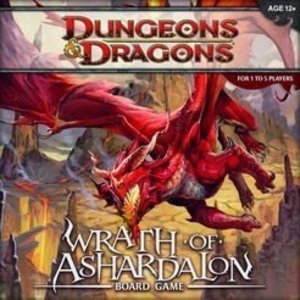

I am a D&D fan, so was quite looking forward to playing this, the packaging and content of the game really caught my attention when the game arrived, I was definitely very excited to start playing.
I read through the rules fairly quickly and set the game up ready to play, the first run through was OK although I messed up the rules a little and felt it would be better to start again, after a quick re-read I was ready to go again. Just bare in mind, the rules are easy, but there are a few things you end up forgetting, so it is handy to read them through a couple of times and have them handy when playing.
I carried on through the game a little longer and soon realised it was quite a tedious process, as I was playing on my own and not with others the game needed to keep me entertained, and it really didn't do that.. I was actually starting to wish it would end (I am someone who has to finish a game and can't stop half way through) and when I finally died, I was actually quite relieved.
I ended up putting it away and not coming back to it for a while.. until one day when a couple of friends were over and we weren't in the mood for a really intense style game, I decided to pull it out and see how it played with others. It was certainly a much different experience, it seemed to flow better and just having the others there to have a bit of fun with definitely made the game much more enjoyable.
I would say it is worth buying the game to play with your friends but as a solo game, I really wouldn't bother.
Louise (64 KP) rated Every Last Lie in Books
Jul 2, 2018
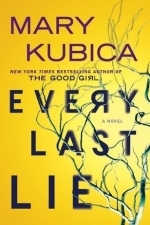

I read ‘Don’t you cry’ by Mary Kubica last year and really enjoyed her writing so I knew that I wanted to read more from this author, that’s why I grabbed the chance at reading this book.
This book is told from dual perspective of Clara and Nick Solberg, they are husband and wife with a four-year old daughter and a new-born baby, they have a great life. Nick has his own dental practice, they have a great network of family and friends and are blissfully in love. Until one day Nick and his daughter are involved in a car crash, unfortunately Nick is killed but Maisie the daughter is unharmed. It’s only when the little girl starts mentioning ‘a bad man’ and becoming terrified of a certain car the Clara starts to investigate the death of her husband herself and unravels secrets that Nick has been keeping from her.
Ahhh this book, I have mixed feelings. The story telling was great, the tension and the mystery had me questioning and trying to second guess everything that was going on… I was really invested in the story and then it came to the ending – oh it was so anti-climatic, I felt a bit cheated, I am not going to say much because I don’t want to give anything away but be warned.
I liked the characters and the alternate POV kept things interesting, we have Clara and then Nicks POV before the accident happened so we get an idea of what their life was like before.Clara’s character was really well written you could feel the anxiety and feel how exhausted she was from the writing, but she also did some things that were questionable and downright stupid. There was something lacking in this story which I can’t put my finger on and obviously the ending.
Overall this is an enjoyable read, a great build up and tension for a mystery/thriller.
I rated this 3 out of 5 stars
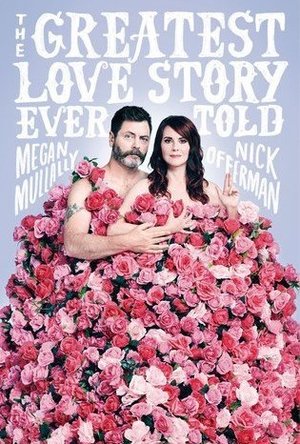
The Greatest Love Story Ever Told
Nick Offerman and Megan Mullally
8.0 Rate It
Book
At last, the full story behind Megan Mullally and Nick Offerman's epic romance, including stories,...
memoir biography celebrity

Vivino Wine Scanner
Food & Drink and Shopping
4.0 Rate It
App
Buying wine in Vivino is simple and easy. Vivino has taken the guesswork out of wine shopping. ...

readwithg (6 KP) rated Bad Girls with Perfect Faces in Books
Mar 20, 2018
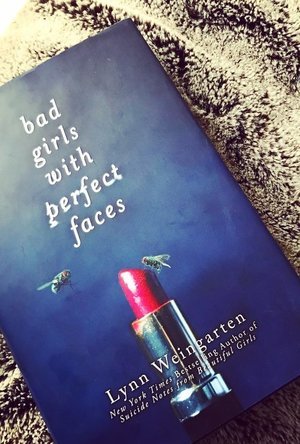

This was my first book purchase of 2016, and because I was wasting my fucking TIME reading the Red Crown series I never had a chance to start it. I immediately sent a picture of the book to my fellow Lynn Weingarten lovers, and had yet to hear anything about it. That is, until I received I text from a friend at 3 AM, filled with expletives regarding the pure love she now had for the book.
That was the precise moment I knew I was royally fucking my shit up by continuing to force-read a bullshit dystopian series. I immediately stopped Red Crown and scrambled into the next room to my library, desperately searching through books for Weingarten's newest gem. and HONEYS, KATIE WAS RIGHT. I shit you not, I started that book at 10:00 PM, went to bed, woke up before work to read some more, and finished it during an "extended" lunch break. And by that, I mean I refused to do any more work until I finished the goddamn book. I read this baby in 16 hours, and that's including 8 hours of sleep and half a work day. I. could. not. stop. Here's a little synopsis for you, boo boos:
"When Sasha's best friend, Xavier, gets back together with his cheating ex, Ivy, Sasha knows she needs to protect him. So she poses as a guy online to lure Ivy away.
But Sasha's plan goes sickeningly wrong. And she soons learns to be careful of who you pretend to be or you might be suprised by who you become...
Told in multiple points of view, Bad Girls with Perfect Faces is sexy and twisted, with shocks at every turn."
I haven't experienced a book like this in a damn long time. You know the kind: you physically cannot do anything productive unless it involves your eyeballs on the novel. Lynn Weingarten, the inside of your mind is a beautifully frightful place. I will read every single book you put out into the universe.
The book is available on Amazon. If you're currently halfway out the door on your way to grab a copy ASAP, I got mine at Target so head straight there. And when you're finished, come back here and let's chat the fuck UP about it cause MY MIND IS STILL BLOWN AND IT'S BEEN TWO WEEKS.
♥ G

TheDefunctDiva (304 KP) rated Charlie and the Chocolate Factory (2005) in Movies
Sep 27, 2017
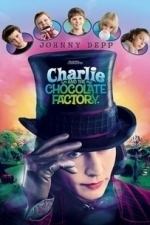
This is the story of Charlie Bucket, an impoverished but genuinely good-natured child. His dream is one of millions: to win a Golden Ticket, and tour Willy Wonka’s chocolate factory in the hopes of obtaining an even bigger prize. If this plot sounds familiar, it’s because you’ve seen Willy Wonka and the Chocolate Factory, or have read the book. I profess my ignorance, for I haven’t read the book Roald Dahl wrote, and therefore have no idea which movie version adheres more strictly to the original text.
Let’s move on by more closely examining Burton’s version. Despite some of the world’s most recalcitrant children winning the four other tickets, Charlie lucks out and becomes the recipient of the last Golden Ticket. This brings great joy to his family and even makes the bed-ridden Grandpa Joe ambulatory again. I love Charlie’s family, especially because his Dad works in a toothpaste factory but everyone in the family has nasty teeth.
The glorious day of the tour arrives and each child shows up with a parental or grandparental guardian. They are introduced first to Willy Wonka by means of a puppet show, which ends in a glorious and unintentional fire. With the smoldering puppets dying disturbingly in the background, Wonka appears with cue cards, giving the impression that the man has no idea how to socially interact. The group then enters the factory.
The first child to be eliminated from the contest is Augustus Gloop. The group has been given free reign of a room made entirely of candy. Augustus cannot resist the lake of chocolate, and he falls in. He is sucked up a tube that leads to the fudge room. Then the Oompa Loompas appear and perform a song engineered for this particular predictable tragedy.
The Oompa Loompas in Burton’s version are short, and they do not have orange hair, but they all have the same face and body. Deep Roy, the actor portraying the Oompa Loompas, deserved an Oscar for effort in my book, for the special features indicate how very involved he was with this production. The songs sung by the Oompa Loompas varied significantly from those in the older version. In fact, I enjoyed how each song of admonishment involved a specific genre of music.
Next Violet Beauregard, the competitive one, is turned into a blueberry by chewing gum. And then we have the case of the sad and supremely spoiled Veruca Salt, who ends up getting thrown down a garbage chute by some very judgmental and highly trained squirrels. After each young lady has been expelled from the contest, the Oompa Loompas say adieu with a musical number.
Throughout the film, Wonka has flashbacks about his father. It seems the elder Wonka was a dentist, and he forbade the young Willy to eat candy. Several scenes show Willy Wonka defying the will of his father, which ultimately led Willy to be a world-renowned chocolatier. Though it was nice to have this subplot as an explanation for some of Wonka’s erratic behavior, I found that I like Gene Wilder’s portrayal of Willy Wonka better. He was whimsical and strange, but the film and the actor seemed to offer no explanation as to how he got that way.
Mike Teavee, a young boy with the attention span of a gnat on amphetamines, is the last of the factory’s victims. He decides to teleport himself into a television screen, which I’m sure seemed like a good idea at the time. Teavee is shown in peril as an Oompa Loompa flips the channels. Now incredibly small, Wonka decides that the best remedy for Mike is the taffy pulling machine.
Charlie is the only child left, and Wonka ushers Charlie and Grandpa Joe into the glass elevator. According to the button, they are going up and out. Indeed, they do, eventually stopping when they crash through the roof of the Bucket house. The grand prize is revealed: Willy Wonka is giving Charlie the factory. This becomes impossible when Wonka forces Charlie to choose between factory and family. Eventually, Wonka reconciles his Daddy issues and allows Charlie’s family to stay at the factory.
The visual effects in this film were amazing. As mentioned previously, Deep Roy was incredible as the face of the many Oompa Loompas. I thought the child actors in this film were also impressive in how they perfectly captured their respective vices. Overall, this was a good film. And yet I still miss moments from the older film, especially the poem with “the grisly reaper mowing.” Call me sentimental…

Lee (2222 KP) rated Welcome to Marwen (2018) in Movies
Jan 11, 2019
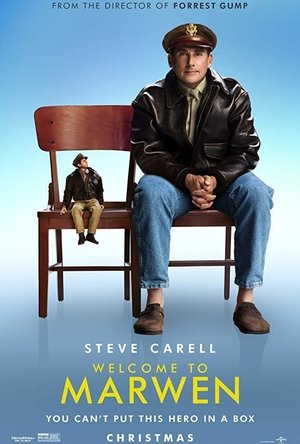
I almost did miss out on seeing Welcome to Marwen though, due to the large number of mediocre reviews I read. In fact, it doesn't seem to have appealed to the general public enough to keep it in the cinemas for very long at all. Having only opened here in the UK on New year's Day, the screening I went to last night was actually the last screening being shown at that particular cinema, and I was one of only a handful of people there watching it. What prompted me earlier this week to give it a go though was after listening to director Robert Zemeckis talk passionately about it, along with his other movies. It was a gentle reminder that this guy is responsible for so many of my favourite movies, and I decided to give it a shot. While I'm glad I did, and overall I enjoyed it a lot, I can certainly appreciate where some of the criticism is coming from.
Welcome to Marwen is based on the true story of Mark Hogancamp, and the 2010 documentary on his life title 'Marwencol'. Mark (played in the movie by Steve Carell) suffered a severe beating at the hands of a bunch of thugs following an altercation in a bar regarding his lifestyle choice of being a cross dresser. After nine days in a coma, the beating understandably left him traumatised, but it also left him without any memory his life prior to the attack - once a talented war illustrator, he now can't even write his own name. But Mark remained an artist, building a miniature World War II Belgian town called Marwen outside his home and populating it with dolls. Using them he creates scenes and a story which he then photographs, helping him to express and deal with his lack of memory, the pain and trauma he now experiences, and the relationships with the people around him. Captain Hogie is a fighter pilot, an Action Man/GI Joe figure representing Mark. The residents of Marwen are all women, alter egos of various people who have helped him in the past or continue to help him. The toyshop worker who supplies him with the dolls, a friend he met during rehab, a co-worker, his carer and the woman who came to his aid following his beating. The town is also terrorised regularly by a bunch of Nazis, representing the men responsible for attacking him. And whenever the Nazis are beaten and killed, they are brought back to life by a Belgian witch! When a woman called Nicol (Leslie Mann) moves in across the street, she strikes up a wonderful friendship with Mark, earning her own doll in the town of Marwen where she strikes up a relationship with Captain Hogie. As the movie progresses, Mark has to deal with the pending sentencing of his attackers and the anxiety surrounding an upcoming exhibition showcasing his photographs. Marwen, and its inhabitants, help him to work through all of this.
The scenes and stories in Marwen that Mark is creating and imagining are brought to life in the movie using impressive motion capture CGI which, if you've seen the trailer or any clips of the movie, will know looks incredible. When you think about the animation Zemeckis and his team were producing for The Polar Express back in 2004, through Beowulf and Disney's The Christmas Carol to where we are now with this movie, it's simply amazing how far we've come. Perfect recreations of the movie characters in doll form, moving and interacting with the real surroundings and the CGI is just faultless. But for the earlier parts of the movie, this aspect of the movie for me was for a while the most frustrating and dull. The movie opens with a big scene as Captain Hogie crashes his plane, comes across a group of Nazis before being rescued by the girls of Marwen and we get a few more of these lengthy sequences early on, with only short glimpses of Mark and his life inbetween. I found myself become interested and engrossed in the life of Mark, wanting to learn more, only to be snapped out of it by a not so interesting scene involving some dolls. Thankfully, the length of those scenes reduces over time, and as you begin to empathise more with Mark and his life, you start to appreciate more the reasons why a certain scene is playing out the way it is. At that point, I began to really appreciate and enjoy them a lot more.
My only issue overall with this movie is that I wouldn't really know the age range to pitch it at, and that's possibly why it doesn't appear to have done so well with audiences. You've got the fun elements involving the dolls and the CGI, but then some of these scenes do involve a fair bit of violence which actually appears quite realistic at times. Then you've got the trauma and the flashbacks involving the beating - the movie doesn't go as dark as it could, or maybe should have done with that subject matter, but I certainly wouldn't say this is a fun movie for all the family to enjoy. Which is a shame really because I did enjoy this a lot. Steve Carell does an outstanding job, and Leslie Mann is just wonderful as always. It's opened my eyes to some of the consequences of brain injury and made me want to learn more about Mark Hogancamp, which parts of the movie are true and which parts were added for entertainment. I'll be sure to try and watch the documentary at some point.

Princess Salon 2 - Makeup, Dressup, Spa and Makeover - Girls Beauty Salon Games
Beauty, Education and Games
App
Dear friends, let’s welcome the beautiful girls from Princess Salon 2! Thanks for your patient...

Darren (1599 KP) rated Hook (1991) in Movies
Jul 7, 2019
Writer: James V Hart, Nick Castle, Malia Scotch Marmo (Screenplay) J.M. Barrie (Books)
Starring: Dustin Hoffman, Robin Williams, Julia Roberts, Bob Hoskins, Maggie Smith, Caroline Goodall, Charlie Korsmo, Amber Scott
Plot: When Captain Hook kidnaps his children, an adult Peter Pan must return to Neverland and reclaim his youthful spirit in order to challenge his old enemy.
Tagline – What if Peter Pan grew up?
Runtime: 2 Hours 22 Minutes
There may be spoilers in the rest of the review
Verdict: Fun-Filled Fantasy
Story: Hook starts as we meet businessman Peter Banning (Williams) who has started over working leading to his children become distant, his wife Moira (Goodall) forces him to visit his Granny Wendy (Smith) in London for Christmas, where she sees how much Peter has changed since his childhood of never wanting to grow up.
Captain Hook (Hoffman) takes Peter’s children, which sees Peter needing to be pushed into returning to Neverland, a place he has long forgotten about, with Tinkerbell (Roberts) taking him there only for Hook to be left disappointed by the man Peter has become, Tinkerbell has three days to restore Peter’s faith in Neverland to save his children.
Thoughts on Hook
Characters – Peter Banning is a lawyer that has been neglecting his family, his Grandmother sees him losing his young heart that made her take him in, in the first place, Peter must confront his past to save his children from his old nemesis Captain Hook in Neverland, a place he has long since forgotten about. Peter has become everything he once hated as a child and shows how at times parents can get buried in their work. Captain Hook has been waiting for the day Peter Pan returns, he is left disappointed when he does return a shell of the boy that left, giving him three days to prepare for a battle, while having his own plan to get revenge on Peter. Tinkerbell comes to Peter to bring him back to Neverland, she helps transform him back to his original self, while showing him what he is still fighting for.
Performances – Robin Williams was a great choice for this role, he gets to manages the serious adult side of everything as well as the playful side of Peter Pan with ease being able to swap between the two whenever he needs to. Dustin Hoffman as the villainous Hook has great enjoyment in this role where he does get to play along with his character. Julia Roberts does all she needs to do without being as involved as the lead too.
Story – The story follows an older Peter Pan that must return to Neverland to save his own children after his old nemesis Captain Hook takes them there. This spin on the Peter Pan story is a wonderful on because see Peter grown up becoming everything he promised he wouldn’t shows us just how difficult being an adult can be, you will turn your back on parts of your childhood become what you once feared. This was always the meaning behind Peter Pan in the first place, finding an escape from the busy lives, now an adult must use this to save his own relationship with his children and family, which is what is important in life.
Adventure/Comedy/Fantasy – The adventure side of the film takes Peter to Neverland to relive moments of his childhood in a fantasy battle against pirates with fairies on their side. We do get elements of comedy, but even Robin Williams is held back from going into his full routine like we saw in Aladdin.
Settings – The film uses the same settings that we know from Peter Pan, the London setting might well be a more modern one, but Neverland hasn’t aged a day since Peter has left.
Scene of the Movie – The battle.
That Moment That Annoyed Me – Pop culture references.
Final Thoughts – This is a magical version of Peter Pan’s adventures showing how life can change for adults who never thought they would be when they were children.
Overall: Magical adventure.
Rating

Kristy H (1252 KP) rated The Dark Angel in Books
May 15, 2018
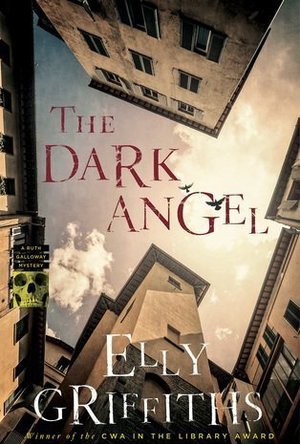

It's no secret that I love Ruth and Elly Griffiths' series of novels featuring our intelligent, plucky heroine. Despite the fact that I know absolutely nothing about bones, I identify with her (e.g., stepping on a plane with Kate for the first time and feeling nervous flying with her daughter, whose safety "overrides everything else"). Ruth's wit, sarcasm, and sense of humor are always absolutely spot-on, and it's wonderful being back with her and her circle of pals, especially the grumpy yet protective Nelson. The Nelson/Ruth dynamic is its typically complicated yet oddly sweet self, and there's a surprising amount of progress or information regarding the characters' personal lives in this novel.
As mentioned, these books are always just lovely and humorous. The narration style is impeccable and works flawlessly. Each character is so perfectly "them," and I enjoyed that we heard from a lot of characters this time around, even Nelson's elder daughter. Oh, and yes, there's also a great mystery plot thrown in, involving an Italian town, some bones (of course), and a variety of deeply buried secrets. Griffiths introduced us to some new characters with the new locale, and I found the mystery to be interesting and engaging. It was front and center enough to keep us interested, but refreshing to get a little more movement on the characters' personal lives, too.
Overall, another winner from Griffiths. As always, I cannot wait for the next Ruth novel (especially because there is some serious unresolved business by the end of this one!). I think of Ruth, Harry, Kate, and the entire cast as dear friends by now. You can read this as a stand-alone, but as always, I recommend reading the whole series, because it's just so darn good.
A huge thanks to the publisher and Edelweiss for a copy of this novel in return for an unbiased review.