
The Norton Anthology of World Religions: Judaism
Book
This magisterial Norton Anthology, edited by world-renowned scholars, offers a portable library of...
Memory Wall
Book
Anthony Doerr's brilliant new collection of stories is about memory: the source of meaning and...
Gendering History on Screen: Women Filmmakers and Historical Films
Book
Movies about significant historical personalities or landmark events like war seem to be governed by...
Command and Control
Book
Command and Control interweaves the minute-by-minute story of an accident at a missile silo in rural...

Awix (3310 KP) rated Z For Zachariah (2015) in Movies
Sep 5, 2020
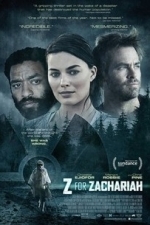


I say 'very loose' because after a while this essentially bears no more resemblance to the source novel than it does to any of a number of other films in a similar vein: the movie adds a new character (which is a big deal in a story which originally only had two). What follows is thoughtful and well-made, clearly favouring Robbie's attempts to display her range, and the performances aren't actively bad. Even if you haven't seen other films dealing with this kind of scenario (and there have been a few!), the slowness and solemnity of this movie may get a bit wearisome after an while; others may baulk at the lack of an actual proper ending. Passes the time, though.
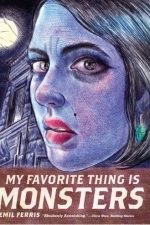
My Favorite Thing is Monsters
10.0 Rate It
Book
Set against the tumultuous political backdrop of late ’60s Chicago, My Favorite Thing Is Monsters...
Graphic novel
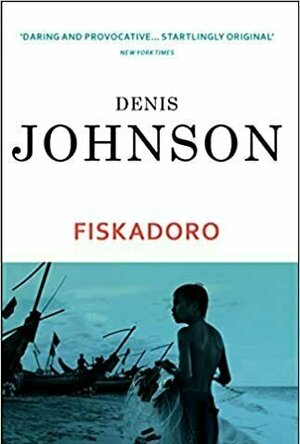
Fiskadoro
Book
'Daring and provocative... Startlingly original' New York Times The nuclear holocaust has been...

Suswatibasu (1703 KP) rated The Zookeeper's Wife (2017) in Movies
Nov 24, 2017 (Updated Nov 24, 2017)
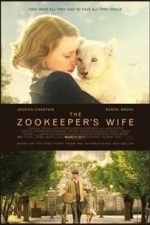
Dr. Jan Zabinski was the director of the Warsaw Zoo in the 1930's, and along with his wife Antonina and young son, they ensured the safety and care of animals in the area. Their life came to an abrupt halt with the German invasion of Poland in 1939, when most of their animals and structures were destroyed in the bombings and siege of the city. The zoo was closed under German occupation, but the Zabinskis continued to occupy the villa, and the zoo itself was used first as a pig farm and subsequently as a fur farm. All the while, Dr Zabinski smuggled Jewish people out of the Warsaw Ghetto and aided their way out of city, not before allowing them to stay in their own house. He was injured while fighting in the Polish resistance, but the couple were given an honorary title by Yad Vashem (Israel's official memorial for Jewish victims of the Holocaust) for their brave efforts.
Similar in the vein of films such as @Schindler's List (1993), there is an element of a saviour complex in these films, but unlike Steven Spielberg's Oscar-winner, it is less extravagant and less well-made, as there was very little engagement with the Jewish characters - focusing more on Antonina, played by Jessica Chastain. It is definitely heart-wrenching watching films based on the holocaust, and there were scenes I had to turn away from, such as when an elderly woman and her mother were shot dead in the streets by soldiers. The script and cinematography weren't at a high standard, however, and as a result the film definitely fell short. I would suggest reading the book @The Zookeeper's Wife - it has far more detail than the film, in which there were glaringly obvious plot holes.
Suswatibasu (1703 KP) rated The Tattooist of Auschwitz in Books
Mar 2, 2018 (Updated Mar 2, 2018)
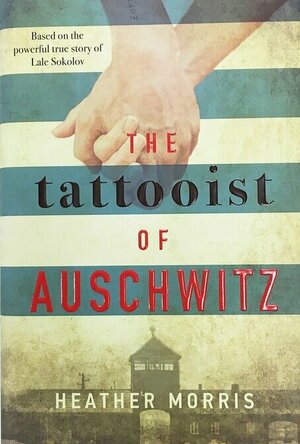

Lale Sokolov, a Slovakian Jew, was given the task of tattooing identification numbers on others at the notorious concentration camp. There he meets Gita, another Slovakian, and he sets himself on a mission to escape with her to freedom by trading food and jewels, revealing his incredible street smarts. If he had been caught, he would have been killed - many owed him their survival.
There are elements where you do think it has been written for the screen, as the scenes fail to connect to one another fluidly. As a result, I did believe it to be a fictional story because the writing failed to completely flourish and the author struggles with the prose. In this respect, it is rather disappointing, however, the memoir is wonderful and it leaves you with huge respect for the Sokolovs.