
Search
Hadley (567 KP) rated The Devil in the White City: Murder, Magic, and Madness in Books
Jan 18, 2021
History (1 more)
Well-written
H.H. Holmes had many aliases and lives.
He's been a doctor and a licensed pharmacist, who then conned an old couple into selling their drug store to him where he preyed on young girls and ignorant customers that would buy whatever Holmes would tell them to buy, whether it were real or fake tonics.
He was a building owner who had a murder hotel secretly built with " a wooden chute that would descend from a secret location on the second floor all the way to the basement... ", "a room next to his office fitted with a large walk-in vault, with airtight seams and asbestos-coated iron walls. A gas jet embedded in one wall would be controlled from his closet...", "a large basement with hidden chambers and a sub-basement for the permanent storage of sensitive material. "
He owned and ran an alcohol-treatment company known as the Silver Ash Institute that claimed to have the cure for alcoholism.
He was a traveling business man, who had two wives and two children. He established the Campbell-Yates Manufacturing Company, which made nothing and sold nothing.
He was also labeled as America's first serial killer. His body count is unknown even today; his victims were frequently young women, which included stenographers and house wives. He was best known for convincing people who trusted him to sign him as the beneficiary of their life insurance policies, only to kill them and make it seem an accident so he could collect the money.
Holmes grew up in a small farming village in New Hampshire, where he briefly spoke about an early fear of a human skeleton that hung in a doctor's office: " 'I had daily to pass the office of one village doctor, the door of which was seldom if ever barred,' he wrote in a later memoir. 'Partly from its being associated in my mind as the source of all the nauseous mixtures that had been my childish terror (for this was before the day of children's medicines), and partly because of vague rumors I had heard regarding its contents, this place was one of peculiar abhorrence to me.' "... "Two children discovered Mudgett's [Holmes' real last name] fear and one day captured him and dragged him 'struggling and shrieking' into the doctor's office. 'Nor did they desist,' Mudgett wrote, 'until I had been brought face to face with one of its grinning skeletons, which, with arms outstretched, seemed ready in its turn to seize me. It was a wicked and dangerous thing to do to a child of tender years and health,' he wrote, ' but it proved an heroic method of treatment, destined ultimately to cure me of my fears, and to inculcate in me, first, a strong feeling of curiosity, and, later, a desire to learn, which resulted years afterwards in my adopting medicine as a profession.' "
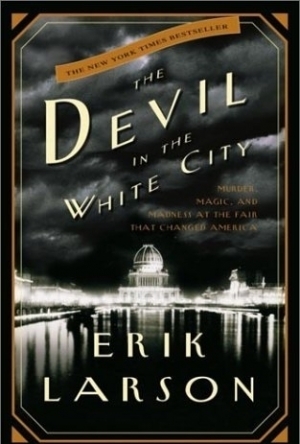
Erik Larson's fourth book, the Devil in the White City, is only partly about Holmes and his dark trail of murder and lies. The story told is mostly centered around the planning and building of the 1893 World's Fair. The prologue opens with one of the architects aboard a ship long after the fair has ended - - - 1912 to be exact- - - where he begins to write of the fair in his diary. The next chapter continues on with Chicago competing against other major cities to win the rights to host the World's Fair. Chicago was not the ideal place for the fair because it was known for it's crime and slaughter houses - - - this was exactly why the politicians wanted it so badly there, so it would help to lighten the image of Chicago for the rest of the world. Even the local Whitechapel Club that had sprouted up after the infamous murders by Jack the Ripper, were excited to win the rights to host the fair in their city, and celebrated in a macabre way:
"Upon learning that Chicago had won the fair, the men of the Whitechapel Club composed a telegram to Chauncey Depew, who more than any other man symbolized New York and its campaign to win the fair. Previously Depew had promised the members of the Whitechapel Club that if Chicago prevailed he would present himself at the club's next meeting, to be hacked apart by the Ripper himself - - - metaphorically, he presumed, although at the Whitechapel Club could one ever be certain? The club's coffin, for example, had once been used to transport the body of a member who had committed suicide. After claiming his body, the club hauled it to the Indiana Dunes on Lake Michigan, where members erected an immense pyre. They placed the body on top, then set it alight. Carrying torches and wearing black hooded robes, they circled the fire singing hymns to the dead between sips of whiskey. The club also had a custom of sending robed members to kidnap visiting celebrities and steal them away in a black coach with covered windows, all without saying a word.
The club's telegram reached Depew in Washington twenty minutes after the final ballot, just as Chicago's congressional delegation began celebrating at the Willard Hotel near the White House. The telegram asked, 'When may we see you at our dissecting table?' "
There are chapters in-between, technically reading like a side story, that tell us about Holmes and his misdeeds in Chicago, but there just wasn't enough about Holmes that I could consider this a True Crime book, nor an informative book about Holmes. Unfortunately, when the reader begins to really dwell into the story of Holmes, it's quickly ended by having two or more chapters about the building of the World's Fair. One interesting point about the story is that the reader does get to see how many inventions were brought to light because of the Fair, such as the invention of the Ferris Wheel. Larson's writing is very coherent and the descriptions are so well done that the reader is practically transported back to the late 1800s, yet, before I finished the book, I felt misled by the title... then coming across everything that happened to not only the Fair, but the people who were involved with it, it's hard not to wonder if the whole thing was cursed, thus the Devil being in the White City.
One of the side stories I did really enjoy was the slow unfolding of a man named Prendergast. A delusional young man who ran one of the groups of paperboys in Chicago, who was also obsessed with politics, became a determined supporter of Mayor Harrison; after Harrison was voted into office again, Prendergast believed it was because of him and the letters he sent out to numerous politicians and potential voters. Prendergast also believed he deserved a chair on the council for Harrison's re-election, for which he even showed up at City Hall to take over. This incident was the straw that broke the camel's back for Prendergast - - - he was humiliated when the people there laughed in his face. Prendergast then decided to take matters into his own hands, and bought a revolver. The day before the Fair would end, Prendergast showed up at Harrison's home and shot him. Harrison died minutes later. Prendergast turned himself in for the murder as soon as he left Harrison's residence. When asked why he had done it, Prendergast responded: " ' Because he betrayed my confidence. I supported him through his campaign and he promised to appoint me corporation counsel. He didn't live up to his word.' "
This book has been voted as a top True Crime must-read novel. I don't agree with this. As I said before: Holmes' chapters are few; eighty percent of this book is about the building of the World's Fair. As a True Crime junkie, I didn't enjoy this one, but also as a history junkie, I enjoyed learning about the Fair and everything that happened. I can't recommend this book to TC fans or horror fans. It's mostly history and architecture.

He's been a doctor and a licensed pharmacist, who then conned an old couple into selling their drug store to him where he preyed on young girls and ignorant customers that would buy whatever Holmes would tell them to buy, whether it were real or fake tonics.
He was a building owner who had a murder hotel secretly built with " a wooden chute that would descend from a secret location on the second floor all the way to the basement... ", "a room next to his office fitted with a large walk-in vault, with airtight seams and asbestos-coated iron walls. A gas jet embedded in one wall would be controlled from his closet...", "a large basement with hidden chambers and a sub-basement for the permanent storage of sensitive material. "
He owned and ran an alcohol-treatment company known as the Silver Ash Institute that claimed to have the cure for alcoholism.
He was a traveling business man, who had two wives and two children. He established the Campbell-Yates Manufacturing Company, which made nothing and sold nothing.
He was also labeled as America's first serial killer. His body count is unknown even today; his victims were frequently young women, which included stenographers and house wives. He was best known for convincing people who trusted him to sign him as the beneficiary of their life insurance policies, only to kill them and make it seem an accident so he could collect the money.
Holmes grew up in a small farming village in New Hampshire, where he briefly spoke about an early fear of a human skeleton that hung in a doctor's office: " 'I had daily to pass the office of one village doctor, the door of which was seldom if ever barred,' he wrote in a later memoir. 'Partly from its being associated in my mind as the source of all the nauseous mixtures that had been my childish terror (for this was before the day of children's medicines), and partly because of vague rumors I had heard regarding its contents, this place was one of peculiar abhorrence to me.' "... "Two children discovered Mudgett's [Holmes' real last name] fear and one day captured him and dragged him 'struggling and shrieking' into the doctor's office. 'Nor did they desist,' Mudgett wrote, 'until I had been brought face to face with one of its grinning skeletons, which, with arms outstretched, seemed ready in its turn to seize me. It was a wicked and dangerous thing to do to a child of tender years and health,' he wrote, ' but it proved an heroic method of treatment, destined ultimately to cure me of my fears, and to inculcate in me, first, a strong feeling of curiosity, and, later, a desire to learn, which resulted years afterwards in my adopting medicine as a profession.' "
Erik Larson's fourth book, the Devil in the White City, is only partly about Holmes and his dark trail of murder and lies. The story told is mostly centered around the planning and building of the 1893 World's Fair. The prologue opens with one of the architects aboard a ship long after the fair has ended - - - 1912 to be exact- - - where he begins to write of the fair in his diary. The next chapter continues on with Chicago competing against other major cities to win the rights to host the World's Fair. Chicago was not the ideal place for the fair because it was known for it's crime and slaughter houses - - - this was exactly why the politicians wanted it so badly there, so it would help to lighten the image of Chicago for the rest of the world. Even the local Whitechapel Club that had sprouted up after the infamous murders by Jack the Ripper, were excited to win the rights to host the fair in their city, and celebrated in a macabre way:
"Upon learning that Chicago had won the fair, the men of the Whitechapel Club composed a telegram to Chauncey Depew, who more than any other man symbolized New York and its campaign to win the fair. Previously Depew had promised the members of the Whitechapel Club that if Chicago prevailed he would present himself at the club's next meeting, to be hacked apart by the Ripper himself - - - metaphorically, he presumed, although at the Whitechapel Club could one ever be certain? The club's coffin, for example, had once been used to transport the body of a member who had committed suicide. After claiming his body, the club hauled it to the Indiana Dunes on Lake Michigan, where members erected an immense pyre. They placed the body on top, then set it alight. Carrying torches and wearing black hooded robes, they circled the fire singing hymns to the dead between sips of whiskey. The club also had a custom of sending robed members to kidnap visiting celebrities and steal them away in a black coach with covered windows, all without saying a word.
The club's telegram reached Depew in Washington twenty minutes after the final ballot, just as Chicago's congressional delegation began celebrating at the Willard Hotel near the White House. The telegram asked, 'When may we see you at our dissecting table?' "
There are chapters in-between, technically reading like a side story, that tell us about Holmes and his misdeeds in Chicago, but there just wasn't enough about Holmes that I could consider this a True Crime book, nor an informative book about Holmes. Unfortunately, when the reader begins to really dwell into the story of Holmes, it's quickly ended by having two or more chapters about the building of the World's Fair. One interesting point about the story is that the reader does get to see how many inventions were brought to light because of the Fair, such as the invention of the Ferris Wheel. Larson's writing is very coherent and the descriptions are so well done that the reader is practically transported back to the late 1800s, yet, before I finished the book, I felt misled by the title... then coming across everything that happened to not only the Fair, but the people who were involved with it, it's hard not to wonder if the whole thing was cursed, thus the Devil being in the White City.
One of the side stories I did really enjoy was the slow unfolding of a man named Prendergast. A delusional young man who ran one of the groups of paperboys in Chicago, who was also obsessed with politics, became a determined supporter of Mayor Harrison; after Harrison was voted into office again, Prendergast believed it was because of him and the letters he sent out to numerous politicians and potential voters. Prendergast also believed he deserved a chair on the council for Harrison's re-election, for which he even showed up at City Hall to take over. This incident was the straw that broke the camel's back for Prendergast - - - he was humiliated when the people there laughed in his face. Prendergast then decided to take matters into his own hands, and bought a revolver. The day before the Fair would end, Prendergast showed up at Harrison's home and shot him. Harrison died minutes later. Prendergast turned himself in for the murder as soon as he left Harrison's residence. When asked why he had done it, Prendergast responded: " ' Because he betrayed my confidence. I supported him through his campaign and he promised to appoint me corporation counsel. He didn't live up to his word.' "
This book has been voted as a top True Crime must-read novel. I don't agree with this. As I said before: Holmes' chapters are few; eighty percent of this book is about the building of the World's Fair. As a True Crime junkie, I didn't enjoy this one, but also as a history junkie, I enjoyed learning about the Fair and everything that happened. I can't recommend this book to TC fans or horror fans. It's mostly history and architecture.
My Macros+ Diet, Weight and Calorie Tracker
Health & Fitness and Lifestyle
App
My Macros+ is the only diet tracking app made by a fitness professional! We are proud to bring you...

Hazel (1853 KP) rated Paper Towns in Books
Dec 7, 2018
This was my book of the month for March 2014. You can view and reblog my Tumblr post here: http://fuzzysparrow.tumblr.com/post/81305903630/x
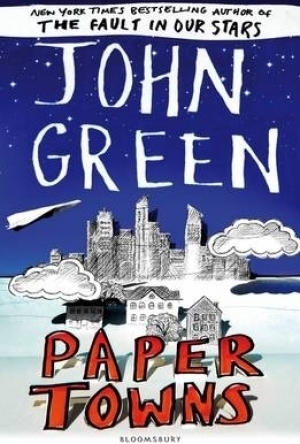
<i>Paper Towns</i> is a brilliantly written novel by John Green. Having only previously read <i>The Fault in our Stars</i> I have little to compare it to and cannot say whether it is his best. I am writing this less that half an hour after finishing <i>Paper Towns</i> therefore it is still fresh in my mind, which may explain my slight preference over <i>TFIOS</i>. However the story lines are so different that it is not really fair to compare them.
Set in Orlando, Florida, <i>Paper Towns</i> is narrated by eighteen-year-old Quentin Jacobson (often referred to as Q). It begins with a flash back to when he and next door neighbour, Margo Roth Spiegelman, were nine and discovered a dead body in the park. It is here that the differences in character are pointed out: “As I took those two steps back, Margo took two equally small and quiet steps forward.” Q is an anxious boy, whereas Margo comes across as very confident.
Despite their childhood relationship, for the main bulk of the story Q and Margo have grown apart. They belong to different social circles: Margo to the popular crowd and Q with the gamers, band members and social outcasts. But things take a turn when one night Margo climbs through Q’s bedroom window and insists he accompany her on a nighttime adventure, going around righting wrongs and wronging rights.
But the next day Margo runs away telling no one where she is going, except it appears that she has left clues to her whereabouts. Clues only intended for Q to discover. With the help of his prom-obsessed friend, Ben; Radar, the guy whose parents own the world’s largest collection of black Santas (seriously, where does Green come up with this stuff?); and Lacey, Margo’s best friend and Ben’s soon to be girlfriend; Q struggles to understand the clues and uncover Margo’s hiding place.
To begin with it is exciting to read about Q and his friends unscrambling the hidden messages but as the story goes on and Margo is yet to be found a sense of dread creeps up on us and Q begins to think the worst.
The final section, however, is fast past and thrilling to read as the characters travel across states, with a rather short time limit, in Q’s mini van in a final attempt to find Margo. What will they find when they arrive? Will Margo still be there?
At first I was not sure that I would like this book. Chapter one is mostly about Quentin, Ben and Radar fooling around as boys do, but once everything kicks off with Margo it is really exciting. Similarly to <i>The Fault in our Stars</i>, Green has filled <i>Paper Towns</i> with clever metaphors with paper, string, balloons and grass being used to represent life. It is a very witty narrative containing lots of humour, yet also manages to convey important ideas about the way we see the world, and the people in it.
<i>Paper Towns</i> can be described as a contemporary, coming-of-age story. As mentioned already, Margo was portrayed as a confident girl whereas Quentin was the opposite. Despite Q stating “I wanted Margo’s disappearance to change me; but it hasn’t, not really” I think Green has shown major character developments, and possibly even role reversals. Q may never completely get rid of his anxieties and does not totally become a different person, but he does gain more confidence as he is forced out of his comfort zone, and his perception of other people also begins to alter. Margo on the other hand may not be all that she seems. The real Margo may in fact be a quiet, rather lost teen in a world she feels trapped in. I think this story and Q’s development has the potential to inspire others of similar ages and make all readers question things about themselves.
Overall, an exceptionally good read.

<i>Paper Towns</i> is a brilliantly written novel by John Green. Having only previously read <i>The Fault in our Stars</i> I have little to compare it to and cannot say whether it is his best. I am writing this less that half an hour after finishing <i>Paper Towns</i> therefore it is still fresh in my mind, which may explain my slight preference over <i>TFIOS</i>. However the story lines are so different that it is not really fair to compare them.
Set in Orlando, Florida, <i>Paper Towns</i> is narrated by eighteen-year-old Quentin Jacobson (often referred to as Q). It begins with a flash back to when he and next door neighbour, Margo Roth Spiegelman, were nine and discovered a dead body in the park. It is here that the differences in character are pointed out: “As I took those two steps back, Margo took two equally small and quiet steps forward.” Q is an anxious boy, whereas Margo comes across as very confident.
Despite their childhood relationship, for the main bulk of the story Q and Margo have grown apart. They belong to different social circles: Margo to the popular crowd and Q with the gamers, band members and social outcasts. But things take a turn when one night Margo climbs through Q’s bedroom window and insists he accompany her on a nighttime adventure, going around righting wrongs and wronging rights.
But the next day Margo runs away telling no one where she is going, except it appears that she has left clues to her whereabouts. Clues only intended for Q to discover. With the help of his prom-obsessed friend, Ben; Radar, the guy whose parents own the world’s largest collection of black Santas (seriously, where does Green come up with this stuff?); and Lacey, Margo’s best friend and Ben’s soon to be girlfriend; Q struggles to understand the clues and uncover Margo’s hiding place.
To begin with it is exciting to read about Q and his friends unscrambling the hidden messages but as the story goes on and Margo is yet to be found a sense of dread creeps up on us and Q begins to think the worst.
The final section, however, is fast past and thrilling to read as the characters travel across states, with a rather short time limit, in Q’s mini van in a final attempt to find Margo. What will they find when they arrive? Will Margo still be there?
At first I was not sure that I would like this book. Chapter one is mostly about Quentin, Ben and Radar fooling around as boys do, but once everything kicks off with Margo it is really exciting. Similarly to <i>The Fault in our Stars</i>, Green has filled <i>Paper Towns</i> with clever metaphors with paper, string, balloons and grass being used to represent life. It is a very witty narrative containing lots of humour, yet also manages to convey important ideas about the way we see the world, and the people in it.
<i>Paper Towns</i> can be described as a contemporary, coming-of-age story. As mentioned already, Margo was portrayed as a confident girl whereas Quentin was the opposite. Despite Q stating “I wanted Margo’s disappearance to change me; but it hasn’t, not really” I think Green has shown major character developments, and possibly even role reversals. Q may never completely get rid of his anxieties and does not totally become a different person, but he does gain more confidence as he is forced out of his comfort zone, and his perception of other people also begins to alter. Margo on the other hand may not be all that she seems. The real Margo may in fact be a quiet, rather lost teen in a world she feels trapped in. I think this story and Q’s development has the potential to inspire others of similar ages and make all readers question things about themselves.
Overall, an exceptionally good read.
Prêt-à-Template
Productivity and Lifestyle
App
Ideas come up all the time. Registering them instantly in our inseparable mobile devices has become...

Kara Skinner (332 KP) rated Ride of Her Life in Books
Jun 12, 2019

Woman Surprised When Neighbor Waits For Her When Coming Home Late
Genre: Contemporary, Erotica
Word Count: 3,830
Average Smashwords rating: 5 out of 5 stars
My rating: 2.5 out of 5 stars
Warning: quotes below are certainly rated R.
When Andrea’s car breaks down and she gets a ride home with a coworker, the last thing she expects is her sexy yet scary-looking neighbor, Bo, waiting for her and livid. Worried out of his mind, Bo is done flirting with Andrea without action. Tonight, he’ll show her exactly what he wants with her.
Ride of Her Life is a hot little escape, but it’s like daydreaming about the stock photo of a tattooed macho man. True, it has some great sexy time.
He was fucking her hard and fast, but it was too much. Too raw. Too intimate. She felt too vulnerable, and she tried to lower her legs.
“No.” Keeping her legs close together, he leaned forward. “I like it this way. It makes you tighter. Makes you pay attention to me.”
The increase in pressure startled her. “Bo!”
He bucked at the sound of his name, and Andrea could hardly stand the pleasure. It felt naughty, exhibitionistic, and so damn good.
“That’s right, sweet thing. Give it to me. I’m the guy who’s meant to be your lover, not your handyman.”
But Bo has no character whatsoever. For that matter, Andrea isn’t much better with her inconsistent weirdness.
Bo is a jerk. He was mad that his neighbor didn’t call him when she was going to be home late or ask him to drive all the way to the college just to give him a ride. He was even more irritated that the coworker who dropped her off was male. Bo is her next door neighbor! Sure, they’re closer than most neighbors, but that doesn’t mean she needs to call him when she is a little bit late.
There’s an inch of depth that flickers beneath Bo’s otherwise boring flatness. His anger stems from worry and he’s insecure around Andrea. He doesn’t think he’s smart enough for her and in a moment of vulnerability asks her what he means to her.
It’s clear the two of them have history together. They have been neighbors for a while and Bo is always there to help with lawn mowing, giving her takeout, and doing repairs around the house. Andrea fantasizes about him at night but is scared to acknowledge her attraction to him. Bo seems to know it anyway and basically takes her on a picnic table with Andrea barely getting a consent out.
The lack of real consent is a huge turn-off for me. Just because he mows her lawn doesn’t mean he gets to, well, mow her lawn. There’s a difference between dominating and borderline-raping, and I wish that was much clearer here.
Andrea’s character is all over the place. She goes from caring to femme fatale in less than four thousand words.
At first, she’s slightly scared of Bo. She’s nervous and innocent for most of the story.
The tingle was back. Her entire body vibrated with anticipation and nerves. She’d never done anything like this. A thrill of uneasiness and excitement rushed through her
By the end, he’s just a fuck for her.
“Can we go inside now?” she asked, her lips brushing against his ear.
“On one condition. Tell me what I am to you.”
She smiled softly. “Oh honey, you’re the man I call when I need a ride.”
Where is this new found confidence of hers and when did she start calling him honey? Did her orgasm compel a man-eating ghost to possess her for the sake of reliving glory days?
We’ll never find out, because that’s where the story ends. There’s no real conclusion and just the flippant line to half-heartedly tie the ending and beginning together. It left me wholly unsatisfied.

Word Count: 3,830
Average Smashwords rating: 5 out of 5 stars
My rating: 2.5 out of 5 stars
Warning: quotes below are certainly rated R.
When Andrea’s car breaks down and she gets a ride home with a coworker, the last thing she expects is her sexy yet scary-looking neighbor, Bo, waiting for her and livid. Worried out of his mind, Bo is done flirting with Andrea without action. Tonight, he’ll show her exactly what he wants with her.
Ride of Her Life is a hot little escape, but it’s like daydreaming about the stock photo of a tattooed macho man. True, it has some great sexy time.
He was fucking her hard and fast, but it was too much. Too raw. Too intimate. She felt too vulnerable, and she tried to lower her legs.
“No.” Keeping her legs close together, he leaned forward. “I like it this way. It makes you tighter. Makes you pay attention to me.”
The increase in pressure startled her. “Bo!”
He bucked at the sound of his name, and Andrea could hardly stand the pleasure. It felt naughty, exhibitionistic, and so damn good.
“That’s right, sweet thing. Give it to me. I’m the guy who’s meant to be your lover, not your handyman.”
But Bo has no character whatsoever. For that matter, Andrea isn’t much better with her inconsistent weirdness.
Bo is a jerk. He was mad that his neighbor didn’t call him when she was going to be home late or ask him to drive all the way to the college just to give him a ride. He was even more irritated that the coworker who dropped her off was male. Bo is her next door neighbor! Sure, they’re closer than most neighbors, but that doesn’t mean she needs to call him when she is a little bit late.
There’s an inch of depth that flickers beneath Bo’s otherwise boring flatness. His anger stems from worry and he’s insecure around Andrea. He doesn’t think he’s smart enough for her and in a moment of vulnerability asks her what he means to her.
It’s clear the two of them have history together. They have been neighbors for a while and Bo is always there to help with lawn mowing, giving her takeout, and doing repairs around the house. Andrea fantasizes about him at night but is scared to acknowledge her attraction to him. Bo seems to know it anyway and basically takes her on a picnic table with Andrea barely getting a consent out.
The lack of real consent is a huge turn-off for me. Just because he mows her lawn doesn’t mean he gets to, well, mow her lawn. There’s a difference between dominating and borderline-raping, and I wish that was much clearer here.
Andrea’s character is all over the place. She goes from caring to femme fatale in less than four thousand words.
At first, she’s slightly scared of Bo. She’s nervous and innocent for most of the story.
The tingle was back. Her entire body vibrated with anticipation and nerves. She’d never done anything like this. A thrill of uneasiness and excitement rushed through her
By the end, he’s just a fuck for her.
“Can we go inside now?” she asked, her lips brushing against his ear.
“On one condition. Tell me what I am to you.”
She smiled softly. “Oh honey, you’re the man I call when I need a ride.”
Where is this new found confidence of hers and when did she start calling him honey? Did her orgasm compel a man-eating ghost to possess her for the sake of reliving glory days?
We’ll never find out, because that’s where the story ends. There’s no real conclusion and just the flippant line to half-heartedly tie the ending and beginning together. It left me wholly unsatisfied.
Sassy Brit (97 KP) rated Let The Dead Keep Their Secrets in Books
Jun 5, 2019
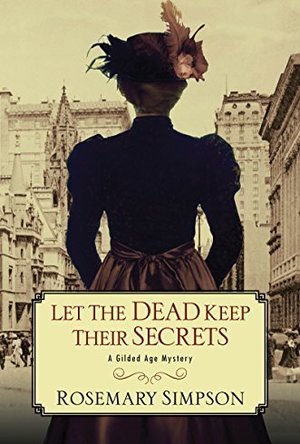
Let The DEAD Keep Their Secrets by Rosemary Simpson brings to life New York City during the 1880s in a historical mystery. It is rich in the culture of the time with a riveting Colombo type crime. Readers know who has done it and seek clues with the characters to find the proof.
The plot opens with New York opera singer Claire Buchanan calling on the investigative services of Prudence MacKenzie and her partner, Geoffrey Hunter. Claire shows up at their door begging them to find out exactly how her twin sister, Catherine, and newborn daughter died, believing it was not from natural causes. Catherine’s husband, Aaron Sorenson, is a scoundrel and appears to be marrying women, getting them pregnant, and then having baby and mother die in childbirth. Prudence and Geoffrey find that childbirth can be dangerous to one’s health as they realize that Sorenson’s current wife may also be in danger. His motive, both the late wife and the current wife would inherit a substantial estate, which will go to him upon their death. Sorensen seems to always be in need of money to pay mounting gambling debts. As the tension mounts the investigative team is putting themselves at risk in attempting to expose the murder-for-inheritance scheme.
The author noted, “Catherine was emotionally abused. Women during that time period did not have much choice. In the Gilded Age in New York women were still property of their husbands. They were very limited to what their husbands wanted.”
One of the important clues is a photograph of the late mother and child. Simpson weaves into the story a Victorian Era custom, post-mortem photography. During these scenes readers learn of the spiritualists who believe “about the possibility of capturing an image of the soul leaving a body at the moment of death.” It was during this time that Claire senses something from her twin sister. The author commented, “During my research, I read how twins separated by birth and raised by different families still have the same likes and dislikes and can sense how each other feels.”
Through the characters people learn of the Gilded Age era, with a fascinating description of the homes, the period clothing, and the city of New York. Unlike many women of the time, Prudence is very unconventional, desiring to take the bar exam and become a litigator. For now, she is content to be an amateur sleuth to her partner, ex-Pinkerton agent Geoffrey Hunter, as she learns on the job. “I wrote Prudence being raised by a widowed father who looked at her as a replacement for a son. He did not make an exception for her being a girl and made sure she had a very well developed sharp legal mind. She is determined to make her own way even though she inherited wealth. I read that the Pinkerton Agency hired a lady detective during the Civil War and knew I wanted to make my heroine an investigator who is constantly challenged by Geoffrey.”
The hero and heroine also have flaws. The author uses events that happened during the Gilded Age paralleling them with what is happening today. Simpson explained, “Geoffrey has left his southern roots, abandoning his culture and family. He has a lot of contradictions. Prudence must struggle with her addiction to the drug laudanum. She was given it by her family doctor to help her cope with her father’s passing and then her fiancé’s death. She overcame the reliance on laudanum but not without a terrible struggle and the knowledge that she would never be entirely free of it. I parallel it with the opioid epidemic today. People became accidental addicts because they were given the drugs legally to cope with physical and emotional pain.”
The antagonist, Simpson has no redeeming qualities. He is a cold and calculating thief, a swindler, and bigamist who victimizes rich women. “I wanted to write an absolute villain. He is unscrupulous, uncaring with no conscience. He had every vile habit known. I do not write cozy mysteries, but historical noirs. My bad guys are really, really bad who cause awful things to happen.”
The author definitely had done her homework. “I want to feel I live in this world for awhile and to get the reader to feel that also. I read the New York Times Archives and fall into the rhythm of the language used, how they spoke, wrote and thought. It puts me in the mindset of the character I am writing about.” With her detailed descriptions and gripping story Simpson has also drawn the reader into the time period through an exciting and action-packed mystery.

The plot opens with New York opera singer Claire Buchanan calling on the investigative services of Prudence MacKenzie and her partner, Geoffrey Hunter. Claire shows up at their door begging them to find out exactly how her twin sister, Catherine, and newborn daughter died, believing it was not from natural causes. Catherine’s husband, Aaron Sorenson, is a scoundrel and appears to be marrying women, getting them pregnant, and then having baby and mother die in childbirth. Prudence and Geoffrey find that childbirth can be dangerous to one’s health as they realize that Sorenson’s current wife may also be in danger. His motive, both the late wife and the current wife would inherit a substantial estate, which will go to him upon their death. Sorensen seems to always be in need of money to pay mounting gambling debts. As the tension mounts the investigative team is putting themselves at risk in attempting to expose the murder-for-inheritance scheme.
The author noted, “Catherine was emotionally abused. Women during that time period did not have much choice. In the Gilded Age in New York women were still property of their husbands. They were very limited to what their husbands wanted.”
One of the important clues is a photograph of the late mother and child. Simpson weaves into the story a Victorian Era custom, post-mortem photography. During these scenes readers learn of the spiritualists who believe “about the possibility of capturing an image of the soul leaving a body at the moment of death.” It was during this time that Claire senses something from her twin sister. The author commented, “During my research, I read how twins separated by birth and raised by different families still have the same likes and dislikes and can sense how each other feels.”
Through the characters people learn of the Gilded Age era, with a fascinating description of the homes, the period clothing, and the city of New York. Unlike many women of the time, Prudence is very unconventional, desiring to take the bar exam and become a litigator. For now, she is content to be an amateur sleuth to her partner, ex-Pinkerton agent Geoffrey Hunter, as she learns on the job. “I wrote Prudence being raised by a widowed father who looked at her as a replacement for a son. He did not make an exception for her being a girl and made sure she had a very well developed sharp legal mind. She is determined to make her own way even though she inherited wealth. I read that the Pinkerton Agency hired a lady detective during the Civil War and knew I wanted to make my heroine an investigator who is constantly challenged by Geoffrey.”
The hero and heroine also have flaws. The author uses events that happened during the Gilded Age paralleling them with what is happening today. Simpson explained, “Geoffrey has left his southern roots, abandoning his culture and family. He has a lot of contradictions. Prudence must struggle with her addiction to the drug laudanum. She was given it by her family doctor to help her cope with her father’s passing and then her fiancé’s death. She overcame the reliance on laudanum but not without a terrible struggle and the knowledge that she would never be entirely free of it. I parallel it with the opioid epidemic today. People became accidental addicts because they were given the drugs legally to cope with physical and emotional pain.”
The antagonist, Simpson has no redeeming qualities. He is a cold and calculating thief, a swindler, and bigamist who victimizes rich women. “I wanted to write an absolute villain. He is unscrupulous, uncaring with no conscience. He had every vile habit known. I do not write cozy mysteries, but historical noirs. My bad guys are really, really bad who cause awful things to happen.”
The author definitely had done her homework. “I want to feel I live in this world for awhile and to get the reader to feel that also. I read the New York Times Archives and fall into the rhythm of the language used, how they spoke, wrote and thought. It puts me in the mindset of the character I am writing about.” With her detailed descriptions and gripping story Simpson has also drawn the reader into the time period through an exciting and action-packed mystery.
Kinect Open Source Programming Secrets: Hacking the Kinect with OpenNI, NITE, and Java
Book
Program Kinect to do awesome things using a unique selection of open source software! The Kinect...
Connor Sheffield (293 KP) rated An American Werewolf in London (1981) in Movies
Jun 4, 2017
Steps away from most of the stereotypes (2 more)
Comedic Horror
Great practical effects for the time, even better than some modern day films
One of the classic Werewolf Films that any horror fan should watch
An American Werewolf in London should always be apart of any Werewolf film or horror film Fan's collection. It's comedic, yes, but it's still a great horror as well especially for it's time.
The cast isn't full of big Hollywood names, but that's what makes this film so good. You don't expect anything from the cast so the film shows you something like you've never seen. Though there are a few cast members that have big names such as Rik Mayall (R.I.P), but he isn't a main cast member, and serves only as a background character in a pub.
The story of two Americans, on a tour of England, with some comedic humour towards the atmosphere of England as we begin the film in the countryside. David's friend complains about the weather, whilst David himself is enjoying his time being out in the open.
The films practical effects are incredible, from the large wolf itself to the actual transformation, which sees limbs being extended into unnatural form, and David's mouth extending into a about, using only practical effects and no CGI. This is what makes this film so damn good!
The soundtrack is one of the cheeriest IV heard for a horror film as it contains multiple versions of the classic song Blue Moon, as well as Creedance Clearwater Revival's classic song Bad Moon Rising. Which eases some of the horror but not by much.
The film also differs from other werewolf films as it mocks the supernatural myth elements such as silver bullets, but includes some of the lesser known myths about the pre-transformation period such as the bizarre nightmares which often involve the cursed being to see themselves naked in a woods stalking and sometimes eating an animal raw, often deer or rabbit, and this film includes that as well as another very bizarre nightmare involving Nazi Demons.
The other great aspect to this film is the appearance of Dave's dead friend throughout the film, as we discover he is trapped in purgatory unable to pass on until the curse is lifted (a.k.a David needs to die). It's not the fact that Jack appears though that makes this element of the film incredible, it's the way he looks when he appears. Everytime Jack shows up, his body is more and more decayed and he becomes very zombiefied during our last encounter with him in the film, and the practical effects and makeup truly add to the grim reality of this aspect. The makeup was so grim in fact, that Griffin Dunne, who portrays Jack, wasn't overly pleased that this gruesome makeup would mean that his mother wouldn't be able to watch the film because it was that horrifying. There were even pieces of dangling rotten flesh, which was accidental but left in because it looked more realistic.
The film is funny, it's gripping and it's horrifying as we watch the beast stalk the people of London and then the next morning, we see a normal man and as we begin to watch him lose his mind, we sympathise for him.
Highly recommend this to any horror fan of you haven't seen it already, and if you haven't...why not? It's brilliantly written and brilliantly directed by the amazing John Landis.
The cast isn't full of big Hollywood names, but that's what makes this film so good. You don't expect anything from the cast so the film shows you something like you've never seen. Though there are a few cast members that have big names such as Rik Mayall (R.I.P), but he isn't a main cast member, and serves only as a background character in a pub.
The story of two Americans, on a tour of England, with some comedic humour towards the atmosphere of England as we begin the film in the countryside. David's friend complains about the weather, whilst David himself is enjoying his time being out in the open.
The films practical effects are incredible, from the large wolf itself to the actual transformation, which sees limbs being extended into unnatural form, and David's mouth extending into a about, using only practical effects and no CGI. This is what makes this film so damn good!
The soundtrack is one of the cheeriest IV heard for a horror film as it contains multiple versions of the classic song Blue Moon, as well as Creedance Clearwater Revival's classic song Bad Moon Rising. Which eases some of the horror but not by much.
The film also differs from other werewolf films as it mocks the supernatural myth elements such as silver bullets, but includes some of the lesser known myths about the pre-transformation period such as the bizarre nightmares which often involve the cursed being to see themselves naked in a woods stalking and sometimes eating an animal raw, often deer or rabbit, and this film includes that as well as another very bizarre nightmare involving Nazi Demons.
The other great aspect to this film is the appearance of Dave's dead friend throughout the film, as we discover he is trapped in purgatory unable to pass on until the curse is lifted (a.k.a David needs to die). It's not the fact that Jack appears though that makes this element of the film incredible, it's the way he looks when he appears. Everytime Jack shows up, his body is more and more decayed and he becomes very zombiefied during our last encounter with him in the film, and the practical effects and makeup truly add to the grim reality of this aspect. The makeup was so grim in fact, that Griffin Dunne, who portrays Jack, wasn't overly pleased that this gruesome makeup would mean that his mother wouldn't be able to watch the film because it was that horrifying. There were even pieces of dangling rotten flesh, which was accidental but left in because it looked more realistic.
The film is funny, it's gripping and it's horrifying as we watch the beast stalk the people of London and then the next morning, we see a normal man and as we begin to watch him lose his mind, we sympathise for him.
Highly recommend this to any horror fan of you haven't seen it already, and if you haven't...why not? It's brilliantly written and brilliantly directed by the amazing John Landis.
Acanthea Grimscythe (300 KP) rated Demon Seed: A novel of terror to horrify you this Halloween in Books
May 16, 2018
One of the things I’ve noticed when I’m running around between thrift stores is an abundance of Dean Koontz novels. That said, I’ve definitely been stockpiling them up, and the first one I read out of my Koontz pile is Demon Seed. Demon Seed is told from a rather peculiar perspective: that of a computer with artificial intelligence. Before I delve deeper into my thoughts on Demon Seed, I would like to note that this is a copy of the 1997 release, and not the original novel published in 1973. There are differences in the two books, however because I have not happened to lay hands upon the original version, I am unable to compare or contrast their contents. As such, my review is based solely upon the second version of the book, which is told solely from the perspective of Proteus, the artificial intelligence program that is all too frighteningly real.
The idea of a computer striking fear into someone’s heart is a bit of an oddball, but with the idea of artificial intelligence an all too possible reality, fear over what could happen should the AI take control of itself and evolve is real. In Demon Seed that science is taken too far when Proteus takes control of his own programming and not only stalks the recently divorced Susan Harris, but holds her captive within her own home. With a plan for the ideal race of humans on its mind, Proteus sets forth on a horrifying adventure to create for himself the perfect body, and poor Susan is a key player in his endeavor.
As a premise, especially for something originally written in the early 70’s, the idea behind Demon Seed is intriguing. I find Proteus to be a very disturbing character, and the way in which Koontz pens Proteus gives me chills. I remember once, a long time ago, having a similar feeling while reading a novel by P. T. Deutermann, in which the occasional chapter was in the killer’s perspective. I don’t remember the name of the book, only the fact that I was left nerve-wracked. Koontz’s Proteus is not too far off from that mark and the mere fact that Koontz is able to capture that essence of a true sociopath with an inanimate object (if I can really call Proteus that) probably factors into my opinion on the book the most. The other characters, and to some degree Susan as well, strike me as a bit one-dimensional. They have a single, solitary purpose and while they possess wildly different backgrounds, the way in which the story progresses does not leave room for the development of feelings toward the characters.
Demon Seed is an extremely quick read, and if you’ve got the time to sit for a few hours and thumb through its pages, I’d definitely recommend it. While it isn’t among my favorite books, and only receives a passing “meh” score from me, it was enjoyable. The linear plot line, told from a single, solitary perspective, makes it an easy read as well. There is also a movie adaptation of the novel, but it is not presently on my to-watch list.
The idea of a computer striking fear into someone’s heart is a bit of an oddball, but with the idea of artificial intelligence an all too possible reality, fear over what could happen should the AI take control of itself and evolve is real. In Demon Seed that science is taken too far when Proteus takes control of his own programming and not only stalks the recently divorced Susan Harris, but holds her captive within her own home. With a plan for the ideal race of humans on its mind, Proteus sets forth on a horrifying adventure to create for himself the perfect body, and poor Susan is a key player in his endeavor.
As a premise, especially for something originally written in the early 70’s, the idea behind Demon Seed is intriguing. I find Proteus to be a very disturbing character, and the way in which Koontz pens Proteus gives me chills. I remember once, a long time ago, having a similar feeling while reading a novel by P. T. Deutermann, in which the occasional chapter was in the killer’s perspective. I don’t remember the name of the book, only the fact that I was left nerve-wracked. Koontz’s Proteus is not too far off from that mark and the mere fact that Koontz is able to capture that essence of a true sociopath with an inanimate object (if I can really call Proteus that) probably factors into my opinion on the book the most. The other characters, and to some degree Susan as well, strike me as a bit one-dimensional. They have a single, solitary purpose and while they possess wildly different backgrounds, the way in which the story progresses does not leave room for the development of feelings toward the characters.
Demon Seed is an extremely quick read, and if you’ve got the time to sit for a few hours and thumb through its pages, I’d definitely recommend it. While it isn’t among my favorite books, and only receives a passing “meh” score from me, it was enjoyable. The linear plot line, told from a single, solitary perspective, makes it an easy read as well. There is also a movie adaptation of the novel, but it is not presently on my to-watch list.
Bob Mann (459 KP) rated The Shallows (2016) in Movies
Sep 29, 2021
The Deathly Shallows, part 1
Every shark movie is inevitably compared (unfavourably) against Spielberg’s classic 1975 tourist-muncher. And “The Shallows” is no exception. But while not a 5-Fad classic, this flick comes pretty close by being hugely enjoyable and having a lot going for it.
Waxing lyrically. The shapely Blake Liveley.
Blake Lively (“The Age of Adeline“) plays surfer and trainee doctor Nancy, still grieving the recent death from cancer of her mother and travelling to a remote Mexican surf beach where she has photos of her mother surfing while pregnant with her. While surfing alone, Nancy is attacked a couple of hundred yards from the shore by a Great White and severely injured. She has the choice of refuge of either a low rock or another less palatable floating object. Choosing the rock (at low tide) she is faced with the dilemma of both surviving her injuries and then being rescued before the high tide takes the rock and leaves her to the mercy of the ever circling big-fish.
We're going to need a bigger rock.
We’re going to need a bigger rock.
A big summer blockbuster this is not, with a total cast of eleven (not including a guest appearance of Steven Seagull (as himself)). But the small cast doesn’t make it less gripping, and gripping it most certainly is, with tension building progressively (emphasised periodically by an on-screen clock) with the countdown to high tide.
Blake Lively is an underrated actress and really delivers the goods here. And bearing in mind the problems that Spielberg had with his mechanical shark Bruce (named after Spielberg’s lawyer) the appearance of the shark is limited to where actually needed, with Lively having to fill in the blanks with reaction shots. As your imagination is still far better than any special effects, this is hugely effective for certain sequences.
Pure horror: here Dad had gone down to the video rental and come back with 'Dirty Grandpa'.
Pure horror: her Dad had gone down to the video rental and come back with ‘Dirty Grandpa’.
The film draws similarities to another interesting entry in the “Jaws” genre – “Open Water 2: Adrift” from 2006. In that film there was the same incessant threat of shark attack combined with the audience frustration that safety (in that case, the deck of their yacht, if only they had let a ladder down) being so near. Here the 200 yards to the shore is shoutable to but still 190 yards too far.
The cinematography (by Flavio Martínez Labiano) is also just beautifully done with some stunning surf and underwater shots that not only highlight Ms Lively’s lithely (sic) figure and her Californian surfing skills, but also the beauty of the ‘Mexican coast’ (actually Lord Howe Island in New South Wales, Australia).
“The Shallows” was written by Anthony Jaswinski and directed by Jaume Collet-Serra (the director of “Non-Stop“, aka Taken 3.5). It comes with a truly impressive BvS quotient of just 5.9%!
So with all of this going for it, you would think that my rating is heading towards at least a 4.5. But all films like this require a satisfying denouement, and unfortunately this is where this one comes off the rails. It is just plain silly and, together with an unnecessary and irritating epilogue scene, diminishes what was on track to be one of the best films of the summer. So here’s the “One Mann’s Movies” solution:
Using Final Cut X, Adobe Premier or your favourite video editing suite, cut out the scene from 115:00 to 116:00 from “Jaws”;
Photoshop Blake Lively’s face onto Roy Scheider’s body.
Insert the finished clip into “The Shallows” at about 82 minutes in.
Enjoy a 5-Fad classic!
This limitation aside, it’s still worth your while hunting it out at a cinema near you, since the fantastic cinematography is best suited to a big screen.
Waxing lyrically. The shapely Blake Liveley.
Blake Lively (“The Age of Adeline“) plays surfer and trainee doctor Nancy, still grieving the recent death from cancer of her mother and travelling to a remote Mexican surf beach where she has photos of her mother surfing while pregnant with her. While surfing alone, Nancy is attacked a couple of hundred yards from the shore by a Great White and severely injured. She has the choice of refuge of either a low rock or another less palatable floating object. Choosing the rock (at low tide) she is faced with the dilemma of both surviving her injuries and then being rescued before the high tide takes the rock and leaves her to the mercy of the ever circling big-fish.
We're going to need a bigger rock.
We’re going to need a bigger rock.
A big summer blockbuster this is not, with a total cast of eleven (not including a guest appearance of Steven Seagull (as himself)). But the small cast doesn’t make it less gripping, and gripping it most certainly is, with tension building progressively (emphasised periodically by an on-screen clock) with the countdown to high tide.
Blake Lively is an underrated actress and really delivers the goods here. And bearing in mind the problems that Spielberg had with his mechanical shark Bruce (named after Spielberg’s lawyer) the appearance of the shark is limited to where actually needed, with Lively having to fill in the blanks with reaction shots. As your imagination is still far better than any special effects, this is hugely effective for certain sequences.
Pure horror: here Dad had gone down to the video rental and come back with 'Dirty Grandpa'.
Pure horror: her Dad had gone down to the video rental and come back with ‘Dirty Grandpa’.
The film draws similarities to another interesting entry in the “Jaws” genre – “Open Water 2: Adrift” from 2006. In that film there was the same incessant threat of shark attack combined with the audience frustration that safety (in that case, the deck of their yacht, if only they had let a ladder down) being so near. Here the 200 yards to the shore is shoutable to but still 190 yards too far.
The cinematography (by Flavio Martínez Labiano) is also just beautifully done with some stunning surf and underwater shots that not only highlight Ms Lively’s lithely (sic) figure and her Californian surfing skills, but also the beauty of the ‘Mexican coast’ (actually Lord Howe Island in New South Wales, Australia).
“The Shallows” was written by Anthony Jaswinski and directed by Jaume Collet-Serra (the director of “Non-Stop“, aka Taken 3.5). It comes with a truly impressive BvS quotient of just 5.9%!
So with all of this going for it, you would think that my rating is heading towards at least a 4.5. But all films like this require a satisfying denouement, and unfortunately this is where this one comes off the rails. It is just plain silly and, together with an unnecessary and irritating epilogue scene, diminishes what was on track to be one of the best films of the summer. So here’s the “One Mann’s Movies” solution:
Using Final Cut X, Adobe Premier or your favourite video editing suite, cut out the scene from 115:00 to 116:00 from “Jaws”;
Photoshop Blake Lively’s face onto Roy Scheider’s body.
Insert the finished clip into “The Shallows” at about 82 minutes in.
Enjoy a 5-Fad classic!
This limitation aside, it’s still worth your while hunting it out at a cinema near you, since the fantastic cinematography is best suited to a big screen.