
Search
Search results

ClareR (6256 KP) rated Stepsister in Books
Sep 29, 2020


The story, with a feminist slant, of the ugly sisters that Cinderella left behind.
I do like a good fairytale, and I seem to be enjoying fairytale retellings quite a bit when I come across them. Stepsister is a great example of a retelling - told from the other side.
Isabelle and Tavi are the ugly sisters, left behind with their unhinged mother, after Cinderella has left with her Prince. The ‘ugly’ sisters actions aren’t excused, in fact they are left to live and struggle with the consequences of their actions. Isabelle has a permanent limp where she sliced off her toes in the hope that she would be able to fit in to the glass slipper. All on the instructions of her mother. Isabelle is a strong character who feels hemmed in by her mother and the restrictions that society has thrust upon her. Her worth is dictated by her looks - something which she falls short on, as does her sister. Instead of the soft mannered, beautiful, obedient girls that society wants, the sisters are clever, resourceful and regrettably ugly. Maman tries to marry them off to the Prince in any way that she can - even making them mutilate themselves. When Cinderella leaves to marry her Prince and the locals discover how she was treated, Isabelle, Tavi and Maman are both ostracised and vilified. Isabelle truly regrets the way that she treated Cinderella, but doesn’t know how she can put right what she did. However, both Fate and Chance have now got an influence over her life, a vested interest, and they have opposing opinions on how Isabelle’s life should play out.
I thought this feminist slant on the after-story of Cinderella was really engaging. I loved it, and if I had a daughter I’d be passing it on to her to read next!
Many thanks to Readers First for my copy of this book.
Isabelle and Tavi are the ugly sisters, left behind with their unhinged mother, after Cinderella has left with her Prince. The ‘ugly’ sisters actions aren’t excused, in fact they are left to live and struggle with the consequences of their actions. Isabelle has a permanent limp where she sliced off her toes in the hope that she would be able to fit in to the glass slipper. All on the instructions of her mother. Isabelle is a strong character who feels hemmed in by her mother and the restrictions that society has thrust upon her. Her worth is dictated by her looks - something which she falls short on, as does her sister. Instead of the soft mannered, beautiful, obedient girls that society wants, the sisters are clever, resourceful and regrettably ugly. Maman tries to marry them off to the Prince in any way that she can - even making them mutilate themselves. When Cinderella leaves to marry her Prince and the locals discover how she was treated, Isabelle, Tavi and Maman are both ostracised and vilified. Isabelle truly regrets the way that she treated Cinderella, but doesn’t know how she can put right what she did. However, both Fate and Chance have now got an influence over her life, a vested interest, and they have opposing opinions on how Isabelle’s life should play out.
I thought this feminist slant on the after-story of Cinderella was really engaging. I loved it, and if I had a daughter I’d be passing it on to her to read next!
Many thanks to Readers First for my copy of this book.
Make Your Home Among Strangers
Book
A New York Times Book Review Editor's Choice, winner of the International Latino Book Award for Best...
Father Figures (2018)
6.9 Rate It
Movie Watch
Owen Wilson (“The Grand Budapest Hotel,” “Zoolander 2”) and Ed Helms (“The Hangover”...
comedy
Rise to Rebellion (Faith Clarke #3)
Book
Summer 1776. Different missions call Faith Clarke and Jeremy Butler to Philadelphia, where delegates...
Historical Fiction Mystery Faith Clarke Series
ClareR (6256 KP) rated Faithbreaker in Books
Nov 23, 2025


I have a confession to make. I had Faithbreaker drop on to my kindle the day it was released, and I actually had it from NetGalley before then. But I couldn’t read it. I’d built it up so much in my head, that I was really worried that it wouldn’t end the way I wanted it to. I also just didn’t want it to end.
After Sunbringer, there was only one way that Faithbreaker was going to go: full out war. The battle scenes are epic. It’s the relationships that are the most special part of the series for me though. I feel we’ve really got to know and love the main characters in this series
Inara was reunited with her mother in Sunbringer, and she leaves on her mothers ship to try and drum up some support from other countries. Inara has a lot to learn about her mother (and vice versa) after their separation and her mothers previous life. And Skediketh - we all need a Skediketh, don’t we! Our own little God who looks after us, keeps us safe to the best of his abilities, and loves us.
Kissen has joined Inara and her mother on their journey in order to hopefully reunite with her family. But she is also left with the decision of what and who to support - her own interests or those of the greater good.
Elo has stayed with Arren to help protect the kingdom. This was a bit of a shock after everything that happened prior to Godkiller and during Sunbringer, but Elo is a man of his word and feels some loyalty to his King and friend.
I’ve loved this series, I could imagine myself there in the thick of the action, and I loved the main characters - I’ll miss them! I’ve managed to make myself feel somewhat better by pre-ordering Hannah Kaners next book: A Snake Among Swans. Now there’s something to look forward to!
After Sunbringer, there was only one way that Faithbreaker was going to go: full out war. The battle scenes are epic. It’s the relationships that are the most special part of the series for me though. I feel we’ve really got to know and love the main characters in this series
Inara was reunited with her mother in Sunbringer, and she leaves on her mothers ship to try and drum up some support from other countries. Inara has a lot to learn about her mother (and vice versa) after their separation and her mothers previous life. And Skediketh - we all need a Skediketh, don’t we! Our own little God who looks after us, keeps us safe to the best of his abilities, and loves us.
Kissen has joined Inara and her mother on their journey in order to hopefully reunite with her family. But she is also left with the decision of what and who to support - her own interests or those of the greater good.
Elo has stayed with Arren to help protect the kingdom. This was a bit of a shock after everything that happened prior to Godkiller and during Sunbringer, but Elo is a man of his word and feels some loyalty to his King and friend.
I’ve loved this series, I could imagine myself there in the thick of the action, and I loved the main characters - I’ll miss them! I’ve managed to make myself feel somewhat better by pre-ordering Hannah Kaners next book: A Snake Among Swans. Now there’s something to look forward to!

The Bandersnatch (199 KP) rated Goodnight Mister Tom in Books
Nov 7, 2019
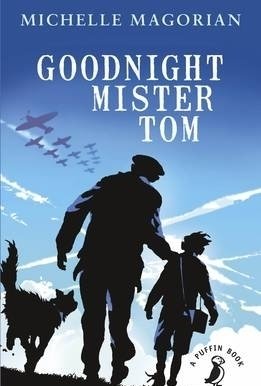

In September 1939, as Britain stands on the brink of the war, many young children from the cities are evacuated tot he countryside to escape an imminent German bombardment. Willie Beech, a boy from Deptford who is physically and emotionally abused by his mother, arrives at the home of Tom Oakley, a widower in his sixties who lives in the village of Little Weirwold. The boy is thinly clad, underfed and covered with painful bruises, and believes he is full of sin, a result of his upbringing by his mother, a domineering, insane, God-fearing widow.
"Mister Tom", as William christens his new guardian, is reclusive and bad-tempered, and as such is avoided by the community. Willie lives with him as his Mother wants him to live with someone who is either religious or lives next to a church. Though initially distant, he is touched after discovering William's home-life and treats him with kindness and understanding, helping to educate him. Under his care, William begins to thrive, forming a small circle of friends at school among his classmates including fellow-evacuee Zach. He also becomes proficient in drawing and dramatics. As William is changed by Tom, so is Tom transformed by William's presence in his home. It is revealed that Tom lost his wife and baby son to Scarlatina some 40 years previously, and he has become reclusive because of this.
The growing bond between William and Tom is threatened when William's mother requests that the boy returns to her in the city, telling him she is sick. At first, William thinks this will be a good thing, as he can be helpful to his mother. However, his mother is not pleased to learn the details of his time with Tom, feeling that he has not been disciplined properly. While William has been away, she has become pregnant and had a girl, but is neglecting the baby. After a bad reunion, where his mother becomes furious upon learning the details of her son's life with Tom, abhorring his association with the Jewish Zach among other things, she hits William and puts him in the under-stairs cupboard, chains him to the piping. William regains consciousness briefly to find himself in the cupboard – he has been stripped of his clothes, minus his underwear, and his ankle is twisted. He quietly sobs for Tom, before he falls asleep.
Back in Little Weirwold, Tom has a premonition that something is not right with William. Although he has never travelled beyond his immediate locality, he ventures into London and eventually locates William's neighbourhood of Deptford and his home. He persuades a local policeman to break down the door of the apparently empty home, to be greeted with a vile stench. They find William in the closet with the baby, who had also been locked under the stairs by William's mother and has now died. William is malnourished and badly bruised as he had been locked under the stairs for a number of days. William is hospitalised, but whilst there suffers horrific nightmares and is drugged simply to prevent his screams from disturbing other children. Tom is warned that it is likely that William will be taken to a children's home, and, unable to observe William's distress any longer, kidnaps him from the hospital and takes him back to Little Weirwold.
Back with Mister Tom, William is much damaged by his ordeal and is also blaming himself for the death of his sister as he had not been able to provide enough milk to feed her whilst locked away, and becomes very depressed. Later, when his favourite teacher Annie Hartridge has a baby, William is shocked to learn from Zach that a woman cannot conceive a child on her own, and realises that his mother was having a relationship with a man, even though she had previously told him that it was wrong for unmarried couples to live together or have children together (something which society in general had regarded as unacceptable at this time). Tom is traced by the authorities, who have come to tell William that his mother is dead, having committed suicide. They also offer him a place in a children's home, as they've been unable to trace any other relatives who may have been able to take care of him. Luckily the authorities realise that William has already found a good home and allow Tom to adopt him.
Tom, William and Zach then enjoy a holiday at the seaside village of Salmouth, where they stay in the house of a widow whose sons have been sent out to war. Zach then receives news that his father has been injured by a German bomb in London and he hurries home on the next train saying farewell to all his friends. Unfortunately this is the last time they see him. William later learns that Zach has been killed and is grief-stricken for some time, but his grief is later healed by another recluse, Geoffery Sanderton. Geoffery, a young man who had lost a leg during the war and takes William for private art lessons,recognises the signs of grief and gives William a pipe to paint along with a picture of two smiling young men. One of the men is Geoffery and he tells William about the loss of his own best friend, the other man in the picture and the owner of the pipe. This is when William starts to come to terms with Zach's death. Adding to this, Doctor Little, the village doctor, who was Zach's guardian while he was evacuated, is surprised but pleased when William asks to have Zach's bike. Through learning to ride it, William realises that Zach lives on inside him and he will never forget his wonderful companion that Zach was.
In the months following, William grows closer to Carrie, one of his friends. One night, on returning home to Tom (whom he now calls "Dad"), he thinks back on how much he has changed since arriving in Little Weirwold and realises that he is growing.
Goodnight Mr Tom Wiki.
Goodnight Mr Tom was published by Kestrel in 1981 and later on in that same year in the US by Harper and Row. The book won Author Michelle Magorian the annual Guardian Children's fiction prize. Magorian was also a runner up for the Carnegie Medal. The book has been adapted as a Movie, a play and a musical. The most recent theatrical adaption won the Laurence Olivier award for Best Entertainment.
I came across the book when I was 10/11 years old. I needed the book for English at primary school, since we needed to read the book and complete a series of assignments for our teacher. I have in the subsequent years read and re-read the book. The book is rather good and I recommand it for children from the ages of 9/10 upwards. The book is a good representation of what happened during WW2 in a fictional setting. And William and Mr Tom healing each other from what they both experienced (Tom loosing family to Scarlatina and William being abused by his mother). I give the book an 8/10.
"Mister Tom", as William christens his new guardian, is reclusive and bad-tempered, and as such is avoided by the community. Willie lives with him as his Mother wants him to live with someone who is either religious or lives next to a church. Though initially distant, he is touched after discovering William's home-life and treats him with kindness and understanding, helping to educate him. Under his care, William begins to thrive, forming a small circle of friends at school among his classmates including fellow-evacuee Zach. He also becomes proficient in drawing and dramatics. As William is changed by Tom, so is Tom transformed by William's presence in his home. It is revealed that Tom lost his wife and baby son to Scarlatina some 40 years previously, and he has become reclusive because of this.
The growing bond between William and Tom is threatened when William's mother requests that the boy returns to her in the city, telling him she is sick. At first, William thinks this will be a good thing, as he can be helpful to his mother. However, his mother is not pleased to learn the details of his time with Tom, feeling that he has not been disciplined properly. While William has been away, she has become pregnant and had a girl, but is neglecting the baby. After a bad reunion, where his mother becomes furious upon learning the details of her son's life with Tom, abhorring his association with the Jewish Zach among other things, she hits William and puts him in the under-stairs cupboard, chains him to the piping. William regains consciousness briefly to find himself in the cupboard – he has been stripped of his clothes, minus his underwear, and his ankle is twisted. He quietly sobs for Tom, before he falls asleep.
Back in Little Weirwold, Tom has a premonition that something is not right with William. Although he has never travelled beyond his immediate locality, he ventures into London and eventually locates William's neighbourhood of Deptford and his home. He persuades a local policeman to break down the door of the apparently empty home, to be greeted with a vile stench. They find William in the closet with the baby, who had also been locked under the stairs by William's mother and has now died. William is malnourished and badly bruised as he had been locked under the stairs for a number of days. William is hospitalised, but whilst there suffers horrific nightmares and is drugged simply to prevent his screams from disturbing other children. Tom is warned that it is likely that William will be taken to a children's home, and, unable to observe William's distress any longer, kidnaps him from the hospital and takes him back to Little Weirwold.
Back with Mister Tom, William is much damaged by his ordeal and is also blaming himself for the death of his sister as he had not been able to provide enough milk to feed her whilst locked away, and becomes very depressed. Later, when his favourite teacher Annie Hartridge has a baby, William is shocked to learn from Zach that a woman cannot conceive a child on her own, and realises that his mother was having a relationship with a man, even though she had previously told him that it was wrong for unmarried couples to live together or have children together (something which society in general had regarded as unacceptable at this time). Tom is traced by the authorities, who have come to tell William that his mother is dead, having committed suicide. They also offer him a place in a children's home, as they've been unable to trace any other relatives who may have been able to take care of him. Luckily the authorities realise that William has already found a good home and allow Tom to adopt him.
Tom, William and Zach then enjoy a holiday at the seaside village of Salmouth, where they stay in the house of a widow whose sons have been sent out to war. Zach then receives news that his father has been injured by a German bomb in London and he hurries home on the next train saying farewell to all his friends. Unfortunately this is the last time they see him. William later learns that Zach has been killed and is grief-stricken for some time, but his grief is later healed by another recluse, Geoffery Sanderton. Geoffery, a young man who had lost a leg during the war and takes William for private art lessons,recognises the signs of grief and gives William a pipe to paint along with a picture of two smiling young men. One of the men is Geoffery and he tells William about the loss of his own best friend, the other man in the picture and the owner of the pipe. This is when William starts to come to terms with Zach's death. Adding to this, Doctor Little, the village doctor, who was Zach's guardian while he was evacuated, is surprised but pleased when William asks to have Zach's bike. Through learning to ride it, William realises that Zach lives on inside him and he will never forget his wonderful companion that Zach was.
In the months following, William grows closer to Carrie, one of his friends. One night, on returning home to Tom (whom he now calls "Dad"), he thinks back on how much he has changed since arriving in Little Weirwold and realises that he is growing.
Goodnight Mr Tom Wiki.
Goodnight Mr Tom was published by Kestrel in 1981 and later on in that same year in the US by Harper and Row. The book won Author Michelle Magorian the annual Guardian Children's fiction prize. Magorian was also a runner up for the Carnegie Medal. The book has been adapted as a Movie, a play and a musical. The most recent theatrical adaption won the Laurence Olivier award for Best Entertainment.
I came across the book when I was 10/11 years old. I needed the book for English at primary school, since we needed to read the book and complete a series of assignments for our teacher. I have in the subsequent years read and re-read the book. The book is rather good and I recommand it for children from the ages of 9/10 upwards. The book is a good representation of what happened during WW2 in a fictional setting. And William and Mr Tom healing each other from what they both experienced (Tom loosing family to Scarlatina and William being abused by his mother). I give the book an 8/10.
tapestry100 (306 KP) rated The Marsh King's Daughter in Books
Aug 2, 2017
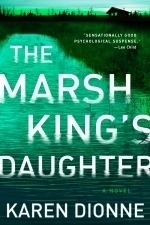
Originally reviewed on http://www.frommybookshelf.com
Helena Pelletier's life is more or less exactly what she wants: a husband and two daughters she loves deeply, a home business that keeps her busy during the days, her past a secret that she keeps hidden from everyone. Helena has worked hard for these things and she prides herself in her accomplishments, until the day her father escapes from prison and she immediately understands that her past is going to catch up to her, whether she wants it to or not. She also knows that the only way to keep her family safe and put her father back in prison is to find and deal with her father herself, since he was the one who trained her to live in the marshes of Michigan's Upper Peninsula, where he was keeping her mother captive after he had kidnapped her as a young girl.
With the main part of the story taking place over 24 hours "real time" with Helena tracking her father, the actual meat of the story all takes place in flashbacks as Helena thinks back on her childhood in the marshes of the UP and how her father treated her and her mother, who her father kidnapped as a young girl and made his wife. As she closes in on her father, she goes over various aspects of the only life she knew as a child, until her mother's past starts to catch up to her and Helena realizes that much of her life has been a lie perpetrated by both her father and mother and isn't exactly what they told her it was. As she grows older and finally starts to understand that even though this is the only life she's ever known, it may not be the life that either she or her mother deserves, and when she finally escapes her father's control she discovers that there is in fact an entire world she never knew about outside the marsh.
To be honest, the story of Helena's childhood is what really makes this book. Personally, I felt the entire portion of the book that is taking place in "real time" where Helena knows that she's the only one who can find her father, regardless of the large police force searching for him, and that she knows exactly where to look for him in the entire area surrounding her home and the prison he escaped from all seemed far to convenient, and only plausible in order to make this portion of the story move forward. Helena's memories of her childhood and the psychological aspects of being a child who has been raised in an extreme situation, but one that seems normal to her only because it's all that she knows, was fascinating. Her recollections of her father teaching her how to hunt and live in the wilderness, and her childhood idolization of him in this respect juxtaposed against her later feeling towards him as she starts to mature and gain some sense of adolescent independence, and her eventual discovery that her whole life has been based on lies and the kidnapping of her mother, was remarkable storytelling, and Karen Dionne delivers this entire sequence of events deftly and with sharp storytelling. While the "real time" story requires quite a hefty amount of suspension of disbelief, the background story well makes up for this and creates a truly mesmerizing and atmospheric story that will keep you up late into the night, turning the page for more.
Helena Pelletier's life is more or less exactly what she wants: a husband and two daughters she loves deeply, a home business that keeps her busy during the days, her past a secret that she keeps hidden from everyone. Helena has worked hard for these things and she prides herself in her accomplishments, until the day her father escapes from prison and she immediately understands that her past is going to catch up to her, whether she wants it to or not. She also knows that the only way to keep her family safe and put her father back in prison is to find and deal with her father herself, since he was the one who trained her to live in the marshes of Michigan's Upper Peninsula, where he was keeping her mother captive after he had kidnapped her as a young girl.
With the main part of the story taking place over 24 hours "real time" with Helena tracking her father, the actual meat of the story all takes place in flashbacks as Helena thinks back on her childhood in the marshes of the UP and how her father treated her and her mother, who her father kidnapped as a young girl and made his wife. As she closes in on her father, she goes over various aspects of the only life she knew as a child, until her mother's past starts to catch up to her and Helena realizes that much of her life has been a lie perpetrated by both her father and mother and isn't exactly what they told her it was. As she grows older and finally starts to understand that even though this is the only life she's ever known, it may not be the life that either she or her mother deserves, and when she finally escapes her father's control she discovers that there is in fact an entire world she never knew about outside the marsh.
To be honest, the story of Helena's childhood is what really makes this book. Personally, I felt the entire portion of the book that is taking place in "real time" where Helena knows that she's the only one who can find her father, regardless of the large police force searching for him, and that she knows exactly where to look for him in the entire area surrounding her home and the prison he escaped from all seemed far to convenient, and only plausible in order to make this portion of the story move forward. Helena's memories of her childhood and the psychological aspects of being a child who has been raised in an extreme situation, but one that seems normal to her only because it's all that she knows, was fascinating. Her recollections of her father teaching her how to hunt and live in the wilderness, and her childhood idolization of him in this respect juxtaposed against her later feeling towards him as she starts to mature and gain some sense of adolescent independence, and her eventual discovery that her whole life has been based on lies and the kidnapping of her mother, was remarkable storytelling, and Karen Dionne delivers this entire sequence of events deftly and with sharp storytelling. While the "real time" story requires quite a hefty amount of suspension of disbelief, the background story well makes up for this and creates a truly mesmerizing and atmospheric story that will keep you up late into the night, turning the page for more.

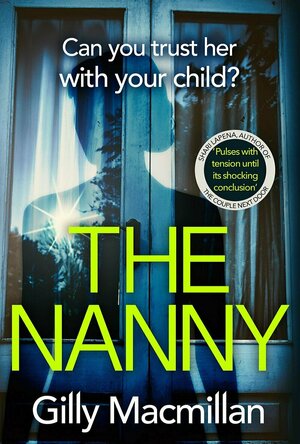

After the death of her husband, Jocelyn "Jo" must return home with her ten-year-old daughter, Ruby. His death has left her in financial trouble, and she has no choice but to head back to Lake Hall, the aristocratic home she shared with her parents when growing up. It's a far cry from California where she lived with Chris and Ruby, escaping a stifling childhood with her mother. Jo's happiest childhood memories involve her nanny, Hannah, but Hannah disappeared suddenly one summer when Jo was seven. Her mother blamed Jo, and the two never repaired their relationship. Back now, thirty years later, Jo must deal with her mother and their fractured relationship. And when she and Ruby find a skull in the lake behind the house, she begins to wonder exactly what happened to Hannah. Jo isn't sure of anything anymore, or who she can trust, even her own memories.
"I'll never be able to change this place, but if we stay here long enough, I'm afraid it will change my daughter and me."
I've loved Gilly Macmillan and her books since I won one of them in a Librarything giveaway a few years ago. She's an excellent writer, and I quite enjoy how different each book is from the next. This one was very different and quite unexpected. It's told from a variety of alternating viewpoints--the primary ones being Jocelyn and her mother, Virginia, but we even get a local policeman and a mysterious woman dating back to the 1970s. I liked the way Macmillan wove all of of these perspectives together. At first, it seemed really easy to trust everyone, and then quickly, you realize that you can't be sure if you can believe either Jo or her mother.
I don't want to go too far or reveal too much, because it's probably better to let most of the plot reveal itself organically, but it's definitely easy to say that much of the book is a little befuddling (in a good way). I found myself drawn to Ruby, the young girl, and oddly, Virginia, despite her history as a pretty terrible parent. Jo frustrated me, with her somewhat naive nature. She would trust some things at face value, yet not others, and I wanted to shake her at points.
There are definitely some convoluted plot points in this one--there's quite a saga with the Holt legacy. I didn't really question it while I was reading, but after, I find myself wondering if it was all necessary. Still, I loved reading about the slightly faded grandeur of Lake Hall--it's just not something you get in America, and it's fun to picture when you read these type of novels. Macmillan does an excellent job of portraying her characters and the setting.
I definitely was caught up in the plot. I thought I had it figured out for a while, then I realized I didn't, and then the ending was a little crazy. I'm still not a 100% sure about it, but I appreciate Macmillan for embracing it. Overall, I enjoyed the varying viewpoints and the slightly fusty, aristocratic setting. I was interested in the characters and wondering what happened with Hannah. A few things seemed a little far-fetched, hence my 3.5-star rating, but still a good read.
"I'll never be able to change this place, but if we stay here long enough, I'm afraid it will change my daughter and me."
I've loved Gilly Macmillan and her books since I won one of them in a Librarything giveaway a few years ago. She's an excellent writer, and I quite enjoy how different each book is from the next. This one was very different and quite unexpected. It's told from a variety of alternating viewpoints--the primary ones being Jocelyn and her mother, Virginia, but we even get a local policeman and a mysterious woman dating back to the 1970s. I liked the way Macmillan wove all of of these perspectives together. At first, it seemed really easy to trust everyone, and then quickly, you realize that you can't be sure if you can believe either Jo or her mother.
I don't want to go too far or reveal too much, because it's probably better to let most of the plot reveal itself organically, but it's definitely easy to say that much of the book is a little befuddling (in a good way). I found myself drawn to Ruby, the young girl, and oddly, Virginia, despite her history as a pretty terrible parent. Jo frustrated me, with her somewhat naive nature. She would trust some things at face value, yet not others, and I wanted to shake her at points.
There are definitely some convoluted plot points in this one--there's quite a saga with the Holt legacy. I didn't really question it while I was reading, but after, I find myself wondering if it was all necessary. Still, I loved reading about the slightly faded grandeur of Lake Hall--it's just not something you get in America, and it's fun to picture when you read these type of novels. Macmillan does an excellent job of portraying her characters and the setting.
I definitely was caught up in the plot. I thought I had it figured out for a while, then I realized I didn't, and then the ending was a little crazy. I'm still not a 100% sure about it, but I appreciate Macmillan for embracing it. Overall, I enjoyed the varying viewpoints and the slightly fusty, aristocratic setting. I was interested in the characters and wondering what happened with Hannah. A few things seemed a little far-fetched, hence my 3.5-star rating, but still a good read.

Night Reader Reviews (683 KP) rated The Dark Prince: The Beginning in Books
Jan 10, 2020
Honest Review for Free Copy of Book
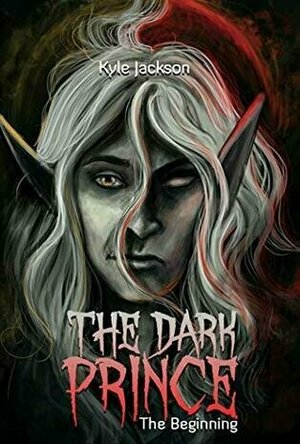
The Dark Prince by Kyle Jackson contains elves, both dark, and light (but not the kind that helps Santa), can be found as main characters in this story. There are also dwarves, gods, dragons, and fae. Demons from the lower planes even make large appearances at various times.
The first book in The Dark Prince series introduces readers to Prince Lexxendae Tal’ Dier, a half-dark elf and half demi-god. His mother is Xeron, a demi-goddess exiled to the mortal plane by the other gods due to her being cruel to humans. She ends up marrying the King of the dark elves and gives him three sons. Price Lexxendae is the eldest of the three princes but he wars with his other evil personality. With the help of Segromor, a necromancer, and a friend of his father, Lexxendae learns how to create a mental barrier to hold back his evil side.
Xeron frames Lexxendae for the murder of his father in an attempt to get Lexxendae out of her way in her quest for more power. Segromor saves Lexxendae and sets him on a great quest for a legendary weapon that can kill a god. While Lexxendae is on his journey and making some surprising new friends his brothers are reluctantly teaming up to fight a new evil that threatens the entire island. Xeron is slowly losing her mind and questioning her choices in turning away or destroying everyone who cared about her and tried to get close to her. Meanwhile, on the realm of the gods they are watching all this unfold on their human children and some are starting to talk of rebelling.
What I liked best was that while I thought the story would drop Lex’s mother in favor of Lex himself I was surprised to find it just branched off instead. Lex’s mother played an important role in the entire story. Also seeing what the Gods were thinking about regarding the events playing out on Earth was interesting. Even though the Gods sent Lex’s mother to Earth they still regularly watched her instead of just leaving the humans to our fate. What I did not like all that much was once Lex’s brothers go to war the book seriously begins to drag. Lex’s journey keeps its pace nicely yet the rest of the book seems to lose its speed. There were also numerous places where the tense of words was so wrong that it was extremely obvious, even to me.
The target readers for this book are teens and young adults who enjoy fantasy. Even though the story is about a Prince it is not a mushy love story in any way and it will interest most anyone. There is one minor sex scene that readers should be aware of. Overall I give this book a rating of 3 out of 4. This book contains all the elements of most fantasy stories. The plotline is strong while multiple branches are being told at the same time. The war slowing down the pace of the book and the errors that even I noticed is why I did not give the book a perfect score.
https://www.facebook.com/nightreaderreviews
The first book in The Dark Prince series introduces readers to Prince Lexxendae Tal’ Dier, a half-dark elf and half demi-god. His mother is Xeron, a demi-goddess exiled to the mortal plane by the other gods due to her being cruel to humans. She ends up marrying the King of the dark elves and gives him three sons. Price Lexxendae is the eldest of the three princes but he wars with his other evil personality. With the help of Segromor, a necromancer, and a friend of his father, Lexxendae learns how to create a mental barrier to hold back his evil side.
Xeron frames Lexxendae for the murder of his father in an attempt to get Lexxendae out of her way in her quest for more power. Segromor saves Lexxendae and sets him on a great quest for a legendary weapon that can kill a god. While Lexxendae is on his journey and making some surprising new friends his brothers are reluctantly teaming up to fight a new evil that threatens the entire island. Xeron is slowly losing her mind and questioning her choices in turning away or destroying everyone who cared about her and tried to get close to her. Meanwhile, on the realm of the gods they are watching all this unfold on their human children and some are starting to talk of rebelling.
What I liked best was that while I thought the story would drop Lex’s mother in favor of Lex himself I was surprised to find it just branched off instead. Lex’s mother played an important role in the entire story. Also seeing what the Gods were thinking about regarding the events playing out on Earth was interesting. Even though the Gods sent Lex’s mother to Earth they still regularly watched her instead of just leaving the humans to our fate. What I did not like all that much was once Lex’s brothers go to war the book seriously begins to drag. Lex’s journey keeps its pace nicely yet the rest of the book seems to lose its speed. There were also numerous places where the tense of words was so wrong that it was extremely obvious, even to me.
The target readers for this book are teens and young adults who enjoy fantasy. Even though the story is about a Prince it is not a mushy love story in any way and it will interest most anyone. There is one minor sex scene that readers should be aware of. Overall I give this book a rating of 3 out of 4. This book contains all the elements of most fantasy stories. The plotline is strong while multiple branches are being told at the same time. The war slowing down the pace of the book and the errors that even I noticed is why I did not give the book a perfect score.
https://www.facebook.com/nightreaderreviews

Lottie disney bookworm (1056 KP) rated Lost Property in Books
Jul 2, 2021
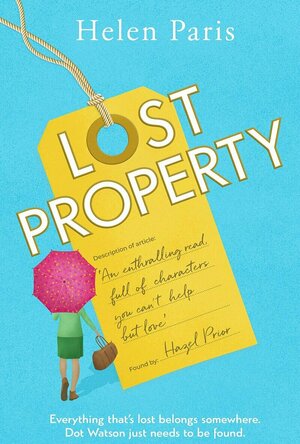
Dot Watson works in the TfL Lost Property office, meticulously labelling items found on London’s public transport in the hope of reuniting them with their owner. However, it soon becomes apparent that it is Dot who is lost, grieving the loss of her father to suicide, her mother to dementia and her ever-deteriorating relationship with her sister.
What isn’t initially clear is why Dot feels guilt-ridden by her father’s suicide but Paris carefully peels back the layers of Dot and her family’s lives to expose their loss, their love and their vulnerability.
Dot herself is fastidious in details, finding safety in rules, routine and order. Her safe words (Sellotape, safety pin, superglue) echo through the novel with no real context except to calm Dot, to allow her to keep everything together and in place. In contrast to this, Dot is clearly falling apart.
Dot’s life is already poles apart from what she envisioned for herself but circumstances cause her to fall further and start looking for an escape: an escape that she finds amongst the stacks of unclaimed items, with a little help from a bottle of absinthe!
Dot’s hallucinations do cause moments of humour but more than this they portray her raw grief and her depression. Dot tries to find a story behind every item in the stacks, to give the item an identity, an owner, a purpose. But what she is really looking for is her identity, her purpose. She passionately fights for these items, believing that their worth surpasses monetary value, but she cannot apply this to herself until it is almost too late.
The characters surrounding Dot serve to reflect how isolated she has made herself.
Our protagonist has few friends in her social circle and those that she does have seem to be work friends, in whom she often finds criticism. I really appreciated the roles of characters such as Anita, she never stopped inviting Dot to events even when Dot had refused several times before. Anita is the perfect model for a friend of someone with depression: keep showing up, keep listening and never give up.
Dot’s mother, Gail, has dementia and has recently moved out of the maisonette she shared with Dot and into a care home. The relationship between mother and daughter has never been as close as the bond Dot had with her father but Dot’s memories of her mother slowly unfurl into the recognition and acceptance of her as a person and a protector, rather than the background character she has always assumed her mother to be.
Dot’s sister Philippa seems to be a bit of a steamroller of a character at first, bossy and controlling in that she plans to sell the maisonette and thus make Dot homeless. However, Philippa finds her spotlight in the final few chapters, perhaps because Dot allows herself to see her sister properly and acknowledge the life and pain that they both shared. The resulting love between the two sisters is heart-warming.
Lost Property is heart-breakingly honest and open. I laughed and, as someone coming to terms with a dementia diagnosis within the family, I cried my little heart out. I frankly couldn’t believe Lost Property is Helen Paris’ debut novel. This is the most emotive book I have read this year.
Thank you to Bookstagrammers.com, Helen Paris and Penguin Random House UK for gifting me a hard copy of this book in exchange for an honest review.
What isn’t initially clear is why Dot feels guilt-ridden by her father’s suicide but Paris carefully peels back the layers of Dot and her family’s lives to expose their loss, their love and their vulnerability.
Dot herself is fastidious in details, finding safety in rules, routine and order. Her safe words (Sellotape, safety pin, superglue) echo through the novel with no real context except to calm Dot, to allow her to keep everything together and in place. In contrast to this, Dot is clearly falling apart.
Dot’s life is already poles apart from what she envisioned for herself but circumstances cause her to fall further and start looking for an escape: an escape that she finds amongst the stacks of unclaimed items, with a little help from a bottle of absinthe!
Dot’s hallucinations do cause moments of humour but more than this they portray her raw grief and her depression. Dot tries to find a story behind every item in the stacks, to give the item an identity, an owner, a purpose. But what she is really looking for is her identity, her purpose. She passionately fights for these items, believing that their worth surpasses monetary value, but she cannot apply this to herself until it is almost too late.
The characters surrounding Dot serve to reflect how isolated she has made herself.
Our protagonist has few friends in her social circle and those that she does have seem to be work friends, in whom she often finds criticism. I really appreciated the roles of characters such as Anita, she never stopped inviting Dot to events even when Dot had refused several times before. Anita is the perfect model for a friend of someone with depression: keep showing up, keep listening and never give up.
Dot’s mother, Gail, has dementia and has recently moved out of the maisonette she shared with Dot and into a care home. The relationship between mother and daughter has never been as close as the bond Dot had with her father but Dot’s memories of her mother slowly unfurl into the recognition and acceptance of her as a person and a protector, rather than the background character she has always assumed her mother to be.
Dot’s sister Philippa seems to be a bit of a steamroller of a character at first, bossy and controlling in that she plans to sell the maisonette and thus make Dot homeless. However, Philippa finds her spotlight in the final few chapters, perhaps because Dot allows herself to see her sister properly and acknowledge the life and pain that they both shared. The resulting love between the two sisters is heart-warming.
Lost Property is heart-breakingly honest and open. I laughed and, as someone coming to terms with a dementia diagnosis within the family, I cried my little heart out. I frankly couldn’t believe Lost Property is Helen Paris’ debut novel. This is the most emotive book I have read this year.
Thank you to Bookstagrammers.com, Helen Paris and Penguin Random House UK for gifting me a hard copy of this book in exchange for an honest review.