
Search
Search results

Ross (3284 KP) rated Free the Darkness in Books
Nov 14, 2018


The premise (1 more)
The flow of the story
The omnipresent narrator (2 more)
The mother of all "Mary Sue"s
The plot seems to be a secret
Very readable but with some sizeable flaws
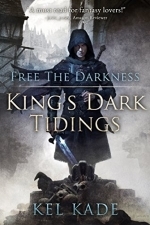
Rezkin has grown up isolated in a fort, trained to be the most powerful weapons-master, most skilful assassin, most adept spy. At the age of 19 he is told his training is complete and the final task is to kill all of his trainers. All but one fall to his sword. With no idea of the outside world or what he is then meant to do, he travels to track down the final trainer who escaped.
So far so good.
However, this has little bearing on the rest of the plot, as Rezkin uses his skills to become head of thieves and assassins guilds, while supposedly tracking down this missing trainer. This is pitched as being his plan all along, but there is no advance warning of this anywhere. If he is somehow like some sort of sleeper agent who has been hypnotised to forget his plot and is suddenly triggered then this is not made clear at all. It really comes across as the author making it up as he went along.
As Rezkin travels, he meets men (generally all clichés - from the honourable but humble soldier to the bumbling sidekick) and women (even more clichéd as all fall for him and become obsessed with him) and travels with a group, dispatching all attackers in the blink of an eye.
I really hate when journalists try not to use someone's name repeatedly, so refer to them as "the veteran" or "the midfield ace" or "the businessman". Kade does this a lot, as Rezkin is referred to as "the young warrior" repeatedly and it really jars and annoys. This is partly due to the narrator being omnipresent, rather than the book being told from one or a number of points of view, so it has to be made clear who is being referred to a lot, but it is somewhat badly executed.
Similarly, the book could do with a serious proof-read as there are a number of grammatical errors and typos throughout.
Some of the sections of the book are excellent, the fight scenes (although Rezkin never being hit by anyone gets old really quick) and his night prowling are well described and excellent.
There is some use of magic in the book which is somewhat clumsy and throwaway and comes across as complete nonsense (somehow just thinking about an alarm and wrapping a thought around it will make it not go off?!), it really adds nothing to the book other than a way out of impossible situations.
I really enjoyed reading this book, and will be reading the other 3 in the series in short order, but the author fell into so many pitfalls that it does get annoying. I really hope he fixed these in the following books and they live up to the promise of the series. I also hope someone finally manages to even hit Rezkin in a fight, I don't really want to read fight scenes where there is no jeopardy.
So far so good.
However, this has little bearing on the rest of the plot, as Rezkin uses his skills to become head of thieves and assassins guilds, while supposedly tracking down this missing trainer. This is pitched as being his plan all along, but there is no advance warning of this anywhere. If he is somehow like some sort of sleeper agent who has been hypnotised to forget his plot and is suddenly triggered then this is not made clear at all. It really comes across as the author making it up as he went along.
As Rezkin travels, he meets men (generally all clichés - from the honourable but humble soldier to the bumbling sidekick) and women (even more clichéd as all fall for him and become obsessed with him) and travels with a group, dispatching all attackers in the blink of an eye.
I really hate when journalists try not to use someone's name repeatedly, so refer to them as "the veteran" or "the midfield ace" or "the businessman". Kade does this a lot, as Rezkin is referred to as "the young warrior" repeatedly and it really jars and annoys. This is partly due to the narrator being omnipresent, rather than the book being told from one or a number of points of view, so it has to be made clear who is being referred to a lot, but it is somewhat badly executed.
Similarly, the book could do with a serious proof-read as there are a number of grammatical errors and typos throughout.
Some of the sections of the book are excellent, the fight scenes (although Rezkin never being hit by anyone gets old really quick) and his night prowling are well described and excellent.
There is some use of magic in the book which is somewhat clumsy and throwaway and comes across as complete nonsense (somehow just thinking about an alarm and wrapping a thought around it will make it not go off?!), it really adds nothing to the book other than a way out of impossible situations.
I really enjoyed reading this book, and will be reading the other 3 in the series in short order, but the author fell into so many pitfalls that it does get annoying. I really hope he fixed these in the following books and they live up to the promise of the series. I also hope someone finally manages to even hit Rezkin in a fight, I don't really want to read fight scenes where there is no jeopardy.

Hazel (1853 KP) rated The Crown (The Selection, #5) in Books
Dec 17, 2018
3.5 stars
<i>This ebook was provided by the publisher via NetGalley in exchange for an honest review </i>
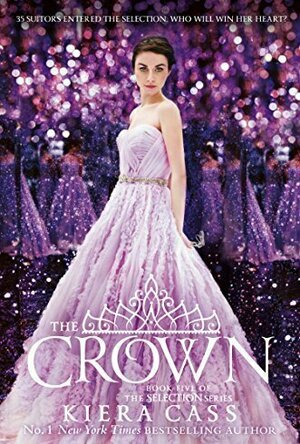
So here it is, the latest (final?) book of <i>The Selection</i> series by popular young adult author Kiera Cass. <i>The Crown</i> continues from the exact place that the previous book, <i>The Heir</i>, left off, with Queen America having suffered a heart attack, and Eadlyn’s twin brother running off to France after secretly marrying. Regardless of the personal troubles, the royal family must keep on running the country of Illéa, however this means that great responsibilities are now resting on teenage Eadlyn’s shoulders.
Readers will already know that the wife, or in this instance husband, of the heir of the throne is chosen through a selection process. Thirty-five suitors were randomly selected from thousands of applicants to try and win the princess’ heart. The boys have been narrowed down to six, but Eadlyn has more pressing issues to worry about. Naturally she is concerned about her mother’s health and sad about being separated from her twin, but the biggest thing on her mind is being named regent whilst her father stays by his wife’s bedside. Eadlyn must temporarily rule like a queen, which is easier said than done.
There is less focus on the selection process in <i>The Crown</i> than there was in the first three novels – where America was eventually selected to become Prince Maxon’s bride. Primarily this is because Eadlyn’s heart is not in it. She does not love any of the elite – the top contestants – and it is only for public appearances that she continues with the game. What Kiera Cass emphasizes in this novel is that being a princess is not all parties and money and power. Instead it is hard work, physically and emotionally exhausting, and almost impossible to be your own person. Initially Eadlyn was viewed as a cold-hearted, spoilt child, but her new responsibilities open her eyes to the ways of the world, revealing her better nature to the people of Illéa.
Unfortunately it needs to be said that <i>The Crown</i> does not quite live up to the rest of the books in the series. The idea of a selection process feels old and over done, and Eadlyn’s personality does not quite work for a romance novel. The conclusion of the book appeared to happen a bit too suddenly, and also rather conveniently. What should have resulted in protest or at least disappointment for a few of the characters became something that was easily accepted instead. Not entirely realistic.
On the other hand, the ending is what most readers will have wished for, myself included, so must not complain too much. It is great to be reunited with the lovely characters, particularly the thoughtful and kind selected suitors, and Eadlyn’s sweet younger brothers. They are the types of people you would feel blessed to know in real life. All in all, <i>The Crown</i> is likely to put a smile on your face.
<i>This ebook was provided by the publisher via NetGalley in exchange for an honest review </i>
So here it is, the latest (final?) book of <i>The Selection</i> series by popular young adult author Kiera Cass. <i>The Crown</i> continues from the exact place that the previous book, <i>The Heir</i>, left off, with Queen America having suffered a heart attack, and Eadlyn’s twin brother running off to France after secretly marrying. Regardless of the personal troubles, the royal family must keep on running the country of Illéa, however this means that great responsibilities are now resting on teenage Eadlyn’s shoulders.
Readers will already know that the wife, or in this instance husband, of the heir of the throne is chosen through a selection process. Thirty-five suitors were randomly selected from thousands of applicants to try and win the princess’ heart. The boys have been narrowed down to six, but Eadlyn has more pressing issues to worry about. Naturally she is concerned about her mother’s health and sad about being separated from her twin, but the biggest thing on her mind is being named regent whilst her father stays by his wife’s bedside. Eadlyn must temporarily rule like a queen, which is easier said than done.
There is less focus on the selection process in <i>The Crown</i> than there was in the first three novels – where America was eventually selected to become Prince Maxon’s bride. Primarily this is because Eadlyn’s heart is not in it. She does not love any of the elite – the top contestants – and it is only for public appearances that she continues with the game. What Kiera Cass emphasizes in this novel is that being a princess is not all parties and money and power. Instead it is hard work, physically and emotionally exhausting, and almost impossible to be your own person. Initially Eadlyn was viewed as a cold-hearted, spoilt child, but her new responsibilities open her eyes to the ways of the world, revealing her better nature to the people of Illéa.
Unfortunately it needs to be said that <i>The Crown</i> does not quite live up to the rest of the books in the series. The idea of a selection process feels old and over done, and Eadlyn’s personality does not quite work for a romance novel. The conclusion of the book appeared to happen a bit too suddenly, and also rather conveniently. What should have resulted in protest or at least disappointment for a few of the characters became something that was easily accepted instead. Not entirely realistic.
On the other hand, the ending is what most readers will have wished for, myself included, so must not complain too much. It is great to be reunited with the lovely characters, particularly the thoughtful and kind selected suitors, and Eadlyn’s sweet younger brothers. They are the types of people you would feel blessed to know in real life. All in all, <i>The Crown</i> is likely to put a smile on your face.
Debbiereadsbook (1836 KP) rated Two For The Road in Books
Jan 28, 2019

I loved this bookj!
Independent reviewer for Archaeolibrarian, I was gifted my copy of this book.
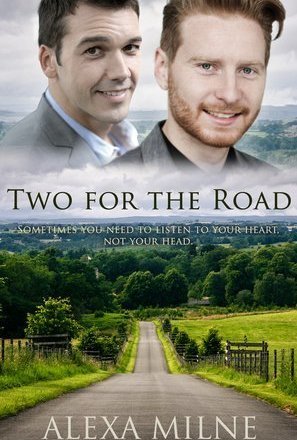
Dylan saw Riley when he was just 15, Riley was suited and booted and Dylan fell in love. At 22, Dylan manages to wrangle to lift to work with Riley, in an effort to get his man. Because Riley is HIS: Riley just needs to see it too. But Riley is 20 years older than Dylan, and Dylan's dad's best fried, even if a bit estranged. Coming back to the village he was born to spend time with his dying father was a shock to Riley's system, but a much needed one. Leaving his partner of 20 years not so much of a shock as a revelation of just what had been going on behind his back for the bigger part of that relationship. Dylan is a breath of fresh air to Riley, who is lonely after his dad passed away. Chatting on the 45 minute drive to work every day brings the two men closer, and when Dylan finally declares his intention to make Riley his, all Riley thinks about is what would Dylan's dad think. Can Riley get past the age gap?
I started reading this and I was liking it. It was shaping up nicely for a 4 star rating. Not loving, just really enjoying it. And then SOMETHING! I've no idea what happened, or who said what, but something happened and I began to LOVE this book! I loved it from that point!
Dylan is young, yes, but he is old enough to know what he wants, more importantly, WHO he wants, and Dylan WANTS Riley. Riley is his and no one else's and Dylan will fight for Riley, even if Riley is scared and worried and all those negative feelings. When Dylan finds out why Riley is scared (not cos of the age gap, that's mentioned a lot!) Dylan steps up his advances a notch and poor Riley doesn't stand a chance. But Dylan's dad catches them, and Riley pushes Dylan away, running at the first hurdle. Dylan though, he doesn't. He'll wait til Riley comes round, cos he WILL come round, just as Dylan's dad will. And they do, wonderfully.
This is one of those books that you just fall into and inhale, you know?? Not too complicated, but you have to pick up the clues about Riley's past relationship. It's not overly explicit, but it is incredibly sexy, especially when Riley's experience is bought to light, even with being in a 20 year relationship (I did NOT like that man!) There is angst and turmoil, but it's not too heavy. Just enough for you to shed a tear when Riley breaks down and cries for what could have been with Dylan.
This really is a warm and fuzzies slash too stinking cute book! It also seems to be the first I've read of Milne, so my wish list is now a little longer.
So!
5 full and shiny and COLOURFUL stars (because after 20 years of white, Riley needs colour)
**same worded review will appear elsewhere**
Dylan saw Riley when he was just 15, Riley was suited and booted and Dylan fell in love. At 22, Dylan manages to wrangle to lift to work with Riley, in an effort to get his man. Because Riley is HIS: Riley just needs to see it too. But Riley is 20 years older than Dylan, and Dylan's dad's best fried, even if a bit estranged. Coming back to the village he was born to spend time with his dying father was a shock to Riley's system, but a much needed one. Leaving his partner of 20 years not so much of a shock as a revelation of just what had been going on behind his back for the bigger part of that relationship. Dylan is a breath of fresh air to Riley, who is lonely after his dad passed away. Chatting on the 45 minute drive to work every day brings the two men closer, and when Dylan finally declares his intention to make Riley his, all Riley thinks about is what would Dylan's dad think. Can Riley get past the age gap?
I started reading this and I was liking it. It was shaping up nicely for a 4 star rating. Not loving, just really enjoying it. And then SOMETHING! I've no idea what happened, or who said what, but something happened and I began to LOVE this book! I loved it from that point!
Dylan is young, yes, but he is old enough to know what he wants, more importantly, WHO he wants, and Dylan WANTS Riley. Riley is his and no one else's and Dylan will fight for Riley, even if Riley is scared and worried and all those negative feelings. When Dylan finds out why Riley is scared (not cos of the age gap, that's mentioned a lot!) Dylan steps up his advances a notch and poor Riley doesn't stand a chance. But Dylan's dad catches them, and Riley pushes Dylan away, running at the first hurdle. Dylan though, he doesn't. He'll wait til Riley comes round, cos he WILL come round, just as Dylan's dad will. And they do, wonderfully.
This is one of those books that you just fall into and inhale, you know?? Not too complicated, but you have to pick up the clues about Riley's past relationship. It's not overly explicit, but it is incredibly sexy, especially when Riley's experience is bought to light, even with being in a 20 year relationship (I did NOT like that man!) There is angst and turmoil, but it's not too heavy. Just enough for you to shed a tear when Riley breaks down and cries for what could have been with Dylan.
This really is a warm and fuzzies slash too stinking cute book! It also seems to be the first I've read of Milne, so my wish list is now a little longer.
So!
5 full and shiny and COLOURFUL stars (because after 20 years of white, Riley needs colour)
**same worded review will appear elsewhere**

Marylegs (44 KP) rated After Before in Books
Aug 14, 2019
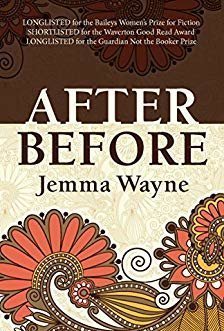
I received After Before, a while ago as a first reads book. I started it a while ago, but have recently re-picked it up and became completely engrossed by it. The pause in reading this book was not based on how engaging I found this book. But rather I was focused on other books I was reading. Once I dedicated my time to this book however, I couldnt stop. When I wasnt reading it I was thinking out it, and it was based actually about a point of history I didnt know about, or at least didnt know a lot about.
The book focuses on three women, who through chance are pulled into each others lives. There is Vera, newly engaged and newly discovering her faith in god. Her fiancé Luke, a devote Christian is helping her to change her life for the better, to move forward and overcome her past. But there is so much more to her past than she has told Luke and she finds it impossible to move on and become better while she still hold onto these secrets. Luke is Veras link to Lynn, his mother, who has found out she has terminal cancer and has to relinquish her control on the life. As she comes to terms with her illness and what will be her untimely death she relives elements of her life that she resents and was unable to achieve because of the choices she made. Vera tries to help care for Lynn, but the two cannot come to terms with each other and so Emily, originally from Rwanda, is brought in to care for Lynn. Emily is a survivor of the Rwandan genocide, and has not come to terms with all that she has seen, or what was done to her. She drifts through her life never wanting to remember her past but forever at its whim. The story flits back and forth through the present and the past for each of the three women. All with different stories but all in pain and unable to let go.
I found Emilys story the most interesting, I could have read a book just about her and how she learns to deal with the horrible event that has overtaken her life. Her flash backs are so well written, graphic in places, but dignified to the history that these people have to live with. We hear a lot about the injustice and the horror of the holocaust, which happened in the Second World War. But learning about the Rwandan Genocide through Emilys 12 year old eyes really touched me. I could feel the fear building, know what was to happen but having to control over it. Knowing that the people who were yesterday your friends are no longer that.
This is a brilliantly written book about forgiveness. That without forgiveness, whether that is for yourself, through god, or for other people, that you will not be able to move on and truly live. Would highly recommend it is however not a light-hearted or emotionally easy read.
The book focuses on three women, who through chance are pulled into each others lives. There is Vera, newly engaged and newly discovering her faith in god. Her fiancé Luke, a devote Christian is helping her to change her life for the better, to move forward and overcome her past. But there is so much more to her past than she has told Luke and she finds it impossible to move on and become better while she still hold onto these secrets. Luke is Veras link to Lynn, his mother, who has found out she has terminal cancer and has to relinquish her control on the life. As she comes to terms with her illness and what will be her untimely death she relives elements of her life that she resents and was unable to achieve because of the choices she made. Vera tries to help care for Lynn, but the two cannot come to terms with each other and so Emily, originally from Rwanda, is brought in to care for Lynn. Emily is a survivor of the Rwandan genocide, and has not come to terms with all that she has seen, or what was done to her. She drifts through her life never wanting to remember her past but forever at its whim. The story flits back and forth through the present and the past for each of the three women. All with different stories but all in pain and unable to let go.
I found Emilys story the most interesting, I could have read a book just about her and how she learns to deal with the horrible event that has overtaken her life. Her flash backs are so well written, graphic in places, but dignified to the history that these people have to live with. We hear a lot about the injustice and the horror of the holocaust, which happened in the Second World War. But learning about the Rwandan Genocide through Emilys 12 year old eyes really touched me. I could feel the fear building, know what was to happen but having to control over it. Knowing that the people who were yesterday your friends are no longer that.
This is a brilliantly written book about forgiveness. That without forgiveness, whether that is for yourself, through god, or for other people, that you will not be able to move on and truly live. Would highly recommend it is however not a light-hearted or emotionally easy read.

Gareth von Kallenbach (980 KP) rated Bendy and the Ink Machine in Video Games
Aug 14, 2019

Set in the long abandoned Joey Drew Studios, Bendy and the Ink Machine (“BatIM”) is a survival horror game with an aesthetic of classic cartoons of yesteryear. As Henry, you set about to revisit your old workshop after receiving a mysterious letter from your past employer. When Henry arrives at the shop, he finds duhn duhn duhn the Ink Machine. The Ink Machine is a rather large device that gushes out black ink and has mystical qualities. Henry then becomes trapped in the maze-like studio, though he soon finds that he is not alone. Like a creep in the shadows, Bendy, the Mickey Mouse of the Joey Drew Studios universe, is lurking. BatIM blends puzzle solving with first-person gameplay as you adventure through a studio brimming with horrors. The art style is reminiscent of Steamboat Willie, with a macabre twist. Instead of happy go-lucky little animals, we are bombarded with the sinister grin of Bendy as he emerges from the shadows.
Similar to other games with an episodic structure (e.g.: Alan Wake and Life is Strange), BatIM uses short levels to advance the story line in some intriguing ways. Love of Exploration will be your saving grace in this game, as each area requires some in order to advance to the next. The game is not fast-paced. On the contrary, it’s meant to be a slow experience for the player with sparse combat scenarios present only to add a brief moment of action. Your actions as Henry are very limited, as is his speed. With 5 chapters, the gameplay time is at just about hours, and the game uses every minute to pull you deeper into the dark world it has created.
I reviewed BatIM for the Nintendo Switch and found that the game was somewhat held back by the platform’s technical limitations. The biggest drawback I found was that textures would often blur and have jagged edges, with the shaky 30FPS frame rate just feeding fuel to this fire. This is a detriment to gaming’s purpose in keeping the players immersed in the environment. BatIM is meant to be tense, but I often found myself dispelled of the illusion due to blurry visuals and dropped frames. With a game designed so well, how unfortunate that this be its biggest flaw. Maybe this can be patched out, but we can only hope at this point.
BatIM developer, theMeatly Games, may have taken inspiration from Five Nights at Freddy’s as the gameplay and overall genre of the games are quite similar. The world is conceptualized using objects such as books and tapes found within the game instead of long cut scenes that can tend to take you out of the moment rather than add to it in games like these. As you delve deeper into the oubliette of a workshop, you’ll find that the gameplay is perfectly paired with the game’s sick and twisted visuals, proving that BatIM delivers on every level.
Bendy and the Ink Machine is available now on all major platforms.
Similar to other games with an episodic structure (e.g.: Alan Wake and Life is Strange), BatIM uses short levels to advance the story line in some intriguing ways. Love of Exploration will be your saving grace in this game, as each area requires some in order to advance to the next. The game is not fast-paced. On the contrary, it’s meant to be a slow experience for the player with sparse combat scenarios present only to add a brief moment of action. Your actions as Henry are very limited, as is his speed. With 5 chapters, the gameplay time is at just about hours, and the game uses every minute to pull you deeper into the dark world it has created.
I reviewed BatIM for the Nintendo Switch and found that the game was somewhat held back by the platform’s technical limitations. The biggest drawback I found was that textures would often blur and have jagged edges, with the shaky 30FPS frame rate just feeding fuel to this fire. This is a detriment to gaming’s purpose in keeping the players immersed in the environment. BatIM is meant to be tense, but I often found myself dispelled of the illusion due to blurry visuals and dropped frames. With a game designed so well, how unfortunate that this be its biggest flaw. Maybe this can be patched out, but we can only hope at this point.
BatIM developer, theMeatly Games, may have taken inspiration from Five Nights at Freddy’s as the gameplay and overall genre of the games are quite similar. The world is conceptualized using objects such as books and tapes found within the game instead of long cut scenes that can tend to take you out of the moment rather than add to it in games like these. As you delve deeper into the oubliette of a workshop, you’ll find that the gameplay is perfectly paired with the game’s sick and twisted visuals, proving that BatIM delivers on every level.
Bendy and the Ink Machine is available now on all major platforms.

Phil Leader (619 KP) rated The Pilgrims (Pendulum #1) in Books
Nov 25, 2019
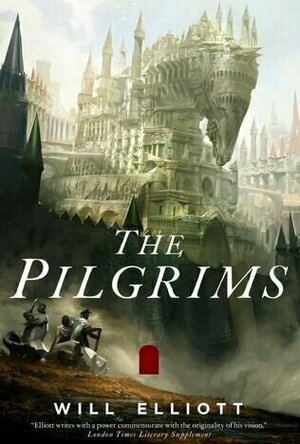

The Pilgrims is the second book by Will Elliott and the first in the Pendulum trilogy. It follows Eric (a down on his luck journalist) and Case (an old vagrant that Eric befriends) who discover that a small door under a bridge leads to a different world.
The story follows them as they travel across this new land of Levaal and encounters various inhabitants - human and other races. There has been a war simmering between The Castle - ruled by the (not to beat about the bush) insane Vous - and a coalition of still-free cities governed by their respective mayors. Eric and Case arrive just as the war is about to become a full battle, and it's clear that this is not a coincidence.
I'm always wary of fantasy books where people cross from this world into the world of the writer's imagination, it always seems like a bit of a fanboy's wet dream and sometimes it isn't handled well and leaves a lot of holes. Elliott does adequately well in addressing these - Eric (at least) does not cross by accident, the magic that brings them to the world allows them to speak the correct language and so on. Elliott also wisely immediately plunges the antagonists into action, revealing the wonders of Levaal rather than letting them frolic on some untouched green hillside.
The other notable deviation from this being any sort of wish fulfillment fantasy is that Levaal actually isn't very.... nice. Danger, intrigue and double dealing abound. Vous could be nominally labelled as the 'bad guy' but it's clearly described that he is doing what are bad things for what he considers the right reasons. There are no 'dark lords' here and by the same token the 'good guys' really aren't particularly good.
Eric and Case are not spared from this. Neither is a paragon of virtue, Eric has some distinct character flaws, which are made very clear to him by other characters and perhaps at least some of the arc of the trilogy will be Eric becoming a 'better' person. Case has served time in prison for murder and is an alcoholic, the latter fact makes him behave erratically at best.
The inhabitants of Levaal do not deviate far from stock fantasy races, but all are unique and the world does seem to fit together and work quite well as a 'real' place, I did like the mechanism of how the magic worked and its limitations. Elliott has really put some thought into this.
The writing is hard to find fault with; the descriptive passages have real atmosphere, the dialogue is sharp and always in keeping with the characters, which in themselves are complex and nobody is represented as a cipher or standard trope. The story is engaging and moves at a terrific pace, covering a lot of ground (both metaphorically and across Levaal).
The ending is a real cliff hanger with a sting in the tail and it will be interesting to see where the story goes in the next volume, Shadow.
Highly recommended, though not for younger readers due to explicit sexual references.
The story follows them as they travel across this new land of Levaal and encounters various inhabitants - human and other races. There has been a war simmering between The Castle - ruled by the (not to beat about the bush) insane Vous - and a coalition of still-free cities governed by their respective mayors. Eric and Case arrive just as the war is about to become a full battle, and it's clear that this is not a coincidence.
I'm always wary of fantasy books where people cross from this world into the world of the writer's imagination, it always seems like a bit of a fanboy's wet dream and sometimes it isn't handled well and leaves a lot of holes. Elliott does adequately well in addressing these - Eric (at least) does not cross by accident, the magic that brings them to the world allows them to speak the correct language and so on. Elliott also wisely immediately plunges the antagonists into action, revealing the wonders of Levaal rather than letting them frolic on some untouched green hillside.
The other notable deviation from this being any sort of wish fulfillment fantasy is that Levaal actually isn't very.... nice. Danger, intrigue and double dealing abound. Vous could be nominally labelled as the 'bad guy' but it's clearly described that he is doing what are bad things for what he considers the right reasons. There are no 'dark lords' here and by the same token the 'good guys' really aren't particularly good.
Eric and Case are not spared from this. Neither is a paragon of virtue, Eric has some distinct character flaws, which are made very clear to him by other characters and perhaps at least some of the arc of the trilogy will be Eric becoming a 'better' person. Case has served time in prison for murder and is an alcoholic, the latter fact makes him behave erratically at best.
The inhabitants of Levaal do not deviate far from stock fantasy races, but all are unique and the world does seem to fit together and work quite well as a 'real' place, I did like the mechanism of how the magic worked and its limitations. Elliott has really put some thought into this.
The writing is hard to find fault with; the descriptive passages have real atmosphere, the dialogue is sharp and always in keeping with the characters, which in themselves are complex and nobody is represented as a cipher or standard trope. The story is engaging and moves at a terrific pace, covering a lot of ground (both metaphorically and across Levaal).
The ending is a real cliff hanger with a sting in the tail and it will be interesting to see where the story goes in the next volume, Shadow.
Highly recommended, though not for younger readers due to explicit sexual references.
Phil Leader (619 KP) rated Truth Teller (The Truth Teller Series #1) in Books
Nov 27, 2019

Remember when you were 6 or 7 and first read The Lion The Witch And The Wardrobe? Well I do and the whole 'you could go to another realm and be special' thing was such a key to drawing me into fantasy. And at that age the whole talking animals thing was entirely in keeping with my imagination.
But if you are a little older, nicely into double figures of age. Although the escape to another realm is still a terrific idea, the talking animals are just not going to fit anymore. What you need is a bit of action and likeable characters who are realistic while still being elves and dwarves. But if Narnia is no longer a viable destination at that age, where is?
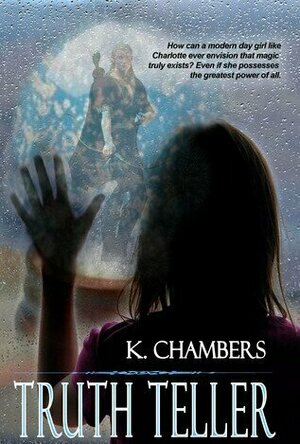
Truth Teller fits the bill perfectly. Charlotte is a normal ten year old girl on holiday with her family. While wandering around the shops of the local town she finds a strange curio shop. She finds one of the objects in the shop interesting - a sort of snow globe without any snow. The odd little man who runs the shop gives it to her for free, but warns her that the price she pays might not be of the monetary kind.
That night while studying the globe she feels if she is falling into it and finds herself in a cold woodland, where she meets Elder. Very soon it is apparent to her that she is not anywhere near where she should be, if she is even on Earth at all anymore. Elder is an elf and he and his family try to help Charlotte find her way back home. Meanwhile dark forces are stirring and rumours of invasion are spreading.
Chambers has set out to provide an entry point into fantasy for younger (female) readers and has done a sterling job. My immediate reaction to this book was that it is flawless, in idea and execution. Although perhaps a little cliched for grizzle fantasy readers like myself it contains just enough strange creatures - elves, dwarves, giant wolves and druids - and a sprinkling of magic here and there to whisk the plot along. And it is whisked at some pace too, the narrative fluid and always in motion towards the books conclusion without much of a pause for breath.
Charlotte as the main character is well written and prone to modern turns of phrase that baffle her elven friends. Elder the elf boy she meets is charming and friendly even though he is as confused by Charlotte's plight as she is. The other characters are also very well drawn.
The story entwines the various threads into a whole that is easy to read and hard to forget. Reaching the last page was something I dreaded but like a lot of things the end of this book is just the start of the story of the Truth Teller.
If anyone is looking for a first book in fantasy, without the talking animals, this book fits the bill perfectly. Narnia for the iPhone generation? It's pretty close to that.
But if you are a little older, nicely into double figures of age. Although the escape to another realm is still a terrific idea, the talking animals are just not going to fit anymore. What you need is a bit of action and likeable characters who are realistic while still being elves and dwarves. But if Narnia is no longer a viable destination at that age, where is?
Truth Teller fits the bill perfectly. Charlotte is a normal ten year old girl on holiday with her family. While wandering around the shops of the local town she finds a strange curio shop. She finds one of the objects in the shop interesting - a sort of snow globe without any snow. The odd little man who runs the shop gives it to her for free, but warns her that the price she pays might not be of the monetary kind.
That night while studying the globe she feels if she is falling into it and finds herself in a cold woodland, where she meets Elder. Very soon it is apparent to her that she is not anywhere near where she should be, if she is even on Earth at all anymore. Elder is an elf and he and his family try to help Charlotte find her way back home. Meanwhile dark forces are stirring and rumours of invasion are spreading.
Chambers has set out to provide an entry point into fantasy for younger (female) readers and has done a sterling job. My immediate reaction to this book was that it is flawless, in idea and execution. Although perhaps a little cliched for grizzle fantasy readers like myself it contains just enough strange creatures - elves, dwarves, giant wolves and druids - and a sprinkling of magic here and there to whisk the plot along. And it is whisked at some pace too, the narrative fluid and always in motion towards the books conclusion without much of a pause for breath.
Charlotte as the main character is well written and prone to modern turns of phrase that baffle her elven friends. Elder the elf boy she meets is charming and friendly even though he is as confused by Charlotte's plight as she is. The other characters are also very well drawn.
The story entwines the various threads into a whole that is easy to read and hard to forget. Reaching the last page was something I dreaded but like a lot of things the end of this book is just the start of the story of the Truth Teller.
If anyone is looking for a first book in fantasy, without the talking animals, this book fits the bill perfectly. Narnia for the iPhone generation? It's pretty close to that.
Sophia (Bookwyrming Thoughts) (530 KP) rated The Wanderers (The Wanderers, #1) in Books
Jan 23, 2020

<b><i>I received this book for free from Publisher in exchange for an honest review. This does not affect my opinion of the book or the content of my review.</i></b>
Kate Ormand takes a unique twist in <i>The Wanderers</i>, following a group of nomad shapeshifters traveling under the guise of a circus. Flo has been part of the circus ever since she was young but has always thought of what the world would be like if she were not a part of the circus. When she accidentally reveals what the circus really is to the public, shapeshifter hunters attack and take away everything she has ever known.
There aren't a lot of shapeshifter books out there all the ones I've come across so far typically have characters that shift into wolves (<i>technically</i> werewolves are like shapeshifters. They're interchangeable). <i>The Wanderers</i>, on the other hand, don't really have wolves (I don't think there are any here). Ormand takes the concept and expands the idea of shapeshifter to include all kinds of animals bears, seals, tigers, horses, etc. It's a breather to have all kinds of animals instead of the usual furry four-legged ones. Have I mentioned there's a shapeshifting parrot? Uber-cool.
Flo (I started imagining her as that Progressive chick) has elements of a good character she's realistic and brave, even though she's watching her back constantly for hunters. She has a constant inner battle with a desire and curiosity to see the world outside of the circus but has no clue if she wants to take that opportunity when she's old enough to be offered a life outside. But Flo is a bit of a mystery to me, and so are most of the shifters.
<i>The Wanderers</i> feels more like a discovery book no one aside from the "elders" know how the circus originated in the first place. Flo and the other shifters seem as though they've been there all their lives they all have a similar past and their way to the circus are all similar. The book becomes more of a survival book after the attack and the remaining shifters work together (albeit the tolerable tension some have towards Flo) to escape the clutches of the hunters going after them. In the midst of it all, Flo discovers a disturbing plot and sets about breaking it before other shifters get hurt as well.
Ormand pulls off an ending similar to <a title="Killer of Enemies by Joseph Bruchac" href="https://bookwyrmingthoughts.com/review-killer-of-enemies-by-joseph-bruchac/"; target="_blank" rel="noopener">Bruchac's in <i>Killer of Enemies</i></a> there's a solid ending, but it's very open-ended and lots of things could potentially happen. The ending to <i>The Wanderers</i> feels very fitting with the story considering the title and the concept. Even though I'm not a huge fan of this book, Ormand has certainly left a mark with just the entire idea.
<a href="https://bookwyrmingthoughts.com/arc-review-the-wanderers-by-kate-ormand/"; target="_blank">This review was originally posted on Bookwyrming Thoughts</a>
Kate Ormand takes a unique twist in <i>The Wanderers</i>, following a group of nomad shapeshifters traveling under the guise of a circus. Flo has been part of the circus ever since she was young but has always thought of what the world would be like if she were not a part of the circus. When she accidentally reveals what the circus really is to the public, shapeshifter hunters attack and take away everything she has ever known.
There aren't a lot of shapeshifter books out there all the ones I've come across so far typically have characters that shift into wolves (<i>technically</i> werewolves are like shapeshifters. They're interchangeable). <i>The Wanderers</i>, on the other hand, don't really have wolves (I don't think there are any here). Ormand takes the concept and expands the idea of shapeshifter to include all kinds of animals bears, seals, tigers, horses, etc. It's a breather to have all kinds of animals instead of the usual furry four-legged ones. Have I mentioned there's a shapeshifting parrot? Uber-cool.
Flo (I started imagining her as that Progressive chick) has elements of a good character she's realistic and brave, even though she's watching her back constantly for hunters. She has a constant inner battle with a desire and curiosity to see the world outside of the circus but has no clue if she wants to take that opportunity when she's old enough to be offered a life outside. But Flo is a bit of a mystery to me, and so are most of the shifters.
<i>The Wanderers</i> feels more like a discovery book no one aside from the "elders" know how the circus originated in the first place. Flo and the other shifters seem as though they've been there all their lives they all have a similar past and their way to the circus are all similar. The book becomes more of a survival book after the attack and the remaining shifters work together (albeit the tolerable tension some have towards Flo) to escape the clutches of the hunters going after them. In the midst of it all, Flo discovers a disturbing plot and sets about breaking it before other shifters get hurt as well.
Ormand pulls off an ending similar to <a title="Killer of Enemies by Joseph Bruchac" href="https://bookwyrmingthoughts.com/review-killer-of-enemies-by-joseph-bruchac/"; target="_blank" rel="noopener">Bruchac's in <i>Killer of Enemies</i></a> there's a solid ending, but it's very open-ended and lots of things could potentially happen. The ending to <i>The Wanderers</i> feels very fitting with the story considering the title and the concept. Even though I'm not a huge fan of this book, Ormand has certainly left a mark with just the entire idea.
<a href="https://bookwyrmingthoughts.com/arc-review-the-wanderers-by-kate-ormand/"; target="_blank">This review was originally posted on Bookwyrming Thoughts</a>

Night Reader Reviews (683 KP) rated Paper Snow in Books
Jan 9, 2020
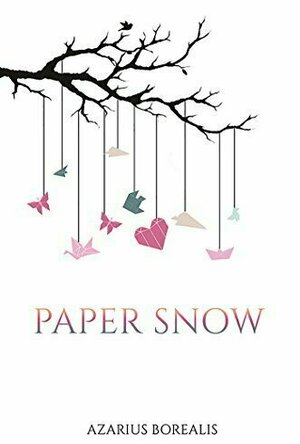
Paper Snow by Azarius Boreaus was not what I expected at all. In fact, it was one of the few books that completely surprised me. The description on the back of the book is vague yet considering the book is fairly short it is understandable. It was hard to write a summary without giving too much away. That being said there is a lot packed into a short book but amazingly it did not feel rushed as the author was able to effectively get the point across.
23 year old Noah wakes up with no idea as to exactly where he is or what happened to him. Everything is all white except for the garden that his bedroom opens up to. In the center of this garden is a giant baobab tree. At first, the only other person Noah sees is Coal, his doctor, but in the garden, he meets the people living in the other rooms surrounding the garden. It is by taking with the other people that Noah comes to know that all is not as it seems and why Coal is so interested in his dreams.
Noah learns that he possesses a special form of empathy, as does the others living in this facility, and that it allows him to communicate with plants. The others also teach him about the sleepers and how they are all prisoners in the facility. The people running the facility believes that Noah and the other prisoners have the ability to save humanity. Noah receives memories from the baobab trees broken branches and tells the tree he is listening by creating origami symbols to represent each memory. With the help of the tree, Noah is able to find strength in himself and help others to escape.
What I liked best is that the author highlights the deep connection the humans once had with nature wonderfully. The connection that the characters had with plants, animal, and each other were well explained. The first fifty pages were slow yet they promised interesting developments later on. It was difficult to stick with the book early on and I almost gave up on it. The jumping from Noahs present to his memories, and then to the Arctic was rough at first but I was able to get used to it.
The target readers for this book would probably be around high school and older. The content is fine for younger audiences I just dont think that it would be able to be understood very well. This book requires a reader to have an open mind as it deals with empaths, communicating with nature, reincarnation, and the ability that our beliefs can shape our physical world if strong enough. I rate this book 4 out of 4. Originally I was going to give it a lower rating but the further I got the more I saw the book for what it really is. I am not even sure if the author knows what they created of if this was just meant as a story. It was an amazing experience to read and something I was able to connect with.
23 year old Noah wakes up with no idea as to exactly where he is or what happened to him. Everything is all white except for the garden that his bedroom opens up to. In the center of this garden is a giant baobab tree. At first, the only other person Noah sees is Coal, his doctor, but in the garden, he meets the people living in the other rooms surrounding the garden. It is by taking with the other people that Noah comes to know that all is not as it seems and why Coal is so interested in his dreams.
Noah learns that he possesses a special form of empathy, as does the others living in this facility, and that it allows him to communicate with plants. The others also teach him about the sleepers and how they are all prisoners in the facility. The people running the facility believes that Noah and the other prisoners have the ability to save humanity. Noah receives memories from the baobab trees broken branches and tells the tree he is listening by creating origami symbols to represent each memory. With the help of the tree, Noah is able to find strength in himself and help others to escape.
What I liked best is that the author highlights the deep connection the humans once had with nature wonderfully. The connection that the characters had with plants, animal, and each other were well explained. The first fifty pages were slow yet they promised interesting developments later on. It was difficult to stick with the book early on and I almost gave up on it. The jumping from Noahs present to his memories, and then to the Arctic was rough at first but I was able to get used to it.
The target readers for this book would probably be around high school and older. The content is fine for younger audiences I just dont think that it would be able to be understood very well. This book requires a reader to have an open mind as it deals with empaths, communicating with nature, reincarnation, and the ability that our beliefs can shape our physical world if strong enough. I rate this book 4 out of 4. Originally I was going to give it a lower rating but the further I got the more I saw the book for what it really is. I am not even sure if the author knows what they created of if this was just meant as a story. It was an amazing experience to read and something I was able to connect with.
Night Reader Reviews (683 KP) rated Fading in Books
Jan 9, 2020
Honest Review for Free Copy of Book
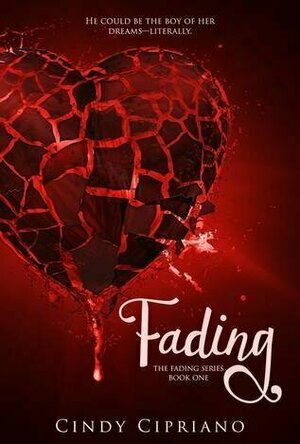
Fading by Cindy Cipriano may not contain vampires or werewolves yet it still has a slightly supernatural/paranormal feel to it. This book is in a similar group as Twilight as a forbidden love book. Also, this is only the first book in a series that is expected to be three or four books long.
Leath is the typical seventeen-year-old high school girl. She has her mother’s full support after her father died and her two best friends Victor and Anamae. The three of them have been considering college visits and what the future may hold for them. Leath and Victor have always been close but when Victor starts showing interest in being more than just friends with Leath she resists him. Victor believes Leath is confused and will come around to recognizing her feelings for him but Leath is not too sure. Then while working in her guidance councilor's office Leath sees the transfer file for a new student, James.
As if fate put them together James and Leath run into each other on Jame’s first day and they instantly become inseparable. Leath feels as if she has known James for her entire life and James feels the same way about her. Leath wonders if James is the same boy that Leath has actually been having dreams about all her life. Is she prepared to make the huge sacrifice required for her to be with James? Leath must choose between her friends, family, and freedom, or James before he makes the decision for her.
What I liked best about the book was honestly James himself. Even if he seemed somewhat creepy at times he is a great guy. His willingness to live alone and possibly face the wrath of his race just to protect Leath from his societies traditions are commendable. What I didn’t really like was the abrupt change around chapter fifteen. I understand the need for it but it was a little rough at first. I also didn’t understand completely why the fading worked so well on Leath that time when it didn’t work the first time. The only difference I can really come up with was the medication Leath was on and everyone else forgetting James helping her forget as well.
Teens of all ages will find this book to be appealing as the language is mild and there isn’t really any inappropriate content. Readers of romance will defiantly enjoy this book more so than fans of other genres. I give this book a rating of 4 out of 4. Fans of teen romance will love this twist on a classic forbidden love story. The entire concept of fading allows for the story to move on without having messy explanations in the middle of everything.
https://www.facebook.com/nightreaderreviews
Leath is the typical seventeen-year-old high school girl. She has her mother’s full support after her father died and her two best friends Victor and Anamae. The three of them have been considering college visits and what the future may hold for them. Leath and Victor have always been close but when Victor starts showing interest in being more than just friends with Leath she resists him. Victor believes Leath is confused and will come around to recognizing her feelings for him but Leath is not too sure. Then while working in her guidance councilor's office Leath sees the transfer file for a new student, James.
As if fate put them together James and Leath run into each other on Jame’s first day and they instantly become inseparable. Leath feels as if she has known James for her entire life and James feels the same way about her. Leath wonders if James is the same boy that Leath has actually been having dreams about all her life. Is she prepared to make the huge sacrifice required for her to be with James? Leath must choose between her friends, family, and freedom, or James before he makes the decision for her.
What I liked best about the book was honestly James himself. Even if he seemed somewhat creepy at times he is a great guy. His willingness to live alone and possibly face the wrath of his race just to protect Leath from his societies traditions are commendable. What I didn’t really like was the abrupt change around chapter fifteen. I understand the need for it but it was a little rough at first. I also didn’t understand completely why the fading worked so well on Leath that time when it didn’t work the first time. The only difference I can really come up with was the medication Leath was on and everyone else forgetting James helping her forget as well.
Teens of all ages will find this book to be appealing as the language is mild and there isn’t really any inappropriate content. Readers of romance will defiantly enjoy this book more so than fans of other genres. I give this book a rating of 4 out of 4. Fans of teen romance will love this twist on a classic forbidden love story. The entire concept of fading allows for the story to move on without having messy explanations in the middle of everything.
https://www.facebook.com/nightreaderreviews