
Search
Search results

Kristy H (1252 KP) rated Defending Taylor in Books
Feb 13, 2018



Taylor has always grown up expecting the most of herself. After all, her father is a State Senator, and he and her mother have high expectations for their youngest daughter. At her private school, Taylor excels at school and is now captain of her soccer team. She has a close group of friends and a boyfriend, Ben. But all of that changes when Taylor makes a mistake--and gets kicked out of school. Now she's forced to start over at the local public school, which puts her dreams of Ivy League college in jeopardy. She joins the school's soccer team and tries to make things right with her family, but she can't deal with the secrets she's keeping, or the crushing disappointment of her entire family.
I can't help it: Kenneally's books are just enjoyable. This one leaves you in the dark in the beginning as to exactly what happened to Taylor--while frustrating, it builds suspense effectively and keeps you turning pages. Taylor's under so much pressure, but Kenneally easily captures the teen experience and the dramatic "life and death" sensation of being a teenager. Sometimes you roll your eyes at Taylor's actions, but you have to remember what it's like to be a teenager: you really do feel bad for the kid. Her parents put a crazy amount of pressure on Taylor, as do her perfect older twin siblings, and the book offers a good commentary about the burden and anxiety teens face these days regarding school and the college process. Plus, Taylor has the extra stress of her behavior being under the microscope of her father's senate campaign.
I was a little frustrated about how Taylor couldn't handle talking to her parents about her life, but could fall quickly and easily into a mature romantic relationship, but that seems to be par for the course for many YA novels these days. Besides, you can't help rooting for her relationship (and the cute guy). I enjoyed the message in this novel about taking a step back, finding yourself, and doing things your own way. I think it's a message that could benefit many teens. I also couldn't help but fall for Taylor, even if she was frustrating at times, and overall, I enjoyed this one. Kenneally has a way with words and writing teens--her books are worth the read.
I received a copy of this book from the publisher and Netgalley (thank you!); it is available everywhere as of 7/5.
<a href="http://justacatandabookatherside.blogspot.com/">My Blog</a> ~ <a href="https://www.facebook.com/justacatandabook/">Facebook</a>; ~ <a href="https://twitter.com/justacatandbook">Twitter</a>;
I can't help it: Kenneally's books are just enjoyable. This one leaves you in the dark in the beginning as to exactly what happened to Taylor--while frustrating, it builds suspense effectively and keeps you turning pages. Taylor's under so much pressure, but Kenneally easily captures the teen experience and the dramatic "life and death" sensation of being a teenager. Sometimes you roll your eyes at Taylor's actions, but you have to remember what it's like to be a teenager: you really do feel bad for the kid. Her parents put a crazy amount of pressure on Taylor, as do her perfect older twin siblings, and the book offers a good commentary about the burden and anxiety teens face these days regarding school and the college process. Plus, Taylor has the extra stress of her behavior being under the microscope of her father's senate campaign.
I was a little frustrated about how Taylor couldn't handle talking to her parents about her life, but could fall quickly and easily into a mature romantic relationship, but that seems to be par for the course for many YA novels these days. Besides, you can't help rooting for her relationship (and the cute guy). I enjoyed the message in this novel about taking a step back, finding yourself, and doing things your own way. I think it's a message that could benefit many teens. I also couldn't help but fall for Taylor, even if she was frustrating at times, and overall, I enjoyed this one. Kenneally has a way with words and writing teens--her books are worth the read.
I received a copy of this book from the publisher and Netgalley (thank you!); it is available everywhere as of 7/5.
<a href="http://justacatandabookatherside.blogspot.com/">My Blog</a> ~ <a href="https://www.facebook.com/justacatandabook/">Facebook</a>; ~ <a href="https://twitter.com/justacatandbook">Twitter</a>;

Leigh J (71 KP) rated Dreamcatcher (2003) in Movies
Nov 24, 2019 (Updated Nov 24, 2019)


Stephen King does The Thing
Contains spoilers, click to show
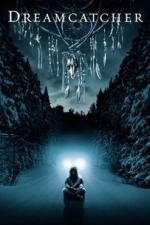
4 friends make their yearly trek to a Cabin in a remote part of Maine to eat, drink, be merry and Hunt. However Jonesy, Pete, Beaver and Henry are not just any ordinary group of friends. For as long as they can remember, there has been a psychic link between them, strengthened further by the addition of Duddits, a mentally disabled young boy who they rescued from bullies one day after school when they were all kids. Their link as a group of 5 is so strong that they even rescue a young girl who has been missing for a while. Now the boys have grown up and this trip is their chance to let loose and blow off some steam, minus Duddits who is still mentally a young boy. Whilst out hunting, they come across a distressed and dazed man who tells them he got lost in the woods whilst out with his Hunting group... and the man is obviously ill. He has a suspicious injury to his face and he can't stop burping and farting, which are so horrible that they make the guys nauseous. Soon enough, they guys discover the man is in a blood soaked Bathroom, dead, and an Alien Weasel looking creature thrashing around in the toilet bowl. And there's a red fungus growing on (and in) everything. Could this really be an Alien invasion? Can the 4 friends strike back against these otherworldly enemies? And what will happen when the most malevolent one of these Aliens decides that Jonesy would be a great place for him to be able to wreak havoc from?
Dreamcatcher is an adaptation of the Book of the same name from Stephen King. I'm now VERY happy I read the Book before I watched this Movie as some things in the Book don't come across that clear in the Movie. Not a lot of people enjoy the Book and feel it's quite out there for Stephen King but I really enjoyed it, and the same can be said for the Movie! The story is really captivating, especially the friendships between the guys and the interaction between Jonesy and Mr Gray (his new invader) and I really appreciated the very "Thing" quality this Movie has (I literally have no idea why it reminds me of The Thing but it just does!) Definitely worth a watch, but it's not going to be for everyone as I would recommend reading the Book first.
Dreamcatcher is an adaptation of the Book of the same name from Stephen King. I'm now VERY happy I read the Book before I watched this Movie as some things in the Book don't come across that clear in the Movie. Not a lot of people enjoy the Book and feel it's quite out there for Stephen King but I really enjoyed it, and the same can be said for the Movie! The story is really captivating, especially the friendships between the guys and the interaction between Jonesy and Mr Gray (his new invader) and I really appreciated the very "Thing" quality this Movie has (I literally have no idea why it reminds me of The Thing but it just does!) Definitely worth a watch, but it's not going to be for everyone as I would recommend reading the Book first.

CARFRIEND - Pure drive and date
Social Networking, Lifestyle and Stickers
App
CARFRIEND – the social network №1 for drivers, bikers and pedestrians in more than 50 countries....

Digital Geiger Counter - Prank Radiation Detector
Entertainment and Utilities
App
Digital Geiger Counter is the best "fake geiger counter" prank on the iTunes App Store. Tilt and...

Lyndsey Gollogly (2893 KP) rated Kill Switch in Books
Feb 17, 2023
🔞🔞🔞
17 of 235
Kindle
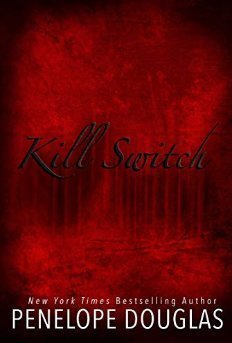
Kill switch ( Devils Night book 3)
By Penelope Douglas
⭐️⭐️⭐️⭐️
"I've done far worse than what I went to prison for. She has no idea how bad this can get."
WINTER
Sending him to prison was the worst thing I could’ve done. It didn’t matter that he did the crime or that I wished he was dead. Perhaps I thought I’d have time to disappear before he got out or he’d cool off in jail and be anything but the horror he was.
But I was wrong. Three years came and went too fast, and now he’s anything but calm. Prison only gave him time to plan.
And while I anticipated his vengeance, I didn’t expect this.
He doesn’t want to make me hurt. He wants to make everything hurt.
DAMON
First thing’s first. Get rid of her daddy. He told them I forced her. He told them his little girl was a victim, but I was a kid, too, and she wanted it just as much as I did.
Step two… Give her, her sister, and her mother nowhere to run and no fuel to escape. The Ashby women are alone now and desperate for a knight in shining armor.
But that’s not what’s coming.
No, it’s time I listened to my father and took control of my future. It’s time I showed them all—my family, her family, my friends—that I will never change and that I have no other ambition than to be the nightmare of their lives.
Starting with her.
She’ll be so scared, she won’t even be safe in her own head by the time I’m done with her. And the best part is I won’t have to break into her home to do it.
As the new man of the house I have all the keys.
For gods sake this woman knows how to kick you in the guts with trauma! This has so many trigger warnings. This book makes you feel everything it’s quite graphic and she doesn’t hold back! Whether you like this series or not the woman writes abuse better than anyone I’ve read she gets you feeling all the emotions. I still can’t stand these men but there is a catalyst for each one of them that being the worlds worst parents they certainly didn’t do their kids any good. One thing I love is these women are strong and ruling the world is on the agenda!
17 of 235
Kindle
Kill switch ( Devils Night book 3)
By Penelope Douglas
⭐️⭐️⭐️⭐️
"I've done far worse than what I went to prison for. She has no idea how bad this can get."
WINTER
Sending him to prison was the worst thing I could’ve done. It didn’t matter that he did the crime or that I wished he was dead. Perhaps I thought I’d have time to disappear before he got out or he’d cool off in jail and be anything but the horror he was.
But I was wrong. Three years came and went too fast, and now he’s anything but calm. Prison only gave him time to plan.
And while I anticipated his vengeance, I didn’t expect this.
He doesn’t want to make me hurt. He wants to make everything hurt.
DAMON
First thing’s first. Get rid of her daddy. He told them I forced her. He told them his little girl was a victim, but I was a kid, too, and she wanted it just as much as I did.
Step two… Give her, her sister, and her mother nowhere to run and no fuel to escape. The Ashby women are alone now and desperate for a knight in shining armor.
But that’s not what’s coming.
No, it’s time I listened to my father and took control of my future. It’s time I showed them all—my family, her family, my friends—that I will never change and that I have no other ambition than to be the nightmare of their lives.
Starting with her.
She’ll be so scared, she won’t even be safe in her own head by the time I’m done with her. And the best part is I won’t have to break into her home to do it.
As the new man of the house I have all the keys.
For gods sake this woman knows how to kick you in the guts with trauma! This has so many trigger warnings. This book makes you feel everything it’s quite graphic and she doesn’t hold back! Whether you like this series or not the woman writes abuse better than anyone I’ve read she gets you feeling all the emotions. I still can’t stand these men but there is a catalyst for each one of them that being the worlds worst parents they certainly didn’t do their kids any good. One thing I love is these women are strong and ruling the world is on the agenda!

Emma @ The Movies (1786 KP) rated Old (2021) in Movies
Aug 22, 2021

Having been out of the "coming soon" game for quite a while so this one came as a surprise when I saw the trailer. It looked good, but there's always that "what is Shyamalan going to do" feeling.
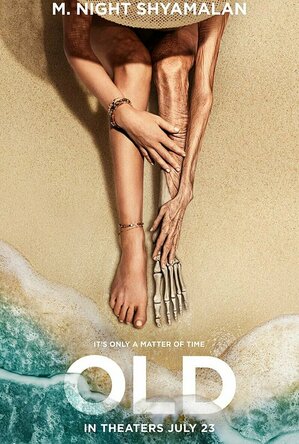
An idyllic resort, a glorious beach. What starts out to be a pleasant day trip turns into tragedy and horror as the guests start ageing at an accelerated rate. What's going on and why can't they seem to do anything about it?
I'm going to mix this up a bit from my usual reviews because it seems appropriate for this oddity of a film.
As a whole, the film probably has a place in the Lost extended universe (especially considering Miles' role in it). Mystery and generalised horror abound, and you're left for prolonged periods of time with more questions than answers. Let's cover the biggie though.
That whole ageing thing... it is in the trailer so I'm going to do my best not to be spoilery.
Let's face it... there's a massive inconsistency. I'm happy to go with the fact that kids will change more physically with age than the adults will initially... no problem with that bit. But the assembled people on the beach have been there for (more or less) two different periods of time. While I don't remember it being established when the first arrived, I would have expected a more pronounced visual than the one we were presented with.
When the group get to the beach, Maddox is 11 and her brother Trent is 6. then there's Kara who is also 6. They progressively age throughout the events and we end up with three teenage looking kids. I'm still on board here, perfectly "logical". But here is also where I start to tail off into what could be a massive psychological debate... their bodies age, but their minds are only exposed to what is around them in that time, so are their actions in line with that?
Thomasin McKenzie seemed to have the right balance, with her character at a starting age of 11 she has the best chance of getting away with it, and her effort was good. I'm not sure the same is true of Alex Wolff and Eliza Scanlen though. Their storyline together, and their behaviour, didn't feel consistent. Particularly with Trent. Mentally the pair should still have been 6, or at least more immature than their look, but that didn't come across very effectively.
We're introduced to all of the characters in fairly quick succession at the beginning, but you do get a very clear idea about what you can expect from them going forward. They don't all really work together, and if chaos wasn't a necessary part of the film then I think I would have tired quickly of them all. As it was, I didn't particularly like any of the characters, including the parents of Trent and Maddox, but at least their journey evolved well through the film.
I feel like I need to mention the dubious sexualisation of the kids, in particular when we have Thomasin McKenzie as Maddox. When they discover the kids have aged up, Mum tells her to change into a swimsuit she has in her bag. The swimsuit she was already wearing covered everything relatively well, and actually has more cloth on it than the alternative. When I think about the things I bring to a beach in my bag with me, I bring a t-shirt, shorts, a sarong... never a second bikini. Would it not have been more logical to give her something different to wear? And was it really necessary to be there at all? I also have another point under this, but it would constitute spoilers I'm afraid.
Old's beach location is stunning, and some of the features allow for a slightly sinister edge. But a lot of the atmosphere is brought in with the cameras, and at one point I felt a rage come over me because of a collection of panning shots of the group. Yes, I know there are better things to be annoyed about, but it bugged me, I couldn't help it!
As a quick round-up of other points:
- I quite enjoyed Shyamalan's role
- Listening to people pronounce my surname wrong gives me palpitations, and
- The one bit of massively noticeable CGI was bad, so very, very, bad.
I'm interested to read the source material and see how its ending compares to what Shyamalan conjured. It's difficult to discuss the end without spoilers, but that's probably just as well because it'll lead to another heavy discussion. The actual resolution though does have a satisfying moment, even though it felt a little wrong.
Now for my overall feelings on the film... I enjoyed the mystery of it, and there are plenty of debates that arise. But the inconsistent moments in the ageing and how the ending comes around, sadly ate into my total score.
Originally posted on: https://emmaatthemovies.blogspot.com/2021/08/old-movie-review.html
An idyllic resort, a glorious beach. What starts out to be a pleasant day trip turns into tragedy and horror as the guests start ageing at an accelerated rate. What's going on and why can't they seem to do anything about it?
I'm going to mix this up a bit from my usual reviews because it seems appropriate for this oddity of a film.
As a whole, the film probably has a place in the Lost extended universe (especially considering Miles' role in it). Mystery and generalised horror abound, and you're left for prolonged periods of time with more questions than answers. Let's cover the biggie though.
That whole ageing thing... it is in the trailer so I'm going to do my best not to be spoilery.
Let's face it... there's a massive inconsistency. I'm happy to go with the fact that kids will change more physically with age than the adults will initially... no problem with that bit. But the assembled people on the beach have been there for (more or less) two different periods of time. While I don't remember it being established when the first arrived, I would have expected a more pronounced visual than the one we were presented with.
When the group get to the beach, Maddox is 11 and her brother Trent is 6. then there's Kara who is also 6. They progressively age throughout the events and we end up with three teenage looking kids. I'm still on board here, perfectly "logical". But here is also where I start to tail off into what could be a massive psychological debate... their bodies age, but their minds are only exposed to what is around them in that time, so are their actions in line with that?
Thomasin McKenzie seemed to have the right balance, with her character at a starting age of 11 she has the best chance of getting away with it, and her effort was good. I'm not sure the same is true of Alex Wolff and Eliza Scanlen though. Their storyline together, and their behaviour, didn't feel consistent. Particularly with Trent. Mentally the pair should still have been 6, or at least more immature than their look, but that didn't come across very effectively.
We're introduced to all of the characters in fairly quick succession at the beginning, but you do get a very clear idea about what you can expect from them going forward. They don't all really work together, and if chaos wasn't a necessary part of the film then I think I would have tired quickly of them all. As it was, I didn't particularly like any of the characters, including the parents of Trent and Maddox, but at least their journey evolved well through the film.
I feel like I need to mention the dubious sexualisation of the kids, in particular when we have Thomasin McKenzie as Maddox. When they discover the kids have aged up, Mum tells her to change into a swimsuit she has in her bag. The swimsuit she was already wearing covered everything relatively well, and actually has more cloth on it than the alternative. When I think about the things I bring to a beach in my bag with me, I bring a t-shirt, shorts, a sarong... never a second bikini. Would it not have been more logical to give her something different to wear? And was it really necessary to be there at all? I also have another point under this, but it would constitute spoilers I'm afraid.
Old's beach location is stunning, and some of the features allow for a slightly sinister edge. But a lot of the atmosphere is brought in with the cameras, and at one point I felt a rage come over me because of a collection of panning shots of the group. Yes, I know there are better things to be annoyed about, but it bugged me, I couldn't help it!
As a quick round-up of other points:
- I quite enjoyed Shyamalan's role
- Listening to people pronounce my surname wrong gives me palpitations, and
- The one bit of massively noticeable CGI was bad, so very, very, bad.
I'm interested to read the source material and see how its ending compares to what Shyamalan conjured. It's difficult to discuss the end without spoilers, but that's probably just as well because it'll lead to another heavy discussion. The actual resolution though does have a satisfying moment, even though it felt a little wrong.
Now for my overall feelings on the film... I enjoyed the mystery of it, and there are plenty of debates that arise. But the inconsistent moments in the ageing and how the ending comes around, sadly ate into my total score.
Originally posted on: https://emmaatthemovies.blogspot.com/2021/08/old-movie-review.html

Smashbomb (4688 KP) created a post in Smashbomb AMA
Jul 12, 2019

Lee (2222 KP) rated Welcome to Marwen (2018) in Movies
Jan 11, 2019
Steve Carell (1 more)
Leslie Mann
This year, I made a resolution to try not to let critic reviews heavily influence my decision to go see a movie or not. In the period between Christmas and New year, I'd booked to go see Holmes and Watson, but when the very bad reviews for it started coming it, I decided to cancel, opting to continue lazing on the sofa with food, drink and Netflix instead. That particular choice I don't regret, but I feel there have been many occasions over the last year where I've either hated a movie the critics loved, or loved a movie the critics were negative about. Time to try and change that.
I almost did miss out on seeing Welcome to Marwen though, due to the large number of mediocre reviews I read. In fact, it doesn't seem to have appealed to the general public enough to keep it in the cinemas for very long at all. Having only opened here in the UK on New year's Day, the screening I went to last night was actually the last screening being shown at that particular cinema, and I was one of only a handful of people there watching it. What prompted me earlier this week to give it a go though was after listening to director Robert Zemeckis talk passionately about it, along with his other movies. It was a gentle reminder that this guy is responsible for so many of my favourite movies, and I decided to give it a shot. While I'm glad I did, and overall I enjoyed it a lot, I can certainly appreciate where some of the criticism is coming from.
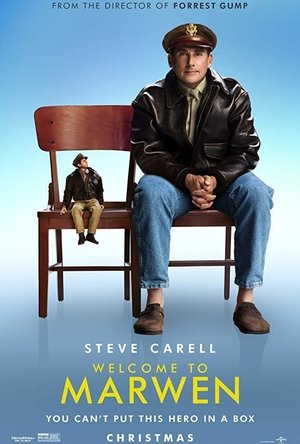
Welcome to Marwen is based on the true story of Mark Hogancamp, and the 2010 documentary on his life title 'Marwencol'. Mark (played in the movie by Steve Carell) suffered a severe beating at the hands of a bunch of thugs following an altercation in a bar regarding his lifestyle choice of being a cross dresser. After nine days in a coma, the beating understandably left him traumatised, but it also left him without any memory his life prior to the attack - once a talented war illustrator, he now can't even write his own name. But Mark remained an artist, building a miniature World War II Belgian town called Marwen outside his home and populating it with dolls. Using them he creates scenes and a story which he then photographs, helping him to express and deal with his lack of memory, the pain and trauma he now experiences, and the relationships with the people around him. Captain Hogie is a fighter pilot, an Action Man/GI Joe figure representing Mark. The residents of Marwen are all women, alter egos of various people who have helped him in the past or continue to help him. The toyshop worker who supplies him with the dolls, a friend he met during rehab, a co-worker, his carer and the woman who came to his aid following his beating. The town is also terrorised regularly by a bunch of Nazis, representing the men responsible for attacking him. And whenever the Nazis are beaten and killed, they are brought back to life by a Belgian witch! When a woman called Nicol (Leslie Mann) moves in across the street, she strikes up a wonderful friendship with Mark, earning her own doll in the town of Marwen where she strikes up a relationship with Captain Hogie. As the movie progresses, Mark has to deal with the pending sentencing of his attackers and the anxiety surrounding an upcoming exhibition showcasing his photographs. Marwen, and its inhabitants, help him to work through all of this.
The scenes and stories in Marwen that Mark is creating and imagining are brought to life in the movie using impressive motion capture CGI which, if you've seen the trailer or any clips of the movie, will know looks incredible. When you think about the animation Zemeckis and his team were producing for The Polar Express back in 2004, through Beowulf and Disney's The Christmas Carol to where we are now with this movie, it's simply amazing how far we've come. Perfect recreations of the movie characters in doll form, moving and interacting with the real surroundings and the CGI is just faultless. But for the earlier parts of the movie, this aspect of the movie for me was for a while the most frustrating and dull. The movie opens with a big scene as Captain Hogie crashes his plane, comes across a group of Nazis before being rescued by the girls of Marwen and we get a few more of these lengthy sequences early on, with only short glimpses of Mark and his life inbetween. I found myself become interested and engrossed in the life of Mark, wanting to learn more, only to be snapped out of it by a not so interesting scene involving some dolls. Thankfully, the length of those scenes reduces over time, and as you begin to empathise more with Mark and his life, you start to appreciate more the reasons why a certain scene is playing out the way it is. At that point, I began to really appreciate and enjoy them a lot more.
My only issue overall with this movie is that I wouldn't really know the age range to pitch it at, and that's possibly why it doesn't appear to have done so well with audiences. You've got the fun elements involving the dolls and the CGI, but then some of these scenes do involve a fair bit of violence which actually appears quite realistic at times. Then you've got the trauma and the flashbacks involving the beating - the movie doesn't go as dark as it could, or maybe should have done with that subject matter, but I certainly wouldn't say this is a fun movie for all the family to enjoy. Which is a shame really because I did enjoy this a lot. Steve Carell does an outstanding job, and Leslie Mann is just wonderful as always. It's opened my eyes to some of the consequences of brain injury and made me want to learn more about Mark Hogancamp, which parts of the movie are true and which parts were added for entertainment. I'll be sure to try and watch the documentary at some point.
I almost did miss out on seeing Welcome to Marwen though, due to the large number of mediocre reviews I read. In fact, it doesn't seem to have appealed to the general public enough to keep it in the cinemas for very long at all. Having only opened here in the UK on New year's Day, the screening I went to last night was actually the last screening being shown at that particular cinema, and I was one of only a handful of people there watching it. What prompted me earlier this week to give it a go though was after listening to director Robert Zemeckis talk passionately about it, along with his other movies. It was a gentle reminder that this guy is responsible for so many of my favourite movies, and I decided to give it a shot. While I'm glad I did, and overall I enjoyed it a lot, I can certainly appreciate where some of the criticism is coming from.
Welcome to Marwen is based on the true story of Mark Hogancamp, and the 2010 documentary on his life title 'Marwencol'. Mark (played in the movie by Steve Carell) suffered a severe beating at the hands of a bunch of thugs following an altercation in a bar regarding his lifestyle choice of being a cross dresser. After nine days in a coma, the beating understandably left him traumatised, but it also left him without any memory his life prior to the attack - once a talented war illustrator, he now can't even write his own name. But Mark remained an artist, building a miniature World War II Belgian town called Marwen outside his home and populating it with dolls. Using them he creates scenes and a story which he then photographs, helping him to express and deal with his lack of memory, the pain and trauma he now experiences, and the relationships with the people around him. Captain Hogie is a fighter pilot, an Action Man/GI Joe figure representing Mark. The residents of Marwen are all women, alter egos of various people who have helped him in the past or continue to help him. The toyshop worker who supplies him with the dolls, a friend he met during rehab, a co-worker, his carer and the woman who came to his aid following his beating. The town is also terrorised regularly by a bunch of Nazis, representing the men responsible for attacking him. And whenever the Nazis are beaten and killed, they are brought back to life by a Belgian witch! When a woman called Nicol (Leslie Mann) moves in across the street, she strikes up a wonderful friendship with Mark, earning her own doll in the town of Marwen where she strikes up a relationship with Captain Hogie. As the movie progresses, Mark has to deal with the pending sentencing of his attackers and the anxiety surrounding an upcoming exhibition showcasing his photographs. Marwen, and its inhabitants, help him to work through all of this.
The scenes and stories in Marwen that Mark is creating and imagining are brought to life in the movie using impressive motion capture CGI which, if you've seen the trailer or any clips of the movie, will know looks incredible. When you think about the animation Zemeckis and his team were producing for The Polar Express back in 2004, through Beowulf and Disney's The Christmas Carol to where we are now with this movie, it's simply amazing how far we've come. Perfect recreations of the movie characters in doll form, moving and interacting with the real surroundings and the CGI is just faultless. But for the earlier parts of the movie, this aspect of the movie for me was for a while the most frustrating and dull. The movie opens with a big scene as Captain Hogie crashes his plane, comes across a group of Nazis before being rescued by the girls of Marwen and we get a few more of these lengthy sequences early on, with only short glimpses of Mark and his life inbetween. I found myself become interested and engrossed in the life of Mark, wanting to learn more, only to be snapped out of it by a not so interesting scene involving some dolls. Thankfully, the length of those scenes reduces over time, and as you begin to empathise more with Mark and his life, you start to appreciate more the reasons why a certain scene is playing out the way it is. At that point, I began to really appreciate and enjoy them a lot more.
My only issue overall with this movie is that I wouldn't really know the age range to pitch it at, and that's possibly why it doesn't appear to have done so well with audiences. You've got the fun elements involving the dolls and the CGI, but then some of these scenes do involve a fair bit of violence which actually appears quite realistic at times. Then you've got the trauma and the flashbacks involving the beating - the movie doesn't go as dark as it could, or maybe should have done with that subject matter, but I certainly wouldn't say this is a fun movie for all the family to enjoy. Which is a shame really because I did enjoy this a lot. Steve Carell does an outstanding job, and Leslie Mann is just wonderful as always. It's opened my eyes to some of the consequences of brain injury and made me want to learn more about Mark Hogancamp, which parts of the movie are true and which parts were added for entertainment. I'll be sure to try and watch the documentary at some point.
Kristy H (1252 KP) rated The In Between in Books
Feb 1, 2018
I confess that this book was not exactly what I was expecting. The novel appears to tell a typical tale of YA love, but it also spends much of its time in a paranormal, mystical world of the "In Between." It's very odd and I wasn't expecting so much talk of Heaven and Hell, despite the hint from the title.
The story follows Tara Jenkins and Justin Westcroft. Friends as children, they become close again after Tara saves Justin's life, when he nearly drowns in an accident at the public beach. Now in high school, Justin is a popular soccer star, while Tara is just a "regular gal." Tara and Justin quickly fall madly in love and become each other's world.
Part of my issue with this book is just that - Tara and Justin are in high school and the entire book centers on their "great romance" and the idea that they are made for each other, destined for all eternity. Some people pull it off, even if it's a cheesy YA series like Twilight. You find yourself rooting for Bella and Edward. Here... I don't know. Pierce's characters just aren't well-developed enough. I like Tara, but I'm not fully invested in her. I actually cared for Justin a bit more (he seemed to have more of a head on his shoulders), but I don't get to learn enough about him, or really get to know him enough as I read the novel. Instead, you are just left wondering why two young kids are so in love and so convinced, at this age, that they are meant for each other. Instead of falling for their love story, it seems like a Made for TV Special.
Once Justin actually dies (and I'm not giving anything away, the book's summary is forthright in telling you that Tara can't save Justin a second time) and he goes to the "In Between," you find him in this weird mythical, mystical land, and it's just odd. I do feel empathy for Justin as he struggles to get back to Tara, and even for Tara, as she grieves for Justin, but it often feels like two kids playing at being grown up. With the distraction of some weird mystical characters thrown in to boot.
That being said, the book managed to keep my interest. I kept reading, wanting to know what would happen to Justin and Tara. Would they kill them both? Would they be reunited? Surely it wouldn't just end with him stuck here and her still pining away? After all this?! In the end, the ending is rather "pat" and the book just sort of ends.
Come to think of it, this probably *would* make a great Lifetime movie. And I'd no doubt guiltily enjoy it with a box of chocolates.
(Note, I received a free digital copy of The In Between in return for a honest review.)
The story follows Tara Jenkins and Justin Westcroft. Friends as children, they become close again after Tara saves Justin's life, when he nearly drowns in an accident at the public beach. Now in high school, Justin is a popular soccer star, while Tara is just a "regular gal." Tara and Justin quickly fall madly in love and become each other's world.
Part of my issue with this book is just that - Tara and Justin are in high school and the entire book centers on their "great romance" and the idea that they are made for each other, destined for all eternity. Some people pull it off, even if it's a cheesy YA series like Twilight. You find yourself rooting for Bella and Edward. Here... I don't know. Pierce's characters just aren't well-developed enough. I like Tara, but I'm not fully invested in her. I actually cared for Justin a bit more (he seemed to have more of a head on his shoulders), but I don't get to learn enough about him, or really get to know him enough as I read the novel. Instead, you are just left wondering why two young kids are so in love and so convinced, at this age, that they are meant for each other. Instead of falling for their love story, it seems like a Made for TV Special.
Once Justin actually dies (and I'm not giving anything away, the book's summary is forthright in telling you that Tara can't save Justin a second time) and he goes to the "In Between," you find him in this weird mythical, mystical land, and it's just odd. I do feel empathy for Justin as he struggles to get back to Tara, and even for Tara, as she grieves for Justin, but it often feels like two kids playing at being grown up. With the distraction of some weird mystical characters thrown in to boot.
That being said, the book managed to keep my interest. I kept reading, wanting to know what would happen to Justin and Tara. Would they kill them both? Would they be reunited? Surely it wouldn't just end with him stuck here and her still pining away? After all this?! In the end, the ending is rather "pat" and the book just sort of ends.
Come to think of it, this probably *would* make a great Lifetime movie. And I'd no doubt guiltily enjoy it with a box of chocolates.
(Note, I received a free digital copy of The In Between in return for a honest review.)

Louise (64 KP) rated He Said/She Said in Books
Jul 2, 2018
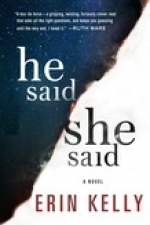
I was lucky enough to win an unfinished copy of this book on a Goodreads giveaway.
The year is 1999, Kit and Laura are down in Cornwall at a festival held for eclipse chasers, this will be their first one together and the start of many more to come. Kit has all the future eclipses planned out, he has been doing this his whole life and wants to share it with the woman he loves and future children. With it being cloudy the odds of a total eclipse is minimal, to try and get a better viewing angle the couple move out to the edges of the festival, but what they do witness changes their lives forever. Kit and Laura are embroiled in a rape case, Jamie Balcombe was witnessed attacking Beth Taylor – Will Laura’s testimony be enough for a conviction?
He Said/She Said is told from alternating point of views from Kit and Laura. They are also told from past and present, so will get a chapter from Kit in 2015 and 1999 and the same from Laura. This allows the stories to be interwoven and tells what happened and how it has affected them now. This is another slow paced book that feeds you small amounts of information at a time and when you think you know what has happened it takes an unexpected turn.
Laura in present day is an unreliable narrator, she suffers with anxiety and is extremely paranoid. We don’t find out for a long time how she has become this way all we do know that it’s related to ‘Beth’. In 1999, Laura has her whole life ahead of her, she has just met Kit and has this outgoing nature to her. As the story progresses you begin understand why she is so paranoid and why she is so anxious.
Kit seemed like a super relaxed guy that takes everything in his stride, Laura is his soulmate and have been together for 15 years and will protect her to no end. At points he could be very meticulous and other points very sloppy regarding their change of identity. I must admit that Laura is the stronger character of the two and her POV was much more enjoyable.
I felt this book especially the first half was very slow even when there were parts that really appealed to me. The story line was good not something I have read about before and I didn’t think it was predictable but when the twist happened it wasn’t anything majorly startling for me.My actual reaction was ‘oh’! but the second half was much better than the first and had more action to it.
There is a trigger warning of Rape, so if this is something you are uncomfortable reading about then this might not be the book for you.
I rated this book 3.5 out of 5 stars
The year is 1999, Kit and Laura are down in Cornwall at a festival held for eclipse chasers, this will be their first one together and the start of many more to come. Kit has all the future eclipses planned out, he has been doing this his whole life and wants to share it with the woman he loves and future children. With it being cloudy the odds of a total eclipse is minimal, to try and get a better viewing angle the couple move out to the edges of the festival, but what they do witness changes their lives forever. Kit and Laura are embroiled in a rape case, Jamie Balcombe was witnessed attacking Beth Taylor – Will Laura’s testimony be enough for a conviction?
He Said/She Said is told from alternating point of views from Kit and Laura. They are also told from past and present, so will get a chapter from Kit in 2015 and 1999 and the same from Laura. This allows the stories to be interwoven and tells what happened and how it has affected them now. This is another slow paced book that feeds you small amounts of information at a time and when you think you know what has happened it takes an unexpected turn.
Laura in present day is an unreliable narrator, she suffers with anxiety and is extremely paranoid. We don’t find out for a long time how she has become this way all we do know that it’s related to ‘Beth’. In 1999, Laura has her whole life ahead of her, she has just met Kit and has this outgoing nature to her. As the story progresses you begin understand why she is so paranoid and why she is so anxious.
Kit seemed like a super relaxed guy that takes everything in his stride, Laura is his soulmate and have been together for 15 years and will protect her to no end. At points he could be very meticulous and other points very sloppy regarding their change of identity. I must admit that Laura is the stronger character of the two and her POV was much more enjoyable.
I felt this book especially the first half was very slow even when there were parts that really appealed to me. The story line was good not something I have read about before and I didn’t think it was predictable but when the twist happened it wasn’t anything majorly startling for me.My actual reaction was ‘oh’! but the second half was much better than the first and had more action to it.
There is a trigger warning of Rape, so if this is something you are uncomfortable reading about then this might not be the book for you.
I rated this book 3.5 out of 5 stars