Search
Search results

Heather Cranmer (2721 KP) rated Prodigal in Books
Jun 7, 2018


(This review can be found on my blog <a href="http://themisadventuresofatwentysomething.blogspot.com/">The (Mis)Adventures of a Twenty-Something Year Old Girl</a>).
Wow...just wow! The feels in this book were just wow! Prodigal by Rektok Ross has definitely become my favorite book this year. In fact, it may've become my favorite book ever, seriously. I had my reservations about this book being as it is Christian fiction. Although I am Christian, I don't like books that are too preachy because it's like they are preachy to the choir. However, this book was not preachy but helped get the message across. It is just amazing!
The title didn't really give me much to go on. In fact, if I'm being honest, when I first heard of the book, the title didn't catch my attention at all.
The cover is definitely original; I'll give it that that. However, like the title it's a bit plain. However, the sheep can be a symbolism in Christianity. Prodigal also touches on the story of the Prodigal Son which is another reason I believe the sheep is on the cover.
The world building was fantastically done! Ross does a great job of portraying a non-believing teen. Ross also portrays the high school relationship drama very well. I actually felt like I was back in high school while reading this book.
The pacing was set superbly! This was one of those books that I didn't want to put down because I had to know what would happen next. Unfortunately, life got in the way sometimes, and I did have to put the book down, but I would pick it up as soon as I got a chance.
The plot was so sweet! Lexy moves to a new state which means a new school her senior year, meets the uber hot quarterback, and they fall in love. However, there's some problems which means their relationship does suffer. Along the way, Lexy finds God. As I've said before, this book isn't over the top preachy. It's not subtle when it comes to God, but it's not in your face either. Oh, there weren't any plot twists that I noticed, but that didn't affect the book.
The characters all felt very realistic to me. I started out not liking Lexy because I didn't like the way she treated and spoke to her mother. However, Lexy began to grow on me, and I soon felt what Lexy felt when it came to what all was going on around her. I also liked Ash. I like how Ross portrayed him as a typical Christian teen and not one who was overly religious. Ash also had his demons so to speak. I even liked Blythe even though she was the resident mean girl. There's no excuse as to why Blythe behaved the way she did, but towards the ending of the book, it's easier to understand why she's the way she is.
I enjoyed the dialogue and the writing in this book. Again, I want to stress that this book doesn't just focus on God and Christianity. If anything, that's more of a minor subplot. There's no real violence in this book and only one swear word (the word ass).
If there's only one book you'll ever pick up, I'd highly suggest Prodigal by Rektok Ross. This book was so much more than I was expecting and left me with so many feels! If I had enough money, I'd buy this book for friends, family, strangers, readers of my blog, and well, everyone really! This book has it all - a great cast of characters, a world that pulls the reader right in, a fantastic story line, and a great message!
I'd recommend this book to those aged 14+ who are believers of God, non-believers, those struggling with their faith, those that are new believers, and just everyone in general.
(I received a free paperback copy from the author in exchange for a fair and honest review).
Wow...just wow! The feels in this book were just wow! Prodigal by Rektok Ross has definitely become my favorite book this year. In fact, it may've become my favorite book ever, seriously. I had my reservations about this book being as it is Christian fiction. Although I am Christian, I don't like books that are too preachy because it's like they are preachy to the choir. However, this book was not preachy but helped get the message across. It is just amazing!
The title didn't really give me much to go on. In fact, if I'm being honest, when I first heard of the book, the title didn't catch my attention at all.
The cover is definitely original; I'll give it that that. However, like the title it's a bit plain. However, the sheep can be a symbolism in Christianity. Prodigal also touches on the story of the Prodigal Son which is another reason I believe the sheep is on the cover.
The world building was fantastically done! Ross does a great job of portraying a non-believing teen. Ross also portrays the high school relationship drama very well. I actually felt like I was back in high school while reading this book.
The pacing was set superbly! This was one of those books that I didn't want to put down because I had to know what would happen next. Unfortunately, life got in the way sometimes, and I did have to put the book down, but I would pick it up as soon as I got a chance.
The plot was so sweet! Lexy moves to a new state which means a new school her senior year, meets the uber hot quarterback, and they fall in love. However, there's some problems which means their relationship does suffer. Along the way, Lexy finds God. As I've said before, this book isn't over the top preachy. It's not subtle when it comes to God, but it's not in your face either. Oh, there weren't any plot twists that I noticed, but that didn't affect the book.
The characters all felt very realistic to me. I started out not liking Lexy because I didn't like the way she treated and spoke to her mother. However, Lexy began to grow on me, and I soon felt what Lexy felt when it came to what all was going on around her. I also liked Ash. I like how Ross portrayed him as a typical Christian teen and not one who was overly religious. Ash also had his demons so to speak. I even liked Blythe even though she was the resident mean girl. There's no excuse as to why Blythe behaved the way she did, but towards the ending of the book, it's easier to understand why she's the way she is.
I enjoyed the dialogue and the writing in this book. Again, I want to stress that this book doesn't just focus on God and Christianity. If anything, that's more of a minor subplot. There's no real violence in this book and only one swear word (the word ass).
If there's only one book you'll ever pick up, I'd highly suggest Prodigal by Rektok Ross. This book was so much more than I was expecting and left me with so many feels! If I had enough money, I'd buy this book for friends, family, strangers, readers of my blog, and well, everyone really! This book has it all - a great cast of characters, a world that pulls the reader right in, a fantastic story line, and a great message!
I'd recommend this book to those aged 14+ who are believers of God, non-believers, those struggling with their faith, those that are new believers, and just everyone in general.
(I received a free paperback copy from the author in exchange for a fair and honest review).

Andy K (10827 KP) rated Enter the Void (Soudain le vide) (2010) in Movies
Oct 13, 2019
WOW!
Not many modern filmmakers garner such a reputation for being controversial and are well deserved. Lars von Trier and Ari Aster come to mind, but I am sure there are others. They pull no punches with their work, so most provoke extreme reactions either love or hate. Maybe also appreciate the art form or what they are trying to say, but do not enjoy the extreme sex or violence or shock value from many of their scenes.
From the psychedelic opening credits (which are the complete film credits by the way, meaning no end credits at all) this film grabs your attention and should immediately realize what you are about to watch is going to be different, exciting, revolting and most of all unique in every way from most movies you have seen in your life until now.
The film focuses on the relationship between Oscar and Linda, a brother and sister living in Japan when tragedy strikes. Oscar goes to meet a friend for a drug deal only to have something go very wrong. For some reason, the police are present and pursue Oscar to the bathroom where he tries to dispense the drugs eliminating the evidence down the facilities. Shortly after, Oscar is shot in the chest and dies on the bathroom floor.
It seems as if Oscar's "soul" leaves his body and begins a hallucinatory journey interacting with his former friends, acquaintances and sister in a spiritual and mind blowing way to help make him and the audience understand the events which led to his death.
The siblings have had a rough life including the horrible death of their parents in an automobile accident when they were young. They were in the back seat as well, so not only witnessed the physical and emotional trauma, but also had to endure the subsequent separation from each other through foster care having to grow up without each other. Before they were separated, they made a blood pact and said they would always be there for each other no matter what.
Linda works at a dance/strip club and the forlorn about the death of her brother, but continues her job duties including dancing and having sex. She gets pregnant, then deals with the repercussions of the act. She becomes increasingly despondent with her life and wishes her brother was still with her.
Oscar's spirit meanders through the lives of his former life watching and understanding the emotions of those left on Earth.
The film is hard to explain and therefore maybe hard to understand as well. This seems to be one of those movies that is not only the words that are spoken, but the emotions that are portrayed and not said aloud. Whatever you believe spiritually about the soul and reincarnation, this film is not here to change your religious beliefs. It is shown in "first person" most of the time, so you interact with the characters of Oscar's life just as he is.
The use of neon colors both on the exterior cityscape of Japan and interior shots o the dance club are gorgeous and reminded me of what the world would appear as if life used a blacklight. The sequences of drug use could not be described as anything else other than living artwork. The rainbow kaleidoscope of the "trip" were reminiscent of "2001: A Space Odyssey" and I read afterwards which is where Noe drew some of his inspiration.
Undoubtedly, the multitude of graphic sex scenes and shocking imagery will turn many off as some of it is pretty extreme, but I feel suits this film symbiotically and perfectly. In fact, the second half of the film is more style than substance (which you could probably say for a lot of Noe's films), but somehow you don't mind since you are along for the ride and enjoy the spectacle anyways.
After reading about the film after my viewing, I discovered there is a "director's cut" including around 20 minutes of additional scenes bring the running time to over 2 1/2 hours.
It looks like I'll be getting the Blu-Ray and watching again in a few weeks!
From the psychedelic opening credits (which are the complete film credits by the way, meaning no end credits at all) this film grabs your attention and should immediately realize what you are about to watch is going to be different, exciting, revolting and most of all unique in every way from most movies you have seen in your life until now.
The film focuses on the relationship between Oscar and Linda, a brother and sister living in Japan when tragedy strikes. Oscar goes to meet a friend for a drug deal only to have something go very wrong. For some reason, the police are present and pursue Oscar to the bathroom where he tries to dispense the drugs eliminating the evidence down the facilities. Shortly after, Oscar is shot in the chest and dies on the bathroom floor.
It seems as if Oscar's "soul" leaves his body and begins a hallucinatory journey interacting with his former friends, acquaintances and sister in a spiritual and mind blowing way to help make him and the audience understand the events which led to his death.
The siblings have had a rough life including the horrible death of their parents in an automobile accident when they were young. They were in the back seat as well, so not only witnessed the physical and emotional trauma, but also had to endure the subsequent separation from each other through foster care having to grow up without each other. Before they were separated, they made a blood pact and said they would always be there for each other no matter what.
Linda works at a dance/strip club and the forlorn about the death of her brother, but continues her job duties including dancing and having sex. She gets pregnant, then deals with the repercussions of the act. She becomes increasingly despondent with her life and wishes her brother was still with her.
Oscar's spirit meanders through the lives of his former life watching and understanding the emotions of those left on Earth.
The film is hard to explain and therefore maybe hard to understand as well. This seems to be one of those movies that is not only the words that are spoken, but the emotions that are portrayed and not said aloud. Whatever you believe spiritually about the soul and reincarnation, this film is not here to change your religious beliefs. It is shown in "first person" most of the time, so you interact with the characters of Oscar's life just as he is.
The use of neon colors both on the exterior cityscape of Japan and interior shots o the dance club are gorgeous and reminded me of what the world would appear as if life used a blacklight. The sequences of drug use could not be described as anything else other than living artwork. The rainbow kaleidoscope of the "trip" were reminiscent of "2001: A Space Odyssey" and I read afterwards which is where Noe drew some of his inspiration.
Undoubtedly, the multitude of graphic sex scenes and shocking imagery will turn many off as some of it is pretty extreme, but I feel suits this film symbiotically and perfectly. In fact, the second half of the film is more style than substance (which you could probably say for a lot of Noe's films), but somehow you don't mind since you are along for the ride and enjoy the spectacle anyways.
After reading about the film after my viewing, I discovered there is a "director's cut" including around 20 minutes of additional scenes bring the running time to over 2 1/2 hours.
It looks like I'll be getting the Blu-Ray and watching again in a few weeks!

Athan Pro Muslim: Azan Prayer Times Quran & Qibla
Reference and Utilities
App
Ramadan Mubarak Kareem to all Known as the best mobile app for Athan and prayer times, our app is...

Free HD Compass
Navigation and Utilities
App
The best and unique free High-definition compass for iPad and for iPhone! Simple beautiful rustic...

Bob Mann (459 KP) rated Finding your feet (2018) in Movies
Sep 29, 2021

Foot tapping and Tear Jerking.
There are some films whose trailers really don’t properly represent their contents. The trailer for the new ‘grey-pound’ film “Finding Your Feet” promised a light hearted and witty foray into an elderly dance-club. And, yes, you get some laughs. But it’s very much a bitter sweet comedy, and the bitterness is ladled on by the bucketload leading to more tears than smiles through the majority of the running time.
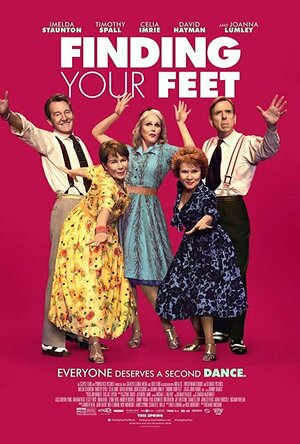
Sandra (Imelda Staunton, “Pride“) – now Lady Sandra, after her husband’s latest knighthood – is in a predictable, sex-free but reasonably happy marriage to legal beagle Mike (John Sessions, “Denial“, “Florence Foster Jenkins“) when her world is shaken to its core on discovering that Mike has been having a five-year affair with her best friend Pamela (Josie Lawrence). Moving in with her Bohemian sister Bif (Celia Imrie, “Bridget Jones Baby“), she struggles to integrate into her decidedly lower class lifestyle and find common ground with Bif’s dance club friends Charlie (Timothy Spall, “Denial“, “Mr Turner”), Ted (David Hayman) and Jackie (Joanna Lumley, “The Wolf of Wall Street“).
Can Sandra turn her downward spiral around and find love and happiness again? Well, the posters scream “The Feel Good Film of the Year” so you don’t need to be a rocket scientist to know the answer to that! But it’s a bumpy journey for sure.
Getting all the acting honours is Timothy Spall, who is far too good to be buried away in this small British rom com. To watch him do “ordinary bloke doing ordinary things” is an absolute delight. He adds class and distinction to every scene he’s in, especially for those concerned with his truly tragic and upsetting back-story. Running a close second is Celia Imrie who has a wicked smile off to perfection and adds a lot of emotional depth to her performance: and she needs the range, since she too is on a pretty emotional journey through the second half of the film.
John Sessions and Josie Lawrence – old compatriots of course from the original version of TV’s “Whose Line Is It Anyway” – also deliver marvellous cameo performances, as does Phoebe Nicholls (“The Elephant Man”, “Downton Abbey”) as the tennis playing friend Janet.
Less convincing for me was Imelda Staunton, particularly in the first half of the film: for me she never quite pulls off the icy cold emotional wreck of Sandra, but is much better once the thaw has set in.
The film is written by Meg Leonard (in a debut script) and Nick Moorcroft (who did the “St Trinians” scripts). And there are some funny lines in there, although it has to be said that there are not enough of them. The majority of the best ones in fact are in the trailer, never bettered by Joanna Lumley’s zinger…. “My last marriage ended for religious reasons…. he thought he was God and I didn’t”! There’s not much more room for comic lines, since the rest of the script is stuffed with the dramatic outcomes from various flavours of old-age malady. Fortunately I was one of the younger members of the generally grey-haired audience, but for those further up the scale it must have been like staring into the void!
The film will win no awards for choreography, since the dance scenes are gloriously inept and out of sync. But this all rather adds to the charm of the piece.
Directed by Richard Loncraine, director of the equally forgettable Brit-flick “Wimbledon” and the rather more memorable “Brimstone and Treacle”, this is as Douglas Adams would have said “Mostly Harmless”: a film that most over-50’s will find a pleasant way to spend two hours. But go in expecting a drama with comic moments, rather than the hilarious comedy predicted by the trailer, and you will be better prepared.
(I should comment that the rating below is my view: my illustrious wife declared it a triumphant chick-flick and gave it FFFFf).
Sandra (Imelda Staunton, “Pride“) – now Lady Sandra, after her husband’s latest knighthood – is in a predictable, sex-free but reasonably happy marriage to legal beagle Mike (John Sessions, “Denial“, “Florence Foster Jenkins“) when her world is shaken to its core on discovering that Mike has been having a five-year affair with her best friend Pamela (Josie Lawrence). Moving in with her Bohemian sister Bif (Celia Imrie, “Bridget Jones Baby“), she struggles to integrate into her decidedly lower class lifestyle and find common ground with Bif’s dance club friends Charlie (Timothy Spall, “Denial“, “Mr Turner”), Ted (David Hayman) and Jackie (Joanna Lumley, “The Wolf of Wall Street“).
Can Sandra turn her downward spiral around and find love and happiness again? Well, the posters scream “The Feel Good Film of the Year” so you don’t need to be a rocket scientist to know the answer to that! But it’s a bumpy journey for sure.
Getting all the acting honours is Timothy Spall, who is far too good to be buried away in this small British rom com. To watch him do “ordinary bloke doing ordinary things” is an absolute delight. He adds class and distinction to every scene he’s in, especially for those concerned with his truly tragic and upsetting back-story. Running a close second is Celia Imrie who has a wicked smile off to perfection and adds a lot of emotional depth to her performance: and she needs the range, since she too is on a pretty emotional journey through the second half of the film.
John Sessions and Josie Lawrence – old compatriots of course from the original version of TV’s “Whose Line Is It Anyway” – also deliver marvellous cameo performances, as does Phoebe Nicholls (“The Elephant Man”, “Downton Abbey”) as the tennis playing friend Janet.
Less convincing for me was Imelda Staunton, particularly in the first half of the film: for me she never quite pulls off the icy cold emotional wreck of Sandra, but is much better once the thaw has set in.
The film is written by Meg Leonard (in a debut script) and Nick Moorcroft (who did the “St Trinians” scripts). And there are some funny lines in there, although it has to be said that there are not enough of them. The majority of the best ones in fact are in the trailer, never bettered by Joanna Lumley’s zinger…. “My last marriage ended for religious reasons…. he thought he was God and I didn’t”! There’s not much more room for comic lines, since the rest of the script is stuffed with the dramatic outcomes from various flavours of old-age malady. Fortunately I was one of the younger members of the generally grey-haired audience, but for those further up the scale it must have been like staring into the void!
The film will win no awards for choreography, since the dance scenes are gloriously inept and out of sync. But this all rather adds to the charm of the piece.
Directed by Richard Loncraine, director of the equally forgettable Brit-flick “Wimbledon” and the rather more memorable “Brimstone and Treacle”, this is as Douglas Adams would have said “Mostly Harmless”: a film that most over-50’s will find a pleasant way to spend two hours. But go in expecting a drama with comic moments, rather than the hilarious comedy predicted by the trailer, and you will be better prepared.
(I should comment that the rating below is my view: my illustrious wife declared it a triumphant chick-flick and gave it FFFFf).
Bob Mann (459 KP) rated Viceroy's House (2017) in Movies
Sep 29, 2021

The 80:20 Rule.
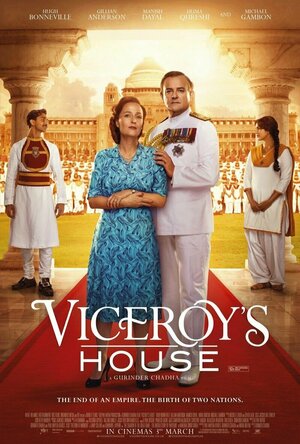
India, 1947. Churchill’s government has sent Lord Grantham – – sorry — Lord Louis Mountbatten of Burma (Hugh Bonneville, “The Monuments Men“) as the new Viceroy. His mission is to make sure he is the last ever Viceroy, for India is to be returned to independence. But racial tensions between the Hindu and minority Muslim populations are brittle and deteriorating fast. Can India survive as a single country, or will Mountbatten be forced to partition the country along religious lines to avoid civil-war and countless deaths?
Of course, there is little tension in this plot line since we know Pakistan was indeed founded by Muhammad Ali Jinnah (played by Denzil Smith) on August 14th 1947. (In reality, Jinnah’s victory was short lived as he died of TB the following year). The rest of India went on to be ruled by Jawaharlal Nehru (played by Tanveer Ghani). What the film does remind this generation of is the extreme cost of that partition, with riots, mass abductions and rapes, over a million estimated deaths and one of the biggest migrations of populations ever seen. (All of this is largely shown through original newsreel footage, which is effectively inter-weaved with the film).
So as an educational documentary it is useful. However, as an entertaining movie night out? Not so much. After coming out of the film we needed to buy some milk at Tesco and I was put on the spot by the checkout lady to sum-up the film: “Worthy but dull” was what I came up with, which with further time to reflect still seems a good summary.
This shouldn’t have been the case, since the film is directed by the well-respected Gurinder Chadha (“Bend it like Beckham) and boasts a stellar cast, with Bonneville supported by Gillian Anderson (“The X Files”) as Lady Mountbatten; Michael Gambon (“Harry Potter”) as General Ismay (Mountbatten’s chief of staff); Simon Callow (“Four Weddings and a Funeral”) as Radcliffe (the drawer of ‘the new map’); and Om Puri (“The Hundred Foot Journey“) as former political prisoner Ali Rahim Noor. Playing Mountbatten’s daughter is Lily Travers (“Kingsman: The Secret Service“): Virginia McKenna’s granddaughter.
But unfortunately, for me at least, the film lumbers from scene to scene, seldom engaging with me. Bonneville’s Mountbatten, whilst perfectly sound, was just a re-tread of Downton with added humidity and curry; Anderson’s (probably extremely accurate) crystal-glass English accent quickly becomes tiresome; and elsewhere a lot of the acting of the broader Indian cast is, I’m sorry to comment, rather sub-par. For me, only Om Puri, who sadly died in January, delivers an effective and moving performance as the blind father (literally) unable to see that the arranged marriage for his daughter Aalia (Huma Qureshi) is heading for trouble thanks to Mountbatten’s man-servant. And no, that isn’t a euphemism…. I’m talking about his real manservant, Jeet Kumar (Manish Dayal)!!
As an aside, the late Puri (probably most famous in western cinema for “East is East”) has made over 270 feature films in his prolific career, over and above his many appearances on Indian TV. And he still has another 6 films to be released! May he rest in peace.
Probably realising that the historical plot is not enough to sustain the film, the screenwriters Paul Mayeda Berges (“Bend it like Beckham”), Moira Buffini (“Tamara Drewe”) and Gurinder Chadha try to add more substance with the illicit romance between the Hindu Jeet and the Muslim Aalia. Unfortunately this is clunky at best, with an incessant 30 minutes-worth of longing looks before anything of substance happens. Even the “Lion“-style denouement (also with a railway train connection) is unconvincing.
After that, the film just tends to peter out, with a ‘real-life photograph’ segue delivering a rather tenuous connection between a character not even featured in the film and the director!
Mrs. Chadha has clearly corralled an army of extras to deliver some of the scenes in the film, in the hope of delivering a historical epic of the scale of Attenborough’s “Gandhi”. For me, she misses by a considerable margin. But that’s just my view….. if you like historical dramas, its a film you might enjoy: as the great man himself said “Honest disagreement is often a good sign of progress”.
Of course, there is little tension in this plot line since we know Pakistan was indeed founded by Muhammad Ali Jinnah (played by Denzil Smith) on August 14th 1947. (In reality, Jinnah’s victory was short lived as he died of TB the following year). The rest of India went on to be ruled by Jawaharlal Nehru (played by Tanveer Ghani). What the film does remind this generation of is the extreme cost of that partition, with riots, mass abductions and rapes, over a million estimated deaths and one of the biggest migrations of populations ever seen. (All of this is largely shown through original newsreel footage, which is effectively inter-weaved with the film).
So as an educational documentary it is useful. However, as an entertaining movie night out? Not so much. After coming out of the film we needed to buy some milk at Tesco and I was put on the spot by the checkout lady to sum-up the film: “Worthy but dull” was what I came up with, which with further time to reflect still seems a good summary.
This shouldn’t have been the case, since the film is directed by the well-respected Gurinder Chadha (“Bend it like Beckham) and boasts a stellar cast, with Bonneville supported by Gillian Anderson (“The X Files”) as Lady Mountbatten; Michael Gambon (“Harry Potter”) as General Ismay (Mountbatten’s chief of staff); Simon Callow (“Four Weddings and a Funeral”) as Radcliffe (the drawer of ‘the new map’); and Om Puri (“The Hundred Foot Journey“) as former political prisoner Ali Rahim Noor. Playing Mountbatten’s daughter is Lily Travers (“Kingsman: The Secret Service“): Virginia McKenna’s granddaughter.
But unfortunately, for me at least, the film lumbers from scene to scene, seldom engaging with me. Bonneville’s Mountbatten, whilst perfectly sound, was just a re-tread of Downton with added humidity and curry; Anderson’s (probably extremely accurate) crystal-glass English accent quickly becomes tiresome; and elsewhere a lot of the acting of the broader Indian cast is, I’m sorry to comment, rather sub-par. For me, only Om Puri, who sadly died in January, delivers an effective and moving performance as the blind father (literally) unable to see that the arranged marriage for his daughter Aalia (Huma Qureshi) is heading for trouble thanks to Mountbatten’s man-servant. And no, that isn’t a euphemism…. I’m talking about his real manservant, Jeet Kumar (Manish Dayal)!!
As an aside, the late Puri (probably most famous in western cinema for “East is East”) has made over 270 feature films in his prolific career, over and above his many appearances on Indian TV. And he still has another 6 films to be released! May he rest in peace.
Probably realising that the historical plot is not enough to sustain the film, the screenwriters Paul Mayeda Berges (“Bend it like Beckham”), Moira Buffini (“Tamara Drewe”) and Gurinder Chadha try to add more substance with the illicit romance between the Hindu Jeet and the Muslim Aalia. Unfortunately this is clunky at best, with an incessant 30 minutes-worth of longing looks before anything of substance happens. Even the “Lion“-style denouement (also with a railway train connection) is unconvincing.
After that, the film just tends to peter out, with a ‘real-life photograph’ segue delivering a rather tenuous connection between a character not even featured in the film and the director!
Mrs. Chadha has clearly corralled an army of extras to deliver some of the scenes in the film, in the hope of delivering a historical epic of the scale of Attenborough’s “Gandhi”. For me, she misses by a considerable margin. But that’s just my view….. if you like historical dramas, its a film you might enjoy: as the great man himself said “Honest disagreement is often a good sign of progress”.

Hazel (1853 KP) rated The Witchwood Crown in Books
Jul 22, 2017
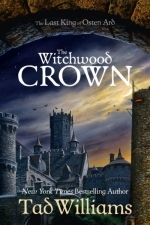

Gosh, what a long book!
Review I received this book for free through Goodreads First Reads.
Approximately 30 years ago, the first novel in Tad Williams’ Memory, Sorrow and Thorn trilogy was published. Fans all over the world adored this high fantasy story about a young kitchen boy, Simon, who goes on to become King of Ostern Ard. Now Williams’ has returned to the fictional lands with a follow-up trilogy, The Last King of Ostern Ard.
Three decades have been and gone since the ending of the previous series. The Witchwood Crown explores the changes that have occurred since the epic story finished, unfortunately, things are not looking good. Simon and his wife, Miriamele, have suffered a few personal tragedies, leaving them with two fatherless grandchildren. Young Lillia is an out spoken child who expostulates with everyone in order to get her way – she is a princess after all. Morgan, the heir, is rather obtuse in comparison; a lazy young man whose vexatious behaviour constantly causes the Royals to despair. However, this is only a tiny problem in their restless kingdom.
The Norn Queen, an antagonist of the original story, has been asleep for the past few decades. Mortals foolishly believed they were safe from the evil character, yet unexpectedly, she has awoken and is determined to destroy humanity. Too weak to carry out her own plans, she infiltrates the minds of the members of her immortal race, sending them off on perilous missions, for example, to extract blood from a live dragon.
As well as Simon’s city and the Norns, there are several more important characters and locations, each with their own on going storyline. A mix of assiduous and animus personas shake up the peace that had settled at the closing of Memory, Sorrow and Thorn. It is almost impossible to fathom whom the good and bad are, especially when reading from so many different points of view.
If the 700 odd pages did not already give it away, the inclusion of maps and appendixes prove the book to contain an extremely lengthy tale. Flitting from one set of characters to another, it is hard to keep up with the hundreds of names and roles. It does not help that the majority are unpronounceable, full of additional apostrophes making them as unlike English names as possible – a usual trait of fantasy fiction.
Not only are the names difficult to pronounce, the words and vernacular some of the characters use are just as dumbfounding. Thankfully, definitions are provided at the back of the book, but to keep flipping between pages can get quite tedious after a while.
The sheer number of characters makes it difficult to unearth the main storyline. In fact, there does not appear to be a strong plot at all. Judging by the ending, it is as though The Witchwood Crown is only an introduction to the narrative that will begin in the following book.
Reading the primary series first will have its benefits, however, it is not mandatory. New readers, like myself, are able to pick up snippets of past events and piece together the lead up to the current scenario. Although a work of historical fantasy, it is possible to see elements of real life within the story. Dragons and fairies may not exist in our world, but similar beliefs and systems are relatable. For instance, the days of the week are obviously based on the English names: Sunday, Moonday, Tiasday, Udunsday, Drorsday, Frayday and Satrinsday.
The most striking connection between real and imagined is the religious beliefs of different clans and species. Many of the mortals have taken, up what is suggested to be, a new religion. There are so many similarities; it is undoubtedly based on Christianity. Likewise, other beliefs are comparable to pagan rites and ceremonies of the distant past.
The Witchwood Crown is not an easy book to read, neither is it all that exciting. On the other hand, it is interesting. It is equivalent to reading historical information with the added benefit of mythical creatures. This is not a quick read; therefore you need to be dedicated to sitting down and pacing through the story. It is definitely targeted at high fantasy fans – in fact, the original stories influenced George R. R. Martin (A Game of Thrones) – who are used to the length and complexity of the narrative
Approximately 30 years ago, the first novel in Tad Williams’ Memory, Sorrow and Thorn trilogy was published. Fans all over the world adored this high fantasy story about a young kitchen boy, Simon, who goes on to become King of Ostern Ard. Now Williams’ has returned to the fictional lands with a follow-up trilogy, The Last King of Ostern Ard.
Three decades have been and gone since the ending of the previous series. The Witchwood Crown explores the changes that have occurred since the epic story finished, unfortunately, things are not looking good. Simon and his wife, Miriamele, have suffered a few personal tragedies, leaving them with two fatherless grandchildren. Young Lillia is an out spoken child who expostulates with everyone in order to get her way – she is a princess after all. Morgan, the heir, is rather obtuse in comparison; a lazy young man whose vexatious behaviour constantly causes the Royals to despair. However, this is only a tiny problem in their restless kingdom.
The Norn Queen, an antagonist of the original story, has been asleep for the past few decades. Mortals foolishly believed they were safe from the evil character, yet unexpectedly, she has awoken and is determined to destroy humanity. Too weak to carry out her own plans, she infiltrates the minds of the members of her immortal race, sending them off on perilous missions, for example, to extract blood from a live dragon.
As well as Simon’s city and the Norns, there are several more important characters and locations, each with their own on going storyline. A mix of assiduous and animus personas shake up the peace that had settled at the closing of Memory, Sorrow and Thorn. It is almost impossible to fathom whom the good and bad are, especially when reading from so many different points of view.
If the 700 odd pages did not already give it away, the inclusion of maps and appendixes prove the book to contain an extremely lengthy tale. Flitting from one set of characters to another, it is hard to keep up with the hundreds of names and roles. It does not help that the majority are unpronounceable, full of additional apostrophes making them as unlike English names as possible – a usual trait of fantasy fiction.
Not only are the names difficult to pronounce, the words and vernacular some of the characters use are just as dumbfounding. Thankfully, definitions are provided at the back of the book, but to keep flipping between pages can get quite tedious after a while.
The sheer number of characters makes it difficult to unearth the main storyline. In fact, there does not appear to be a strong plot at all. Judging by the ending, it is as though The Witchwood Crown is only an introduction to the narrative that will begin in the following book.
Reading the primary series first will have its benefits, however, it is not mandatory. New readers, like myself, are able to pick up snippets of past events and piece together the lead up to the current scenario. Although a work of historical fantasy, it is possible to see elements of real life within the story. Dragons and fairies may not exist in our world, but similar beliefs and systems are relatable. For instance, the days of the week are obviously based on the English names: Sunday, Moonday, Tiasday, Udunsday, Drorsday, Frayday and Satrinsday.
The most striking connection between real and imagined is the religious beliefs of different clans and species. Many of the mortals have taken, up what is suggested to be, a new religion. There are so many similarities; it is undoubtedly based on Christianity. Likewise, other beliefs are comparable to pagan rites and ceremonies of the distant past.
The Witchwood Crown is not an easy book to read, neither is it all that exciting. On the other hand, it is interesting. It is equivalent to reading historical information with the added benefit of mythical creatures. This is not a quick read; therefore you need to be dedicated to sitting down and pacing through the story. It is definitely targeted at high fantasy fans – in fact, the original stories influenced George R. R. Martin (A Game of Thrones) – who are used to the length and complexity of the narrative

BookblogbyCari (345 KP) rated A Short History of the World in Books
Aug 5, 2018
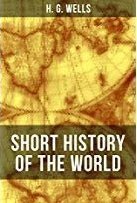
Best known for his classic fiction, HG Wells also wrote a non-fiction book summarising the history of the world, going from the history of the solar system, right up to the date the book was published in 1922.
As I hoped, the book often reads like a novel, with 67 distinct sections, each like a mini story. In order to fit the history of the whole world into one book, by nature the story telling ranges from nice and rapid, to a little too rapid. I found it rather like a catalogue of numerous interesting little nuggets of information. Despite covering events from all over the world, the topics often flow seamlessly from one topic to the next. Due to so many overlapping topics, this history of the world isn't told in a linear purely chronological pattern, but has to go backwards a little, now and again.
At various times throughout, the stories are gripping and Wells successfully brings history to life. I particularly liked the various sections on religious leaders. Appropriately, Wells tackles religion as would any unbiased historian-become storyteller. I also enjoyed the beginning, where Wells paints a crystal clear picture of our solar system and the vast empty space that our dramas are within. His description of our galaxy sounds nothing short of beautiful.
The book was meant to be predominantly factual, but Wells did include a substantial amount of speculation and opinion. This does not distract from the storyline, but adds value in generating the concepts of the time periods.
It covers progress and prosperity as much as carnage and decimation, and provides good explanations of everything it covers. (Although it would benefit from more illustrations). At times it feels detail heavy but also gives the reader a feel for each age - the book is not limited to which country went to war with which country and when, but also examines changes in ways of thinking through the ages. Including the Ancient Greek philosophers, Arabian progress in maths and science, the advent of experimental science, and the development of political and social ideas in Wells’ time.
I was reassured to learn that despite not studying the history of the world in its entirety in school, I was already familiar with much of the book’s content. Having said that, there were also topics where I really felt I was learning something. I read Wells’ opinion on why the Roman Empire fell, and how the industrial revolution was not merely a revolution in machinery, but rather a revolution in how people conducted their everyday lives. There were also some important figures from history described that were never mentioned in my school days, particularly Charlemagne and Roger Bacon.
Towards the end of the book, Wells correctly predicts another war like that of the Great War. However his final message was one of faith and hope in humanity’s progress.
With such a huge scope, Wells must have struggled with deciding what topics to include and what to exclude. I thought he ought to have included a touch more detail on Ancient Egypt, and on the causes of the Great War (World War 1). As a British person myself I would have liked to have seen more on British history.
Likewise, if the book were written now rather than 1922 I began to speculate on what he would and wouldn’t have included. I imagine there would certainly be a section on World War 2, rockets into space, the internet, and 9/11. He would have provided an excellently conducted section on how humans are destroying the planet.
One of the beauties of this book has to be its availability. If you type “short history of the world” into Google, the free PDF of this book takes up much of the first 2 pages of results. If you’re sketchy on world history, this book will fill in the main blanks, and is worth a read if this is your aim, especially if you wish to do so quickly. The fact that it’s split up into so many succinct sections also means that you can pick up and put down the book as often as opportunity allows. It also works well as a reference book, as it does not need to be read from cover to cover in order to look up one particular event or time period.
In summary, this book would be a welcome addition to bookshelf (or ebook library) of the general non-fiction fan or historian.
Find more of my book review on www.bookblogbycari.com
As I hoped, the book often reads like a novel, with 67 distinct sections, each like a mini story. In order to fit the history of the whole world into one book, by nature the story telling ranges from nice and rapid, to a little too rapid. I found it rather like a catalogue of numerous interesting little nuggets of information. Despite covering events from all over the world, the topics often flow seamlessly from one topic to the next. Due to so many overlapping topics, this history of the world isn't told in a linear purely chronological pattern, but has to go backwards a little, now and again.
At various times throughout, the stories are gripping and Wells successfully brings history to life. I particularly liked the various sections on religious leaders. Appropriately, Wells tackles religion as would any unbiased historian-become storyteller. I also enjoyed the beginning, where Wells paints a crystal clear picture of our solar system and the vast empty space that our dramas are within. His description of our galaxy sounds nothing short of beautiful.
The book was meant to be predominantly factual, but Wells did include a substantial amount of speculation and opinion. This does not distract from the storyline, but adds value in generating the concepts of the time periods.
It covers progress and prosperity as much as carnage and decimation, and provides good explanations of everything it covers. (Although it would benefit from more illustrations). At times it feels detail heavy but also gives the reader a feel for each age - the book is not limited to which country went to war with which country and when, but also examines changes in ways of thinking through the ages. Including the Ancient Greek philosophers, Arabian progress in maths and science, the advent of experimental science, and the development of political and social ideas in Wells’ time.
I was reassured to learn that despite not studying the history of the world in its entirety in school, I was already familiar with much of the book’s content. Having said that, there were also topics where I really felt I was learning something. I read Wells’ opinion on why the Roman Empire fell, and how the industrial revolution was not merely a revolution in machinery, but rather a revolution in how people conducted their everyday lives. There were also some important figures from history described that were never mentioned in my school days, particularly Charlemagne and Roger Bacon.
Towards the end of the book, Wells correctly predicts another war like that of the Great War. However his final message was one of faith and hope in humanity’s progress.
With such a huge scope, Wells must have struggled with deciding what topics to include and what to exclude. I thought he ought to have included a touch more detail on Ancient Egypt, and on the causes of the Great War (World War 1). As a British person myself I would have liked to have seen more on British history.
Likewise, if the book were written now rather than 1922 I began to speculate on what he would and wouldn’t have included. I imagine there would certainly be a section on World War 2, rockets into space, the internet, and 9/11. He would have provided an excellently conducted section on how humans are destroying the planet.
One of the beauties of this book has to be its availability. If you type “short history of the world” into Google, the free PDF of this book takes up much of the first 2 pages of results. If you’re sketchy on world history, this book will fill in the main blanks, and is worth a read if this is your aim, especially if you wish to do so quickly. The fact that it’s split up into so many succinct sections also means that you can pick up and put down the book as often as opportunity allows. It also works well as a reference book, as it does not need to be read from cover to cover in order to look up one particular event or time period.
In summary, this book would be a welcome addition to bookshelf (or ebook library) of the general non-fiction fan or historian.
Find more of my book review on www.bookblogbycari.com

Chris Sawin (602 KP) rated Antikörper (Antibodies) (2007) in Movies
Jun 18, 2019


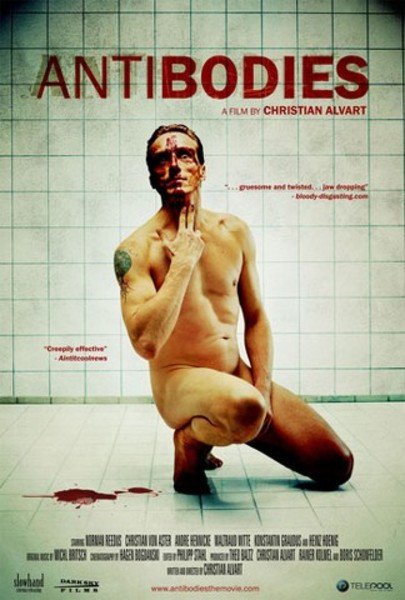
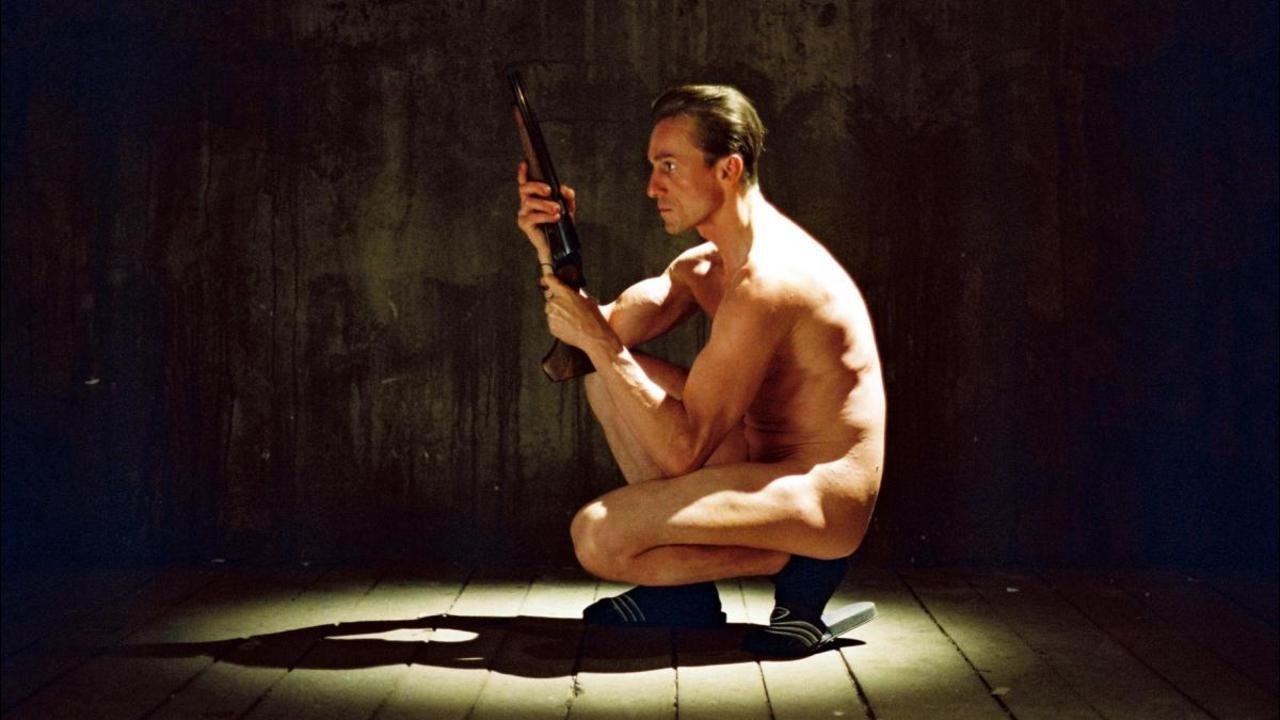
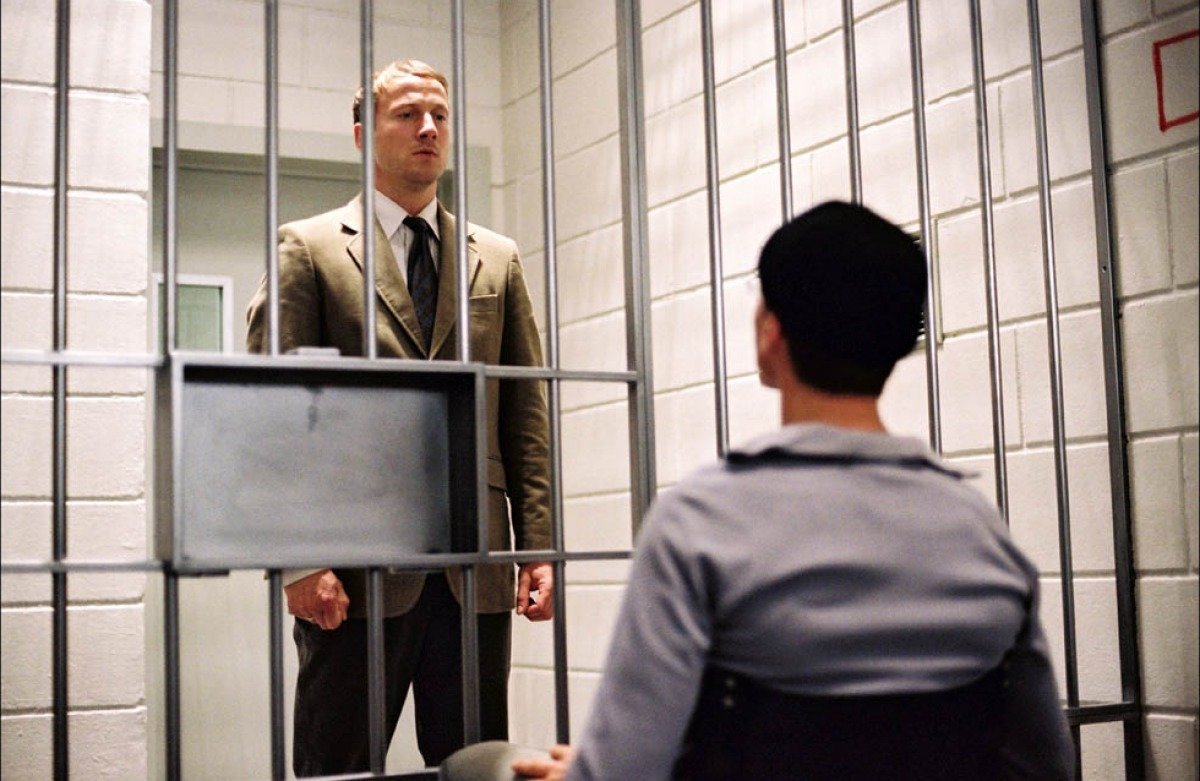
A serial killer named Gabriel Engel (André Hennicke, Pandorum) that the police have been after for months has finally been captured. This is where most stories would end happily ever after, but instead this is how Antibodies begins. Michael Martens (Wotan Wilke Möhring, Valkyrie), a cop from a small, rural town had an unsolved case from a year ago concerning a 12-year-old girl named Lucia Flieder and Michael intends to interrogate Gabriel in hopes of a confession for her murder.
Gabriel already admitted to being in the area around the time of Lucia’s death, but her murder doesn’t entirely fit his M.O. But Michael plays right into Gabriel’s hands and becomes the pawn in his sick, psychological game as he’s able to get into Michael’s head from the moment they meet and remains there until the credits roll. The question isn’t, “Will Michael be able to find what he’s looking for?” but is instead, “Will Michael be able to survive the cerebral hedge maze Gabriel has thrown him into?”
Written and directed by Christian Alvart (Case 39, Pandorum), Antibodies is a German crime drama thriller that is worth seeing for André Hennicke’s performance alone. His portrayal of Gabriel is psychotic, disturbing, and extraordinarily mesmerizing as he steals nearly every scene he’s in. Hennicke embodies Gabriel and brings the character to life in all of his monstrously disquieting glory. There’s a brief sequence where Gabriel is drawing in his cell and he slowly starts pulling out his hair. There’s no dialogue, but Hennicke is able to pull it off with such terrifying elegance that it is incredible to witness.
Wotan Wilke Möhring is also quite impressive as Michael Martens. Michael struggles with the mental obstacles Gabriel throws at him throughout the film. Möhring is fantastically efficient at portraying a man who devoted his life to being an abiding citizen that is also committed to his religion. He cares deeply about his family and is now slowly losing his grip on his so-called perfect life. The interrogation scenes between Michael and Gabriel seem to simultaneously be homage to The Silence of the Lambs while also offering something different with its complete mastery of tension and Gabriel’s ulterior motives ring loudly upon the audience yet fall on deaf ears to a gullible Michael.
The religious parallels are incredibly interesting and deserve recognition, as well. The film has a tendency to not only reveal these parallels, but dives into them in a way that is easy to understand for the audience; the similarities between Michael and the archangel Gabriel are uncanny. The ending involving the test Gabriel gives Michael is all a part of a twisted game Gabriel plays and the web he’s spun has managed to get Michael tangled up in it. The film makes you think you know where it’s headed before it takes an unexpected detour and ends up going in the opposite direction.
Perhaps the most unusual aspect of the film is the involvement of Norman Reedus. The Wikipedia entry for Antibodies is still so bare, but apparently Reedus did his part in the film for free. Before The Walking Dead came along, Reedus was known best for his roles in The Boondock Saints, 8MM, Blade II, and the John Carpenter directed Masters of Horror episode, “Cigarette Burns.” Reedus has always taken part in projects that are unusual, but typically turn out to be fairly awesome. It was a great change of pace to see him show up and speak a few lines of German without a crossbow or a motorcycle.
Antibodies isn’t without its flaws as its script is often juvenile with the way it references sex and pleasuring yourself way more often than it should. The German thriller is still able to capitalize on a wonderfully tense and magnificently unsettling atmosphere with two incredibly strong leads that make the whole journey worthwhile. The story is riveting despite a few hiccups, the cast is top notch, the cinematography is excellent, and its unpredictable outcome is brilliant.
Antibodies is currently streaming on Amazon Video and Vudu for $2.99. The 2-disc special edition DVD is available for $24.98 on Amazon while the standard DVD is between $19.99 and $43.41. The film is available on DVD for various prices on eBay with the best offers being a pre-owned version of the single disc edition for $5.39 (10% off its normal $5.99 price) and the two-disc edition for $18.24; both have free shipping.
Gabriel already admitted to being in the area around the time of Lucia’s death, but her murder doesn’t entirely fit his M.O. But Michael plays right into Gabriel’s hands and becomes the pawn in his sick, psychological game as he’s able to get into Michael’s head from the moment they meet and remains there until the credits roll. The question isn’t, “Will Michael be able to find what he’s looking for?” but is instead, “Will Michael be able to survive the cerebral hedge maze Gabriel has thrown him into?”
Written and directed by Christian Alvart (Case 39, Pandorum), Antibodies is a German crime drama thriller that is worth seeing for André Hennicke’s performance alone. His portrayal of Gabriel is psychotic, disturbing, and extraordinarily mesmerizing as he steals nearly every scene he’s in. Hennicke embodies Gabriel and brings the character to life in all of his monstrously disquieting glory. There’s a brief sequence where Gabriel is drawing in his cell and he slowly starts pulling out his hair. There’s no dialogue, but Hennicke is able to pull it off with such terrifying elegance that it is incredible to witness.
Wotan Wilke Möhring is also quite impressive as Michael Martens. Michael struggles with the mental obstacles Gabriel throws at him throughout the film. Möhring is fantastically efficient at portraying a man who devoted his life to being an abiding citizen that is also committed to his religion. He cares deeply about his family and is now slowly losing his grip on his so-called perfect life. The interrogation scenes between Michael and Gabriel seem to simultaneously be homage to The Silence of the Lambs while also offering something different with its complete mastery of tension and Gabriel’s ulterior motives ring loudly upon the audience yet fall on deaf ears to a gullible Michael.
The religious parallels are incredibly interesting and deserve recognition, as well. The film has a tendency to not only reveal these parallels, but dives into them in a way that is easy to understand for the audience; the similarities between Michael and the archangel Gabriel are uncanny. The ending involving the test Gabriel gives Michael is all a part of a twisted game Gabriel plays and the web he’s spun has managed to get Michael tangled up in it. The film makes you think you know where it’s headed before it takes an unexpected detour and ends up going in the opposite direction.
Perhaps the most unusual aspect of the film is the involvement of Norman Reedus. The Wikipedia entry for Antibodies is still so bare, but apparently Reedus did his part in the film for free. Before The Walking Dead came along, Reedus was known best for his roles in The Boondock Saints, 8MM, Blade II, and the John Carpenter directed Masters of Horror episode, “Cigarette Burns.” Reedus has always taken part in projects that are unusual, but typically turn out to be fairly awesome. It was a great change of pace to see him show up and speak a few lines of German without a crossbow or a motorcycle.
Antibodies isn’t without its flaws as its script is often juvenile with the way it references sex and pleasuring yourself way more often than it should. The German thriller is still able to capitalize on a wonderfully tense and magnificently unsettling atmosphere with two incredibly strong leads that make the whole journey worthwhile. The story is riveting despite a few hiccups, the cast is top notch, the cinematography is excellent, and its unpredictable outcome is brilliant.
Antibodies is currently streaming on Amazon Video and Vudu for $2.99. The 2-disc special edition DVD is available for $24.98 on Amazon while the standard DVD is between $19.99 and $43.41. The film is available on DVD for various prices on eBay with the best offers being a pre-owned version of the single disc edition for $5.39 (10% off its normal $5.99 price) and the two-disc edition for $18.24; both have free shipping.


Neon's Nerd Nexus (360 KP) rated The Exorcist (1973) in Movies
Oct 17, 2019


Its a scream
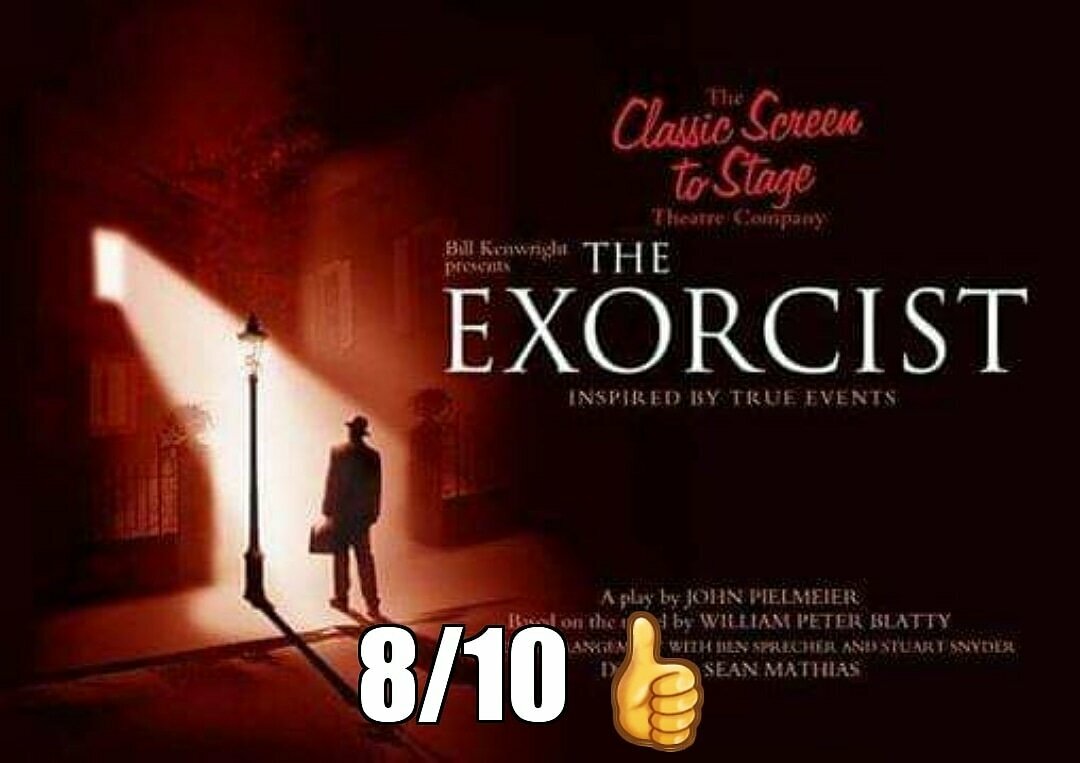
This is a guest review for the stage show of The Exorcist not for the movie written by my good friend jappyscraps (on instagram) which I'm very thankful for.
The Exorcist on stage – Alexandra Theatre, Birmingham, 16/10/19
It’s my number one film of all-time so naturally I approached this production with some caution. Any stage adaptations of films have to be stripped down for obvious reasons and with The Exorcist having some key technical moments I was eager to see how they achieved them or even included them at all.
There’s a very clever build-up to the show with a steady drone of religious chanting and indecipherable voices, whispers and moans which stay with you before a massive crack rips through the sound system and the theatre is plunged into total darkness. It’s quite unsettling and there were a lot of nervous giggles and squeaks in the audience. A light appears at the top of the stage set and Father Merrin (played by Paul Nicholas, yes him of 80’s sitcom ‘Just Good Friends’ fame and one-time pop star) appears, speaks a few lines which we couldn’t hear at all and then promptly disappears and the stage lights reveal the MacNeil household below where Chris MacNeil and her daughter Regan. They obviously have a close bond and the next few minutes is spent establishing this and introducing the character of Burke, a film director and friend of actress Chris, who provides some occasional comedy touches. There are scenes of Regan playing with a Ouija board which she discovers in the attic. This is the first introduction of the demon that Regan refers to as Captain Howdy. Unlike the film, we hear the demon speaking in the early stages of Regan’s possession. The demon’s voice is provided by (a pre-recorded) Sir Ian McKellen and his performance is brilliant despite it sounding nothing like Mercedes McCambridge in the original.
At this stage we have lost one of the key characters and if you know the story well you will know who this is. As Reagan’s behaviour deteriorates, we are introduced to various doctors and psychiatrists before a priest friend of Chris suggests she talks to Father Karras, a key character in The Exorcist. When Karras first meets Regan she is in her bed, restrained by straps and speaking in the demon’s voice. Susannah Edgeley as Regan does a magnificent job lip-synching to McKellen’s voice, she does not miss a beat and her performance overall steals the show.
Father Karras is not convinced that an exorcism is the answer but, as we know, events take a turn for the worse and a frail Father Merrin is summoned for a showdown with the demon, which is the show’s dramatic (and loud) finale.
If you are wondering if all of The Exorcist’s key moments are included in the stage show I can confirm that most of them are, even if they don’t appear in the same scenes in the film. So, the crucifix scene is present and correct, though not so bloody and graphic. Regan’s head spin is there, achieved by what you might describe as a Penn & Teller trick but it is surprisingly effective. Regan does vomit during the exorcism but the classic scene of her projectile vomiting over Karras isn’t there, probably a step too far for a stage show. There is no levitation in the exorcism but there is a clever effect where Regan is catapulted forward on the bed, as if pushed forward by the demon. It’s all very impressive stuff.
The Exorcist on stage is very good, fans of the film will enjoy picking up on the original dialogue and dissecting the new lines and plotline. Some characters from the film don’t appear at all, the key one being Lieutenant Kinderman (played by Lee J. Cobb in the film) which I was a little disappointed about. My main issues were with the sound on occasions, particularly not hearing the actors deliver their lines clearly but it was a minor niggle. The character of Burke Dennings is renamed Burke Dennis in the stage show and I have no idea why – I was frankly irritated by it. The performances of Susannah Edgeley and McKellen’s demon more than make up for it though. The stage set is excellent and the lights and sound effects were top notch. I’d recommend it without hesitation, just don’t expect a scene for scene reboot of the film or you will be very disappointed.
The Exorcist on stage – Alexandra Theatre, Birmingham, 16/10/19
It’s my number one film of all-time so naturally I approached this production with some caution. Any stage adaptations of films have to be stripped down for obvious reasons and with The Exorcist having some key technical moments I was eager to see how they achieved them or even included them at all.
There’s a very clever build-up to the show with a steady drone of religious chanting and indecipherable voices, whispers and moans which stay with you before a massive crack rips through the sound system and the theatre is plunged into total darkness. It’s quite unsettling and there were a lot of nervous giggles and squeaks in the audience. A light appears at the top of the stage set and Father Merrin (played by Paul Nicholas, yes him of 80’s sitcom ‘Just Good Friends’ fame and one-time pop star) appears, speaks a few lines which we couldn’t hear at all and then promptly disappears and the stage lights reveal the MacNeil household below where Chris MacNeil and her daughter Regan. They obviously have a close bond and the next few minutes is spent establishing this and introducing the character of Burke, a film director and friend of actress Chris, who provides some occasional comedy touches. There are scenes of Regan playing with a Ouija board which she discovers in the attic. This is the first introduction of the demon that Regan refers to as Captain Howdy. Unlike the film, we hear the demon speaking in the early stages of Regan’s possession. The demon’s voice is provided by (a pre-recorded) Sir Ian McKellen and his performance is brilliant despite it sounding nothing like Mercedes McCambridge in the original.
At this stage we have lost one of the key characters and if you know the story well you will know who this is. As Reagan’s behaviour deteriorates, we are introduced to various doctors and psychiatrists before a priest friend of Chris suggests she talks to Father Karras, a key character in The Exorcist. When Karras first meets Regan she is in her bed, restrained by straps and speaking in the demon’s voice. Susannah Edgeley as Regan does a magnificent job lip-synching to McKellen’s voice, she does not miss a beat and her performance overall steals the show.
Father Karras is not convinced that an exorcism is the answer but, as we know, events take a turn for the worse and a frail Father Merrin is summoned for a showdown with the demon, which is the show’s dramatic (and loud) finale.
If you are wondering if all of The Exorcist’s key moments are included in the stage show I can confirm that most of them are, even if they don’t appear in the same scenes in the film. So, the crucifix scene is present and correct, though not so bloody and graphic. Regan’s head spin is there, achieved by what you might describe as a Penn & Teller trick but it is surprisingly effective. Regan does vomit during the exorcism but the classic scene of her projectile vomiting over Karras isn’t there, probably a step too far for a stage show. There is no levitation in the exorcism but there is a clever effect where Regan is catapulted forward on the bed, as if pushed forward by the demon. It’s all very impressive stuff.
The Exorcist on stage is very good, fans of the film will enjoy picking up on the original dialogue and dissecting the new lines and plotline. Some characters from the film don’t appear at all, the key one being Lieutenant Kinderman (played by Lee J. Cobb in the film) which I was a little disappointed about. My main issues were with the sound on occasions, particularly not hearing the actors deliver their lines clearly but it was a minor niggle. The character of Burke Dennings is renamed Burke Dennis in the stage show and I have no idea why – I was frankly irritated by it. The performances of Susannah Edgeley and McKellen’s demon more than make up for it though. The stage set is excellent and the lights and sound effects were top notch. I’d recommend it without hesitation, just don’t expect a scene for scene reboot of the film or you will be very disappointed.