Search
Search results

Gareth von Kallenbach (980 KP) rated Injustice: Gods Among Us in Apps
Jun 19, 2019


Superhero games of often been a mixed bag for gamers. For every Batman Arkham Asylum, there are several titles that failed to deliver the goods and have been relegated to being largely forgettable efforts. Thankfully Injustice: Gods Among Us is a very nice surprise indeed. Not only is it a very solid and enjoyable superhero game, but it is a top-flight fighting game as well. The game is told over 12 chapters and each chapter requires the player to play as one of several heroes or villains. The story is propelled through cut scenes which outline a very detailed and elaborate threat to the world as well is the response that the various characters have to this situation as well as each other.
A typical chapter involves three or so fights that a character has to win in order to move on to the next segment. Since the game is done by the folks who created the recent and highly outstanding Mortal Kombat game this format should be very familiar to anybody who is a fan of fighting games. One of the nice features of the game is that it does not require the best two out of three in order for a player to advance. One victory is sufficient but players get a letter of armor protection over their standard health protection which requires players to inflict a severe amount of damage upon an opponent to win a match.
Should a player fall in battle there immediately able to retry it and after a few subsequent failures the opponent’s abilities ramp down to make advancement slightly easier. There are numerous combat moves available and they differ according to characters. This does require a bit of learning as oddly enough I found playing as Batman to be the most underwhelming character of the game. This is not to say it was not fun simply that I found his combat options rather mundane compared to that of other characters. Since Batman plays a large role in the game you could see how this could be slightly frustrating to me. Interestingly enough, Aquaman and Green Arrow were an absolute delight to play as I found their combat system to be much better suited for my style of play and really enjoyed the options I was able to employ as well as the phenomenal finishing moves that each character has available to them.
In one sequence I was getting pummeled quite severely by Nightwing who unleashed a furious attack on me which knocked me into a new locale. Interestingly enough, the new locale was right into the arms of Killer Croc who was holding a meeting with the penguin and other underworld types, who were kind enough to take the time to smack me around a bit before sending me back out to battle. There were also some interesting mini games such as shooting cars away that had been thrown at me and a very enjoyable one as the Joker or I had to deal cards at an oncoming enemy. Failure to successfully complete one of these mini games resulted in starting a level with the reduced armor capacity.
As the game went on I found myself really enjoying the story but becoming frustrated with what appeared to be a slower than normal reaction time from the characters. He did take a bit of adjustment to my gameplay style, but I was able to complete the challenge and finished the game despite some frustrations.
The game has some fantastic character surprises as well as some very interesting voice talent in it but what I find most amazing is the sheer value and variety of the game. Not only are there the story and online modes which in and of themselves would be more than enough to justify the purchase of the game. There are also challenge modes and scenarios such as S.T.A.R. Labs were various challenge scenarios involving different characters are available for players to test their skills in. This mode alone would’ve made a very interesting and rewarding game and the fact that there is both a story and online mode available really allows this game shine.
When you do with superheroes you must have a lot of belief suspended in order for the story to work. One such example was believing that certain characters could take the beating was being thrown down on them by Superman and come back for more with only a little bit of their armor or health diminished. That being said, I was always happy to dish out more for any of them who wanted it as I especially enjoyed the phenomenal ultra moves of each character as well as being able to interact with the background and bring certain objects into play. During one battle in a hangar, I was able to finish off the opponent by grabbing a tool chest and swatting them like a bug. Another scenario allowed me to pull a missile that was hanging overhead down upon an unsuspecting opponent.
The graphics and sound of the game are first rate and there is absolutely no reason why anybody who is a fan of comic books, superheroes, or fighting games should not get this game especially with the promise of new characters and scenarios being made available in the future through downloadable content. The list of characters in the game alone is impressive and this is truly a phenomenal experience for those who have been waiting for a games do justice to their favorite DC comics characters.
http://sknr.net/2013/04/29/injustice-gods-among-us/
A typical chapter involves three or so fights that a character has to win in order to move on to the next segment. Since the game is done by the folks who created the recent and highly outstanding Mortal Kombat game this format should be very familiar to anybody who is a fan of fighting games. One of the nice features of the game is that it does not require the best two out of three in order for a player to advance. One victory is sufficient but players get a letter of armor protection over their standard health protection which requires players to inflict a severe amount of damage upon an opponent to win a match.
Should a player fall in battle there immediately able to retry it and after a few subsequent failures the opponent’s abilities ramp down to make advancement slightly easier. There are numerous combat moves available and they differ according to characters. This does require a bit of learning as oddly enough I found playing as Batman to be the most underwhelming character of the game. This is not to say it was not fun simply that I found his combat options rather mundane compared to that of other characters. Since Batman plays a large role in the game you could see how this could be slightly frustrating to me. Interestingly enough, Aquaman and Green Arrow were an absolute delight to play as I found their combat system to be much better suited for my style of play and really enjoyed the options I was able to employ as well as the phenomenal finishing moves that each character has available to them.
In one sequence I was getting pummeled quite severely by Nightwing who unleashed a furious attack on me which knocked me into a new locale. Interestingly enough, the new locale was right into the arms of Killer Croc who was holding a meeting with the penguin and other underworld types, who were kind enough to take the time to smack me around a bit before sending me back out to battle. There were also some interesting mini games such as shooting cars away that had been thrown at me and a very enjoyable one as the Joker or I had to deal cards at an oncoming enemy. Failure to successfully complete one of these mini games resulted in starting a level with the reduced armor capacity.
As the game went on I found myself really enjoying the story but becoming frustrated with what appeared to be a slower than normal reaction time from the characters. He did take a bit of adjustment to my gameplay style, but I was able to complete the challenge and finished the game despite some frustrations.
The game has some fantastic character surprises as well as some very interesting voice talent in it but what I find most amazing is the sheer value and variety of the game. Not only are there the story and online modes which in and of themselves would be more than enough to justify the purchase of the game. There are also challenge modes and scenarios such as S.T.A.R. Labs were various challenge scenarios involving different characters are available for players to test their skills in. This mode alone would’ve made a very interesting and rewarding game and the fact that there is both a story and online mode available really allows this game shine.
When you do with superheroes you must have a lot of belief suspended in order for the story to work. One such example was believing that certain characters could take the beating was being thrown down on them by Superman and come back for more with only a little bit of their armor or health diminished. That being said, I was always happy to dish out more for any of them who wanted it as I especially enjoyed the phenomenal ultra moves of each character as well as being able to interact with the background and bring certain objects into play. During one battle in a hangar, I was able to finish off the opponent by grabbing a tool chest and swatting them like a bug. Another scenario allowed me to pull a missile that was hanging overhead down upon an unsuspecting opponent.
The graphics and sound of the game are first rate and there is absolutely no reason why anybody who is a fan of comic books, superheroes, or fighting games should not get this game especially with the promise of new characters and scenarios being made available in the future through downloadable content. The list of characters in the game alone is impressive and this is truly a phenomenal experience for those who have been waiting for a games do justice to their favorite DC comics characters.
http://sknr.net/2013/04/29/injustice-gods-among-us/
Gareth von Kallenbach (980 KP) rated the PC version of Shadow Of The Tomb Raider in Video Games
Aug 14, 2019
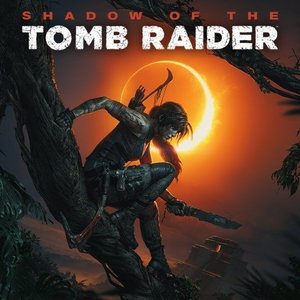

It’s hard to believe that Lara Croft made her first appearance in a video game all the way back in 1996. Featuring cutting edge 3D polygon graphics and gameplay that would often be duplicated but never replicated, the game would go on to sell a whopping 7 million copies. Since that time there have been numerous sequels, culminating in a complete re-envisioning of the franchise in 2013. The new era of Lara Croft explores her origin story and how she ultimately became one of the toughest female characters to grace a PC or console screen.
Shadow of the Tomb Raider is the third installment in the reboot of the franchise. Lara is no longer a naïve, explorer in training, who struggles with the idea, much less the actual action, of killing a human being. The years have made her a more seasoned (and possibly more ruthless) tomb raider, and she has now blossomed into the badass character that she is known for. Her adventures will take her deep into Mexico and South America, where she is trying to stop the apocalypse that she had accidently set in motion when she acquired an ancient dagger. What follows is roughly a 12+ hour main story and several hours’ worth of side missions that help flesh out the story and the world around her. The best part is that the story has all the excitement and thrills you would get if you took an Indiana Jones movie and added some of the Mel Gibson drama Apocalypto, so buckle up and enjoy the ride.
Shadow of the Tomb Raider adds the social interaction that was largely missing in the previous installments. While there are still plenty of times when Lara will be out on her own, searching through ruins or trekking through the jungle, there are now several civilizations that Lara will be interacting with. Her adventures will take her to the ancient city of Paititi, where most of her interactions will be with the locals and the main antagonists to the trilogy, Trinity. It’s in the interactions where we really get to see Lara question not only her beliefs but also her actions when acquiring ancient artifacts. Many of the discussions revolve around what will happen if outsiders come and try to change their standard of living or force their own wills on the natives. These discussions cause Lara to reevaluate what she does for a living, and how her own actions have an impact far greater than she even realizes. The inclusion of so much interaction with other people brings a whole new dimension to the Tomb Raider world and it entrenches you in the story in a way that battling even the most dangerous tombs never could.
One of the most interesting levels in the game takes you back in time to when Lara was just a young girl. You get the opportunity to experience the world through the innocence of a child, and her own imagination as she explores her father’s mansion. It provides an interesting look into the events that would unfold during her impressionable years, and also helps to offer some additional insight into what drives her as an adult. It’s in this level, where you finally understand what fuels her desire and continues to push her forward.
Gameplay is largely the same as the previous titles, but they did add a few new interesting ways to traverse some of the more difficult terrain, such as the ability to rappel down cliffs or using a pick axe to traverse cave ceilings. Climbing, jumping and swinging are all handled very intuitively using the controller. Yes, there were times where I felt I was doing the right thing and fell to my death anyway, but at no time did I feel overly frustrated or blame the tight controls for my own missteps.
Swimming and diving play a far bigger role in Shadow than in the previous games. Long, deep caverns will require you to swim and find pockets of air to keep from drowning. There are even a few sequences where you will need to swim through plants to avoid the various eels and piranha that will kill you, and swimming through the plants is just as easy as it sounds. Thankfully I never felt these sequences played on for too long and they certainly added diversity to the levels. While generally swimming and diving in video games tend to be an exercise in frustration, I never felt that was the case here.
Stealth also plays a bigger role in this game and adds another key to your survival. The original 1996 game focused on your dual pistol wielding abilities to get you out of jams and in this game, you are rewarded with a subtler approach. Taking a nod from games such as Horizon Zero Dawn, you will now have plenty of opportunities for Lara to crouch in large grassy fields or cover herself in mud and hide amongst the vines and cliff walls to surprise and take down her enemies. You can now overcome many adversities utilizing only stealth, but don’t worry, if you prefer more upfront action, there are still the obligatory pistols, shotguns and machine guns you can use to dispatch foes. Stealth is just an added way to ensure that Lara saves her bullets for far bigger threats down the road.
Now for everyone’s favorite part…the tombs! What would Tomb Raider be without tombs and the challenges that come along with them? As you may have already guessed, all sorts of puzzles and booby traps await you on your journey. I found they kept a nice balance between challenging and entertaining and thankfully none of them were so obscure that you need to break out Google to overcome them. Another great addition to the game is that the player can now individually adjust the difficulty on puzzles and on combat. That means if you love combat but not the puzzles you can adjust them independently, which is something I wish far more games would take advantage of. Either way, there are plenty of challenging tombs where you can flex your tomb raiding muscles.
As your adventure progresses you will earn skill points that allow you to upgrade Lara with new abilities. There are three skill trees, each containing many different skills, where Lara can spend her points. The three trees are broken down into Seeker, Warrior and Scavenger and Lara can be upgraded when she arrives at a basecamp. A few of these upgraded skills are longer swim times, multiple stealth takedowns, and the ability to shoot two enemies simultaneously. It’s always exciting to upgrade your character and see how the gameplay changes with new your abilities. This game is no exception and the upgrades you choose can really enhance your experience.
Graphically, Lara has never looked better. I played the game on my Xbox One X in 4K and the environments were awe inspiring. The lush jungle almost jumps off the screen and the character models are some of the best I’ve seen in recent memory. Of course, all this beauty wouldn’t mean much if there were stutters and lags and thankfully I never noticed a single frame drop while playing the game in all its 4K glory. Shadow of the Tomb Raider feels like you are part of a high budget, summer blockbuster and at times it was difficult to determine the difference between a cutscene or live game play (in a “wow, this is incredible!” way). The acting was also top notch and Camilla Luddington once again does an outstanding job delivering her lines, even making some of the corniest statements endearing. Every aspect of this game is the best of the best and you will be hard pressed to find an area of the game that was lacking.
Shadow of the Tomb Raider in an amazing accomplishment and easily my favorite game of the series. I’d even go as far as saying that I enjoyed it more than Uncharted 2, which is a true testament to how much I loved this game. Not only does the story have a heart and completely engages the player but it’s thrilling and there is non-stop adventure until the very end. While this certainly could be the last game in the rebooted series, I truly hope it’s not as I already want to play another. I highly recommend picking this game up. As soon as you knock over your first pot, you will be happy that you did!
What I liked: Stunning graphics, Incredible voice acting, Blockbuster feel
What I liked less: Occasional areas where it was unclear where to go next
Shadow of the Tomb Raider is the third installment in the reboot of the franchise. Lara is no longer a naïve, explorer in training, who struggles with the idea, much less the actual action, of killing a human being. The years have made her a more seasoned (and possibly more ruthless) tomb raider, and she has now blossomed into the badass character that she is known for. Her adventures will take her deep into Mexico and South America, where she is trying to stop the apocalypse that she had accidently set in motion when she acquired an ancient dagger. What follows is roughly a 12+ hour main story and several hours’ worth of side missions that help flesh out the story and the world around her. The best part is that the story has all the excitement and thrills you would get if you took an Indiana Jones movie and added some of the Mel Gibson drama Apocalypto, so buckle up and enjoy the ride.
Shadow of the Tomb Raider adds the social interaction that was largely missing in the previous installments. While there are still plenty of times when Lara will be out on her own, searching through ruins or trekking through the jungle, there are now several civilizations that Lara will be interacting with. Her adventures will take her to the ancient city of Paititi, where most of her interactions will be with the locals and the main antagonists to the trilogy, Trinity. It’s in the interactions where we really get to see Lara question not only her beliefs but also her actions when acquiring ancient artifacts. Many of the discussions revolve around what will happen if outsiders come and try to change their standard of living or force their own wills on the natives. These discussions cause Lara to reevaluate what she does for a living, and how her own actions have an impact far greater than she even realizes. The inclusion of so much interaction with other people brings a whole new dimension to the Tomb Raider world and it entrenches you in the story in a way that battling even the most dangerous tombs never could.
One of the most interesting levels in the game takes you back in time to when Lara was just a young girl. You get the opportunity to experience the world through the innocence of a child, and her own imagination as she explores her father’s mansion. It provides an interesting look into the events that would unfold during her impressionable years, and also helps to offer some additional insight into what drives her as an adult. It’s in this level, where you finally understand what fuels her desire and continues to push her forward.
Gameplay is largely the same as the previous titles, but they did add a few new interesting ways to traverse some of the more difficult terrain, such as the ability to rappel down cliffs or using a pick axe to traverse cave ceilings. Climbing, jumping and swinging are all handled very intuitively using the controller. Yes, there were times where I felt I was doing the right thing and fell to my death anyway, but at no time did I feel overly frustrated or blame the tight controls for my own missteps.
Swimming and diving play a far bigger role in Shadow than in the previous games. Long, deep caverns will require you to swim and find pockets of air to keep from drowning. There are even a few sequences where you will need to swim through plants to avoid the various eels and piranha that will kill you, and swimming through the plants is just as easy as it sounds. Thankfully I never felt these sequences played on for too long and they certainly added diversity to the levels. While generally swimming and diving in video games tend to be an exercise in frustration, I never felt that was the case here.
Stealth also plays a bigger role in this game and adds another key to your survival. The original 1996 game focused on your dual pistol wielding abilities to get you out of jams and in this game, you are rewarded with a subtler approach. Taking a nod from games such as Horizon Zero Dawn, you will now have plenty of opportunities for Lara to crouch in large grassy fields or cover herself in mud and hide amongst the vines and cliff walls to surprise and take down her enemies. You can now overcome many adversities utilizing only stealth, but don’t worry, if you prefer more upfront action, there are still the obligatory pistols, shotguns and machine guns you can use to dispatch foes. Stealth is just an added way to ensure that Lara saves her bullets for far bigger threats down the road.
Now for everyone’s favorite part…the tombs! What would Tomb Raider be without tombs and the challenges that come along with them? As you may have already guessed, all sorts of puzzles and booby traps await you on your journey. I found they kept a nice balance between challenging and entertaining and thankfully none of them were so obscure that you need to break out Google to overcome them. Another great addition to the game is that the player can now individually adjust the difficulty on puzzles and on combat. That means if you love combat but not the puzzles you can adjust them independently, which is something I wish far more games would take advantage of. Either way, there are plenty of challenging tombs where you can flex your tomb raiding muscles.
As your adventure progresses you will earn skill points that allow you to upgrade Lara with new abilities. There are three skill trees, each containing many different skills, where Lara can spend her points. The three trees are broken down into Seeker, Warrior and Scavenger and Lara can be upgraded when she arrives at a basecamp. A few of these upgraded skills are longer swim times, multiple stealth takedowns, and the ability to shoot two enemies simultaneously. It’s always exciting to upgrade your character and see how the gameplay changes with new your abilities. This game is no exception and the upgrades you choose can really enhance your experience.
Graphically, Lara has never looked better. I played the game on my Xbox One X in 4K and the environments were awe inspiring. The lush jungle almost jumps off the screen and the character models are some of the best I’ve seen in recent memory. Of course, all this beauty wouldn’t mean much if there were stutters and lags and thankfully I never noticed a single frame drop while playing the game in all its 4K glory. Shadow of the Tomb Raider feels like you are part of a high budget, summer blockbuster and at times it was difficult to determine the difference between a cutscene or live game play (in a “wow, this is incredible!” way). The acting was also top notch and Camilla Luddington once again does an outstanding job delivering her lines, even making some of the corniest statements endearing. Every aspect of this game is the best of the best and you will be hard pressed to find an area of the game that was lacking.
Shadow of the Tomb Raider in an amazing accomplishment and easily my favorite game of the series. I’d even go as far as saying that I enjoyed it more than Uncharted 2, which is a true testament to how much I loved this game. Not only does the story have a heart and completely engages the player but it’s thrilling and there is non-stop adventure until the very end. While this certainly could be the last game in the rebooted series, I truly hope it’s not as I already want to play another. I highly recommend picking this game up. As soon as you knock over your first pot, you will be happy that you did!
What I liked: Stunning graphics, Incredible voice acting, Blockbuster feel
What I liked less: Occasional areas where it was unclear where to go next

Daniel Boyd (1066 KP) rated Hellboy (2019) in Movies
Apr 17, 2019 (Updated Apr 17, 2019)


The script (4 more)
The CGI
The editing
The performances
Everything else
Actual Hell
If the Hellboy 2019 movie has one thing going for it, it's that it's impressive. It is impressive in the sense that it actually made me question the futility of time and why I was wasting my short time on this earth watching this atrocious piece of trash. There were several times when I was watching the film that I actually couldn't bring myself to believe how bad what I was witnessing onscreen really was. This might be the worst film I have ever seen.
It has without a doubt taken the crown of the worst superhero movie ever made from Fan4stic and is downright insulting. I cannot believe that they chose to make this dogshit over another one with Ron Perlman and Del Toro. Almost every single aspect of this movie is garbage and there are hardly any redeeming features.
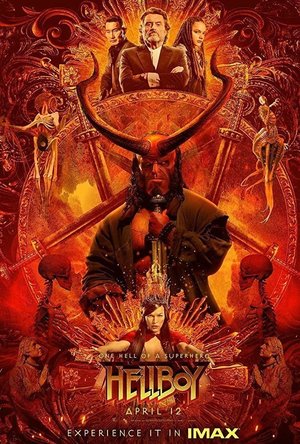
Let's talk about the main character, this movie's version of Hellboy. We all knew going in that David Harbour had some pretty big shoes to fill left by Perlman and in Harbour's defence, pretty much the only slightly positive aspect of this thing is the fact that you can tell that Harbour is doing the very best with the piss poor material he has been given to work with. Most of his lines are awful and the way that his character is written as a moaning, whiny bitch is actually insulting to the character. Also, the excessive makeup he is wearing means that he is hardly able to emote with his mouth. When he is talking, his mouth simply opens and closes like a puppet and it is painfully obvious that the dialogue has been dubbed in later and it's not even been done very well. The other slight positive in this movie is seeing Hellboy in his full demonic getup with long horns and donning the flaming crown and sword was pretty cool, unfortunately this is only a fleeting glimpse of coolness before we get right back to the crap.
The other memorable part of the Del Toro Hellboy movies was the endearing supporting cast, unfortunately they have been substituted with an insufferable lot of replacements. The actress playing Alice may give the worst performance that I have ever seen in a comic book movie, (and I saw Polar!) Every single line that she uttered was extremely cringe-worthy and poorly delivered. Daniel Dae Kim was almost as bad as Hellboy's other sidekick. Again, a lot of his lines were ADR'd in later and it is really shoddily done. Ian McShane plays Broom, the scientist that found Hellboy and adopted him and he is sleepwalking his way through this role for the sake of an easy paycheck. As is Milla Jovovich, she plays a stereotypical villainous witch and she does nothing here that we haven't seen her do before in other movies.
Over my years of watching almost every comic book movie that releases, I have seen my fair share of cheap, cartoony looking CGI, but this takes the cake. Almost every scene in the movie features some kind of CGI creature and they are all on a similar level of quality to an unfinished student project. One of the moments it really stood out was the giant fight, where we were subjected to not only one bad CGI giant, but three of them. The scene is also shot in broad daylight, which really does the bad CGI no favours. Not once, did anything in this movie look better than anything in the Del Toro movies which came out 10+ years ago.
I'm going to spoil something here, because seriously who gives a fuck at this point? The absolute worst part of CGI though in the entire movie, is undoubtedly during one of the final scenes in the movie where Ian McShane comes back to speak to Hellboy as a ghost. The CG in this scene is genuinely on par with the Rock's CG in in the Scorpion King. Yes, it really is that bad.
The soundtrack is so misused here also. The songs themselves that are featured are all half decent songs, but they do not work in the context of this film and they add absolutely nothing to the scenes that they are used in. The editing is also horrible, there were several times that I was reminded of the cheap editing in shows like Buffy The Vampire Slayer.
The last thing that I want to talk about is the tone and humour, (or lack of,) present throughout the film. The movie opens with a flashback scene showing King Arthur chopping up the witch. The scene is being narrated by Ian McShane and it is chock-full of diabolically awful dialogue and insufferably cheesy line delivery. Whilst watching it I thought, "Oh they are really hamming it up here and going for a really corny tone for these flashback scenes." I then swiftly came to the soul-crushing conclusion that no, this was how the next 2 hours of this movie was going to go. The awful sense of humour is actually comparable to that in a poor quality kids film, with gross out burp and kiss jokes to boot. What happened to the darker, more horror orientated tone that we were teased with when the movie was in pre-production? Any semblance of that is sorely lacking here and it is a shame because I would have quite liked to have seen that movie and there is a good chance that it would have been a lot better than this dumpster fire.
Overall, please don't see this unless you hate yourself. It is two hours of your life that would be better spent doing literally anything else. At the end it has the audacity to tease a sequel which, (if there is a God,) will never happen.
It has without a doubt taken the crown of the worst superhero movie ever made from Fan4stic and is downright insulting. I cannot believe that they chose to make this dogshit over another one with Ron Perlman and Del Toro. Almost every single aspect of this movie is garbage and there are hardly any redeeming features.
Let's talk about the main character, this movie's version of Hellboy. We all knew going in that David Harbour had some pretty big shoes to fill left by Perlman and in Harbour's defence, pretty much the only slightly positive aspect of this thing is the fact that you can tell that Harbour is doing the very best with the piss poor material he has been given to work with. Most of his lines are awful and the way that his character is written as a moaning, whiny bitch is actually insulting to the character. Also, the excessive makeup he is wearing means that he is hardly able to emote with his mouth. When he is talking, his mouth simply opens and closes like a puppet and it is painfully obvious that the dialogue has been dubbed in later and it's not even been done very well. The other slight positive in this movie is seeing Hellboy in his full demonic getup with long horns and donning the flaming crown and sword was pretty cool, unfortunately this is only a fleeting glimpse of coolness before we get right back to the crap.
The other memorable part of the Del Toro Hellboy movies was the endearing supporting cast, unfortunately they have been substituted with an insufferable lot of replacements. The actress playing Alice may give the worst performance that I have ever seen in a comic book movie, (and I saw Polar!) Every single line that she uttered was extremely cringe-worthy and poorly delivered. Daniel Dae Kim was almost as bad as Hellboy's other sidekick. Again, a lot of his lines were ADR'd in later and it is really shoddily done. Ian McShane plays Broom, the scientist that found Hellboy and adopted him and he is sleepwalking his way through this role for the sake of an easy paycheck. As is Milla Jovovich, she plays a stereotypical villainous witch and she does nothing here that we haven't seen her do before in other movies.
Over my years of watching almost every comic book movie that releases, I have seen my fair share of cheap, cartoony looking CGI, but this takes the cake. Almost every scene in the movie features some kind of CGI creature and they are all on a similar level of quality to an unfinished student project. One of the moments it really stood out was the giant fight, where we were subjected to not only one bad CGI giant, but three of them. The scene is also shot in broad daylight, which really does the bad CGI no favours. Not once, did anything in this movie look better than anything in the Del Toro movies which came out 10+ years ago.
I'm going to spoil something here, because seriously who gives a fuck at this point? The absolute worst part of CGI though in the entire movie, is undoubtedly during one of the final scenes in the movie where Ian McShane comes back to speak to Hellboy as a ghost. The CG in this scene is genuinely on par with the Rock's CG in in the Scorpion King. Yes, it really is that bad.
The soundtrack is so misused here also. The songs themselves that are featured are all half decent songs, but they do not work in the context of this film and they add absolutely nothing to the scenes that they are used in. The editing is also horrible, there were several times that I was reminded of the cheap editing in shows like Buffy The Vampire Slayer.
The last thing that I want to talk about is the tone and humour, (or lack of,) present throughout the film. The movie opens with a flashback scene showing King Arthur chopping up the witch. The scene is being narrated by Ian McShane and it is chock-full of diabolically awful dialogue and insufferably cheesy line delivery. Whilst watching it I thought, "Oh they are really hamming it up here and going for a really corny tone for these flashback scenes." I then swiftly came to the soul-crushing conclusion that no, this was how the next 2 hours of this movie was going to go. The awful sense of humour is actually comparable to that in a poor quality kids film, with gross out burp and kiss jokes to boot. What happened to the darker, more horror orientated tone that we were teased with when the movie was in pre-production? Any semblance of that is sorely lacking here and it is a shame because I would have quite liked to have seen that movie and there is a good chance that it would have been a lot better than this dumpster fire.
Overall, please don't see this unless you hate yourself. It is two hours of your life that would be better spent doing literally anything else. At the end it has the audacity to tease a sequel which, (if there is a God,) will never happen.
Gareth von Kallenbach (980 KP) rated Klang in Video Games
Jun 19, 2019
Klang is a Rhythm/Platformer game and it’s the debut of the developer studio called Tinimations. The environments, visuals, story and gameplay aspects were done by one person named Tom-Ivar Arntzen while the music was done by the EDM composer bLiNd.
The Story:
The premise here is very simple. You assume the role of a tuneblade-wielding elite rave warrior called Klang who wants to free himself from the shackles of a Zeus-like figure named Soundlord Sonus. And so the game begins. There is barely any Story here and it isn’t the focus of the game and it doesn’t contribute to the game whatsoever and if the story is removed entirely, you will barely notice any difference. So if you are the type who plays a game for the story in it or a game that is accompanied by a good premise, then this game isn’t for you. The game focuses mostly on its gameplay aspects.
The Visuals:
The visuals of the game look very beautiful with its Tron-inspired aesthetics. Klang’s design is colorful and stylish. The environment looked gorgeous with all the vibrant neon colors popping out on the screen while you’re playing but on rare occasions, they can be distracting and a bit too much when there are so many things happening at once.
The Sound:
This is one of those games that are worth buying a quality headset or a subwoofer for because the sound design is excellent and the composer bLiNd did a marvelous job with it. Listening to the music with a normal headset or your TV’s sound system doesn’t do it justice. And the way the music and the beat sync with what’s on screen are perfect. The soundtrack is most definitely the best aspect of the game.
The gameplay:
The game mechanics tries to blend rhythm game mechanics and platform game mechanics into one game. That means instead of only pressing buttons that appears on the screen like you normally do in Rhythm games, you also have to traverse the levels by jumping and sliding while pressing the buttons in order to get through the stage.
The controls are fairly simple. Like most 2D games, you use the left thumbstick to move the character left and right and you use the Right thumbstick in one of the eight directions when the icon that looks like a slice of Pizza appears on the screen in one of those eight directions to deflect the incoming attacks. And you use LT to jump and RT to slide throughout the levels.
While blending those game mechanics works very well on most stages, they can also be overwhelming and frustrating at times. For instance, there is a place where you have to dodge lasers by jumping between 5 platforms that falls when the lasers make contact with them (They come back up after a few seconds) so you will have to jump left and right fast and all that combined with rhythm gameplay. It gets very confusing because there are so many things happening at once on the screen and you don’t know whether you should focus on deflecting the attacks or focus on the lasers. One mistake and you are dead so that made it a bit frustrating and annoying instead of challenging. There is a thin line between a game that put your skills to the test and a game that simply frustrates you to cover its flaws.
Unfortunately, I felt like this is the latter because the game itself is very short and if I hadn’t died in the game over 300 times, it would have lasted me an hour. So I felt like the difficulty spike was there just to mask the game’s short length which brings me to the final point in the review.
Difficulty, Length and Replay Value:
The game has three difficulty levels. Easy, Normal and Nightcore Mode. The higher the difficulty, the higher rank you can achieve when you finish a stage. On Easy mode, B Rank is the max possible rank, Normal mode, S Rank is the max possible rank and on Nightcore Mode, SSS Rank is the max possible rank. Also the higher the difficulty, the faster the game music sounds, and the faster the button prompts on screen moves
I started the game on Normal mode it took me 3 hours and 311 deaths to finish. Once you finish the game for the first time, you unlock the hardest mode in the game which is called NightCore mode where everything moves so fast and that includes the music.
In terms of Replay Value, there isn’t much to do after you finish all the stages except for collecting Pirate Tokens which are the in-game collectables that allow you to unlock the game’s Soundtrack in a special level where you can hear them without replaying the other levels just to hear that awesome track.
And you can also replay the game on Nightcore mode if you want to get the highest rank possible in the game. And if you are the Achievement Hunter type then you will find that getting all the achievements will be very time consuming. For instance, there is an achievement that requires you not to die even once throughout the whole game and that is excruciatingly difficult. So, if you are a completionist, then the game will last you for quite a while.
But if you are not, then you won’t find much to do here after you finish its short story mode because it doesn’t have much to offer after that.
Conclusion:
Klang is a great game but its short amount of content and sometimes overwhelmingly difficult levels can put you off. So for that, I give Klang 4/5. Great concept but if the gameplay was more fun and rewarding, and it had more content and unlockables, it would have been a superb game. And I give the developer Tom-Ivar Arntzen SSS for effort and for trying to innovate and do something new with the genre and I am definitely interested to see what he is going to do next.
http://sknr.net/2016/09/23/klang/
The Story:
The premise here is very simple. You assume the role of a tuneblade-wielding elite rave warrior called Klang who wants to free himself from the shackles of a Zeus-like figure named Soundlord Sonus. And so the game begins. There is barely any Story here and it isn’t the focus of the game and it doesn’t contribute to the game whatsoever and if the story is removed entirely, you will barely notice any difference. So if you are the type who plays a game for the story in it or a game that is accompanied by a good premise, then this game isn’t for you. The game focuses mostly on its gameplay aspects.
The Visuals:
The visuals of the game look very beautiful with its Tron-inspired aesthetics. Klang’s design is colorful and stylish. The environment looked gorgeous with all the vibrant neon colors popping out on the screen while you’re playing but on rare occasions, they can be distracting and a bit too much when there are so many things happening at once.
The Sound:
This is one of those games that are worth buying a quality headset or a subwoofer for because the sound design is excellent and the composer bLiNd did a marvelous job with it. Listening to the music with a normal headset or your TV’s sound system doesn’t do it justice. And the way the music and the beat sync with what’s on screen are perfect. The soundtrack is most definitely the best aspect of the game.
The gameplay:
The game mechanics tries to blend rhythm game mechanics and platform game mechanics into one game. That means instead of only pressing buttons that appears on the screen like you normally do in Rhythm games, you also have to traverse the levels by jumping and sliding while pressing the buttons in order to get through the stage.
The controls are fairly simple. Like most 2D games, you use the left thumbstick to move the character left and right and you use the Right thumbstick in one of the eight directions when the icon that looks like a slice of Pizza appears on the screen in one of those eight directions to deflect the incoming attacks. And you use LT to jump and RT to slide throughout the levels.
While blending those game mechanics works very well on most stages, they can also be overwhelming and frustrating at times. For instance, there is a place where you have to dodge lasers by jumping between 5 platforms that falls when the lasers make contact with them (They come back up after a few seconds) so you will have to jump left and right fast and all that combined with rhythm gameplay. It gets very confusing because there are so many things happening at once on the screen and you don’t know whether you should focus on deflecting the attacks or focus on the lasers. One mistake and you are dead so that made it a bit frustrating and annoying instead of challenging. There is a thin line between a game that put your skills to the test and a game that simply frustrates you to cover its flaws.
Unfortunately, I felt like this is the latter because the game itself is very short and if I hadn’t died in the game over 300 times, it would have lasted me an hour. So I felt like the difficulty spike was there just to mask the game’s short length which brings me to the final point in the review.
Difficulty, Length and Replay Value:
The game has three difficulty levels. Easy, Normal and Nightcore Mode. The higher the difficulty, the higher rank you can achieve when you finish a stage. On Easy mode, B Rank is the max possible rank, Normal mode, S Rank is the max possible rank and on Nightcore Mode, SSS Rank is the max possible rank. Also the higher the difficulty, the faster the game music sounds, and the faster the button prompts on screen moves
I started the game on Normal mode it took me 3 hours and 311 deaths to finish. Once you finish the game for the first time, you unlock the hardest mode in the game which is called NightCore mode where everything moves so fast and that includes the music.
In terms of Replay Value, there isn’t much to do after you finish all the stages except for collecting Pirate Tokens which are the in-game collectables that allow you to unlock the game’s Soundtrack in a special level where you can hear them without replaying the other levels just to hear that awesome track.
And you can also replay the game on Nightcore mode if you want to get the highest rank possible in the game. And if you are the Achievement Hunter type then you will find that getting all the achievements will be very time consuming. For instance, there is an achievement that requires you not to die even once throughout the whole game and that is excruciatingly difficult. So, if you are a completionist, then the game will last you for quite a while.
But if you are not, then you won’t find much to do here after you finish its short story mode because it doesn’t have much to offer after that.
Conclusion:
Klang is a great game but its short amount of content and sometimes overwhelmingly difficult levels can put you off. So for that, I give Klang 4/5. Great concept but if the gameplay was more fun and rewarding, and it had more content and unlockables, it would have been a superb game. And I give the developer Tom-Ivar Arntzen SSS for effort and for trying to innovate and do something new with the genre and I am definitely interested to see what he is going to do next.
http://sknr.net/2016/09/23/klang/
Daniel Boyd (1066 KP) rated X-Men: Apocalypse (2016) in Movies
Jul 19, 2017 (Updated Apr 16, 2021)


80's setting (2 more)
Quicksilver
Oscar Isaacs
Mutants Have Mankind Divided
This movie has had the most mixed reaction that I have seen since Batman V Superman, however I do objectively believe that X Men is a better movie and to be honest I don’t understand the mixed response Apocalypse has gotten. The year is 1983, 10 years after the last x men movie, Days Of Future Past (as in the kind of 10 years where no one ages a day,) and we know that it is 1983 because some of the young mutants go and see Return Of The Jedi in the cinema. The hairstyles and fashion statements are suitably 80’s, which is an appropriate motif to choose as it adds a more comic book feel to the movie and forces it to stick to a brighter colour pallet than some of the previous X men outings. Another positive is the return of Quicksilver, who has another awesome slow motion scene, which possibly isn’t as well choreographed as the one in DOFP, but is definitely grander in scale. While the design of Apocalypse in this movie has been heavily criticised, I didn’t feel that it took me out of the movie and I felt that Oscar Isaacs’ portrayal of the ancient mutant is another great turn by the actor and proves yet again how diverse and chameleon like he really is. The one downside of his character is that he has been significantly nerfed in terms of his powers here. He does feel powerful, but never overwhelmingly so and when the final confrontation does take place, it feels like he is holding back. This could be explained in a contrived manner by saying that he doesn’t want to kill mutants, because they are all his children, but if the success of his plan depends on it then he shouldn’t even hesitate, he should just wipe all the X Men out in an instant like we know he can.
The tone is another issue I have with the movie, it is fairly inconsistent throughout and never reaches the level of threat that it is aiming for. However, this is through no fault of the cast or the performances. MacAvoy and Fassbender stand out here as you would expect, their relationship also remains one of the most interesting parts of the plot. Isaacs’ performance is also suitably threatening and sinister, the only thing lacking in his character other than the odd design choice, is how short he is next to the other mutants. He doesn’t have to be huge like in the comics and cartoons, but making him a little bit more physically imposing with clever camera tricks would have went a long way in adding to the character. Jennifer Lawrence is fine here as usual and young Cyclops and Jean Grey are perfectly serviceable, although Sophie Turner’s American accent does come and go in certain scenes. Even Peters is typically brilliant as Quicksilver and the actress who plays Storm here is also pretty convincing, as is the young English actor who plays Angel. Nightcrawler is a welcome addition to the roster as I feel that he has been criminally underused since the second X Men movie and his power set is definitely one of the most interesting in all of the X Men movies, also the actor playing him here does a good job throughout the film. However the same can’t be said for Olivia Munn who plays Psylocke in this movie, I have disliked this actress in every role I have seen her in to date and the same goes for this one, she brings nothing to the movie and she constantly has a resting bitch face that suggests she doesn’t want to be there.
Like Civil War, X Men wasn’t anything like the comic it was based on and we didn’t get what we expected, but what we did end up getting was fresh and entertaining in it’s own right, so it’s okay that the film plots aren’t 100% faithful to the source material and that is something that Singer has been preaching since he made the first X Men movie back in 2001, which incidentally wasn’t based on any comic book and was a totally original plot. Also I love how because of the alternate timeline they are now free to do whatever they want in terms of the timing of certain events. For example, (and this is a slight spoiler, but the movie has been out for a while now so deal with it,) the Phoenix Force makes an appearance in this movie, which typically isn’t something that Jean Grey acquires until later in her life. Also the fact that we saw Wolverine escaping from Weapon X again, (again spoilers but this was in the trailers anyway so again, deal with it,) was awesome and this time we saw him being broken out by the young X Men and this time he had the comic book accurate electric headgear on while he escaped and I also loved how we saw him interact with young Jean Grey and regain some of his memories. This could also could be a change in the timeline caused by the butterfly effect as a result of the events of Days Of Future Past. This would also explain why the Magneto/Quicksilver, father/son relationship has never been discussed before, because if Apocalypse never awakened in the original X Men trilogy, then Quicksilver would have never went to the X Men mansion and therefore wouldn’t have come into contact with his dad during the final battle scene. Also Mystique looks like she is now a member and potential leader of the X Men team, rather than an enemy of the team like she was in the original movies when she was played by Rebecca Romjin. The other big change in the timeline is the death of Magneto’s family and even the fact that he had a wife and another child besides Quicksilver and Scarlett Witch.
Overall I really enjoyed this movie, however I can also see why some people would take a disliking to it, as it does require a good amount of previous knowledge of the universe, but as an X Men fan, I loved it. Also another criticism I have read is that people aren’t happy with the length of the film, stating that it is too long and it drags in, but I actually thought the pacing was spot on. Anyway as an X Men fan, I loved my time would this movie and I look forward to seeing it again and I’d recommend it to anyone who is a mutant superhero fan.
The tone is another issue I have with the movie, it is fairly inconsistent throughout and never reaches the level of threat that it is aiming for. However, this is through no fault of the cast or the performances. MacAvoy and Fassbender stand out here as you would expect, their relationship also remains one of the most interesting parts of the plot. Isaacs’ performance is also suitably threatening and sinister, the only thing lacking in his character other than the odd design choice, is how short he is next to the other mutants. He doesn’t have to be huge like in the comics and cartoons, but making him a little bit more physically imposing with clever camera tricks would have went a long way in adding to the character. Jennifer Lawrence is fine here as usual and young Cyclops and Jean Grey are perfectly serviceable, although Sophie Turner’s American accent does come and go in certain scenes. Even Peters is typically brilliant as Quicksilver and the actress who plays Storm here is also pretty convincing, as is the young English actor who plays Angel. Nightcrawler is a welcome addition to the roster as I feel that he has been criminally underused since the second X Men movie and his power set is definitely one of the most interesting in all of the X Men movies, also the actor playing him here does a good job throughout the film. However the same can’t be said for Olivia Munn who plays Psylocke in this movie, I have disliked this actress in every role I have seen her in to date and the same goes for this one, she brings nothing to the movie and she constantly has a resting bitch face that suggests she doesn’t want to be there.
Like Civil War, X Men wasn’t anything like the comic it was based on and we didn’t get what we expected, but what we did end up getting was fresh and entertaining in it’s own right, so it’s okay that the film plots aren’t 100% faithful to the source material and that is something that Singer has been preaching since he made the first X Men movie back in 2001, which incidentally wasn’t based on any comic book and was a totally original plot. Also I love how because of the alternate timeline they are now free to do whatever they want in terms of the timing of certain events. For example, (and this is a slight spoiler, but the movie has been out for a while now so deal with it,) the Phoenix Force makes an appearance in this movie, which typically isn’t something that Jean Grey acquires until later in her life. Also the fact that we saw Wolverine escaping from Weapon X again, (again spoilers but this was in the trailers anyway so again, deal with it,) was awesome and this time we saw him being broken out by the young X Men and this time he had the comic book accurate electric headgear on while he escaped and I also loved how we saw him interact with young Jean Grey and regain some of his memories. This could also could be a change in the timeline caused by the butterfly effect as a result of the events of Days Of Future Past. This would also explain why the Magneto/Quicksilver, father/son relationship has never been discussed before, because if Apocalypse never awakened in the original X Men trilogy, then Quicksilver would have never went to the X Men mansion and therefore wouldn’t have come into contact with his dad during the final battle scene. Also Mystique looks like she is now a member and potential leader of the X Men team, rather than an enemy of the team like she was in the original movies when she was played by Rebecca Romjin. The other big change in the timeline is the death of Magneto’s family and even the fact that he had a wife and another child besides Quicksilver and Scarlett Witch.
Overall I really enjoyed this movie, however I can also see why some people would take a disliking to it, as it does require a good amount of previous knowledge of the universe, but as an X Men fan, I loved it. Also another criticism I have read is that people aren’t happy with the length of the film, stating that it is too long and it drags in, but I actually thought the pacing was spot on. Anyway as an X Men fan, I loved my time would this movie and I look forward to seeing it again and I’d recommend it to anyone who is a mutant superhero fan.

Ande Thomas (69 KP) rated The Time Traveler's Wife in Books
May 30, 2019

I've been thinking a lot about what I would write about <i>The Time Traveler's Wife,</i> partly because it seems one usually falls into one of two camps: Love it, hate it. It turns out, I belong to the latter. I won't bother with the sci-fi elements, the could he/couldn't he, the exploration of time travel as a plot device - I'm always willing to engage with a story as long as it follows it's own rules. My problems run deeper.
Spoilers abound.
<spoiler>
First, I'd be remiss not to at least acknowledge the creepy factor of a 40 year old naked man befriending a 6 year old girl. It's been discussed ad nauseum, but I've got to put my two cents in.
The whole experience reeks of grooming. Henry shows up, naked, in a young girl's life and (although true) casually explains that he's a <i>time traveler</i>. Her imagination is hooked. Her very own secret Magic Man. Over the following years, their friendship blossoms, and Henry refuses to tell her anything about the future. He is friendly, charming even, and always respectful. But he remains an enigma. Clare is pulled in by the mystery of the Magic Man. All she knows are the dates of his future arrivals. Until one day he begins to break his rule and tell her that they will be together. They'll get married and be in love and have a life. What changed? Why is he suddenly willing to tell her snippets of her future life? Puberty. She admits her desire to be with him and he basically says "keep waiting, it'll happen."
From that moment, her life has been decided - by Henry, and for Henry. Clare spends the entirety of her teenage existence (and beyond) waiting on Henry. The whole of her character arc is basically one big middle finger to the Bechdel test. Henry leads her by a leash with clues and vague promises of the future. We'll be together when you're older (we're destined). We'll have sex on your 18th birthday (wait for me). We'll meet in Chicago (move to Chicago). Even after his dying breath, he subtly slides direction her way. "I hope you move on, but by the way, I'll drop by when you're EIGHTY. But by all means...move on." Is it coincidence that Henry's time traveling mimics an emotionally abusive relationship? Clare tells us, "Henry is an artist of another sort, a disappearing artist. Our life together in this too-small apartment is punctuated by Henry’s small absences. Sometimes he disappears unobtrusively . . . Sometimes it’s frightening." Sure, you say, but he can't help it. He wants to be there for her. <i>It's just the way he is.</i> It's not even hinted at. Multiple people tell Clare <b>to her face</b> that Henry is bad news. But she won't hear it, because he spent her entire childhood molding her into his wife.
The author doesn't hide the allusion to Homer. Rather, she beats us over the head with it. And sure, it makes sense; Clare is the patiently waiting wife, Henry the distant traveler. Even Alba takes up her role as Telemachus, going on her own journeys in search of her father. But do we need both main characters referring to Henry by name, as Odysseus? We get it, girl. You want to write your own romantic Odyssey. Ease up.
Oh, and by the way - Clare's quote above? That's one of her first comments on married life. Her first thoughts after the wedding are "Why is my husband always gone? Why am I always afraid for him?" Henry's first thoughts? "How can Clare listen to Cheap Trick?" Let me remind you that this is the guy who's willing to rattle off a comprehensive list of early punk before jumping up to join in singing a Prince song, but he's upset that his wife listens to The Eagles instead of some obscure as hell French punk band. Also, this man who is thrilled to share musical tastes with a young teen with a mohawk then laments that the kid can't find his own music and has to take his? He preaches the meaning of punk before privately questioning why those kids want to be punk? Here's a guy who's entire life was shaped by music - both of his parents made livings playing music written before they were even born, yet he can't comprehend why two preteens could (or should) like The Clash, or why Clare would like The Beatles. <i>Stay in your own time,</i> he is essentially saying, <i>leave the time traveling to me.</i>
The guy doesn't even realize the pain he causes. Ingrid asks him "Why were you so mean to me?" "Was I," he says, "I didn't want to be." I know, I know. Everyone around her didn't want him to see her or speak to her. But need I remind you - dude time travels and frequently gives himself tips from the future. "Hey pal, take it easy on Ingrid," or "Bro, Ingrid is really shaken up, don't listen to her family or doctor, she needs some closure." But of course, nothing can really change, everything is the way it is.
This is all before I even begin to mention how much Niffenegger LOVES to name-drop. Of course there's the aforementioned punk band name-vomit, mentions of Henry's parents' work can't go by without naming a specific piece, despite adding nothing to the story or our understanding of the characters, there are two separate references to Claude Levi-Strauss (why?), and various other casual mentions of figures that seem to serve no purpose other than to prove that Henry is smart, and knows smart people things.
</spoiler>
I wanted to like this book more, I thought it had a fascinating premise and an interesting perspective. Obviously, I'm not a regular consumer of romance, and I realize that the problems I have with this book are problems shared by a large portion of the genre. But I am positive that we can have a love story that isn't mired by (at best) morally ambiguous relationships. I understand it was a different world when it was published, and that's not directly anyone's fault. Questions of consent and power and respect have been thrust into the spotlight in the short years since this book was published, but that's the lens with which I have to peer through. Stop glorifying these vapid, and frankly, abusive relationships as the paragon of romance. We're better than this. We need to be.
Spoilers abound.
<spoiler>
First, I'd be remiss not to at least acknowledge the creepy factor of a 40 year old naked man befriending a 6 year old girl. It's been discussed ad nauseum, but I've got to put my two cents in.
The whole experience reeks of grooming. Henry shows up, naked, in a young girl's life and (although true) casually explains that he's a <i>time traveler</i>. Her imagination is hooked. Her very own secret Magic Man. Over the following years, their friendship blossoms, and Henry refuses to tell her anything about the future. He is friendly, charming even, and always respectful. But he remains an enigma. Clare is pulled in by the mystery of the Magic Man. All she knows are the dates of his future arrivals. Until one day he begins to break his rule and tell her that they will be together. They'll get married and be in love and have a life. What changed? Why is he suddenly willing to tell her snippets of her future life? Puberty. She admits her desire to be with him and he basically says "keep waiting, it'll happen."
From that moment, her life has been decided - by Henry, and for Henry. Clare spends the entirety of her teenage existence (and beyond) waiting on Henry. The whole of her character arc is basically one big middle finger to the Bechdel test. Henry leads her by a leash with clues and vague promises of the future. We'll be together when you're older (we're destined). We'll have sex on your 18th birthday (wait for me). We'll meet in Chicago (move to Chicago). Even after his dying breath, he subtly slides direction her way. "I hope you move on, but by the way, I'll drop by when you're EIGHTY. But by all means...move on." Is it coincidence that Henry's time traveling mimics an emotionally abusive relationship? Clare tells us, "Henry is an artist of another sort, a disappearing artist. Our life together in this too-small apartment is punctuated by Henry’s small absences. Sometimes he disappears unobtrusively . . . Sometimes it’s frightening." Sure, you say, but he can't help it. He wants to be there for her. <i>It's just the way he is.</i> It's not even hinted at. Multiple people tell Clare <b>to her face</b> that Henry is bad news. But she won't hear it, because he spent her entire childhood molding her into his wife.
The author doesn't hide the allusion to Homer. Rather, she beats us over the head with it. And sure, it makes sense; Clare is the patiently waiting wife, Henry the distant traveler. Even Alba takes up her role as Telemachus, going on her own journeys in search of her father. But do we need both main characters referring to Henry by name, as Odysseus? We get it, girl. You want to write your own romantic Odyssey. Ease up.
Oh, and by the way - Clare's quote above? That's one of her first comments on married life. Her first thoughts after the wedding are "Why is my husband always gone? Why am I always afraid for him?" Henry's first thoughts? "How can Clare listen to Cheap Trick?" Let me remind you that this is the guy who's willing to rattle off a comprehensive list of early punk before jumping up to join in singing a Prince song, but he's upset that his wife listens to The Eagles instead of some obscure as hell French punk band. Also, this man who is thrilled to share musical tastes with a young teen with a mohawk then laments that the kid can't find his own music and has to take his? He preaches the meaning of punk before privately questioning why those kids want to be punk? Here's a guy who's entire life was shaped by music - both of his parents made livings playing music written before they were even born, yet he can't comprehend why two preteens could (or should) like The Clash, or why Clare would like The Beatles. <i>Stay in your own time,</i> he is essentially saying, <i>leave the time traveling to me.</i>
The guy doesn't even realize the pain he causes. Ingrid asks him "Why were you so mean to me?" "Was I," he says, "I didn't want to be." I know, I know. Everyone around her didn't want him to see her or speak to her. But need I remind you - dude time travels and frequently gives himself tips from the future. "Hey pal, take it easy on Ingrid," or "Bro, Ingrid is really shaken up, don't listen to her family or doctor, she needs some closure." But of course, nothing can really change, everything is the way it is.
This is all before I even begin to mention how much Niffenegger LOVES to name-drop. Of course there's the aforementioned punk band name-vomit, mentions of Henry's parents' work can't go by without naming a specific piece, despite adding nothing to the story or our understanding of the characters, there are two separate references to Claude Levi-Strauss (why?), and various other casual mentions of figures that seem to serve no purpose other than to prove that Henry is smart, and knows smart people things.
</spoiler>
I wanted to like this book more, I thought it had a fascinating premise and an interesting perspective. Obviously, I'm not a regular consumer of romance, and I realize that the problems I have with this book are problems shared by a large portion of the genre. But I am positive that we can have a love story that isn't mired by (at best) morally ambiguous relationships. I understand it was a different world when it was published, and that's not directly anyone's fault. Questions of consent and power and respect have been thrust into the spotlight in the short years since this book was published, but that's the lens with which I have to peer through. Stop glorifying these vapid, and frankly, abusive relationships as the paragon of romance. We're better than this. We need to be.
Gareth von Kallenbach (980 KP) rated Total Recall (2012) in Movies
Aug 7, 2019

Remaking classic films is always risky business. Mainly because there is a specific reason those movies are so well received – because they are the best of their time. Remakes are inherently risky because the filmmakers have a bar they have to at least reach, and they absolutely cannot tread the exact same ground as the original. They have to do something new, modern, or innovate. Or, at least they are expected to. When remakes work, they soar. When they don’t… Well, that’s another story. Paul Verhoeven’s “Total Recall” (1990) was an excellent science fiction monolith of its time. It stood out as a heartfelt science fiction story, one that was exceptionally aware of its own identity, design, and overall setting. It reflected the vary soul of its time – intentionally representational of culture at the time (late 80s and early 90s). If Len Wiseman’s remake, “Total Recall” (2012) is supposed to be a representation of contemporary culture in the same way as the original, then I fear our popular culture is too shallow for high minded science fiction. While not a bad movie – in fact, it is actually quite entertaining overall – it just does not feature the same soul and passion of the original film.
The premise follows the original in only a rough sense. Sometime in the future, the world has been left mostly uninhabitable due to a deadly chemical war across the globe. Humanity has been left to residing in the only remaining habitable landmasses – Western Europe and “The Colony”, the latter being modern-day Australia. Because air travel is now impossible, the only travel between the landmasses is through a massive elevator called “The Fall” that cuts through the center of the Earth. Douglas Quaid (Colin Farrell) is a factory worker who works in Europe but lives in “The Colony” with his wife, Lori (Kate Beckinstale). His chronic nightmares lead him to become interested in the “Rekall” service – a machine that can implant memories into customers. His interest will lead him on a wild journey with Melina (Jessica Biel) to learn about his true self as well as secrets of Cohaagen’s (Bryan Cranston) tyrannical administration.
The problems of the film really start with the premise. While I enjoy the creativity of something like “The Fall”, it is simply too ridiculous to take seriously. They deserve credit for coming up with a relatively unknown science fiction concept, but an elevator that travels through the center of the Earth? Peoples’ suspension of disbelief can only be pushed so far. It serves a practical purpose in the plot – to create the conflict between “The Colony” and the mainland and between the government and the Resistance. Yet, too much time is spent trying to introduce this concept and make it seem plausible than the film should. It honestly seems easier to just use the original film’s conflict between settings – Mars and Earth. I have to ask, what makes an elevator between two lands more contemporary of an idea than a conflict between colonial Mars and Earth. This is especially true considering recent news that a Mars colony might be seen in our lifetimes.
The other problems are more literary. Colin Farrell’s Douglas Quaid is portrayed very well throughout the film, and he manages to make the character satisfactory in the emotional portrayal of a man with a confused past and an insane situation. But even then, I have to say Arnold’s original portrayal seemed overall more human. The problem with Colin Farrell’s character is a mixture of performance and writing in his introduction. It is hard to believe him as someone so distraught over his nightmares that he absolutely feels compelled to go to Rekall. If they spent more time exploring his inner demons and how they are bringing his life down, then he would have been a much more compelling character. As it stands, he just goes through the motions of a protagonist. All of the other characters are the same way. Kate Beckinstale’s villainous Lori and Jessica Biel’s Melina are fairly shallow characters. They are not bad at their roles but that is all they, unfortunately, are: roles. Like Quaid, they just go through the motions, playing their part as clichéd character archetypes. Bryan Cranston is always awesome in any role, but in this he is not given much to work with. All he ends up being is just an evil tyrant with a megalomaniacal plot – with very little reason or background.
Those issues said, there are many things that do work. The pacing is good throughout, with no moments feeling awkward. The art design is exceptional, and there are no moments in the film that are boring to look at. To its credit, almost every scene is full of beautiful science-fiction design. The only complaint in this area is that some of the action scenes feel very cluttered due to the overall noise of The Colony’s design. The plot moves forward steadily, and it is overall simple to understand. That said, it is not without its own faults. The plot starts out great but becomes full of usual secret agent thriller clichés. Also, the plot becomes very campy, not to mention unbelievable, in its third act. The third act is also where there are the most plot holes – notable plot holes at that.
If you can shut your brain off for a couple hours, you can enjoy “Total Recall”. The film is pretty to look at and is absolutely packed with action sequences. All of the action sequences are well shot, well paced, and entertaining. The actors all do great with what they are given; but the problem is that they are not given much. They are all fairly flat characters, but are all satisfactory for the service of the plot – a plot that is well paced and understandable, but one that becomes campy, ridiculous, and peppered with notable plot holes. It is not as tightly written and directed to be a great secret agent thriller, and not as inspired to be a great science fiction story. The original was exceptional in its setting construction – pulling the audience into the amazingly designed Paul Verhoeven world. It was full of comedy and thrills, thought and design. As it stands, the moments that could really go far in establishing a passionate soul-filled, inspired world are instead spent on making quick references to those vary moments from the original. It could have established its own voice, its own heart and soul, but it just settles on being your clichéd average science fiction blockbuster.
The premise follows the original in only a rough sense. Sometime in the future, the world has been left mostly uninhabitable due to a deadly chemical war across the globe. Humanity has been left to residing in the only remaining habitable landmasses – Western Europe and “The Colony”, the latter being modern-day Australia. Because air travel is now impossible, the only travel between the landmasses is through a massive elevator called “The Fall” that cuts through the center of the Earth. Douglas Quaid (Colin Farrell) is a factory worker who works in Europe but lives in “The Colony” with his wife, Lori (Kate Beckinstale). His chronic nightmares lead him to become interested in the “Rekall” service – a machine that can implant memories into customers. His interest will lead him on a wild journey with Melina (Jessica Biel) to learn about his true self as well as secrets of Cohaagen’s (Bryan Cranston) tyrannical administration.
The problems of the film really start with the premise. While I enjoy the creativity of something like “The Fall”, it is simply too ridiculous to take seriously. They deserve credit for coming up with a relatively unknown science fiction concept, but an elevator that travels through the center of the Earth? Peoples’ suspension of disbelief can only be pushed so far. It serves a practical purpose in the plot – to create the conflict between “The Colony” and the mainland and between the government and the Resistance. Yet, too much time is spent trying to introduce this concept and make it seem plausible than the film should. It honestly seems easier to just use the original film’s conflict between settings – Mars and Earth. I have to ask, what makes an elevator between two lands more contemporary of an idea than a conflict between colonial Mars and Earth. This is especially true considering recent news that a Mars colony might be seen in our lifetimes.
The other problems are more literary. Colin Farrell’s Douglas Quaid is portrayed very well throughout the film, and he manages to make the character satisfactory in the emotional portrayal of a man with a confused past and an insane situation. But even then, I have to say Arnold’s original portrayal seemed overall more human. The problem with Colin Farrell’s character is a mixture of performance and writing in his introduction. It is hard to believe him as someone so distraught over his nightmares that he absolutely feels compelled to go to Rekall. If they spent more time exploring his inner demons and how they are bringing his life down, then he would have been a much more compelling character. As it stands, he just goes through the motions of a protagonist. All of the other characters are the same way. Kate Beckinstale’s villainous Lori and Jessica Biel’s Melina are fairly shallow characters. They are not bad at their roles but that is all they, unfortunately, are: roles. Like Quaid, they just go through the motions, playing their part as clichéd character archetypes. Bryan Cranston is always awesome in any role, but in this he is not given much to work with. All he ends up being is just an evil tyrant with a megalomaniacal plot – with very little reason or background.
Those issues said, there are many things that do work. The pacing is good throughout, with no moments feeling awkward. The art design is exceptional, and there are no moments in the film that are boring to look at. To its credit, almost every scene is full of beautiful science-fiction design. The only complaint in this area is that some of the action scenes feel very cluttered due to the overall noise of The Colony’s design. The plot moves forward steadily, and it is overall simple to understand. That said, it is not without its own faults. The plot starts out great but becomes full of usual secret agent thriller clichés. Also, the plot becomes very campy, not to mention unbelievable, in its third act. The third act is also where there are the most plot holes – notable plot holes at that.
If you can shut your brain off for a couple hours, you can enjoy “Total Recall”. The film is pretty to look at and is absolutely packed with action sequences. All of the action sequences are well shot, well paced, and entertaining. The actors all do great with what they are given; but the problem is that they are not given much. They are all fairly flat characters, but are all satisfactory for the service of the plot – a plot that is well paced and understandable, but one that becomes campy, ridiculous, and peppered with notable plot holes. It is not as tightly written and directed to be a great secret agent thriller, and not as inspired to be a great science fiction story. The original was exceptional in its setting construction – pulling the audience into the amazingly designed Paul Verhoeven world. It was full of comedy and thrills, thought and design. As it stands, the moments that could really go far in establishing a passionate soul-filled, inspired world are instead spent on making quick references to those vary moments from the original. It could have established its own voice, its own heart and soul, but it just settles on being your clichéd average science fiction blockbuster.
Gareth von Kallenbach (980 KP) rated Battleship (2012) in Movies
Aug 7, 2019

Basing a movie off of a videogame is often a risky proposition. For every “Resident Evil”, there at least a dozen others that are out and out disasters, “Mario Brothers”, “Wing Commander”, and “Double Dragon” are a few examples of how not to do it.
While Hollywood shows no signs of stopping videogame adaptations anytime soon, game development companies are becoming more savvy with allowing their products to become movies and are requiring uality scripts, cast, and directors before they enter into any film deal. Undaunted, Hollywood turned its eyes on children’s toys for inspiration. With the successful Transformers series, Hasbro has been targeted for their very popular line of board games as source material for future movies.
First out of the box is “Battleship”, director Peter Berg’s big-budget adaptation of the timeless naval strategy game that has been enjoyed for decades by players young and old. Since this is the era of video games, the simplistic style of the board game needed to be tweaked in order to make it appealing for the summer movie masses.
Gone is the classic strategy of the game and in its place, a loud and brash cast of 20-somethings, over-the-top special effects, and a plot riddled with more holes than the classic grids in the game that spawned the film.
Taylor Kitsch follows up his role in John Carter by playing Alex Hopper, a ne’er-do-well who despite the mentoring of his successful naval officer brother (Alexander Skarsgard), never seems to run out of ways to get himself in trouble. His latest efforts to impress a girl he met in a bar, land him in hot water with the authorities and his brother lays down the law and insists that Alex join the Navy and make something of his life.
The film jumps into the future where Alex is now dating the very attractive girl from the bar, Samantha (Brooklyn Decker), and trying to get enough courage together to ask her father for permission to marry his daughter. The fact that her father is Admiral Shane (Liam Neeson), only complicates the matter.
Despite holding the rank of an officer, Alex is still extremely headstrong and prone to getting himself in trouble. What what was supposed to be a friendly soccer match during allied naval exercises escalates, and Alex finds himself facing an ignominious exit from the Navy. He’s given a temporary reprieve as the ships in his fleet are suddenly faced with the threat of extraterrestrial origins.
Approximately around the same time Alex entered the Navy, scientists developed a way to amplify radio signals and directed them toward planets they believed could possibly support life. The signals were answered in the form of a hostile force that arrives on Earth only to cut a swath of destruction across the world as well as the naval fleet it encounters. Cut off from the rest of the fleet and reinforcements by an energy field, Alex is forced into command and must confront the deadly enemy at all cost to save the world.
What follows is a series of elaborate special effects that, while visually appealing, fail to pack much punch as the plot and characters are so underwhelming.
I understand that for films this type, especially given the source material, one must give a certain amount of leeway and accept, even grudgingly, the inconsistencies and impracticalities. That being said, not only are the characters about as thin and one-dimensional as they possibly could be, they are for the most part utterly devoid of any interesting qualities nor are they given much in the way of back story that makes us care for their outcomes. R&B star Rihanna spends a good chunk of her time looking tough and menacing, but isn’t given much more to do than occasionally fire a gun.
Kitsch is so utterly bland and unsympathetic that there’s just really no redeeming value to his character. Battleship is supposed to be a story of redemption but instead it’s a story of inconsistencies. Many times throughout the film common sense much less standard military procedures seems to go out the window.
For example, standard rules of engagement tactics were not used early in the film, but yet were readily deployed during the so-called big finale to the film with success. One has to wonder how more seasoned officers with far more resources at their disposal failed to utilize such tactics or have success with the methods that they employed. Yet ironically, this young lieutenant on his first command is able to out-maneuver these aliens when he decides to take to the offensive and lull the enemy into a fairly passive mode where they don’t do much more than watch.
The aliens, while interesting, are given precious little to do other than occasionally destroy or blow something up. We have no idea why they are on earth and to be honest, why they arrived in such small force. If the idea was to conquer Earth, it was poorly planned. Yet if proper procedures were followed, their incursion could have been dealt with very early and easily with the resources at hand. But that would’ve made for a short movie.
What I found puzzling was how surprisingly light on action the movie was. Yes there were firefights but they were spread sparingly throughout the film. You do not have one grand epic battle against overwhelming odds, you do not have legions of enemy troops for the Navy to wade through. It was pretty much a here-it-is-take-it-or-leave it, ho-hum finale.
The film does have some good points with Hawaii as its main backdrop. I did like the fact that there were a lot of active and retired soldiers and sailors used in the filming of the picture. It is clear that the filmmakers wanted to honor the soldiers who have so gallantly served our nation. I just wish they could’ve given them a much better showcase, because truthfully you’ll find far more thrills and enjoyment busting out the actual Battleship game than sitting through the film.
There is a scene post-credits that does hint at possible future installments, but I kept asking myself one question, “Why?” Rumor has it that several years goes Steven Segal attempted to revive his big-screen career by pitching an Under Siege 3 to Universal. Segal supposedly pitched the idea that his character would be on a naval ship that encountered extraterrestrial menace. The studio passed on this idea and, if there’s any truth to the rumor, they should have passed on this idea when it came time to make Battleship.
While Hollywood shows no signs of stopping videogame adaptations anytime soon, game development companies are becoming more savvy with allowing their products to become movies and are requiring uality scripts, cast, and directors before they enter into any film deal. Undaunted, Hollywood turned its eyes on children’s toys for inspiration. With the successful Transformers series, Hasbro has been targeted for their very popular line of board games as source material for future movies.
First out of the box is “Battleship”, director Peter Berg’s big-budget adaptation of the timeless naval strategy game that has been enjoyed for decades by players young and old. Since this is the era of video games, the simplistic style of the board game needed to be tweaked in order to make it appealing for the summer movie masses.
Gone is the classic strategy of the game and in its place, a loud and brash cast of 20-somethings, over-the-top special effects, and a plot riddled with more holes than the classic grids in the game that spawned the film.
Taylor Kitsch follows up his role in John Carter by playing Alex Hopper, a ne’er-do-well who despite the mentoring of his successful naval officer brother (Alexander Skarsgard), never seems to run out of ways to get himself in trouble. His latest efforts to impress a girl he met in a bar, land him in hot water with the authorities and his brother lays down the law and insists that Alex join the Navy and make something of his life.
The film jumps into the future where Alex is now dating the very attractive girl from the bar, Samantha (Brooklyn Decker), and trying to get enough courage together to ask her father for permission to marry his daughter. The fact that her father is Admiral Shane (Liam Neeson), only complicates the matter.
Despite holding the rank of an officer, Alex is still extremely headstrong and prone to getting himself in trouble. What what was supposed to be a friendly soccer match during allied naval exercises escalates, and Alex finds himself facing an ignominious exit from the Navy. He’s given a temporary reprieve as the ships in his fleet are suddenly faced with the threat of extraterrestrial origins.
Approximately around the same time Alex entered the Navy, scientists developed a way to amplify radio signals and directed them toward planets they believed could possibly support life. The signals were answered in the form of a hostile force that arrives on Earth only to cut a swath of destruction across the world as well as the naval fleet it encounters. Cut off from the rest of the fleet and reinforcements by an energy field, Alex is forced into command and must confront the deadly enemy at all cost to save the world.
What follows is a series of elaborate special effects that, while visually appealing, fail to pack much punch as the plot and characters are so underwhelming.
I understand that for films this type, especially given the source material, one must give a certain amount of leeway and accept, even grudgingly, the inconsistencies and impracticalities. That being said, not only are the characters about as thin and one-dimensional as they possibly could be, they are for the most part utterly devoid of any interesting qualities nor are they given much in the way of back story that makes us care for their outcomes. R&B star Rihanna spends a good chunk of her time looking tough and menacing, but isn’t given much more to do than occasionally fire a gun.
Kitsch is so utterly bland and unsympathetic that there’s just really no redeeming value to his character. Battleship is supposed to be a story of redemption but instead it’s a story of inconsistencies. Many times throughout the film common sense much less standard military procedures seems to go out the window.
For example, standard rules of engagement tactics were not used early in the film, but yet were readily deployed during the so-called big finale to the film with success. One has to wonder how more seasoned officers with far more resources at their disposal failed to utilize such tactics or have success with the methods that they employed. Yet ironically, this young lieutenant on his first command is able to out-maneuver these aliens when he decides to take to the offensive and lull the enemy into a fairly passive mode where they don’t do much more than watch.
The aliens, while interesting, are given precious little to do other than occasionally destroy or blow something up. We have no idea why they are on earth and to be honest, why they arrived in such small force. If the idea was to conquer Earth, it was poorly planned. Yet if proper procedures were followed, their incursion could have been dealt with very early and easily with the resources at hand. But that would’ve made for a short movie.
What I found puzzling was how surprisingly light on action the movie was. Yes there were firefights but they were spread sparingly throughout the film. You do not have one grand epic battle against overwhelming odds, you do not have legions of enemy troops for the Navy to wade through. It was pretty much a here-it-is-take-it-or-leave it, ho-hum finale.
The film does have some good points with Hawaii as its main backdrop. I did like the fact that there were a lot of active and retired soldiers and sailors used in the filming of the picture. It is clear that the filmmakers wanted to honor the soldiers who have so gallantly served our nation. I just wish they could’ve given them a much better showcase, because truthfully you’ll find far more thrills and enjoyment busting out the actual Battleship game than sitting through the film.
There is a scene post-credits that does hint at possible future installments, but I kept asking myself one question, “Why?” Rumor has it that several years goes Steven Segal attempted to revive his big-screen career by pitching an Under Siege 3 to Universal. Segal supposedly pitched the idea that his character would be on a naval ship that encountered extraterrestrial menace. The studio passed on this idea and, if there’s any truth to the rumor, they should have passed on this idea when it came time to make Battleship.

Kirk Bage (1775 KP) rated Ford v Ferrari (aka Le Mans '66) (2019) in Movies
Jan 22, 2021 (Updated Jan 22, 2021)
Matt Damon asked Christian Bale how he had managed to lose almost 70lbs for his role as Ken Miles, following his chubbing up to play Dick Cheney in Vice the previous year. Bale just smiled, shrugged and said, “I didn’t eat”. Such is his reputation for playing real people with 100% commitment, apocryphal or not, I totally believe that is true.
Sports films, and especially racing films, hang on three things: the quality and believability of the sports/racing scenes, the dynamic tension between the lead characters, and the degree we are hooked by the underdog makes a comeback element. Le Mans ’66, also known as Ford V Ferrari for American audiences, who obviously can’t make sense of French or numbers, has all three of those boxes ticked, and several others besides.
It will make it easier for me to explain why I liked this film so much if I confess up front to how much I liked it, so without hesitation I confidently state… more than Rush (2013) and Grand Prix (1966), making it probably the best racing film ever, but less than Warrior (2011) or Rocky (1976), making it a contender for top 5 but not the best sports movie ever. So, that is pretty high praise from the flag-fall.
Let’s examine the 3 key elements in order. Firstly, the racing scenes: This film is based on real people in real races driving real cars, with very little altered or tweaked for dramatic purposes (save one key detail of the final race). It didn’t need anything adding, because the real story is incredible enough. Part of that is the very real rivalry that existed between the undisputed champions of the world’s most beautiful cars, Ferrari, representing everything essentially European, and the empire of mass production efficiency that was the Ford dynasty, representing everything American.
The reproductions of the cars themselves and the personalities behind them is vivid and believable from minute one, so when the cars hit the track you can almost smell the fuel and feel the heat and grime, not to mention the speed. Every shot on every straight and turn feels like it should, and would, if you yourself were driving: intense, terrifying, exhilarating and addictive!
At no point did I see anything unrealistic, or a piece of footage copied and pasted. No trick angles or overuse of time stretching techniques, what you see is mostly what you get, and if you understand car racing in even the most amateur way then that is impressive. Add to that a complete understanding of tension building during a race from a direction and acting point of view and you just have to tip your helmet visor to James Mangold and Christian Bale, who seem in complete synthesis about what is required from a racing scene.
Next, look at the chemistry between Damon’s laconic yet stubborn pragmatist, Carroll Shelby, and Bale’s idiosyncratic, twitchy adrenaline junky, Ken Miles. They couldn’t be more different, personality wise, or actually performance wise. Bale chews up the screen with another in a long line now of big bold characterisations that you can’t take your eyes off, and Damon gives off solid, dependable, trust-worthy movie-star vibes in return. Their scenes together are spiky, fun, compelling and feel authetic, in a Hollywood movie way that we recognise and love. It feels almost like Paul Newman and Jack Lemon – the handsome straight guy and the quirky foil.
I love both these actors when they bring their A game. And they do here. It is consummate film acting, completely in control of what kind of film they are making. Not a naturalistic drama hoping to sweep the Oscars and hit hard in the emotional solar plexus, but a fun sports film driven by the conventions and tropes of the genre. Both manage to keep it just the right side of fun and exciting, whilst holding the reigns on believability also. Mangold, who knows how both action (Logan) and Bio-pics (Walk the Line) work to a very high level, brings experience of both genres to the fore here, and the blend is sublime.
Finally, there is the underdog element. Both of these guys were unconventional mavericks, and well known as being so. Both respected, but never treated as champions as they deserved in their lifetime, perhaps because they were not yes men or company men, who toed the line and played by the rules of the big bosses of the sport. Both of them absolutely driven by compulsion and passion to win, yet both flawed on the ways they could achieve that.
Then there is the consideration how much the car is a character, or at least Ford as a concept. What makes this story so great is the David and Goliath element, that makes you sure there is no possible way this could be true. As with all great sports films, even if you know the history and result of a real event, the little guy sticking it to the invincible and arrogant behemoth, win, lose or draw, is what makes us invest and then cheer, or cry, when all the effort is finally spent.
Effort, sacrifice, overcoming obstacles, facing defeat, bouncing back from setbacks, gaining respect of friends and rivals alike – all these elements make a sports film great. Le Mans ’66 has it all, with the added bonus of enough budget to make it fly, which isn’t usually the case in this genre. It looks spectacular, feels exciting and is ultimately completely satisfying, as both a character study of real men, and a document of a game changing moment in sporting history.
It also doesn’t entirely ignore the female influence on such a masculine world; the little known Irish actress Catriona Balfe as Mollie Miles really caught my eye in some really tender scenes. This film won’t be passing the Bechdal test any time soon, however, as she is pretty much the only female member of the cast with an actual name! But it isn’t something to get too hung up about, in my opinion.
I’d be bold enough to recommend this to anyone. No need to love cars, or racing or even sport at all. If you love good movies that keep you hooked till the checkered flag of the credits, then look no further. High art? No. A proper movie with huge mass appeal? 100%
Sports films, and especially racing films, hang on three things: the quality and believability of the sports/racing scenes, the dynamic tension between the lead characters, and the degree we are hooked by the underdog makes a comeback element. Le Mans ’66, also known as Ford V Ferrari for American audiences, who obviously can’t make sense of French or numbers, has all three of those boxes ticked, and several others besides.
It will make it easier for me to explain why I liked this film so much if I confess up front to how much I liked it, so without hesitation I confidently state… more than Rush (2013) and Grand Prix (1966), making it probably the best racing film ever, but less than Warrior (2011) or Rocky (1976), making it a contender for top 5 but not the best sports movie ever. So, that is pretty high praise from the flag-fall.
Let’s examine the 3 key elements in order. Firstly, the racing scenes: This film is based on real people in real races driving real cars, with very little altered or tweaked for dramatic purposes (save one key detail of the final race). It didn’t need anything adding, because the real story is incredible enough. Part of that is the very real rivalry that existed between the undisputed champions of the world’s most beautiful cars, Ferrari, representing everything essentially European, and the empire of mass production efficiency that was the Ford dynasty, representing everything American.
The reproductions of the cars themselves and the personalities behind them is vivid and believable from minute one, so when the cars hit the track you can almost smell the fuel and feel the heat and grime, not to mention the speed. Every shot on every straight and turn feels like it should, and would, if you yourself were driving: intense, terrifying, exhilarating and addictive!
At no point did I see anything unrealistic, or a piece of footage copied and pasted. No trick angles or overuse of time stretching techniques, what you see is mostly what you get, and if you understand car racing in even the most amateur way then that is impressive. Add to that a complete understanding of tension building during a race from a direction and acting point of view and you just have to tip your helmet visor to James Mangold and Christian Bale, who seem in complete synthesis about what is required from a racing scene.
Next, look at the chemistry between Damon’s laconic yet stubborn pragmatist, Carroll Shelby, and Bale’s idiosyncratic, twitchy adrenaline junky, Ken Miles. They couldn’t be more different, personality wise, or actually performance wise. Bale chews up the screen with another in a long line now of big bold characterisations that you can’t take your eyes off, and Damon gives off solid, dependable, trust-worthy movie-star vibes in return. Their scenes together are spiky, fun, compelling and feel authetic, in a Hollywood movie way that we recognise and love. It feels almost like Paul Newman and Jack Lemon – the handsome straight guy and the quirky foil.
I love both these actors when they bring their A game. And they do here. It is consummate film acting, completely in control of what kind of film they are making. Not a naturalistic drama hoping to sweep the Oscars and hit hard in the emotional solar plexus, but a fun sports film driven by the conventions and tropes of the genre. Both manage to keep it just the right side of fun and exciting, whilst holding the reigns on believability also. Mangold, who knows how both action (Logan) and Bio-pics (Walk the Line) work to a very high level, brings experience of both genres to the fore here, and the blend is sublime.
Finally, there is the underdog element. Both of these guys were unconventional mavericks, and well known as being so. Both respected, but never treated as champions as they deserved in their lifetime, perhaps because they were not yes men or company men, who toed the line and played by the rules of the big bosses of the sport. Both of them absolutely driven by compulsion and passion to win, yet both flawed on the ways they could achieve that.
Then there is the consideration how much the car is a character, or at least Ford as a concept. What makes this story so great is the David and Goliath element, that makes you sure there is no possible way this could be true. As with all great sports films, even if you know the history and result of a real event, the little guy sticking it to the invincible and arrogant behemoth, win, lose or draw, is what makes us invest and then cheer, or cry, when all the effort is finally spent.
Effort, sacrifice, overcoming obstacles, facing defeat, bouncing back from setbacks, gaining respect of friends and rivals alike – all these elements make a sports film great. Le Mans ’66 has it all, with the added bonus of enough budget to make it fly, which isn’t usually the case in this genre. It looks spectacular, feels exciting and is ultimately completely satisfying, as both a character study of real men, and a document of a game changing moment in sporting history.
It also doesn’t entirely ignore the female influence on such a masculine world; the little known Irish actress Catriona Balfe as Mollie Miles really caught my eye in some really tender scenes. This film won’t be passing the Bechdal test any time soon, however, as she is pretty much the only female member of the cast with an actual name! But it isn’t something to get too hung up about, in my opinion.
I’d be bold enough to recommend this to anyone. No need to love cars, or racing or even sport at all. If you love good movies that keep you hooked till the checkered flag of the credits, then look no further. High art? No. A proper movie with huge mass appeal? 100%

Purple Phoenix Games (2266 KP) rated Zombie Kidz Evolution in Tabletop Games
Nov 9, 2021

You know how you are just browsing BGG and come across some surprising statistics? For example, if you click on a ranking number on a game’s profile page, it will take you to the entire list of games including that search term. I do not believe I had checked on “Children’s Game” ranks for quite some time, so I was taken aback when I noticed that Zombie Kidz Evolution ranks #1 overall, per BGG users. Well, heck. I have children. They like games. I should probably check this out, right? Absolutely!
Zombie Kidz Evolution is a cooperative, horror/zombies, dice rolliling, variable player powers, LEGACY game… for children?? Those mechanics do not scream “children” to me at all! What gives here? In this one, players take on the role of children protecting their schoolhouse from infiltrating zombies, and all players win or lose together. Through multiple plays, however, the game evolves and the way in which the game is played also evolves. Oh, and there’s also stickers, which ALL children love.
To setup, determine play count and which side of the board to play. Each player chooses a standee to represent them, place out one zombie tile in each area with a fence gate, and the other zombies randomly in a line near the board. The lock tokens should be placed nearby and the die is given to the starting player (in our house, my son, as he will cry if we didn’t). The player standees, “kids” from here out, are placed in the central room of the schoolhouse and the game is ready to begin!
Zombie Kidz Evolution is played over several turns, and each turn consists of three or four actions. First, the active player rolls the die. The die face determines in which school zone a zombie tile will spawn. There are five colored spaces relating to five of the six die faces, with one die face being blank – no zombies spawn on that roll. After placing the zombie tile in the appropriate zone, the player may move their kid to an adjacent zone or leave them where they are. However, if a zone contains three or more zombies, the kids cannot enter.
After movement, the player may then eliminate one or two zombies in their zone. This happens automatically – there are no combat mechanics. The player simply removes one or two zombie tiles and places them at the end of the line off-board. Should two kids occupy the same zone outside the school where a fence gate is unlocked, they may high-five and place a lock token on the gate. After this step, the die is passed to the next player for their turn.
The game continues in this fashion of taking turns spawning and eliminating zombies until the players have locked all four gates outside the schoolhouse. A brain sticker is applied to the appropriate space on the back of the rulebook to track victories, and if enough stickers have been applied, players may be allowed to open one of the 13 sealed envelopes. Inside these envelopes are an assortment of items, most of which I am unable to disclose. However, more stickers may be applied to certain components, thus changing their functions completely for subsequent plays – just as all good legacy games provide. If playing with children, expect to play several games in sequence, as it is very addicting.
Components. The physical components in this game are all fine. The standees, board, and tokens are unspectacular, but do their job. The die is cool, but under weak lighting the blue and green can be difficult to differentiate. I will not discuss anything contained in the envelopes, and I apologize for that, but I do not want to spoil anything. The art style, though, is what does it for me. Every component proudly displays amazing artwork, and half the fun is watching little ones stare and smile at the components on the table. My only request here, and I cannot believe I am saying this, is that I do wish the player pieces were minis instead of standees, but I understand the decision to keep the cardboard standees in to keep the price point super reasonable. Outside that, this little box has a ton of game inside it.
My 5-year-old son is completely addicted to this game! He requests we play almost every night, and I happily oblige, as I really enjoy it as well. Yes, it is very light. Hardcore gamers probably will not get much enjoyment out of it, though I could certainly be wrong as well. We have found it to provide so much joy to our family, and though the box says it is intended for ages 7+, I encourage parents of younger children to give it a try as well. The turns are simple: roll, spawn, move, remove, and possibly lock. We are a modern household, so zombies in this game are just “taken care of” instead of “killed,” so we are able to skirt our problematic verbiage. There isn’t much we can do to soften the art of all the kids wielding weapons, though, so beware if that is against your parenting style.
As a game, and especially as a children’s game, this one is just incredible. I can certainly understand why it is rated #1 in Children’s Games on BGG. The game tackles more advanced mechanics and throws them into a game meant for little ones. And it does this beautifully. Unfortunately, though, I have noticed that my son now is exhibiting some completionist behaviors, as he likes to complete missions in the rulebook so we can advance toward opening more and more envelopes. It is so very easy for Purple Phoenix Games to give this one a well-deserved 20 / 24. That score includes opinions from not only Laura and me, but also my wife and son. We all love it!
If you are looking for an lighter (at first) legacy game to get your feet wet, I cannot recommend Zombie Kidz Evolution enough. Adults may be able to breeze through a few games in a night, but don’t expect it to be a pushover. The die will still roll against your wishes and fill up zones you wanted to clear, and then that blocks your movement through that zone, or you may find it difficult to travel around the board very easily, as kids can only move one zone each turn, so when they are three zones away from trauma, the pressure becomes real. We have probably lost almost as many games as we have won, but we have always had a great time. And when you are spending this quality time with the people you love, “taking care of” zombies, you want to tell the whole world to enjoy the game as much as you have. So, go grab yourselves a copy right now!
Zombie Kidz Evolution is a cooperative, horror/zombies, dice rolliling, variable player powers, LEGACY game… for children?? Those mechanics do not scream “children” to me at all! What gives here? In this one, players take on the role of children protecting their schoolhouse from infiltrating zombies, and all players win or lose together. Through multiple plays, however, the game evolves and the way in which the game is played also evolves. Oh, and there’s also stickers, which ALL children love.
To setup, determine play count and which side of the board to play. Each player chooses a standee to represent them, place out one zombie tile in each area with a fence gate, and the other zombies randomly in a line near the board. The lock tokens should be placed nearby and the die is given to the starting player (in our house, my son, as he will cry if we didn’t). The player standees, “kids” from here out, are placed in the central room of the schoolhouse and the game is ready to begin!
Zombie Kidz Evolution is played over several turns, and each turn consists of three or four actions. First, the active player rolls the die. The die face determines in which school zone a zombie tile will spawn. There are five colored spaces relating to five of the six die faces, with one die face being blank – no zombies spawn on that roll. After placing the zombie tile in the appropriate zone, the player may move their kid to an adjacent zone or leave them where they are. However, if a zone contains three or more zombies, the kids cannot enter.
After movement, the player may then eliminate one or two zombies in their zone. This happens automatically – there are no combat mechanics. The player simply removes one or two zombie tiles and places them at the end of the line off-board. Should two kids occupy the same zone outside the school where a fence gate is unlocked, they may high-five and place a lock token on the gate. After this step, the die is passed to the next player for their turn.
The game continues in this fashion of taking turns spawning and eliminating zombies until the players have locked all four gates outside the schoolhouse. A brain sticker is applied to the appropriate space on the back of the rulebook to track victories, and if enough stickers have been applied, players may be allowed to open one of the 13 sealed envelopes. Inside these envelopes are an assortment of items, most of which I am unable to disclose. However, more stickers may be applied to certain components, thus changing their functions completely for subsequent plays – just as all good legacy games provide. If playing with children, expect to play several games in sequence, as it is very addicting.
Components. The physical components in this game are all fine. The standees, board, and tokens are unspectacular, but do their job. The die is cool, but under weak lighting the blue and green can be difficult to differentiate. I will not discuss anything contained in the envelopes, and I apologize for that, but I do not want to spoil anything. The art style, though, is what does it for me. Every component proudly displays amazing artwork, and half the fun is watching little ones stare and smile at the components on the table. My only request here, and I cannot believe I am saying this, is that I do wish the player pieces were minis instead of standees, but I understand the decision to keep the cardboard standees in to keep the price point super reasonable. Outside that, this little box has a ton of game inside it.
My 5-year-old son is completely addicted to this game! He requests we play almost every night, and I happily oblige, as I really enjoy it as well. Yes, it is very light. Hardcore gamers probably will not get much enjoyment out of it, though I could certainly be wrong as well. We have found it to provide so much joy to our family, and though the box says it is intended for ages 7+, I encourage parents of younger children to give it a try as well. The turns are simple: roll, spawn, move, remove, and possibly lock. We are a modern household, so zombies in this game are just “taken care of” instead of “killed,” so we are able to skirt our problematic verbiage. There isn’t much we can do to soften the art of all the kids wielding weapons, though, so beware if that is against your parenting style.
As a game, and especially as a children’s game, this one is just incredible. I can certainly understand why it is rated #1 in Children’s Games on BGG. The game tackles more advanced mechanics and throws them into a game meant for little ones. And it does this beautifully. Unfortunately, though, I have noticed that my son now is exhibiting some completionist behaviors, as he likes to complete missions in the rulebook so we can advance toward opening more and more envelopes. It is so very easy for Purple Phoenix Games to give this one a well-deserved 20 / 24. That score includes opinions from not only Laura and me, but also my wife and son. We all love it!
If you are looking for an lighter (at first) legacy game to get your feet wet, I cannot recommend Zombie Kidz Evolution enough. Adults may be able to breeze through a few games in a night, but don’t expect it to be a pushover. The die will still roll against your wishes and fill up zones you wanted to clear, and then that blocks your movement through that zone, or you may find it difficult to travel around the board very easily, as kids can only move one zone each turn, so when they are three zones away from trauma, the pressure becomes real. We have probably lost almost as many games as we have won, but we have always had a great time. And when you are spending this quality time with the people you love, “taking care of” zombies, you want to tell the whole world to enjoy the game as much as you have. So, go grab yourselves a copy right now!