Search
Search results
Merissa (14173 KP) rated Bitten By Fate (Regent's Park Pack #6) in Books
Mar 5, 2019
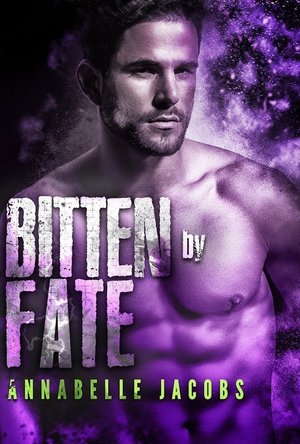


Bitten By Fate (Regent's Park Pack #6) by Annabelle Jacobs
Bitten by Fate is the sixth and final book in the Regent's Park Pack series, and we see how Cam is still trying to bring together both sides of his new pack. Calling in the big guns, he sends two units, plus two betas to 'oversee', off to a couple of weeks "bonding session", held by the Alpha Council. Daryl and Jason are the two betas there as support. Their time together has some unexpected side-affects for both of them.
I am so sad to see this series come to an end, but I am supremely happy with how it was done. Daryl and Jason are complete opposites in nearly every way, but this is what makes them so perfect for each other. Their characters are written so well that even when one of them acts like a d*ck, you can understand the whys of it! With laughs at the bonding activities and tension (both sexual and otherwise), there is something here for everyone.
Exceedingly well written, with no editing or grammatical errors that I noticed, I am sad to leave this Regent's Park Pack. Their world is clear and concise, with strong characters, both main and supporting. I would love to hear more about how they are getting on further down the line, but I will just have to read this author's other books in the meantime. ? It's a hard job, but someone's got to do it!
Absolutely recommended by me. This is one of my favourites of the series, although Cam and Gareth still hold the highest honour.
* A copy of this book was provided to me with no requirements for a review. I voluntarily read this book, and the comments here are my honest opinion. *
Merissa
Archaeolibrarian - I Dig Good Books!
I am so sad to see this series come to an end, but I am supremely happy with how it was done. Daryl and Jason are complete opposites in nearly every way, but this is what makes them so perfect for each other. Their characters are written so well that even when one of them acts like a d*ck, you can understand the whys of it! With laughs at the bonding activities and tension (both sexual and otherwise), there is something here for everyone.
Exceedingly well written, with no editing or grammatical errors that I noticed, I am sad to leave this Regent's Park Pack. Their world is clear and concise, with strong characters, both main and supporting. I would love to hear more about how they are getting on further down the line, but I will just have to read this author's other books in the meantime. ? It's a hard job, but someone's got to do it!
Absolutely recommended by me. This is one of my favourites of the series, although Cam and Gareth still hold the highest honour.
* A copy of this book was provided to me with no requirements for a review. I voluntarily read this book, and the comments here are my honest opinion. *
Merissa
Archaeolibrarian - I Dig Good Books!

Saffy Alexandra (89 KP) rated The Hobbit in Books
Jun 10, 2019

Characters (2 more)
Plot
Introduction and backstory to a character
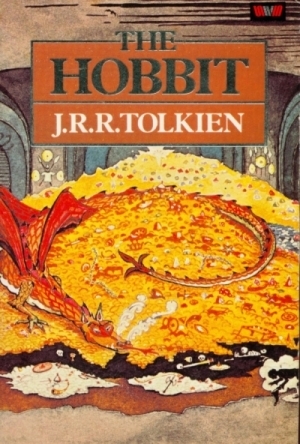
What good is a book without a dragon or two in it?
The Hobbit is my all time favourite book not just as a child but as an adult as well, capturing my imagination and love from the first time I picked it up to it now being my go to book when I am feeling sad or when I need to feel like ‘home’.
This book is definitely not as lengthly as the it’s cousin, Lord of the Rings, but it holds a certain charm to it. We come to love the foolish but courageous Hobbit, Bilbo Baggins, and follow his adventure to the lonely mountain with the rag-tag group of Dwarves and the mischievous and ever in trouble Gandalf the Grey.
Coming from a small town that was similar to Hobbiton (I was told that Tolkien actually based Hobbiton on the town I am from) I could relate so well to Bilbo when he had misgivings about leaving his home, but that urge for adventure and lust for the unknown was too much to resist.
This story, although quite sad at the end, is full of humour, wit and no end of riddles and charm that even the grumpiest reader should not be able to resist. Perhaps it is not the most powerful or awe-inspiring book, but I think that’s what makes it so great. It’s not trying to be the best book that you’ve ever read, it’s simply telling a story the best way it can, you can’t help but be drawn in to the characters and the descriptions that Tolkien gives you.
It might not be The Lord of the Rings, but to me it will always be my favourite and best book to keep with me wherever I go and I would be lost without it!
This book is definitely not as lengthly as the it’s cousin, Lord of the Rings, but it holds a certain charm to it. We come to love the foolish but courageous Hobbit, Bilbo Baggins, and follow his adventure to the lonely mountain with the rag-tag group of Dwarves and the mischievous and ever in trouble Gandalf the Grey.
Coming from a small town that was similar to Hobbiton (I was told that Tolkien actually based Hobbiton on the town I am from) I could relate so well to Bilbo when he had misgivings about leaving his home, but that urge for adventure and lust for the unknown was too much to resist.
This story, although quite sad at the end, is full of humour, wit and no end of riddles and charm that even the grumpiest reader should not be able to resist. Perhaps it is not the most powerful or awe-inspiring book, but I think that’s what makes it so great. It’s not trying to be the best book that you’ve ever read, it’s simply telling a story the best way it can, you can’t help but be drawn in to the characters and the descriptions that Tolkien gives you.
It might not be The Lord of the Rings, but to me it will always be my favourite and best book to keep with me wherever I go and I would be lost without it!
Elli H Burton (1288 KP) rated Game Of Thrones - Season 8 in TV
Aug 11, 2019

The battle of winterfell was good (1 more)
Arya.
Rushed (2 more)
The battle of winterfell was dark as anything. Clearly
a production problem not our TVS!!!
Spoilers ruined this season finale, making it predictable and not worth watching tbh.
Such a disappointment
I don't like to include spoilers in my reviews as it ruins it for people who haven't seen it. Although the following is quite negative I would urge people to watch this series and make their own minds up about it. It has some awesome moments that had the essence of the good thrones series. G.O.T. fan when this season started I counted down minutes until I could watch it (yes I'm that sad). All I found after 2 years of waiting was a rushed finale that could have used atleast 2 more episodes or even another series. Despite the fantastic actors they have in thrones, the writer's clearly just wanted to get this over and done with. It is rumoured that George R.R. Martin wanted 2 more series after S.8 (he had written up to series 5 i believe). Series 6 and 7 weren't awful but definitely not as good as the first 5, this was the final nail in what was a perfect coffin.
I would have preferred to wait longer to get what the person that created the world wanted than writers just winging it. It's been months since the finale and I haven't been able to bring myself to watch it anymore if I'm honest.
Again, I know how sad it sounds but I am actually heartbroken as it was a finale so many had waited for and it just didn't live up to true thrones standards.
Granted some bits were brilliant, but unfortunately the pros of this series do not outway the cons.
I would have preferred to wait longer to get what the person that created the world wanted than writers just winging it. It's been months since the finale and I haven't been able to bring myself to watch it anymore if I'm honest.
Again, I know how sad it sounds but I am actually heartbroken as it was a finale so many had waited for and it just didn't live up to true thrones standards.
Granted some bits were brilliant, but unfortunately the pros of this series do not outway the cons.
Liberty Boston (93 KP) rated Hocus Pocus and the All-New Sequel in Books
Mar 15, 2021
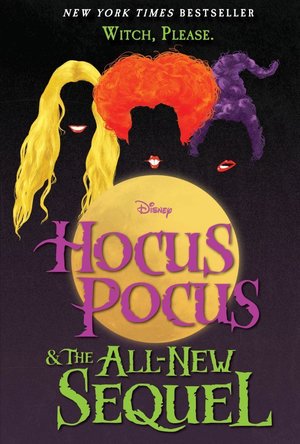
It's a very sad thing when the book you were so excited about lets you down. Such is the case with Hocus Pocus & The All-New Sequel. The book, written by A. W. Jantha is split into two parts.
Then.
Now.
Then is a novelization of the movie which I very much enjoyed. 90 percent of the dialogue is taken directly from the movie while there's just enough added detail to give the characters some new depth and set up for the second half of the book.
Now: the second half of the book, the sequel was...
well, It was disappointing.
How?
First, there's the bizarre jump from third person to first and later second POV.
It just throws you into Poppy's world with minimal backstory on who she is and why we should like her or her friends, Travis and Isabella.
Secondly, the characters are STUPID!
Stupid choices left, right, and, center.
As a writer, I understand there needs to be some way to kickstart the conflict but going to the Sanderson house has danger written all over it.
Oh, let's talk about the Sandersons,
The witches are back in all their evil glory with added sister Elizabeth who turned her back on the family legacy of darkness.
Then there's their mother. Their mother who they could not shut up about. Mother this and Mother that.
All the hype got me excited about Sanderson's sister's flashbacks. Backstory. Entire chapters dedicated to them.
it didn't happen.
I was treated to brief remembrances but no backstory.
Then the Mother who was so hyped up made a one chapter appearance before going kersplat.
WHAT WAS THE POINT??
You don't hype a character that much for them to do NOTHING.
The book gets by on nostalgia alone.
Don't even get me started on the bizarre and unneeded cliffhanger.
Very sad.
Then.
Now.
Then is a novelization of the movie which I very much enjoyed. 90 percent of the dialogue is taken directly from the movie while there's just enough added detail to give the characters some new depth and set up for the second half of the book.
Now: the second half of the book, the sequel was...
well, It was disappointing.
How?
First, there's the bizarre jump from third person to first and later second POV.
It just throws you into Poppy's world with minimal backstory on who she is and why we should like her or her friends, Travis and Isabella.
Secondly, the characters are STUPID!
Stupid choices left, right, and, center.
As a writer, I understand there needs to be some way to kickstart the conflict but going to the Sanderson house has danger written all over it.
Oh, let's talk about the Sandersons,
The witches are back in all their evil glory with added sister Elizabeth who turned her back on the family legacy of darkness.
Then there's their mother. Their mother who they could not shut up about. Mother this and Mother that.
All the hype got me excited about Sanderson's sister's flashbacks. Backstory. Entire chapters dedicated to them.
it didn't happen.
I was treated to brief remembrances but no backstory.
Then the Mother who was so hyped up made a one chapter appearance before going kersplat.
WHAT WAS THE POINT??
You don't hype a character that much for them to do NOTHING.
The book gets by on nostalgia alone.
Don't even get me started on the bizarre and unneeded cliffhanger.
Very sad.

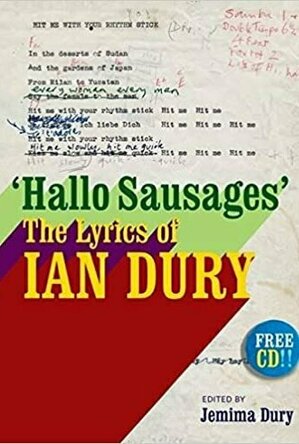
James Wood recommended Hallo Sausages: The Lyrics of Ian Dury in Books (curated)
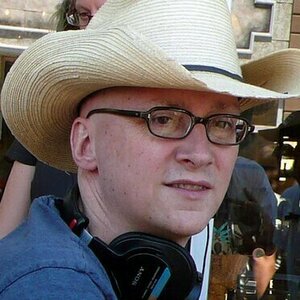
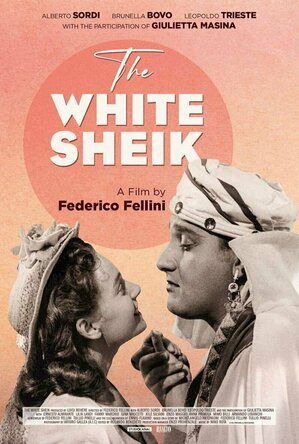
Greg Mottola recommended The White Sheik (1952) in Movies (curated)
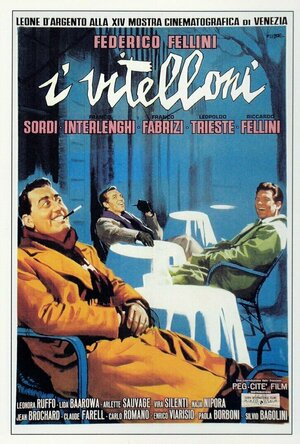
Greg Mottola recommended I Vitelloni (1953) in Movies (curated)
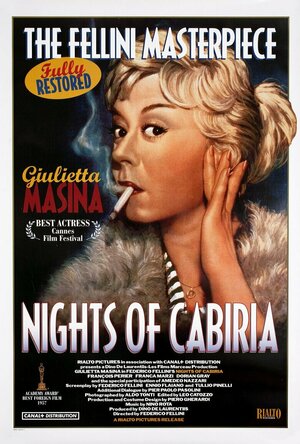
Greg Mottola recommended Nights of Cabiria (1957) in Movies (curated)
Greg Mottola recommended 8 1/2 (1963) in Movies (curated)