
Search
Search results
Purple Phoenix Games (2266 KP) rated Slip Strike in Tabletop Games
Jan 28, 2020
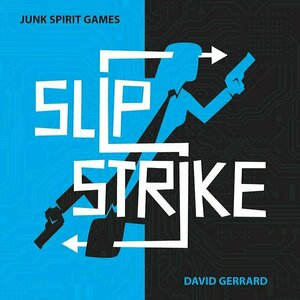

Super spies. We have all dreamed of being one – don’t lie! What about teleporting super spies? What about time-traveling teleporting super spies?! As a huge Doctor Who fan, that is right up my alley. Well, minus the eventual assassination that comes with winning the game. Dat theme tho…
Slip Strike is a card game of bluffing, running, and managing your resources. The goal of the game is to get one hit on your opponent: the final strike. This could come from a bullet, a knife wound, or several other injuries that lead to your opponent’s demise. You each have ways of “slipping” out of trouble, but they are limited and certainly give your opponent the upper hand.
DISCLAIMER: We were provided a prototype copy of this game for the purposes of this review. These are preview copy components, and the final components will probably be different from these shown. Also, it is not my intention to detail every rule in the game, but to give our readers an idea of how the game plays. If you would like to read the rulebook, you may purchase the game through the publisher, back the game through the Kickstarter campaign, or through any retailers stocking it after fulfillment. -T
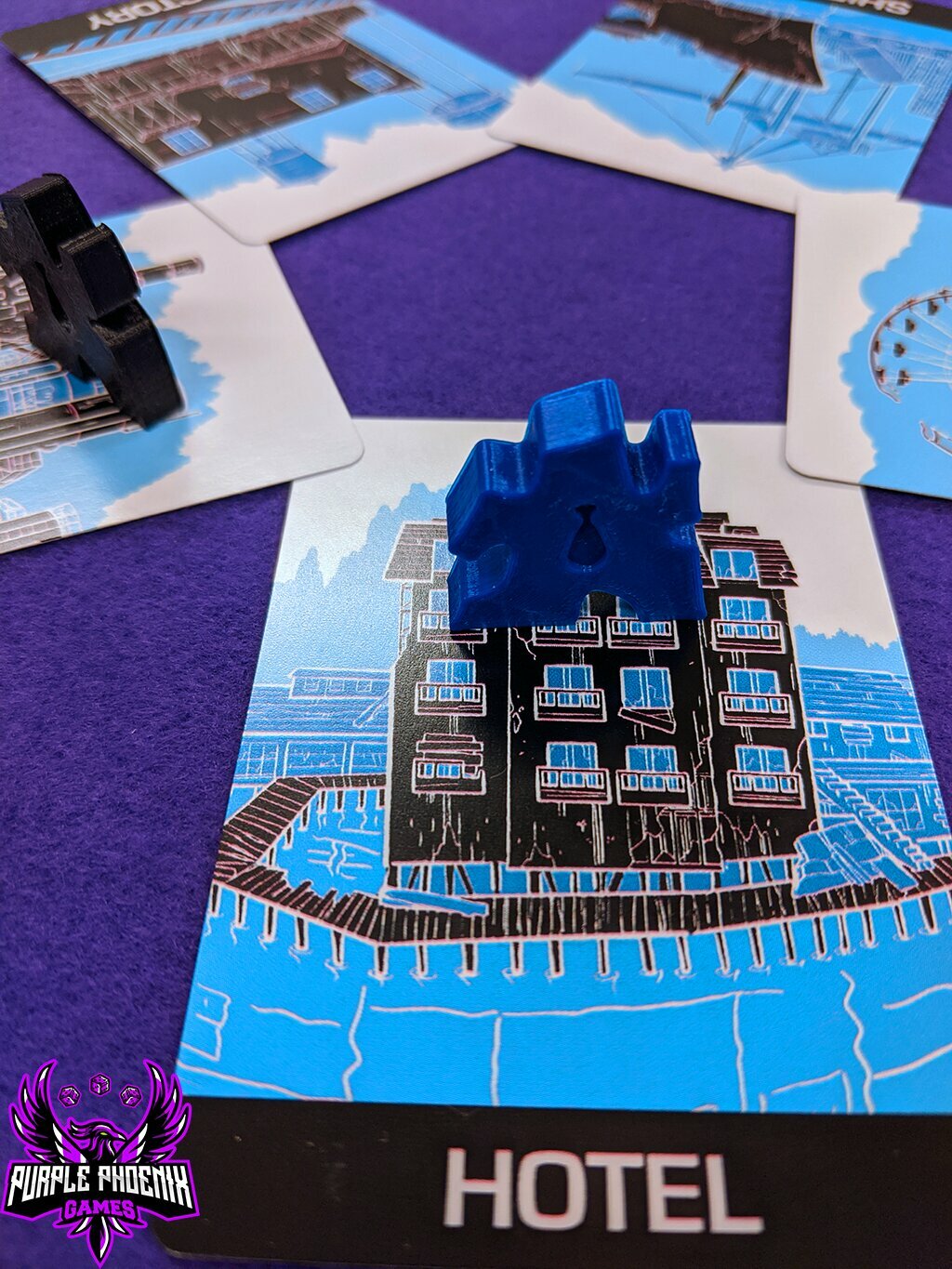
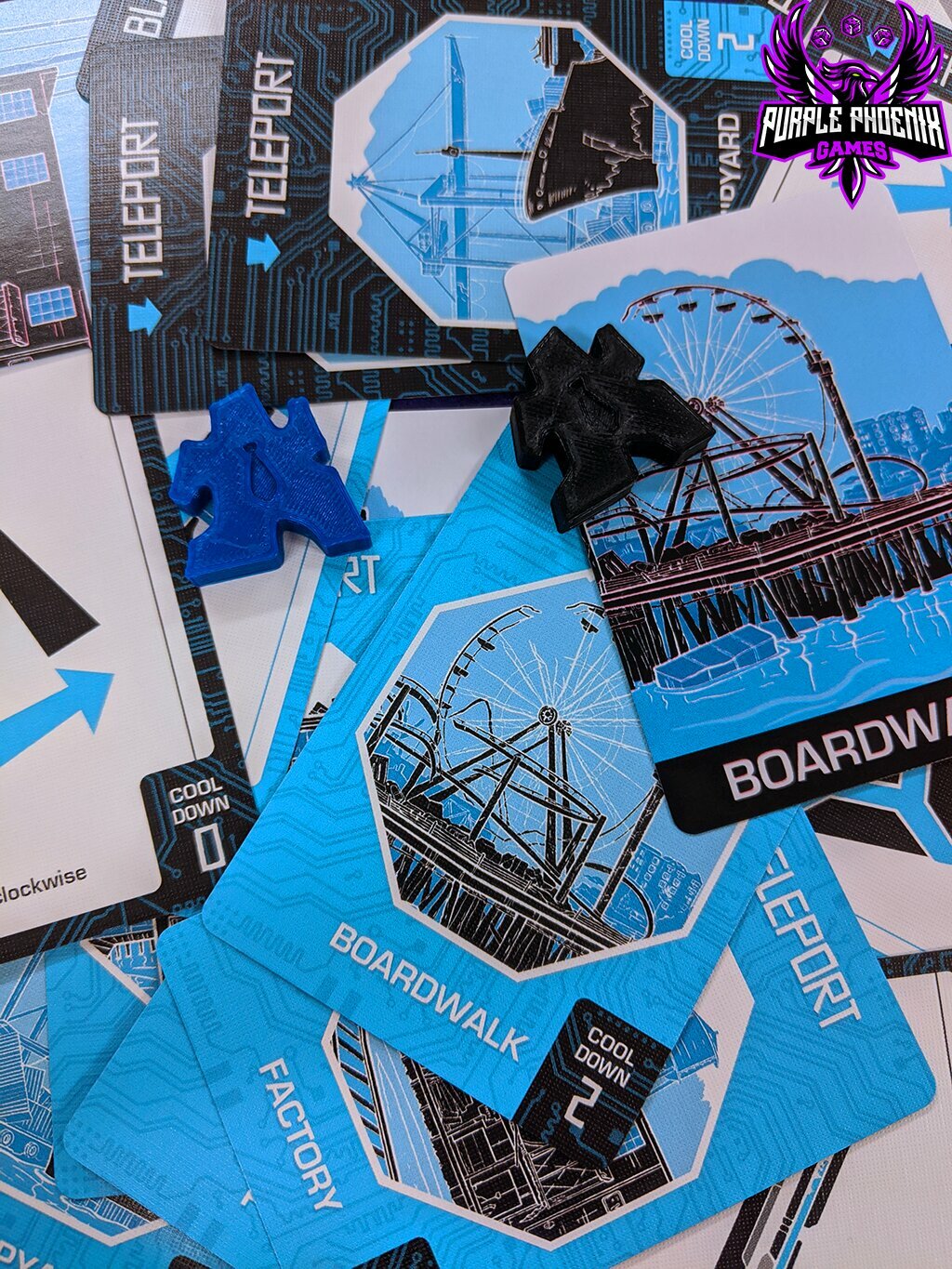
To setup, each player chooses a color (in this edition either blue or black) and receives the cards and spy-eeple (speeple?) of that color. Randomly place the location cards in a circle, or pentagon shape, to mark the map. Each player will select a location card at which they would like to begin the game, and reveal these simultaneously. Players will place their speeples on those locations and the game is setup and ready to play! For a more hardcore game, you may include one or two special Asset cards. We did that.
Slip Strike has no “turns” in the traditional sense. Instead, players will be choosing two cards to be played in succession. These cards are all from their hands and can include movement, teleportation, and weapon cards. Once the players have set their two cards in front of themselves, the cards in the first slot will be revealed simultaneously and resolved. Movement happens first, then any teleportations, then weapon effects.
If a player chose to play a movement card (left or right), simply move the speeple one space in that direction. Teleportation cards have the speeples moving directly to the location specified on the card. Weapon cards will have text on them referring to which spaces will be affected by the weapon – same space, one space away, or two spaces away usually. Should an enemy speeple reside in a space and is to be hit, the attacking player either wins with a successful strike or the defending player will need to “slip” to another location by playing (and therefore also discarding) a location card. This location card is now out of play and essentially is used as a countdown to their end, as players only have one card per location to use for a future slip.
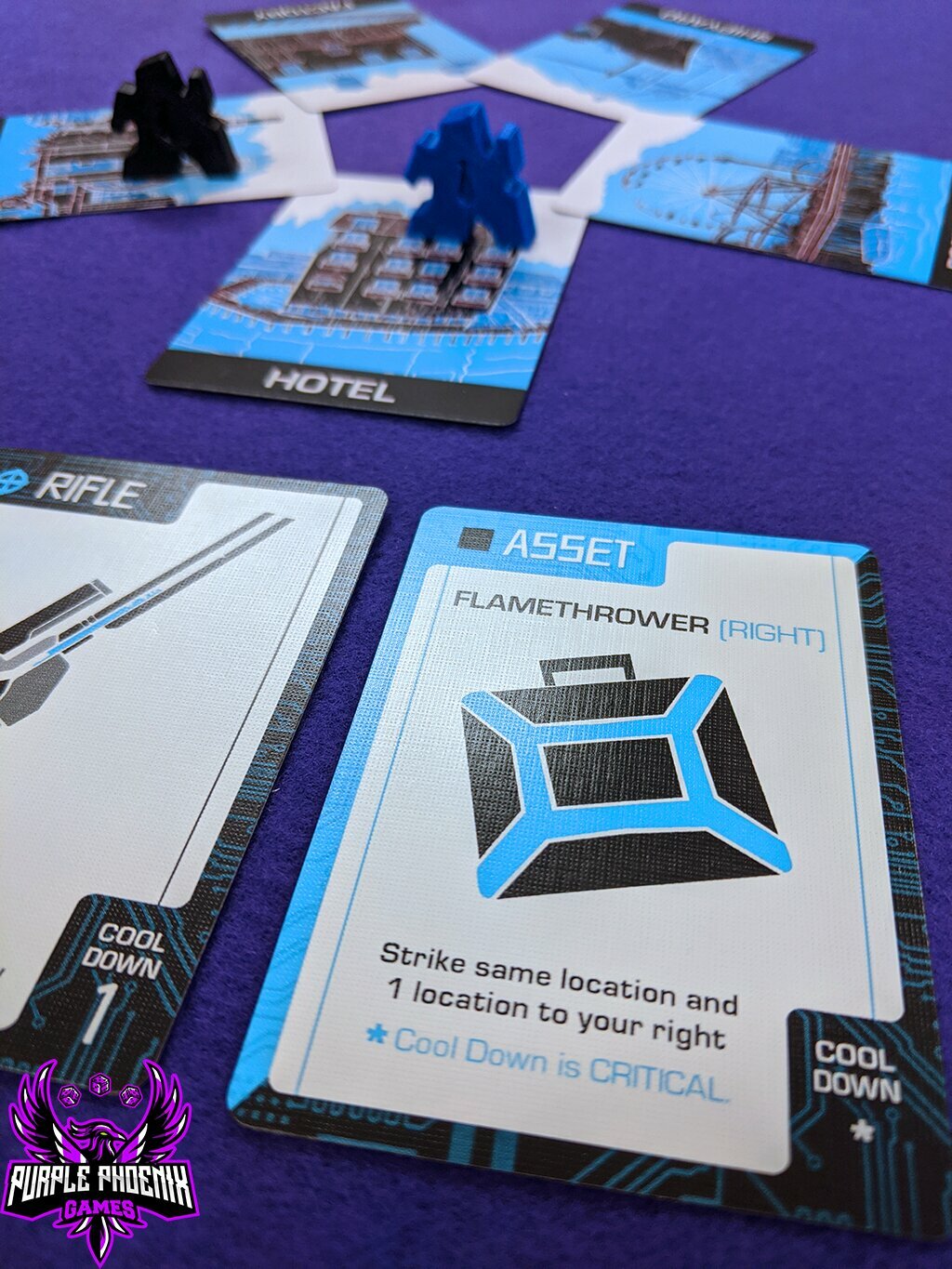
Each card will also feature a cooldown number on it. This number reflects how many game rounds this card will need to sit on the table before it can be shuffled back into the player’s hand. I believe this to be the greatest aspect of this game: utilizing the cool downs effectively in order to exact the most damaging tactics for victory. Some more powerful cards will also show an asterisk in place of a cool down number. This means that the card must remain out of play for three or more rounds before entering the player’s hand (see photo below for the Flamethrower Asset).
The player that can guess their opponent’s next moves, play their corresponding cards, and whittle down the location slips the fastest will become the ultimate spy and someone I definitely do NOT want to play against.
Components. As previously mentioned, we were provided a prototype copy of Slip Strike, and the components may change during the Kickstarter campaign. That said, this game is a bunch of cards and two speeples. The cards look incredible and the art is spot-in with the theme. I quite enjoy the art style and it stays out of the way while playing, but is also interesting enough that you can spend lots of time inspecting it when playing against AP-prone opponents. The speeples are cool, and I am excited to see where they end up as a result of a successful Kickstarter campaign. All thumbs up from us on components!
The game play is super solid. We had no questions on how to play the game after reading the rules (which are super short – thank you!), and we were off to murder each other in seconds flat. What I really appreciate about this game is that anyone can be successful with it and really get into the theme. Do you want to play as Agent Smith from The Matrix? Go for it! Want to play as Hiro Nakamura from Heroes (when he could control his powers, that is)? Do it! Slip Strike is quick, super engaging, and gives me the feeling of high-stakes, adrenaline rushing, globetrotting secret agents that I have been looking for. If you are interested in picking this one up, consider backing it on Kickstarter, purchasing from the publisher directly, from your FLGS, or your favorite online retailer once this one hits market. You won’t regret it.


Writing (3 more)
No character development
Too many inconsistencies
Too many chapters
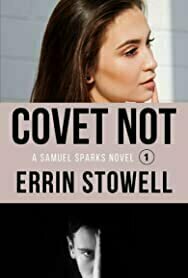
Errin Stowell's new novel series starts with Covet Not which is about a middle-aged lawyer named Sam Sparks - - - who is referred to as Sparks nearly the entire story - - - whose fiancee goes missing and he then becomes the prime suspect. Before everything happens though, readers see that Sparks spends his time trying to defend the elderly from home foreclosures as a small-time lawyer.
If this sounds like a synopsis for a John Grisham novel, you wouldn't be far off because Stowell has the potential to be the next one. This is only the first novel I've read by Stowell, but the one thing I noticed mostly in this story was the amount of inconsistencies and amateur writing mistakes; with better editing and consistency, his books could very well hit mainstream.
Also, Covet Not had so many chapters, so much so that scenes were chopped in half and made into entirely new chapters. The book ended up having 48 chapters within 158 pages. This amount could have easily been shortened and helped with the flow of the story if Stowell had just continued onwards with scenes rather then cutting them short or just skipping parts completely.
The novel starts with a man called Skinny who is enjoying his growing infamy on the dark web (he records himself murdering women then uploads it for his audience to enjoy). Here is how Stowell describes Skinny's thought process:
" Skinny took a black ski mask from the duffel bag and put it on before carrying the bag into the camera's frame and placing it near the woman. He began unpacking other items from the bag. It was slow work, deliberately slow for the camera. Skinny intended to have a before and after view for each tool. It was important to show the proper use of tools. The viewers always appreciated that. "
When we switch over to Sparks, we find him after a long day of work, speaking with a journalist named Gina, his fiancee, who is telling him one of her co-workers stole her story, but no one has heard from her in two days. Yet, they both agree that she's probably holed up with one of the producers, and instead, get into a small argument about Sparks never supporting Gina - - - a constant habit of arguing is almost every interaction between the two throughout the entire novel.
Soon after, Sparks introduces us to his uncle Jimmy, who is being housed at a retirement home: " The old man was seated in a wheelchair; his left leg had been amputated just below the knee a few years before, the result of allowing an ingrown toenail to fester to gangrene. Jimmy's barrel chest and solid upper body contrasted with his wasting legs. "
As Sparks continues to visit his uncle in the retirement home, he keeps running into a cute nurse named Darlene, who quickly sets her sights on him. She goes so far out of her way to get Sparks and Gina to separate that she sends him nude photos of herself from a burner phone. Fortunately, Sparks has bigger fish to fry when he hears over his car radio that Gina's co-worker was now being treated as a missing person case, causing Sparks to quickly jump to the conclusion that Gina possibly was responsible for it.
However, Stowell throws in an expected curveball by making our villain, Skinny, work at the retirement home. When he comes in to take care of a patient while Sparks is present, it's too easy to guess that this patient was going to end up dead soon. Sparks, expectedly, has a bad feeling about this male nurse, but dismisses it and believes that the patient died by natural causes. Life goes on.
Stowell's novel, with a great plot, was just too focused on ending the story, that after page 50, it seemed as if Stowell didn't care what happened to these characters, just as long as he finished the book. At one point, readers are told that Sparks doesn't drink alcohol, but it's never explained why he doesn't which would have given a bite of character development; another scene, Sparks finds a phone, but doesn't want to give it to police, instead he states that he has a 'friend' in the police department who can go through it as a favor, but this 'friend' is completely forgotten, as if Sparks never mentioned him, and the former is left dumbfounded as to how to get into the phone.
There's a story here and characters that could be more well-rounded, but I honestly found myself not caring the least bit about any of the characters' well-being, especially Sparks - - - someone who comes off as inept, someone who has to be told what to do in order for anything to get done - - - he's like a lost child running blindly throughout the book. The story needs to be longer with more emphasis given to mundane scenes that will allow readers to chew on a piece of Sparks' daily life because, by the end of the book, we needed a full picture of every major character, not a Jackson Pollock.
Mandy and G.D. Burkhead (26 KP) rated The Grey Bastards in Books
May 20, 2018
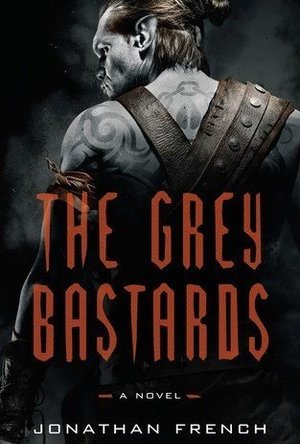

Shelf Life – The Grey Bastards Exemplifies Grimdark Fantasy at Its Damn Finest
Contains spoilers, click to show
The Grey Bastards is a fun, foul-mouthed read. If you’re turned off by bad language, steamy sex, or a good plot with plenty of action and twists, then this book isn’t for you. The Grey Bastards falls into the fantasy sub-genre known as grimdark. Where high fantasy has your Tolkien beautiful and noble elves, dwarves, humans, and wizards with epic battles between good and evil, grimdark takes all of that and covers it in shit, pus, and blood. Notice how in high fantasy nobody ever takes a piss or fucks? In grimdark, everyone does.
But don’t be fooled into thinking this book will be any less intelligent, epic, or heartfelt for it. The Grey Bastards is all of that and more. The novel follows Jackal, a half-breed orc living in the Lot Lands, the barren desert wasteland of Hispartha. He is a Grey Bastard, one of many half-orc hoofs, each protecting its own small town in the Lots. Members of a hoof are elite warriors that ride out on their Barbarians—giant warthogs—and slaughter invading bands of orcs.
Hispartha is a vibrant world, with a mix of fantastical species (orcs, half-orcs, elves, humans, halflings, and centaurs) with unique cultures and religions. Hispartha itself takes influences from Reconquista Spain, which is especially noticeable in the nomenclature, geography, and architecture.
The primarily atheistic half-orcs recently won their freedom from slavery at the hands of humans. Humans treat the half-orcs like second-class citizens, but tolerate them because of their strength, using them as a shield from the orcs. The elves are beautiful, reclusive, and probably the most cliché; there is one important elf character, but for the most part, we don’t get a good look into their culture in the first book. The centaurs worship Romanesque deities and go on crazed, Bacchanalian killing sprees during the blood moon.
Besides the half-orcs, the halflings are perhaps the most interesting. I still have a hard time visualizing them, trying to figure out if they are thin, pixie-like creatures or more stocky like dwarves. Their small stature and black skin makes me think of pygmies. They worship a god they expect will reincarnate someday, (view spoiler)
One thing that has always annoyed me about fantasy is that many authors feel that the characters of their world, being pre-industrial and thus “medieval,” must all be white, straight, Christian (or proto-Christian), cisgender males. If a woman appears at all is to act as the damsel, prize, or, if she’s lucky, a mystical enchantress to guide the heroes or provide a maguffin. It has come to the point in which this has become a tired and accepted baseline for fantasy. I don’t necessarily think that these fantasy authors are intentionally trying to be uninclusive, so much as they just seem to forget that other groups of people can exist in fantasy thanks to its fathers, Tolkien and Lewis.
But enough with my rant, the purpose of which is to highlight why I am often drawn to grimdark fantasy: at the very least I know that women, people of color, lgbt people, and other religions will be present, even if they are often victimized. This is because grimdark fantasy honestly depicts the horrors of rape, war, murder, slavery, and racism (or rather, speciesism in most cases) and has heroes and villains that are morally grey.
However, many authors describe these atrocities and then leave it at that, assuming that simply depicting them is enough to make a book mature and meaningful. They often fail to make any sort of statement on evil, and thus can seem to be, at best, blindly accepting it and, at worst, glorifying it (this often happens in the cases of magnificent bastard characters, who are absolute monsters but are so charming you almost respect or like them).
Jonathan French, however, does not fall short of the mark as many authors do, and for two main reasons: humor and humanity.
Let’s start with the humor. This book is hilarious. I mean in the I literally laughed out loud while reading it way. Sure, the jokes are often crass, but I have a dirty mind, so inappropriate humor is my favorite kind. The dialogue is especially top-notch, and the interactions between Jackal and his friends Fetching and Oats feel genuine, full of in-jokes, insults, and sexually-charged humor, all of which are exactly how I interact with my own close friends. And every major character in this book is so damn witty that I’m honestly jealous of them. If I could be quick enough to make even one of their zingers at the right time in a conversation, I would feel proud of myself for the rest of the day.
Humor is necessary to prevent any grimdark fantasy from becoming too over-the-top or depressing. And honestly, humor is needed most when the world is a dark and frightening place. But too much humor could accidentally downplay the point of grimdark: the brutally honest depiction of the atrocities that people are capable of.
And this is where it is important to have an element of humanity. By this I mean that the “good guys” must make some action or statement on those atrocities. Too often I read or watch hardened badass characters with no emotion who can watch a person get tortured and killed without flinching (maybe even do it themselves) and who never stop to question the nature of their society (even as part of their character growth), and I have difficulty finding them at all relatable or even the least bit interesting.
Now, often for this type of character, he or she is dead inside as a coping mechanism and part of their character arc is learning to allow themselves to feel their repressed emotions: heartbreak, anger, fear, etc. This can be done very well (see The Hunger Games for a great example—dystopian scifi and grimdark fantasy have very similar undertones). But most times it just ends up falling flat.
But Jackal already starts out with more personality than most grimdark protagonists. He is a humorous and light-hearted person. Sure, he lives in a desert wasteland, his race is entirely created by rape, he’s treated as a second-class citizen, and his life and the lives of those around him are in constant danger of rape and/or murder by invading orcs or blood-crazed centaurs. But despite all of that, he still has a sense of humor, people he loves, a community, ambitions, moral code, and all of the other things that these protagonists are often lacking.
Don’t get me wrong, he can be an asshole, and he’s often acts rashly before he thinks. But the scene that really stuck with me the most was [when Jackal and the wizard Crafty come across an unconscious elf sex-slave. I was expecting him to say something along the lines of “There’s nothing we can do for her, we have to save ourselves” or “This isn’t any of our business” or “It would be best to just put her out of her mercy.” These are the typical lines that a grimdark protagonist might utter while their companion—accused of being a bleeding heart—frees the slave. But this was not the case. Jackal and Crafty both immediately set out to free the girl and steal her away from her owner, despite the danger to themselves. And when he comes across an entire castle-full of these women, Jackal again sets about freeing them without a moment’s hesitation. (hide spoiler)]
And it’s no surprise that Jackal has a serious problem with rape. As I’ve mentioned before, half-orcs are entirely the product of roving bands of orcs raping human, elven, or even half-orc women. [When Jackal learns that Starling, the elf slave he rescued, is pregnant with a half-orc baby, he is not only furious with the orcs that gang-raped her, but also disturbed by the fact that elven society shuns any of their women who have been raped, and that these victims often end up taking their own lives rather than give birth to an impure half-elf. (hide spoiler)]
Furthermore, Jackal, unlike many people in Hispartha, does not buy into misogyny or sexism. His best friend Fetching is the first female half-orc to have joined a group of riders. Not only does Jackal respect Fetching, he understands the emotional turmoil that she is dealing with being the first female rider and how she overcompensates as a result to earn the respect of the other men.
While there is quite a bit of speciesism (pretty much none of the species get along with one another), the inhabitants of Hispartha come in every skin color and nobody gives a damn. Furthermore, sexuality is primarily treated as each person’s individual preference and nobody else’s business. While characters may make jokes about acting “backy” (gay), these are made in good humor between friends, and nobody gets particularly offended by them. Fetching is herself openly bisexual (though she seems to suppress her heterosexual desires more than her homosexual ones out of that same need to be “one of the boys”), and Oats and Jackal are one of my favorite bromantic pairings.
Grimdark fantasy can often be depressing to read. But Jonathan French does an excellent job of infusing hope into his narrative. The story actually has a happier ending than I was expecting. [I was especially pleased when Jackal chooses Fetching to be the new leader of the hoof (she is voted in unanimously by the other riders). I find it incredibly annoying in books and movies when revolutionaries/usurpers decide to appoint themselves leaders, as the former does not qualify you for the latter. Part of Jackal’s arc is realizing that he is not meant to lead the hoof like he’d once desired. (hide spoiler)]
For the sequel, The True Bastards, I’m hoping to see [if a cure can be found for the thrice-blood child now infected with plague, how Fetching is doing leading the hoof, and what the mysterious Starling is up to (I don’t buy for a second that she’s killed herself). And of course, I fully expect that Jackal is going to have to fulfill his empty promise to the halfling’s resurrected god, Belico.
Purple Phoenix Games (2266 KP) rated Dinosaur Island in Tabletop Games
Jun 12, 2019
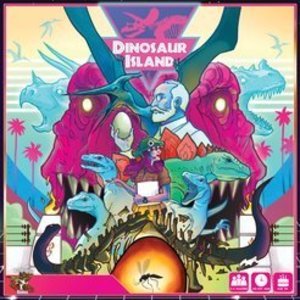

One of the best parts of the board gaming experience is finding a fun group of people with whom to play! Sometimes, though, coordinating a game night is easier said than done. We all must occasionally forego the group experience and face the world as the Lonely Only. But fear not! The world of solo-play is a vast and exciting realm! What follows is a chronicle of my journey into the solo-playing world – notes on gameplay, mechanics, rules, difficulty, and overall experience with solo variations of commonly multiplayer games! I hope this will provide some insight as you continue to grow your collection, or explore your already owned games!
In Dinosaur Island, you have successfully created a theme park of the Jurassic variety (see what I did there?), and are now tasked with managing and supervising the day-to-day operations. Think “Zoo Tycoon” on steroids. You have to collect new DNA, upgrade your facilities, build new attractions, hire specialists, oversee your workers, and create new dinosaurs to populate your park! Make sure you manage your resources wisely for maximum benefit, and keep a close eye on the security of your park to ensure the safety of your guests! The goal is to create and maintain the most successful dinosaur park!
DISCLAIMER: An expansion exists for Dinosaur Island, and I do own it, but I have yet to incorporate it into my games. Once I get some experience with the expansion, I will either amend this review or address it in a separate post! -L
Let me first begin this review by saying that there is A LOT going on in this game. Seriously, a lot. And it can be pretty overwhelming at first. But one thing I cannot praise enough about Dinosaur Island is its rulebook. It’s kind of hefty, but it is so detailed and clear (with numerous examples) that I understood how to play the game on my first read-through. And sometimes with games that have so many moving elements, total understanding from the get-go can be rare, for me especially. The excellent rulebook makes a seemingly daunting game not so scary. I always keep the rulebook on hand when I play (just to be safe!), but once I got the hang of all of the steps, I don’t really need to refer back to it anymore!
As a solo game, Dinosaur Island plays very similarly as it does in group play with a few minor differences. For one, no regular Objective cards are used – instead you use a set of specified Solo Objective cards. Next, to simulate player interaction during the Research and Market Phases, the solo player draws a card from an AI deck and eliminates the options/discards the resources listed on the card – this mimics group play in the sense that turn order changes every round and you do not always get your first pick during these phases. The remaining 2 Phases (Worker and Park) occur simultaneously and involve no player interaction, so those are played as normal. One final difference between group and solo play is that the solo player can choose to play without Plot Twist cards. A solo game is played over the course of 7 total rounds, and the overall goal of the game remains the same – amass the most Victory Points.
The trickiest part of playing Dinosaur Island solo, for me, has to do with the Solo Objectives. You have 7 Solo Objectives to be completed throughout the game, and they reward Victory Points based on the round in which they were completed – finishing objectives in earlier rounds yields a higher number of points. If you are unable to complete any objective in a given round, you must discard one (of your choice) at the end of that round. The hard thing is that depending on which objectives are currently in play, it can be difficult to complete one each round to earn those points. Some things take time (and a couple of rounds) to be able to complete – like “Reach a threat level of 15.” If you have multiple long-term objectives in play, they can really limit the number of points you can earn from them. A nice mix of objectives (both short-term and long-term) can help balance out the game a little more, but it’s ultimately a luck of the draw.
One positive thing I can say about the objectives, though, is that they really force you to come up with a multi-faceted strategy. Depending on which objectives are in play, you have to decide on a logical strategy and order in which to complete them for maximum points. You can’t just focus on one objective – you also need to be setting yourself up to complete future objectives. I never feel like I’m just going through the motions because I always need to be thinking ahead to my future rounds.
The thing I really like about Dinosaur Island as a solo game is that it is still extremely engaging. I’m not a huge fan of “Beat your own personal best” solo games, but this one keeps me so involved that I don’t mind the fact that there’s no real ‘winner.’ Since a group game doesn’t involve that much player interaction anyway, Dinosaur Island doesn’t really even necessarily feel like a solo game. Every play requires a different strategy, and that makes it feel like a new game every time. If you enjoy Dinosaur Island in a group setting, give it a try as a solo game. There’s really not much of a gameplay difference, and I think you’ll enjoy it just as much!
https://purplephoenixgames.wordpress.com/2019/05/21/solo-chronicles-dinosaur-island/

Gareth von Kallenbach (980 KP) rated Indiana Jones and the Kingdom of the Crystal Skull (2008) in Movies
Aug 14, 2019

After 17 years away from the big screen, Indiana Jones has dusted off his trusty fedora and bullwhip in one of the most eagerly awaited returns to the screen in cinema history. Harrison Ford once again plays the rough and rugged archeologist who is as equally adept in the classroom as he is in the depths of an ancient trap laden chamber.
In “Indiana Jones and the Kingdom of the Crystal Skull”, audience are re-introduced to Jones, who is by now an older, and wiser man who spent the years of WWII as a special operative which earned him not only the rank of Colonel, but numerous medals and citations.
The film opens with a group of bad guys forcing Indiana to locate an object from a gigantic storage area in the infamous Area 51. Since Jones was part of a team that examined said object nearly a decade earlier, his services are greatly desired, and he is forced to play along with his captors.
Of course Indiana Jones is still a man of action, and soon turns the tables on his captors in a daring and humor filled action sequence that quickly answers those that doubted Ford could pull off his charismatic character in his 60’s.
The events of the situation do not go unnoticed by the U.S. government who suspect Jones of collaborating with the enemy, and in the Red Scare America of the 1950’s Jones soon finds himself suspended from his teaching position and looking to head overseas.
As Indy’s train heads out of town, he is approached by a motorcycle riding messenger who says his name is Mutt (Shia LaBeouf), and he has been sent to find Indy by a former college of Indy’s Professor Oxle (John Hurt). Intrigued, Jones listens to the tale Mutt tells him that people have kidnapped Oxley and his mother, and he shows him a letter that Oxley instructed him to pass along to Indy should anything happen to him.
Before Indy can dig further into the mystery, he and Mutt are accosted by thugs and after a daring race through traffic on Mutt’s motorcycle, find themselves on a plane to South America in search of Oxley and Mutt’s mother as well as the fabled Crystal Skull that legend says will grant amazing powers to anyone who returns it to the fabled Golden City.
Thinking that his old friend Oxley may have succeeded where Indy was unable to many years earlier, Jones takes up the cause of locating the fabled artifact and the city as he believes that they are also the keys to locating his missing friend. The film really slows down here and devotes a good amount of time to advancing the story and characters and thanks to the amazingly detailed sets and enjoyable characters; you may find yourself not minding the change of pace.
Of course there are plenty of bad guys to add to the mix, including the evil Irinia Spalko (Cate Blanchett), who is leading a team of Russian soldiers who also have designs on the skull, as it would give them the power to read and control the minds of the leaders the world over, amongst other powers that would be used for their aggressive agendas.
What follows is an effects-laden adventure leading to a grand finale that is not as spectacular as past films in the series, but enjoyable nonetheless. When the action comes it is solid, and while some of it seems to be a retread of some of the classic moments of the series, it does deliver enough thrills to keep fans happy. There are some very welcome moments in the film such as a nice tribute to Sean Connery and the Late Denholm Elliot as well as a cleverly placed cameo early in the film during the warehouse fight.
Shia LaBeouf is an interesting addition to the series and his scenes with Ford are very enjoyable. They have a natural chemistry and do not seem forced like the Short Round character from “Indiana Jones and the Temple of Doom”. I was also very happy to see Karen Allen return to the series as Marion Ravenwood. She has truly proven to be the only love interest in the series that truly measures up to Indy, and her fiery temper with a girl next door charm is the perfect foil for Jones.
The effects in the film are not groundbreaking, but solid, however some may find that the films plot is a bit to complex and takes too long to setup. There were funny moments in the film to go along with the action and viewers who pay close attention will catch some very subtle nods to other moments in the series.
I was pleased with the sets in the film as Director Steven Speilberg and Producer George Lucas clearly paid attention to details in the look of the film. The tombs and exotic chambers depicted in the film had a very immersive nature to them much the same way that classic Disneyland rides like Pirates of the Caribbean and The Haunted Mansion place guests right in the middle of the spooky and exotic locales. From cobwebs, skeletons, and insects and well as treasures galore, it was like being in on the adventure with Indy.
The series does have some life in it and while the film does not measure up with the first film in the series, I would say it is on par with “Temple of Doom” and was for me, more enjoyable than “The Last Crusade.” The film leaves the door open for yet another adventure, and if comments from Speilberg and Lucas are to be taken seriously, we may see the beloved archeologist back on the big screen in the not too distant future.

Emma @ The Movies (1786 KP) rated John Wick: Chapter 3 - Parabellum (2019) in Movies
Jun 22, 2019 (Updated Sep 25, 2019)
We left off at the end of John Wick 2 with our lead's imminent excommunication. He's been given an hours grace, in a city that's filled with assassins his odds don't look good, but even for John Wick... bad odds are still pretty good.
I've been contemplating the story to this since I watched it. There doesn't feel like much of one. He's attempting to save his life, sure, but that's really the only thing. It feels very much like a set up for the sequel, which depending on what you read is either already planned or not planned at all.
I don't really think we go to see John Wick movies for the plot though, do we? So on that front it delivers spectacularly. The opening was immense, we come in knowing that it's all going to kick off pretty quickly after the last instalment so the anticipation is with you from the off, and it doesn't disappoint. Sheer kick-assery that we've come to expect from the franchise.
As the clock ticks over the hour and John Wick's own time is now running out he dashes through the streets (rather bold for someone with a $14 million bounty on his head) trying to make his way to people who might actually help him. Of course he's spotted by one of the thousands of assassins and villains that seem to litter the streets of New York. He ends up in a handily weaponised building and we see him take on a gang of knife proficient bad guys. The scene in this sequence, with the weapons cupboards, had everyone in the cinema chuckling.
Laughter was a surprising feature of the film, the same chuckling rippled through several scenes and broke up the violence. Some of that violence did also bring out the odd pained "ooh" as we recoiled from the screen in sympathetic pain for the character.
The complexities of the fight scenes are epic, but there was one moment in particular that stuck out as being scripted... yes, yes, I know it's all scripted! We see a very brief pause and the reaction's slow in a moment that was such a departure from everything around it that it was very noticeable to me. (On second viewing, while I still saw it, it wasn't as bad as I had seen it the first time.)
One other fight scene made me pause with a moment of being picky. John and Sofia are fighting every bad guy in Morocco. It was epic, it was fun... but everywhere I looked, "someone's going to fall off that and land on that". The set-up of the scenery was such a giveaway to upcoming action that it took some edge of the action.
The cast is filled to the brim with wonderful actors. Ian McShane, Laurence Fishburne, Lance Reddick and Anjelica Huston were brilliant. I was a little taken aback to see Jerome Flynn appear as Sofia's old boss, Berrada. I winced a little when I noticed that he was playing it with an accent, but I had to take it back because he was rather good with it. There was no one that I thought was "letting the side down", everyone brought their A-game.
There's only one character that did something that disappointed. Zero, played by Mark Dacascos, is a very disciplined man. He's a master with the knife, a master of death, and his action sequences are incredible. He also gets a very funny moment in The Continental before my moment of disappointment. They turn him into a fanboy, and while the contrast has the potential to be amusing it's actually better achieved with characters later in the film. Zero's change felt uncomfortable and out of place.
I shouldn't put all of that in one place, there's one other very short moment in the film that seems out of character/place, and that's at the very end of the film. It felt so odd that I would have ended it a scene earlier. I liked the reveal, but it would have left a bit more intrigue without it.
We can't talk about John Wick without talking about doggos, and these ones were exceptionally good. The two new additions are very talented and look like they get to have a lot of fun. But my heart belongs to Dog though. When he turns up in a taxi... 😢
Can we all face up to some facts at this point, please? John Wick... super assassin... well, he isn't really is he? He's just really resilient when taking a beating, and very persistent when it comes to shooting things! He'd waste a lot less ammo if he didn't put a minimum of three bullets into every body.
Parabellum was action packed and showed us some very imaginative pieces, but it didn't feel quite as well rounded as either of the other two. I'm still looking forward to what's to come, the pure action is amazing I love to see what they think of next. On the horizon we've got a fourth film, which is listed as Ballerina, and a TV series called The Continental. From this installment I could see some potential routes for the film, but it's the series I'm excited about. I would absolutely love it if each episode was in a different Continental.
What you should do
This movie is an "anyone" kind of thing. Old, young, couples, friends, lone cinema nerds... we were all there. If you love mindless violence and action then you should go and watch this, and look out for the best line of the whole film, "I get it."
If you don't like seeing bad things happen to good books, perhaps don't watch the first ten minutes or so.
Movie thing you wish you could take home

graveyardgremlin (7194 KP) rated Nightmares: A New Decade of Modern Horror in Books
Feb 15, 2019
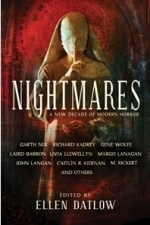
Shallaballah by [a:Mark Samuels|679023|Mark Samuels|https://images.gr-assets.com/authors/1485638875p2/679023.jpg]
Weird and I didn't completely understand it. I'm not big on surreal-like stories.
1.5 stars
Sob in the Silence by [a:Gene Wolfe|23069|Gene Wolfe|https://images.gr-assets.com/authors/1207670073p2/23069.jpg]
I liked it okay, but wasn't wowed. I feel like there was a missed opportunity and that the ending was too abrupt.
3 stars
Our Tun Too Will One Day Come by [a:Brian Hodge|167606|Brian Hodge|https://images.gr-assets.com/authors/1326937946p2/167606.jpg]
Folklore and horror equal an interesting tale. I'd read more from Brian Hodge.
4 stars
Dead Sea Fruit by [a:Kaaron Warren|1207458|Kaaron Warren|https://images.gr-assets.com/authors/1303270263p2/1207458.jpg]
So far the best in the book. Perfectly paced and pretty darned creepy.
4.5 stars
Closet Dreams by [a:Lisa Tuttle|38313|Lisa Tuttle|https://images.gr-assets.com/authors/1296860221p2/38313.jpg]
Haunting. That's the first word that popped into my head when I finished this story. Also, disturbing, sad, and devastating. Trigger warning: <spoiler>pedophilia and abduction, although not described in any kind of detail</spoiler>
5 stars
Spectral Evidence by [a:Gemma Files|765702|Gemma Files|https://images.gr-assets.com/authors/1266869494p2/765702.jpg]
I had a hard time with this, especially at the beginning since it's written as a case study with footnotes. Had this been written as a regular short story, I do believe the horror is there for a good tale, but as it stands it didn't feel at all scary or nightmarish.
2.5 stars
Hushabye by [a:Simon Bestwick|2830642|Simon Bestwick|https://s.gr-assets.com/assets/nophoto/user/u_50x66-632230dc9882b4352d753eedf9396530.png]
This was...okay. It sorta fit the book, but it also sorta didn't. The story almost felt noir, but not quite, plus everything was rather vague. Not bad, but fine.
3 stars
Very Low-Flying Aircraft by [a:Nicholas Royle|20435|Nicholas Royle|https://s.gr-assets.com/assets/nophoto/user/m_50x66-82093808bca726cb3249a493fbd3bd0f.png]
The only horror in this is the fact that it's included in a horror anthology. I'm not even sure what the point was.
1.5 stars
The Goosle by [a:Margo Lanagan|277536|Margo Lanagan|https://images.gr-assets.com/authors/1361153347p2/277536.jpg]
Meh. An even more twisted sequel of sorts to Hansel and Gretel sans Gretel. While it's gory, it didn't bother me but I didn't love it.
3 stars
The Clay Party by [a:Steve Duffy|376166|Steve Duffy|https://images.gr-assets.com/authors/1329037438p2/376166.jpg]
A take on the Donner Party told through diary entries and a letter at the end.
4 stars
Strappado by [a:Laird Barron|466494|Laird Barron|https://images.gr-assets.com/authors/1446325324p2/466494.jpg]
This didn't do anything for me; it was just too vague.
2 stars
Lonegan's Luck by [a:Stephen Graham Jones|96300|Stephen Graham Jones|https://images.gr-assets.com/authors/1458951688p2/96300.jpg]
Interesting, the writing and pace was good. The MC is a conman of the old(?) West. I didn't understand why he did what he did exactly, like were there circumstances of something that happened to the country as a whole, but it's not such a big thing. I only hoped he'd get a taste of his own medicine, so to speak.
3 stars
Mr. Pigsny by [a:Reggie Oliver|518983|Reggie Oliver|https://images.gr-assets.com/authors/1477924368p2/518983.jpg]
An odd, creepy little tale.
4 stars
At Night, When the Demons Come by [a:Ray Cluley|4446653|Ray Cluley|https://s.gr-assets.com/assets/nophoto/user/u_50x66-632230dc9882b4352d753eedf9396530.png]
Perfectly told, perfectly paced, with a horrible-ish ending. Definitely memorable.
4.5 stars
Was She Wicked? Was She Good by [a:Mary Rickert|7344680|Mary Rickert|https://s.gr-assets.com/assets/nophoto/user/u_50x66-632230dc9882b4352d753eedf9396530.png] (as M. Rickert)
Meh. Not bad, but not great either. I don't really have much to say about it.
3 stars
The Shallows by [a:John Langan|58413|John Langan|https://s.gr-assets.com/assets/nophoto/user/u_50x66-632230dc9882b4352d753eedf9396530.png]
I honestly don't even remember this one so it must not have been all that bad or good.
2 stars
Little Pig by [a:Anna Taborska|4343515|Anna Taborska|https://s.gr-assets.com/assets/nophoto/user/u_50x66-632230dc9882b4352d753eedf9396530.png]
Horrific only in the way of what you might do to for the survival of those you love. A quirky start with an powerful ending.
4 stars
Omphalos by [a:Livia Llewellyn|2966042|Livia Llewellyn|https://images.gr-assets.com/authors/1298571003p2/2966042.jpg]
Well-written but definitely not one for everybody. It's sick, a little too descriptive with the incest. I don't need an actual scene with explicitness. While I felt sorry for the MC and her brother, the story made me sad for actual victims. Possibly the point, but it's an upsetting story that some should probably skip. Also, what happened in the end? I get some of it, but it was so confusing and vague that I didn't fully comprehend the conclusion. It doesn't matter much, but I'm getting tired of vague endings or other scenes in these stories.
3.5 stars
How We Escaped Our Certain Fate by [a:Dan Chaon|16560|Dan Chaon|https://images.gr-assets.com/authors/1241719844p2/16560.jpg]
Interesting and thoughtful zombie tale. Slightly melancholy.
3.5 stars
That Tiny Flutter of The Heart I Used to Call Love by [a:Robert Shearman|128037|Robert Shearman|https://images.gr-assets.com/authors/1363523036p2/128037.jpg]
Strange. I'm not sure exactly what I thought of this tale, and I'm not sure I totally get what happened at the end, but that seems to be my lot with some of these stories.
3 stars
Interstate Love Song (Murder Ballad No. 8) by [a:Caitlín R. Kiernan|4798562|Caitlín R. Kiernan|https://images.gr-assets.com/authors/1491390729p2/4798562.jpg]
I liked this story. It was....interesting to say the least. Not my favorite but solid.
3.75 stars
Shay Corsham Worsted by [a:Garth Nix|8347|Garth Nix|https://images.gr-assets.com/authors/1207583754p2/8347.jpg]
3.5 stars
The Atlas of Hell by [a:Nathan Ballingrud|2957979|Nathan Ballingrud|https://images.gr-assets.com/authors/1354770124p2/2957979.jpg]
4.5 stars
Ambitious Boys Like You by [a:Richard Kadrey|37557|Richard Kadrey|https://images.gr-assets.com/authors/1252945001p2/37557.jpg]
4 - 4.5 stars
Okay, I kinda ran out of reviewing steam near the end, but the last two stories were excellent.

Chris Sawin (602 KP) rated A Clockwork Orange (1971) in Movies
Jun 15, 2019
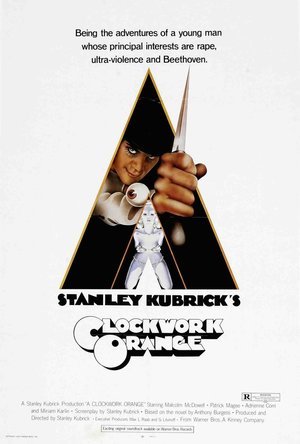
Alex DeLarge (Malcolm McDowell) is your average eighteen year old boy...if by average, you mean he fully embraces the old ultraviolence and wanders the streets with his three droogs causing havoc and doing whatever he likes; skipping school, breaking and entering, rape, and assault is just another average day in Alex's life. However, when a planned rape turns into an "accidental" murder, things start to turn fowl for Alex. His droogs turn on him and he winds up being caught by the police. He is then taken to a correctional facility where he spends the next few years, puts on the front that he's fully embraced the bible and that he's now a changed man. But when word makes round of the experimental Ludovico treatment, Alex realizes his chance at freedom and jumps through the proper hoops to get out of the penitentiary he finds himself in and get into the experimental facility where he can be "cured."
Alex is promised that he'll be a free man within a fortnight. The treatment consists of a drug known as Serum 114 being injected into the patient before making them sit through short films such as a man being beaten to a pulp, a woman being the sexual victim of several men, and a Nazi concentration camp film set to the soundtrack of Beethoven's ninth symphony. Alex begins to feel sick during the films and the doctors insist that it's part of the cure. Alex's love for music and Beethoven in general become one of the adverse effects of the treatment as the ninth symphony has the same effect on Alex as the urge to beat or rape someone would. Alex soon comes to realize that you can never go home again and that being a free man isn't all it's cracked up to be, especially after a treatment such as this.
It took 37 years after its initial theatrical release and 24 years of being alive on this planet (the original viewing of this film was in 2008) to finally get around to seeing A Clockwork Orange. The film starts and it makes the viewer feel like they've missed something entirely that everyone else already knows about, but as the film unravels it snowballs into a unique vision of cinema. There are shades of Altered States in A Clockwork Orange, but A Clockwork Orange feels much more polarizing in its presentation in comparison. Stanley Kubrick tries to shine this spotlight of beauty onto the most heinous of actions as the film’s classical score becomes the soundtrack to ferocious and almost inhuman desires. This is Kubrick’s adaptation of the 1962 novel of the same name written by Anthony Burgess and it’s incredible how the film is able to remain captivating over a two hour period.
The film has a stunning restoration on the two-disc Blu-ray anniversary edition. Kubrick always had a brilliant eye when it came to perspective and camera placement; the majority of that could be contributed to Kubrick’s frequent collaborations with cinematographer John Alcott. The long hallway shots and close-ups on memorably haunting facial expressions are some of the most significant scenes in the film. A Clockwork Orange is loaded with vibrant colors that make every frame jump off the screen despite the film nearing half a century in age. This was the first film to take advantage of Dolby Digital surround sound, which contributes to the film sounding as good as it does.
Even with Stanley Kubrick as director, A Clockwork Orange wouldn’t be the same without Malcolm McDowell. McDowell fits the Alex DeLarge role as perfectly as Robert Downey Jr fits Tony Stark; these actors are these characters. The speeches McDowell gives in the film along with how traumatized he is after the treatment process are two of the biggest takeaways after viewing the film. This was one of McDowell’s first on-screen roles, which is surprising given how enthralling he is. You will never think of, “Singin’ in the Rain,” the same way again after viewing A Clockwork Orange.
A Clockwork Orange is a unique expedition into insanity no matter how you look at it. The dialogue is unusual and the characters are this fantastic blend of bizarre and diabolical, but the film is consistently engrossing and never seems to lag. Prior to 1986, the A Clockwork Orange novel was published in the US without its final chapter and that’s the version of the film Kubrick adapted. Anthony Burgess praised Kubrick’s version of the film despite this, which is more than what Stephen King did with Kubrick’s adaptation of The Shining. Every shot in A Clockwork Orange grabs your attention largely in part to how it’s presented or the colors that leap off the screen. The novel is written in a way that’s difficult to read and that often translates on-screen. Like most of Kubrick’s work, A Clockwork Orange is for a specific audience. It is perhaps what Malcolm McDowell is known best for and probably shouldn’t be recommended to just anyone since it would likely soar over a modern day moviegoer. This isn’t the type of film to have on in the background while you text or play games on your phone. Ultraviolence is something you have to embrace and give your undivided attention to.
This is viewed by some as one of the greatest sci-fi films ever by some, but it isn’t any less pretentious than the rest of Stanley Kubrick’s work. A Clockwork Orange is mesmerizing with a performance from Malcolm McDowell that leaves a long lasting impact, but its affinity to utilize difficult to decipher jargon, nonstop innuendo being slammed into your face, and overuse of animalistic violence shackles the film from being more appealing to a wider audience. From a personal standpoint, A Clockwork Orange is one of Kubrick's best but it's easy to understand why it wouldn't be for everyone.
Emma @ The Movies (1786 KP) rated Valerian and the City of a Thousand Planets (2017) in Movies
Sep 25, 2019
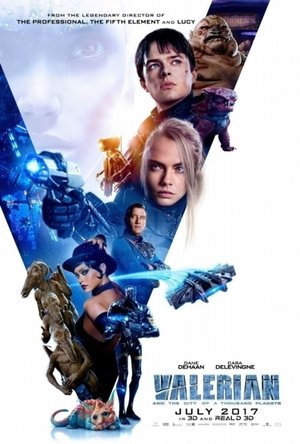
The story of Valerian is a good one. We open on Mül, a idyllic place of peace and a simple life. But this peace is shattered when fire rains from the sky devastating the entire planet. The last moment of Mül sees the Princess, doomed to die in the explosion, release her energy into the universe, through time and space.
Valerian, sunning himself on his ship, is hit with a sudden vision of the cataclysm on Mül. Unsure about it's meaning he goes back to the task at hand, retrieving a relic from some disreputable people on the black market. The "converter" is the last of it's kind in the universe, it will eat anything and rapidly replicate it, and as such is a very valuable commodity.
The mission is to return the converter to Alpha station. But when they arrive they discover that the station has been infected with something right at its heart. It's spreading, and all those that enter do not come back. When events lead to Valerian being drawn into the infected area, Laureline isn't willing to give up hope, and she battles her way in. Once she's reunited with Valerian they work travel to the centre of the station and discover the shocking truth about how the infection began...
The film is based on Valerian and Laureline, a French sci-fi comic series written by Pierre Christin and illustrated by Jean-Claude Mézières. I have got the first one to read, but as is my tradition, I have yet to do so. The first one is available free on Kindle at the moment if anybody is that way inclined. I expect that it will get a much better reaction in Europe than it seem to have done in the States, which is a bit of a shame. Possibly the way to go would have been with bigger stars, but *shrugs shoulders* it's too late now.
As I said, the story itself is a good one, and while people are nit picking and saying there are plot holes... there aren't if you don't look for them. I have this horrible ability to just watch a film for what it is, if you just go and see something to have some fun you don't notice any of that. It's a horribly nice way to be able to live my life, I enjoy a lot more things that way.
What I'm about to say is going to contradict my overall feeling for the film... I didn't really enjoy Dane DeHaan or Cara Delevingne. I had originally thought that I hadn't seen DeHaan in anything before, but was soon getting recollections of The Amazing Spider-Man 2. Scrolling through Delevingne's few years of films I've only seen Suicide Squad, and her acting as a "real person" is quite a small piece in that. While I can't think of anyone who would have perfectly suited either role, I feel like many other actors could have done an equal, or better, performance.
You get a wonderful introduction to what the station is, and has become. And we're treated to the potted history of alien species, several of which would sit quite nicely in the Whoniverse. I'm quite looking forward to reading the graphic novel. I can see stories unfolding in the different sections of the station, and that works. It almost feels like it would have made an amazing TV series, because it is essentially Star Trek with glitzier aliens and ecosystems.
As far as the secondary characters go we're treated to several memorable moments. Including Ethan Hawke as Jolly the Pimp, which is as flamboyant as you'd expect. Clive Owen as Commander Filitt, stern and ruthless, the sort who would stab you in the back (or the front) for his own gain. Sam Spruell as General Okto-Bar, who acted his part incredibly well... I'm honestly surprised I've not seen any of the other things he's been in, but I will be checking them out. Rihanna as Bubble, I'm a little surprised about how much I heard about her being in this considering how short her role is. But the same is true of a few things I've seen recently. We first meet her at Jolly's den of iniquity, where the music video training definitely came in handy.
As a whole the film moves along smoothly, with only a few little bits that seemed like they didn't belong, or could have been cut out. Unlike other films though, these little additions didn't harm the overall product.
Here is where my love for the film takes a steep nose-drive. Imagine crying with joy to resting bitch-face in the space of a few seconds. The 3D was hideous. I can't even think of a nice thing to say about it.
When the scenes were general crowd shots or indoors, everything was fine... although these shots didn't really benefit from the effect. The exterior shots however, in my not so expert opinion, were a terrible idea. I found some of them actually painful to watch, particularly long range shots of Alpha with ships coming in to dock. It was near on impossible to deal with the perspective as there was so much happening. For the last half of the film I took my 3D glasses off every time these shots appeared on screen as my head was rapidly starting to hurt, and I wasn't the only one having trouble.
If it wasn't for the painful exterior shots I honestly would have forgotten I was watching the film in 3D. Unlike other 3D films, you weren't aware that things were coming out of the screen at you. Not once.
I really don't want to be so negative about this film, it was an enjoyable watch (without the optical illusion created by the 3D). I would recommend it to anyone who has a passing interest in sci-fi and adaptations of comics. And I feel like, if nothing else, it might get the graphic novels themselves more circulation outside of Europe.
But please... watch it in 2D.
Mandy and G.D. Burkhead (26 KP) rated Banewreaker in Books
May 20, 2018
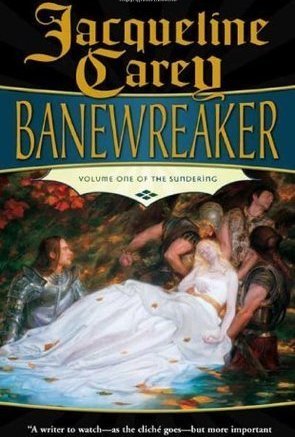

Shelf Life – Banewreaker Will Make You Feel Bad for Sauron
Contains spoilers, click to show
Very few fantasy fans can get away with admitting that they aren’t all that big into sweeping, high epic fantasy à la Lord of the Rings or the Pern stories or everything that Terry Brooks writes. Many non-fantasy fans, however, can point to these tales as examples of why they aren’t into fantasy. Like it or not, it’s hard not to see the latter group’s point, as a lot of high fantasy is riddled with confusing terminology, rehashed stories, and genre clichés. This is not to say that these stories are bad, per sé, just that they can easily turn off readers who aren’t in the right kind of crowd.
Banewreaker, the first book in Jacqueline Carey’s two-part volume The Sundering, will probably not change any opinions in this respect, then, as it’s sweeping high fantasy to the core. This, as it turns out, is both its greatest strength and its greatest weakness.
There are some reviews out there that laud Banewreaker as a masterful examination of subjective viewpoints in an epic fantasy turned into a human tragedy by a simple change of perspective. And they are absolutely correct.
There are other reviews, however, that call the book out as a heap of all of the stalest fantasy clichés piled one atop the other in a confusing and pretentious jumble with a shellacking of purple prose for good measure. And they are also absolutely correct.
Let me explain.
For starters, it would be inaccurate to say that this story is full of clichés. This story is clichés. This story is every familiar and used-up trope you would expect from a high fantasy, all of those details that have been done to death in thousands of other versions until almost nothing that happens seems original anymore.
This is what’s going to turn off a lot of people. But the thing is, Banewreaker has to be this way. It wants the reader to look at all of the things that they’ve come to expect from a fantasy epic and then, by shifting the narrative focus, realize that all of these beloved tropes are actually, when you think about it, tragic as hell.
In other words, it’s Lord of the Rings from Sauron’s point of view.
It’s not a riff, though. It’s not goofy like most of the stuff I go in for. It takes its subject just as seriously as the stories that it’s mirroring, and this is what makes the whole story ultimately so gripping and so moving.
The story starts out like many stories of this magnitude, with exposition stretching back to the Dawn of This Particular Creation. In this case, we have a protogenos world god named Uru-Alat who died and gave rise to seven smaller godlike beings called Shapers. First comes Haomane, who becomes the Lord of Thought and sets himself up as head honcho for this ensuing pantheon. Second is Arahila, the Basically a Love Goddess; and third is Satoris, whose purview was “the quickening of the flesh,” which is high fantasy speak for sexy times. Four more Shapers come after this who, for the sake of brevity, we’ll be glossing over.
To summarize the important godly exposition, the Seven Shapers set about shaping the world to the surprise of no one. Haomane creates elves (here called Ellyl, but if you’ve ever even looked at a fantasy, you know that they’re the elves here), Arahila creates humans, and Satoris doesn’t create anything because he’s busy hanging out with dragons and learning their wisdom. Satoris grants his fleshy quickening to the humans but not the elves, because Haomane didn’t want his elves to do that. Then Haomane decides he doesn’t want the humans to do that either, but Satoris refuses to take the gift away again. Conflict escalates, god wars ensue, and the world splits into two continents, with Satoris ostracized from his brethren on one and the remaining Shapers on the other. By the time the dust has settled, Satoris is scarred and burned pitch black, living in a mostly dead land thanks to Haomane’s wrath, but with a dagger in his possession that is the only weapon capable of killing any of the Shapers.
The story itself picks up thousands of years later, with Satoris as the Satan/Sauron stand-in living in a forbidding land surrounded by classically evil things like trolls, giant spiders, and insane people. Since Haomane is the head god, the rest of the world believes Satoris to be a terrible figure of evil and betrayal, while Satoris’s few allies know him as a pitiable and misunderstood figure who only ever wanted to honor his word and do right by his own sense of morality rather than the dictates of his elder brother god king.
From here the plot becomes the typical Army of Good vs. Army of Evil adventure, but with the protagonistic focus on Satoris and his allies. His trolls we see not as a mindless horde but as a simple, honorable people who happily serve their lord because he happily serves them right back. The mad individuals inhabiting his fortress are castaways from normal society with nowhere else to go. And the giant spiders just happen to live there and be bigger than normal, with no sinister intentions beyond that.
And just like that, by actually showing us the home life of the ultimate in evil fantasy tropes, we see how easily one side’s view of evil is another’s view of good. In doing so, Banewreaker becomes perhaps the first sweeping fantasy epic with no real bad guy, just two sides of an unfortunate conflict. Both sides have their likeable characters, both sides seem from their view to be in the right, and pretty soon you, as the reader, will stop cheering for either one, because whenever one person that you like succeeds it means that another person whom you also like is failing.
In fact, the closest thing that this story has to a clearly-labeled “evil” character is the sorceress Lilias, and even then, she’s not evil so much as a woman who has done some bad things for completely understandable reasons. Lilias, in fact, is one of the most pitiful characters in this whole saga of pitiable characters, with her fears and attachments closely mirroring those of most readers, only amplified by her immortality and magical powers. She is afraid of dying. She wants to be more in the grand scheme of things than just another man’s wife or another country’s momentary ruler, both of which would just be tiny moments in a long history. She likes her youth. She likes having pretty things and pretty people around her. And from her interactions with her dragon mentor and apparently only friend, Calandor, we see that she is also capable of intense affection and even love just as she is capable of indulging in self-centered self-interest that, if not particularly a good trait, is also one that she is not alone in possessing.
Banewreaker, then, is a story with a large cast of characters but very few actual heroes or innocents as well as very few outright villains, which is exactly what it sets out to be. Those who love it and those who hate it both seem to blame this quality in particular for their feelings. The biggest complaint leveled against it (that I have read, anyway) is that the people we should be rooting for do not deserve our sympathy, while the people we should be rooting against are more misguided and unwilling to see things in another light than deserving of our scorn.
This is true. But if it’s a flaw, it’s an intentional one. And if it makes you feel like you shouldn’t be cheering for either side at all in this conflict, that’s the point. This is a story of clichés, yes, but it has something that it needs to say about these clichés and, in doing so, about the subjective and impossibly nebulous quality of morality in general.
In short, here again is another fantasy story about the Forces of Good wiping out an entire nation dedicated to their “evil” enemy. And as the story points out, even if you believe in that cause, you’re still wiping out an entire nation of people. No way is there not a downside to that. Seeing things in a black-and-white morality just means crushing a whole lot of important shades of gray underfoot.
Whether or not you like Banewreaker, then, depends in large part upon how much you realize that Carey as an author is being self-aware. As someone who read and still hasn’t stopped being awed over her Kushiel series, I can’t claim complete objectivity in this area, because I came to Banewreaker already in love with her. I can say, however, that unless you have an intense and searing aversion to ornate and sweeping style, this book is worth any fantasy-lover’s time – especially if you’ve ever felt a pang of empathy for all of the poor villainous mooks that fantasy heroes tend to mow down without a thought because they were the wrong kind of ugly.