

RAVENMARK: Scourge of Estellion
Games
App
50% OFF FOR WWDC! Experience the award-winning wargame, Ravenmark: Scourge of Estellion, where epic...

Pandemic: The Board Game
Games
App
As skilled members of a disease-fighting team, you must keep four deadly diseases at bay while...

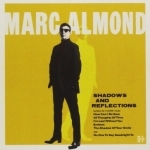
Shadows and Reflections by Marc Almond
Album Watch
‘Shadows And Reflections’ features sumptuous arrangements of iconic torch songs and 60’s...
pop

Real Drift Car Racing
Games
App
With more than 15 millions of fan players worldwide, Real Drift Car Racing is the most realistic 3D...


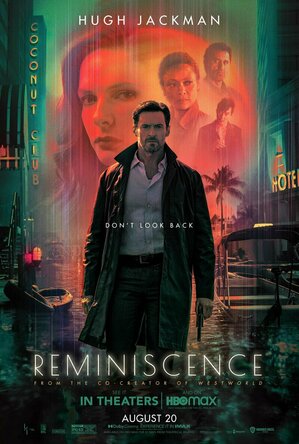
Bob Mann (459 KP) rated Reminiscence (2021) in Movies
Aug 24, 2021


Positives:
- The special effects showing a submerged Miami are impressive enough.
- I enjoyed the soundtrack by "Westworld" and "Game of Thrones" composer Ramin Djawadi.
Negatives:
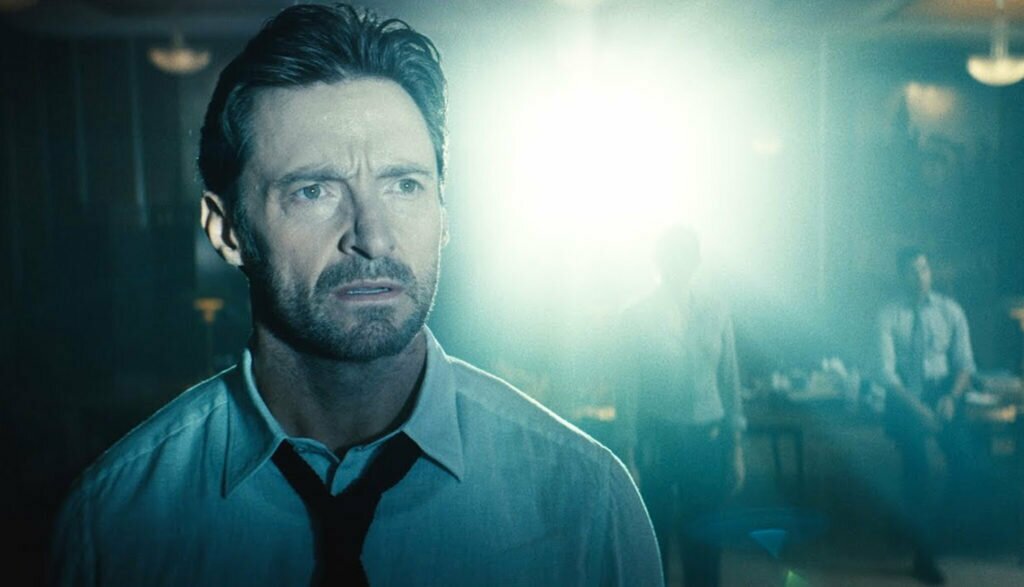
- The script is dreadful. Hugh Jackman's does a voiceover.... and regular readers of mine will know my feelings about those!!! Here he drones on incessantly about things like "memories being beads on time's necklace". Outside of the voiceover, the dialogue generally doesn't sound remotely like things that people would say to each other. There are some cringe-inducing segments of speechifying. That's when you can actually understand what's being said: I found the sound mix makes that really difficult with some of the lines.
- This seemed to me to be reflected in the performances of Jackman, Ferguson and Newton. Star-power indeed, but it appeared to me that they didn't have confidence in the words. Fans of the trio will, I think, be disappointed. (And I am a big fan of Rebecca Ferguson. She is again gorgeous here and - unlike in "The Greatest Showman" - actually gets to sing).
Summary Thoughts on "Reminiscence": This film is a big disappointment to me. When I first saw the trailer, I went "YES, YES, YES!!". It looked like an interesting post-apocalyptic sci-fi with perhaps elements of "Inception", "Waterworld" and "Flatliners" thrown in. Jackman even gets to tussle with sheets on a rooftop again! (Was anyone else playing "A Million Dreams" in their head?). But then came the film itself. The result was that about two-thirds in I was really willing it to end. (On principle, I don't walk out of movies). To be fair, the story did pick up slightly towards the conclusion, so I could quietly put my 1* rating away.
I really feel sorry for writer/director Lisa Joy for writing such a negative review. The executive producer of "Westworld" (who's also written and directed some episodes) had secured Jackman and brought some of her "Westworld" talent with her. I'm sure she put her heart and soul into this as her directorial feature debut. But I'm afraid it just did nothing for me and - given the talent available - came across as a wasted opportunity.
(For the full graphical review, please check out onemannsmovies on the web, Facebook and Tiktok. Thanks.)
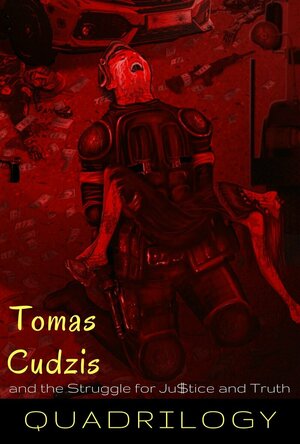
Tomas Cudzis and the Struggle for Justice and Truth: Quadrilogy
Book
Tomas’s sense of inferiority since his childhood has forced him to transform himself physically,...
thriller psychological thriller dark thriller

Chris Sawin (602 KP) rated A Clockwork Orange (1971) in Movies
Jun 15, 2019
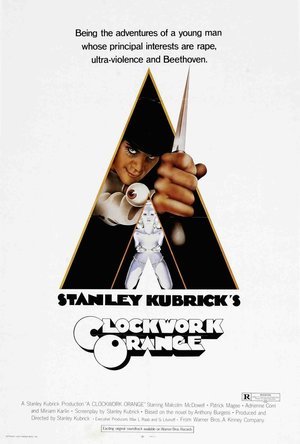


Alex is promised that he'll be a free man within a fortnight. The treatment consists of a drug known as Serum 114 being injected into the patient before making them sit through short films such as a man being beaten to a pulp, a woman being the sexual victim of several men, and a Nazi concentration camp film set to the soundtrack of Beethoven's ninth symphony. Alex begins to feel sick during the films and the doctors insist that it's part of the cure. Alex's love for music and Beethoven in general become one of the adverse effects of the treatment as the ninth symphony has the same effect on Alex as the urge to beat or rape someone would. Alex soon comes to realize that you can never go home again and that being a free man isn't all it's cracked up to be, especially after a treatment such as this.
It took 37 years after its initial theatrical release and 24 years of being alive on this planet (the original viewing of this film was in 2008) to finally get around to seeing A Clockwork Orange. The film starts and it makes the viewer feel like they've missed something entirely that everyone else already knows about, but as the film unravels it snowballs into a unique vision of cinema. There are shades of Altered States in A Clockwork Orange, but A Clockwork Orange feels much more polarizing in its presentation in comparison. Stanley Kubrick tries to shine this spotlight of beauty onto the most heinous of actions as the film’s classical score becomes the soundtrack to ferocious and almost inhuman desires. This is Kubrick’s adaptation of the 1962 novel of the same name written by Anthony Burgess and it’s incredible how the film is able to remain captivating over a two hour period.
The film has a stunning restoration on the two-disc Blu-ray anniversary edition. Kubrick always had a brilliant eye when it came to perspective and camera placement; the majority of that could be contributed to Kubrick’s frequent collaborations with cinematographer John Alcott. The long hallway shots and close-ups on memorably haunting facial expressions are some of the most significant scenes in the film. A Clockwork Orange is loaded with vibrant colors that make every frame jump off the screen despite the film nearing half a century in age. This was the first film to take advantage of Dolby Digital surround sound, which contributes to the film sounding as good as it does.
Even with Stanley Kubrick as director, A Clockwork Orange wouldn’t be the same without Malcolm McDowell. McDowell fits the Alex DeLarge role as perfectly as Robert Downey Jr fits Tony Stark; these actors are these characters. The speeches McDowell gives in the film along with how traumatized he is after the treatment process are two of the biggest takeaways after viewing the film. This was one of McDowell’s first on-screen roles, which is surprising given how enthralling he is. You will never think of, “Singin’ in the Rain,” the same way again after viewing A Clockwork Orange.
A Clockwork Orange is a unique expedition into insanity no matter how you look at it. The dialogue is unusual and the characters are this fantastic blend of bizarre and diabolical, but the film is consistently engrossing and never seems to lag. Prior to 1986, the A Clockwork Orange novel was published in the US without its final chapter and that’s the version of the film Kubrick adapted. Anthony Burgess praised Kubrick’s version of the film despite this, which is more than what Stephen King did with Kubrick’s adaptation of The Shining. Every shot in A Clockwork Orange grabs your attention largely in part to how it’s presented or the colors that leap off the screen. The novel is written in a way that’s difficult to read and that often translates on-screen. Like most of Kubrick’s work, A Clockwork Orange is for a specific audience. It is perhaps what Malcolm McDowell is known best for and probably shouldn’t be recommended to just anyone since it would likely soar over a modern day moviegoer. This isn’t the type of film to have on in the background while you text or play games on your phone. Ultraviolence is something you have to embrace and give your undivided attention to.
This is viewed by some as one of the greatest sci-fi films ever by some, but it isn’t any less pretentious than the rest of Stanley Kubrick’s work. A Clockwork Orange is mesmerizing with a performance from Malcolm McDowell that leaves a long lasting impact, but its affinity to utilize difficult to decipher jargon, nonstop innuendo being slammed into your face, and overuse of animalistic violence shackles the film from being more appealing to a wider audience. From a personal standpoint, A Clockwork Orange is one of Kubrick's best but it's easy to understand why it wouldn't be for everyone.

Gareth von Kallenbach (980 KP) rated Klang in Video Games
Jun 19, 2019
The Story:
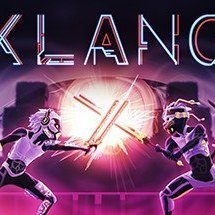
The premise here is very simple. You assume the role of a tuneblade-wielding elite rave warrior called Klang who wants to free himself from the shackles of a Zeus-like figure named Soundlord Sonus. And so the game begins. There is barely any Story here and it isn’t the focus of the game and it doesn’t contribute to the game whatsoever and if the story is removed entirely, you will barely notice any difference. So if you are the type who plays a game for the story in it or a game that is accompanied by a good premise, then this game isn’t for you. The game focuses mostly on its gameplay aspects.
The Visuals:
The visuals of the game look very beautiful with its Tron-inspired aesthetics. Klang’s design is colorful and stylish. The environment looked gorgeous with all the vibrant neon colors popping out on the screen while you’re playing but on rare occasions, they can be distracting and a bit too much when there are so many things happening at once.
The Sound:
This is one of those games that are worth buying a quality headset or a subwoofer for because the sound design is excellent and the composer bLiNd did a marvelous job with it. Listening to the music with a normal headset or your TV’s sound system doesn’t do it justice. And the way the music and the beat sync with what’s on screen are perfect. The soundtrack is most definitely the best aspect of the game.
The gameplay:
The game mechanics tries to blend rhythm game mechanics and platform game mechanics into one game. That means instead of only pressing buttons that appears on the screen like you normally do in Rhythm games, you also have to traverse the levels by jumping and sliding while pressing the buttons in order to get through the stage.
The controls are fairly simple. Like most 2D games, you use the left thumbstick to move the character left and right and you use the Right thumbstick in one of the eight directions when the icon that looks like a slice of Pizza appears on the screen in one of those eight directions to deflect the incoming attacks. And you use LT to jump and RT to slide throughout the levels.
While blending those game mechanics works very well on most stages, they can also be overwhelming and frustrating at times. For instance, there is a place where you have to dodge lasers by jumping between 5 platforms that falls when the lasers make contact with them (They come back up after a few seconds) so you will have to jump left and right fast and all that combined with rhythm gameplay. It gets very confusing because there are so many things happening at once on the screen and you don’t know whether you should focus on deflecting the attacks or focus on the lasers. One mistake and you are dead so that made it a bit frustrating and annoying instead of challenging. There is a thin line between a game that put your skills to the test and a game that simply frustrates you to cover its flaws.
Unfortunately, I felt like this is the latter because the game itself is very short and if I hadn’t died in the game over 300 times, it would have lasted me an hour. So I felt like the difficulty spike was there just to mask the game’s short length which brings me to the final point in the review.
Difficulty, Length and Replay Value:
The game has three difficulty levels. Easy, Normal and Nightcore Mode. The higher the difficulty, the higher rank you can achieve when you finish a stage. On Easy mode, B Rank is the max possible rank, Normal mode, S Rank is the max possible rank and on Nightcore Mode, SSS Rank is the max possible rank. Also the higher the difficulty, the faster the game music sounds, and the faster the button prompts on screen moves
I started the game on Normal mode it took me 3 hours and 311 deaths to finish. Once you finish the game for the first time, you unlock the hardest mode in the game which is called NightCore mode where everything moves so fast and that includes the music.
In terms of Replay Value, there isn’t much to do after you finish all the stages except for collecting Pirate Tokens which are the in-game collectables that allow you to unlock the game’s Soundtrack in a special level where you can hear them without replaying the other levels just to hear that awesome track.
And you can also replay the game on Nightcore mode if you want to get the highest rank possible in the game. And if you are the Achievement Hunter type then you will find that getting all the achievements will be very time consuming. For instance, there is an achievement that requires you not to die even once throughout the whole game and that is excruciatingly difficult. So, if you are a completionist, then the game will last you for quite a while.
But if you are not, then you won’t find much to do here after you finish its short story mode because it doesn’t have much to offer after that.
Conclusion:
Klang is a great game but its short amount of content and sometimes overwhelmingly difficult levels can put you off. So for that, I give Klang 4/5. Great concept but if the gameplay was more fun and rewarding, and it had more content and unlockables, it would have been a superb game. And I give the developer Tom-Ivar Arntzen SSS for effort and for trying to innovate and do something new with the genre and I am definitely interested to see what he is going to do next.
http://sknr.net/2016/09/23/klang/