
Search
Search results
Purple Phoenix Games (2266 KP) rated King of the Castle in Tabletop Games
Jul 2, 2020

The King is dead! As the kingdom reels from this sudden turn of events, those eager for power see their opportunity to pounce. Amassing personal armies, the war for the throne begins! Storm the castle, collect potions, capture towers, and conquer your opponents to claim the throne for yourself. Which tactic will lead to success – brute strength or sly strategy? Only one way to find out!
Disclaimer: We were provided a prototype copy of this game for the purposes of this preview. The components pictured are not final. Also, I do not plan to detail the entire rulebook in this review, but rather discuss the main rules and overall flow of the game. Keep an eye out for the Kickstarter launching later this fall! -L
King of the Castle is a game of hand management, grid movement, and take that in which players are battling to be the first to capture and hold the throne. Played over a series of turns, players will move around the board, draw cards, and battle opponents to hinder their progress. To setup, each player is given a Character card at random, selects a Meeple in their chosen color, and places it on one of the various Start spaces on the game board. Shuffle all other cards and place them in a draw deck. Select a player to be the first player, and you are ready to begin!
On your turn, you will take a combination of 2 actions. Those combos are: Move 1 space and draw 1 card, Move 2 spaces, or Draw 2 cards. It is important to note that diagonal movement is not allowed! There are 2 types of cards that can be drawn: Potion cards (special powers/abilities) and Army cards (strength points for duels). Once you have performed your 2 actions, and played any Potion cards from your hand that you want, your turn ends. The game moves on to the next player. If you land on the same space as an opponent, you must duel each other. The dueling players will select as many Army cards from their hand as they wish to play, and will lay them down simultaneously. They may then play up to 3 Potion cards from their hand to influence the strength points of either player, as stated on the Potion cards. Whomever has the most strength points wins the duel, and gets to remain on that space. The loser must discard a card, and is knocked back to the nearest Exit space (depending on their current placement on the board).
In the center of the board are 2 Tower spaces. You must ‘capture’ a Tower in order to fulfill the win conditions. To capture a Tower, you must land on that space and occupy it for one full turn. Once you have captured a Tower, you may move to capture the Throne. The centermost space of the board is the Throne. To capture the Throne, you must first have captured a Tower, and you must enter the Throne space and occupy it for 3 complete and consecutive turns. When you are capturing a Tower or the Throne, you can still be attacked by opponents – so it is important to have a strong hand of cards to ward off enemies and continue your occupation of these valuable spaces. Once a player has occupied the Throne space for 3 consecutive turns, the game ends and that player is named King!
So with all of that said, how does King of the Castle play? Overall, I would say it’s a nice and simple little game. The concept itself is easy to comprehend – draw cards, duel opponents, capture a Tower, and ultimately, the Throne. There is a decent amount of strategy required for success. Not only are you racing to the center of the board, but you also need to amass a strong hand of cards with which you can hinder your opponents. Choosing when to use your Potion cards can affect not only your strategy, but those of your enemies as well. Is your strategy to skirt around your opponents and try to sneak by unnoticed? Or will you duel enemies at every opportunity, building up your Army and continually kicking the other players to the Exit spaces on the board? The idea of having to ‘capture’ certain spaces by occupying them for consecutive turns is an interesting one, and adds a unique twist to this game. You must be able to defend yourself in those spaces, or risk being kicked back to an Exit, requiring you to start that journey over again. It is a simple game to play, but not necessarily one that is easy to win, and I really like that.
Components. As I stated earlier, this is only a prototype version of the game, and I anticipate that there will be some changes for final production. That being said, the board in this prototype is nice and sturdy, the cards are easy to manipulate, and the Meeples are your standard wooden bits. So overall, these prototype components are off to a great start. The artwork and overall style of the game are a different story. The current artwork is pretty childish and unrefined. Again, this being only a prototype, I anticipate that the artwork will be overhauled and revised for final production. The artwork on the board is pretty basic as well, which is not necessarily a bad thing, it just doesn’t feel immersive or engaging for players. The spaces of the board are different colors to denote different areas of play, but nothing is labeled on the board, which can create some confusion at first as to the flow of movement around the board. The rules themselves need to be revised and edited for clarity. There is just a bit of ambiguity that leaves questions unanswered, but nothing that cannot be fixed.
All in all, the concept of King of the Castle is a solid one. It combines hand management, grid movement, and take that in a way that all 3 mechanics complement and work well with each other. The gameplay is lighthearted and relatively simple, which results in a fun and fast game. With some refining of the style and editing of the rules, I am sure that this game will truly shine. I look forward to following its progress, and am eager to see the Kickstarter campaign later this year. Keep your eyes on King of the Castle, because it’s shaping up to be a solid game.
Disclaimer: We were provided a prototype copy of this game for the purposes of this preview. The components pictured are not final. Also, I do not plan to detail the entire rulebook in this review, but rather discuss the main rules and overall flow of the game. Keep an eye out for the Kickstarter launching later this fall! -L
King of the Castle is a game of hand management, grid movement, and take that in which players are battling to be the first to capture and hold the throne. Played over a series of turns, players will move around the board, draw cards, and battle opponents to hinder their progress. To setup, each player is given a Character card at random, selects a Meeple in their chosen color, and places it on one of the various Start spaces on the game board. Shuffle all other cards and place them in a draw deck. Select a player to be the first player, and you are ready to begin!
On your turn, you will take a combination of 2 actions. Those combos are: Move 1 space and draw 1 card, Move 2 spaces, or Draw 2 cards. It is important to note that diagonal movement is not allowed! There are 2 types of cards that can be drawn: Potion cards (special powers/abilities) and Army cards (strength points for duels). Once you have performed your 2 actions, and played any Potion cards from your hand that you want, your turn ends. The game moves on to the next player. If you land on the same space as an opponent, you must duel each other. The dueling players will select as many Army cards from their hand as they wish to play, and will lay them down simultaneously. They may then play up to 3 Potion cards from their hand to influence the strength points of either player, as stated on the Potion cards. Whomever has the most strength points wins the duel, and gets to remain on that space. The loser must discard a card, and is knocked back to the nearest Exit space (depending on their current placement on the board).
In the center of the board are 2 Tower spaces. You must ‘capture’ a Tower in order to fulfill the win conditions. To capture a Tower, you must land on that space and occupy it for one full turn. Once you have captured a Tower, you may move to capture the Throne. The centermost space of the board is the Throne. To capture the Throne, you must first have captured a Tower, and you must enter the Throne space and occupy it for 3 complete and consecutive turns. When you are capturing a Tower or the Throne, you can still be attacked by opponents – so it is important to have a strong hand of cards to ward off enemies and continue your occupation of these valuable spaces. Once a player has occupied the Throne space for 3 consecutive turns, the game ends and that player is named King!
So with all of that said, how does King of the Castle play? Overall, I would say it’s a nice and simple little game. The concept itself is easy to comprehend – draw cards, duel opponents, capture a Tower, and ultimately, the Throne. There is a decent amount of strategy required for success. Not only are you racing to the center of the board, but you also need to amass a strong hand of cards with which you can hinder your opponents. Choosing when to use your Potion cards can affect not only your strategy, but those of your enemies as well. Is your strategy to skirt around your opponents and try to sneak by unnoticed? Or will you duel enemies at every opportunity, building up your Army and continually kicking the other players to the Exit spaces on the board? The idea of having to ‘capture’ certain spaces by occupying them for consecutive turns is an interesting one, and adds a unique twist to this game. You must be able to defend yourself in those spaces, or risk being kicked back to an Exit, requiring you to start that journey over again. It is a simple game to play, but not necessarily one that is easy to win, and I really like that.
Components. As I stated earlier, this is only a prototype version of the game, and I anticipate that there will be some changes for final production. That being said, the board in this prototype is nice and sturdy, the cards are easy to manipulate, and the Meeples are your standard wooden bits. So overall, these prototype components are off to a great start. The artwork and overall style of the game are a different story. The current artwork is pretty childish and unrefined. Again, this being only a prototype, I anticipate that the artwork will be overhauled and revised for final production. The artwork on the board is pretty basic as well, which is not necessarily a bad thing, it just doesn’t feel immersive or engaging for players. The spaces of the board are different colors to denote different areas of play, but nothing is labeled on the board, which can create some confusion at first as to the flow of movement around the board. The rules themselves need to be revised and edited for clarity. There is just a bit of ambiguity that leaves questions unanswered, but nothing that cannot be fixed.
All in all, the concept of King of the Castle is a solid one. It combines hand management, grid movement, and take that in a way that all 3 mechanics complement and work well with each other. The gameplay is lighthearted and relatively simple, which results in a fun and fast game. With some refining of the style and editing of the rules, I am sure that this game will truly shine. I look forward to following its progress, and am eager to see the Kickstarter campaign later this year. Keep your eyes on King of the Castle, because it’s shaping up to be a solid game.
Purple Phoenix Games (2266 KP) rated Dodekka in Tabletop Games
Mar 3, 2021

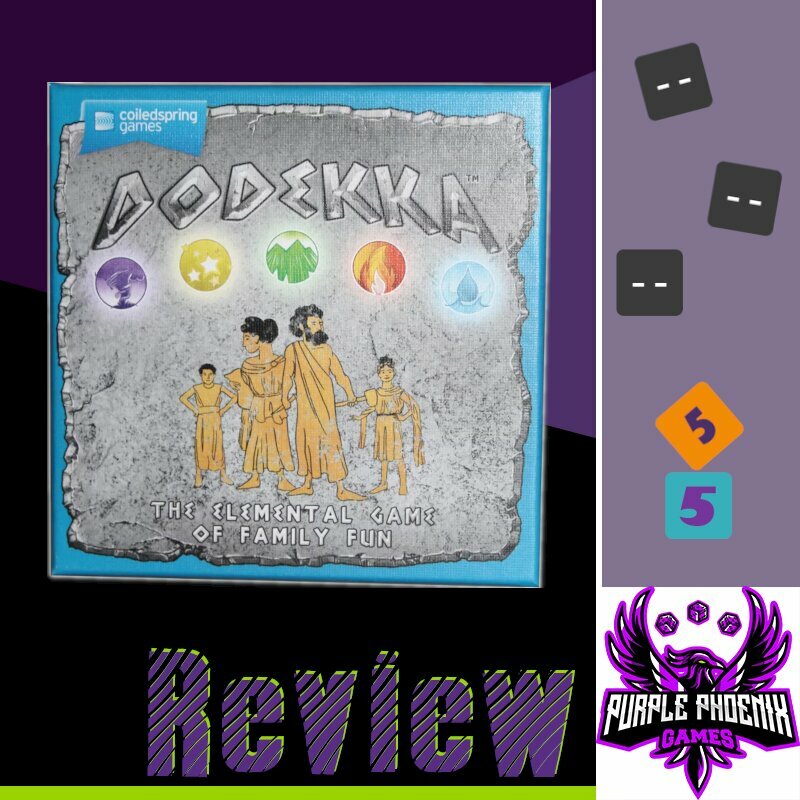
I am eagerly growing into a big Andy Hopwood fan. He has designed family favorites like Daring Dustbunnies, Mijnlieff, and Niche. Playing one of his games is like playing an old classic with a new coat of paint and some killer new rims. Dodekka may seem familiar when playing, and I will disclose my comp at the end of this review, but again has a special twist. Obviously my family loves the game, but why?
Dodekka is loosely named after the Greek prefix for 12, Dodeca. Twelve is a big aspect of this game. In it players are attempting to score a large value of cards from one suit while keeping other suits to a minimum, as they are negative points at the end of the game. The player with the most points at the end of the game will be crowned the winner.
DISCLAIMER: We were provided a copy of this game for the purposes of this review. This is a retail copy of the game, so what you see in these photos is exactly what would be received in your box. I do not intend to cover every single rule included in the rulebook, but will describe the overall game flow and major rule set so that our readers may get a sense of how the game plays. For more in depth rules, you may purchase a copy online or from your FLGS. -T
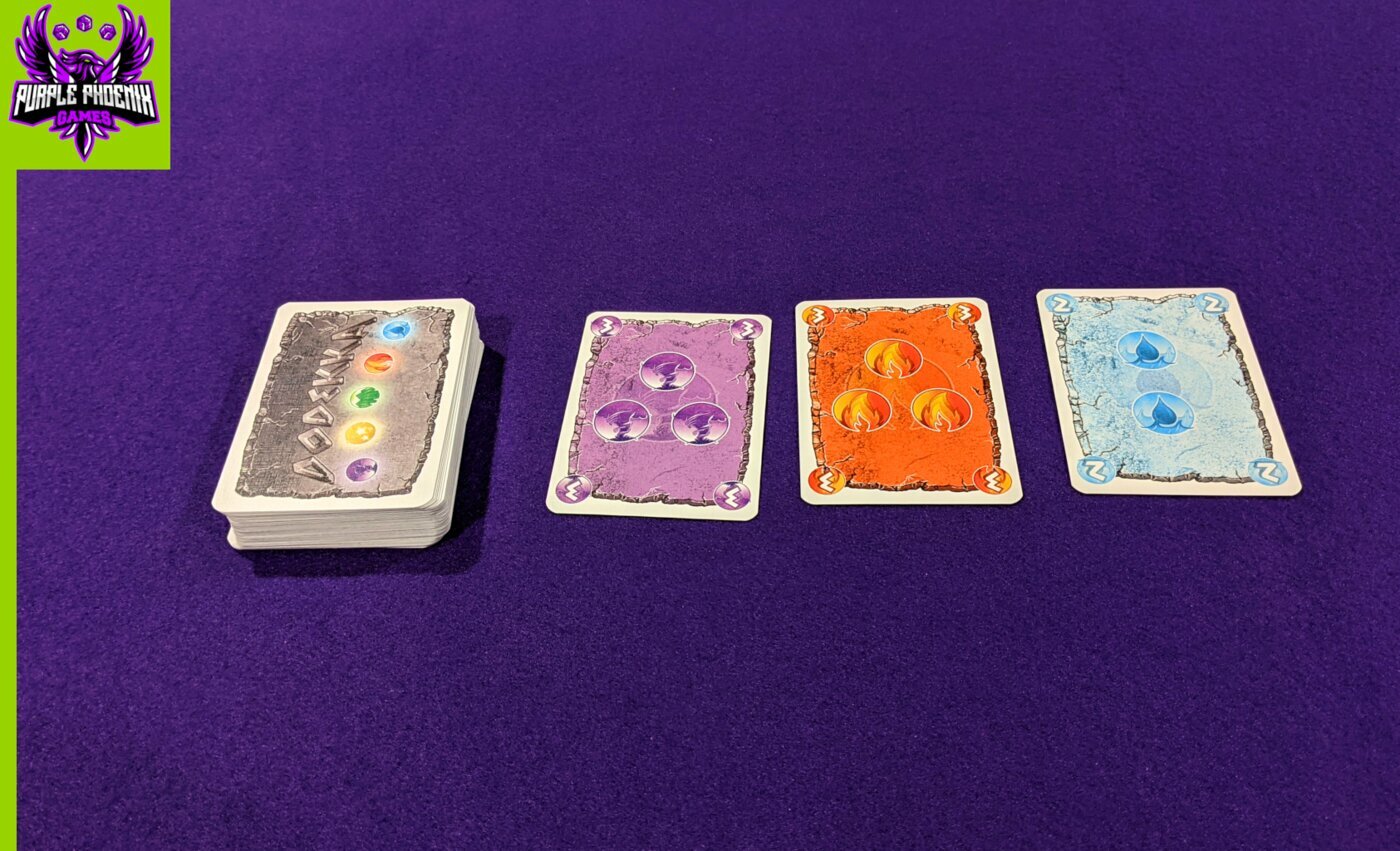
To setup shuffle the main deck of cards and reveal three near the deck. The game may now begin! Note: this may be the easiest setup of any game I have played.
Dodekka is played in turns where each player will take one of a choice of two actions: take a card or add a card. When a player decides to take a card they simply take the card closest to the deck into their hand. Should they wish to add a card the player will simply reveal a card from the deck and add it to the end of the line. Easy, right? Well that’s not much of a game, admittedly. Where’s the catch?
When players add cards to the end of the line they must take care not to increase the total value of the cards within the line past 12. Each suit contains cards numbered zero through four, so adding a card to the line can be quite a gamble if the total value of the cards in the line is already in double digits. Many times players will be forced to take the card closest to the deck out of fear of busting the line total. When a players busts they must take ALL the cards in the line and a new set of three will be revealed to form a new line.
However, there is a catch to this catch. A catch-ception! Should the line bust when adding a card, but the newly added card is of the matching value of the card already at the end of the line (for example adding a three when the last card is already a three) then the bust is delayed until another player brings the total value down by taking a card or busts on a failed gamble.
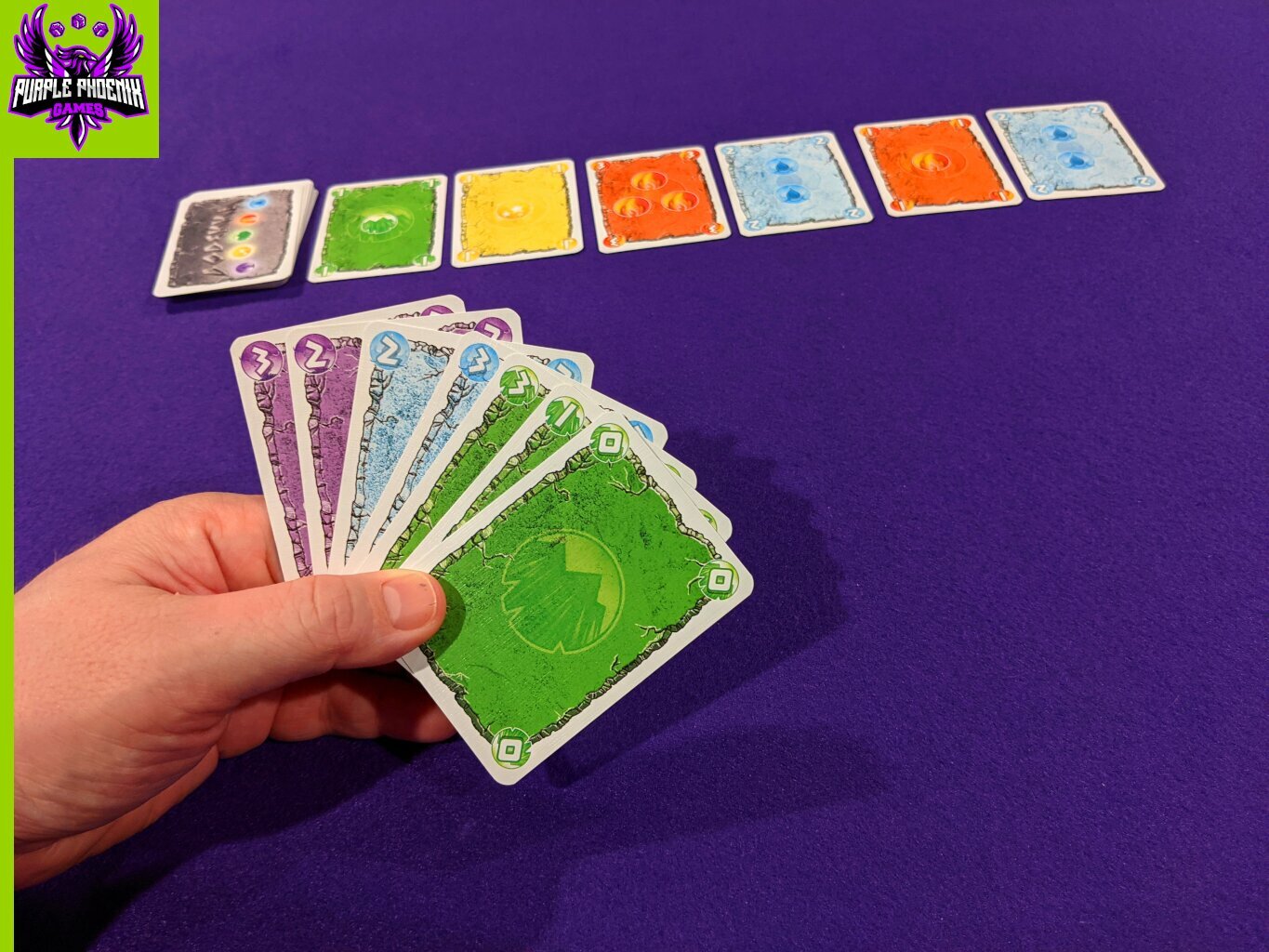
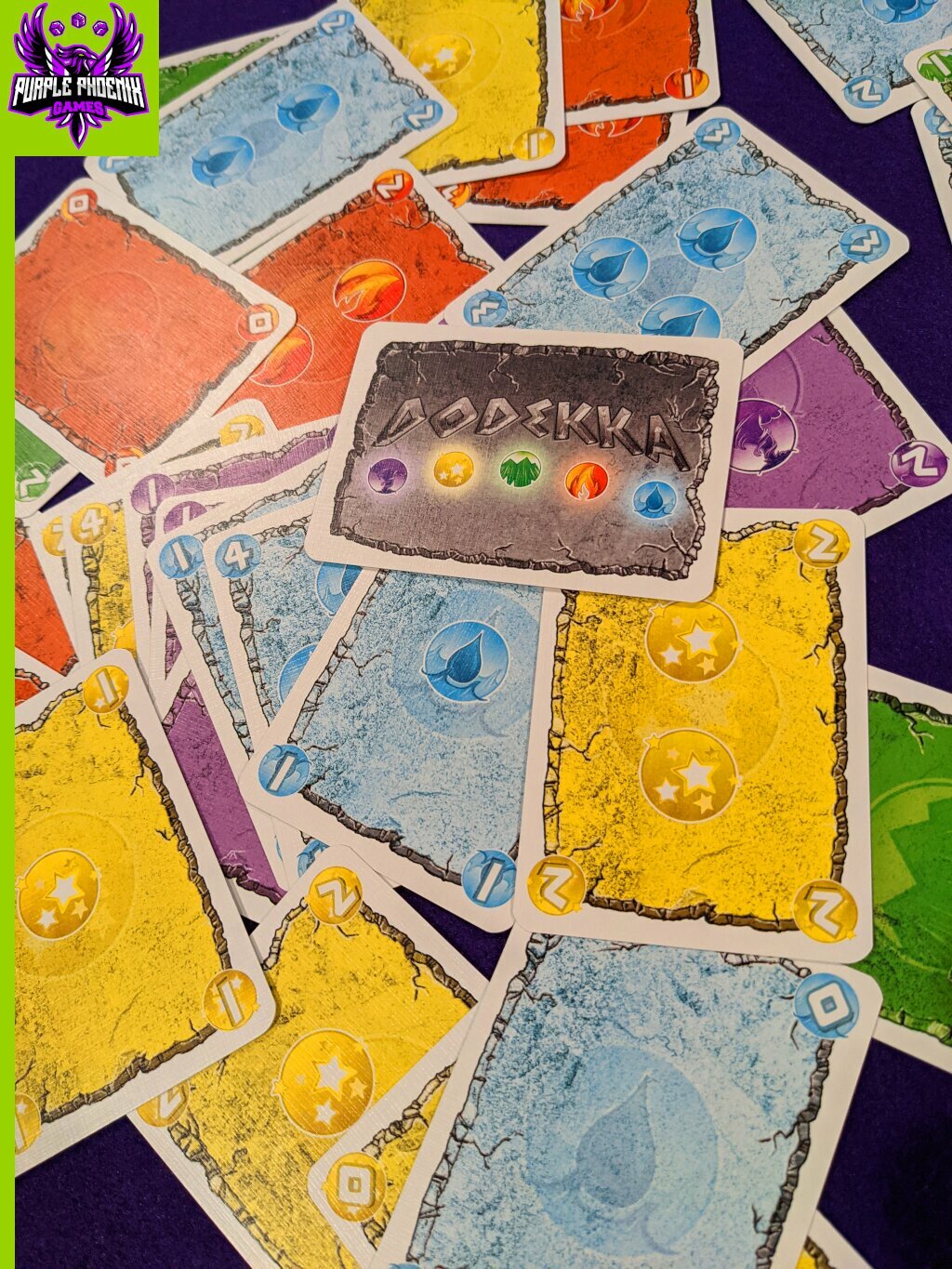
Play continues in this fashion of players collecting cards of certain suits to earn points or pressing their luck by adding cards to the line until the deck runs out of cards. At that point players will add up the values of the suit with the most points in their hand and subtract the NUMBER of non-scoring cards. Using the photo below for example, should the player choose to score blue they would have five points. However, they would need to subtract the number of cards from the non-scoring suit, which also equals five (two purple cards and three green cards). This will be a net zero score. The player with the most points wins!
Components. This game is a bunch of cards. The cards are all great quality and feature minimal art. The numbering text on the cards are ancient Greek-themed and work for me. I actually like that the art gets out of the way of the cards and allows the numbers and suit colors to shine. Although, I try to be conscious of our colorblind friends and Dodekka is also considerate here by the addition of different art for each suit to help these players be successful. I have no qualms with any of the components here.
All in all, this game is quite similar to another favorite of ours: No Thanks! In each, players are trying to keep away from gaining a bunch of cards that will negatively impact their final scores. Also in each is the element of press your luck that I find simply delicious. You try to wait as long as possible sometimes so as not to get stuck with the bad card(s) but sometimes that gamble blows up in your face. I just love it!
What I like better in Dodekka than I do in No Thanks! is that there is so little to setup that this can be taken almost anywhere and played without any real concern for losing or damaging components. Being solely cards and setup just being a deck with three exposed cards is so simple that players I have introduced to Dodekka are floored that they don’t receive any cards or have anything at setup. It is just refreshing to start a game that can be setup in 10 seconds or less, depending on shuffling skills.
I really don’t want to say this because I love No Thanks! but I may have found its replacement. Dodekka is light, fast, and gives the same level of heart-racing excitement when you need to add a card to the line when it is at 11 already and showing a three at the end. Can you risk pulling a 0, 1, or 3 to remain cool, or will a 2 or 4 be your downfall and cause you to take the lot? It’s wonderful! If you are looking for a small card game that is an excellent little filler and has interesting twists on familiar mechanics, I recommend you grab a copy of Dodekka. Purple Phoenix Games gives this one an under-the-radar 10 / 12. Go grab your trusty dodecahedrons (or borrow mine – my Monk doesn’t use it for anything) and get Dodekka to the table!
Dodekka is loosely named after the Greek prefix for 12, Dodeca. Twelve is a big aspect of this game. In it players are attempting to score a large value of cards from one suit while keeping other suits to a minimum, as they are negative points at the end of the game. The player with the most points at the end of the game will be crowned the winner.
DISCLAIMER: We were provided a copy of this game for the purposes of this review. This is a retail copy of the game, so what you see in these photos is exactly what would be received in your box. I do not intend to cover every single rule included in the rulebook, but will describe the overall game flow and major rule set so that our readers may get a sense of how the game plays. For more in depth rules, you may purchase a copy online or from your FLGS. -T
To setup shuffle the main deck of cards and reveal three near the deck. The game may now begin! Note: this may be the easiest setup of any game I have played.
Dodekka is played in turns where each player will take one of a choice of two actions: take a card or add a card. When a player decides to take a card they simply take the card closest to the deck into their hand. Should they wish to add a card the player will simply reveal a card from the deck and add it to the end of the line. Easy, right? Well that’s not much of a game, admittedly. Where’s the catch?
When players add cards to the end of the line they must take care not to increase the total value of the cards within the line past 12. Each suit contains cards numbered zero through four, so adding a card to the line can be quite a gamble if the total value of the cards in the line is already in double digits. Many times players will be forced to take the card closest to the deck out of fear of busting the line total. When a players busts they must take ALL the cards in the line and a new set of three will be revealed to form a new line.
However, there is a catch to this catch. A catch-ception! Should the line bust when adding a card, but the newly added card is of the matching value of the card already at the end of the line (for example adding a three when the last card is already a three) then the bust is delayed until another player brings the total value down by taking a card or busts on a failed gamble.
Play continues in this fashion of players collecting cards of certain suits to earn points or pressing their luck by adding cards to the line until the deck runs out of cards. At that point players will add up the values of the suit with the most points in their hand and subtract the NUMBER of non-scoring cards. Using the photo below for example, should the player choose to score blue they would have five points. However, they would need to subtract the number of cards from the non-scoring suit, which also equals five (two purple cards and three green cards). This will be a net zero score. The player with the most points wins!
Components. This game is a bunch of cards. The cards are all great quality and feature minimal art. The numbering text on the cards are ancient Greek-themed and work for me. I actually like that the art gets out of the way of the cards and allows the numbers and suit colors to shine. Although, I try to be conscious of our colorblind friends and Dodekka is also considerate here by the addition of different art for each suit to help these players be successful. I have no qualms with any of the components here.
All in all, this game is quite similar to another favorite of ours: No Thanks! In each, players are trying to keep away from gaining a bunch of cards that will negatively impact their final scores. Also in each is the element of press your luck that I find simply delicious. You try to wait as long as possible sometimes so as not to get stuck with the bad card(s) but sometimes that gamble blows up in your face. I just love it!
What I like better in Dodekka than I do in No Thanks! is that there is so little to setup that this can be taken almost anywhere and played without any real concern for losing or damaging components. Being solely cards and setup just being a deck with three exposed cards is so simple that players I have introduced to Dodekka are floored that they don’t receive any cards or have anything at setup. It is just refreshing to start a game that can be setup in 10 seconds or less, depending on shuffling skills.
I really don’t want to say this because I love No Thanks! but I may have found its replacement. Dodekka is light, fast, and gives the same level of heart-racing excitement when you need to add a card to the line when it is at 11 already and showing a three at the end. Can you risk pulling a 0, 1, or 3 to remain cool, or will a 2 or 4 be your downfall and cause you to take the lot? It’s wonderful! If you are looking for a small card game that is an excellent little filler and has interesting twists on familiar mechanics, I recommend you grab a copy of Dodekka. Purple Phoenix Games gives this one an under-the-radar 10 / 12. Go grab your trusty dodecahedrons (or borrow mine – my Monk doesn’t use it for anything) and get Dodekka to the table!
Purple Phoenix Games (2266 KP) rated Exit: The Game – The Polar Station in Tabletop Games
Mar 11, 2022

One thing that has grown in popularity over the recent years are Escape Rooms. You know, where you’re physically trapped inside a room and have to solve various puzzles, crack codes, and beat the clock in an effort to get out before it’s game over. It should come as no surprise that this premise has made its way into the world of board gaming. Yeah, you’re not physically trapped somewhere, but you still have tons of puzzles to sort out in the fastest time you can. So how does this EXIT game hold up when compared with a real-life escape room? Keep reading to find out!
Disclaimer: In order to avoid spoilers, I will not be going too in depth with this review, but rather provide a general overview of the type of gameplay involved. Also, this review covers one specific EXIT game, but the general mechanics and gameplay are the same across the entire EXIT family.
In EXIT: The Game – The Polar Station (simply referred to as just EXIT from hereon out), you are a member of a research team stationed in the Arctic. One morning, the evacuation alarm goes off unexpectedly, and everyone makes a break for the helicopters. Just one problem for your crew – your exit door is already locked and sealed! You make your way to another section of the lab to look for an alternate escape route. What you find is a room full of locked drawers/doors. You must quickly crack these codes, in hopes that the materials contained within will aid you in your attempts to escape before the final rescue helicopter takes off.
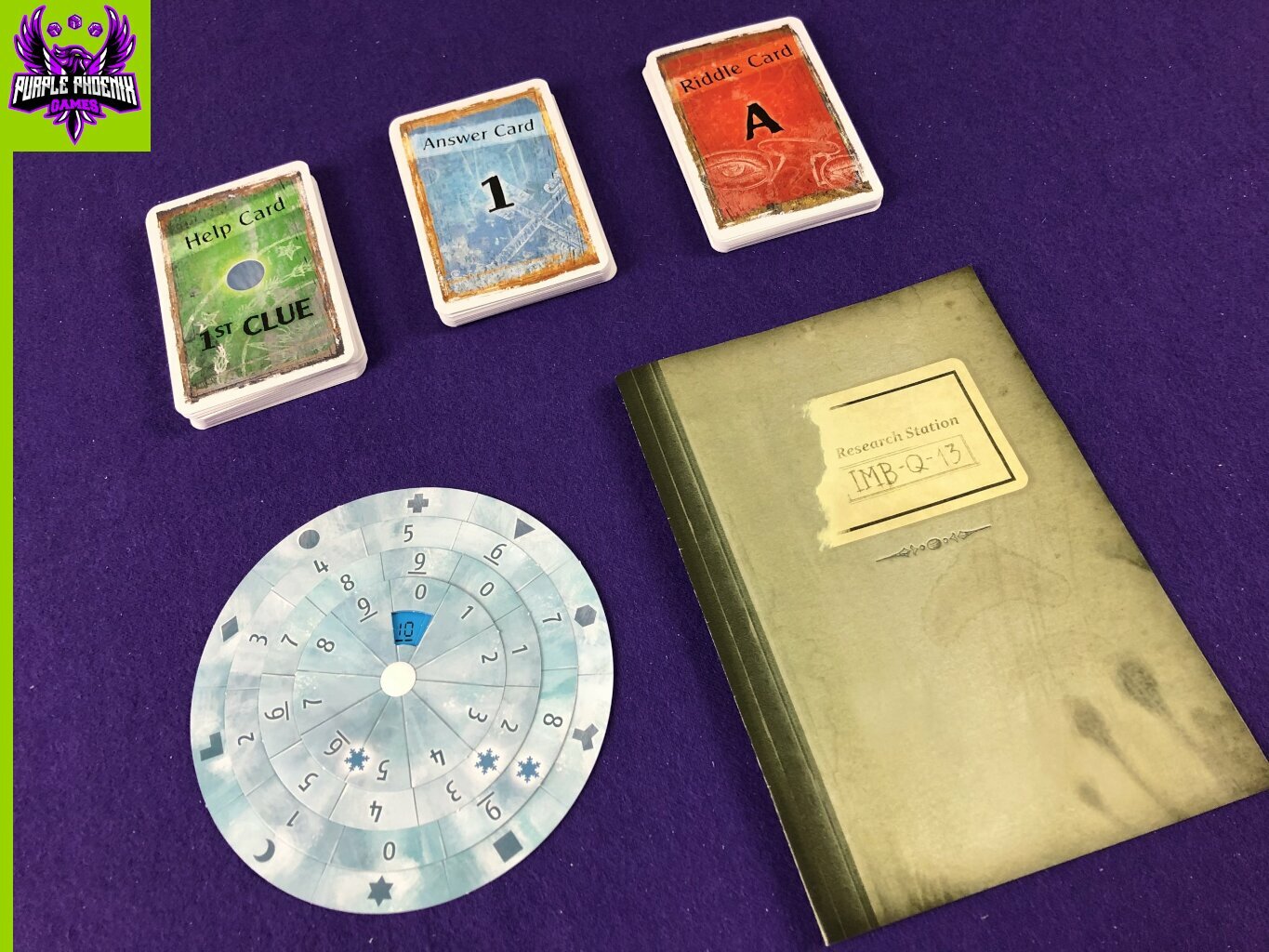
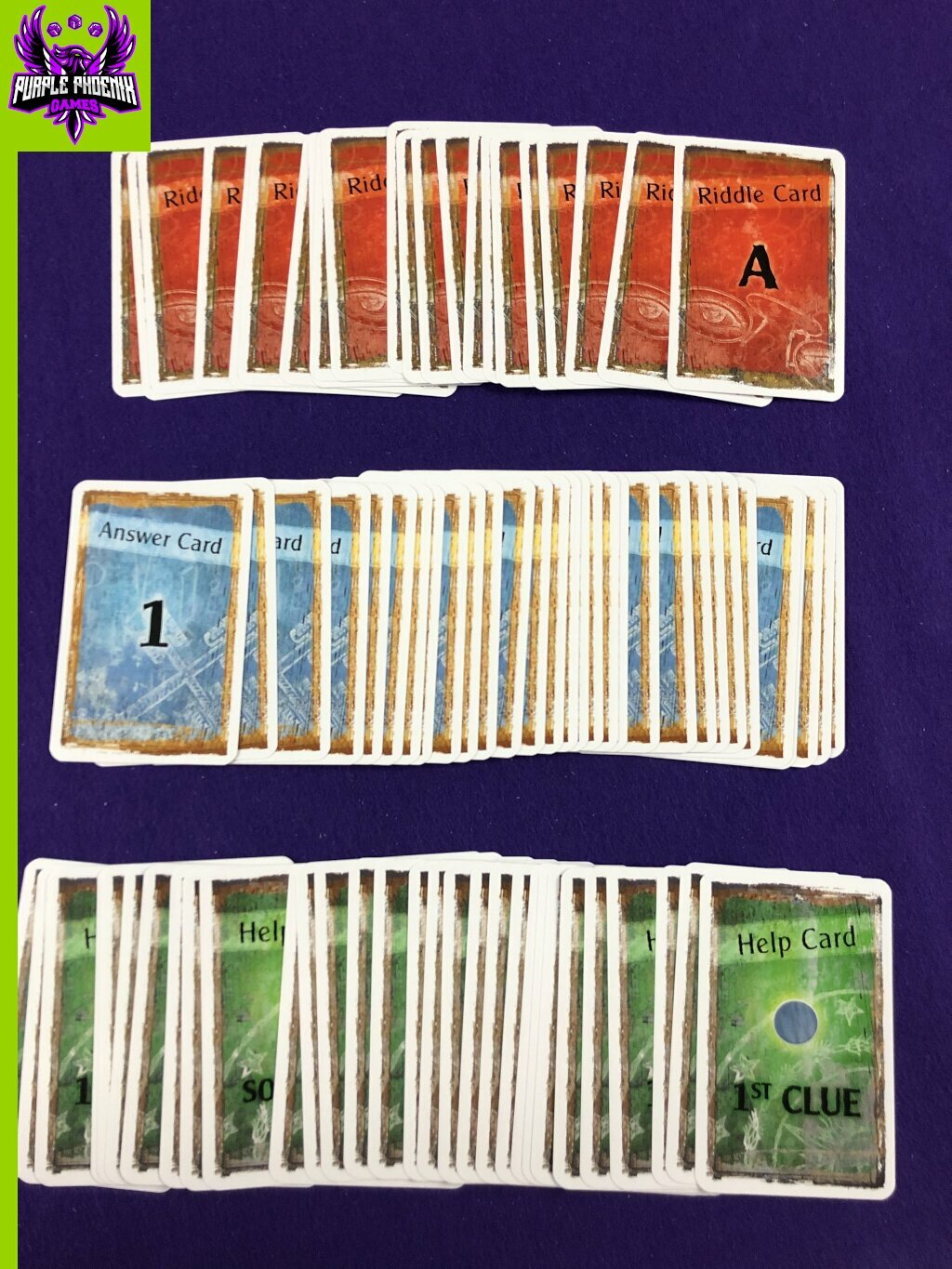
To setup for a game, sort the cards into their appropriate decks – Riddle cards, Answer cards, and Help cards. Place the Decoder disk and the Book in the center of the table. Leave the other items in the game box, to be introduced later in the gameplay. You will also most likely need a pen/pencil and paper to help you as you solve the riddles. And bam! You’re ready to start. You may then open the Book and begin the game. The game ends if or when players are able to successfully solve all of the riddles/puzzles and make their escape from the polar station.
Without spoilers, that’s basically as much detail as I can provide. Over the course of the gameplay, players will be using the pages of the Book to find clues, solve puzzles, or even identify secret symbols. Riddle cards will be drawn and used as ciphers, puzzles, or clues to help crack a code. When you think you have the correct 3-digit code for a specific Riddle Card, enter the code onto the Decoder disk. The disk will then provide the number of an Answer card, which you will draw and check to see if you were correct or incorrect. If your answer is incorrect, you simply keep trying to solve the Riddle card. If your answer is correct, you will then be instructed to draw other Riddle Cards, or the other items from the game box, and will continue with these new puzzles. If at any point in time you feel stuck, you may draw a Help card for the corresponding puzzle. The first and second Help cards will give you hints, and the final Help card will tell you the solution to the puzzle. Draw these sparingly if you can, as they affect your end-game score!
When all puzzles/riddles/codes have been completed and cracked, the game is over. Players will then check the rulebook to see how many Stars were earned, out of 10. The number of Help cards you use, as well as how much time you took to complete the game, will affect the overall score.
All in all, I think that EXIT is a unique game. The games of the series have varying difficulty levels, and this particular EXIT is rated a 3 out of 5. So this one isn’t the most difficult game in the bunch, but it wasn’t easy either! All of the puzzles require creative solutions, and the answers are rarely ever as straight-forward as they appear. Some puzzles are more logical than others, while some require you to physically manipulate components to be used in creative ways. I guess that’s as good a segue as any to get into components. This game consists of a deck of cards, a Decoder disk, a Book, and a couple of special ‘items.’ All decent quality overall. But here’s the thing – you will have to bend/cut/manipulate/destroy many of the components to help you in your mission to solve the riddles. So this game is literally a one-and-done. It cannot be played again.
Did I enjoy my play of this EXIT game? Yes. It was uniquely challenging, while forcing me to think creatively when addressing the different riddles. The method used to solve one riddle is not necessarily the same to solve the next, so you have be able to adjust on the fly. And often times you will have several riddles in play at once, so you have to decide which to address and when, when do you have the right information, which riddle it goes with, etc.
The biggest drawback for me is that it cannot be played again, The fact that you have to alter the components to a point of destroying the original card is something that was personally hard for me to get used to. I try to keep all my games so nice and pristine, that having to cut a card apart was tough! I got over it though. Having played a couple of the EXIT games, as well as a few of the Unlock! games, I would have to say I prefer the Unlock! system. The puzzles are just as challenging and creative, but you do not need to alter components to complete the game. That way, I can pass along an Unlock! game to a friend, as opposed to just tossing this EXIT game right in the recycling bin. I might pick up another EXIT game if I had a specific group/game night in mind, but in general I don’t think I’ll be grabbing any more of these, for the lack of replayability alone. The gameplay itself is pretty great, but the fact that I can’t play it again is a con I can’t ignore. Purple Phoenix Games gives this one a chilling 4 / 6.
Disclaimer: In order to avoid spoilers, I will not be going too in depth with this review, but rather provide a general overview of the type of gameplay involved. Also, this review covers one specific EXIT game, but the general mechanics and gameplay are the same across the entire EXIT family.
In EXIT: The Game – The Polar Station (simply referred to as just EXIT from hereon out), you are a member of a research team stationed in the Arctic. One morning, the evacuation alarm goes off unexpectedly, and everyone makes a break for the helicopters. Just one problem for your crew – your exit door is already locked and sealed! You make your way to another section of the lab to look for an alternate escape route. What you find is a room full of locked drawers/doors. You must quickly crack these codes, in hopes that the materials contained within will aid you in your attempts to escape before the final rescue helicopter takes off.
To setup for a game, sort the cards into their appropriate decks – Riddle cards, Answer cards, and Help cards. Place the Decoder disk and the Book in the center of the table. Leave the other items in the game box, to be introduced later in the gameplay. You will also most likely need a pen/pencil and paper to help you as you solve the riddles. And bam! You’re ready to start. You may then open the Book and begin the game. The game ends if or when players are able to successfully solve all of the riddles/puzzles and make their escape from the polar station.
Without spoilers, that’s basically as much detail as I can provide. Over the course of the gameplay, players will be using the pages of the Book to find clues, solve puzzles, or even identify secret symbols. Riddle cards will be drawn and used as ciphers, puzzles, or clues to help crack a code. When you think you have the correct 3-digit code for a specific Riddle Card, enter the code onto the Decoder disk. The disk will then provide the number of an Answer card, which you will draw and check to see if you were correct or incorrect. If your answer is incorrect, you simply keep trying to solve the Riddle card. If your answer is correct, you will then be instructed to draw other Riddle Cards, or the other items from the game box, and will continue with these new puzzles. If at any point in time you feel stuck, you may draw a Help card for the corresponding puzzle. The first and second Help cards will give you hints, and the final Help card will tell you the solution to the puzzle. Draw these sparingly if you can, as they affect your end-game score!
When all puzzles/riddles/codes have been completed and cracked, the game is over. Players will then check the rulebook to see how many Stars were earned, out of 10. The number of Help cards you use, as well as how much time you took to complete the game, will affect the overall score.
All in all, I think that EXIT is a unique game. The games of the series have varying difficulty levels, and this particular EXIT is rated a 3 out of 5. So this one isn’t the most difficult game in the bunch, but it wasn’t easy either! All of the puzzles require creative solutions, and the answers are rarely ever as straight-forward as they appear. Some puzzles are more logical than others, while some require you to physically manipulate components to be used in creative ways. I guess that’s as good a segue as any to get into components. This game consists of a deck of cards, a Decoder disk, a Book, and a couple of special ‘items.’ All decent quality overall. But here’s the thing – you will have to bend/cut/manipulate/destroy many of the components to help you in your mission to solve the riddles. So this game is literally a one-and-done. It cannot be played again.
Did I enjoy my play of this EXIT game? Yes. It was uniquely challenging, while forcing me to think creatively when addressing the different riddles. The method used to solve one riddle is not necessarily the same to solve the next, so you have be able to adjust on the fly. And often times you will have several riddles in play at once, so you have to decide which to address and when, when do you have the right information, which riddle it goes with, etc.
The biggest drawback for me is that it cannot be played again, The fact that you have to alter the components to a point of destroying the original card is something that was personally hard for me to get used to. I try to keep all my games so nice and pristine, that having to cut a card apart was tough! I got over it though. Having played a couple of the EXIT games, as well as a few of the Unlock! games, I would have to say I prefer the Unlock! system. The puzzles are just as challenging and creative, but you do not need to alter components to complete the game. That way, I can pass along an Unlock! game to a friend, as opposed to just tossing this EXIT game right in the recycling bin. I might pick up another EXIT game if I had a specific group/game night in mind, but in general I don’t think I’ll be grabbing any more of these, for the lack of replayability alone. The gameplay itself is pretty great, but the fact that I can’t play it again is a con I can’t ignore. Purple Phoenix Games gives this one a chilling 4 / 6.

Puke Flyswatter (7 KP) rated Star Wars: Episode V – The Empire Strikes Back (1980) in Movies
Sep 12, 2017

Incredible special effects for the time (1 more)
Story writing and characters
The Force is strong with this one
Contains spoilers, click to show
Most fans argue over which of its ongoing episodes, is the best in the Star Wars saga. The Empire Strikes Back took a darker approach than its predecessor in delivering the story of the Rebellion's fight to bring peace and freedom to the galaxy by destroying the Empire who now rule with far more than just iron fist, having snatched its power from the dead hands of the Old Republic. This in my opinion, is what made it not only the best of the saga, but the best science fiction movie of all time and more controversially- one of the best movies ever made; an accolade that has still to be taken by any other movie of the genre to date.
George Lucas, ("the daddy" and brains behind the series of stories of intergalactic war and oppression), had reportedly suffered from exhaustion to the point of near breakdown- even suffering a near heart attack and so decided for the sake of his health and mental well-being not to helm this project which led to Irvin Kershner taking the reins instead.
Kershner's change in approach is apparent throughout the movie and even from the opening scene on Hoth- the barren ice planet- there is a palpably hollow and sombre overall feel which is more than likely deliberate so as to reflect the apparent futility and hopelessness of the protagonists’ struggle. This cleverly generated more empathy toward the characters, meaning the viewer became more invested in the outcome of the story.
The scope and scale of each scene is also cleverly used to give the viewer insight into the characters' state of mind and the choice in lighting and colour (or lack thereof) to deliver more impact and focus on the subject matter in each scene.
As far as story writing and script go, this is also miles ahead of the first and brilliant instalment of the saga. This was apparently due to George Lucas not being happy with the direction of the original draft of the screenplay and being forced to write a further two drafts for the movie following the death of the original screenplay author- the renowned Leigh Brackett who sadly died losing her battle with cancer. Lucas felt it necessary to then bring in Lawrence Kasdan to complete the writing of the screenplay, Kasdan would also go on to pen the screenplays for Raiders Of The Lost Ark, Return Of The Jedi, Star Wars VII The Force Awakens (as co-writer) and is also currently penning the screenplay for the upcoming Han Solo...solo movie. His input and impact on Empire took the saga from the swashbuckling heroic scenes of A New Hope to the almost World War-esque style in which characters are somewhat downtrodden and clearly showing the negative psychological effects on their personalities that are associated with any and every war. This set it apart from A New Hope which, despite the deaths of countless poor and innocent Jawas, inhabitants of Alderaan and Obi-Wan Kenobi, still managed to keep an optimistic outlook which while being an immensely fun and thrilling watch, did not do much in the way of drawing the viewer in and having a connection with the characters. This did not in any way ruin my enjoyment of the movie, I was a kid after all, but upon watching Empire for the first time, I was introduced to a new concept in cinema for me- one where the heroes do not always win, but who still carry on the fight no matter how emotionally scarred or beaten they may be. As a kid, this was so much more of a compelling and exciting movie as it was near impossible to guess where the story would lead and what the future would hold for the then trilogy.
Another highly positive aspect, is that the viewer did not necessarily need to have watched the previous movie and could jump straight into the story, able to enjoy it as each of the characters and the movie’s histories are cleverly re-introduced and explained without the use of exhausting flashbacks or back stories, effectively allowing it to serve as a standalone movie.
For people- who for some reason unbeknownst to me- that are not fans of the genre, this remains as a compelling, well-written and visually stunning piece of movie-making that still stands the test of time and one that anyone of any age can enjoy.
George Lucas, ("the daddy" and brains behind the series of stories of intergalactic war and oppression), had reportedly suffered from exhaustion to the point of near breakdown- even suffering a near heart attack and so decided for the sake of his health and mental well-being not to helm this project which led to Irvin Kershner taking the reins instead.
Kershner's change in approach is apparent throughout the movie and even from the opening scene on Hoth- the barren ice planet- there is a palpably hollow and sombre overall feel which is more than likely deliberate so as to reflect the apparent futility and hopelessness of the protagonists’ struggle. This cleverly generated more empathy toward the characters, meaning the viewer became more invested in the outcome of the story.
The scope and scale of each scene is also cleverly used to give the viewer insight into the characters' state of mind and the choice in lighting and colour (or lack thereof) to deliver more impact and focus on the subject matter in each scene.
As far as story writing and script go, this is also miles ahead of the first and brilliant instalment of the saga. This was apparently due to George Lucas not being happy with the direction of the original draft of the screenplay and being forced to write a further two drafts for the movie following the death of the original screenplay author- the renowned Leigh Brackett who sadly died losing her battle with cancer. Lucas felt it necessary to then bring in Lawrence Kasdan to complete the writing of the screenplay, Kasdan would also go on to pen the screenplays for Raiders Of The Lost Ark, Return Of The Jedi, Star Wars VII The Force Awakens (as co-writer) and is also currently penning the screenplay for the upcoming Han Solo...solo movie. His input and impact on Empire took the saga from the swashbuckling heroic scenes of A New Hope to the almost World War-esque style in which characters are somewhat downtrodden and clearly showing the negative psychological effects on their personalities that are associated with any and every war. This set it apart from A New Hope which, despite the deaths of countless poor and innocent Jawas, inhabitants of Alderaan and Obi-Wan Kenobi, still managed to keep an optimistic outlook which while being an immensely fun and thrilling watch, did not do much in the way of drawing the viewer in and having a connection with the characters. This did not in any way ruin my enjoyment of the movie, I was a kid after all, but upon watching Empire for the first time, I was introduced to a new concept in cinema for me- one where the heroes do not always win, but who still carry on the fight no matter how emotionally scarred or beaten they may be. As a kid, this was so much more of a compelling and exciting movie as it was near impossible to guess where the story would lead and what the future would hold for the then trilogy.
Another highly positive aspect, is that the viewer did not necessarily need to have watched the previous movie and could jump straight into the story, able to enjoy it as each of the characters and the movie’s histories are cleverly re-introduced and explained without the use of exhausting flashbacks or back stories, effectively allowing it to serve as a standalone movie.
For people- who for some reason unbeknownst to me- that are not fans of the genre, this remains as a compelling, well-written and visually stunning piece of movie-making that still stands the test of time and one that anyone of any age can enjoy.

Phillip McSween (751 KP) rated The One (2001) in Movies
Apr 7, 2018


Just Bad
What if the universe was not just one universe but a multitude of parallel universes? In each universe, you exist living a different life in the universe next door. Oh, and everytime one of you dies the other yous get stronger in every way, shape, and form. What if someone with no relation to astronomy or science figured out this secret and decided to travel to every single parallel universe killing his other replicas until he basically became a god? I'm kind of getting mad just typing it out, actually. But yeah, that's The One alright. Hot mess doesn't even begin to describe it.
Acting: 1
There were honestly times where I didn't know if I was watching an action film or an afterschool special. The lowest score I've ever given Acting before this was an 8 if that gives you any indication on my thoughts of the performances, or lack thereof, that came from The One. The lines were so badly telegraphed you could see them coming from a mile away. Overreactions in abundance. It was painful to watch so I know it had to be painful to film. Actors/actresses, you have one job...Terrible film or not, at least make me believe you.
Beginning: 6
From an action standpoint, not the worst start I've seen. However, I couldn't shake the fact that there was going to be a need for a lot of explaining in the future. I also couldn't shake the fact that that explanation was probably going to be extremely disappointing. While I enjoyed the fact that it came out of the gates swinging, there was a cohesiveness that was missing. Sadly, that carried through for the rest of the film.
Characters: 5
Both the acting and the scripted characters were wildly inconsistent. I was never really intrigued by any of the characters nor carried any desire to want to know anything more about them. Watching the characters move aimlessly through the story was like watching cardboard hold up a wall. Where did the 5 come from? That's simple: Jet Li is a badass. Give me multiple Jet Li's with superhuman abilities and you definitely have my attention.
At one point in the film, Jet Li faces the other Jet Li and goes, "After this, there will only be one." Who the hell wrote that in? Are you kidding me? We know there will only be one, that's the entire point of the movie. Killing me...
Cinematography/Visuals: 5
Conflict: 6
Decent action sequences here. Big "HOWEVER" coming up...wait for it....However, the main problem I couldn't shake was the same problem I had with the film Lucy: If you have god-like abilities, it's never really a fair fight. If it's never really a fair fight, things get boring really fast.
I felt like the girl whose boyfriend bit off more than he could chew in a fight and is now getting manhandled while she's screaming, "Stop hitting him!" It just gets old after awhile. Imagine if Superman's greatest opponent in a film was the National Guard? Definitely skipping that film.
Genre: 6
Not the best martial arts action film I've seen. Also not the worst, far from it in fact. Credit is deserved for at least trying to do something different. The execution may have fallen short, but there are still a handful of moments that I can say I enjoyed.
Memorability: 5
Pace: 10
Plot: 4
If it doesn't look good on paper, it's definitely not going to translate well to the big screen. Not remotely believable. So many holes I don't even know where to start. Again, how does this one man learn that there are other "hims" out there he can kill and get stronger? Not buying it. I'm giving it a 4 because the foundation was there. The follow-through, unfortunately, was not.
Even if the story had been fine, it would have been done in with the endless corny moments that appear out of nowhere. There's this one gas station scene...you know what, not even going to get into it. Let's just say it's bad. Real bad.
Resolution: 2
Overall: 50
Yikes. You know what's really sad? This film actually has flashes of brilliance. I can see the areas where it could have been tweaked to create a solid film. Sadly, that will never happen. Steer clear of this grenade.
Acting: 1
There were honestly times where I didn't know if I was watching an action film or an afterschool special. The lowest score I've ever given Acting before this was an 8 if that gives you any indication on my thoughts of the performances, or lack thereof, that came from The One. The lines were so badly telegraphed you could see them coming from a mile away. Overreactions in abundance. It was painful to watch so I know it had to be painful to film. Actors/actresses, you have one job...Terrible film or not, at least make me believe you.
Beginning: 6
From an action standpoint, not the worst start I've seen. However, I couldn't shake the fact that there was going to be a need for a lot of explaining in the future. I also couldn't shake the fact that that explanation was probably going to be extremely disappointing. While I enjoyed the fact that it came out of the gates swinging, there was a cohesiveness that was missing. Sadly, that carried through for the rest of the film.
Characters: 5
Both the acting and the scripted characters were wildly inconsistent. I was never really intrigued by any of the characters nor carried any desire to want to know anything more about them. Watching the characters move aimlessly through the story was like watching cardboard hold up a wall. Where did the 5 come from? That's simple: Jet Li is a badass. Give me multiple Jet Li's with superhuman abilities and you definitely have my attention.
At one point in the film, Jet Li faces the other Jet Li and goes, "After this, there will only be one." Who the hell wrote that in? Are you kidding me? We know there will only be one, that's the entire point of the movie. Killing me...
Cinematography/Visuals: 5
Conflict: 6
Decent action sequences here. Big "HOWEVER" coming up...wait for it....However, the main problem I couldn't shake was the same problem I had with the film Lucy: If you have god-like abilities, it's never really a fair fight. If it's never really a fair fight, things get boring really fast.
I felt like the girl whose boyfriend bit off more than he could chew in a fight and is now getting manhandled while she's screaming, "Stop hitting him!" It just gets old after awhile. Imagine if Superman's greatest opponent in a film was the National Guard? Definitely skipping that film.
Genre: 6
Not the best martial arts action film I've seen. Also not the worst, far from it in fact. Credit is deserved for at least trying to do something different. The execution may have fallen short, but there are still a handful of moments that I can say I enjoyed.
Memorability: 5
Pace: 10
Plot: 4
If it doesn't look good on paper, it's definitely not going to translate well to the big screen. Not remotely believable. So many holes I don't even know where to start. Again, how does this one man learn that there are other "hims" out there he can kill and get stronger? Not buying it. I'm giving it a 4 because the foundation was there. The follow-through, unfortunately, was not.
Even if the story had been fine, it would have been done in with the endless corny moments that appear out of nowhere. There's this one gas station scene...you know what, not even going to get into it. Let's just say it's bad. Real bad.
Resolution: 2
Overall: 50
Yikes. You know what's really sad? This film actually has flashes of brilliance. I can see the areas where it could have been tweaked to create a solid film. Sadly, that will never happen. Steer clear of this grenade.

Mothergamer (1652 KP) rated Dragon Quest Heroes: The World Tree's Woe and the Blight Below in Video Games
Apr 3, 2019
Let me get this out of the way first. I do like games like Dynasty Warriors and they are fun to play when I just want to relax and do a few minutes of hack and slash, so I didn't mind that Dragon Quest Heroes seemed to be a mashup of Dynasty Warriors, Tower Defense, and Hyrule Warriors. It was different and not like Dragon Quest 8 and 9 which I loved, but I did find myself having fun with it. The graphics are beautiful and you have over 10 characters from the various Dragon Quest games to choose from to be in your party. There are a lot of references to the Dragon Quest lore which is fun as well.
First fight with a dragon!
The tutorial for the controls is easy to follow and the game play controls handle really well. The battle system for the most part is pretty decently thought out and you can play a quick mission here and there. You can switch back and forth between your party members with a quick press of a button which is handy. The story isn't as good as previous Dragon Quest games with a pretty thin plot and a rather sub-par ending. The thing that really shines is the various special battle moves characters can do and the tension gauge. As your heroes land hits on monsters, the tension meter builds up and once it's full you can unleash a chain of powerful attacks that will defeat your enemies.
Tension attacks really pack a punch.
There are side quests you can do while doing the main story; mainly fetch quests or defeat a certain number of monsters. That can get tedious after a while because you revisit some of the same dungeon areas. There's a lack of exploration as you basically just go from one dungeon crawl area to another. Sure the airship town is cool, but I would have liked an opportunity to at least get to check out areas freely rather than have a go from point A to point B situation. Level grinding is pretty easy especially with the live weekend events they have where you can get extra EXP for your heroes (20% this weekend), rare items, and bonus gold. With all the battles your heroes do you can earn more than enough gold to buy weapons and gear for your party which is pretty great. The addition of monster medals is also a plus. Monster medals drop off any monsters you defeat and you can use the medals to summon those monsters to fight alongside you.
A town with everything you need all on one ship!
While I did like Dragon Quest Heroes, I did not love it the way I have the previous games. It is good, but it's not perfect. I understand they went in a different direction and for the most part it works and is fun up to a point. In many of the missions there's usually an object that must be protected from the onslaught of monsters and strategy is crucial here as well as deciding your party setup and which monsters to summon. However, sometimes the strategy isn't enough because there can be hordes of monsters that can overwhelm your party and as you're struggling to zip to and from different areas, it can be frustrating as you try to read a very cluttered map. Sometimes you will fail a mission and have to try again from the beginning. The one good thing about that is all your EXP and items you've gained carry over. It can get repetitive and I did find myself a little bored as I progressed. I tried different tactics if I had trouble with a mission and trying different things does help to an extent. The AI can also be incredibly stupid. There were a few times where I had a party member just standing there doing nothing while they would be attacked by enemies.
Early dungeons start out okay and then it gets complicated.
The game play overall is good, but it's not great. Dragon Quest Heroes is fun to play once and not at full price especially with only 30 hours of play time. I'd suggest waiting until it goes on sale or buying it used. It pains me to say that because I love the Dragon Quest series, but this game could have been better and it just felt so much like a Dynasty Warriors/Hyrule Warriors clone in places which left me a little disappointed.
First fight with a dragon!
The tutorial for the controls is easy to follow and the game play controls handle really well. The battle system for the most part is pretty decently thought out and you can play a quick mission here and there. You can switch back and forth between your party members with a quick press of a button which is handy. The story isn't as good as previous Dragon Quest games with a pretty thin plot and a rather sub-par ending. The thing that really shines is the various special battle moves characters can do and the tension gauge. As your heroes land hits on monsters, the tension meter builds up and once it's full you can unleash a chain of powerful attacks that will defeat your enemies.
Tension attacks really pack a punch.
There are side quests you can do while doing the main story; mainly fetch quests or defeat a certain number of monsters. That can get tedious after a while because you revisit some of the same dungeon areas. There's a lack of exploration as you basically just go from one dungeon crawl area to another. Sure the airship town is cool, but I would have liked an opportunity to at least get to check out areas freely rather than have a go from point A to point B situation. Level grinding is pretty easy especially with the live weekend events they have where you can get extra EXP for your heroes (20% this weekend), rare items, and bonus gold. With all the battles your heroes do you can earn more than enough gold to buy weapons and gear for your party which is pretty great. The addition of monster medals is also a plus. Monster medals drop off any monsters you defeat and you can use the medals to summon those monsters to fight alongside you.
A town with everything you need all on one ship!
While I did like Dragon Quest Heroes, I did not love it the way I have the previous games. It is good, but it's not perfect. I understand they went in a different direction and for the most part it works and is fun up to a point. In many of the missions there's usually an object that must be protected from the onslaught of monsters and strategy is crucial here as well as deciding your party setup and which monsters to summon. However, sometimes the strategy isn't enough because there can be hordes of monsters that can overwhelm your party and as you're struggling to zip to and from different areas, it can be frustrating as you try to read a very cluttered map. Sometimes you will fail a mission and have to try again from the beginning. The one good thing about that is all your EXP and items you've gained carry over. It can get repetitive and I did find myself a little bored as I progressed. I tried different tactics if I had trouble with a mission and trying different things does help to an extent. The AI can also be incredibly stupid. There were a few times where I had a party member just standing there doing nothing while they would be attacked by enemies.
Early dungeons start out okay and then it gets complicated.
The game play overall is good, but it's not great. Dragon Quest Heroes is fun to play once and not at full price especially with only 30 hours of play time. I'd suggest waiting until it goes on sale or buying it used. It pains me to say that because I love the Dragon Quest series, but this game could have been better and it just felt so much like a Dynasty Warriors/Hyrule Warriors clone in places which left me a little disappointed.

Ryan Hill (152 KP) rated The Avengers (2012) in Movies
May 9, 2019
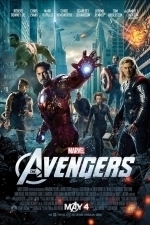
Some assembly required
There's a lot about this movie I love (it used to be one of my favorite films to rewatch when I was a teenager), one thing that really stood out to me about watching this again for the first time in awhile, is how much Whedon understands the language of comics.
Whenever people bring that aspect up, they usually talk about the splash panel inspired sequences (the long take through the Battle of New York), but nobody tends to talk about the choices he makes with how he and Seamus McGarvey decide to shoot the smaller scale scenes like they were regular panels.
Take Loki's entrance for example; as the laser begins to open the portal, we cut above, seeing how big the room is and how long the laser is, all in a wide, beautiful shot, taken from an angel to capture the intensity of the villain's entrance, and then that's followed up with a panel inspired close up on Loki's eyes as he breaks into a grin. Or the shot of Natasha being integrated from the prospective of the mirror in the room, and we see various different treasures as it pushes away from it.
Or probably the best example of this, is Steve's introduction; repeatedly working himself up with every punch, flashing back to the events in his life that make him feel the most intense, before punching it straight off its hook, only for him to grab another one of several he has lying there.
It's little touches like this that are sprinkled throughout, making you feel like you're watching a comic book in motion without having to go full on "Scott Pilgrim", "Into The Spider-Verse", "Speed Racer", or even "Batman: The Movie", along with capturing the lavish and striking lighting and colors found within some of the best artists for them.
Plus, while Whedon's writing is known for his sense of humor (for better and worse, especially when it comes to it's impact on the rest of these films post this one), I don't think enough of us take into account how much that humor is there to service the characters, not just the viewers.
Both this and his work with Drew Goddard on "Cabin in the Woods" showcase this perfectly. When Marty in "Cabin" asks if anyone else thinks something weird is going on when Curt contradict himself by saying they should split up, he isn't just saying that for the sake of a gag, it's Whedon and Goddard's way of hinting that he knows more than the others, and establishing that he's immune from these tricks being played on them.
When Steve and Tony are arguing about who's stronger and Steve keeps saying "put on the suit!", once shit hits the fan, he says it once again, but in a way that's far more urgent and fearful, not just being there for the sake of a funny payoff, but as progression for the next series of events that need to play out.
And, man....
There's just so many great moments. Not just the action or the characters working off of each other, but little moments, like the Old Man standing up for Earth to Loki, Steve giving Fury ten bucks after seeing the Helicarrier in action, Bruce mentioning the time he figured he had enough and how he couldn't end it himself, complete with the fear trembling in his voice and facial expression, Loki saying "I'm listening" as Thor was taken away from him, or his monologue to Natasha, the entire New York battle centering around them both trying to keep the army at bay and save as many by standards as possible, just too many to name.
It's one of the most memorable and entertaining blockbusters of this decade and while it doesn't feel as special seeing all of these people in the same movie anymore, it still has them at their best and manages to do it so effortlessly. Like it's one thing that this movie exists, but the fact that it worked is something that'll never not be amazing.
What else can I say, really? It's "The Avengers". You've likely seen it, memed about it, quoted it, referenced it, it doesn't matter, it's been here for nearly ten years now and it's impact is still felt and mentioned. As well as something that's super easy to put on and rewatch, either for some lazy day entertainment, or to revisit during the lead up to their next big adventure.....
Whenever people bring that aspect up, they usually talk about the splash panel inspired sequences (the long take through the Battle of New York), but nobody tends to talk about the choices he makes with how he and Seamus McGarvey decide to shoot the smaller scale scenes like they were regular panels.
Take Loki's entrance for example; as the laser begins to open the portal, we cut above, seeing how big the room is and how long the laser is, all in a wide, beautiful shot, taken from an angel to capture the intensity of the villain's entrance, and then that's followed up with a panel inspired close up on Loki's eyes as he breaks into a grin. Or the shot of Natasha being integrated from the prospective of the mirror in the room, and we see various different treasures as it pushes away from it.
Or probably the best example of this, is Steve's introduction; repeatedly working himself up with every punch, flashing back to the events in his life that make him feel the most intense, before punching it straight off its hook, only for him to grab another one of several he has lying there.
It's little touches like this that are sprinkled throughout, making you feel like you're watching a comic book in motion without having to go full on "Scott Pilgrim", "Into The Spider-Verse", "Speed Racer", or even "Batman: The Movie", along with capturing the lavish and striking lighting and colors found within some of the best artists for them.
Plus, while Whedon's writing is known for his sense of humor (for better and worse, especially when it comes to it's impact on the rest of these films post this one), I don't think enough of us take into account how much that humor is there to service the characters, not just the viewers.
Both this and his work with Drew Goddard on "Cabin in the Woods" showcase this perfectly. When Marty in "Cabin" asks if anyone else thinks something weird is going on when Curt contradict himself by saying they should split up, he isn't just saying that for the sake of a gag, it's Whedon and Goddard's way of hinting that he knows more than the others, and establishing that he's immune from these tricks being played on them.
When Steve and Tony are arguing about who's stronger and Steve keeps saying "put on the suit!", once shit hits the fan, he says it once again, but in a way that's far more urgent and fearful, not just being there for the sake of a funny payoff, but as progression for the next series of events that need to play out.
And, man....
There's just so many great moments. Not just the action or the characters working off of each other, but little moments, like the Old Man standing up for Earth to Loki, Steve giving Fury ten bucks after seeing the Helicarrier in action, Bruce mentioning the time he figured he had enough and how he couldn't end it himself, complete with the fear trembling in his voice and facial expression, Loki saying "I'm listening" as Thor was taken away from him, or his monologue to Natasha, the entire New York battle centering around them both trying to keep the army at bay and save as many by standards as possible, just too many to name.
It's one of the most memorable and entertaining blockbusters of this decade and while it doesn't feel as special seeing all of these people in the same movie anymore, it still has them at their best and manages to do it so effortlessly. Like it's one thing that this movie exists, but the fact that it worked is something that'll never not be amazing.
What else can I say, really? It's "The Avengers". You've likely seen it, memed about it, quoted it, referenced it, it doesn't matter, it's been here for nearly ten years now and it's impact is still felt and mentioned. As well as something that's super easy to put on and rewatch, either for some lazy day entertainment, or to revisit during the lead up to their next big adventure.....

Movie Metropolis (309 KP) rated Pokémon: Detective Pikachu (2019) in Movies
Jun 10, 2019
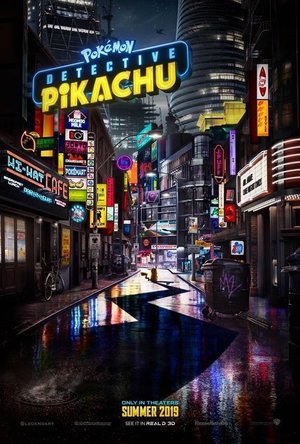
Totally Onix-pected
Before we begin, I must apologise for the bad pun, but if any franchise deserves a pun for their first live-action movie adaptation, it’s Pokémon. Growing up in 90s Britain, Pokémon was absolutely everywhere. You couldn’t turn a street corner without seeing Pikachu and his sidekick Ash (or should that be the other way around) emblazoned across every toy shop window or on every bus. It was a true phenomenon that took the world by storm like nothing else.
Fast forward to 2019 and perhaps even more impressively, Pokémon is still very much in people’s consciousness. The adorable Pocket Monsters, if we are referring to them with their full title, are still something of a cultural mainstay across the globe – yet true global box-office success has eluded them.
Enter Pokémon: Detective Pikachu. The first live-action movie from the universally loved series. It’s taken over 20 years to get to this point, but is the resulting film worth the wait? Or are we looking at yet another video game to move adaptation dud?
Ace detective Harry Goodman goes mysteriously missing, prompting his 21-year-old son, Tim (Justice Smith), to find out what happened. Aiding in the investigation is Harry’s former Pokémon partner, wise-cracking, adorable super-sleuth Detective Pikachu (Ryan Reynolds). Finding that they are uniquely equipped to work together, as Tim is the only human who can talk with Pikachu, they join forces to unravel the tangled mystery.
It was a peculiar choice for Warner Bros. and The Pokémon Company to adapt one of the lesser known video games in the franchise in which a talking Pikachu helps a young man solve the mystery of his missing father, but it ended up being a master stroke.
For those not familiar with Pokémon Red, Blue, Yellow etc, the film needs no introduction and no prerequisite of Pokémon knowledge, meaning it’s suitable for Pokémon fans and Pokémon novices.
What the movie does need however, is complete immersion. The central setting of Ryme City is a thriving metropolis in which Pocket Monster and human live alongside each other, free from the battles that brought the franchise universal success. It’s a bold move, putting aside what is essentially the main money-making aspect of the series, but it works well for the most part.
The creature designs are astounding, bringing these historically cartoon animals living and breathing into the 21stCentury
Director Rob Letterman (Goosebumps) creates a vibrant world that is as immersive as anything we’ve seen on the big screen in years. You feel a part of the adventure and to be frank, it took me back to my first experiences with the trading cards and the Gameboy games.
With charm, wit and heart on its side, Pokemon: Detective Pikachu is by far the best video game movie, although that’s not saying much. Jurassic World: Fallen Kingdom’s Justice Smith plays the lead role of Tim with gusto and true emotion and his character arc throughout the film is pleasingly well-written for a film in the genre. Bill Nighy adds some class to proceedings as wealthy businessman Howard Clifford and Ken Watanabe pops up now and then as a detective inspector.
But the main star is of course, Detective Pikachu himself. Ryan Reynolds takes to the role like a Magikarp to water and brings a little of his Deadpool magnetism to the portrayal. It shouldn’t work, but it really does and the humorous little mouse is a delight to spend the film with.
The cinematography too is lovely. John Mathieson, who worked on Robin Hood with Ridley Scott and X-Men: First Class brings to life stunning locations, filled with mystery and magic – and that’s everything you could ask for in a Pokémon movie. The special effects are on the whole, very good. With a reported budget of $150million, you can see where the money has been spent. The creature designs are astounding, bringing these historically cartoon animals living and breathing into the 21stCentury. There are a couple of lapses here and there, but nothing to write home about.
It’s not all good news. The plot is both predictable and nonsensical at the same time, especially towards the film’s climax. The thrill here is definitely not in the story but rather in the exceptional world the film-makers have built. Rumour has it that a sequel is already on the cards, and with a confidently filmed, funny and emotive first outing, the Pokémon franchise continues to be in good health.
Your move Sonic.
https://moviemetropolis.net/2019/05/10/pokemon-detective-pikachu-review-totally-onix-pected/
Fast forward to 2019 and perhaps even more impressively, Pokémon is still very much in people’s consciousness. The adorable Pocket Monsters, if we are referring to them with their full title, are still something of a cultural mainstay across the globe – yet true global box-office success has eluded them.
Enter Pokémon: Detective Pikachu. The first live-action movie from the universally loved series. It’s taken over 20 years to get to this point, but is the resulting film worth the wait? Or are we looking at yet another video game to move adaptation dud?
Ace detective Harry Goodman goes mysteriously missing, prompting his 21-year-old son, Tim (Justice Smith), to find out what happened. Aiding in the investigation is Harry’s former Pokémon partner, wise-cracking, adorable super-sleuth Detective Pikachu (Ryan Reynolds). Finding that they are uniquely equipped to work together, as Tim is the only human who can talk with Pikachu, they join forces to unravel the tangled mystery.
It was a peculiar choice for Warner Bros. and The Pokémon Company to adapt one of the lesser known video games in the franchise in which a talking Pikachu helps a young man solve the mystery of his missing father, but it ended up being a master stroke.
For those not familiar with Pokémon Red, Blue, Yellow etc, the film needs no introduction and no prerequisite of Pokémon knowledge, meaning it’s suitable for Pokémon fans and Pokémon novices.
What the movie does need however, is complete immersion. The central setting of Ryme City is a thriving metropolis in which Pocket Monster and human live alongside each other, free from the battles that brought the franchise universal success. It’s a bold move, putting aside what is essentially the main money-making aspect of the series, but it works well for the most part.
The creature designs are astounding, bringing these historically cartoon animals living and breathing into the 21stCentury
Director Rob Letterman (Goosebumps) creates a vibrant world that is as immersive as anything we’ve seen on the big screen in years. You feel a part of the adventure and to be frank, it took me back to my first experiences with the trading cards and the Gameboy games.
With charm, wit and heart on its side, Pokemon: Detective Pikachu is by far the best video game movie, although that’s not saying much. Jurassic World: Fallen Kingdom’s Justice Smith plays the lead role of Tim with gusto and true emotion and his character arc throughout the film is pleasingly well-written for a film in the genre. Bill Nighy adds some class to proceedings as wealthy businessman Howard Clifford and Ken Watanabe pops up now and then as a detective inspector.
But the main star is of course, Detective Pikachu himself. Ryan Reynolds takes to the role like a Magikarp to water and brings a little of his Deadpool magnetism to the portrayal. It shouldn’t work, but it really does and the humorous little mouse is a delight to spend the film with.
The cinematography too is lovely. John Mathieson, who worked on Robin Hood with Ridley Scott and X-Men: First Class brings to life stunning locations, filled with mystery and magic – and that’s everything you could ask for in a Pokémon movie. The special effects are on the whole, very good. With a reported budget of $150million, you can see where the money has been spent. The creature designs are astounding, bringing these historically cartoon animals living and breathing into the 21stCentury. There are a couple of lapses here and there, but nothing to write home about.
It’s not all good news. The plot is both predictable and nonsensical at the same time, especially towards the film’s climax. The thrill here is definitely not in the story but rather in the exceptional world the film-makers have built. Rumour has it that a sequel is already on the cards, and with a confidently filmed, funny and emotive first outing, the Pokémon franchise continues to be in good health.
Your move Sonic.
https://moviemetropolis.net/2019/05/10/pokemon-detective-pikachu-review-totally-onix-pected/

Chris Sawin (602 KP) rated Transformers (2007) in Movies
Jun 19, 2019 (Updated Jun 22, 2019)
Transformers being made into a live action film sounds like every fan's dream come true on paper, but throw Michael Bay into the equation and you lose a good portion of that audience. Bay is a director who tends to rely solely on action sequences. He's known for creating superb and intense scenes in his films, but they always rely on heavy explosions or pure destruction. That's not to say that's a bad thing, but it's hard to name a memorable scene in a Michael Bay film that doesn't include those elements. Everything else in his films (the story, the dialogue, the initial scenes that bridge the gap between each action sequence, etc) all seem to be lacking that extra spark his action sequences have. So those doubts carried over to Transformers and Bay's version seems to be more enjoyable for people who aren't rabid fans of the franchise.
The film revolves around the Autobots fighting off the Decepticons from gaining possession of the Allspark, which has the power to save them from extinction or grant them ultimate power. Optimus Prime, the leader of the Autobots, is trying to save Cybertron (their home planet) while Megatron, the leader of the Decepticons, wants to conquer the universe and will do whatever it takes to accomplish that goal. In 1935, Megatron had found the Allspark on Earth in the Arctic Ocean, but was eventually frozen in his quest to capture it. Megatron used the last of his energy to embed the location of the Allspark in the glasses of a captain who accidentally found Megatron buried deep beneath the ice. That captain was the great, great grandfather of Sam Witwicky who is now in possession of said glasses. In the present day, Sam's father buys Sam his first car; a yellow Camaro which turns out to be Autobot, Bumblebee. As the Transformers arrive on Earth, their first objectives are to find Sam Witwicky, acquire possession of the glasses, and hopefully attain an advantage over their enemy.
The movie relies solely on giant robots fighting each other to be the selling point of the film, so if you're expecting much else story-wise then you'll probably walk away from the film disappointed. The special effects are top notch as the Transformers themselves look incredibly realistic. Scenes in other films that rely heavily on characters that are purely computer generated have a sense of being unrealistic since it's usually noticeable that the actors on screen are reacting to something that isn't really there. CGI characters don't usually look this good though. Most of the time, when the actors interact with the computer generated characters, those actors also become computer generated. Like when Doctor Octopus carries Mary Jane up a skyscraper after kidnapping her from the coffee shop in Spider-Man 2 is a great example. They're both noticeably computer generated. While in Transformers, the actors either weren't CGI or the effect was achieved to a greater degree because it looked phenomenal and believable the entire time. As believable as transforming robots can be anyway. The fight scenes between the Autobots and the Decepticons are where the movie hooks its audience though. There is so much going on that the movie requires multiple viewings just to see everything that's going on.
While Transformers is an incredibly fun ride, it does have its down side. The humor of the film is often on the cheesy side and not really funny at all ("I NEED A CREDIT CARD," the entire Glen Whitmann character, Jazz's dialogue, "This is easily 100 times cooler than Armageddon," etc). A trait that seems to carry over into Revenge of the Fallen as the same sense of humor is in the trailer footage. Another issue is the action scenes. While they are intriguing, they're also incredibly confusing most of the time. The camera is almost always too close during those sequences and telling the difference between an Autobot and a Decepticon while they're rolling around in the air is near impossible. The camera looks like it's pulled out a bit in Revenge of the Fallen, so hopefully that problem has been addressed and taken care of. Looks like we'll find out June 24th.
Despite hardcore Transformers fans being displeased (to say the least) with the film, it can't be denied that the 2007 film was one of the biggest blockbuster films at the box office that year. Transformers is exciting and action packed from beginning to end. It is basically a two and a half hour adrenaline rush. So, bottom line, see Transformers if you're looking for an action packed adventure that'll make your heart race and put you on the edge of your seat.
The film revolves around the Autobots fighting off the Decepticons from gaining possession of the Allspark, which has the power to save them from extinction or grant them ultimate power. Optimus Prime, the leader of the Autobots, is trying to save Cybertron (their home planet) while Megatron, the leader of the Decepticons, wants to conquer the universe and will do whatever it takes to accomplish that goal. In 1935, Megatron had found the Allspark on Earth in the Arctic Ocean, but was eventually frozen in his quest to capture it. Megatron used the last of his energy to embed the location of the Allspark in the glasses of a captain who accidentally found Megatron buried deep beneath the ice. That captain was the great, great grandfather of Sam Witwicky who is now in possession of said glasses. In the present day, Sam's father buys Sam his first car; a yellow Camaro which turns out to be Autobot, Bumblebee. As the Transformers arrive on Earth, their first objectives are to find Sam Witwicky, acquire possession of the glasses, and hopefully attain an advantage over their enemy.
The movie relies solely on giant robots fighting each other to be the selling point of the film, so if you're expecting much else story-wise then you'll probably walk away from the film disappointed. The special effects are top notch as the Transformers themselves look incredibly realistic. Scenes in other films that rely heavily on characters that are purely computer generated have a sense of being unrealistic since it's usually noticeable that the actors on screen are reacting to something that isn't really there. CGI characters don't usually look this good though. Most of the time, when the actors interact with the computer generated characters, those actors also become computer generated. Like when Doctor Octopus carries Mary Jane up a skyscraper after kidnapping her from the coffee shop in Spider-Man 2 is a great example. They're both noticeably computer generated. While in Transformers, the actors either weren't CGI or the effect was achieved to a greater degree because it looked phenomenal and believable the entire time. As believable as transforming robots can be anyway. The fight scenes between the Autobots and the Decepticons are where the movie hooks its audience though. There is so much going on that the movie requires multiple viewings just to see everything that's going on.
While Transformers is an incredibly fun ride, it does have its down side. The humor of the film is often on the cheesy side and not really funny at all ("I NEED A CREDIT CARD," the entire Glen Whitmann character, Jazz's dialogue, "This is easily 100 times cooler than Armageddon," etc). A trait that seems to carry over into Revenge of the Fallen as the same sense of humor is in the trailer footage. Another issue is the action scenes. While they are intriguing, they're also incredibly confusing most of the time. The camera is almost always too close during those sequences and telling the difference between an Autobot and a Decepticon while they're rolling around in the air is near impossible. The camera looks like it's pulled out a bit in Revenge of the Fallen, so hopefully that problem has been addressed and taken care of. Looks like we'll find out June 24th.
Despite hardcore Transformers fans being displeased (to say the least) with the film, it can't be denied that the 2007 film was one of the biggest blockbuster films at the box office that year. Transformers is exciting and action packed from beginning to end. It is basically a two and a half hour adrenaline rush. So, bottom line, see Transformers if you're looking for an action packed adventure that'll make your heart race and put you on the edge of your seat.

Darren (1599 KP) rated 300 (2007) in Movies
Jun 20, 2019
Story: 300 starts by telling us about Leonidas and how he was put through his training as a child before becoming King Leonidas (Butler). When a Persian messenger comes to Sparta with a message from King Xerxes (Santoro) about an impending war Leonidas refuses to back down. Leonidas draws up a battle plan to go against the Persian’s against that out numbers them drastically. The oracles warn Leonidas about going into the battle but Leonidas refuses to back down.
Leonidas selects 300 warriors who have sons to carry on their names to go and fight leaving Sparta behind. One the way to the battle Leonidas and his men learn what the Persians are capable off as they prepare for the battle. We follow King Leonidas and his 300 as they plough through the Persian army defying all of the odds, while another battle for power rages on back at Sparta.
300 shows how determined one group of people were to protect their own land, sure we have comic book style which helps the film enter the fantasy side. It doesn’t have the most original screen story but this is clearly made for the action. We do see how the warriors of Sparta would have been the better in battle even if the actual battle turned into something very fantasy based. Just remember you won’t need to be thinking too much through this film, just relax and enjoy. (7/10)
Actor Review
Gerard Butler: King Leonidas fearless warrior who leads his army of 300 into battle against the Persians against all odds. He goes against all the gods and wishes of their oracle to battle for his people. Gerard gives a good performance showing how he was going to be a lead actor. (8/10)
leonidas
Lena Headey: Queen Gorgo who is left to rule Sparta while the King goes into battle. She has to deal with Theron who stays back might not be as loyal as first thought. Lena gives a good performance and shows how she was always going to be playing a Queen. (7/10)
lena
Dominic West: Theron Spartan who stays behind and tries to use his power in the city to gain power over the people while Leonidas is battling for their freedom. Dominic gives a solid performance as the scheming villain. (6/10)
dom
David Wenham: Dilios warrior who is also the story telling, he provides narration for the story and fills us in on Leonidas’ past. David gives a good performance as the story teller but also warrior who fights for Sparta. (6/10)
david
Michael Fassbender: Stelios one of the fearless warriors who has never faced a real challenge and hopes to find one in this battle. Michael gives a good performance as the greatest warrior of the army in what was his debut role. (7/10)
stelios
Support Cast: 300 supporting cast is filled with warriors on both sides of the fight, they all have their moments in the battle.
Director Review: Zack Snyder – Zack showed why he is such a popular director with his newer style of directing which is both unique and entertaining. (8/10)
Action: 300 has plenty of fights but what did you expect from this kind of war film. (9/10)
Fantasy: 300 uses fantasy for its battles showing how different types of warriors could be looked and the legend created by fear. (8/10)
War: 300 shows of the great battles between the Persians and the Spartans. (10/10)
Settings: 300 creates the settings to look very authentic looking scenery for the battle scenes. (9/10)
Special Effects: 300 uses great effects for the fights and to create the different style of fighters. (9/10)
Suggestion: 300 is one for the action fans to enjoy, it has plenty of fighting but not much in the way of thinking needed. (Action Fans Watch)
Best Part: Stelios Now.
Worst Part: Lots of shouting from Leonidas.
Action Scene Of The Film: The first battle.
Kill Of The Film: Monster creature man vs Leonidas.
Favourite Quote: King Leonidas ‘This is Sparta!’
Believability: No (0/10)
Chances of Tears: No (0/10)
Chances of Sequel: Has a sequel.
Post Credits Scene: No
Oscar Chances: No
Box Office: $456 Million
Budget: $65 Million
Runtime: 1 Hour 57 Minutes
Tagline: Spartans, prepare for glory!
Overall: THIS IS ‘JUST’ GOOD!
https://moviesreview101.com/2015/05/16/300-2006/
Leonidas selects 300 warriors who have sons to carry on their names to go and fight leaving Sparta behind. One the way to the battle Leonidas and his men learn what the Persians are capable off as they prepare for the battle. We follow King Leonidas and his 300 as they plough through the Persian army defying all of the odds, while another battle for power rages on back at Sparta.
300 shows how determined one group of people were to protect their own land, sure we have comic book style which helps the film enter the fantasy side. It doesn’t have the most original screen story but this is clearly made for the action. We do see how the warriors of Sparta would have been the better in battle even if the actual battle turned into something very fantasy based. Just remember you won’t need to be thinking too much through this film, just relax and enjoy. (7/10)
Actor Review
Gerard Butler: King Leonidas fearless warrior who leads his army of 300 into battle against the Persians against all odds. He goes against all the gods and wishes of their oracle to battle for his people. Gerard gives a good performance showing how he was going to be a lead actor. (8/10)
leonidas
Lena Headey: Queen Gorgo who is left to rule Sparta while the King goes into battle. She has to deal with Theron who stays back might not be as loyal as first thought. Lena gives a good performance and shows how she was always going to be playing a Queen. (7/10)
lena
Dominic West: Theron Spartan who stays behind and tries to use his power in the city to gain power over the people while Leonidas is battling for their freedom. Dominic gives a solid performance as the scheming villain. (6/10)
dom
David Wenham: Dilios warrior who is also the story telling, he provides narration for the story and fills us in on Leonidas’ past. David gives a good performance as the story teller but also warrior who fights for Sparta. (6/10)
david
Michael Fassbender: Stelios one of the fearless warriors who has never faced a real challenge and hopes to find one in this battle. Michael gives a good performance as the greatest warrior of the army in what was his debut role. (7/10)
stelios
Support Cast: 300 supporting cast is filled with warriors on both sides of the fight, they all have their moments in the battle.
Director Review: Zack Snyder – Zack showed why he is such a popular director with his newer style of directing which is both unique and entertaining. (8/10)
Action: 300 has plenty of fights but what did you expect from this kind of war film. (9/10)
Fantasy: 300 uses fantasy for its battles showing how different types of warriors could be looked and the legend created by fear. (8/10)
War: 300 shows of the great battles between the Persians and the Spartans. (10/10)
Settings: 300 creates the settings to look very authentic looking scenery for the battle scenes. (9/10)
Special Effects: 300 uses great effects for the fights and to create the different style of fighters. (9/10)
Suggestion: 300 is one for the action fans to enjoy, it has plenty of fighting but not much in the way of thinking needed. (Action Fans Watch)
Best Part: Stelios Now.
Worst Part: Lots of shouting from Leonidas.
Action Scene Of The Film: The first battle.
Kill Of The Film: Monster creature man vs Leonidas.
Favourite Quote: King Leonidas ‘This is Sparta!’
Believability: No (0/10)
Chances of Tears: No (0/10)
Chances of Sequel: Has a sequel.
Post Credits Scene: No
Oscar Chances: No
Box Office: $456 Million
Budget: $65 Million
Runtime: 1 Hour 57 Minutes
Tagline: Spartans, prepare for glory!
Overall: THIS IS ‘JUST’ GOOD!
https://moviesreview101.com/2015/05/16/300-2006/