

The Smart Palate: Delicious Recipes for a Healthy Lifestyle
Tina Landsman Abbey, Gail Goldfarb Karp and Joe Schwarcz
Book
Catering to those who want to be as health conscious as they are passionate about food, The Smart...

Thumbsucker
Book
This eighties-centric, Ritalin-fueled, pitch-perfect comic novel by a writer to watch brings energy...

BookInspector (124 KP) rated Dinner At The Happy Skeleton in Books
Sep 24, 2020
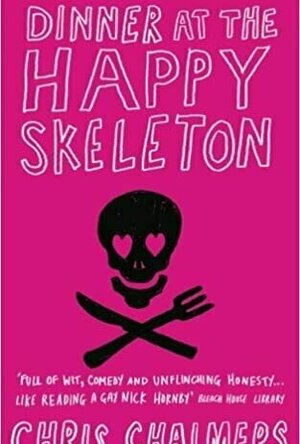

When I was approached by the author, I was a little bit unsure, how I am going to react to this book. Before this book, I haven’t read other books about gay guys, but because I like to read different types of books (you will not know whether you like it until you try it), I decided to give this book a go, and I had very educational experience with this novel.
The blurb above described this novel very very accurately. The main character in this novel is Dan, and the whole book was told from Dan’s perspective. I really liked Dan’s personality in this book, I think he is very believable, funny, nice person, and I would like to have a friend like Dan.
The whole narrative of this book felt a lot like a diary. I really enjoyed reading not only Dan’s present life events but also, his memories about his ex-boyfriend, who brought Dan a lot of trust issues. As a person, who knows very little about gay people’s lives, I found this book very educational. I learned about gay guys lifestyle, and it was very interesting to have an insight into how they feel. This book for me felt a lot like reading a Chick lit book, but instead of a girl telling a story, it was a guy. (I hope you get what I mean…) The whole story is flowing very evenly, and I was missing the depth in this book, some deep conflict, which Dan could battle. The whole plot of this book has very close resemblance with author’s bio down below, so I strongly believe, that there are some true facts and stories which author shared in this novel, and it just increased my curiosity, of which parts are true, and which ones are fictional.
The writing style of this book is really pleasant and I really enjoyed how Chris Chalmers portrayed all the little details about London, Dan’s personal feelings and interesting experiences. The chapters used in this novel are pretty short, so it was easy to read and it didn’t leave me bored. I would like to throw in a DISCLAIMER, that there is quite a lot of sex scenes/ talks in this book. The ending of this novel left me satisfied, as it is well deserved and rounds up this book really nicely. So, to conclude, it was a very interesting experience for me, where I got to feed my curiosity, and read some pretty interesting stories, which could’ve been based on true facts, and I do recommend to give it a try, you never know, you might enjoy it. 🙂
Was given this book by the author for an honest review.




Surprisingly it works... The setting is perfect to make the tension greater, with the storm causing problems with power inside and making everything hazardous in the scenes out on the decks...
The crew distrust each other and don't get on, they have issues with the insurance assessor, the boss is about to lose control and its almost Christmas... Something has got to give....
I found it similar in feel (although obviously different) to Fortitude and is very much like a modern remake of a famous Agatha Christie novel (Which I won't mention the title of, as it could give the game away) although I'm sure it probably isn't actually based on it...
One criticism is, I think it was a little rushed in places and could probably have made a 8 or 10 episode series, and maybe explore some of the characters a little more, rather than cram it all into 6 Episodes...
I was going to rate the the ending as a good point and a bad point because I think it will divide people, for me it worked well, but I can see some people having issues with it (in my opinion) ... BUT, that is what makes a good story, something that causes debate......
I really recommend this as a series to slot in after finishing binge watching one long series and before starting another long show... 6 episodes about 45 min each, perfect for a lazy weekend...
Hazel (1853 KP) rated The Snow Child in Books
May 30, 2017
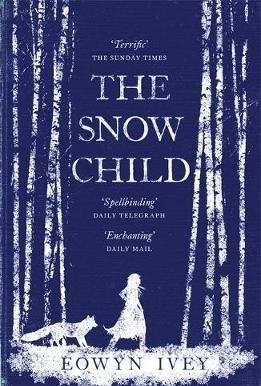

Set in Alaska during the 1920s this is the story of a couple, Jack and Mabel, who, aside from a stillbirth, have not had any children despite their desperate longing. Now that they are both approaching fifty years of age they know that they will never be able to have a son or daughter of their own. One winter, during the first snowfall, the two of them on an uncharacteristic, spur of the moment impulse build a snowman next to their cabin. Rather than building a large snowman they make a smaller one in the shape of a girl, decorating her with scarves and mittens – they have made a snow girl.
Eowyn Ivey has based her novel on a Russian fairy tale, Snegurochka, which in English translates to The Snow Maiden. It was Arthur Ransome’s retelling, Little Daughter of the Snow, which inspired Ivey, but the general storyline is essentially the same, although some versions have alternative endings. For those who are familiar with Snegurochka and its variants will know that it does not end happily therefore it seems inevitable that The Snow Child will head in the same direction. However which ending will it most resemble?
Throughout the novel it is impossible to be absolutely sure that the little girl who turns up outside the cabin the day after the snowman has been built (and destroyed) is in fact the snow girl magically transformed into flesh and bone; or whether it is a lost child and the circumstance are purely coincidental. There is a third option: Jack and Mabel could be imagining things through their desperate longing, but this is easy to rule out.
The snow is understandably a key theme throughout the story. At the beginning the anticipated Alaskan winter is imagined as a “cold on the valley like a coming death”. Not only will it be unbearably freezing, Jack and Mabel will struggle to make do with their limited amount of food and supplies. After the arrival of the child the winter becomes a happy occasion. Jack and Mabel’s relationship improves and they become less isolated after befriending some neighbours. The only heartbreak is when the girl, Faina, disappears in the spring; but as she comes back as soon as it snows, winter becomes something to look forward to. Another snowy link in the story is Faina’s name, which she claims means “the colour on snow when the sun turns” in Russian. This also makes the idea of her truly being the snow girl more convincing.
The novel does predictably have an unhappy ending but the epilogue makes up for this by revealing the contentment of the remaining characters a few years into the future.
As already mentioned, The Snow Child was not a very gripping read, but it was a beautiful tale in the way that fairy tales, even those with unhappy endings, often can be.
Hazel (1853 KP) rated The Snow Child in Books
Dec 14, 2018
Set in Alaska during the 1920s this is the story of a couple, Jack and Mabel, who, aside from a stillbirth, have not had any children despite their desperate longing. Now that they are both approaching fifty years of age they know that they will never be able to have a son or daughter of their own. One winter, during the first snowfall, the two of them on an uncharacteristic, spur of the moment impulse build a snowman next to their cabin. Rather than building a large snowman they make a smaller one in the shape of a girl, decorating her with scarves and mittens – they have made a snow girl.
Eowyn Ivey has based her novel on a Russian fairy tale, <i>Snegurochka</i>, which in English translates to <i>The Snow Maiden</i>. It was Arthur Ransome’s retelling, <i>Little Daughter of the Snow</i>, which inspired Ivey, but the general storyline is essentially the same, although some versions have alternative endings. For those who are familiar with <i>Snegurochka</i> and its variants will know that it does not end happily therefore it seems inevitable that <i>The Snow Child</i> will head in the same direction. However which ending will it most resemble?
Throughout the novel it is impossible to be absolutely sure that the little girl who turns up outside the cabin the day after the snowman has been built (and destroyed) is in fact the snow girl magically transformed into flesh and bone; or whether it is a lost child and the circumstance are purely coincidental. There is a third option: Jack and Mabel could be imagining things through their desperate longing, but this is easy to rule out.
The snow is understandably a key theme throughout the story. At the beginning the anticipated Alaskan winter is imagined as a “cold on the valley like a coming death”. Not only will it be unbearably freezing, Jack and Mabel will struggle to make do with their limited amount of food and supplies. After the arrival of the child the winter becomes a happy occasion. Jack and Mabel’s relationship improves and they become less isolated after befriending some neighbours. The only heartbreak is when the girl, Faina, disappears in the spring; but as she comes back as soon as it snows, winter becomes something to look forward to. Another snowy link in the story is Faina’s name, which she claims means “the colour on snow when the sun turns” in Russian. This also makes the idea of her truly being the snow girl more convincing.
The novel does predictably have an unhappy ending but the epilogue makes up for this by revealing the contentment of the remaining characters a few years into the future.
As already mentioned, <i>The Snow Child</i> was not a very gripping read, but it was a beautiful tale in the way that fairy tales, even those with unhappy endings, often can be.

Ugh, this book. Some of it was enjoyable, and yet so much of it was just so damn frustrating. First of all, the entire thing seemed like it was based on just a mountain of stereotypes and tropes. Emma has built-in stereotypes and preconceived notions about Dominic (a bartender can't be anything like a banker, apparently, or share any of the same interests). Every woman in the banking world is a vapid idiot except Emma. All New Yorkers just want to get married and move to the suburbs. And so on and so on. It gets really old after a while.
Then, the whole different worlds thing: Emma versus Dom style. As a moving forward plot device, it just seemed incredibly forced. I understand that the "we're from two different worlds" idea still exists today, but really? It's that hard to overcome that a woman considers just dropping the only guy who has ever made her happy, because he seems beneath her? It would be different if the book put forth some real reasons that their class differences threatened their relationship, but it really doesn't. It's all half developed and mostly based on Emma's speculation.
That brings me to Emma. I wanted to like Emma. I could see a lot of Emma in myself - a quiet introvert who doesn't take well to people, who needs time to warm up. I understand that. But oh my gosh, she drove me crazy. So wishy washy! So indecisive! So unable to just follow her *own* thoughts and feelings. She drove me insane. It's very hard to fully enjoy a novel where you often want to wring the neck of the main character.
All of that, truly, I could have probably forgiven if Green hadn't taken the plot off the deep end near the end of the novel. I was so irritated and so upset: I went through all of the above for THIS? I won't spoil it, but let's just say I didn't sign up for a Nicholas Sparks novel. Any of the novel's redeeming qualities (a cute cat, a somewhat cute kid, Emma's dad) went out the window.
Overall, I just didn't enjoy this one. Too much of the plot devices irritated me, and then-BOOM-the actual plot drove me over the edge.
Sunny
Book
Sunny tries to shine despite his troubled past in this third novel in the critically acclaimed Track...
Introduction to Methods of Approximation in Physics and Astronomy
Book
This textbook provides students with a solid introduction to the techniques of approximation...

Cellular Automata in Image Processing and Geometry
Andrew Adamatzky, Paul Rosin and Xianfang Sun
Book
The book presents findings, views and ideas on what exact problems of image processing, pattern...