
Search
Search results
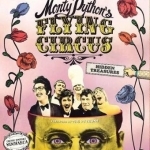
Monty Python's Flying Circus: Hidden Treasures
Book
Carlton Books presents Monty Python's Flying Circus: Hidden Treasures, the complete history of Monty...
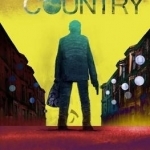
Moon Country
Book
Fifteen years ago, Tommy Hunter committed a terrible crime. Now pursued by his own bad memories and...
Matthew Krueger (10051 KP) rated 300 (2007) in Movies
Jan 5, 2021
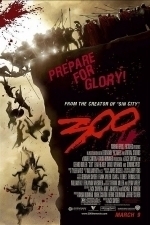
This is Sparta
300- is a excellent film. Zack Snyder did a excellent job with this film. This was his 2nd film he did and it really put him on the map, cause after this he did "Watchman" and "Man of Steel". His remake of "Dawn of the Dead" was excellent. 300 has excellent visuals, gory, vengeances and epicnest. Gerald Bulter does a excellent job in this.
The plot: In 480 B.C. a state of war exists between Persia, led by King Xerxes (Rodrigo Santoro), and Greece. At the Battle of Thermopylae, Leonidas (Gerard Butler), king of the Greek city state of Sparta, leads his badly outnumbered warriors against the massive Persian army. Though certain death awaits the Spartans, their sacrifice inspires all of Greece to unite against their common enemy.
The film is a shot-for-shot adaptation of the comic book, similar to the film adaptation of Sin City.
Its a excellent movie and a must see.
The plot: In 480 B.C. a state of war exists between Persia, led by King Xerxes (Rodrigo Santoro), and Greece. At the Battle of Thermopylae, Leonidas (Gerard Butler), king of the Greek city state of Sparta, leads his badly outnumbered warriors against the massive Persian army. Though certain death awaits the Spartans, their sacrifice inspires all of Greece to unite against their common enemy.
The film is a shot-for-shot adaptation of the comic book, similar to the film adaptation of Sin City.
Its a excellent movie and a must see.
Mark @ Carstairs Considers (2572 KP) rated Silent as the Grave in Books
Mar 13, 2025
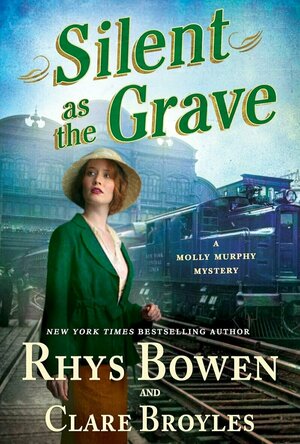
Mayhem Behind the Scenes of Silent Pictures
When Molly visits her friends Ryan O’ Hara on the set of an early silent movie, her adopted daughter Bridie winds up getting discovered and cast in the lead. So Molly starts spending time on the set herself, where she sees some suspicious accidents. But when one hits very close to home, Molly starts investigating. Can she find proof of sabotage before someone dies?
I’ve always appreciated that this series has given us glimpses into many different worlds of 1900’s New York City. As a fan of movies, this setting was very fun. Having said that, the pacing was really off here, which was disappointing. The climax is satisfying, however. I enjoy spending time with the characters, although some growth would be nice. I did feel transported to the time period as I read. Fans of the series will appreciate time with the characters even if this isn’t the strongest book in the series.
David McK (3801 KP) rated Sharpe's Honour in TV
Nov 14, 2021 (Updated Nov 14, 2021)
The fifth episode in the TV adaptations of the novels by Bernard Cornwell (which are well worth a read), based on the book of the same name.
I say 'based on' as, because while the main thrust of the storyline is the same, the TV movie of necessity abbreviates the novel somewhat: most noticeably (I felt) watering down quite substantially the role of El Matarife in the proceedings.
As this starts, Sharpe is still mourning the death of his wife Teresa, while Napoleon - in his first appearance in the series - is in retreat from Russia, and with Major Pierre Ducos hatching a plan to drive a wedge between the Spanish and British allies while also getting his revenge on Sharpe by provoking a duel between Sharpe and a Spanish nobleman who he (Ducos) later murders, with Sharpe then taking the rap for said murder (until he is later able to prove his innocence).
I say 'based on' as, because while the main thrust of the storyline is the same, the TV movie of necessity abbreviates the novel somewhat: most noticeably (I felt) watering down quite substantially the role of El Matarife in the proceedings.
As this starts, Sharpe is still mourning the death of his wife Teresa, while Napoleon - in his first appearance in the series - is in retreat from Russia, and with Major Pierre Ducos hatching a plan to drive a wedge between the Spanish and British allies while also getting his revenge on Sharpe by provoking a duel between Sharpe and a Spanish nobleman who he (Ducos) later murders, with Sharpe then taking the rap for said murder (until he is later able to prove his innocence).
Matthew Krueger (10051 KP) rated Doctor Sleep (2019) in Movies
Nov 11, 2019 (Updated Nov 12, 2019)
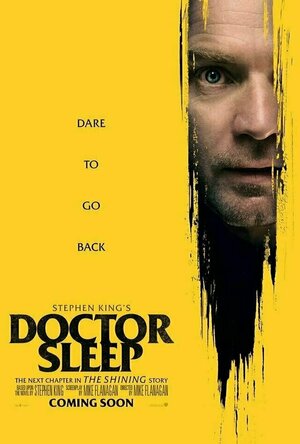
39 Years Later: Redrum aka Murder
Doctor Sleep- if you dont know is the sequel to the shining. I have been waiting for this movie to come out ever since it got announced. I read the book over two years again and i loved it. I didnt even know their was a sequel to the shining until i read the book. The book is phenomenal, it is acutally my first stephen king novel that i read and finshed, so to say at less, i was hyped and very anticpated, so what did i think. I thought it was good. I liked it alot.
Ewan McGregor was a perfect cast for Danny Torrance and Rebecca Ferguson was excellent as Rose The Hat and newcomer actress Kyliegh Curran was great as Abra Stone. Mike Flanagan was amazing choice for the dirctor. I liked his other movies that he directed and also loved The Haunting of Hill House which he created and directed.
The Recreated sences from the oringal film was intresting, i liked it not to bad. The hotel looks the same, old, crooked, haunted, scary, horrorfying and terrorfying. The replacements for Dick Hallorann, young Danny, Wendy and Llyod/Jack were intresting. I really liked the actress who played Wendy. As for Dick, i liked the actor who played him. As for young Danny he was good and Llyod/Jack the actor who played him was okay/bad, he just did a impression of Jack Nichoslon and looked like a young Jack Nicolson.
This is intresting, i just found this out: Danny Lloyd, who played Danny Torrance in The Shining, makes a cameo appearance as Bradley Trevor's father. Lloyd had been retired from acting for roughly 38 years, and was direct-messaged on Twitter by Flanagan to appear in the film. Producer Trevor Macy said of Lloyd's involvement, "[Lloyd] was excited to do [the cameo]. He hadn't acted since [the original]. He's a schoolteacher, and a very successful one at that, [who] like[s] making the world better. He came back for a day, and we were thrilled to have him." When pressed as to why the filmmakers did not extend the same offer to Jack Nicholson, Macy responded, "With Jack, I knew that they approached him for Ready Player One, and that he seems to be very serious about being retired. I had known that he was supportive [of the sequel] but retired." Flanagan admitted, "I didn't know how that would really work. Even if he were to come back, if he were appearing as a different character, I thought that would set people's hair on fire. He was absolutely a presence on set, though, whether he knew it or not."
So thats intresting. I would of loved to see Jack Nichloson come out of retirement and play old Jack Torrance.
Doctor Sleep was a great/excellent sequel to the shining and what Mike Flanagan did was perfect he toke elements from Stanley Kubrick's film and made it his own. The cast is great, the story is great, the hotel is great.
If you havent seen the shining than watch it and read it. If you havent seen this movie, than go watch it and read it.

Ewan McGregor was a perfect cast for Danny Torrance and Rebecca Ferguson was excellent as Rose The Hat and newcomer actress Kyliegh Curran was great as Abra Stone. Mike Flanagan was amazing choice for the dirctor. I liked his other movies that he directed and also loved The Haunting of Hill House which he created and directed.
The Recreated sences from the oringal film was intresting, i liked it not to bad. The hotel looks the same, old, crooked, haunted, scary, horrorfying and terrorfying. The replacements for Dick Hallorann, young Danny, Wendy and Llyod/Jack were intresting. I really liked the actress who played Wendy. As for Dick, i liked the actor who played him. As for young Danny he was good and Llyod/Jack the actor who played him was okay/bad, he just did a impression of Jack Nichoslon and looked like a young Jack Nicolson.
This is intresting, i just found this out: Danny Lloyd, who played Danny Torrance in The Shining, makes a cameo appearance as Bradley Trevor's father. Lloyd had been retired from acting for roughly 38 years, and was direct-messaged on Twitter by Flanagan to appear in the film. Producer Trevor Macy said of Lloyd's involvement, "[Lloyd] was excited to do [the cameo]. He hadn't acted since [the original]. He's a schoolteacher, and a very successful one at that, [who] like[s] making the world better. He came back for a day, and we were thrilled to have him." When pressed as to why the filmmakers did not extend the same offer to Jack Nicholson, Macy responded, "With Jack, I knew that they approached him for Ready Player One, and that he seems to be very serious about being retired. I had known that he was supportive [of the sequel] but retired." Flanagan admitted, "I didn't know how that would really work. Even if he were to come back, if he were appearing as a different character, I thought that would set people's hair on fire. He was absolutely a presence on set, though, whether he knew it or not."
So thats intresting. I would of loved to see Jack Nichloson come out of retirement and play old Jack Torrance.
Doctor Sleep was a great/excellent sequel to the shining and what Mike Flanagan did was perfect he toke elements from Stanley Kubrick's film and made it his own. The cast is great, the story is great, the hotel is great.
If you havent seen the shining than watch it and read it. If you havent seen this movie, than go watch it and read it.
Film tie-in
I received this book for free through Goodreads First Reads.
Nominated for an Oscar, BAFTA and Golden Globe,Trumbo is a recent film based on the original biography Dalton Trumbo written by Bruce Cook in 1977. Its adaptation to film provided the perfect opportunity to republish this extremely well researched book. With a forward written by John McNamara, the screenwriter of the motion picture, the story of Dalton Trumbo’s life is just as intriguing as it was almost forty years ago. But who is Trumbo?
If, like me, you have never heard of Trumbo or even the infamous “Hollywood Ten,” it may take a while for it to become clear as to why it was worth Cook’s time to produce a book about the man. Dalton Trumbo was a well-known screenwriter of films such as Papillon, Lonely Are The Brave and Roman Holiday as well as author of the novel Johnny Got His Gun. However these are not all he is famous for. During his life, Trumbo became a member of the Communist Party, which Hollywood branded as an Un-American Activity and thus blacklisted him, as well as other screenwriters, directors and actors. Ten of these men, Trumbo included, were imprisoned for their political beliefs – yet nothing prevented Trumbo from continuing his fairly successful career.
Interestingly, Cook begins the book with the final stages of Trumbo’s life. At time of writing Trumbo was still alive, although rather poorly. After contracting lung cancer, having a lung removed, and suffering a heart attack, Trumbo was a very sick man; nonetheless he was still enthusiastic about being interviewed and telling his personal story.
From his childhood, to his evening shifts at a bakery, Cook details Trumbo’s early life, emphasizing the hard upbringing he had before he found himself in the world of Hollywood. Although roughly 75% of the book focuses on Trumbo’s career, Cook highlights Trumbo as a family man, with both a wife and three children who he absolutely adores.
Cook constantly refers to the Hollywood Ten as a concept that the reader should already be familiar with. Granted, someone who picks up this book is more likely to do so having a prior interest in the central figure, and thus already know about his background; however those ignorant on the topic eventually gather a better understanding on the topic once reaching the relevant chapters. It also becomes clearer why Trumbo is worth reading/writing about – he may have been blacklisted, but he managed to break through all the barriers and reinstate his name and many others.
Reading this half a century after the event, it seems strange that Trumbo was imprisoned. He had not done anything intrinsically wrong, it was purely prejudice against his political beliefs that got him into the mess he found himself. But when you consider the events of the time: World War Two, the Cold War, the Korean War, and Vietnam; it is understandable why many feared those who claimed to be Communists.
Cook’s narrative does not flow as a story, and much of it is broken up with quotes from various people he interviewed. The timeline jumps about between past and present (1970s), which occasionally gets a bit confusing. A large part of the book is spent analyzing many of Trumbo’s works – both for screen and written formats – which, unless you have a particular interest, can be a little tedious.
It has got to be said that Bruce Cook was an exemplary writer with a great eye for detail. He did not jump to conclusions or only talk about things from his point of view. Instead he interviewed, what seems like, everyone who ever met Trumbo, and based his writing on fact backed up with numerous quotes and citations.
This edition of Trumbo contains a selection of photographs taken on the set of the movie. Disappointingly it does not contain any of Trumbo himself – you would think that some photos could have been tracked down!
Trumbo is not a book that will interest everyone. Most people today – particularly in England – will probably be unaware of who Dalton Trumbo was, and thus would only seek out this publication due to a fascination with film production. I have not seen the film, but after reading this and discovering how books go from novels, to screenplays to moving image, it would be interesting to find out which parts of Trumbo’s life made it onto the big screen.

Nominated for an Oscar, BAFTA and Golden Globe,Trumbo is a recent film based on the original biography Dalton Trumbo written by Bruce Cook in 1977. Its adaptation to film provided the perfect opportunity to republish this extremely well researched book. With a forward written by John McNamara, the screenwriter of the motion picture, the story of Dalton Trumbo’s life is just as intriguing as it was almost forty years ago. But who is Trumbo?
If, like me, you have never heard of Trumbo or even the infamous “Hollywood Ten,” it may take a while for it to become clear as to why it was worth Cook’s time to produce a book about the man. Dalton Trumbo was a well-known screenwriter of films such as Papillon, Lonely Are The Brave and Roman Holiday as well as author of the novel Johnny Got His Gun. However these are not all he is famous for. During his life, Trumbo became a member of the Communist Party, which Hollywood branded as an Un-American Activity and thus blacklisted him, as well as other screenwriters, directors and actors. Ten of these men, Trumbo included, were imprisoned for their political beliefs – yet nothing prevented Trumbo from continuing his fairly successful career.
Interestingly, Cook begins the book with the final stages of Trumbo’s life. At time of writing Trumbo was still alive, although rather poorly. After contracting lung cancer, having a lung removed, and suffering a heart attack, Trumbo was a very sick man; nonetheless he was still enthusiastic about being interviewed and telling his personal story.
From his childhood, to his evening shifts at a bakery, Cook details Trumbo’s early life, emphasizing the hard upbringing he had before he found himself in the world of Hollywood. Although roughly 75% of the book focuses on Trumbo’s career, Cook highlights Trumbo as a family man, with both a wife and three children who he absolutely adores.
Cook constantly refers to the Hollywood Ten as a concept that the reader should already be familiar with. Granted, someone who picks up this book is more likely to do so having a prior interest in the central figure, and thus already know about his background; however those ignorant on the topic eventually gather a better understanding on the topic once reaching the relevant chapters. It also becomes clearer why Trumbo is worth reading/writing about – he may have been blacklisted, but he managed to break through all the barriers and reinstate his name and many others.
Reading this half a century after the event, it seems strange that Trumbo was imprisoned. He had not done anything intrinsically wrong, it was purely prejudice against his political beliefs that got him into the mess he found himself. But when you consider the events of the time: World War Two, the Cold War, the Korean War, and Vietnam; it is understandable why many feared those who claimed to be Communists.
Cook’s narrative does not flow as a story, and much of it is broken up with quotes from various people he interviewed. The timeline jumps about between past and present (1970s), which occasionally gets a bit confusing. A large part of the book is spent analyzing many of Trumbo’s works – both for screen and written formats – which, unless you have a particular interest, can be a little tedious.
It has got to be said that Bruce Cook was an exemplary writer with a great eye for detail. He did not jump to conclusions or only talk about things from his point of view. Instead he interviewed, what seems like, everyone who ever met Trumbo, and based his writing on fact backed up with numerous quotes and citations.
This edition of Trumbo contains a selection of photographs taken on the set of the movie. Disappointingly it does not contain any of Trumbo himself – you would think that some photos could have been tracked down!
Trumbo is not a book that will interest everyone. Most people today – particularly in England – will probably be unaware of who Dalton Trumbo was, and thus would only seek out this publication due to a fascination with film production. I have not seen the film, but after reading this and discovering how books go from novels, to screenplays to moving image, it would be interesting to find out which parts of Trumbo’s life made it onto the big screen.
My rating: 3.5
<i>I received this book for free through Goodreads First Reads.</i>
Nominated for an Oscar, BAFTA and Golden Globe, <i>Trumbo</i> is a recent film based on the original biography <i>Dalton Trumbo</i> written by Bruce Cook in 1977. Its adaptation to film provided the perfect opportunity to republish this extremely well researched book. With a forward written by John McNamara, the screenwriter of the motion picture, the story of Dalton Trumbo’s life is just as intriguing as it was almost forty years ago. But who is Trumbo?
If, like me, you have never heard of Trumbo or even the infamous “Hollywood Ten,” it may take a while for it to become clear as to why it was worth Cook’s time to produce a book about the man. Dalton Trumbo was a well-known screenwriter of films such as <i>Papillon, Lonely Are The Brave</i> and <i>Roman Holiday</i> as well as author of the novel <i>Johnny Got His Gun</i>. However these are not all he is famous for. During his life, Trumbo became a member of the Communist Party, which Hollywood branded as an Un-American Activity and thus blacklisted him, as well as other screenwriters, directors and actors. Ten of these men, Trumbo included, were imprisoned for their political beliefs – yet nothing prevented Trumbo from continuing his fairly successful career.
Interestingly, Cook begins the book with the final stages of Trumbo’s life. At time of writing Trumbo was still alive, although rather poorly. After contracting lung cancer, having a lung removed, and suffering a heart attack, Trumbo was a very sick man; nonetheless he was still enthusiastic about being interviewed and telling his personal story.
From his childhood, to his evening shifts at a bakery, Cook details Trumbo’s early life, emphasizing the hard upbringing he had before he found himself in the world of Hollywood. Although roughly 75% of the book focuses on Trumbo’s career, Cook highlights Trumbo as a family man, with both a wife and three children who he absolutely adores.
Cook constantly refers to the Hollywood Ten as a concept that the reader should already be familiar with. Granted, someone who picks up this book is more likely to do so having a prior interest in the central figure, and thus already know about his background; however those ignorant on the topic eventually gather a better understanding on the topic once reaching the relevant chapters. It also becomes clearer why Trumbo is worth reading/writing about – he may have been blacklisted, but he managed to break through all the barriers and reinstate his name and many others.
Reading this half a century after the event, it seems strange that Trumbo was imprisoned. He had not done anything intrinsically wrong, it was purely prejudice against his political beliefs that got him into the mess he found himself. But when you consider the events of the time: World War Two, the Cold War, the Korean War, and Vietnam; it is understandable why many feared those who claimed to be Communists.
Cook’s narrative does not flow as a story, and much of it is broken up with quotes from various people he interviewed. The timeline jumps about between past and present (1970s), which occasionally gets a bit confusing. A large part of the book is spent analyzing many of Trumbo’s works – both for screen and written formats – which, unless you have a particular interest, can be a little tedious.
It has got to be said that Bruce Cook was an exemplary writer with a great eye for detail. He did not jump to conclusions or only talk about things from his point of view. Instead he interviewed, what seems like, everyone who ever met Trumbo, and based his writing on fact backed up with numerous quotes and citations.
This edition of <i>Trumbo</i> contains a selection of photographs taken on the set of the movie. Disappointingly it does not contain any of Trumbo himself – you would think that some photos could have been tracked down!
<i>Trumbo</i> is not a book that will interest everyone. Most people today – particularly in England – will probably be unaware of who Dalton Trumbo was, and thus would only seek out this publication due to a fascination with film production. I have not seen the film, but after reading this and discovering how books go from novels, to screenplays to moving image, it would be interesting to find out which parts of Trumbo’s life made it onto the big screen.
<i>I received this book for free through Goodreads First Reads.</i>
Nominated for an Oscar, BAFTA and Golden Globe, <i>Trumbo</i> is a recent film based on the original biography <i>Dalton Trumbo</i> written by Bruce Cook in 1977. Its adaptation to film provided the perfect opportunity to republish this extremely well researched book. With a forward written by John McNamara, the screenwriter of the motion picture, the story of Dalton Trumbo’s life is just as intriguing as it was almost forty years ago. But who is Trumbo?
If, like me, you have never heard of Trumbo or even the infamous “Hollywood Ten,” it may take a while for it to become clear as to why it was worth Cook’s time to produce a book about the man. Dalton Trumbo was a well-known screenwriter of films such as <i>Papillon, Lonely Are The Brave</i> and <i>Roman Holiday</i> as well as author of the novel <i>Johnny Got His Gun</i>. However these are not all he is famous for. During his life, Trumbo became a member of the Communist Party, which Hollywood branded as an Un-American Activity and thus blacklisted him, as well as other screenwriters, directors and actors. Ten of these men, Trumbo included, were imprisoned for their political beliefs – yet nothing prevented Trumbo from continuing his fairly successful career.
Interestingly, Cook begins the book with the final stages of Trumbo’s life. At time of writing Trumbo was still alive, although rather poorly. After contracting lung cancer, having a lung removed, and suffering a heart attack, Trumbo was a very sick man; nonetheless he was still enthusiastic about being interviewed and telling his personal story.
From his childhood, to his evening shifts at a bakery, Cook details Trumbo’s early life, emphasizing the hard upbringing he had before he found himself in the world of Hollywood. Although roughly 75% of the book focuses on Trumbo’s career, Cook highlights Trumbo as a family man, with both a wife and three children who he absolutely adores.
Cook constantly refers to the Hollywood Ten as a concept that the reader should already be familiar with. Granted, someone who picks up this book is more likely to do so having a prior interest in the central figure, and thus already know about his background; however those ignorant on the topic eventually gather a better understanding on the topic once reaching the relevant chapters. It also becomes clearer why Trumbo is worth reading/writing about – he may have been blacklisted, but he managed to break through all the barriers and reinstate his name and many others.
Reading this half a century after the event, it seems strange that Trumbo was imprisoned. He had not done anything intrinsically wrong, it was purely prejudice against his political beliefs that got him into the mess he found himself. But when you consider the events of the time: World War Two, the Cold War, the Korean War, and Vietnam; it is understandable why many feared those who claimed to be Communists.
Cook’s narrative does not flow as a story, and much of it is broken up with quotes from various people he interviewed. The timeline jumps about between past and present (1970s), which occasionally gets a bit confusing. A large part of the book is spent analyzing many of Trumbo’s works – both for screen and written formats – which, unless you have a particular interest, can be a little tedious.
It has got to be said that Bruce Cook was an exemplary writer with a great eye for detail. He did not jump to conclusions or only talk about things from his point of view. Instead he interviewed, what seems like, everyone who ever met Trumbo, and based his writing on fact backed up with numerous quotes and citations.
This edition of <i>Trumbo</i> contains a selection of photographs taken on the set of the movie. Disappointingly it does not contain any of Trumbo himself – you would think that some photos could have been tracked down!
<i>Trumbo</i> is not a book that will interest everyone. Most people today – particularly in England – will probably be unaware of who Dalton Trumbo was, and thus would only seek out this publication due to a fascination with film production. I have not seen the film, but after reading this and discovering how books go from novels, to screenplays to moving image, it would be interesting to find out which parts of Trumbo’s life made it onto the big screen.
LaBMaC (116 KP) rated Brain on Fire (2016) in Movies
Aug 3, 2019
Highlights the real life presentation of anti-NMDA receptor encephalitis (2 more)
Engaging and emotive plot
Highlights issues surrounding misdiagnosis and psychiatric incarceration
Contains spoilers, click to show
This movie is unsettling as it is based on a true story, told in the book of the same name by Suzannah Cahalan.
A healthy young woman in her early 20's suddenly and inexplicably withdraws from life. As her personality is destroyed as is much of her life. The illness begins with sensory sensitivity and confusion and ends in catatonia.
When watching it I found myself trying to figure out what exactly what could make someone act like this. Epilepsy, stress, schizophrenia, mental breakdown. The diagnosis was none of these and it reminds the viewer that the brain is a complex and vulnerable entity that could fail in numerous ways.
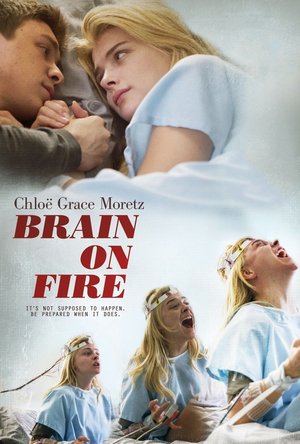
A healthy young woman in her early 20's suddenly and inexplicably withdraws from life. As her personality is destroyed as is much of her life. The illness begins with sensory sensitivity and confusion and ends in catatonia.
When watching it I found myself trying to figure out what exactly what could make someone act like this. Epilepsy, stress, schizophrenia, mental breakdown. The diagnosis was none of these and it reminds the viewer that the brain is a complex and vulnerable entity that could fail in numerous ways.
Brain on Fire (2016)
Movie Watch
Based on the true story of Susannah Cahalan and her book by the same name, this movie follows a 21...


