

Abide - Christian Meditation
Health & Fitness and Medical
App
Abide is the #1 Christian meditation app to bring more peace and less stress into your daily life....

ReMix - Split Screen MultiTasking Multi Window
Social Networking and Music
App
ReMix is finally here on our patent pending platform! Use Social Media, Reddit, Tumblr, Google,...

Dominicana
8.0 Rate It
Book
SHORTLISTED FOR THE WOMEN'S PRIZE FOR FICTION 2020 'A story for now, an important story . . ....
Historical Fiction New York Literary Fiction Adult Fiction The Dominican Republic Coming of Age

Midge (525 KP) rated The Nowhere Child in Books
Mar 11, 2019
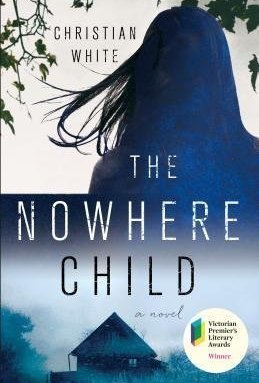

The book opens with an introduction to the main protagonist Kimberly (Kim) Leamy who is a photography teacher in Melbourne, Australia. Twenty-six years earlier, Sammy Went, a two-year-old girl vanished from her home in Manson, Kentucky. James Finn, an American accountant who contacts Kim is convinced she was that child, kidnapped just after her birthday. She cannot believe the woman who raised her crossed international lines to steal a toddler.
Jack and Molly Went’s daughter Sammy disappeared from their Kentucky home in 1990. Already estranged, the couple drifted further apart as time passed. Jack did his best to raise and protect his other daughter and son while Molly found solace in her faith. The Church of the Light Within, a Pentecostal fundamentalist group who handle poisonous snakes as part of their worship, provided that faith.
Now, with proof that she and Sammy are in fact the same person, Kim travels to America to reunite with a family she never knew she had and to solve the mystery of her abduction that will take her deep into the dark heart of religious fanaticism.
For me, Christian White’s writing is captivating and extremely well structured. Although the theme of a child being stolen is not particularly original, the clever telling of this story made it a joy to read. The chapters alternate between the past and the present, maintaining the reader’s attention. The chapters narrated in the past explore the impact of Sammy’s disappearance on her family and the community in which they live. The other chapters follow Kim’s pathway of discovery to the truth about her past.
The most gripping parts of “The Nowhere Child” were the chapters about the past, as the author unearthed long-buried secrets of Kim’s grieving family. It seemed that nearly every character from her past had something they wanted to be kept hidden. Revelations were made that included identity, betrayal, secrets, loss and a sinister cult. A tense story of menace and suspense, the story held my interest from start to finish and the way in which Christian White brought everything to a conclusion was just fabulous.
I loved “The Nowhere Child” and I would recommend it to anyone who likes this genre. It has left me eager to read more from this author in the future.
Thank you to #NetGalley, and HarperCollins UK for a free ARC of #NowhereChild in exchange for a voluntary, honest review.

Night Reader Reviews (683 KP) rated Will Shaksper's Secret in Books
Feb 4, 2020
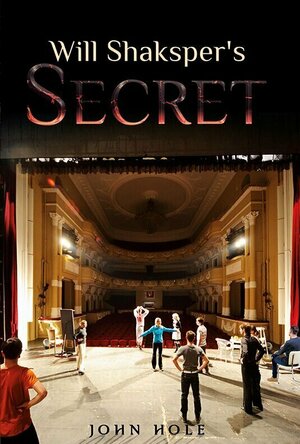

In 1584 John Heminges is dismissed from his job largely due to sleeping with his boss’s wife. During his interactions with her, she robs him, leaving him penniless and alone. It is because of this that he ends up on the outside of a playhouse and saves Henry Condell thus connecting him to the theater. Within the preforming group he meats Christopher Marlowe and Will Shaksper.
As it happens Christopher Marlowe gets into quite a bit of trouble for preaching atheism in a time when the church is struggling to begin with. This results in the threat of execution hanging over him. To protect him from this fate, other performers create a plan to make it appear that Christopher Marlowe is dead, allowing him to disappear. After he has been gone for some time Will Shaksper stars producing some wonder plays of amazing quality but they always come following a visit from a messenger.
The concept of Will Shakespear not actually being the famous playwright that everyone knows him to be is interesting. Also, the circumstances that allowed to trade of writing from Christopher Marlowe to Will Shaksper was strange in a way that makes one question if things could actually have worked out that way. Sadly to say thought the title and description on the back promise an interesting read yet the book fails to deliver. The book itself ended up being very dry and the “blustering, boiserous journey” ended up dragging and slow.
Adults who enjoy Shakspere both in language and historically would be the type of person ideally interested in this book. They dry style and language used best suits this book for those who are true fand of literary classics. Others may attempt to read it but might find the language a bit difficult. I rate this book 1 out of 4. The back of this book promises a much more interesting story than what it actually is. Besides being dry the plot is largely lost among the language. I understand what was being attempted and give the author credit for it, but I believe it largely missed the mark.
https://nightreaderreviews.blogspot.com
https://facebook.com/nightreaderreviews
https://smashbomb.com/nightreader

JT (287 KP) rated Easy A (2010) in Movies
Mar 10, 2020



Olive (Stone) is a well liked pupil at high school, but when a little white lie about losing her virginity gets the rumour mill going she is singled out as, well, quite simply a slut.
Drawing on comparisons to The Scarlet Letter, which happens to be one of the books she is studying she takes it upon herself to brandish her attire with the letter A, for adulterer, as well as using her new found status to milk a little money from desperate males keen to move a level or two up the social ladder.
As Indie films go this does little to highlight those credentials bestowed on other greats such as Clueless or Sixteen Candles
Some have compared this to the best teen comedy since Clueless, well forget it, Director Will Gluck does little to inject this film with any laughs whatsoever, and any dramatic interludes seem bland. If anything the characters are somewhat annoying, ranging from Amanda Bynes’s devout Christian who is not really a good advert for all things religious to Olive’s best bud Rhiannon (Aly Michalka) by far and away one of the worst acting performances I have seen for some time.
Even the inclusion of Friends star (yes she’ll always have that tag) Lisa Kudrow as the school councillor or Thomas Haden Church as her teacher husband do little to offer the overall outcome of the plot. Perhaps one of the few shinning lights are Olive’s parents Dill and Rosemary (aptly named), Stanley Tucci and Patricia Clarkson respectively, whose care free guide to parenting should be noted for today’s modern age.
If Gluck thinks he can walk in the same footsteps of a John Hughes master class he is going to have to come up with something better than this. Hughes himself was the Godfather of the teenage comedy for the likes of The Breakfast Club and not forgetting for a second Ferris Bueller’s Day Off.
Easy A tries to hard to follow in the footsteps of the above and even Olive herself references them during the film, with an ending that hardly screams of originality, unless they are paying homage to 80s teen comedies.
Openly, its not good, confused and lost for long periods Stone does her utmost to pull anything back but it ain’t working for her or Gluck here.

Veronica Pena (690 KP) rated I Still Believe (2020) in Movies
Apr 25, 2020 (Updated Apr 25, 2020)

What annoys me about the critics that watched this film and their reviews is that they're almost surprised that she dies and that it's a Christian film. Like, do you know anything about Jeremy Camp and who he is? He's literally a Christian singer - for a living. I think this is one of those films where the audience is way more insightful than critics. I've said it before and I'll say it again, I feel like it's so easy for critics to critique and not just escape in the film. But I digress.
K.J. Apa and Britt Robinson are forces in this film. I think that they already have long, successful careers in front of them, without a doubt, but when they work together, they make some serious magic. This is their second film together and I could watch them in a million more. Shania Twain was a nice plug. I think sometimes when you put big country stars in films - Trace Adkins, Shania, etc. - it can be kind of overpowering (depending on the film), but she's very understated but memorable. The standout though, to me, other than the leads was Gary Sinise as Jeremy's dad. There's a moment towards the end of the film where he's just overcome and he leans against the wall and there's a picture of K.J. (meant to be Jeremy) under him and it just hits you. I feel like that was his strongest moment and one of the best moments of the film.
Overall, I think this film is really beautiful. I'm sure I'll come back to it a million times more. I definitely recommend watching it, just have tissues.


Shallow Graves: The Hunt for the New Bedford Highway Serial Killer
Book
Eleven women went missing over the spring and summer of 1988 in New Bedford, Massachusetts, an old...
Leading Teams in a Week: Team Leadership in Seven Simple Steps
Book
Leading a team just got easierWe live in a world of teams made up of all kinds of people. We see...
The Trinity: How Not to be a Heretic
Book
"Trinity" is Christianity's most basic description of who God actually is-and who he needs to be in...