
Search
Search results
Hazel (1853 KP) rated The Calling (Endgame #1) in Books
Dec 7, 2018


<i>This eBook was provided by the publisher via NetGalley in exchange for an honest review</i>
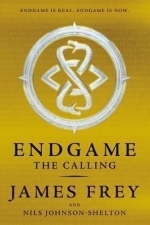
The result of collaboration between James Frey and Nils Johnson-Shelton is this first book in a dystopian series, <i>Endgame: The Calling</i>. Twelve teenage descendants of ancient cultures from across the world have been trained to represent humanity in a game that will determine the future of the world. The only way to win is to discover three keys and be the last player left alive. These young people are not just playing for their own lives for if they die their entire family line will be wiped out.
<i>Endgame: The Calling</i> focuses on discovering the first key, Earth Key. After meeting each other in China, each of the twelve is given a clue to solve that will help lead them in the right direction. Although there can only be one winner, a couple of the player decide to help each other out, but is there really anyone who can be trusted?
<i>Endgame</i> reminds me of <i>The Hunger Games</i> by Suzanne Collins but on a much larger scale, and also a more adult version. The entire planet is the games’ arena, which does not bode well for a lot of the world’s inhabitants. That is one of the things I disliked about this book, the unnecessary deaths of innocents. There was a lot of gruesome murder, which admittedly is the point of <i>Endgame</i>, but some of it was uncalled-for.
I did not particularly care for the writing style and formatting of the text. It was often confusing to work out who was saying or doing what. Another thing I did not like was that there was not an obvious protagonist. It is hard to know whether there is a particular character we should be rooting for or whether they should all be regarded as equal.
For a science fiction, dystopian novel <i>Endgame</i> is an interesting idea, fast paced and full of action. Unfortunately the events, names and puzzles leave the reader feeling bewildered, and the gruesome scenes rather disgusted.
Overall I think this book would appeal to an audience who loves a lot of brutal action and solving things. It requires the reader to be able to think rather than sit back and enjoy. Personally, I am not bothered about reading the next in the series.
The result of collaboration between James Frey and Nils Johnson-Shelton is this first book in a dystopian series, <i>Endgame: The Calling</i>. Twelve teenage descendants of ancient cultures from across the world have been trained to represent humanity in a game that will determine the future of the world. The only way to win is to discover three keys and be the last player left alive. These young people are not just playing for their own lives for if they die their entire family line will be wiped out.
<i>Endgame: The Calling</i> focuses on discovering the first key, Earth Key. After meeting each other in China, each of the twelve is given a clue to solve that will help lead them in the right direction. Although there can only be one winner, a couple of the player decide to help each other out, but is there really anyone who can be trusted?
<i>Endgame</i> reminds me of <i>The Hunger Games</i> by Suzanne Collins but on a much larger scale, and also a more adult version. The entire planet is the games’ arena, which does not bode well for a lot of the world’s inhabitants. That is one of the things I disliked about this book, the unnecessary deaths of innocents. There was a lot of gruesome murder, which admittedly is the point of <i>Endgame</i>, but some of it was uncalled-for.
I did not particularly care for the writing style and formatting of the text. It was often confusing to work out who was saying or doing what. Another thing I did not like was that there was not an obvious protagonist. It is hard to know whether there is a particular character we should be rooting for or whether they should all be regarded as equal.
For a science fiction, dystopian novel <i>Endgame</i> is an interesting idea, fast paced and full of action. Unfortunately the events, names and puzzles leave the reader feeling bewildered, and the gruesome scenes rather disgusted.
Overall I think this book would appeal to an audience who loves a lot of brutal action and solving things. It requires the reader to be able to think rather than sit back and enjoy. Personally, I am not bothered about reading the next in the series.
Debbiereadsbook (1811 KP) rated Edge Jump in Books
Jul 22, 2018


kinda creeps up on ya!
Independent reviewer for Divine Magazine, I was gifted my copy of this book direct from the author, that I write a review was not required.
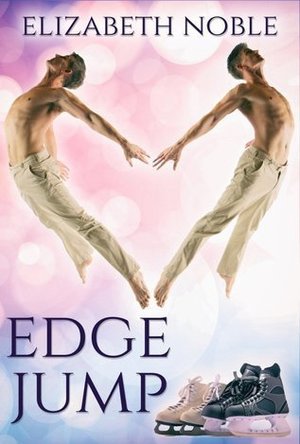
Brett retired from professional ice hokey and now runs the centre his parents set up, to teach. His sister, Celia and her partner, Rylan, has moved onto ice dancing. But a senseless crime takes Celia away from both Brett and Rylan, and brings them both together at their darkest time. Then Rylan is hit with a far worse tragedy. Can they get through this, together?
You know, sometimes, you read a blurb, and your brain plots away, and that's what you expect from the book?? Then the book actually goes off in a way you did not see coming?? And you loved it for it??
This book, right here!
I have NO idea what I thought would happen here, but I was very surprised with it! It really did kinda-creep-up-on-me!!
Brett and Rylan have chemistry, right from the start. But Brett keeps himself back a bit, and it pulls at you, the way Rylan reacts to that. There is a lot of pulling on the heart strings here! I loved the way Brett gradually introduced Rylan to BDSM, and that Rylan took to it, like a duck to water. I didn't think it overly explicit though and I LIKED that here, but that might just be me!
I did not get how Celia and her fiance's deaths would play out. Did NOT see that one coming at me, not at all!
Rylan's recovery from what happened is long and painful, but you feel it **taps chest* right here. Every time his brain threw self doubt at him. Every time Brett pulled him out of it, and you cheer, when he finally is able to get back on the ice. And when Rylan listens to Brett when he says "I'm not going anywhere!"
I've read a couple of other books by Ms Noble, and I do like how she can switch from paranormal, to contemporary, to more sexy books. High skill of an author, I think!
It crept up on, this book, it really did!
4.5 stars
**same worded review will appear elsewhere**
Brett retired from professional ice hokey and now runs the centre his parents set up, to teach. His sister, Celia and her partner, Rylan, has moved onto ice dancing. But a senseless crime takes Celia away from both Brett and Rylan, and brings them both together at their darkest time. Then Rylan is hit with a far worse tragedy. Can they get through this, together?
You know, sometimes, you read a blurb, and your brain plots away, and that's what you expect from the book?? Then the book actually goes off in a way you did not see coming?? And you loved it for it??
This book, right here!
I have NO idea what I thought would happen here, but I was very surprised with it! It really did kinda-creep-up-on-me!!
Brett and Rylan have chemistry, right from the start. But Brett keeps himself back a bit, and it pulls at you, the way Rylan reacts to that. There is a lot of pulling on the heart strings here! I loved the way Brett gradually introduced Rylan to BDSM, and that Rylan took to it, like a duck to water. I didn't think it overly explicit though and I LIKED that here, but that might just be me!
I did not get how Celia and her fiance's deaths would play out. Did NOT see that one coming at me, not at all!
Rylan's recovery from what happened is long and painful, but you feel it **taps chest* right here. Every time his brain threw self doubt at him. Every time Brett pulled him out of it, and you cheer, when he finally is able to get back on the ice. And when Rylan listens to Brett when he says "I'm not going anywhere!"
I've read a couple of other books by Ms Noble, and I do like how she can switch from paranormal, to contemporary, to more sexy books. High skill of an author, I think!
It crept up on, this book, it really did!
4.5 stars
**same worded review will appear elsewhere**

LilyLovesIndie (123 KP) rated The Assassin's Mark in Books
Nov 5, 2018
Firstly I must thank Ebsworth not only for providing a complimentary copy of this book in return for an honest review, but also for having immense patience in waiting for me to provide him with that review. I must also point out how much I have enjoyed reading this book, even if I did struggle to get into the book at first.
There are several aspects which I feel to be major strengths in this book, particularly the characterisation. The assembled cast of characters are all extravagantly wonderful in their own ways, working well together and being entirely believable in the context of the text. In addition, it is worth commenting that they work as well individually as they do collectively, a great testament to Ebsworth's writing style. Jack Telford, as the main character, is a wonderful example of manhood and his cynicism in the tour breathes a breath of fresh air, prompting much thought by the reader on the matters discussed.
A further strength of this book is it's intricate and well developed plot. It is brilliantly put together, with mystery and thought provoking elements all combined with some humour and great history. I can't compliment enough the many well written twists and turns in this novel, whether it's sudden and unexpected deaths or mysterious figures appearing at odd intervals, there's always something that keeps the reader on the edge of their seats and thinking of what could be happening behind closed doors. It's a fantastic read for making you think about what you are reading, however, this is an occasional downside as it makes it a difficult book to read when you only have a few minutes spare.
Perhaps, for me, the best aspect of this book is the detailed research that shines through on every page. It is evident, even to someone with a limited knowledge of the Spanish Civil War, that there is much to learn in this book and that it has been incredibly well researched. Clearly, Ebsworth put much time into his research, and to his credit, as it adds an extra dimension to this story.
Finally, there is little else for me to say other than to recommend this book to all who enjoy history, a good mystery and a strong leading character.
There are several aspects which I feel to be major strengths in this book, particularly the characterisation. The assembled cast of characters are all extravagantly wonderful in their own ways, working well together and being entirely believable in the context of the text. In addition, it is worth commenting that they work as well individually as they do collectively, a great testament to Ebsworth's writing style. Jack Telford, as the main character, is a wonderful example of manhood and his cynicism in the tour breathes a breath of fresh air, prompting much thought by the reader on the matters discussed.
A further strength of this book is it's intricate and well developed plot. It is brilliantly put together, with mystery and thought provoking elements all combined with some humour and great history. I can't compliment enough the many well written twists and turns in this novel, whether it's sudden and unexpected deaths or mysterious figures appearing at odd intervals, there's always something that keeps the reader on the edge of their seats and thinking of what could be happening behind closed doors. It's a fantastic read for making you think about what you are reading, however, this is an occasional downside as it makes it a difficult book to read when you only have a few minutes spare.
Perhaps, for me, the best aspect of this book is the detailed research that shines through on every page. It is evident, even to someone with a limited knowledge of the Spanish Civil War, that there is much to learn in this book and that it has been incredibly well researched. Clearly, Ebsworth put much time into his research, and to his credit, as it adds an extra dimension to this story.
Finally, there is little else for me to say other than to recommend this book to all who enjoy history, a good mystery and a strong leading character.

Goddess in the Stacks (553 KP) rated Anna Dressed in Blood (Anna, #1) in Books
Oct 28, 2019
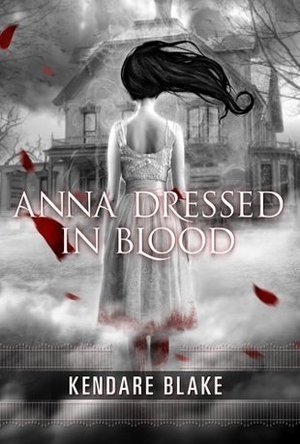
Another spooky story for October! On first glance, this one is very similar to Rin Chupeco's The Girl From The Well, but the plot is actually quite different. It's still human boy, murderous ghost girl, but here the girl is bound to her house and forced to murder whoever comes inside. Unraveling the WHY is a major part of the plot.
I'd say this one is actually less creepy than The Girl From The Well, though one of the evil things Cas encounters is VERY creepy. Both of these were just about the right amount of spooky for me. I'm actually REALLY disappointed that the sequel is proving very difficult to get my hands on! I had to request it through Marina, my statewide lending program, so I'm not sure when it will arrive. But I NEEEEEEED to know what happens to Cas and Anna after this book ends!
I think I liked the relationship between boy and ghost better in Girl From The Well; you could clearly see the draw for the ghost, and the connection between them. Not so much here; Cas is trying to kill Anna, but then they become fascinated with each other for...some reason? Anna isn't compelled to kill Cas, and that's never explained, and seems to be her main source of fascination with the boy.
Another major difference is that while Tark in Girl From The Well is rather isolationist and creeps out his peers, Cas seems to attract his peers, and quickly finds friends wherever he goes. He's typically used them as contacts in the past, not really valuing them as friends, but that changes with the events of this book, as he actually comes to know a couple of the kids at his new school and value their friendship. He even puts up with their jokes about being Ghostbusters and who would be which character, which is kind of hilarious.
Both stories are great; I'd say this one is slightly more light-hearted than Girl From The Well, but only slightly. There's still lots of creepy ghosts, life-or-death situations, gory deaths of side characters, and curses. It's another great spooky October book for scaredy-cats like me!
You can find all my reviews and more at http://goddessinthestacks.com
I'd say this one is actually less creepy than The Girl From The Well, though one of the evil things Cas encounters is VERY creepy. Both of these were just about the right amount of spooky for me. I'm actually REALLY disappointed that the sequel is proving very difficult to get my hands on! I had to request it through Marina, my statewide lending program, so I'm not sure when it will arrive. But I NEEEEEEED to know what happens to Cas and Anna after this book ends!
I think I liked the relationship between boy and ghost better in Girl From The Well; you could clearly see the draw for the ghost, and the connection between them. Not so much here; Cas is trying to kill Anna, but then they become fascinated with each other for...some reason? Anna isn't compelled to kill Cas, and that's never explained, and seems to be her main source of fascination with the boy.
Another major difference is that while Tark in Girl From The Well is rather isolationist and creeps out his peers, Cas seems to attract his peers, and quickly finds friends wherever he goes. He's typically used them as contacts in the past, not really valuing them as friends, but that changes with the events of this book, as he actually comes to know a couple of the kids at his new school and value their friendship. He even puts up with their jokes about being Ghostbusters and who would be which character, which is kind of hilarious.
Both stories are great; I'd say this one is slightly more light-hearted than Girl From The Well, but only slightly. There's still lots of creepy ghosts, life-or-death situations, gory deaths of side characters, and curses. It's another great spooky October book for scaredy-cats like me!
You can find all my reviews and more at http://goddessinthestacks.com
The Grimaldis of Monaco: Centuries of Scandal, Years of Grace
Book
The Grimaldis of Monaco tells in full the remarkable history of the world's oldest reigning dynasty....

Narcoland: The Mexican Drug Lords and Their Godfathers
Roberto Saviano and Anabel Hernandez
Book
Narcoland describes a disastrous 'war on drugs' that has led to more than 80,000 deaths in half a...
Angel of Oblivion
Book
Haderlap is an accomplished poet, and that lyricism leaves clear traces on this ravishing debut,...
Leanne Crabtree (480 KP) rated The Darkest Torment (Lords of the Underworld #12) in Books
Jan 6, 2021
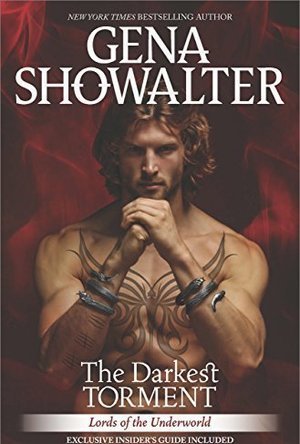
I wasn't expecting Baden's story to be next. I assumed it would be William, the Ever Randy, or Cameo with Lazarus since both of their stories have been progressing in the background of previous books. So I'll admit my interest wasn't all that captured by his story. I started this some time in June and picked it back up after a lengthy break in September.
If I remember correctly this starts with Baden in a bad mood, not knowing how to cope with the new beats inside him and needing a way to relax so William hires some female company for the night. Only they are assassins sent to kill him and he finds himself in the middle of a war between Lucifer and Hades. As one of Hades' assassins, thanks to the wreaths, he now finds himself - along with Pandora - on missions to earn points to see which of them will be given their life back. One mission takes him back to Budapest and straight into the middle of a wedding ceremony between his target and Katarina, who is being forced into the marriage to save her loved ones.
As mentioned above, I wasn't really craving this book when I realised it was Baden's story and not one of the others but after the month break reading other things, I have to say that I quickly got sucked back into the story. I grew to like Baden a lot. He got good at dealing with all the crap that Hades threw at and asked of him. Katarina was a little harder for me to like. She did kind of treat him like she would her dogs but I do get that the beast that occasionally took over Baden was rather animal like.
I loved seeing this group of friends and warriors again. They're an eclectic bunch but will protect each other to their deaths.
This one has set us up for Gilly and Puck's story - a way out of left field decision from the author after making us want Gilly and William for the past ten books or so. And also Cameo and Lazarus which has been brewing since the previous book - and coincidentally the next in the series.
P.S. I loved the reference to Immortals After Dark by Kresley Cole. Keeley, I love that series, too!
If I remember correctly this starts with Baden in a bad mood, not knowing how to cope with the new beats inside him and needing a way to relax so William hires some female company for the night. Only they are assassins sent to kill him and he finds himself in the middle of a war between Lucifer and Hades. As one of Hades' assassins, thanks to the wreaths, he now finds himself - along with Pandora - on missions to earn points to see which of them will be given their life back. One mission takes him back to Budapest and straight into the middle of a wedding ceremony between his target and Katarina, who is being forced into the marriage to save her loved ones.
As mentioned above, I wasn't really craving this book when I realised it was Baden's story and not one of the others but after the month break reading other things, I have to say that I quickly got sucked back into the story. I grew to like Baden a lot. He got good at dealing with all the crap that Hades threw at and asked of him. Katarina was a little harder for me to like. She did kind of treat him like she would her dogs but I do get that the beast that occasionally took over Baden was rather animal like.
I loved seeing this group of friends and warriors again. They're an eclectic bunch but will protect each other to their deaths.
This one has set us up for Gilly and Puck's story - a way out of left field decision from the author after making us want Gilly and William for the past ten books or so. And also Cameo and Lazarus which has been brewing since the previous book - and coincidentally the next in the series.
P.S. I loved the reference to Immortals After Dark by Kresley Cole. Keeley, I love that series, too!

LeftSideCut (3776 KP) rated Mortal Kombat (2021) in Movies
May 7, 2021

Contains spoilers, click to show
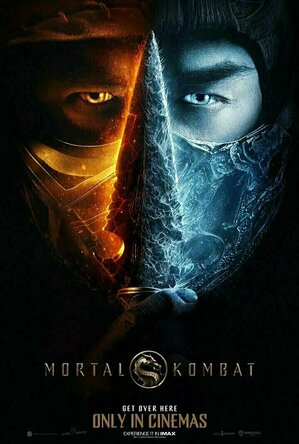
After all the hype I tried desperately hard not to buy into, Mortal Kombat turned out to be exactly what I expected...
The whole film suffers from an excruciatingly piss poor script (with the exception of Kano's anal bead comment at Lui Kang of course). Every character gets to announce their name unnecessarily at every opportunity, phrases from the game are shouted when the they don't really make sense in the moment, and the narrative is just about held together by bizarre edits and cuts. I can only assume that anyone not familiar with the source material may have a few issues following what the fuck is going on at certain points, even when the pacing takes a hard dip around the mid point.
Having Cole (a non-game character written for the movie) as the main lead is a shot in the foot - the character himself isn't unlikable by any stretch, but he's a little bland, and his inclusion means that a lot of familiar characters are sort of pushed to the side, and moulded around his story. Without naming names, unless they do some ret-conning in the inevitable sequels, I take issues with a few big characters being killed off so early in a proposed franchise. If these deaths stick, then there's some seriously wasted content being thrown away.
All of these negatives however are surrounded by a number of positives. For the most part, the fight scenes are entertaining enough, but the climactic duels are pretty damn awesome. The action is complimented with decent CG work (I kind of miss weird-puppet Goro but he did look pretty great in this one).
The gory moments are pretty full on as they should be and the cast are pretty solid. Some great turns from Hiroyuki Sanada, Max Huang, and Josh Lawson in particular. The film manages to pack in a tonne of references to the wider MK lore as well which is a nice touch for fans.
Overall, Mortal Kombat is dumb and trashy, but manages to be a whole heap of fun with some spectacular violence to boot. It might not be the best video game adaption out there, but it's a far cry from being a bad one.
Between this, Sonic, and Detective Pikachu, I truly, and possibly naively, hope that the era of shit video game films has passed - all eyes on Uncharted to carry on the trend.
The whole film suffers from an excruciatingly piss poor script (with the exception of Kano's anal bead comment at Lui Kang of course). Every character gets to announce their name unnecessarily at every opportunity, phrases from the game are shouted when the they don't really make sense in the moment, and the narrative is just about held together by bizarre edits and cuts. I can only assume that anyone not familiar with the source material may have a few issues following what the fuck is going on at certain points, even when the pacing takes a hard dip around the mid point.
Having Cole (a non-game character written for the movie) as the main lead is a shot in the foot - the character himself isn't unlikable by any stretch, but he's a little bland, and his inclusion means that a lot of familiar characters are sort of pushed to the side, and moulded around his story. Without naming names, unless they do some ret-conning in the inevitable sequels, I take issues with a few big characters being killed off so early in a proposed franchise. If these deaths stick, then there's some seriously wasted content being thrown away.
All of these negatives however are surrounded by a number of positives. For the most part, the fight scenes are entertaining enough, but the climactic duels are pretty damn awesome. The action is complimented with decent CG work (I kind of miss weird-puppet Goro but he did look pretty great in this one).
The gory moments are pretty full on as they should be and the cast are pretty solid. Some great turns from Hiroyuki Sanada, Max Huang, and Josh Lawson in particular. The film manages to pack in a tonne of references to the wider MK lore as well which is a nice touch for fans.
Overall, Mortal Kombat is dumb and trashy, but manages to be a whole heap of fun with some spectacular violence to boot. It might not be the best video game adaption out there, but it's a far cry from being a bad one.
Between this, Sonic, and Detective Pikachu, I truly, and possibly naively, hope that the era of shit video game films has passed - all eyes on Uncharted to carry on the trend.
Kristina (502 KP) rated Lux (The Nocte Trilogy, #3) in Books
Dec 7, 2020
Contains spoilers, click to show
Mind. Blown.
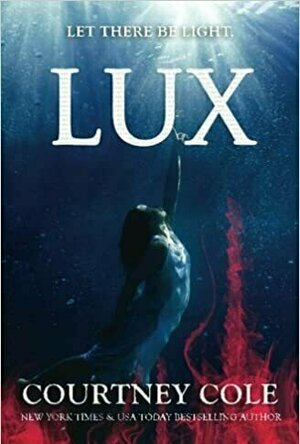
What the holy crap did I just read? I'm completely satisfied, yet my mind is still reeling from all the unexpected twists and turns I just experienced. Seriously, what just happened? Cole literally said the ending can be interpreted how the readers wants and I have my interpretation (though I would never attribute it to real life; I'm really good at suspending my beliefs for a good story). The whole family was cursed. They continued to multiply with one another, creating children out of incest, therefore the curse never ended. If Laura hadn't been with Richard, I feel like the curse would have ended. Or maybe not. Either way, I want to believe that Dare, Calla, and Finn went round and round in an endless cycle, one that changed ever so slightly every now and then, until they finally made the decision that put everything into balance. I loved the ending, though there was a dark time when I would have accepted anyone's deaths other than Calla's and Dare's. I've given Lux a 4.5 out of 5 stars. It would originally be 5 out of 5, because the story is absolutely crazy and the author is a complete lunatic - in all the best ways. I understand that she chose to rewrite certain scenes from both Nocte and Verum to show that moments kept repeating themselves, even if there were slight changes. It was just hard to concentrate, considering I'd already read those scenes just before this book. I think I would have enjoyed those parts better had she tried to word them differently or focused on a different aspect while playing out the same scenario. Other than that, Lux was a continuous whirlwind of confusion. Cole was great at allowing the reader to see the finish line, to get close enough to taste it, only to pull the rug out from underneath us and make us start the marathon again. It was exciting, intimidating, daunting, and fun. There were so many ways Lux could have ended and all of them probably would have matched up with the plot of the entire series, but I'm very happy with the ending she offered - even if I was a little upset to say goodbye to Calla and Dare.
What the holy crap did I just read? I'm completely satisfied, yet my mind is still reeling from all the unexpected twists and turns I just experienced. Seriously, what just happened? Cole literally said the ending can be interpreted how the readers wants and I have my interpretation (though I would never attribute it to real life; I'm really good at suspending my beliefs for a good story). The whole family was cursed. They continued to multiply with one another, creating children out of incest, therefore the curse never ended. If Laura hadn't been with Richard, I feel like the curse would have ended. Or maybe not. Either way, I want to believe that Dare, Calla, and Finn went round and round in an endless cycle, one that changed ever so slightly every now and then, until they finally made the decision that put everything into balance. I loved the ending, though there was a dark time when I would have accepted anyone's deaths other than Calla's and Dare's. I've given Lux a 4.5 out of 5 stars. It would originally be 5 out of 5, because the story is absolutely crazy and the author is a complete lunatic - in all the best ways. I understand that she chose to rewrite certain scenes from both Nocte and Verum to show that moments kept repeating themselves, even if there were slight changes. It was just hard to concentrate, considering I'd already read those scenes just before this book. I think I would have enjoyed those parts better had she tried to word them differently or focused on a different aspect while playing out the same scenario. Other than that, Lux was a continuous whirlwind of confusion. Cole was great at allowing the reader to see the finish line, to get close enough to taste it, only to pull the rug out from underneath us and make us start the marathon again. It was exciting, intimidating, daunting, and fun. There were so many ways Lux could have ended and all of them probably would have matched up with the plot of the entire series, but I'm very happy with the ending she offered - even if I was a little upset to say goodbye to Calla and Dare.