
Search
Search results

iTheorie Auto Theorieprüfung Premium Schweiz asa
Education and Games
App
THE BEST-SELLING AUTOMOBILE THEORY APP IN APP STORE Contains all the official asa questions of 2017....

Newchic – Online Fashion Shop
Shopping and Lifestyle
App
Discover latest fashion trend online, get chic on your life, Newchic App offers over 10 thousand...

Taryn K (444 KP) rated Otherworldly Izakaya Nobu Volume 2 (manga) in Books
May 15, 2022 (Updated May 15, 2022)


The characters are well written (1 more)
The world is beginning to expand.
Another quiet slice-of-life night at Izakaya Nobu
Much like volume 1, volume 2 of Otherworldly Izakaya Nobu takes us to the pub that sits between modern Japan and the rather medieval city of Aitheria. Again, we have Japanese, German, and English food terms going on, which keeps life interesting, but the explanations are handy, so there is minimal chance of confusion.
The book starts off with one of the soldiers from volume 1, Hans, stopping by the pub after training only to find out it's 'Kisu Day'. Hans is surprised to see Chef Nobu deep frying the tempura-battered fish and putting it on paper, which is a very expensive commodity in Aitheria. The little details really make this series special, I think.
In chapter 2, "Thief", we meet a new helper, a young girl trying to help out her family, named Effa. There is a bit of confusion, but we get to meet the new deacon in town, who has already become a regular.
Chapter 3, "An Uninvited Guest", Chef Nobu learns a 'new' recipe, and we are reminded that Shinobu can cook as well. A pompous little man and his gourmet aristocrat boss stop by in search of the Ankake Yudofu that pleased the bride-to-be in volume 1, as she praised it at her wedding. Each chapter builds ties to other people or builds ties between Shinobu/Chef and the regulars, which Is another thing I love. Ankake Yudofu is out of season, as it is no longer winter, so schnitzel is apparently just the ticket, if Chef just knew what it is.
Chapter 4, "Quarreling Craftsmen", sees two new characters introduced. Holga, a glassmaker who heard about Izakaya Nobu from the tax collector Gehrnot, who enjoyed the 'Spaghetti Napolitan' in volume 1, and Han's father, a woodworker named Laurenz. They spend most of the chapter arguing and trying each other's dishes, but it is a friendly rivalry that gets settled down by a surprising person.
Chapter 5, "The Commander's Weakness", is hilarious due to more puns on squid than I ever thought could be made, but Commander Bertholdt has to conquer his fear of squid before his arranged marriage to the daughter of a fisherman. Such a good chapter. One of my favorites. "He squidn't!"
Chapter 6, "Effa in Wonderland", sees Effa going through the back door of the pub into modern Japan. Not much cooking in this chapter, but we find out a little more about how the pub ended up being in two places at once. Thankfully, she gets back to Aitheria safe and sound.
I'm not completely sure about this being a review as much as a rundown of what happens. It's just a feel-good series, with just a hair of drama, but nothing that can't be resolved in a chapter or perhaps two. The characters are likeable, for the most part, and those who aren't are meant to be unlikeable. The interpersonal relationships are fun to see revealed. Definitely a good pre-bed book. 😊
The book starts off with one of the soldiers from volume 1, Hans, stopping by the pub after training only to find out it's 'Kisu Day'. Hans is surprised to see Chef Nobu deep frying the tempura-battered fish and putting it on paper, which is a very expensive commodity in Aitheria. The little details really make this series special, I think.
In chapter 2, "Thief", we meet a new helper, a young girl trying to help out her family, named Effa. There is a bit of confusion, but we get to meet the new deacon in town, who has already become a regular.
Chapter 3, "An Uninvited Guest", Chef Nobu learns a 'new' recipe, and we are reminded that Shinobu can cook as well. A pompous little man and his gourmet aristocrat boss stop by in search of the Ankake Yudofu that pleased the bride-to-be in volume 1, as she praised it at her wedding. Each chapter builds ties to other people or builds ties between Shinobu/Chef and the regulars, which Is another thing I love. Ankake Yudofu is out of season, as it is no longer winter, so schnitzel is apparently just the ticket, if Chef just knew what it is.
Chapter 4, "Quarreling Craftsmen", sees two new characters introduced. Holga, a glassmaker who heard about Izakaya Nobu from the tax collector Gehrnot, who enjoyed the 'Spaghetti Napolitan' in volume 1, and Han's father, a woodworker named Laurenz. They spend most of the chapter arguing and trying each other's dishes, but it is a friendly rivalry that gets settled down by a surprising person.
Chapter 5, "The Commander's Weakness", is hilarious due to more puns on squid than I ever thought could be made, but Commander Bertholdt has to conquer his fear of squid before his arranged marriage to the daughter of a fisherman. Such a good chapter. One of my favorites. "He squidn't!"
Chapter 6, "Effa in Wonderland", sees Effa going through the back door of the pub into modern Japan. Not much cooking in this chapter, but we find out a little more about how the pub ended up being in two places at once. Thankfully, she gets back to Aitheria safe and sound.
I'm not completely sure about this being a review as much as a rundown of what happens. It's just a feel-good series, with just a hair of drama, but nothing that can't be resolved in a chapter or perhaps two. The characters are likeable, for the most part, and those who aren't are meant to be unlikeable. The interpersonal relationships are fun to see revealed. Definitely a good pre-bed book. 😊

Emma @ The Movies (1786 KP) rated 1917 (2020) in Movies
Jan 22, 2020
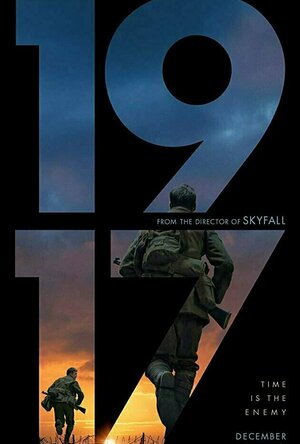

It has felt like a long wait to get to this film, there was a lot of talk when Midway was coming out so I was very glad it finally arrived.
Lance Corporal Blake has been told to report with another soldier, the respite from war was short but something important must be afoot. It's more than just important, it's life and death for Blake's older brother. His company have sent word that they're going to advance on the retreating German troops but communications are down and they don't know they're going headfirst into a trap.
Blake and Schofield are tasked with finding a way to their position to stop the advance before they lead 1,600 men into the ambush. Between them and their objective? No man's land, abandoned German trenches and large expanses of open land. One another and vigilance are all they have to get them to their objective.
I ended up seeing this twice on its opening weekend, mainly for technical reasons. When I completed my first watch I saw a lot of tweets about its "one-shot" filming and details of an interview about the filming techniques used, that all made me want to go back and watch for more detail.
If I'm honest with you I didn't notice the "one-shot" filming during my first trip to the cinema. In the interview I saw it said that there were no takes longer than 9 minutes, with its running time that meant that at the very least there were 14 cuts... of course I wanted to go and try to spot them. There were only a few "obvious" ones, but even then some of those felt so seamless that you wouldn't question if they said it was done in one (two) shot(s).
The effects in the film are fantastic, but also one of my only quibbles. There are several video clips with and without effects on floating around the internet and you'll see the massive effort that went into these effects. The major scene that comes to mind is in the trailer, Schofield is running across the field as the regiment is advancing around him. I had just assumed that the shot was aerial, but no, it was filmed from the back of a truck. That doesn't sound all that strange until you see in this video that the truck has a road to drive down that is then CGId out for the final cut. That was incredible to see. But this scene is also the only scene that made me doubt the effects too. When I watched it on the big screen it felt clear that some of the explosions were generated, and watching the clips proved that feeling to be right.
I could ramble on about the effects in this for ages but I need to remember there are other things to talk about... but well, I want to rave a little.
The nighttime scene is truly incredible to watch. It makes you paranoid and scared, you watch the shadows for soldiers and survivors, ugh, gripping and terrifying all at the same time.
Right, come one... move along, Emma!
Not much of a switch but I want to mention what I believe are mainly physical effects. One of the first scenes shows Blake and Schofield going through the trenches and over no man's land, walking through the trenches takes a long time, the fact they dug all of that and decked out the entire length for what is sometimes just a fleeting view. The soldiers as they sleep against the walls blending in like they're not there, the claustrophobic feeling as they walls creep higher and closer around them, and just the sheer volume of people down there. Both fast-paced and drawn out at the same time this whole sequence is complex and important.
After the trenches we see them go over the top into no man's land. The pair of them make an amazing job of playing in the mud. It's another part of the film that makes you look around. What's floating in the water? What's hidden in the mud? Truly spectacular additions and I imagine that on every viewing you'd see something different and horrific appear.
Come on, Emma... acting.
There are a lot of cameos from recognisable talented actors but the nature of the story means they're only the briefest of scenes. Mark Strong was probably my favourite of those, his tone at that critical part of the film was perfect.
To our main duo... Blake is played by Dean-Charles Chapman, a face I recognised but had to look up. I'd seen him most recently in The King and Blinded By The Light but clearly neither of those roles stuck with me. Schofield is played by George MacKay who I haven't seen in anything before. The pair had an interesting dynamic, there was certainly a camaraderie there but I swung between thinking they were good friends and just acquaintances because of their behaviour towards each other. Their characters felt very much at two ends of the scale, Blake optimistic and almost a little green, Schofield, battle-worn and sceptical.
Between the two I can easily say that George MacKay was the better performer. He does get some of the headier scenes to deal with but Chapman felt like he wasn't in a warzone. There were still good moments there but I wasn't as convinced by his performance. MacKay was acting even when he wasn't acting, his moments of silence were just as impressive as his scripted parts.
There is just so much in 1917 to look at, the background is so well thought out that you're drawn to it just as much as the action that's in the foreground. You're scanning everything as they move with them like you're a member of their regiment. It feels like it needs to be watched a couple of times. I watched it to see it, I watched it to watch the techniques and I feel like I want to see it again just to watch that background. None of these watches are for anything other than the technical side of things though. Even though I felt emotional connections with parts of the story it's still a basic quest with obstacles and while it's an interesting look at soldiers and their dedication it's not all that extraordinary.
This truly deserves to win a lot of technical awards. I'm not sure that the acting or script hit the same heights, but as a whole 1917 is definitely something special to see.
Originally posted on: https://emmaatthemovies.blogspot.com/2020/01/1917-movie-review.html
Lance Corporal Blake has been told to report with another soldier, the respite from war was short but something important must be afoot. It's more than just important, it's life and death for Blake's older brother. His company have sent word that they're going to advance on the retreating German troops but communications are down and they don't know they're going headfirst into a trap.
Blake and Schofield are tasked with finding a way to their position to stop the advance before they lead 1,600 men into the ambush. Between them and their objective? No man's land, abandoned German trenches and large expanses of open land. One another and vigilance are all they have to get them to their objective.
I ended up seeing this twice on its opening weekend, mainly for technical reasons. When I completed my first watch I saw a lot of tweets about its "one-shot" filming and details of an interview about the filming techniques used, that all made me want to go back and watch for more detail.
If I'm honest with you I didn't notice the "one-shot" filming during my first trip to the cinema. In the interview I saw it said that there were no takes longer than 9 minutes, with its running time that meant that at the very least there were 14 cuts... of course I wanted to go and try to spot them. There were only a few "obvious" ones, but even then some of those felt so seamless that you wouldn't question if they said it was done in one (two) shot(s).
The effects in the film are fantastic, but also one of my only quibbles. There are several video clips with and without effects on floating around the internet and you'll see the massive effort that went into these effects. The major scene that comes to mind is in the trailer, Schofield is running across the field as the regiment is advancing around him. I had just assumed that the shot was aerial, but no, it was filmed from the back of a truck. That doesn't sound all that strange until you see in this video that the truck has a road to drive down that is then CGId out for the final cut. That was incredible to see. But this scene is also the only scene that made me doubt the effects too. When I watched it on the big screen it felt clear that some of the explosions were generated, and watching the clips proved that feeling to be right.
I could ramble on about the effects in this for ages but I need to remember there are other things to talk about... but well, I want to rave a little.
The nighttime scene is truly incredible to watch. It makes you paranoid and scared, you watch the shadows for soldiers and survivors, ugh, gripping and terrifying all at the same time.
Right, come one... move along, Emma!
Not much of a switch but I want to mention what I believe are mainly physical effects. One of the first scenes shows Blake and Schofield going through the trenches and over no man's land, walking through the trenches takes a long time, the fact they dug all of that and decked out the entire length for what is sometimes just a fleeting view. The soldiers as they sleep against the walls blending in like they're not there, the claustrophobic feeling as they walls creep higher and closer around them, and just the sheer volume of people down there. Both fast-paced and drawn out at the same time this whole sequence is complex and important.
After the trenches we see them go over the top into no man's land. The pair of them make an amazing job of playing in the mud. It's another part of the film that makes you look around. What's floating in the water? What's hidden in the mud? Truly spectacular additions and I imagine that on every viewing you'd see something different and horrific appear.
Come on, Emma... acting.
There are a lot of cameos from recognisable talented actors but the nature of the story means they're only the briefest of scenes. Mark Strong was probably my favourite of those, his tone at that critical part of the film was perfect.
To our main duo... Blake is played by Dean-Charles Chapman, a face I recognised but had to look up. I'd seen him most recently in The King and Blinded By The Light but clearly neither of those roles stuck with me. Schofield is played by George MacKay who I haven't seen in anything before. The pair had an interesting dynamic, there was certainly a camaraderie there but I swung between thinking they were good friends and just acquaintances because of their behaviour towards each other. Their characters felt very much at two ends of the scale, Blake optimistic and almost a little green, Schofield, battle-worn and sceptical.
Between the two I can easily say that George MacKay was the better performer. He does get some of the headier scenes to deal with but Chapman felt like he wasn't in a warzone. There were still good moments there but I wasn't as convinced by his performance. MacKay was acting even when he wasn't acting, his moments of silence were just as impressive as his scripted parts.
There is just so much in 1917 to look at, the background is so well thought out that you're drawn to it just as much as the action that's in the foreground. You're scanning everything as they move with them like you're a member of their regiment. It feels like it needs to be watched a couple of times. I watched it to see it, I watched it to watch the techniques and I feel like I want to see it again just to watch that background. None of these watches are for anything other than the technical side of things though. Even though I felt emotional connections with parts of the story it's still a basic quest with obstacles and while it's an interesting look at soldiers and their dedication it's not all that extraordinary.
This truly deserves to win a lot of technical awards. I'm not sure that the acting or script hit the same heights, but as a whole 1917 is definitely something special to see.
Originally posted on: https://emmaatthemovies.blogspot.com/2020/01/1917-movie-review.html

Bob Mann (459 KP) rated Wonder Woman (2017) in Movies
Sep 29, 2021
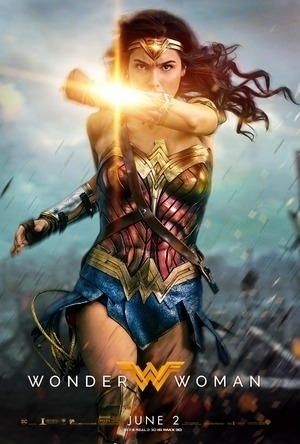
“What first attracted you Dr Mann to the movie with the scantily-clad Amazonians?”
Amazonians deliver! And how. The much anticipated new Wonder Woman movie is with us, and for once the film lives up to the wall-to-wall marketing hype.
With a heavy dose of mythology, Diana is growing up as the cossetted daughter of Hippolyta (Connie Nielsen, “Gladiator”), the Queen of the Amazons, on the hidden paradise island of Themyscira. Trained up as a warrior by Hippolyta’s sister, General Antiope (Robin Wright of “House of Cards”), Diana is clearly something special. Her ego is reinforced by the knowledge that she was made of clay with life breathed into her by the God Zeus. It’s enough to turn a girl’s head!
It’s 1917 and the man-free paradise is shaken up when an American spy by the name of Steve Trevor (Chris Pine, “Star Trek: Beyond“) crash-lands in the waters off Themyscira. (And yes… you didn’t mishear me… this film genuinely features a hero with both the names “Steve” and ‘Trevor”). Prince Eric – no, sorry, wrong film – is saved and awakened on the beach by Diana as the others arrive. “Thank God!”, say the Amazonians. “At last, someone to process the 200 year backlog of washing and ironing”!
But Steve (an “above average specimen”, LOL) is not long for paradise as he needs to return to the war with the results of his spy-work: a chemistry book stolen from the gorgeously deformed Dr Maru (Elena Anaya), gas-developer for the evil General Ludendorff (Danny Huston). Seeing Ludendorff to be her God-like nemesis Ares, Diana returns with Steve to the WW1 battlefields with the intent of killing the God of War and so ending the ‘war to end all wars’.
Much ‘fish out of water’ fun is had with Diana meeting civilised London society, although perhaps this section of the film doesn’t quite live up to its full potential: having ice cream for the first time, without any sign of surprise, all she can come up with is an amusing but rather lame “You must be very proud”.
But where the film really accelerates into awesomeness is when Diana reaches ‘The Front’. She emerges from the trenches like some shimmering vision of hotness, to set male and lesbian hearts a flutter. Its the most memorable trench-exit since the finale of “Black Adder 4”, and the subsequent scenes of Diana single-handedly facing the German guns is for me one of the most compelling and enjoyable scenes in any recent DC or Marvel movie.
Holding all this together is the ex-Israeli army-trainer Gal Gadot in the title role. And man oh man, what a Gal! Statuesque, athletic but also sweet, charming and emotionally fragile she completely owns this role from beginning to end. Gadot made a memorable entry in the otherwise poor “Batman v Superman: Dawn of Justice” (#marthagate #neverforget #neverforgive) but nothing prepares you for just how great she is in this outing. In fact, I’ll go as far as saying that this film, although having a UK 12 certificate, is a film of immense danger to heterosexual teenagers of any age (#humor):
All boys will be cast into a lifetime of misery, never able to find a woman that can possibly live up to the impossibly perfect vision of Diana Prince, tearing up the German army with fists and whip!;
All girls WILL BECOME LESBIANS AFTER WATCHING THIS FILM!
Parents: you have been warned! 🙂
Chris Pine – the thinking women’s Chris Pratt – once again proves himself as a talented actor who manages to successfully morph to inhabit the role he plays. Much as he did in the excellent “Hell or High Water“, not once did I equate him to be James Tiberius Kirk after the first 5 minutes.
Effective in supporting roles are David Thewlis (“Harry Potter”) as a ‘helpful’ army bod and an almost unrecognisable Lucy Davis (“The Office”) as Etta, Steve’s comedic secretary. Steve’s rather unlikely sidekicks of Sameer (Said Taghmaoui, “American Hustle“), Charlie (Ewen Bremner, “Trainspotting”) and ‘The Chief’ (Eugene Brave Rock “The Revenant“) all rather fade into the woodwork by comparison.
I saw the film in 3D (“careful now… you could take an eye out with those things”) and very good it was too. Aside from some rather unnecessary Amazonian arrows, its never feels overdone, and elements of it were extremely effective.
Another star of the show is the superb Wonder Woman theme by Hans Zimmer, here rolled out by the film’s composer Rupert Gregson-Williams (“Hacksaw Ridge“). Unfortunately, the rest of the soundtrack is not particularly memorable.
The film shifts into more traditional yawn-worthy ‘superhero finale’ mode in the last twenty minutes, which is a bit of a shame. It’s also really curious that for such a sexually charged film there is an almost complete absence of ‘lurrve’ on show. The one love scene coquettishly fades to a view of the outside window. Was this to protect the film’s family friendly rating (probably) or that the director didn’t want to show her heroine in a remotely submissive position (possibly)? More frustratingly, the morning after there is no mention of it at all! (“Move along, nothing to see here”). I at least wanted some sort of recognition that a human/God liaison had taken place: Steve grimacing a bit when he sits down; or Diana on the blower to Themyscira saying “Yes, you were right Mum. 5 minutes in, and it just snapped clean off!”
I know my friend David Moody (of markanddave vblog fame, and a big DC/Marvel fan) was generally disappointed with the film. Conversely, Amy Andrews from the ever-excellent Oh That Film Blog loved it. I’m with Amy on this one, and greatly enjoyed it as a well-constructed action rollercoaster. The nearly two and a half hours sped by. By the way (and I took one for the team here) there is no “monkey” at the end of the film’s credit to hang on for.
Patty Jenkins (“Monster”) directs and knows the audience she is aiming to please. One can only imagine the empowering impact this film will have on young girls, crossing their wrists to ‘THAT’ music and, in their imagination, casting terrorists into the hell that they should be consigned to. In this week of yet more Isis atrocity in London, Wonder Woman is a role-model we could all stand and salute: “I believe in love” too.
With a heavy dose of mythology, Diana is growing up as the cossetted daughter of Hippolyta (Connie Nielsen, “Gladiator”), the Queen of the Amazons, on the hidden paradise island of Themyscira. Trained up as a warrior by Hippolyta’s sister, General Antiope (Robin Wright of “House of Cards”), Diana is clearly something special. Her ego is reinforced by the knowledge that she was made of clay with life breathed into her by the God Zeus. It’s enough to turn a girl’s head!
It’s 1917 and the man-free paradise is shaken up when an American spy by the name of Steve Trevor (Chris Pine, “Star Trek: Beyond“) crash-lands in the waters off Themyscira. (And yes… you didn’t mishear me… this film genuinely features a hero with both the names “Steve” and ‘Trevor”). Prince Eric – no, sorry, wrong film – is saved and awakened on the beach by Diana as the others arrive. “Thank God!”, say the Amazonians. “At last, someone to process the 200 year backlog of washing and ironing”!
But Steve (an “above average specimen”, LOL) is not long for paradise as he needs to return to the war with the results of his spy-work: a chemistry book stolen from the gorgeously deformed Dr Maru (Elena Anaya), gas-developer for the evil General Ludendorff (Danny Huston). Seeing Ludendorff to be her God-like nemesis Ares, Diana returns with Steve to the WW1 battlefields with the intent of killing the God of War and so ending the ‘war to end all wars’.
Much ‘fish out of water’ fun is had with Diana meeting civilised London society, although perhaps this section of the film doesn’t quite live up to its full potential: having ice cream for the first time, without any sign of surprise, all she can come up with is an amusing but rather lame “You must be very proud”.
But where the film really accelerates into awesomeness is when Diana reaches ‘The Front’. She emerges from the trenches like some shimmering vision of hotness, to set male and lesbian hearts a flutter. Its the most memorable trench-exit since the finale of “Black Adder 4”, and the subsequent scenes of Diana single-handedly facing the German guns is for me one of the most compelling and enjoyable scenes in any recent DC or Marvel movie.
Holding all this together is the ex-Israeli army-trainer Gal Gadot in the title role. And man oh man, what a Gal! Statuesque, athletic but also sweet, charming and emotionally fragile she completely owns this role from beginning to end. Gadot made a memorable entry in the otherwise poor “Batman v Superman: Dawn of Justice” (#marthagate #neverforget #neverforgive) but nothing prepares you for just how great she is in this outing. In fact, I’ll go as far as saying that this film, although having a UK 12 certificate, is a film of immense danger to heterosexual teenagers of any age (#humor):
All boys will be cast into a lifetime of misery, never able to find a woman that can possibly live up to the impossibly perfect vision of Diana Prince, tearing up the German army with fists and whip!;
All girls WILL BECOME LESBIANS AFTER WATCHING THIS FILM!
Parents: you have been warned! 🙂
Chris Pine – the thinking women’s Chris Pratt – once again proves himself as a talented actor who manages to successfully morph to inhabit the role he plays. Much as he did in the excellent “Hell or High Water“, not once did I equate him to be James Tiberius Kirk after the first 5 minutes.
Effective in supporting roles are David Thewlis (“Harry Potter”) as a ‘helpful’ army bod and an almost unrecognisable Lucy Davis (“The Office”) as Etta, Steve’s comedic secretary. Steve’s rather unlikely sidekicks of Sameer (Said Taghmaoui, “American Hustle“), Charlie (Ewen Bremner, “Trainspotting”) and ‘The Chief’ (Eugene Brave Rock “The Revenant“) all rather fade into the woodwork by comparison.
I saw the film in 3D (“careful now… you could take an eye out with those things”) and very good it was too. Aside from some rather unnecessary Amazonian arrows, its never feels overdone, and elements of it were extremely effective.
Another star of the show is the superb Wonder Woman theme by Hans Zimmer, here rolled out by the film’s composer Rupert Gregson-Williams (“Hacksaw Ridge“). Unfortunately, the rest of the soundtrack is not particularly memorable.
The film shifts into more traditional yawn-worthy ‘superhero finale’ mode in the last twenty minutes, which is a bit of a shame. It’s also really curious that for such a sexually charged film there is an almost complete absence of ‘lurrve’ on show. The one love scene coquettishly fades to a view of the outside window. Was this to protect the film’s family friendly rating (probably) or that the director didn’t want to show her heroine in a remotely submissive position (possibly)? More frustratingly, the morning after there is no mention of it at all! (“Move along, nothing to see here”). I at least wanted some sort of recognition that a human/God liaison had taken place: Steve grimacing a bit when he sits down; or Diana on the blower to Themyscira saying “Yes, you were right Mum. 5 minutes in, and it just snapped clean off!”
I know my friend David Moody (of markanddave vblog fame, and a big DC/Marvel fan) was generally disappointed with the film. Conversely, Amy Andrews from the ever-excellent Oh That Film Blog loved it. I’m with Amy on this one, and greatly enjoyed it as a well-constructed action rollercoaster. The nearly two and a half hours sped by. By the way (and I took one for the team here) there is no “monkey” at the end of the film’s credit to hang on for.
Patty Jenkins (“Monster”) directs and knows the audience she is aiming to please. One can only imagine the empowering impact this film will have on young girls, crossing their wrists to ‘THAT’ music and, in their imagination, casting terrorists into the hell that they should be consigned to. In this week of yet more Isis atrocity in London, Wonder Woman is a role-model we could all stand and salute: “I believe in love” too.

Goddess in the Stacks (553 KP) rated On Tyranny: Twenty Lessons From The Twentieth Century in Books
Jan 11, 2018

An excellent book full of warnings
On Tyranny is a short little book. I don't think it needs to be longer - it's easy to read, succinct, and is meant to serve as a warning. If anyone wants to learn more about any of the twenty lessons, there are plenty of resources for that. It's simply "HEY. This happened before. And this happened before. And this happened before and YOU NEED TO SEE THESE SIMILARITIES." It was a very quick read, but has left me with a lot to think about.
The format is simple: Twenty sections, each beginning with a lesson title and a short summary paragraph, then going into more detail in the next two to three pages. For example:
Do Not Obey In Advance.
Most of the power of authoritarianism is freely given. In times like these, individuals think ahead about what a more repressive government will want, and then offer themselves without being asked. A citizen who adapts in this way is teaching power what it can do.
The next few pages talk about Austrian Nazis rounded up Jews and used them as forced labor, before the German government told them to. When Jewish businesses were marked as such, people immediately started avoiding them. Anticipatory obedience. (Relate this to the suddenly overt racism and Nazi marches we're now facing in the US - where that used to be hidden.)
Another example:
Take Responsibility For The Face Of The World.
The symbols of today enable the reality of tomorrow. Notice the swastikas and the other signs of hate. Do not look away, and do not get used to them. Remove them yourself and set an example for others to do so.
The next pages talk about propaganda, and signs. If we tolerate swastikas, we imply that we accept them. That we support them. And if the oppressed groups that those swastikas are aimed at see everyone around them supporting them, who do they look to for help? All it takes is one person deciding to scrub off or paint over the swastika, for people around them to realize that's a thing that can be done. This plays into another section, which talked about Standing Out. Do the thing that makes you stand out - whether that's standing up for a minority, or scrubbing swastikas off walls, or attending a protest. If you don't stand out, you're too easily ignored as part of the problem.
This book had lots of holds at my local library - while I was sad to have to wait so long, I was pleased that so many people wanted to read it. I was 35th in line at one point! Just knowing that so many people want to read it is a little reassuring. The author has written several books on the Holocaust, WWII, and the rise of Hitler, so he knows what he's talking about, and it shows in his writing.
On Tyranny is a quick read and does an amazing job of boiling a lot of complicated concepts down into very succinct little points. I definitely recommend it as a jumping off point. Just don't let it be all you read.
You can find all my reviews at http://goddessinthestacks.wordpress.com
The format is simple: Twenty sections, each beginning with a lesson title and a short summary paragraph, then going into more detail in the next two to three pages. For example:
Do Not Obey In Advance.
Most of the power of authoritarianism is freely given. In times like these, individuals think ahead about what a more repressive government will want, and then offer themselves without being asked. A citizen who adapts in this way is teaching power what it can do.
The next few pages talk about Austrian Nazis rounded up Jews and used them as forced labor, before the German government told them to. When Jewish businesses were marked as such, people immediately started avoiding them. Anticipatory obedience. (Relate this to the suddenly overt racism and Nazi marches we're now facing in the US - where that used to be hidden.)
Another example:
Take Responsibility For The Face Of The World.
The symbols of today enable the reality of tomorrow. Notice the swastikas and the other signs of hate. Do not look away, and do not get used to them. Remove them yourself and set an example for others to do so.
The next pages talk about propaganda, and signs. If we tolerate swastikas, we imply that we accept them. That we support them. And if the oppressed groups that those swastikas are aimed at see everyone around them supporting them, who do they look to for help? All it takes is one person deciding to scrub off or paint over the swastika, for people around them to realize that's a thing that can be done. This plays into another section, which talked about Standing Out. Do the thing that makes you stand out - whether that's standing up for a minority, or scrubbing swastikas off walls, or attending a protest. If you don't stand out, you're too easily ignored as part of the problem.
This book had lots of holds at my local library - while I was sad to have to wait so long, I was pleased that so many people wanted to read it. I was 35th in line at one point! Just knowing that so many people want to read it is a little reassuring. The author has written several books on the Holocaust, WWII, and the rise of Hitler, so he knows what he's talking about, and it shows in his writing.
On Tyranny is a quick read and does an amazing job of boiling a lot of complicated concepts down into very succinct little points. I definitely recommend it as a jumping off point. Just don't let it be all you read.
You can find all my reviews at http://goddessinthestacks.wordpress.com

RəX Regent (349 KP) rated Dracula (English) (1931) in Movies
Mar 7, 2019


Where it all began...
Contains spoilers, click to show
The year was 1931: Two years after the success of The Jazz Singer and the final introduction of sound movies into the mainstream, sound was still revolutionising the industry. But in 1931, a bit like 3D now, there was still much confusion over to how make films, with directors, producers and actors alike, were still moving over from the suddenly dated silent era, with varying success.
Tod Browning was a man who would unfortunately find little success in the sound era, but not necessarily because he couldn't move with the times, but because his career was derailed a couple of years later by his disturbing horror pic, Freaks.
Dracula was shot THREE times. One, this one, was the conventional sound version that we all know. An other was shot at night and in Spanish for the benefit of that audience, which the studio supposedly preferred. This was quite common at this time, but little known nowadays. And the third was a straight forward silent version for the many theatres still un-equipped to handle sound.
But the styles of the silent era are all over this film. From the long silent reactions shots and the over acting, especially by Bela Lagosi in the titular role. This was also the adaptation of the stage adaptation of Bram Stoker's chiller, and was faithfully adapted from that source, hence the lack of more complex special effects, with bats on strings and fog machines, over more cinematic effects.
The transformation scenes for example, where the Count morphs from a bat to the undead human occur off-screen, rather than some form of cross fade etc. Is this a choice driven by lack of money? Lack of cinematic ambition of a choice to stick to the stage material? To be honest, I have too little knowledge or experience of Tod Browning's work to suggest a reason, but when all's said and done, it did work.
Let's be honest, this is 80 years old and is not the least bit scary and it is hard not to laugh, but in context, I'm sure it worked well at the time and the story is well conveyed. Lagosi's undead performance is hammy by today's standards but he was somewhat likable. He was very deliberate, slow and the silent era has certainly left its scars, as the subtly of sound performing was yet to take hold.
But this is the sort of film were silent melodramatic acting still worked. This is of course a piece Gothic Horror, the home of melodrama if ever there was one. This is surly a product of its time, both as the industry went through one of it's most dramatic changes, which ended so many careers as well a created so many new ones, but it's also, let's not forget, the first direct adaptation of Bram Stoker's book, besides the 1922 German version, Nosferatu, which changes a fair few details to try to get around the copyright, failing to do so mind, resulting in failed bid to have every copy of the film destroyed.
This is the film that ingrained the image of the Dracula that we know today into popular culture. This was were the Universal horror franchise began. For whatever faults it has by today's standards, it did something right.
Tod Browning was a man who would unfortunately find little success in the sound era, but not necessarily because he couldn't move with the times, but because his career was derailed a couple of years later by his disturbing horror pic, Freaks.
Dracula was shot THREE times. One, this one, was the conventional sound version that we all know. An other was shot at night and in Spanish for the benefit of that audience, which the studio supposedly preferred. This was quite common at this time, but little known nowadays. And the third was a straight forward silent version for the many theatres still un-equipped to handle sound.
But the styles of the silent era are all over this film. From the long silent reactions shots and the over acting, especially by Bela Lagosi in the titular role. This was also the adaptation of the stage adaptation of Bram Stoker's chiller, and was faithfully adapted from that source, hence the lack of more complex special effects, with bats on strings and fog machines, over more cinematic effects.
The transformation scenes for example, where the Count morphs from a bat to the undead human occur off-screen, rather than some form of cross fade etc. Is this a choice driven by lack of money? Lack of cinematic ambition of a choice to stick to the stage material? To be honest, I have too little knowledge or experience of Tod Browning's work to suggest a reason, but when all's said and done, it did work.
Let's be honest, this is 80 years old and is not the least bit scary and it is hard not to laugh, but in context, I'm sure it worked well at the time and the story is well conveyed. Lagosi's undead performance is hammy by today's standards but he was somewhat likable. He was very deliberate, slow and the silent era has certainly left its scars, as the subtly of sound performing was yet to take hold.
But this is the sort of film were silent melodramatic acting still worked. This is of course a piece Gothic Horror, the home of melodrama if ever there was one. This is surly a product of its time, both as the industry went through one of it's most dramatic changes, which ended so many careers as well a created so many new ones, but it's also, let's not forget, the first direct adaptation of Bram Stoker's book, besides the 1922 German version, Nosferatu, which changes a fair few details to try to get around the copyright, failing to do so mind, resulting in failed bid to have every copy of the film destroyed.
This is the film that ingrained the image of the Dracula that we know today into popular culture. This was were the Universal horror franchise began. For whatever faults it has by today's standards, it did something right.

Sassy Brit (97 KP) rated Burning Ridge in Books
Jun 5, 2019
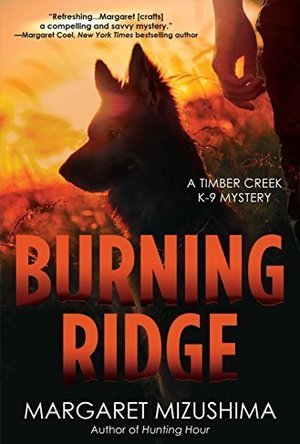
Burning Ridge by Margaret Mizushima is a fast-paced and engrossing police procedural. It features Matti Cobb and her K-9 German Shepherd partner Robo, which makes these stories appealing to not only those who enjoy mysteries, but also to animal lovers.
Having done her homework, the author spoke with and shadowed those that train dogs. “I have a friend who retired from training tracking dogs. She allowed me to watch her train for tracking and evidence detection. I was inspired by her to write about a female canine handler. In fact, she had a dog named Robo, which I based the story dog Robo on. He could do so many things: Patrol, apprehend, track, and even pick up on gun powder to find hidden shells and casings.”
8171DUdQgiL._AC_UL115_Ridge
The plot has veterinarian Cole Walker and his two young daughters enjoying their trail ride in the Colorado mountains until they find a man’s charred boot with a decomposing foot in it. Called in to search for the rest of the body Matti and Robo find him. It is then Mattie realizes there is a personal link to her own troubled past.
This book explores her disturbed childhood, having been placed in foster homes since the age of six. Her father was convicted of abusing her mother who later abandoned her and her brother. This is why she and Cole are taking the relationship slow although it is obvious they love each other.
Because her husband is a vet, Mizushima knows something about the profession. “I always wanted to write a vet as a protagonist. Similar to my husband, Cole is a mixed practice vet, which means he treats large and small animals. He has to overcome some personal problems after his wife left him and his daughters. Both he and Mattie are hesitant to connect because of their baggage with abandonment issues. This is why I wrote, ‘And as much as she wanted to, she had trouble allowing him past the wall she built to protect her feelings.’ He is a work driven, a type-A personality, but soft-hearted. She is kind, athletic, spunky, a loner, independent, and vulnerable.”
What makes this novel special is the relationship between the partners. Robo is not written as some Superdog, but with realistic traits. Mattie and Robo are a dedicated team who have a strong bond professionally and personally. He is truly her best friend, and when she goes missing Robo uses his search and rescue skills to find her.
Having lived in Colorado all her life, Mizushima is able to create a realistic setting. She seems to draw from current events since there have been so many wildfires this season. In the novel, she uses it to enhance the action where the fire becomes an antagonist. “I grew in a small town on a ranch. I used the mountains because there is a sense of suspense and danger. This is why I wrote in the book quote, ‘Blazing orang lit the ridge above her, rapidly feeding on timber and eating its way downward. Balls of fire leapt from tree to tree, the dry needles wicking flames into branches and sap, setting off booming explosions in the treetops.’”
This is a gripping tale that has a message of hope. With Robo at her side Mattie is trying to overcome her childhood demons and learn to tear down the wall she has built, allowing Cole and his daughters into her life.
Having done her homework, the author spoke with and shadowed those that train dogs. “I have a friend who retired from training tracking dogs. She allowed me to watch her train for tracking and evidence detection. I was inspired by her to write about a female canine handler. In fact, she had a dog named Robo, which I based the story dog Robo on. He could do so many things: Patrol, apprehend, track, and even pick up on gun powder to find hidden shells and casings.”
8171DUdQgiL._AC_UL115_Ridge
The plot has veterinarian Cole Walker and his two young daughters enjoying their trail ride in the Colorado mountains until they find a man’s charred boot with a decomposing foot in it. Called in to search for the rest of the body Matti and Robo find him. It is then Mattie realizes there is a personal link to her own troubled past.
This book explores her disturbed childhood, having been placed in foster homes since the age of six. Her father was convicted of abusing her mother who later abandoned her and her brother. This is why she and Cole are taking the relationship slow although it is obvious they love each other.
Because her husband is a vet, Mizushima knows something about the profession. “I always wanted to write a vet as a protagonist. Similar to my husband, Cole is a mixed practice vet, which means he treats large and small animals. He has to overcome some personal problems after his wife left him and his daughters. Both he and Mattie are hesitant to connect because of their baggage with abandonment issues. This is why I wrote, ‘And as much as she wanted to, she had trouble allowing him past the wall she built to protect her feelings.’ He is a work driven, a type-A personality, but soft-hearted. She is kind, athletic, spunky, a loner, independent, and vulnerable.”
What makes this novel special is the relationship between the partners. Robo is not written as some Superdog, but with realistic traits. Mattie and Robo are a dedicated team who have a strong bond professionally and personally. He is truly her best friend, and when she goes missing Robo uses his search and rescue skills to find her.
Having lived in Colorado all her life, Mizushima is able to create a realistic setting. She seems to draw from current events since there have been so many wildfires this season. In the novel, she uses it to enhance the action where the fire becomes an antagonist. “I grew in a small town on a ranch. I used the mountains because there is a sense of suspense and danger. This is why I wrote in the book quote, ‘Blazing orang lit the ridge above her, rapidly feeding on timber and eating its way downward. Balls of fire leapt from tree to tree, the dry needles wicking flames into branches and sap, setting off booming explosions in the treetops.’”
This is a gripping tale that has a message of hope. With Robo at her side Mattie is trying to overcome her childhood demons and learn to tear down the wall she has built, allowing Cole and his daughters into her life.
Sassy Brit (97 KP) rated You Should Have Left in Books
Jun 5, 2019
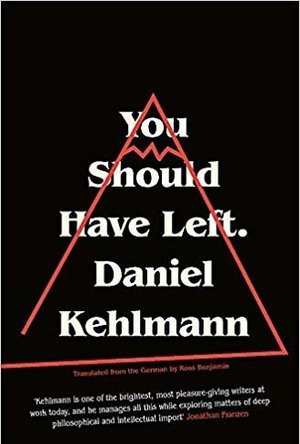
by author Daniel Kehlmann is imaginatively written in such a way that you’re reading a scriptwriter’s notes from his notebook, as he is writing them. The main character bares his soul about his life, his thoughts and dreams. Much of it is mundane everyday stuff, until you realise that what is being said actually has a very different meaning. Darker and more horrific than it at first may seem.
Writing his screenplay, and lying to his boss about his progress, the screenwriter takes his family, wife Susanna, and four-year old Esther to what he wants to be a writer’s retreat. Yeah, it does sound rather like The Shining. But even though there’s less of it, there’s even more to it… Stick with me. I’ll explain.
Things are not going as planned, for this unnamed writer. His marriage is on the rocks and his screenplay is failing. On top of that there are a lot of strange goings on he cannot explain. Odd things are happening in the house he’s renting via Airbnb. Maybe it’s haunted, or just tricks of light are playing with his mind giving him that illusion. Either way, it’s a slow descent into darkness that the author of the notebook does not seem to notice himself. Not straight away.
But as the reader I get to see that every now and then there’s things hidden in the text the writer seems not to be aware of. He’s spiralling downhill I’m wondering about his mental state, or if the house itself, or something in it — something supernatural — is playing with his mind.
How long can he hold it together? He’s got responsibilities to look after his kid, but he can hardly look after himself. He’s already forgetting which lies he’s told and mixing his dreams (and nightmares) with reality. Even he doesn’t know how it will end, and starts to think about leaving his notebook behind in order for it to be found… and it has been, I’m reading it now…
Several of the notes in his book get to the end of the page and are never finished, which to my mind, is in keeping with the distracted, confused voice of this note taker and adds to the setting’s dark, oppressive atmosphere.
Clever, surreal, with a kind of rhythmic writing, akin to memories of sitting in the back of the car and being rocked to sleep. The only difference would be the rude awakening. The slamming of the brakes. When the harshness of reality jolts you awake.
Yep, this unsettling, nightmarish journey, had me glued to the pages, even though at first I was not entirely sure I understood what I’d read… It’s a short novella sized book, and I must admit I had to read it again to fully appreciate this awesome piece of writing. It’s not your average horror, I can tell you! Nope, there’s nothing average about this at all. Incidentally, it’s translated from German and that fact may be why I thought it worked even better. No words are wasted. There’s a certain style to this book that makes me feel like he’s got something bigger, and maybe even better to come. I can see, however, it won’t be everyone’s cup of tea. I personally wish I’d got to this one sooner.
Stark, sparse, and totally different to anything I’ve read in a long time. I loved it. An alternative read without a doubt. A very short read, in fact. What’s more, this review took longer to write about it, than it did to read. Twice.
Writing his screenplay, and lying to his boss about his progress, the screenwriter takes his family, wife Susanna, and four-year old Esther to what he wants to be a writer’s retreat. Yeah, it does sound rather like The Shining. But even though there’s less of it, there’s even more to it… Stick with me. I’ll explain.
Things are not going as planned, for this unnamed writer. His marriage is on the rocks and his screenplay is failing. On top of that there are a lot of strange goings on he cannot explain. Odd things are happening in the house he’s renting via Airbnb. Maybe it’s haunted, or just tricks of light are playing with his mind giving him that illusion. Either way, it’s a slow descent into darkness that the author of the notebook does not seem to notice himself. Not straight away.
But as the reader I get to see that every now and then there’s things hidden in the text the writer seems not to be aware of. He’s spiralling downhill I’m wondering about his mental state, or if the house itself, or something in it — something supernatural — is playing with his mind.
How long can he hold it together? He’s got responsibilities to look after his kid, but he can hardly look after himself. He’s already forgetting which lies he’s told and mixing his dreams (and nightmares) with reality. Even he doesn’t know how it will end, and starts to think about leaving his notebook behind in order for it to be found… and it has been, I’m reading it now…
Several of the notes in his book get to the end of the page and are never finished, which to my mind, is in keeping with the distracted, confused voice of this note taker and adds to the setting’s dark, oppressive atmosphere.
Clever, surreal, with a kind of rhythmic writing, akin to memories of sitting in the back of the car and being rocked to sleep. The only difference would be the rude awakening. The slamming of the brakes. When the harshness of reality jolts you awake.
Yep, this unsettling, nightmarish journey, had me glued to the pages, even though at first I was not entirely sure I understood what I’d read… It’s a short novella sized book, and I must admit I had to read it again to fully appreciate this awesome piece of writing. It’s not your average horror, I can tell you! Nope, there’s nothing average about this at all. Incidentally, it’s translated from German and that fact may be why I thought it worked even better. No words are wasted. There’s a certain style to this book that makes me feel like he’s got something bigger, and maybe even better to come. I can see, however, it won’t be everyone’s cup of tea. I personally wish I’d got to this one sooner.
Stark, sparse, and totally different to anything I’ve read in a long time. I loved it. An alternative read without a doubt. A very short read, in fact. What’s more, this review took longer to write about it, than it did to read. Twice.

Movie Metropolis (309 KP) rated Wonder Woman (2017) in Movies
Jun 10, 2019
DC gets it right
I’m not going to sit here and tell you that Wonder Woman is alright because it’s been directed by a woman, or that it’s the most progressive superhero film of the last decade. No, neither of those things are true.
However, the titular superhero, played superbly by Gal Gadot stars in by far the best film in the ever-expanding DC Universe – though with Suicide Squad and Batman v Superman as stablemates, that really isn’t saying much.
Before she became Wonder Woman (Gal Gadot), she was Diana, princess of the Amazons, trained to be an invincible warrior. Raised on a sheltered island paradise, Diana meets a US pilot (Chris Pine) who tells her about the conflict that’s raging in the outside world. Convinced she can stop the threat, Diana leaves her safe haven for the very first time. She fights alongside men of war and along the way discovers her true potential and her destiny.
So, let’s get the elephant in the room out of the way first. Director Patty Jenkins is one of the only women to have helmed a big summer blockbuster. Mimi Leder crafted Deep Impact back in 1998 and since then, female directors have been few and far between with Kathryn Bigelow being a notable exception. The gravitas of this cannot be understated.
How does the cast do? Well, it’s a story of two halves. Gal Gadot has proven herself in Batman v Superman and with a full film behind her, she is exceptional. It’s almost impossible to now think of anyone better suited to playing the titular character. Chris Pine is fine but he’s in the film far too much – not really his fault, but a superhero sidekick is usually relegated to a few witty one-liners rather than a fully-fledged supporting role.
The villains on the other hand are absolute garbage. Danny Huston hams it up as a German general and Elena Anaya’s portrayal of “Dr Poison” aiming to ramp up the war effort with the introduction of mustard gas is little to no use to the plot. The introduction of another villainous character towards the film’s climax also fails to lift the offering.
But what about the special effects? You guessed it, it’s 50/50. The sequences of Wonder Woman braving No Man’s Land are stunning, especially with the now instantly recognisable theme tune playing in the background, but this is poorly juxtaposed with some very shoddy CGI, it had me thinking of 2003’s Catwoman it was that bad.
Then the finale arrives and we’re thrown head first into the same CGI heavy ending that blights the majority of comic-book films nowadays. So, whilst it’s true that Patty Jenkins certainly knows how to shoot the action, she’s let down by cheap looking special effects.
Overall, Wonder Woman is a perfectly decent addition to the DCEU and certainly head and shoulders above its other offerings. The problem arises when we take a deeper look at Gal Gadot – she’s much, much better than the film she is in, and that’s a problem facing Ben Affleck, Henry Cavill, Will Smith, Margot Robbie… you get the picture.
Justice League, the ball is in your court.
https://moviemetropolis.net/2017/06/02/dc-gets-it-right-wonder-woman-review/
However, the titular superhero, played superbly by Gal Gadot stars in by far the best film in the ever-expanding DC Universe – though with Suicide Squad and Batman v Superman as stablemates, that really isn’t saying much.
Before she became Wonder Woman (Gal Gadot), she was Diana, princess of the Amazons, trained to be an invincible warrior. Raised on a sheltered island paradise, Diana meets a US pilot (Chris Pine) who tells her about the conflict that’s raging in the outside world. Convinced she can stop the threat, Diana leaves her safe haven for the very first time. She fights alongside men of war and along the way discovers her true potential and her destiny.
So, let’s get the elephant in the room out of the way first. Director Patty Jenkins is one of the only women to have helmed a big summer blockbuster. Mimi Leder crafted Deep Impact back in 1998 and since then, female directors have been few and far between with Kathryn Bigelow being a notable exception. The gravitas of this cannot be understated.
How does the cast do? Well, it’s a story of two halves. Gal Gadot has proven herself in Batman v Superman and with a full film behind her, she is exceptional. It’s almost impossible to now think of anyone better suited to playing the titular character. Chris Pine is fine but he’s in the film far too much – not really his fault, but a superhero sidekick is usually relegated to a few witty one-liners rather than a fully-fledged supporting role.
The villains on the other hand are absolute garbage. Danny Huston hams it up as a German general and Elena Anaya’s portrayal of “Dr Poison” aiming to ramp up the war effort with the introduction of mustard gas is little to no use to the plot. The introduction of another villainous character towards the film’s climax also fails to lift the offering.
But what about the special effects? You guessed it, it’s 50/50. The sequences of Wonder Woman braving No Man’s Land are stunning, especially with the now instantly recognisable theme tune playing in the background, but this is poorly juxtaposed with some very shoddy CGI, it had me thinking of 2003’s Catwoman it was that bad.
Then the finale arrives and we’re thrown head first into the same CGI heavy ending that blights the majority of comic-book films nowadays. So, whilst it’s true that Patty Jenkins certainly knows how to shoot the action, she’s let down by cheap looking special effects.
Overall, Wonder Woman is a perfectly decent addition to the DCEU and certainly head and shoulders above its other offerings. The problem arises when we take a deeper look at Gal Gadot – she’s much, much better than the film she is in, and that’s a problem facing Ben Affleck, Henry Cavill, Will Smith, Margot Robbie… you get the picture.
Justice League, the ball is in your court.
https://moviemetropolis.net/2017/06/02/dc-gets-it-right-wonder-woman-review/