
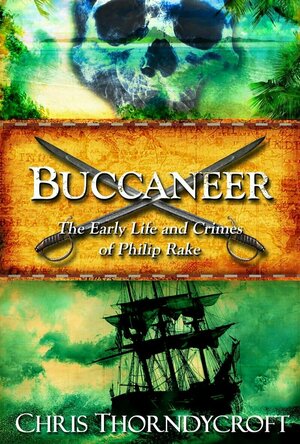
Buccaneer: The Early Life and Crimes of Philip Rake (The Molucca Star Quartet #1)
Book
Bristol, 1713. When Philip Rake, pickpocket, smuggler and scoundrel is arrested and thrown in jail,...
Historical Action and Adventure Pirates Caribbean Swashbuckling Naval Fiction
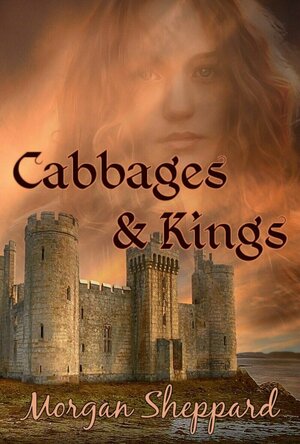
Cabbages & Kings
9.0 Rate It
Book
Hero. Honourable Thief. Lovable Rogue. Scoundrel. Blackguard. Everyone’s heard of Robin Hood...
Historical Fiction Origin Story Robin Hood Coming of Age

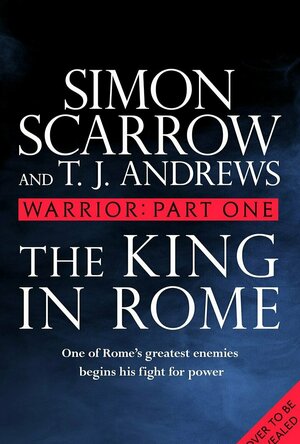
David McK (3929 KP) rated The King in Rome (Warrior #1) in Books
May 28, 2023

Even more so - again, IMO - with those set during the time of the Roman Empire: I think we're approaching 20, now, of his full length Cato and Macro novels (edit: as of typing this, 22 novels).
I can't say much about TJ Andrews, other than I'm aware he has collaborated with Scarrow on a a few e-book novella's.
This is the latest in that collaboration, taking - as it's inspiration - the tale of Caratacus, the British warlord who defied the Empire before the time of Boudica, and who appeared in some of the earlier Eagle (aka Cato and Macro) novels as an antagonist. Eventually defeated by the Roman legions, Caratacus was spared by the Emperor Claudius to live out his life in the confines of Rome (and with Prefect Cato being name dropped when he mentions that in this novella), which is where this series of novellas picks up, as Caratacus is persuaded to tell his life story to a Roman historian who first encounters him at a banquet hosted by the Emperor Nero.
Told, therefore, from the 'other point of view' than the usual, I'm interested in seeing where this goes!


TRIGGER WARNINGS: rape, domestic violence, death, affairs, miscarriage
"You can only go so long pretending, acting as if you're someone you're not. Eventually you must return to who you are, who you were born to be. You can stray from it, try on other roles, other personalities, other beliefs, other lives, but eventually it will catch up with you and you have to return to the only person you can be."
Main Characters:
Beatrice Bordeaux - the main character, married to Harry Bordeaux. A bit of a feminist but it doesn't start showing until the middle to end of the novel. She's got a strong, compassionate, sweet personality. Her development was major and not at all what I was expecting.
Thomas - the lighthouse keeper. He's a simple man, compassionate and patient. Also unbelievably kind to all, no matter ethnicity, class, or gender.
Harry Bordeaux - cocky, self-conceded. Honestly, the most horrible person ever.
Dolly - hat maker who befriends Bea. She's sweet, independent, and an all around feminist.
Elizabeth - laundress for the Montauk Manor, befriends Bea. She's down-to-earth and a loving mother and wife.
"I felt rage and a hot determination side by side and that was something. That alone gave me hope. Something was better than numbness. Something was better than not caring, not dreaming, not daring."
Review:
**Possible spoilers ahead**
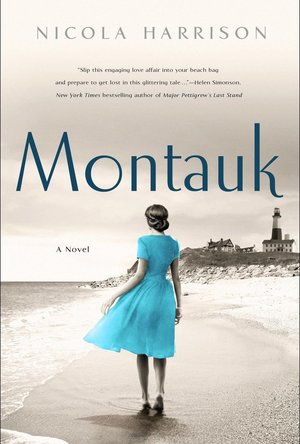
The story starts off in the year of 1938. The wealthy from New York City always head to the East Coast to an up and coming town called Montauk for the summer. Here, the wives stay in the luxurious Montauk Manor during the weekdays with their children and nannies, planning social events and relaxing, while the men head back to the city to work - only coming back to visit on the weekends.
Beatrice Bordeaux is one of the wives who ends up staying in Montauk for the summer. But she soon learns that her husband, Harry, would actually be leaving with the rest of the men during the week. Beatrice is taken aback, as the main reason why the couple took this vacation was to rekindle their cracking marriage. She was also hoping that the vacation would allow her and Harry to have alone time as she craved being a mother but has been eluded by pregnancy for the past five years.
Beatrice is forced to socialize with the other wives, even though she just wants to relax and read, so that Harry can gain a foothold for his investment interests. He thinks that if Beatrice can become buddy buddy with some of the more known in society women, that he can sizzle his way up to their husbands to get some funds to invest into Montauk. But, Beatrice quickly grows bored of the woman's talk of events that are more self-serving than they are generous. This is where Elizabeth, the Manor's laundress enters.
Elizabeth's down-to-earth nature gives Beatrice nostalgia of her life prior to meeting Harry. The two women befriend each other, even though it would be looked down upon if the other wives of the Manor found out. This doesn't stop Beatrice though.
As the novel progresses, Beatrice becomes disillusioned with her marriage and even finds out that Harry was not being the faithful husband he promised in his vows. The reader can see Harry's regression of interest towards Beatrice throughout the novel, and how he only seems to care about her when she is beside him at social gatherings. This causes Beatrice to start doing the things that she wants. Enter the handsome yet sensitive lighthouse keeper, Thomas.
Thomas is the complete opposite of Harry and as Beatrice's marriage drifts more and more apart, she takes her life into her own hands where she follows what her heart wants. But with the risk she's taking, major consequences that could take lives and ruin social standings follow. This is when Beatrice must decide whether to follow her heart or do what is right according to society.
Montauk is an interesting and beautifully written look back into history when women were expected to do what society told her to do. Questions were not asked, and one must be "happy" that she's being cared for by her husband, because "good wives" waited for orders from their husbands and always did what they wished. The author, Nicola Harrison, does an excellent job with captivating the history and superficial feel of society back in the late 30's. Even the descriptions of the lighthouse, manor, and fishing village created vivid images that circulated within my mind as I read.
Usually, when it comes to Historical Fiction novels, I've found that they can be very predictable. Montauk was not your average Historical Fiction novel, that's for sure. There were twists and turns that I was not expecting and the ending twist threw me for a major loop. The one problem that I do have with the overall story, was the last chapter and epilogue. It lacked the depth and detail that was interwoven throughout the rest of the story. But overall, I was fascinated and enthralled in the story of Montauk.
Character/ Story background and development -
It's there, one hundred percent there. The main character's and the side characters all have the development and background interwoven into the story, waiting to be dug out as you read. All of the development and background that took place within Montauk, actually made this novel great!
Plot -
At first, the plot and story was slow. It could have just been my skewed perspective of not liking Historical Fiction novels, but it eventually picked up; allowing the like/dislike scales to flip. I was really worried that I would DNF Montauk, but once the story started to get more in depth with the characters and background, I was taken on an emotional roller coaster of feels. And I will happily take that ride over and over again.
Spelling/ Grammatical errors -
I did not notice any spelling or grammatical errors that took away from the overall story. There were a slight few littered throughout, but they were so minor and hardly noticeable that it did no harm to count it against the author or publisher.
Enjoyment -
I can for sure say, that I 100% enjoyed every second I spent on Montauk. I don't typically like Historical Fiction novels, but Nicola Harrison does an amazing job not only making sure the information is correct, but the writing is well-thought out.
Overall -
This novel is a sucker punch to the emotions; it's honestly one of those novels that will be cherished forever because the story, the development, the plot, the background, the heartache and pain, it was all there. And it made this a breathtaking novel to read.
Do I recommend? -
159% yes! I highly recommend Montauk by Nicola Harrison.
"With the ocean surrounding me, I feel free and at peace with the world."

Molly J (Cover To Cover Cafe) (106 KP) rated The White City in Books
Mar 1, 2019
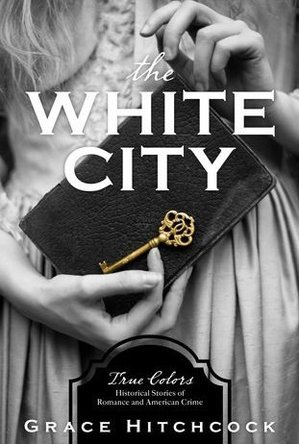
Winnie and Jude’s characters are wonderful! I loved them so good. The detail with which Hitchcock created the scenes that Winnie saw, and went through, and how Jude fell for her, was awesome. I felt like I became Winnie and fell for Jude instantly. Jude was a sweet soul and Winnie was absolutely full of spunk and sass!
The real life serial killer aspect woven into the story was incredible. I had no idea about that time period having someone like that, and it really made the story that much more captivating. The twists and turns of the roller coaster story, seeing Winnie going “undercover” to prove to her Police Chief father that she was right, was fantastic and had me reading this book and finishing it in a 24 hour period.
If you love historical novels, love the thrills of a great suspense story, and enjoy reading a God-filled romance book, then look no further than this 4 star debut. Ms. Hitchcock has extreme talent and is sure to be on the best sellers list before long! I sing the praises of this story loudly and can’t wait for the next book from this talented author, as well as another incredible installment in this new series from Barbour!
*I received a complimentary copy of this book from Barbour Publishing and was under no obligation to post a review, positive or negative.*
Olive (1 KP) rated The Mermaid and Mrs Hancock in Books
Jan 27, 2018
Visually the book is a stunner and one you can definitely judge by its cover. It's rare to find a historical fantasy where the fantasy aspect takes more of a backseat. I love both genres but this was a perfect balance between the two. The Regency London setting rather than Medieval or Victorian was really refreshing as was the use of mermaids rather than vampires/werewolves/zombies/magic. I've read a few reviews where people complain that the mermaids are prolific enough considering the title but I think this is only the case if you enter it anticipating the focus to be mermaids. It's definitely a consistent theme from start to finish but it doesn't take center stage until the very end. If you go in expecting mermaids galore, you might be a little disappointed.
A lot of historical fiction written after the time it portrays attempts to emulate the formal language of the time and usually with cringe-worthy results. This book is an exception. The prose is lightly reminiscent of a Jane Austen novel and beautifully descriptive but not overly so. The plot isn't one you can guess from the first page and while you can make educated guesses, the journey there is full of delightful twists and turns.
Really though I cannot say enough about this book. The only word that seems to come close is 'sumptuous'. It's the sort of book you can easily reread because the enjoyment doesn't hinge on shocking plot twists or mystery and suspense. It was a sheer joy to read and I dreaded the ending from the very first chapter. I almost never reread books but this is one I actually look forward to rereading.

Eleanor (1463 KP) rated The Mercies in Books
Jan 23, 2020 (Updated Jan 23, 2020)
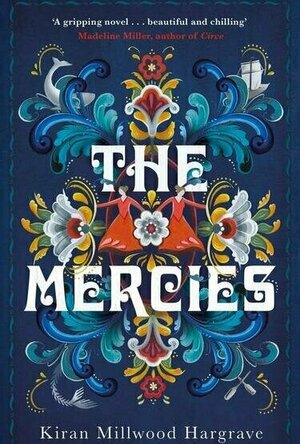

The book begins with a freak storm killing most (all the able-bodied) men who were fishing from the small village of Vardo. (This is based on a true story - the storm thing really did happen to a village of that time.) It’s a horrific tragedy and the women left behind have to work out how to survive without their husbands and sons. From the village, the tale is told from the perspective of Maren who loses her father, brother and betrothed.
With news of the circumstances of the village spreading a commissioner is appointed and travels from Scotland to oversee the village (because God only knows what could happen if you left women to sort stuff out themselves!!) It being the 17th Century, travel takes a long time and he stops off to get himself a wife on the way (must-have travel accessory) so the village gets by for many a year without oversight. With the arrival of the commissioner and his wife (Ursa) life again gets turned on its head as it turns out the new Commissioner has a knack for witch-hunting.
Although I found the pace a bit too slow for my liking it had a great feel and really evoked the frustration for the world women lived in at the time. With at times graphic descriptions of the way witch hunts were operated it’s at times a hard read. With the slow build, I did find the ending a bit rushed and unsatisfying but was left with plenty to reflect upon.
Many thanks to the author, publisher, and NetGalley for the ARC in exchange for an honest review.
Sentimental Murder: Love and Madness in the Eighteenth Century
Book
On an April evening in 1779, a woman is shot on the steps of Covent Garden. Her murderer is a young...

Personal Identity and Applied Ethics: A Historical and Philosophical Introduction
Book
'Soul', 'self', 'substance' and 'person' are just four of the terms often used to describe the human...

ClareR (6256 KP) rated The Haunting of Alma Fielding: A True Ghost Story in Books
Oct 5, 2020 (Updated Oct 5, 2020)
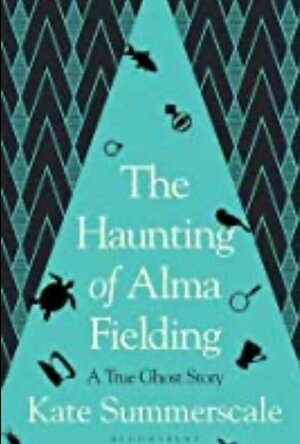
There does seem to be a theme of obsession running through this with regards to Fodor. I was never quite sure if his obsession was with Alma’s haunting, or with Alma herself. She was an attractive woman, after all. He would certainly have been stopped a lot sooner if this had happened today (but I do wonder whether this would have happened at all).
The historical background and the build up to the Second World War was very interesting, and I enjoyed the historical detail throughout. I also liked that there was an ending. Summerscale researched up to the deaths of those involved - I appreciated that closure. But what interesting lives these people had!
This was a great story for a sceptic like me. Ghost stories fascinate me. I don’t believe that there are ghosts, but I still like that they have the ability to unnerve and scare me! And this was certainly unnerving!
Many thanks to The Pigeonhole for serialising this book. I probably would have gone on the waiting list at the library because of the (well-deserved) buzz around it, but I really do much prefer not having to wait and reading along with my fellow pigeons!