Search
Search results
David McK (3791 KP) rated Free Guy (2021) in Movies
Aug 27, 2021

Latest - at the time of reviewing - Ryan Reynolds starrer, in which he discovers he is actually a NOC (non Player character, for the uninitiated) inside a video game, that bears more than a passing resemblance to that of GTA online (or so I'm told).
Set in both his, and the 'real' world (to which he cannot cross over), I felt that had quite a bit in common with the likes of 'The Truman Show', 'The Matrix', 'Ready Player One', maybe even a bit of 'Pixels' thrown in, but is none the less quite enjoyable, with Taika Waititi stealing the show (and with Guy's best mate cop running a close second)
Sheriff of Nottingham
Tabletop Game
This game has merchants trying to bluff or bribe the sheriff in order to deliver or smuggle their...

Purple Phoenix Games (2266 KP) rated Nyctophobia: Vampire Encounter in Tabletop Games
Jun 12, 2019

When it comes to board gaming, there are many tried and true mechanics that appear in most games. If it ain’t broke, don’t fix it, right? That being said, it’s always neat when a game creates an entirely new mechanic that has never been seen before. Nyctophobia is one of those games. When I heard about it, I knew I had to try it. It’s quite a clever idea and it makes for a unique and fun game!
DISCLAIMER: There are technically 2 versions of this game – the OG version and the Vampire version. Thematically, they may be different, but mechanically and gameplay-wise, they’re the same! For the purposes of this review, we will be playing the Vampire Encounter version. -L
A lighthearted trip to the woods has taken a startling turn when you and your friends come across a Vampire! And to make things worse, the Vampire has managed to lure one of your buddies deep into the woods with him! You can’t just turn tail and run – you’ve gotta save your friend! The sun has set, though, and the woods are way more ominous than you thought. You and your friends must cooperate to carefully and quietly navigate in total darkness to avoid disclosing your position to the Vampire while searching for your friend. Will you manage to not only find your buddy, but make it back to the car for your getaway? Or will the Vampire manage to pick you all off, one by one, as he creeps around in the darkness waiting for the opportunity to pounce?
Nyctophobia: Vampire Encounter is a semi-cooperative 1-vs-All memory game with a twist – all players (except for the Vampire player) must wear black-out glasses and cannot see the board. All turns and movement are taken based on feel. You ARE in the dark woods after all – it’s not like you can see your surroundings. Basically how it works is that the Vampire player kind of acts as a GM for the game. They can see the board, and help guide the players’ hands to their pieces and move the player pieces as requested. The players are blind and must rely on feeling their way around the board (avoiding trees and the Vampire!) and communicating the perceived layout to their comrades. The Vampire player then sneaks around the board, silently trying to corner the other players and abduct them. Each player gets a special ability to use on their turns, and there’s a small combat element involved if a player ever runs into the Vampire. The goal of the game, for regular players, is to work with your friends to find the kidnapped NPC (represented by a cardboard standee) and get back to the car to escape. The goal of the game for the Vampire player is to pick off all other players until none remain.
I think this is a super neat game. It’s pretty unique and it’s fun to play! You’re trying to cooperate with your friends to create a strategy for a board that you can’t see. It’s definitely a challenge, but it’s presented in such a novel way that makes it enjoyable. The overall atmosphere of the game is great. The nerves and pressure can really get to the players as they are (quite literally) flailing around in the dark. The Vampire player can have a lot of fun as the GM – do you taunt your players and make them second-guess every move, or do you lay low and stay quiet until juuuust the right moment? Nyctophobia feels like more than just a game while you’re playing, and that is what makes it so exciting.
The only real issue I’ve run into with this game has to do with the components themselves. The board is an 8×8 grid, with the layout set up in secret by the Vampire player. On a regular player turn, you can feel up to 1 space in each adjacent direction to your current location. The only issue is that sometimes, unless the player is diligent, they could accidentally (or purposefully?) feel too many spaces than are allowed – either diagonally or 2 or more spaces away, for example. The way I’ve come up with to alleviate this issue is to have players use only 1 finger when interacting with their piece/the board. That way there can be no extra feeling. And I also, as the Vampire player, will move player pieces for them – the player tells me in which direction to move and I move the piece before guiding their hand back. Maybe if the board were a little larger, this problem would be eliminated? I’m really not sure, but the method I’ve come up with to combat it has worked well so far!
Overall, I enjoy Nyctophobia. It’s a neat game with a unique mechanical aspect and fun player interactions. Is it my favorite game to play? No. But it’s one that I like breaking out for newer gamers and for some lighthearted fun! If you haven’t done so already, give Nyctophobia a try because it’s a refreshingly new take on the modern board game. Purple Phoenix Games gives it a haunting 15 / 18.
https://purplephoenixgames.wordpress.com/2019/05/14/nyctophobia-review/
DISCLAIMER: There are technically 2 versions of this game – the OG version and the Vampire version. Thematically, they may be different, but mechanically and gameplay-wise, they’re the same! For the purposes of this review, we will be playing the Vampire Encounter version. -L
A lighthearted trip to the woods has taken a startling turn when you and your friends come across a Vampire! And to make things worse, the Vampire has managed to lure one of your buddies deep into the woods with him! You can’t just turn tail and run – you’ve gotta save your friend! The sun has set, though, and the woods are way more ominous than you thought. You and your friends must cooperate to carefully and quietly navigate in total darkness to avoid disclosing your position to the Vampire while searching for your friend. Will you manage to not only find your buddy, but make it back to the car for your getaway? Or will the Vampire manage to pick you all off, one by one, as he creeps around in the darkness waiting for the opportunity to pounce?
Nyctophobia: Vampire Encounter is a semi-cooperative 1-vs-All memory game with a twist – all players (except for the Vampire player) must wear black-out glasses and cannot see the board. All turns and movement are taken based on feel. You ARE in the dark woods after all – it’s not like you can see your surroundings. Basically how it works is that the Vampire player kind of acts as a GM for the game. They can see the board, and help guide the players’ hands to their pieces and move the player pieces as requested. The players are blind and must rely on feeling their way around the board (avoiding trees and the Vampire!) and communicating the perceived layout to their comrades. The Vampire player then sneaks around the board, silently trying to corner the other players and abduct them. Each player gets a special ability to use on their turns, and there’s a small combat element involved if a player ever runs into the Vampire. The goal of the game, for regular players, is to work with your friends to find the kidnapped NPC (represented by a cardboard standee) and get back to the car to escape. The goal of the game for the Vampire player is to pick off all other players until none remain.
I think this is a super neat game. It’s pretty unique and it’s fun to play! You’re trying to cooperate with your friends to create a strategy for a board that you can’t see. It’s definitely a challenge, but it’s presented in such a novel way that makes it enjoyable. The overall atmosphere of the game is great. The nerves and pressure can really get to the players as they are (quite literally) flailing around in the dark. The Vampire player can have a lot of fun as the GM – do you taunt your players and make them second-guess every move, or do you lay low and stay quiet until juuuust the right moment? Nyctophobia feels like more than just a game while you’re playing, and that is what makes it so exciting.
The only real issue I’ve run into with this game has to do with the components themselves. The board is an 8×8 grid, with the layout set up in secret by the Vampire player. On a regular player turn, you can feel up to 1 space in each adjacent direction to your current location. The only issue is that sometimes, unless the player is diligent, they could accidentally (or purposefully?) feel too many spaces than are allowed – either diagonally or 2 or more spaces away, for example. The way I’ve come up with to alleviate this issue is to have players use only 1 finger when interacting with their piece/the board. That way there can be no extra feeling. And I also, as the Vampire player, will move player pieces for them – the player tells me in which direction to move and I move the piece before guiding their hand back. Maybe if the board were a little larger, this problem would be eliminated? I’m really not sure, but the method I’ve come up with to combat it has worked well so far!
Overall, I enjoy Nyctophobia. It’s a neat game with a unique mechanical aspect and fun player interactions. Is it my favorite game to play? No. But it’s one that I like breaking out for newer gamers and for some lighthearted fun! If you haven’t done so already, give Nyctophobia a try because it’s a refreshingly new take on the modern board game. Purple Phoenix Games gives it a haunting 15 / 18.
https://purplephoenixgames.wordpress.com/2019/05/14/nyctophobia-review/
Purple Phoenix Games (2266 KP) rated Citadels in Tabletop Games
Aug 13, 2021
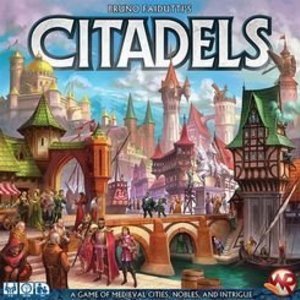
It has been documented several times that I, Travis Lopez, would be a horrible city planner. So why do I keep playing these games that require me to build city buildings and components and why do I enjoy them so much? Well, truth be told, this is a game that I had traded for years ago, got rid of, missed terribly, and repurchased. However, this is the newer version that includes a lot more in the box. Does it mean that the game is better? More stuff means better game, right?
In Citadels players will be donning the mantle of potential Master Builders and will need to build the greatest buildings within the city and manipulate the powers of special people within its walls. The game ends when a player has built their seventh district building. The player with the most VP at this time will be crowned Master Builder and winner of Citadels!
To setup, decide which eight characters will be used in the game, gather their cards and tokens, and place their tokens in ascending order on the table. This is to remind all players which characters (and their rank) is in play. Assemble the district (building) cards per the rules and shuffle the deck. Deal each player four of these district cards along with two gold coins. The eldest player will begin the game as the current First Player (complete with crown mini) and will begin the first phase of the first round.
Citadels is played over several rounds, each with two phases played within. The first phase is the Selection Phase, where the current First Player takes the character cards, shuffles them, adds zero to two cards (dependent upon number of players) face-up on the table and one card face-down. They then choose from the cards remaining in hand which character’s powers they would like to enact for the turn. The cards are passed to the next player in line who will do the same, and so on around the table.
Once all players have chosen their character card, the Turn Phase can begin. The current First Player (the one with the crown) will announce the characters in rank order, with the lowest character going first. In a typical game using only original base characters, this is “1: Assassin.” Whomever chose the Assassin card will flip over their character card, perform its special power, and then continue with their turn. In this case, the Assassin’s special power is to announce the name of a CHARACTER to assassinate. NOTE: This does NOT mean the name of the PLAYER. So the Assassin could choose to assassinate the King character, not the Travis player. After the character has used their power, the player can continue with the rest of their turn, though some character powers may be used at any time during the player’s turn.
After the character power is used, the player will gather resources in the form of two gold coins from the bank or by drawing two district cards from the deck and choosing one to keep in hand. After this choice, the player may then build one district in their play area if they wish and if they can afford to do so. Once complete, the crowned First Player will call out the next character rank (2: Thief in our example) who will continue their turn in the same way. The game continues in this fashion until a player has built their seventh district. The round continues until all players have had an equal amount of turns. Players then count VP on district cards and bonuses per the rulebook. The player with the most VP at the end of the game is crowned the Master Builder and winner of Citadels!
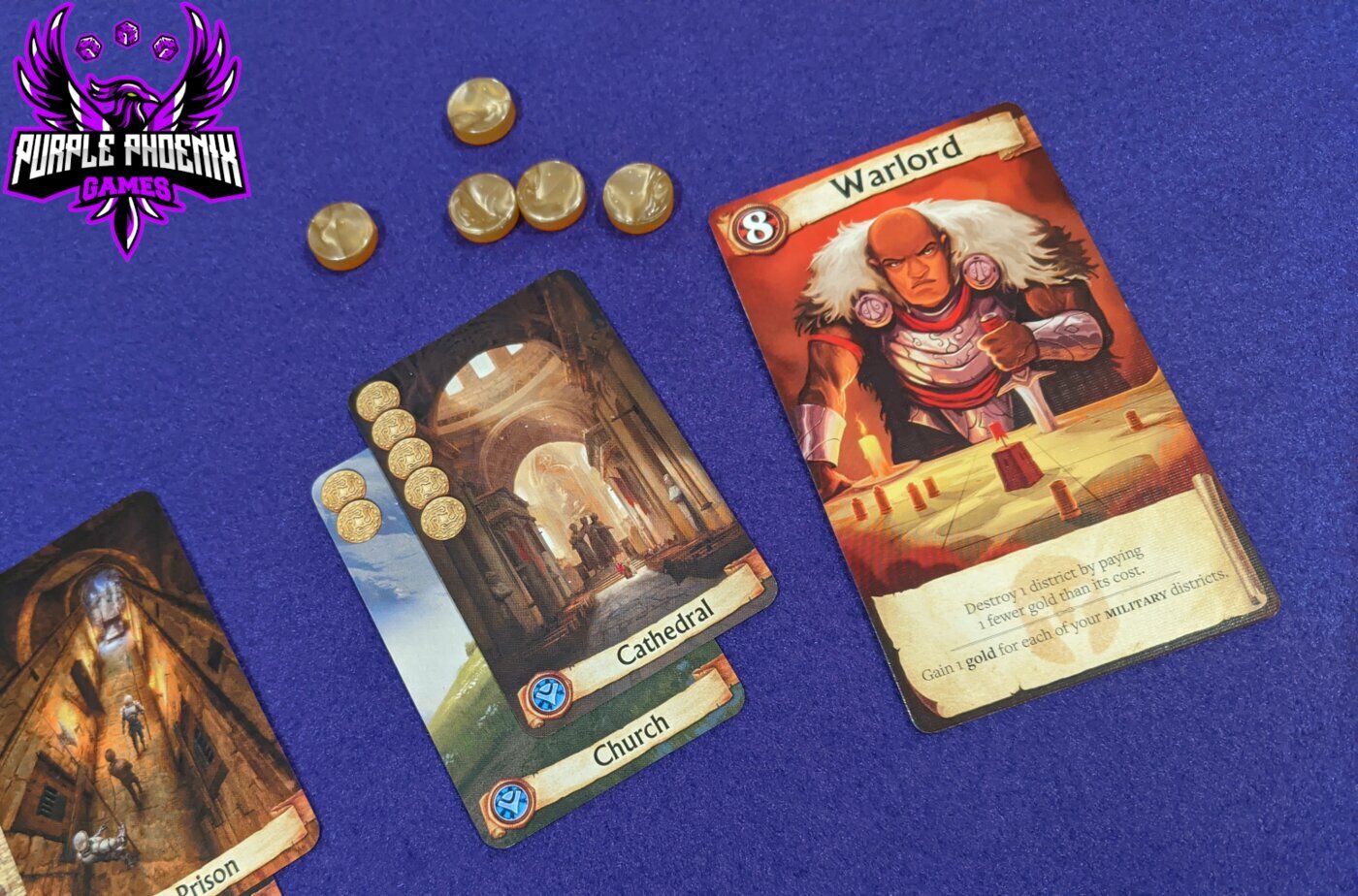
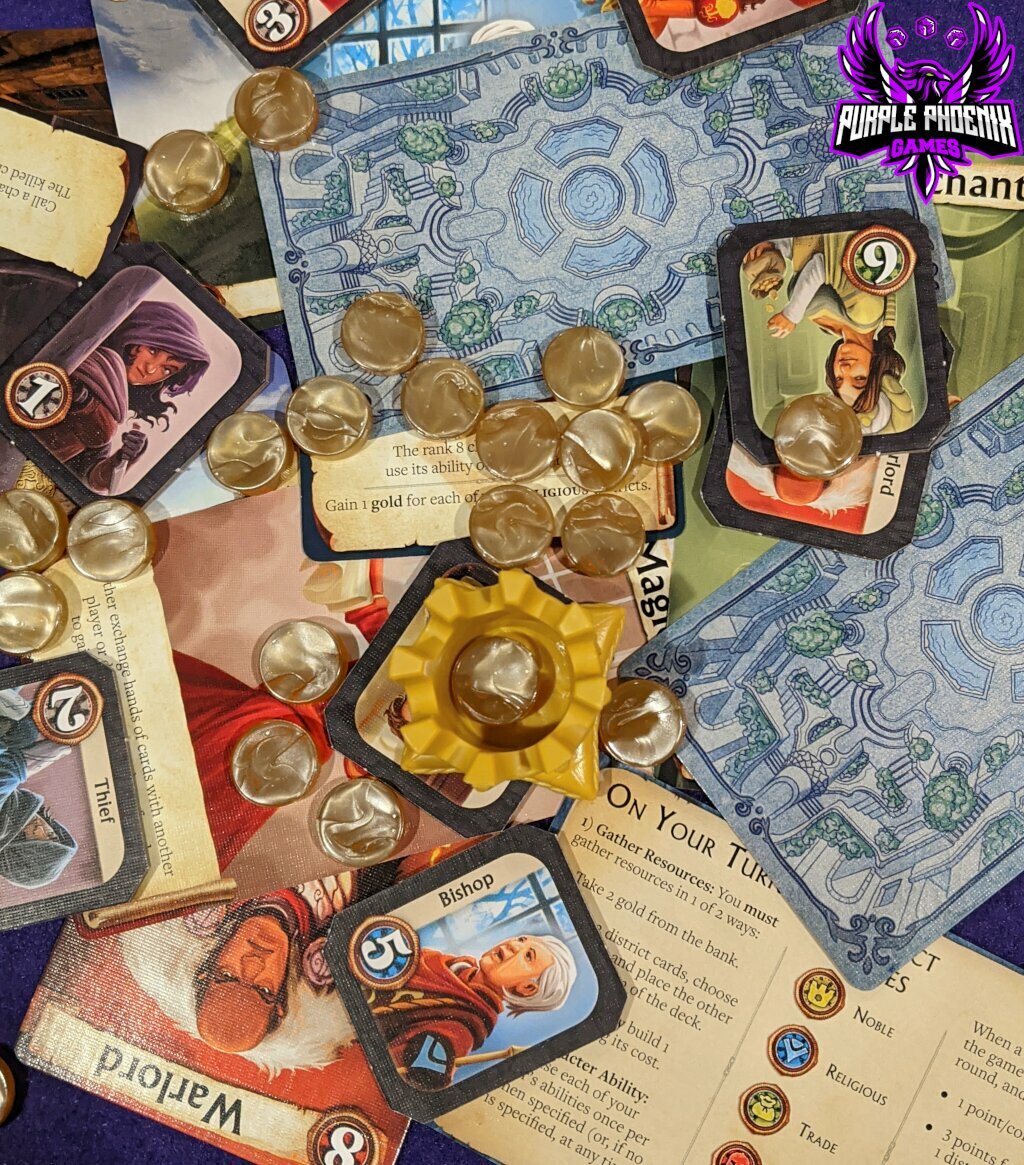
Components. I have to say that I enjoyed the components in the older version of Citadels I used to have just fine. I had sleeved all my cards, and the gold coins were nice back in the day. This version, however, includes many more components and each one is higher quality than the previous version’s. The art on the cards has been updated and is much much nicer now as well. The addition of the crown mini, the character tokens, and other components not mentioned here merely increases my love for Citadels. Windrider has knocked it out of the park with this version. And that’s saying nothing about all the additional characters now included in the game! Oh boy, so much variability!
Along with that variability is the customization of the game. You can play with one of the six pre-constructed provided suggestions in the rulebook or create your own combination of different characters. With three versions of each rank, many possibilities are… possible.
I do love Citadels, and with the right group can be a show-stopper all on its own. Some players may get a little offended or sassy because there is a fair amount of Take That in Citadels with the character interactions, so if playing with people who don’t understand the difference between a game and real life, I would prep them appropriately. I love being able to outwit my opponents by drafting certain characters they didn’t think I would want. Keeping them all on their toes during the game is sneaky fun.
So for me, with the amount of replayability, high quality and excellent components, and cutthroat gameplay I simply adore Citadels. I can pull it out with different groups and have different play experiences and try to tailor the character offering to the strengths of my players, or simply use one listed in the back of the rulebook. Purple Phoenix Games gives Citadels an underhanded, yet scholarly 21 / 24. It’s a stunning, magical, wonderful game and one of Bruno Faidutti’s best ever! Surely this is already in your collection, right? If not, make it so.
In Citadels players will be donning the mantle of potential Master Builders and will need to build the greatest buildings within the city and manipulate the powers of special people within its walls. The game ends when a player has built their seventh district building. The player with the most VP at this time will be crowned Master Builder and winner of Citadels!
To setup, decide which eight characters will be used in the game, gather their cards and tokens, and place their tokens in ascending order on the table. This is to remind all players which characters (and their rank) is in play. Assemble the district (building) cards per the rules and shuffle the deck. Deal each player four of these district cards along with two gold coins. The eldest player will begin the game as the current First Player (complete with crown mini) and will begin the first phase of the first round.
Citadels is played over several rounds, each with two phases played within. The first phase is the Selection Phase, where the current First Player takes the character cards, shuffles them, adds zero to two cards (dependent upon number of players) face-up on the table and one card face-down. They then choose from the cards remaining in hand which character’s powers they would like to enact for the turn. The cards are passed to the next player in line who will do the same, and so on around the table.
Once all players have chosen their character card, the Turn Phase can begin. The current First Player (the one with the crown) will announce the characters in rank order, with the lowest character going first. In a typical game using only original base characters, this is “1: Assassin.” Whomever chose the Assassin card will flip over their character card, perform its special power, and then continue with their turn. In this case, the Assassin’s special power is to announce the name of a CHARACTER to assassinate. NOTE: This does NOT mean the name of the PLAYER. So the Assassin could choose to assassinate the King character, not the Travis player. After the character has used their power, the player can continue with the rest of their turn, though some character powers may be used at any time during the player’s turn.
After the character power is used, the player will gather resources in the form of two gold coins from the bank or by drawing two district cards from the deck and choosing one to keep in hand. After this choice, the player may then build one district in their play area if they wish and if they can afford to do so. Once complete, the crowned First Player will call out the next character rank (2: Thief in our example) who will continue their turn in the same way. The game continues in this fashion until a player has built their seventh district. The round continues until all players have had an equal amount of turns. Players then count VP on district cards and bonuses per the rulebook. The player with the most VP at the end of the game is crowned the Master Builder and winner of Citadels!
Components. I have to say that I enjoyed the components in the older version of Citadels I used to have just fine. I had sleeved all my cards, and the gold coins were nice back in the day. This version, however, includes many more components and each one is higher quality than the previous version’s. The art on the cards has been updated and is much much nicer now as well. The addition of the crown mini, the character tokens, and other components not mentioned here merely increases my love for Citadels. Windrider has knocked it out of the park with this version. And that’s saying nothing about all the additional characters now included in the game! Oh boy, so much variability!
Along with that variability is the customization of the game. You can play with one of the six pre-constructed provided suggestions in the rulebook or create your own combination of different characters. With three versions of each rank, many possibilities are… possible.
I do love Citadels, and with the right group can be a show-stopper all on its own. Some players may get a little offended or sassy because there is a fair amount of Take That in Citadels with the character interactions, so if playing with people who don’t understand the difference between a game and real life, I would prep them appropriately. I love being able to outwit my opponents by drafting certain characters they didn’t think I would want. Keeping them all on their toes during the game is sneaky fun.
So for me, with the amount of replayability, high quality and excellent components, and cutthroat gameplay I simply adore Citadels. I can pull it out with different groups and have different play experiences and try to tailor the character offering to the strengths of my players, or simply use one listed in the back of the rulebook. Purple Phoenix Games gives Citadels an underhanded, yet scholarly 21 / 24. It’s a stunning, magical, wonderful game and one of Bruno Faidutti’s best ever! Surely this is already in your collection, right? If not, make it so.
Arboretum
Tabletop Game
Arboretum is a strategy card game for 2-4 players, aged 10 and up, that combines set collection,...
Boardgames CardGames BeautifulGames

Toscana
Tabletop Game
"Toscana is an exciting game set in the competitive world of wine. You are the proud owner of a...
Boardgames Winegames

Cosmic Run: Express
Tabletop Game
Race to distant planets in search of a new home, in this standalone mini-card game in Dr Finn's...
Purple Phoenix Games (2266 KP) rated Dinos Not Assembled in Tabletop Games
Mar 15, 2021
I think it’s no secret that I would be super hyped to go on a dinosaur dig. My brother, Bryan, is certainly more of a dino dude than I am, but I still remember loving them as a child and wishing I could see a skeleton being unearthed. Now I am the one with children who wish the same thing, and now I can play games with just that theme and they enjoy themselves. This is just such a game.
Dinos Not Assembled is a competitive set collection board game with hints of take-that for two to four players that can be enjoyed by players as young as four years old (I know this because my son is four and he loves it). In it players are acting as assistant paleontologists vying for the prestigious opportunity to join a world-famous paleo on their next dig. The player who is first to display three complete dinosaur skeletons in their portion of the museum will win the chance to go on the dig and win the game.
DISCLAIMER: We were provided a copy of this game for the purposes of this review. This is a retail copy of the game, so what you see in these photos is exactly what would be received in your box. I do not intend to cover every single rule included in the rulebook, but will describe the overall game flow and major rule set so that our readers may get a sense of how the game plays. For more in depth rules, you may purchase a copy online or from your FLGS. -T
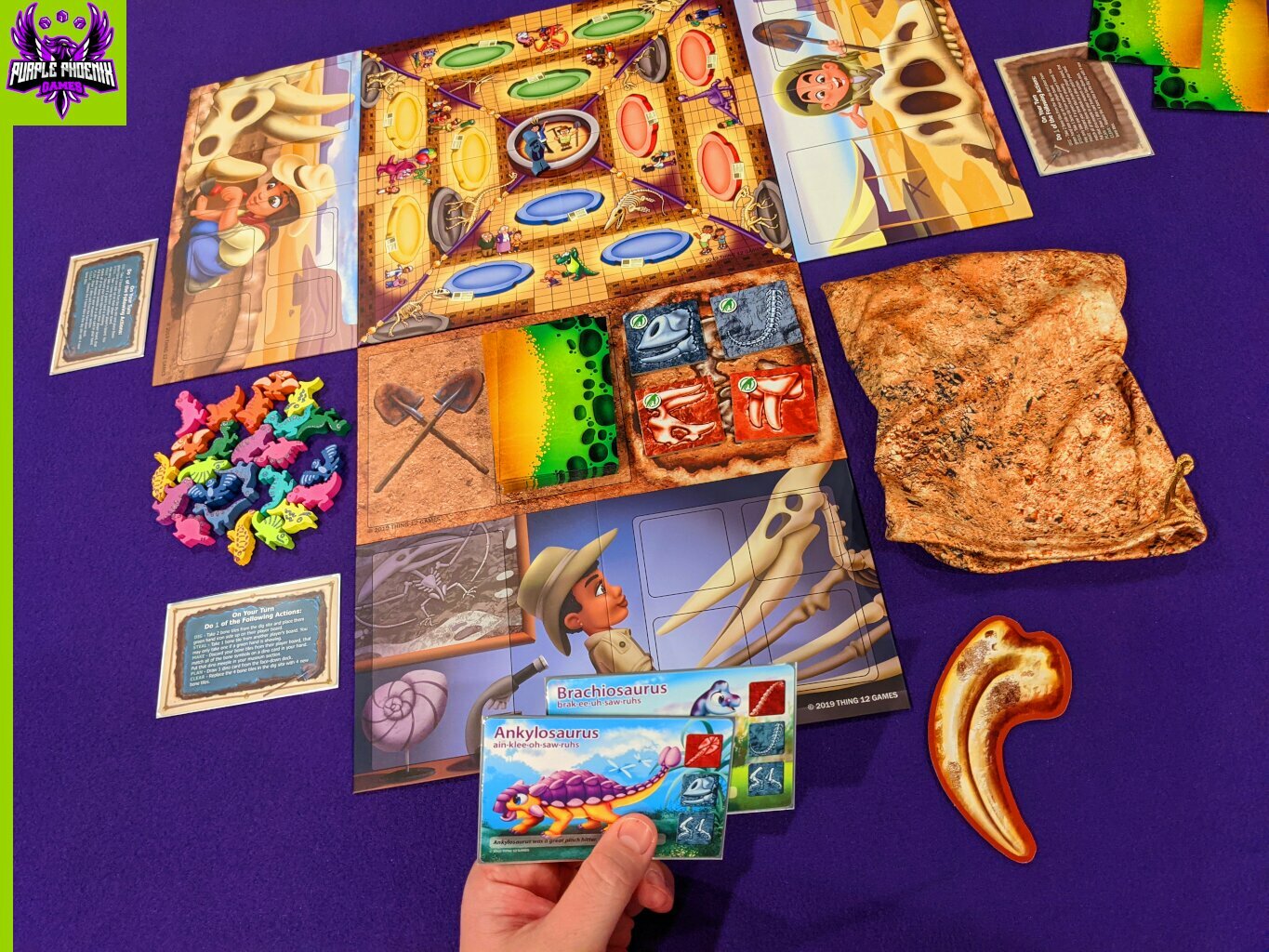
To setup place the main Museum Board and Dig Site Board in the middle of the table. The Dino Cards are shuffled and each player receives two cards. In addition each player will choose their Character Boards and section of the museum. All Bone Tiles are shuffled into the Dirt Sack, four of these tiles are drawn and displayed on the Dig Site Board, and the Dino Meeples are placed on the table nearby. The first player receives the velociraptor talon (in my copy) and the game may begin!
On a turn a player may perform one action from a choice of five actions: Dig, Steal, Clear, Make, Plan. Since the players are attempting to build their dinosaur skeletons based on the necessary tile types from their Dino Cards, players may Dig by selecting two Bone Tiles from the Dig Site Board to add to their Character Board. Players may never have more than four tiles at any one time. Perhaps the Dig Site Board offers nothing of interest to the active player. The active player may choose to instead Steal one Bone Tile from another player onto their own Character Board. When this happens the player that was just stolen from alerts the Security Meeple and they take the meeple to their Character Board to signify they may not be stolen from again until another player has suffered a Steal action. The active player may choose to instead Clear the board by removing the tiles on offer and drawing four new tiles to the board.
Once a player has collected the necessary Bone Tiles to build a dino skeleton they may Make the skeleton. This requires the player to discard their Bone Tiles back to the Dirt Sack (which I mistakenly kept calling the Dirt Bag), place their completed Dino Card on their Character Board, and place the appropriate Dino Meeple on one of their museum spaces. This player is now one dino closer to winning the game.
If none of these options suit the active player they may always Plan a new dig by drawing a Dino Card from the pile on the Dig Site Board and adding it to their hand. Players may not hold more than three Dino Cards at any one time.
Play continues in this manner of players choosing one action to perform on their turn until one player has made their third dino skeleton. That player wins the game and then gloats to their father. I mean, that didn’t happen…
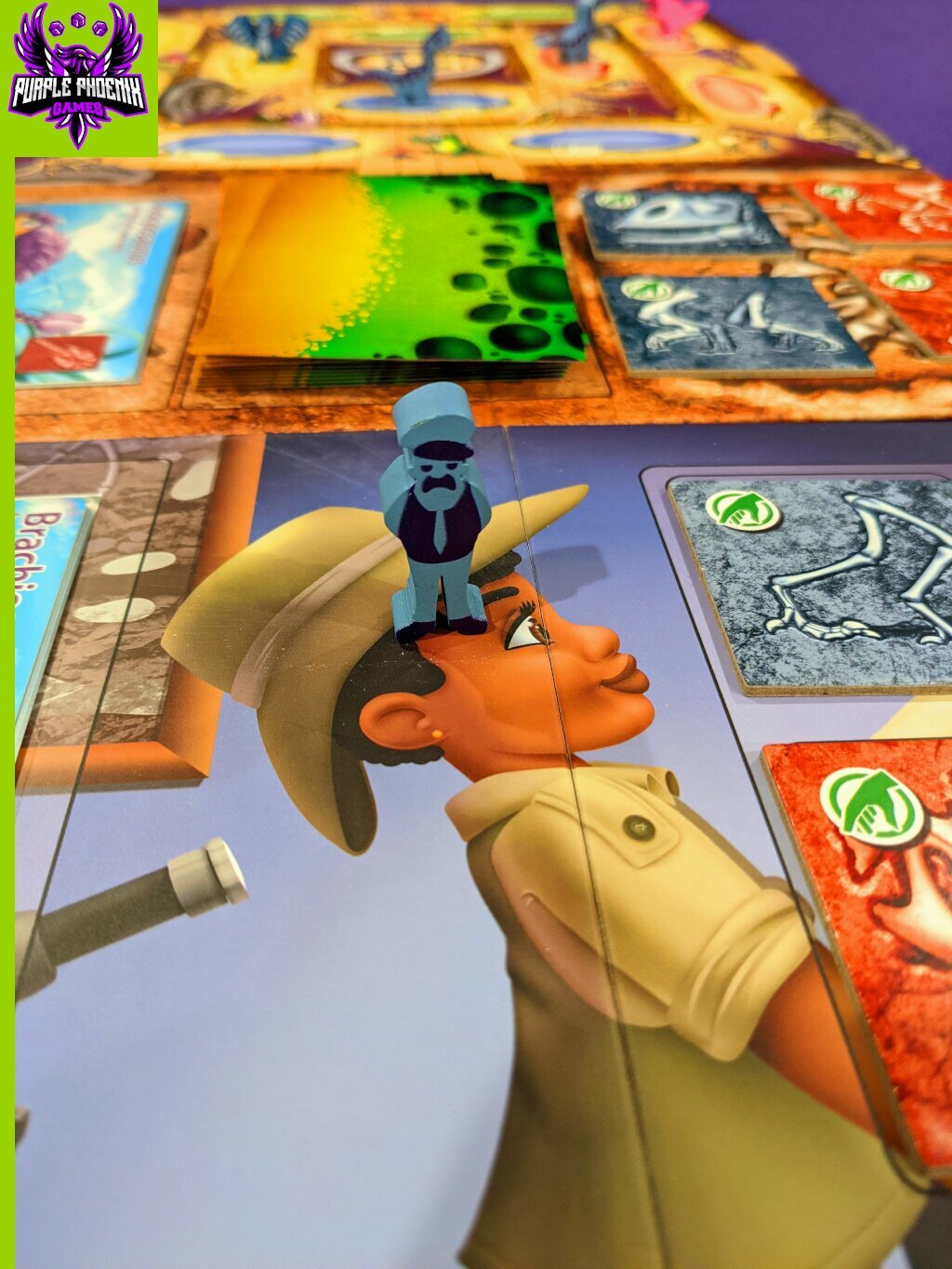
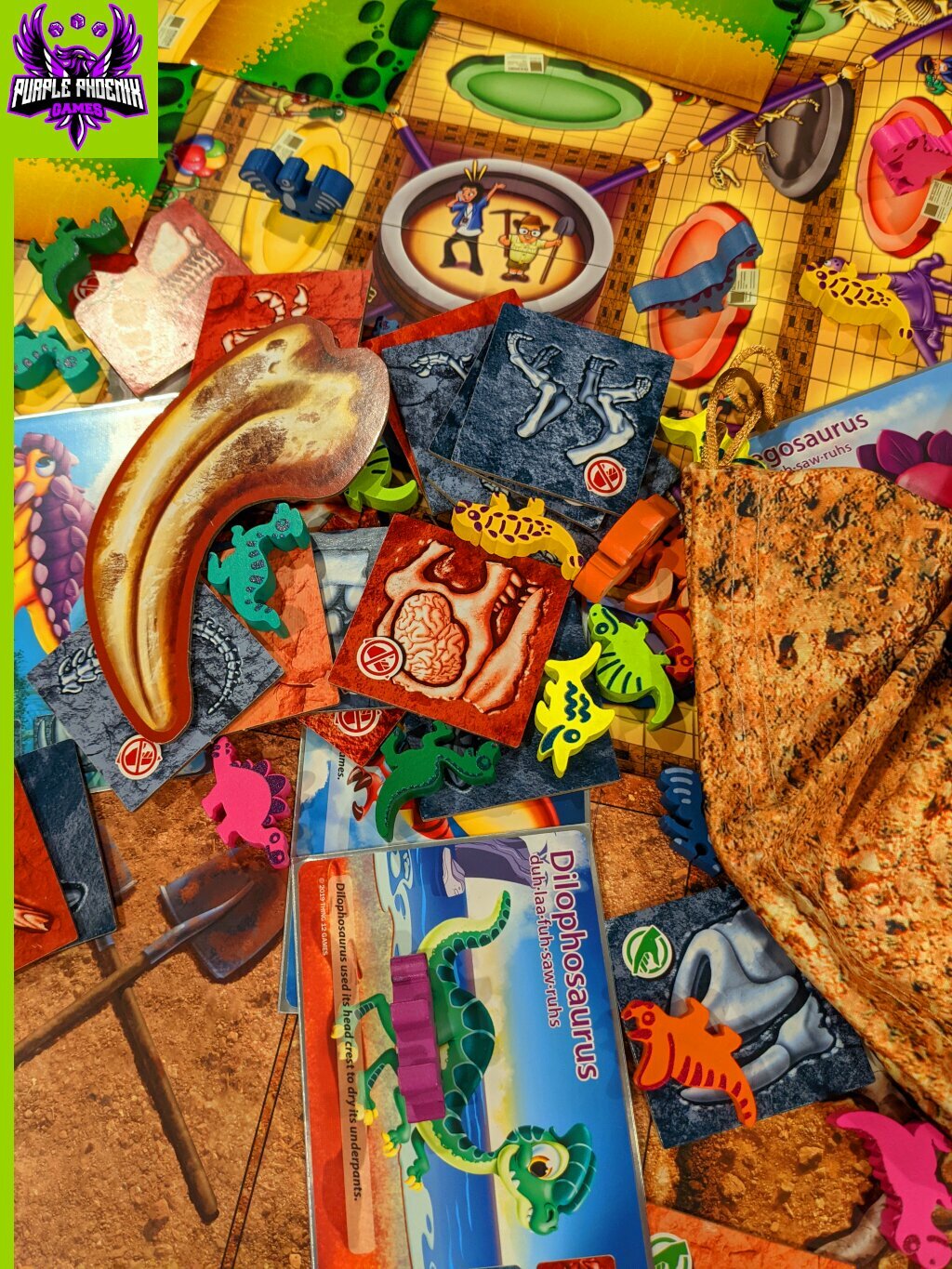
Components. This game is fabulously produced. The artwork is just perfect for this game. It is colorful, cartoony without being too wacky, and lovable all around. The components themselves are also very good quality. My favorite pieces are all the Dino Meeples and the fancy Security Meeple. Securiteeple?
For a game that states it is intended for players aged eight and above this is a great family game. Yes, my four year old plays it and loves it, and absolutely zero reading skills are necessary to play. The Dino Cards have some fun facts on them, but are not required to enjoy the game. Once players truly understand the five actions that can be taken (and it may take several turns to click) the game is a breeze and flows really well. I would caution gamers playing with younger kids that the Steal action may cause some tears, but it can be used as an essential teaching moment.
Even with strictly adults this game is excellent. Very light and gateway, but still very enjoyable. There is just something about collecting dinosaur bones and building your beasts, but having to also struggle with deciding which bones to keep and which to pass on, as your board can only hold four tiles at a time, but each dinosaur requires three bones to complete. It can be a tasty balancing act of resource collection that I truly love.
This all said Purple Phoenix Games gives this one a very enthusiastic 11 / 12, with a guest score from my son. If your collection lacks a great family game for younger gamers or you are completely invested in the dinosaur theme then this one is a no-brainer. If you enjoy family games with a little bit of take-that, then this is a little gem for you to consider. I am so glad to have this in my collection and my son is already asking to be its caretaker. He has only ever requested two games to ever become “his,” and this is one of them. High praise from the son of a game reviewer.
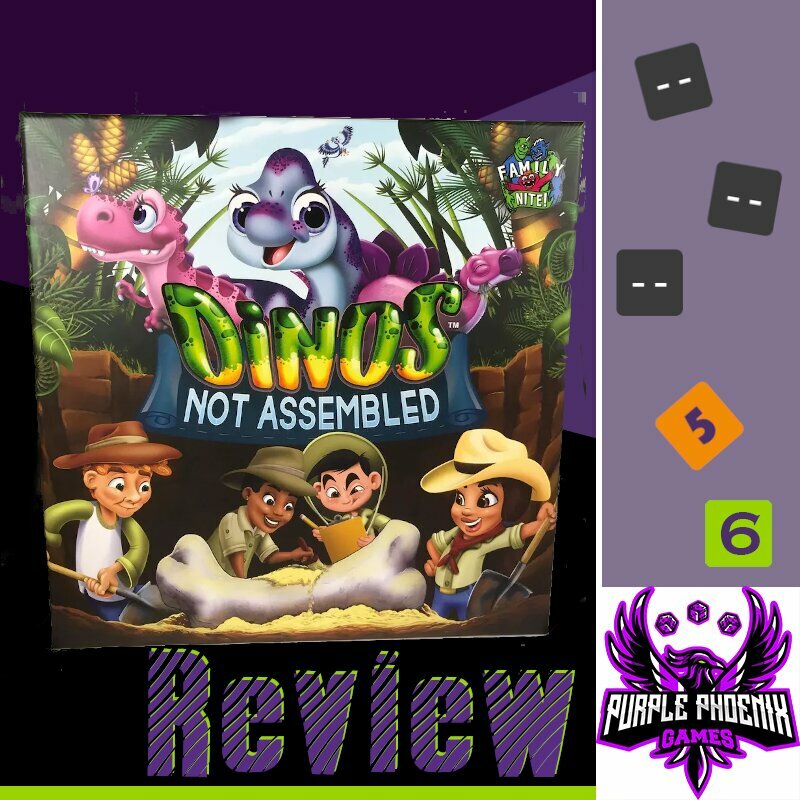
Dinos Not Assembled is a competitive set collection board game with hints of take-that for two to four players that can be enjoyed by players as young as four years old (I know this because my son is four and he loves it). In it players are acting as assistant paleontologists vying for the prestigious opportunity to join a world-famous paleo on their next dig. The player who is first to display three complete dinosaur skeletons in their portion of the museum will win the chance to go on the dig and win the game.
DISCLAIMER: We were provided a copy of this game for the purposes of this review. This is a retail copy of the game, so what you see in these photos is exactly what would be received in your box. I do not intend to cover every single rule included in the rulebook, but will describe the overall game flow and major rule set so that our readers may get a sense of how the game plays. For more in depth rules, you may purchase a copy online or from your FLGS. -T
To setup place the main Museum Board and Dig Site Board in the middle of the table. The Dino Cards are shuffled and each player receives two cards. In addition each player will choose their Character Boards and section of the museum. All Bone Tiles are shuffled into the Dirt Sack, four of these tiles are drawn and displayed on the Dig Site Board, and the Dino Meeples are placed on the table nearby. The first player receives the velociraptor talon (in my copy) and the game may begin!
On a turn a player may perform one action from a choice of five actions: Dig, Steal, Clear, Make, Plan. Since the players are attempting to build their dinosaur skeletons based on the necessary tile types from their Dino Cards, players may Dig by selecting two Bone Tiles from the Dig Site Board to add to their Character Board. Players may never have more than four tiles at any one time. Perhaps the Dig Site Board offers nothing of interest to the active player. The active player may choose to instead Steal one Bone Tile from another player onto their own Character Board. When this happens the player that was just stolen from alerts the Security Meeple and they take the meeple to their Character Board to signify they may not be stolen from again until another player has suffered a Steal action. The active player may choose to instead Clear the board by removing the tiles on offer and drawing four new tiles to the board.
Once a player has collected the necessary Bone Tiles to build a dino skeleton they may Make the skeleton. This requires the player to discard their Bone Tiles back to the Dirt Sack (which I mistakenly kept calling the Dirt Bag), place their completed Dino Card on their Character Board, and place the appropriate Dino Meeple on one of their museum spaces. This player is now one dino closer to winning the game.
If none of these options suit the active player they may always Plan a new dig by drawing a Dino Card from the pile on the Dig Site Board and adding it to their hand. Players may not hold more than three Dino Cards at any one time.
Play continues in this manner of players choosing one action to perform on their turn until one player has made their third dino skeleton. That player wins the game and then gloats to their father. I mean, that didn’t happen…
Components. This game is fabulously produced. The artwork is just perfect for this game. It is colorful, cartoony without being too wacky, and lovable all around. The components themselves are also very good quality. My favorite pieces are all the Dino Meeples and the fancy Security Meeple. Securiteeple?
For a game that states it is intended for players aged eight and above this is a great family game. Yes, my four year old plays it and loves it, and absolutely zero reading skills are necessary to play. The Dino Cards have some fun facts on them, but are not required to enjoy the game. Once players truly understand the five actions that can be taken (and it may take several turns to click) the game is a breeze and flows really well. I would caution gamers playing with younger kids that the Steal action may cause some tears, but it can be used as an essential teaching moment.
Even with strictly adults this game is excellent. Very light and gateway, but still very enjoyable. There is just something about collecting dinosaur bones and building your beasts, but having to also struggle with deciding which bones to keep and which to pass on, as your board can only hold four tiles at a time, but each dinosaur requires three bones to complete. It can be a tasty balancing act of resource collection that I truly love.
This all said Purple Phoenix Games gives this one a very enthusiastic 11 / 12, with a guest score from my son. If your collection lacks a great family game for younger gamers or you are completely invested in the dinosaur theme then this one is a no-brainer. If you enjoy family games with a little bit of take-that, then this is a little gem for you to consider. I am so glad to have this in my collection and my son is already asking to be its caretaker. He has only ever requested two games to ever become “his,” and this is one of them. High praise from the son of a game reviewer.
Purple Phoenix Games (2266 KP) rated Top Pop in Tabletop Games
Jul 22, 2021

THANK YOU, TALON STRIKES STUDIOS! I recently moved from Illinois to Tennessee (where things are mostly “Coke”) and I have always grown up calling soft drinks “pop,” so when I saw a group was creating a game using the proper terminology, I jumped at the chance. Stackable bottlecaps AND a bidding mechanic? I’m so in. This may not be everyone’s jam, but it’s working for me!
Top Pop is a 2-5 player (well, I would say 3-5) card game of market penetration and territory influence. In it, players are representatives of rival pop manufacturers bent on skyrocketing their company’s popularity in various major cities across the country. The winning rep is they who can diversify their influence and hit influential cities hard and often.
DISCLAIMER: We were provided a prototype copy of this game for the purposes of this review. These are preview copy components, and I do not know for sure if the final components will be any different from these shown. Also, it is not my intention to detail every rule in the game, as there are just too many. You are invited to download the rulebook, back the game through the Kickstarter campaign, or through any retailers stocking it after fulfillment. -T
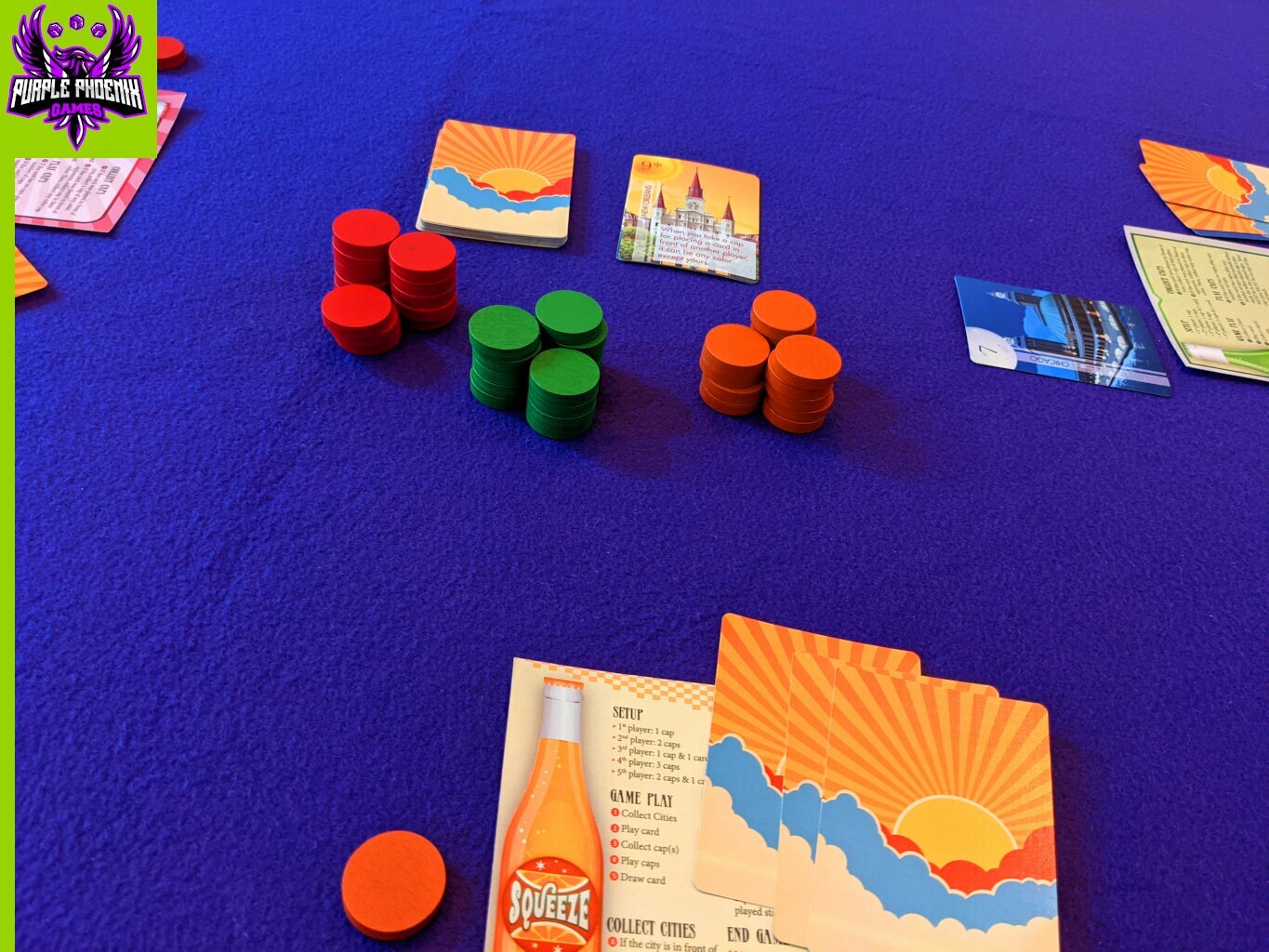
To setup a game of Top Pop, refer to the rulebook to determine the starting resources per number of players. Each game is setup differently depending on how many players are involved. Shuffle the deck of city cards, and if using the optional City Power or Scenario variants, place these cards on the table for all to access as well. Each player chooses a color, receives the appropriate starting resources and the game is ready to begin!
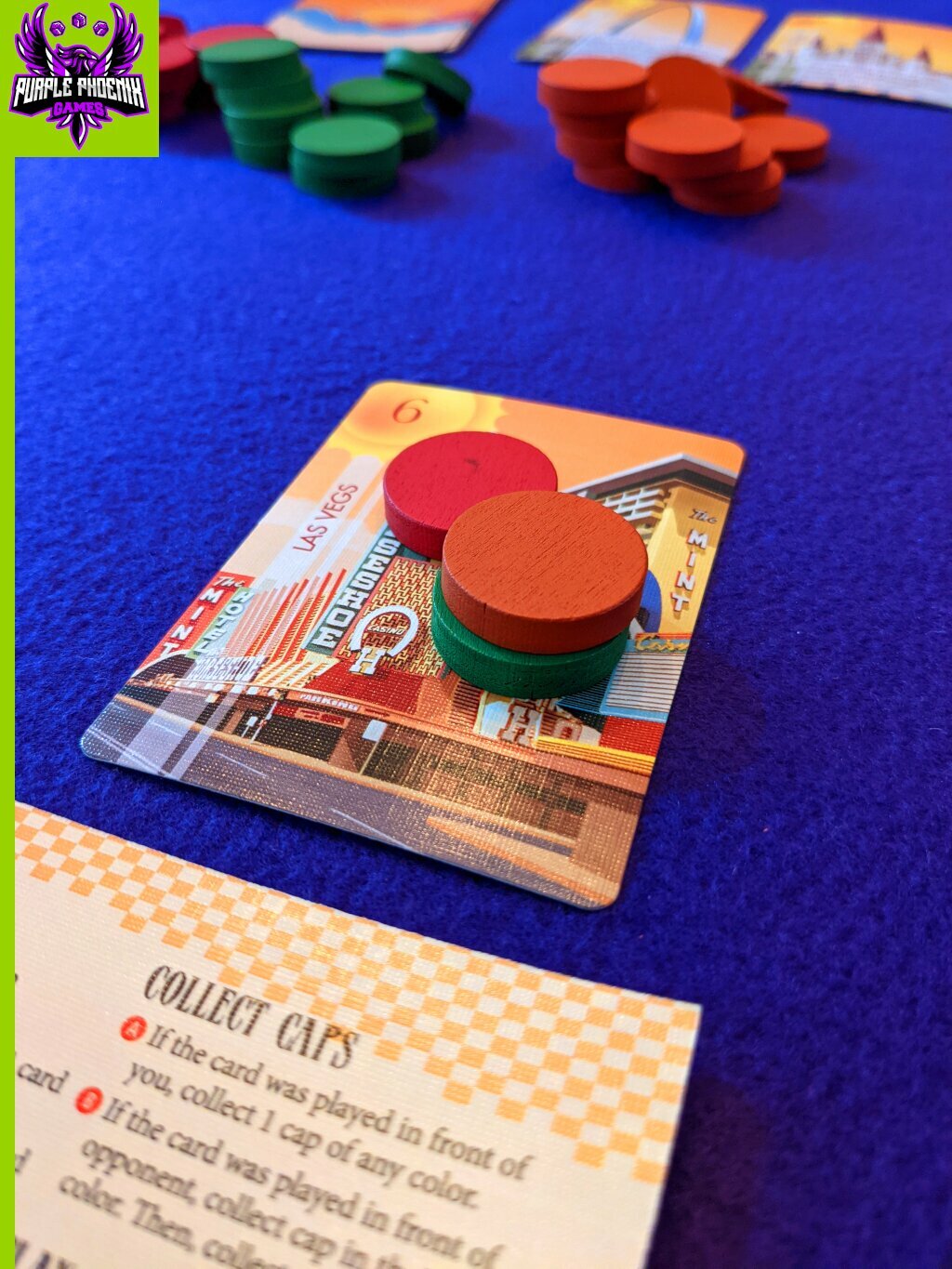
On the active player’s turn, they will complete the following steps: Collect City Cards, Play a City Card, Take Caps, Place Stacks, and then Draw a Card. The first turn of the game Collect City Cards is skipped, but after that, each card the active player owns the largest stack of tops on they will collect. Caps that were stacked on the card are redistributed depending on where the card was placed (in front of the active player or a rival player). Next, the player will Play a City Card from their hand either in front of themselves or in front of a rival player. This is an important step to consider because once a card has been claimed then caps are distributed according to card placement, as referenced in the first step. Also noteworthy here is that if a card is placed in front of a rival, the active player takes one of said rival’s caps (Take Caps) from the bank of caps in the middle of table as well as a cap of the active player’s choice.
Now that the active player presumably has some caps with which to play, they Place Stacks on any City Card(s) they wish. The stacks of caps need to be the tallest stack on the card, must include a cap of the same color of the player who currently owns the highest stack, and must also be topped with a cap of the active player’s color. Any amount of caps may be added to a City Card in order to achieve these requirements, and the active player may place stacks on any number of City Cards in play. Once the active player has placed all caps they wish, they must then Draw a Card and prepare for their next turn.
As City Cards are played, caps placed out in stacks, and players winning bids on cards, players are jockeying for endgame points. The game ends after a player collects their sixth City Card and every other player has a chance to spend their remaining caps to claim cards. At the end of the game, points are awarded for having simple majority in each city as well as points for collecting a more diversified set of City Cards. The player with the most points scored at the end of the game wins!
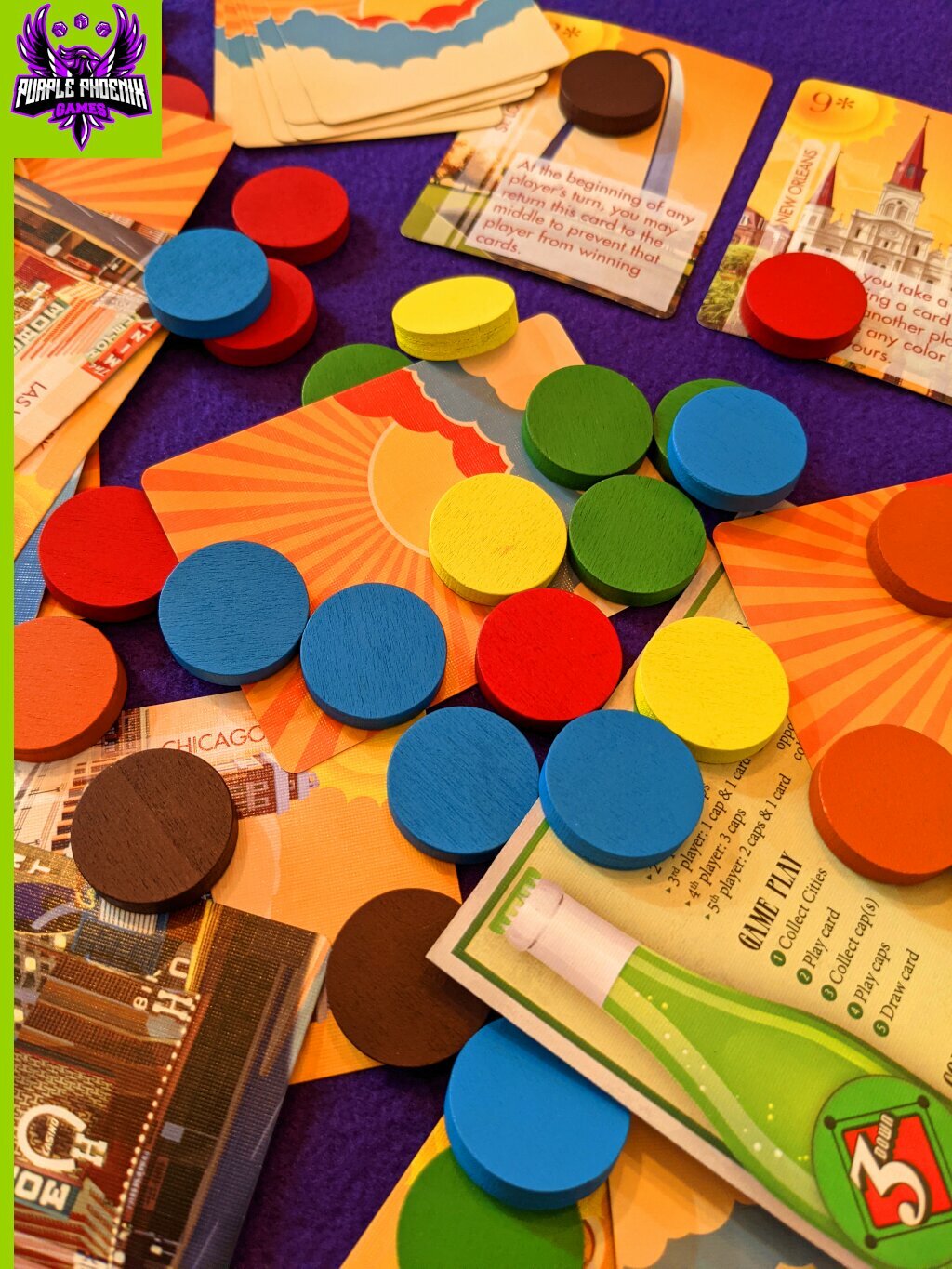
Components. Again, this is a prototype copy of the game, so components are in no way final. Most notably, the final copies of Top Pop will include nice plastic stackable bottlecaps that look way better than the painted wooden discs (which for a prototype, are actually quite nice). The City Cards look and feel complete to me, and are pretty impressive. I like the art quite a bit and the game’s style is spot on. I am very excited to see how this one ends up, and I think gamers will love handling the finished bottlecaps.
There is a lot going on here that is hard to put into words. I played this solely three-player and included the City Powers with a few Scenarios (Kickstarter exclusives, I understand). I found the base game to be very good, but adding in those optional rules really makes it pop for me (I know you saw what I did there). Every player is constantly engaged throughout, and the tactical play always has me considering tons of options. I would not necessarily want to play this with extremely AP-prone players, but it is quick enough to include them as well from time to time.
What I like most about Top Pop, in addition to the overall aesthetic (even in the prototype), is the tactics in watching what other players are collecting, where the cards are placed, and cross-referencing all that with your personal bottlecap economy. There are just so many things to consider on each turn that makes me hungry for more and more plays. I say this a lot, but when I think about a game and ways I would attack it differently outside of the game session, that is a mark of a great game to me. And this one is a great game to me.
If you are looking for a uniquely-themed bidding card game with (promised) excellent components, I urge you to check out the Kickstarter campaign, which ends August 7, 2021. And on a personal note, I’m so excited to have both Chicago and New Orleans in this game. Two of my favorite cities in the world!
Top Pop is a 2-5 player (well, I would say 3-5) card game of market penetration and territory influence. In it, players are representatives of rival pop manufacturers bent on skyrocketing their company’s popularity in various major cities across the country. The winning rep is they who can diversify their influence and hit influential cities hard and often.
DISCLAIMER: We were provided a prototype copy of this game for the purposes of this review. These are preview copy components, and I do not know for sure if the final components will be any different from these shown. Also, it is not my intention to detail every rule in the game, as there are just too many. You are invited to download the rulebook, back the game through the Kickstarter campaign, or through any retailers stocking it after fulfillment. -T
To setup a game of Top Pop, refer to the rulebook to determine the starting resources per number of players. Each game is setup differently depending on how many players are involved. Shuffle the deck of city cards, and if using the optional City Power or Scenario variants, place these cards on the table for all to access as well. Each player chooses a color, receives the appropriate starting resources and the game is ready to begin!
On the active player’s turn, they will complete the following steps: Collect City Cards, Play a City Card, Take Caps, Place Stacks, and then Draw a Card. The first turn of the game Collect City Cards is skipped, but after that, each card the active player owns the largest stack of tops on they will collect. Caps that were stacked on the card are redistributed depending on where the card was placed (in front of the active player or a rival player). Next, the player will Play a City Card from their hand either in front of themselves or in front of a rival player. This is an important step to consider because once a card has been claimed then caps are distributed according to card placement, as referenced in the first step. Also noteworthy here is that if a card is placed in front of a rival, the active player takes one of said rival’s caps (Take Caps) from the bank of caps in the middle of table as well as a cap of the active player’s choice.
Now that the active player presumably has some caps with which to play, they Place Stacks on any City Card(s) they wish. The stacks of caps need to be the tallest stack on the card, must include a cap of the same color of the player who currently owns the highest stack, and must also be topped with a cap of the active player’s color. Any amount of caps may be added to a City Card in order to achieve these requirements, and the active player may place stacks on any number of City Cards in play. Once the active player has placed all caps they wish, they must then Draw a Card and prepare for their next turn.
As City Cards are played, caps placed out in stacks, and players winning bids on cards, players are jockeying for endgame points. The game ends after a player collects their sixth City Card and every other player has a chance to spend their remaining caps to claim cards. At the end of the game, points are awarded for having simple majority in each city as well as points for collecting a more diversified set of City Cards. The player with the most points scored at the end of the game wins!
Components. Again, this is a prototype copy of the game, so components are in no way final. Most notably, the final copies of Top Pop will include nice plastic stackable bottlecaps that look way better than the painted wooden discs (which for a prototype, are actually quite nice). The City Cards look and feel complete to me, and are pretty impressive. I like the art quite a bit and the game’s style is spot on. I am very excited to see how this one ends up, and I think gamers will love handling the finished bottlecaps.
There is a lot going on here that is hard to put into words. I played this solely three-player and included the City Powers with a few Scenarios (Kickstarter exclusives, I understand). I found the base game to be very good, but adding in those optional rules really makes it pop for me (I know you saw what I did there). Every player is constantly engaged throughout, and the tactical play always has me considering tons of options. I would not necessarily want to play this with extremely AP-prone players, but it is quick enough to include them as well from time to time.
What I like most about Top Pop, in addition to the overall aesthetic (even in the prototype), is the tactics in watching what other players are collecting, where the cards are placed, and cross-referencing all that with your personal bottlecap economy. There are just so many things to consider on each turn that makes me hungry for more and more plays. I say this a lot, but when I think about a game and ways I would attack it differently outside of the game session, that is a mark of a great game to me. And this one is a great game to me.
If you are looking for a uniquely-themed bidding card game with (promised) excellent components, I urge you to check out the Kickstarter campaign, which ends August 7, 2021. And on a personal note, I’m so excited to have both Chicago and New Orleans in this game. Two of my favorite cities in the world!