
Search
Search results

Purple Phoenix Games (2266 KP) rated Lagoon: Land of Druids in Tabletop Games
Jun 12, 2019


One of the best parts of the board gaming experience is finding a fun group of people with whom to play! Sometimes, though, coordinating a game night is easier said than done. We all must occasionally forego the group experience and face the world as the Lonely Only. But fear not! The world of solo-play is a vast and exciting realm! What follows is a chronicle of my journey into the solo-playing world – notes on gameplay, mechanics, rules, difficulty, and overall experience with solo variations of commonly multiplayer games! I hope this will provide some insight as you continue to grow your collection, or explore your already owned games!
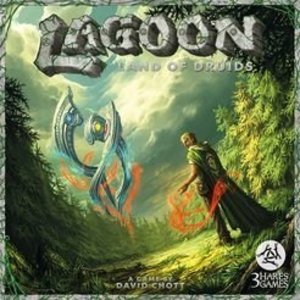
Lagoon is a land of harmony and balance. Or at least it WAS until the rise of humanity. The three spiritual energies that once existed in a perfect equilibrium are now fighting for dominance and control over the destiny of Lagoon. Each energy has amassed a following of druids who are working to ensure that their chosen energy is victorious! Which energy will you choose to serve, and will your choice be the correct one in the end? There’s only one way to find out!
Lagoon: Land of the Druids is a game of tile placement and exploration. You are the leader of a circle of druids, and they will do your bidding throughout the game. On your turn, you will take any/all of these five actions: Move, Summon (add one of your reserve druids to the play area), Explore (add a new site tile to the table), Invoke (use a Site Action), or Unravel (remove a site tile from play). You can perform as many of these actions as you want, as long as you have the appropriate resources to spend. Each tile in the game is double-sided, and each side has a unique action/ability associated with it. Strategy is everything – which tile side should you choose to bring into play, and how can you best use the available abilities to benefit your chosen energy? You also have to keep an eye on your opponents because they might be trying to undermine your plans to help their energy achieve success! The game ends when all tiles have been explored, and then players count up points dependent upon which energy was ultimately dominant. The player with the most points is the winner!
As a solo game, Lagoon plays similarly to the multi-player game. Instead of competing against other humans, you are playing against an AI opponent (fondly referred to as “AJ” in the rulebook). On its turn, alternating with yours, the AI executes three steps – Explore, Unravel, and Invoke (perform an action dependent on which druids the AI currently has in play). Each of those steps is explained in more detail in the rulebook. The game ends as in a normal group game, and the player (either you or the AI) with the highest score wins.
The first thing I should mention are the solo rules themselves – they are very wordy and contain lots of ambiguity. It took me a couple of read-throughs before I felt comfortable trying to play, and even now I still keep the solo rules easily accessible when I do play. With so many moving elements in this game, clear and concise rules are necessary for an unencumbered game.
When I say there are a lot of moving elements, I mean it. At any point, you could have up to 5 druids in play, with access to up to 5 unique site powers to invoke in addition to the basic actions you can take on your turn. And on top of that, your druids are spiritually connected, so a druid on one site can use the power of a different site as long as you have a druid there as well. There are also lots of opportunities to combo powers this way, and unless you’re 100% focused, you could lose track of what you already did or forget to pay for an action. And in a solo game, you’re not only tracking this for yourself, you also have to make sure you’re executing the AI turns correctly. There’s just a lot going on and it can be easy to accidentally skip a step.
The thing I dislike most about playing Lagoon solo is that I have to make decisions for the AI. When placing tiles on AI turns, I get to choose which side to play. When the AI unravels a site, I get to choose which site to remove. It’s hard to play this game honestly because I can just choose whatever will benefit ME the most, and not necessarily act in the AI’s best interest. Obviously, a human opponent would do whatever they want for themselves, but in a solo game I am in control of my opponent. The rulebook does offer ways to alleviate this, but I either honestly forget to refer back to the rules for certain situations, or I just choose to ignore the suggestions. I know, I know, that sounds like a personal problem. And I guess it is. I just don’t like the responsibility of having to play two competing sides because it is hard to stay honest. Since this game is so dependent on strategy and personal decisions, there is no good way for an AI opponent to be successful.
Lagoon: Land of the Druids is a complex game that requires more strategy than you think. That being said, I don’t like to play it solo. Each turn offers lots of opportunities, but so many options can be overwhelming. Having to make decisions for the AI is not enjoyable for me because I am aware that I do not always make the best decision for the AI – it’s just hard for me to consciously make decisions detrimental to my game. The idea of this game is neat, but the execution of the solo rules (from their editing to their actual gameplay) just doesn’t work well for me. Give it a try solo if you want, but you’re not really missing a lot if you don’t.
https://purplephoenixgames.wordpress.com/2019/03/11/solo-chronicles-lagoon-land-of-the-druids/
Lagoon is a land of harmony and balance. Or at least it WAS until the rise of humanity. The three spiritual energies that once existed in a perfect equilibrium are now fighting for dominance and control over the destiny of Lagoon. Each energy has amassed a following of druids who are working to ensure that their chosen energy is victorious! Which energy will you choose to serve, and will your choice be the correct one in the end? There’s only one way to find out!
Lagoon: Land of the Druids is a game of tile placement and exploration. You are the leader of a circle of druids, and they will do your bidding throughout the game. On your turn, you will take any/all of these five actions: Move, Summon (add one of your reserve druids to the play area), Explore (add a new site tile to the table), Invoke (use a Site Action), or Unravel (remove a site tile from play). You can perform as many of these actions as you want, as long as you have the appropriate resources to spend. Each tile in the game is double-sided, and each side has a unique action/ability associated with it. Strategy is everything – which tile side should you choose to bring into play, and how can you best use the available abilities to benefit your chosen energy? You also have to keep an eye on your opponents because they might be trying to undermine your plans to help their energy achieve success! The game ends when all tiles have been explored, and then players count up points dependent upon which energy was ultimately dominant. The player with the most points is the winner!
As a solo game, Lagoon plays similarly to the multi-player game. Instead of competing against other humans, you are playing against an AI opponent (fondly referred to as “AJ” in the rulebook). On its turn, alternating with yours, the AI executes three steps – Explore, Unravel, and Invoke (perform an action dependent on which druids the AI currently has in play). Each of those steps is explained in more detail in the rulebook. The game ends as in a normal group game, and the player (either you or the AI) with the highest score wins.
The first thing I should mention are the solo rules themselves – they are very wordy and contain lots of ambiguity. It took me a couple of read-throughs before I felt comfortable trying to play, and even now I still keep the solo rules easily accessible when I do play. With so many moving elements in this game, clear and concise rules are necessary for an unencumbered game.
When I say there are a lot of moving elements, I mean it. At any point, you could have up to 5 druids in play, with access to up to 5 unique site powers to invoke in addition to the basic actions you can take on your turn. And on top of that, your druids are spiritually connected, so a druid on one site can use the power of a different site as long as you have a druid there as well. There are also lots of opportunities to combo powers this way, and unless you’re 100% focused, you could lose track of what you already did or forget to pay for an action. And in a solo game, you’re not only tracking this for yourself, you also have to make sure you’re executing the AI turns correctly. There’s just a lot going on and it can be easy to accidentally skip a step.
The thing I dislike most about playing Lagoon solo is that I have to make decisions for the AI. When placing tiles on AI turns, I get to choose which side to play. When the AI unravels a site, I get to choose which site to remove. It’s hard to play this game honestly because I can just choose whatever will benefit ME the most, and not necessarily act in the AI’s best interest. Obviously, a human opponent would do whatever they want for themselves, but in a solo game I am in control of my opponent. The rulebook does offer ways to alleviate this, but I either honestly forget to refer back to the rules for certain situations, or I just choose to ignore the suggestions. I know, I know, that sounds like a personal problem. And I guess it is. I just don’t like the responsibility of having to play two competing sides because it is hard to stay honest. Since this game is so dependent on strategy and personal decisions, there is no good way for an AI opponent to be successful.
Lagoon: Land of the Druids is a complex game that requires more strategy than you think. That being said, I don’t like to play it solo. Each turn offers lots of opportunities, but so many options can be overwhelming. Having to make decisions for the AI is not enjoyable for me because I am aware that I do not always make the best decision for the AI – it’s just hard for me to consciously make decisions detrimental to my game. The idea of this game is neat, but the execution of the solo rules (from their editing to their actual gameplay) just doesn’t work well for me. Give it a try solo if you want, but you’re not really missing a lot if you don’t.
https://purplephoenixgames.wordpress.com/2019/03/11/solo-chronicles-lagoon-land-of-the-druids/
Purple Phoenix Games (2266 KP) rated Arctic Scavengers in Tabletop Games
Jun 12, 2019


One of the best parts of the board gaming experience is finding a fun group of people with whom to play! Sometimes, though, coordinating a game night is easier said than done. We all must occasionally forego the group experience and face the world as the Lonely Only. But fear not! The world of solo-play is a vast and exciting realm! What follows is a chronicle of my journey into the solo-playing world – notes on gameplay, mechanics, rules, difficulty, and overall experience with solo variations of commonly multiplayer games! I hope this will provide some insight as you continue to grow your collection, or explore your already owned games!
Welcome to the Ice Age. No, not the animated movie. I’m talking about the real deal. Arctic Scavengers is set in a post-apocalyptic ice age where the cold is deadly and the resources are scarce. Any surviving humans have banded together to form ‘tribes’ that are competing for dominance in this frigid tundra. Can you and your tribe outwit your competitors to become the most powerful group? Or will a bigger and more menacing tribe overpower you and jeopardize your survival?
Disclaimer: The solo variant is only addressed in the Recon Expansion rules. There IS another expansion – HQ – but I have not used that content in my solo plays. This review only encompasses the Base Game and Recon Expansion.
Arctic Scavengers is a deck-building game where players are recruiting mercenaries to their tribes, searching for general resources, and battling other tribes for contested resources. Each turn has two main phases – Resource Gathering and Skirmish. During Resource Gathering, you play cards from your hand to either recruit new mercenaries or search the junkyard for general resources. Any remaining cards in your hand are then used during the Skirmish phase – where the player with the highest ‘fight’ value wins the contested resource for that round. At the end of the game, the player with the biggest tribe wins!
The solo variant has some minor differences, but is played essentially the same way. In a solo game, the contested resource cards are divided into 7 skirmishes to be encountered throughout the game. You can decide when to engage in a skirmish – it is not a requirement to encounter one each turn. After each skirmish, you either win and earn a contested resource, or lose and must permanently discard a card from your losing hand. The game ends when all 7 skirmishes have been encountered. The other difference is that each time you have to re-shuffle your discard pile, you must permanently remove the top card of your new deck from the game. Beyond those changes, the game remains the same. At the end of the game, all cards in your tribe are worth certain numbers of points – the goal is to beat your own personal best score.
In theory, this game sounds super cool! But when I actually got to play it solo, I was seriously underwhelmed. The game feels stagnant in the sense that there is no tension or urgency in your strategy. Since YOU get to decide when to engage in a skirmish, it is possible to just while away the time building up your deck until you have enough cards to beat every skirmish. Yes, you permanently discard a card each time you re-shuffle your discard pile, but if you are able to recruit one or two new cards each turn, it negates the penalty of discarding a card. The ability to choose when to engage in skirmishes is seriously over-powered because there is nothing stopping you from ignoring skirmishes and amassing cards for end-game scoring.
The other grievance I have with the game is regarding the Junkyard – the deck of cards where you ‘search’ for resources. The solo rules do not explicitly address setting up the Junkyard deck at all. So do you use one or not? Not having the Junkyard deck can be a serious hinderance – certain mercenaries cannot be recruited without certain resources. If you DO play with the Junkyard, how many cards do you use? Do you use the corresponding cards from the Base game and BOTH expansions? Only Base game and one expansion? Again, not explicitly addressed. I’ve tried using all of the Junkyard cards and that is difficult – there are just too many cards in that deck. I have gone entire games without coming across a necessary resource just because the size of the deck is too large (and I’m apparently a poor card-shuffler). The simple solution to this ambiguity would have been to just address it in the rulebook. But it’s not there, so I’m left guessing as to how I should set it up every time.
I really like the idea of this game. I really don’t like the solo variant though. Not having forced skirmishes makes the game extremely boring for me – I don’t really need a strategy since I can just recruit cards until I can draw a powerful hand. If there was a timeline for skirmishes – maybe something like “You must encounter one skirmish every other turn” – the game would be vastly different. I would actually need to strategize what cards to recruit and how I should delegate my cards on turns with a skirmish. In most games, I will reach a certain point where I choose to encounter a skirmish (that I know I will lose) just because I am starting to get bored. I appreciate the sentiment of including a solo variant, but this one just does not work.
Arctic Scavengers requires decent strategy and it offers good player interaction in group games. In a solo game, however, it is just imbalanced and boring. This is one solo variant that I would not recommend that you try, unless you are including drastic house rules.
https://purplephoenixgames.wordpress.com/2019/03/06/solo-chronicles-arctic-scavengers/
Welcome to the Ice Age. No, not the animated movie. I’m talking about the real deal. Arctic Scavengers is set in a post-apocalyptic ice age where the cold is deadly and the resources are scarce. Any surviving humans have banded together to form ‘tribes’ that are competing for dominance in this frigid tundra. Can you and your tribe outwit your competitors to become the most powerful group? Or will a bigger and more menacing tribe overpower you and jeopardize your survival?
Disclaimer: The solo variant is only addressed in the Recon Expansion rules. There IS another expansion – HQ – but I have not used that content in my solo plays. This review only encompasses the Base Game and Recon Expansion.
Arctic Scavengers is a deck-building game where players are recruiting mercenaries to their tribes, searching for general resources, and battling other tribes for contested resources. Each turn has two main phases – Resource Gathering and Skirmish. During Resource Gathering, you play cards from your hand to either recruit new mercenaries or search the junkyard for general resources. Any remaining cards in your hand are then used during the Skirmish phase – where the player with the highest ‘fight’ value wins the contested resource for that round. At the end of the game, the player with the biggest tribe wins!
The solo variant has some minor differences, but is played essentially the same way. In a solo game, the contested resource cards are divided into 7 skirmishes to be encountered throughout the game. You can decide when to engage in a skirmish – it is not a requirement to encounter one each turn. After each skirmish, you either win and earn a contested resource, or lose and must permanently discard a card from your losing hand. The game ends when all 7 skirmishes have been encountered. The other difference is that each time you have to re-shuffle your discard pile, you must permanently remove the top card of your new deck from the game. Beyond those changes, the game remains the same. At the end of the game, all cards in your tribe are worth certain numbers of points – the goal is to beat your own personal best score.
In theory, this game sounds super cool! But when I actually got to play it solo, I was seriously underwhelmed. The game feels stagnant in the sense that there is no tension or urgency in your strategy. Since YOU get to decide when to engage in a skirmish, it is possible to just while away the time building up your deck until you have enough cards to beat every skirmish. Yes, you permanently discard a card each time you re-shuffle your discard pile, but if you are able to recruit one or two new cards each turn, it negates the penalty of discarding a card. The ability to choose when to engage in skirmishes is seriously over-powered because there is nothing stopping you from ignoring skirmishes and amassing cards for end-game scoring.
The other grievance I have with the game is regarding the Junkyard – the deck of cards where you ‘search’ for resources. The solo rules do not explicitly address setting up the Junkyard deck at all. So do you use one or not? Not having the Junkyard deck can be a serious hinderance – certain mercenaries cannot be recruited without certain resources. If you DO play with the Junkyard, how many cards do you use? Do you use the corresponding cards from the Base game and BOTH expansions? Only Base game and one expansion? Again, not explicitly addressed. I’ve tried using all of the Junkyard cards and that is difficult – there are just too many cards in that deck. I have gone entire games without coming across a necessary resource just because the size of the deck is too large (and I’m apparently a poor card-shuffler). The simple solution to this ambiguity would have been to just address it in the rulebook. But it’s not there, so I’m left guessing as to how I should set it up every time.
I really like the idea of this game. I really don’t like the solo variant though. Not having forced skirmishes makes the game extremely boring for me – I don’t really need a strategy since I can just recruit cards until I can draw a powerful hand. If there was a timeline for skirmishes – maybe something like “You must encounter one skirmish every other turn” – the game would be vastly different. I would actually need to strategize what cards to recruit and how I should delegate my cards on turns with a skirmish. In most games, I will reach a certain point where I choose to encounter a skirmish (that I know I will lose) just because I am starting to get bored. I appreciate the sentiment of including a solo variant, but this one just does not work.
Arctic Scavengers requires decent strategy and it offers good player interaction in group games. In a solo game, however, it is just imbalanced and boring. This is one solo variant that I would not recommend that you try, unless you are including drastic house rules.
https://purplephoenixgames.wordpress.com/2019/03/06/solo-chronicles-arctic-scavengers/
Purple Phoenix Games (2266 KP) rated Darkest Night (First edition) in Tabletop Games
Jun 12, 2019
One of the best parts of the board gaming experience is finding a fun group of people with whom to play! Sometimes, though, coordinating a game night is easier said than done. We all must occasionally forego the group experience and face the world as the Lonely Only. But fear not! The world of solo-play is a vast and exciting realm! What follows is a chronicle of my journey into the solo-playing world – notes on gameplay, mechanics, rules, difficulty, and overall experience with solo variations of commonly multiplayer games! I hope this will provide some insight as you continue to grow your collection, or explore your already owned games!
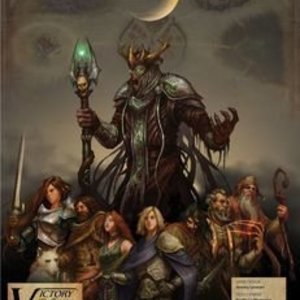
Once prosperous, your kingdom has fallen victim to a powerful Necromancer who has shrouded the realm in darkness. His minions traverse the land doing his bidding, and his army, as well as his powers, continue to grow. All hope is lost….or is it? Four heroes band together in a final attempt to defeat this evil being. Each brings unique powers and strategies to the table, and success will come in one of two ways – by defeating the Necromancer in direct combat, or by gathering Holy Relics and performing a ritual to undo his powers. But be warned: the Necromancer grows stronger with every passing moment, so be sure your chosen strategy is the right one. Otherwise you too will fall victim to the Necromancer’s might.
Darkest Night is a cooperative game where players take on the role of the heroes attempting to defeat the Necromancer. Each turn has 4 steps – Perform any start-of-turn actions, draw/resolve an Event card, perform one action, and defend against Blights (monsters). Each equipped with a unique set of powers, the heroes must work together to search the land for Holy Relics and destroy Blights before the kingdom is overrun. Once all of the heroes have had their turn, the Necromancer gets his turn, which entails advancing the Darkness track, moving towards the closest detected hero, and creating more Blights. Victory comes in two forms – ritual or combat. If the heroes collectively uncover three Holy Relics, they can use them in a ritual to break the Necromancer’s powers. Or if a hero gets strong enough, they could directly fight the Necromancer. If, at any point, the Monastery is overrun by Blights, the game ends in failure and the kingdom has fallen into darkness.
DISCLAIMER – This review is for the Darkest Night (First Edition) base game. There is a second edition, and several expansions, but I have not had experience with any of those, so my thoughts are solely based on the First Edition base game. -L
I’m just going to be up-front and let you know that I am not a huge fan of this game solo. The main reason is that this game is for four heroes, regardless of actual player count. So playing solo means that I have to control all four heroes. Controlling one hero, I can do. Controlling two heroes takes more focus, but is usually manageable. But controlling four heroes at once? Madness! At least for me it is. There is so much more for a single person to keep track of, and it can be pretty overwhelming. There are so many variables to keep track of, I often end up making mistakes – forgetting to draw Event cards, accidentally using one hero’s ability when it is a different hero’s turn, forgetting to give one hero a turn in a round because I thought they already had one, etc. If I am lucky, I will catch a mistake in-progress, or one turn later, and can rectify it. But to be honest, of all the mistakes I make while playing Darkest Night, I probably won’t catch 25% of them. Which can either make a game super easy, or super brutal. You might tell me, “Focus!” or “Pay better attention!” but believe me, I’m trying! I just feel like four heroes for one person is too much.
Patience is a virtue, but apparently I have none when it comes to this game. And by that, I mean that I feel like it takes an eternity to accomplish anything in this game. On your turn, you only get one single action. And movement is an action. Picture this – I am trying to move my hero to the opposite end of the kingdom (at least 2 spaces away). I am going to have to spend 2 complete rounds (active hero turn, other hero turns, Necromancer turn, x2) just to get there. And then once I finally get there, I have to wait for the 3rd round to even do anything in that location! I just get frustrated at the fact that something as simple as moving a few spaces takes multiple rounds to accomplish. Since everything takes so long to do, you have to be thinking so far into the future with every turn. That makes it difficult for me to strategize, and the game just feels so inefficient, especially in solo play, when you have to control all of the heroes. It can be tricky enough planning a few turns in advance for a single hero, but being in charge of all heroes just makes the job more complicated. And maybe I’m just not patient enough for this game, but I think that if every hero got two actions per turn, the game would be a lot more manageable.
This will come as no surprise to you, but I enjoy this game more in a group rather than solo. This game is cooperative, and I like being able to talk strategy with my fellow gamers, rather than trying to figure everything out for each of the four heroes by myself. Group play also allows me to focus my attention on one single hero instead of multiple, which makes the game feel less overwhelming to me. And perhaps the second edition or expansions address some of the issues I have with the game, but for the time being, Darkest Night is low on my list of solo games.
https://purplephoenixgames.wordpress.com/2019/01/04/solo-chronicles-darkest-night/
Once prosperous, your kingdom has fallen victim to a powerful Necromancer who has shrouded the realm in darkness. His minions traverse the land doing his bidding, and his army, as well as his powers, continue to grow. All hope is lost….or is it? Four heroes band together in a final attempt to defeat this evil being. Each brings unique powers and strategies to the table, and success will come in one of two ways – by defeating the Necromancer in direct combat, or by gathering Holy Relics and performing a ritual to undo his powers. But be warned: the Necromancer grows stronger with every passing moment, so be sure your chosen strategy is the right one. Otherwise you too will fall victim to the Necromancer’s might.
Darkest Night is a cooperative game where players take on the role of the heroes attempting to defeat the Necromancer. Each turn has 4 steps – Perform any start-of-turn actions, draw/resolve an Event card, perform one action, and defend against Blights (monsters). Each equipped with a unique set of powers, the heroes must work together to search the land for Holy Relics and destroy Blights before the kingdom is overrun. Once all of the heroes have had their turn, the Necromancer gets his turn, which entails advancing the Darkness track, moving towards the closest detected hero, and creating more Blights. Victory comes in two forms – ritual or combat. If the heroes collectively uncover three Holy Relics, they can use them in a ritual to break the Necromancer’s powers. Or if a hero gets strong enough, they could directly fight the Necromancer. If, at any point, the Monastery is overrun by Blights, the game ends in failure and the kingdom has fallen into darkness.
DISCLAIMER – This review is for the Darkest Night (First Edition) base game. There is a second edition, and several expansions, but I have not had experience with any of those, so my thoughts are solely based on the First Edition base game. -L
I’m just going to be up-front and let you know that I am not a huge fan of this game solo. The main reason is that this game is for four heroes, regardless of actual player count. So playing solo means that I have to control all four heroes. Controlling one hero, I can do. Controlling two heroes takes more focus, but is usually manageable. But controlling four heroes at once? Madness! At least for me it is. There is so much more for a single person to keep track of, and it can be pretty overwhelming. There are so many variables to keep track of, I often end up making mistakes – forgetting to draw Event cards, accidentally using one hero’s ability when it is a different hero’s turn, forgetting to give one hero a turn in a round because I thought they already had one, etc. If I am lucky, I will catch a mistake in-progress, or one turn later, and can rectify it. But to be honest, of all the mistakes I make while playing Darkest Night, I probably won’t catch 25% of them. Which can either make a game super easy, or super brutal. You might tell me, “Focus!” or “Pay better attention!” but believe me, I’m trying! I just feel like four heroes for one person is too much.
Patience is a virtue, but apparently I have none when it comes to this game. And by that, I mean that I feel like it takes an eternity to accomplish anything in this game. On your turn, you only get one single action. And movement is an action. Picture this – I am trying to move my hero to the opposite end of the kingdom (at least 2 spaces away). I am going to have to spend 2 complete rounds (active hero turn, other hero turns, Necromancer turn, x2) just to get there. And then once I finally get there, I have to wait for the 3rd round to even do anything in that location! I just get frustrated at the fact that something as simple as moving a few spaces takes multiple rounds to accomplish. Since everything takes so long to do, you have to be thinking so far into the future with every turn. That makes it difficult for me to strategize, and the game just feels so inefficient, especially in solo play, when you have to control all of the heroes. It can be tricky enough planning a few turns in advance for a single hero, but being in charge of all heroes just makes the job more complicated. And maybe I’m just not patient enough for this game, but I think that if every hero got two actions per turn, the game would be a lot more manageable.
This will come as no surprise to you, but I enjoy this game more in a group rather than solo. This game is cooperative, and I like being able to talk strategy with my fellow gamers, rather than trying to figure everything out for each of the four heroes by myself. Group play also allows me to focus my attention on one single hero instead of multiple, which makes the game feel less overwhelming to me. And perhaps the second edition or expansions address some of the issues I have with the game, but for the time being, Darkest Night is low on my list of solo games.
https://purplephoenixgames.wordpress.com/2019/01/04/solo-chronicles-darkest-night/

Kristy H (1252 KP) rated Truly Madly Guilty in Books
Feb 13, 2018
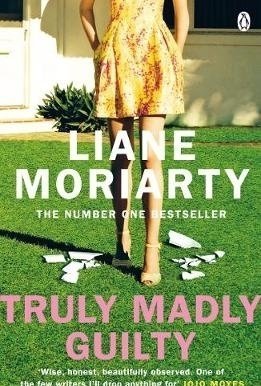

Erika has the whole event planned: an afternoon tea with her friend, Clementine, Clementine's husband, Sam, and the couple's two young daughters, Holly and Ruby. She even has a glittery art table set up for the youngsters. But the day is derailed when Erika runs into her next-door neighbor, Vid, who invites both couples over for a last minute barbecue. Erika and her husband, Oliver, aren't the last minute types; besides, they had something they needed to talk about with Clementine and Sam. But, Erika feels like obligated to say yes. Clementine and Sam are secretly relieved, as Vid and his beautiful wife Tiffany are far more personable than Erika and Oliver. The afternoon starts off well enough; Tiffany and Vid's daughter, Dakota, is even happy enough to hang out with Holly and Ruby. But by the time the night is over, lives will be changed, and all the adults--Sam and Clementine in particular--will find themselves wishing they never attended this impromptu event.
So we all know the drill by now. Liane Moriarty is a well-known master of dramatic suspense, especially at capturing the tension that hides behind ordinary lives. I went through a period where I read all of Moriarty's books; [b:What Alice Forgot|6469165|What Alice Forgot|Liane Moriarty|https://d.gr-assets.com/books/1377159022s/6469165.jpg|6659752] and her last novel, [b:Big Little Lies|19486412|Big Little Lies|Liane Moriarty|https://d.gr-assets.com/books/1399582436s/19486412.jpg|27570886], rank as two of my particular favorites. Anyway, Moriarty has become rather famous in the book world, with [b:Big Little Lies|19486412|Big Little Lies|Liane Moriarty|https://d.gr-assets.com/books/1399582436s/19486412.jpg|27570886] being made into a 7-episode HBO TV series, starring Reese Witherspoon and Nicole Kidman.
Of course, with such fame comes great responsibility. And pressure. Can a new work live up to the hype and excitement of the previous? This one will divide readers. It certainly has all the hallmarks of a typical Moriarty novel: a cast of women (and men) living ordinary lives on the surface, with a hidden veneer beneath. There's a secret layer to all of Moriarty's characters, though the drama associated with those in [b:Truly Madly Guilty|26247008|Truly Madly Guilty|Liane Moriarty|https://d.gr-assets.com/books/1467061262s/26247008.jpg|49997474] may not live up to some of her other novels.
First of all, this book will frustrate you. The beginning is incredibly maddening, as Moriarty starts leading up to the events that happened at the barbecue... in slow, excruciating detail. As she does so, we alternate chapters with the present, with the point-of-view told from our various characters. We have Erika, a slightly repressed accountant whose life has been formed around her stressful childhood as the only daughter of her hoarder mother, and Erika's husband, Oliver, her equally steady mate, who grew up with alcoholic parents and longs for the same order in life as Erika. Clementine and Erika have been friends since childhood, when Clementine basically felt Erika's friendship was forced upon her by Clementine's social worker mother, who felt bad for Erika and her flea-infested home. Clementine is a cellist and a bit of a free spirit, but she's balanced by her more grounded husband Sam, who works in business at an energy drink company. They are parents to five-year-old Holly and two-year-old, Ruby. And then, finally, we have Erika and Oliver's neighbors, Vid and Tiffany. Swarthy, wealthy Vid is a joyous, open man who loves sharing his home (and his food) with friends and family. His gorgeous wife Tiffany is his pride and joy. Their quiet 10-year-old daughter, Dakota, just loves to read.
See how I just distracted you from the events of the barbecue by a description of the characters? Imagine that, for pages and pages! It's a great technique, don't get me wrong, but there was one point where I truly wanted to fling the book across the room. "JUST TELL ME WHAT HAPPENS!" I actually shouted in my (thankfully empty) bedroom. I've read some reviews that state that the big reveal, when it happens, isn't shocking enough, but I disagree: I think that event would certainly change my life and haunt my dreams (no more than that; a spoiler will truly ruin this book).
So while this novel can be a bit frustrating, it really is a Liane Moriarty book. It's compulsively readable. At first, I thought it was a very detailed look at three self-involved couples, but over time, I realized I had really fallen for Erika and Oliver and eventually, Tiffany and Vid, too (and Dakota, I loved Dakota!). Moriarty has a way of humanizing her characters and differentiating each from another: they all stand as individuals. Even Sam and Clementine, who were my least favorites, were their own people. It's the tiny details and pieces about each that she sticks in that really build your picture of each character in your mind. Much of the book takes place in the rain, and I could truly visualize each character and every event, unspooling, in this torrential Sydney downpour.
Overall, this book connected with me less on a dramatic, "oh my gosh" level (though that exists) but more on an emotional one. It speaks to the guilt we can all feel about life events--adults and kids alike--and potentially carry with us all of our days. Not a lot may happen in the book, per se, yet it's really a strong story of friendship, marriage, life, and loss. When I framed it in that perspective, versus looking purely for moments of dramatic tension, I realized I'd really enjoyed it. A strong 3.5 stars and definitely worth picking up. Just keep an open mind.
<a href="http://justacatandabookatherside.blogspot.com/">My Blog</a> ~ <a href="https://www.facebook.com/justacatandabook/">Facebook</a>; ~ <a href="https://twitter.com/mwcmoto">Twitter</a>;
So we all know the drill by now. Liane Moriarty is a well-known master of dramatic suspense, especially at capturing the tension that hides behind ordinary lives. I went through a period where I read all of Moriarty's books; [b:What Alice Forgot|6469165|What Alice Forgot|Liane Moriarty|https://d.gr-assets.com/books/1377159022s/6469165.jpg|6659752] and her last novel, [b:Big Little Lies|19486412|Big Little Lies|Liane Moriarty|https://d.gr-assets.com/books/1399582436s/19486412.jpg|27570886], rank as two of my particular favorites. Anyway, Moriarty has become rather famous in the book world, with [b:Big Little Lies|19486412|Big Little Lies|Liane Moriarty|https://d.gr-assets.com/books/1399582436s/19486412.jpg|27570886] being made into a 7-episode HBO TV series, starring Reese Witherspoon and Nicole Kidman.
Of course, with such fame comes great responsibility. And pressure. Can a new work live up to the hype and excitement of the previous? This one will divide readers. It certainly has all the hallmarks of a typical Moriarty novel: a cast of women (and men) living ordinary lives on the surface, with a hidden veneer beneath. There's a secret layer to all of Moriarty's characters, though the drama associated with those in [b:Truly Madly Guilty|26247008|Truly Madly Guilty|Liane Moriarty|https://d.gr-assets.com/books/1467061262s/26247008.jpg|49997474] may not live up to some of her other novels.
First of all, this book will frustrate you. The beginning is incredibly maddening, as Moriarty starts leading up to the events that happened at the barbecue... in slow, excruciating detail. As she does so, we alternate chapters with the present, with the point-of-view told from our various characters. We have Erika, a slightly repressed accountant whose life has been formed around her stressful childhood as the only daughter of her hoarder mother, and Erika's husband, Oliver, her equally steady mate, who grew up with alcoholic parents and longs for the same order in life as Erika. Clementine and Erika have been friends since childhood, when Clementine basically felt Erika's friendship was forced upon her by Clementine's social worker mother, who felt bad for Erika and her flea-infested home. Clementine is a cellist and a bit of a free spirit, but she's balanced by her more grounded husband Sam, who works in business at an energy drink company. They are parents to five-year-old Holly and two-year-old, Ruby. And then, finally, we have Erika and Oliver's neighbors, Vid and Tiffany. Swarthy, wealthy Vid is a joyous, open man who loves sharing his home (and his food) with friends and family. His gorgeous wife Tiffany is his pride and joy. Their quiet 10-year-old daughter, Dakota, just loves to read.
See how I just distracted you from the events of the barbecue by a description of the characters? Imagine that, for pages and pages! It's a great technique, don't get me wrong, but there was one point where I truly wanted to fling the book across the room. "JUST TELL ME WHAT HAPPENS!" I actually shouted in my (thankfully empty) bedroom. I've read some reviews that state that the big reveal, when it happens, isn't shocking enough, but I disagree: I think that event would certainly change my life and haunt my dreams (no more than that; a spoiler will truly ruin this book).
So while this novel can be a bit frustrating, it really is a Liane Moriarty book. It's compulsively readable. At first, I thought it was a very detailed look at three self-involved couples, but over time, I realized I had really fallen for Erika and Oliver and eventually, Tiffany and Vid, too (and Dakota, I loved Dakota!). Moriarty has a way of humanizing her characters and differentiating each from another: they all stand as individuals. Even Sam and Clementine, who were my least favorites, were their own people. It's the tiny details and pieces about each that she sticks in that really build your picture of each character in your mind. Much of the book takes place in the rain, and I could truly visualize each character and every event, unspooling, in this torrential Sydney downpour.
Overall, this book connected with me less on a dramatic, "oh my gosh" level (though that exists) but more on an emotional one. It speaks to the guilt we can all feel about life events--adults and kids alike--and potentially carry with us all of our days. Not a lot may happen in the book, per se, yet it's really a strong story of friendship, marriage, life, and loss. When I framed it in that perspective, versus looking purely for moments of dramatic tension, I realized I'd really enjoyed it. A strong 3.5 stars and definitely worth picking up. Just keep an open mind.
<a href="http://justacatandabookatherside.blogspot.com/">My Blog</a> ~ <a href="https://www.facebook.com/justacatandabook/">Facebook</a>; ~ <a href="https://twitter.com/mwcmoto">Twitter</a>;

Gareth von Kallenbach (980 KP) rated the PC version of South Park: The Stick of Truth in Video Games
Jun 19, 2019


Following several delays after the collapse of THQ, Obsidian’s South Park: The Stick of Truth has been released to critical acclaim. Not only is the game the best adaptation of the hit animated series to date for gamers, the one could argue that it is the best videogame based on an animated series to ever be released. This is a pretty bold statement but the game backs it up time and time again with its engaging story, considerable gameplay length, and an abundance of laughs many of which are cringe worthy.
Playing is a new kid in town was tasked by his parents to go out and make friends, you quickly find yourself in the company of Cartman and his cronies who are busy playing a fantasy game involving the legendary Stick of Truth. Despite the fact that the stick is nothing more than a piece of wood, all manner of importance is placed upon it and when a rival faction steals it, it falls to the players to retrieve the stick and save the day.
Players will be accompanied by various characters in the game ranging from Butters to Stan, Kyle, Kenny, Jimmy, and Cartman he to whom have their own special abilities and combat technique. At various points in the game players may have to call upon a player in order to use their unique ability in order to solve one of the game’s many puzzles. The entire map of South Park is highly detailed and loaded with countless references to the show. Players are free to explore the town, interact with various characters, and embark on side quests that have no bearing on the story and are not required to complete the main part of the game.
The key is exploration as obtaining items which can be sold as a vital part of the game as health power ups in the form of snack foods and other supplements are essential to surviving the numerous combat opportunities in the game.
At first it took a little getting used to but being able to equip your characters in costumes and weapons in order to complete the quests and solve various puzzles is an essential part of the game.
While it is basically role-playing game at its heart, The Stick of Truth is essentially like being in a season of the show that happens to have a connected and continuous plot. There are numerous twists and turns and surprises in the game ranging from alien abductions, government conspiracies, venturing to Canada, and so much more.
Combat in the game usually involves two players and players who alternate between powering up attacking defensive abilities, using super moves which players can select and customize, and attacking with your primary or secondary weapons.
The game has a very elaborate social network is various characters who you friend along the way will offer hints and suggestions to you and being able to obtain items to power up your weapons is a hysterical and vital part of the game.
I have put in over 17 hours of gameplay into completing the main story the game and a few of the side quests but I have not completed all of the options that are available in the game. This gives you an idea of the scope of the game and thankfully the designers allow a rapid transit system courtesy of Timmy to help you traverse the map. The abundance of characters both featured in supporting from the series show up the game and there are countless nods to numerous other episodes including the classic Sexual Harassment Panda theme that brought a smile to my face when I heard blaring over the and offices PA system while I was exploring.
There are puzzles to solve the game most of which involve thinking outside the box although some are very straightforward. It is important to remember that when you are dealing with the town of South Park expecting the unexpected is par for the course so any game that would have you battle the Underpants Gnomes in a shrunken state while your parents graphically consummate their marriage above you should give you an idea about humor in the game.
The game is not in any way politically correct, for children, or for those easily offended, but if you’re a fan of the series you know what to expect and the game delivers it in droves. The laughs are numerous and hysterical as abs constantly shocked just how far certain sequences would be taken but delighted nonetheless.
There were a few minor glitches now and then but nothing that severely hampered my gameplay experience other than a few graphical drops and legs now and then on the PC version of the game. For me this was a small price to pay as the PC version is completely uncensored and does not have any of the cards that were required for the console version of the game.
The mouse and keyboard while effective are not the intended control system for the game so I would suggest that players may want to consider using a game pad or at the least, prepare themselves for certain scenes that are going to involve button mashing and other console standards.
The graphics, sound, and music, of the game are on par with the best the show has offered and as I indicated earlier, the storyline is one of the best that has ever been done for South Park episode and is not to be missed.
Not only is the game one of the best surprises of the year but I can honestly say that it is an early contender for some game of the year awards which is surprising as one announced, I think people had interest but yet modest expectations for what the finished product would be like. It is been a long time since I’ve had this many laughs in a movie, television show, or game, as well as this much enjoyment.
South Park: The Stick of Truth is one of the best gaming releases the year and is not to be missed.
http://sknr.net/2014/03/31/south-park-the-stick-of-truth/
Playing is a new kid in town was tasked by his parents to go out and make friends, you quickly find yourself in the company of Cartman and his cronies who are busy playing a fantasy game involving the legendary Stick of Truth. Despite the fact that the stick is nothing more than a piece of wood, all manner of importance is placed upon it and when a rival faction steals it, it falls to the players to retrieve the stick and save the day.
Players will be accompanied by various characters in the game ranging from Butters to Stan, Kyle, Kenny, Jimmy, and Cartman he to whom have their own special abilities and combat technique. At various points in the game players may have to call upon a player in order to use their unique ability in order to solve one of the game’s many puzzles. The entire map of South Park is highly detailed and loaded with countless references to the show. Players are free to explore the town, interact with various characters, and embark on side quests that have no bearing on the story and are not required to complete the main part of the game.
The key is exploration as obtaining items which can be sold as a vital part of the game as health power ups in the form of snack foods and other supplements are essential to surviving the numerous combat opportunities in the game.
At first it took a little getting used to but being able to equip your characters in costumes and weapons in order to complete the quests and solve various puzzles is an essential part of the game.
While it is basically role-playing game at its heart, The Stick of Truth is essentially like being in a season of the show that happens to have a connected and continuous plot. There are numerous twists and turns and surprises in the game ranging from alien abductions, government conspiracies, venturing to Canada, and so much more.
Combat in the game usually involves two players and players who alternate between powering up attacking defensive abilities, using super moves which players can select and customize, and attacking with your primary or secondary weapons.
The game has a very elaborate social network is various characters who you friend along the way will offer hints and suggestions to you and being able to obtain items to power up your weapons is a hysterical and vital part of the game.
I have put in over 17 hours of gameplay into completing the main story the game and a few of the side quests but I have not completed all of the options that are available in the game. This gives you an idea of the scope of the game and thankfully the designers allow a rapid transit system courtesy of Timmy to help you traverse the map. The abundance of characters both featured in supporting from the series show up the game and there are countless nods to numerous other episodes including the classic Sexual Harassment Panda theme that brought a smile to my face when I heard blaring over the and offices PA system while I was exploring.
There are puzzles to solve the game most of which involve thinking outside the box although some are very straightforward. It is important to remember that when you are dealing with the town of South Park expecting the unexpected is par for the course so any game that would have you battle the Underpants Gnomes in a shrunken state while your parents graphically consummate their marriage above you should give you an idea about humor in the game.
The game is not in any way politically correct, for children, or for those easily offended, but if you’re a fan of the series you know what to expect and the game delivers it in droves. The laughs are numerous and hysterical as abs constantly shocked just how far certain sequences would be taken but delighted nonetheless.
There were a few minor glitches now and then but nothing that severely hampered my gameplay experience other than a few graphical drops and legs now and then on the PC version of the game. For me this was a small price to pay as the PC version is completely uncensored and does not have any of the cards that were required for the console version of the game.
The mouse and keyboard while effective are not the intended control system for the game so I would suggest that players may want to consider using a game pad or at the least, prepare themselves for certain scenes that are going to involve button mashing and other console standards.
The graphics, sound, and music, of the game are on par with the best the show has offered and as I indicated earlier, the storyline is one of the best that has ever been done for South Park episode and is not to be missed.
Not only is the game one of the best surprises of the year but I can honestly say that it is an early contender for some game of the year awards which is surprising as one announced, I think people had interest but yet modest expectations for what the finished product would be like. It is been a long time since I’ve had this many laughs in a movie, television show, or game, as well as this much enjoyment.
South Park: The Stick of Truth is one of the best gaming releases the year and is not to be missed.
http://sknr.net/2014/03/31/south-park-the-stick-of-truth/

Hazel (1853 KP) rated Kids of Appetite in Books
Dec 14, 2018
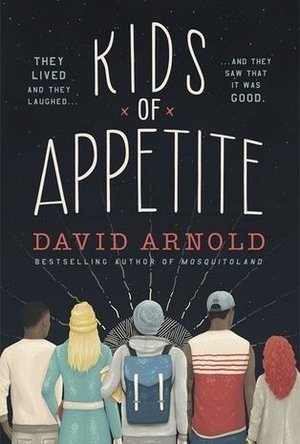

<i>This ARC was provided by the publisher via NetGalley in exchange for an honest review
They lived and they laughed and they saw that it was good.</i>
<i>Mosquitoland </i>was the best book I read last year (2015) and I was excited to discover what David Arnold would write next. I approached<i> Kids of Appetite</i> with mild trepidation; what if it did not live up to my expectations? Need not have worried – it was brilliant. Dubbed a “tragicomedy” <i>Kids of Appetite</i> is a combination of realistic, heartbreaking experiences with intellectual humour.
The book opens mid interview at a local police station where two teenagers, Vic and Mad, are being questioned about a murder their friend has supposedly committed. From there, the story backtracks a week and proceeds to bring the reader up to date. It all begins with Vic running away from home, distancing himself from his mother and her new partner. By chance, a coincidence – a bump, Vic would say – he is found by Mad who introduces him to a small group of homeless friends. Vic may not have packed in preparation for life on the streets – or in a greenhouse as it turns out – however he did grab the urn containing his late father’s ashes before racing out of the house. Along with the urn is a letter containing cryptic clues that lead to various locations that Vic’s father wished for his ashes to be scattered. He, along with his new found friends; make it a mission to put his father to rest.
It is not possible to label the general theme of the book. <i>Kids of Appetite</i> is a story full of stories. Each character has their own past, something that led them to the situation they find themselves in now. The group consists of five members – once Vic has been accepted. Baz, at age twenty-seven, is clearly the leader: responsible, caring, and fatherly – until accused of murder. Seven years younger is Zuz, Baz’s mute brother, and finally Coco, an eleven year old with the mouth of a foul old lady. It is Coco, amongst all her swearing and hilarious misuse of words, that coins the name <i>Kids of Appetite, KOA</i> for short, a play on words: they are not solely in want of food, they hunger for life.
Initially it would appear that the main focus will be on Vic: his father’s death, his mother’s new partner, Moebius (facial paralysis) – a syndrome that results in a lot of bullying and discrimination – and, of course, his flight from home. However the remaining members of <i>KOA </i>equally contribute to the overall narrative. Mad, like Vic, knows what it is like to lose a father. Unfortunately she also knows what it is like to lose a mother. Her life since the fateful car crash that left her and orphan has been full of abuse and uncertainty. Baz and Zuz, on the other hand, have escaped a traumatizing childhood in the midst of the Congo Civil War.
Similarly with <i>Mosquitoland</i>, Arnold’s second book is full of intellectual knowledge and humour complete with references to highbrow material. Vic is obsessed with an operatic song and deeply interested in abstract art, particularly Matisse. He pulls the artist’s work apart in search of meaning and relatable truths of life. Like Vic, Mad has a particular song she draws comfort from. The lyrics help her make sense of the world around her, and produce her own manifesto – Madifesto, rather. She is particularly fascinated by S E Hinton’s <i>The Outsiders</i> – a book I have not read, but am obviously going to now. With in-depth theories purloined from her favourite novel, she encourages and advises those around her.
The murder investigation is evidently another key point of the book. I do not want to say too much on the matter as it would not be fair to give the ending away. Be reassured that<i> Kids of Appetite</i> is not a thriller, crime or horror novel; it is the events and dialogue leading up to the conclusion that make up the greatest parts of the story.
It is essentially the characters that make <i>Kids of Appetite</i> such a fantastic work of fiction. Their background stories are all based on real life experiences of many people throughout the world, but it is their opinion of life, their terminology, and their reckless enthusiasm that really impacts the reader. <i>Kids of Appetite</i> is a book to be read over and over again. So many phrases can be lifted and quoted to explain our own lives and feelings. In fact, the entire novel is one big quote to sum up life itself. Although there are so many themes, stories and ideas, there is one clear message. Let go. Let go of the past. Let go of the things that hold you back. For Vic and Mad it is the death of their parents; for Coco it is abandonment; and Baz and Zuz learn to let go of their violent childhood.
David Arnold is an extremely talented author, seamlessly flowing from one notion to another, whilst sweeping the reader into a sea of pure emotion. He may over use the word “ergo” and have an unconventional penchant for ellipses, but that only adds to the uniqueness of the writing. There may be an excessive amount of expletives, however that is overshadowed by the pure genius of the story itself. <i>Kids of Appetite</i> is a book I want to recommend to all. The blurb likens it to authors Rainbow Rowell and Jennifer Niven – I would like to throw John Green into the mix – and should appeal to many Young Adult readers. I could write forever about this book, but I would rather you go and read it yourself. And whilst you read, remember:
<i>They lived and they laughed and they saw that it was good. </i>
They lived and they laughed and they saw that it was good.</i>
<i>Mosquitoland </i>was the best book I read last year (2015) and I was excited to discover what David Arnold would write next. I approached<i> Kids of Appetite</i> with mild trepidation; what if it did not live up to my expectations? Need not have worried – it was brilliant. Dubbed a “tragicomedy” <i>Kids of Appetite</i> is a combination of realistic, heartbreaking experiences with intellectual humour.
The book opens mid interview at a local police station where two teenagers, Vic and Mad, are being questioned about a murder their friend has supposedly committed. From there, the story backtracks a week and proceeds to bring the reader up to date. It all begins with Vic running away from home, distancing himself from his mother and her new partner. By chance, a coincidence – a bump, Vic would say – he is found by Mad who introduces him to a small group of homeless friends. Vic may not have packed in preparation for life on the streets – or in a greenhouse as it turns out – however he did grab the urn containing his late father’s ashes before racing out of the house. Along with the urn is a letter containing cryptic clues that lead to various locations that Vic’s father wished for his ashes to be scattered. He, along with his new found friends; make it a mission to put his father to rest.
It is not possible to label the general theme of the book. <i>Kids of Appetite</i> is a story full of stories. Each character has their own past, something that led them to the situation they find themselves in now. The group consists of five members – once Vic has been accepted. Baz, at age twenty-seven, is clearly the leader: responsible, caring, and fatherly – until accused of murder. Seven years younger is Zuz, Baz’s mute brother, and finally Coco, an eleven year old with the mouth of a foul old lady. It is Coco, amongst all her swearing and hilarious misuse of words, that coins the name <i>Kids of Appetite, KOA</i> for short, a play on words: they are not solely in want of food, they hunger for life.
Initially it would appear that the main focus will be on Vic: his father’s death, his mother’s new partner, Moebius (facial paralysis) – a syndrome that results in a lot of bullying and discrimination – and, of course, his flight from home. However the remaining members of <i>KOA </i>equally contribute to the overall narrative. Mad, like Vic, knows what it is like to lose a father. Unfortunately she also knows what it is like to lose a mother. Her life since the fateful car crash that left her and orphan has been full of abuse and uncertainty. Baz and Zuz, on the other hand, have escaped a traumatizing childhood in the midst of the Congo Civil War.
Similarly with <i>Mosquitoland</i>, Arnold’s second book is full of intellectual knowledge and humour complete with references to highbrow material. Vic is obsessed with an operatic song and deeply interested in abstract art, particularly Matisse. He pulls the artist’s work apart in search of meaning and relatable truths of life. Like Vic, Mad has a particular song she draws comfort from. The lyrics help her make sense of the world around her, and produce her own manifesto – Madifesto, rather. She is particularly fascinated by S E Hinton’s <i>The Outsiders</i> – a book I have not read, but am obviously going to now. With in-depth theories purloined from her favourite novel, she encourages and advises those around her.
The murder investigation is evidently another key point of the book. I do not want to say too much on the matter as it would not be fair to give the ending away. Be reassured that<i> Kids of Appetite</i> is not a thriller, crime or horror novel; it is the events and dialogue leading up to the conclusion that make up the greatest parts of the story.
It is essentially the characters that make <i>Kids of Appetite</i> such a fantastic work of fiction. Their background stories are all based on real life experiences of many people throughout the world, but it is their opinion of life, their terminology, and their reckless enthusiasm that really impacts the reader. <i>Kids of Appetite</i> is a book to be read over and over again. So many phrases can be lifted and quoted to explain our own lives and feelings. In fact, the entire novel is one big quote to sum up life itself. Although there are so many themes, stories and ideas, there is one clear message. Let go. Let go of the past. Let go of the things that hold you back. For Vic and Mad it is the death of their parents; for Coco it is abandonment; and Baz and Zuz learn to let go of their violent childhood.
David Arnold is an extremely talented author, seamlessly flowing from one notion to another, whilst sweeping the reader into a sea of pure emotion. He may over use the word “ergo” and have an unconventional penchant for ellipses, but that only adds to the uniqueness of the writing. There may be an excessive amount of expletives, however that is overshadowed by the pure genius of the story itself. <i>Kids of Appetite</i> is a book I want to recommend to all. The blurb likens it to authors Rainbow Rowell and Jennifer Niven – I would like to throw John Green into the mix – and should appeal to many Young Adult readers. I could write forever about this book, but I would rather you go and read it yourself. And whilst you read, remember:
<i>They lived and they laughed and they saw that it was good. </i>
Purple Phoenix Games (2266 KP) rated The Road to Canterbury in Tabletop Games
Oct 4, 2021
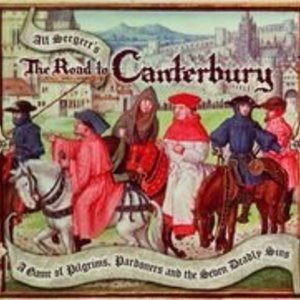
I am not a sinless man. In fact, it’s been years since I’ve been to confession, and at this point I’m afraid I would be there for hours just spilling the beans. I know many pious people, but alas, I am not one. However, I do appreciate those that attempt to live that holy life. It takes a lot of guts and a lot of hard work. I guess I’m a little slothy when it comes to that, personally. Anyway, I know of the Seven Deadly Sins, Cardinal Sins, Capital Vices, or whatever you’d like to call them. In fact, I really like the movie Seven – I think it’s great! That said, let’s find out just “what’s in the box?”
The Road To Canterbury is a game of medieval hand management and area influence. In it players are false pardoners stalking the road to the city of Canterbury as pilgrims make their way there from London. As their companies run across these pardoners, they are offered the chance to purchase pardons – salvation and forgiveness for their sins. However, these pardoners are also keen to help the pilgrims along the path of sin, thus making their faux pardons worth even more money! The pardoner who ends the game with the most money will win along The Road to Canterbury.
DISCLAIMER: We were provided a copy of the Impoverished Pilgrim Edition (2nd edition) game for the purposes of this review. This is a retail copy of the game, so what you see in these photos is exactly what would be received in your box. I do not intend to cover every single rule included in the rulebook, but will describe the overall game flow and major rule set so that our readers may get a sense of how the game plays. For more in depth rules, you may purchase a copy online or from your FLGS. -T
To setup, follow the rulebook, as there are many components to track. The main areas are the Circle of Sin mat that holds the Parson pawn, the decks area that hold the various decks of cards from which players will be drawing, and each player’s personal area where players will hide their earnings and hand of cards behind the privacy screen. Once all is setup somewhat correctly, it should look similar to the photo below. Warning: When I set this up and took the photo, I neglected to realize the red company and the map tiles were translated to the wrong spaces, so just switch those.
The Road to Canterbury is a game of rounds, and each round players will be taking similar steps: Play One Card, Redraw, Perform a Reckoning of Sin. Players will have access to three different types of cards that can be played during the Play One Card phase: Sin cards (five of which are dealt at setup), Pardon cards, and Relic cards. During this phase, the active player can play a Sin card to one of the active Pilgrims to tempt them towards committing that sin. The first time the player adds a Sin card to a Pilgrim, they place one of their corruption cubes on the matching sin on the Circle of Sin. Alternatively, they may play a powerful Relic card that offers adjustments to the rules, or has some interesting results. When a player feels that enough Sin cards of a specific type have been played on a Pilgrim, they may opt to play a matching Pardon card in order to gain precious coin to their pockets. Each Pardon card essentially pardons ALL the sins of that type on the Pilgrim, and the player then collects coins exponentially for a larger total of matching Sin cards on that Pilgrim. If the Parson is currently sitting on the matching sin, the pardoner receives extra coin for it being an especially egregious sin in the eyes of the church. Each time the Pilgrim is pardoned, the pardoner places one of their corruption cubes upon the Pilgrim.
After the active player has played their card, they must Redraw their hand back to five cards, choosing to draw from the Sin, Pardon, or Relic offerings. Some Sin cards may be drawn that are Death Approaches cards. When these surface, they are immediately attached to the Pilgrim whose color matches that of the drawn card’s border color. This essentially eats up a slot on the Pilgrim that could be used for a Sin card to be pardoned.
Once the player has redrawn cards to their hand they must next Perform a Reckoning of Sin. The active player assesses each active Pilgrim to see if they have seven or more cards attached to them. If so, that Pilgrim will perish from the “deadly” sins. Whichever player has placed the most number of corruption cubes upon the Pilgrim is considered present at time of death and will receive credit for the sending to the heavens. They move one of the cubes upon the Pilgrim to the first space on the map tile, earning bonus points and a Last Rites token. Last Rites may be performed immediately to take another turn, or may be held until the end of the game for a 3 VP bonus per token. The most interesting aspect of a Pilgrim dying is the fact that their card now becomes a permanent placeholder underneath their company’s colored banner. So the next Pilgrim to enter play for that company will need only six additional cards to kick the bucket, and so on.
Play continues in this fashion of players taking turns through their three phases. The game ends when all the spaces on the map tile are filled with cubes. Bonus points are counted, coins are added, and the player with the most money/highest score is the winner! The best temptress and pardoner this side of Yorkshire!
Components. I have no experience with the first edition of The Road to Canterbury, so unfortunately I cannot compare and contrast components. However, I have seen many photos and even checked out a review video or two. What I can say about components is that this edition has refreshed the look of nearly everything, and so much for the better. Instead of boring plain cards, there’s just a little more decoration. Not so much to be invasive or distracting, but very tasteful. The component quality throughout is quite stellar. There’s a lot of cardboard in this box, and it all looks and feels great. I do quite like the art style, even though it’s all medievall-y and too artsy for my normal preference. All in all a great quality box of game.
So like I said, I have no experience with this game prior to receiving it and playing through it now. It certainly doesn’t feel like a 10-year-old game, nor does it really feel like many of the Alf Seegert games I have played in the past. Neither of these points are bad at all, just some thoughts I had.
It should be obvious by my ratings graphic that I dig this game a lot. I have nothing like it in my collection, and I am super excited to really bring this out with different types of gamers to see how it fares (once the COVID is no longer an issue, of course). I see this being a hit with my family, who enjoys a lot of take that style games. I see this being a hit with my more thinky gamer friends, because there are just so many juicy choices to be had every turn. I can see this even being a hit with my more gateway friends, because it isn’t terribly heavy, has some humor in it, and I can see the prospect of sowing sin and killing off innocent Pilgrims being attractive to some of my more morbid friends.
For me, I love the ability to take every turn and make important decisions. I try to make every turn meaningful to my agenda, but tactical with what may be at my disposal at the time. When should I play this Relic? Why is named something ridiculous? Should I wait a while longer to pardon this sin, or should I pile on another and then pardon next turn? Ooh, but what if my opponent has the same Pardon card. Am I truly happy that this poor Wife of Bath is about to kick it? GAAHHHHH!
Now it’s no secret that I am a big fan of Dr. Seegert’s games, as I have previously reviewed Fantastiqa and Haven with very high ratings. So, I was not at all surprised that I would love this one as well. It offers so many great choices, looks great on the table, fills a unique void that was present in my collection, and can be played with various types of gamers, even though it is designed for two or three players total. Purple Phoenix Games gives this one an unapologetic 5 / 6. I don’t think it will break into my Top 10, but I certainly won’t rule it out quite yet. More plays with different types of gamers may change my mind on that statement, and I eagerly await my plateful of crow. So if you are like me in your gaming preferences, check out this version of The Road to Canterbury. Let me know how often you tend to grab Relics too, because I feel like I need to utilize them more, but it is so hard to pass up a Sin or Pardon. I Lust after them so very badly.
The Road To Canterbury is a game of medieval hand management and area influence. In it players are false pardoners stalking the road to the city of Canterbury as pilgrims make their way there from London. As their companies run across these pardoners, they are offered the chance to purchase pardons – salvation and forgiveness for their sins. However, these pardoners are also keen to help the pilgrims along the path of sin, thus making their faux pardons worth even more money! The pardoner who ends the game with the most money will win along The Road to Canterbury.
DISCLAIMER: We were provided a copy of the Impoverished Pilgrim Edition (2nd edition) game for the purposes of this review. This is a retail copy of the game, so what you see in these photos is exactly what would be received in your box. I do not intend to cover every single rule included in the rulebook, but will describe the overall game flow and major rule set so that our readers may get a sense of how the game plays. For more in depth rules, you may purchase a copy online or from your FLGS. -T
To setup, follow the rulebook, as there are many components to track. The main areas are the Circle of Sin mat that holds the Parson pawn, the decks area that hold the various decks of cards from which players will be drawing, and each player’s personal area where players will hide their earnings and hand of cards behind the privacy screen. Once all is setup somewhat correctly, it should look similar to the photo below. Warning: When I set this up and took the photo, I neglected to realize the red company and the map tiles were translated to the wrong spaces, so just switch those.
The Road to Canterbury is a game of rounds, and each round players will be taking similar steps: Play One Card, Redraw, Perform a Reckoning of Sin. Players will have access to three different types of cards that can be played during the Play One Card phase: Sin cards (five of which are dealt at setup), Pardon cards, and Relic cards. During this phase, the active player can play a Sin card to one of the active Pilgrims to tempt them towards committing that sin. The first time the player adds a Sin card to a Pilgrim, they place one of their corruption cubes on the matching sin on the Circle of Sin. Alternatively, they may play a powerful Relic card that offers adjustments to the rules, or has some interesting results. When a player feels that enough Sin cards of a specific type have been played on a Pilgrim, they may opt to play a matching Pardon card in order to gain precious coin to their pockets. Each Pardon card essentially pardons ALL the sins of that type on the Pilgrim, and the player then collects coins exponentially for a larger total of matching Sin cards on that Pilgrim. If the Parson is currently sitting on the matching sin, the pardoner receives extra coin for it being an especially egregious sin in the eyes of the church. Each time the Pilgrim is pardoned, the pardoner places one of their corruption cubes upon the Pilgrim.
After the active player has played their card, they must Redraw their hand back to five cards, choosing to draw from the Sin, Pardon, or Relic offerings. Some Sin cards may be drawn that are Death Approaches cards. When these surface, they are immediately attached to the Pilgrim whose color matches that of the drawn card’s border color. This essentially eats up a slot on the Pilgrim that could be used for a Sin card to be pardoned.
Once the player has redrawn cards to their hand they must next Perform a Reckoning of Sin. The active player assesses each active Pilgrim to see if they have seven or more cards attached to them. If so, that Pilgrim will perish from the “deadly” sins. Whichever player has placed the most number of corruption cubes upon the Pilgrim is considered present at time of death and will receive credit for the sending to the heavens. They move one of the cubes upon the Pilgrim to the first space on the map tile, earning bonus points and a Last Rites token. Last Rites may be performed immediately to take another turn, or may be held until the end of the game for a 3 VP bonus per token. The most interesting aspect of a Pilgrim dying is the fact that their card now becomes a permanent placeholder underneath their company’s colored banner. So the next Pilgrim to enter play for that company will need only six additional cards to kick the bucket, and so on.
Play continues in this fashion of players taking turns through their three phases. The game ends when all the spaces on the map tile are filled with cubes. Bonus points are counted, coins are added, and the player with the most money/highest score is the winner! The best temptress and pardoner this side of Yorkshire!
Components. I have no experience with the first edition of The Road to Canterbury, so unfortunately I cannot compare and contrast components. However, I have seen many photos and even checked out a review video or two. What I can say about components is that this edition has refreshed the look of nearly everything, and so much for the better. Instead of boring plain cards, there’s just a little more decoration. Not so much to be invasive or distracting, but very tasteful. The component quality throughout is quite stellar. There’s a lot of cardboard in this box, and it all looks and feels great. I do quite like the art style, even though it’s all medievall-y and too artsy for my normal preference. All in all a great quality box of game.
So like I said, I have no experience with this game prior to receiving it and playing through it now. It certainly doesn’t feel like a 10-year-old game, nor does it really feel like many of the Alf Seegert games I have played in the past. Neither of these points are bad at all, just some thoughts I had.
It should be obvious by my ratings graphic that I dig this game a lot. I have nothing like it in my collection, and I am super excited to really bring this out with different types of gamers to see how it fares (once the COVID is no longer an issue, of course). I see this being a hit with my family, who enjoys a lot of take that style games. I see this being a hit with my more thinky gamer friends, because there are just so many juicy choices to be had every turn. I can see this even being a hit with my more gateway friends, because it isn’t terribly heavy, has some humor in it, and I can see the prospect of sowing sin and killing off innocent Pilgrims being attractive to some of my more morbid friends.
For me, I love the ability to take every turn and make important decisions. I try to make every turn meaningful to my agenda, but tactical with what may be at my disposal at the time. When should I play this Relic? Why is named something ridiculous? Should I wait a while longer to pardon this sin, or should I pile on another and then pardon next turn? Ooh, but what if my opponent has the same Pardon card. Am I truly happy that this poor Wife of Bath is about to kick it? GAAHHHHH!
Now it’s no secret that I am a big fan of Dr. Seegert’s games, as I have previously reviewed Fantastiqa and Haven with very high ratings. So, I was not at all surprised that I would love this one as well. It offers so many great choices, looks great on the table, fills a unique void that was present in my collection, and can be played with various types of gamers, even though it is designed for two or three players total. Purple Phoenix Games gives this one an unapologetic 5 / 6. I don’t think it will break into my Top 10, but I certainly won’t rule it out quite yet. More plays with different types of gamers may change my mind on that statement, and I eagerly await my plateful of crow. So if you are like me in your gaming preferences, check out this version of The Road to Canterbury. Let me know how often you tend to grab Relics too, because I feel like I need to utilize them more, but it is so hard to pass up a Sin or Pardon. I Lust after them so very badly.
Mandy and G.D. Burkhead (26 KP) rated Hottest Blood: The Ultimate in Erotic Horror in Books
May 20, 2018

Shelf Life – Hottest Blood: The Ultimate in Erotic Horror is Neither of Those Things
(I’m gonna go ahead and throw a disclaimer on up here: You are about to read something that deals with purportedly “erotic” subject matter. If you don’t like the sound of that word, you might wanna go elsewhere. If it’s actually-erotic things that offend you, though, you’ll be fine.)
I like short story compilations because you get a variety of content that’s just as easy to breeze through if you have the time as it is to get to a stopping point and put down if you don’t. I like horror fiction because it usually involves the super-natural, which interests me, and intense emotional responses, which are almost always a good thing in writing. And I like eroticism because I am a warm-blooded human being with a pulse. However, on the whole, I do not like Hottest Blood.
I wanted to, I did. Look at that cover. It’s equal amounts scary and sexy, both in completely safe, PG-13-at-most kind of ways. Unfortunately, Softcore Succubus here is both the scariest and the sexiest thing about this book
Bluntly analogized, you know that feeling you get when you come across something on the internet that disturbs and/or disgusts you, and then you learn that there’s a dedicated group of people that gets off on it? Most of the stories in this book are that feeling captured in words.
Case in point, the story “Damaged Goods” by Elizabeth Massie, which as far as I can tell is about a couple of physically abused, emotionally damaged, developmentally stunted kids somewhere around their early teens who live with a religious fringe cult being led out to a field to have sex with each other while a nameless U.S. President watches and masturbates before both kids are drowned in a river by their preacher/pimp caretaker.
Or there’s “Mr. Right” by Chris Lacher, which tells the story of a college student named Russ who has a secret fetish for the deformed women in the freak show at a nearby carnival – a fascination which leads to him getting held down and forcibly raped by a group of unwashed subhuman mutants, which the detailed descriptions make sure you understand are completely revolting to all five senses. The story ends with him being dumped out behind the fairgrounds while a small, legless girl happily informs him that this is how all carnival workers reproduce, and he can look forward to seeing his own mutant rape-spawn in the show next year.
Or there’s “Abuse” by Matthew Costello, which simply shows us how the arrest of a Peewee Herman surrogate goes down in an adult movie theater before ending with another man jerking off with the cold, dry, severed hand in his pocket as he contemplates getting a new one to replace it.
The tone of these three are pretty much par for the course for the rest of the book: thoroughly disturbing, and sex is involved, but the disturbing feeling stems from revulsion rather than fear, and the sex bits are so far on the other end of the spectrum from erotic that it feels like the authors are trying to punish their readers for even expecting to be aroused in any way.
Of course, I said myself earlier that intense emotional responses are “almost always a good thing in writing.” By that merit alone, this book technically succeeds; in fact, if it had billed itself as shock fiction instead of erotic horror, I’d begrudgingly give it a medal in its class. The “aw, what the hell?!” moments are not as artistically executed as, say, a Chuck Palahniuk read, and they tend not to have as much depth to them, but strictly in terms of making you wish that you could unread words, they get the job done.
But that isn’t the job that Hottest Blood was hired to do, and that’s not what it put on its resume. It said it was going to “heat the blood and chill the mind,” and promised that “terror never felt this sexy!” It would have been more appropriate to say that “sex never felt this terrible.”
All of that said, if you abandon any hope of seeing anything resembling erotica or horror (scary horror, anyway), there are a few stories in here that are decent reads – mostly because they try to say something with their subject matter rather than use it to see how thoroughly they can ruin the idea of sex for the reader. To give a few quick nods of approval:
Nancy Holder’s “I Hear the Mermaids Singing,” which opens the anthology, is a dark and modern re-imagining of “The Little Mermaid” that brutally points up the drawbacks to throwing away your whole life and family in order to pursue someone that you know nothing about outside of a few fleeting glimpses and lustful inner fantasies.
J.L. Comeau’s “Black Cars” is the narrative of a high-class chauffeur as he tells his passenger an increasingly mysterious story about a couple of his regular customers, culminating in a creepy twist payoff that, in retrospect, actually makes it count as a legitimate horror story, and a decently gripping one at that.
And “Safe at Home” by Steve and Melanie Tem, while decidedly and disturbingly unsexy, at least has good reason to be; it’s a short character study of a young woman who’d been molested as a child, and the lasting and complex psychological damage resulting thereof that prevents her from having any normal social life or relationships, even with someone whom she legitimately likes, someone who knows what’s happened and sincerely cares for her.
So for the handful of intriguing stories that don’t make you quit (or wish you had) mid-read out of revolted disappointment, I can’t completely condemn Hottest Blood. If you want to test your own threshold for repulsion but are understandably hesitant to use online image searches to this end, I heartily recommend it.
If you are legitimately turned on by the idea of a man eating a woman alive and then gestating her alien spawn inside his own bloated body until his head detaches and crawls away (“How Deep the Taste of Love,” John Shirley), I suppose I still heartily recommend it, though I do so from a safe distance.
If you want to read one of the few stories involved that aren’t horrible, I heartily recommend trying to find them on their own somewhere else first.
But if you want “the ultimate in erotic horror,” stay the hell away. Softcore Succubus is a trap.
I like short story compilations because you get a variety of content that’s just as easy to breeze through if you have the time as it is to get to a stopping point and put down if you don’t. I like horror fiction because it usually involves the super-natural, which interests me, and intense emotional responses, which are almost always a good thing in writing. And I like eroticism because I am a warm-blooded human being with a pulse. However, on the whole, I do not like Hottest Blood.
I wanted to, I did. Look at that cover. It’s equal amounts scary and sexy, both in completely safe, PG-13-at-most kind of ways. Unfortunately, Softcore Succubus here is both the scariest and the sexiest thing about this book
Bluntly analogized, you know that feeling you get when you come across something on the internet that disturbs and/or disgusts you, and then you learn that there’s a dedicated group of people that gets off on it? Most of the stories in this book are that feeling captured in words.
Case in point, the story “Damaged Goods” by Elizabeth Massie, which as far as I can tell is about a couple of physically abused, emotionally damaged, developmentally stunted kids somewhere around their early teens who live with a religious fringe cult being led out to a field to have sex with each other while a nameless U.S. President watches and masturbates before both kids are drowned in a river by their preacher/pimp caretaker.
Or there’s “Mr. Right” by Chris Lacher, which tells the story of a college student named Russ who has a secret fetish for the deformed women in the freak show at a nearby carnival – a fascination which leads to him getting held down and forcibly raped by a group of unwashed subhuman mutants, which the detailed descriptions make sure you understand are completely revolting to all five senses. The story ends with him being dumped out behind the fairgrounds while a small, legless girl happily informs him that this is how all carnival workers reproduce, and he can look forward to seeing his own mutant rape-spawn in the show next year.
Or there’s “Abuse” by Matthew Costello, which simply shows us how the arrest of a Peewee Herman surrogate goes down in an adult movie theater before ending with another man jerking off with the cold, dry, severed hand in his pocket as he contemplates getting a new one to replace it.
The tone of these three are pretty much par for the course for the rest of the book: thoroughly disturbing, and sex is involved, but the disturbing feeling stems from revulsion rather than fear, and the sex bits are so far on the other end of the spectrum from erotic that it feels like the authors are trying to punish their readers for even expecting to be aroused in any way.
Of course, I said myself earlier that intense emotional responses are “almost always a good thing in writing.” By that merit alone, this book technically succeeds; in fact, if it had billed itself as shock fiction instead of erotic horror, I’d begrudgingly give it a medal in its class. The “aw, what the hell?!” moments are not as artistically executed as, say, a Chuck Palahniuk read, and they tend not to have as much depth to them, but strictly in terms of making you wish that you could unread words, they get the job done.
But that isn’t the job that Hottest Blood was hired to do, and that’s not what it put on its resume. It said it was going to “heat the blood and chill the mind,” and promised that “terror never felt this sexy!” It would have been more appropriate to say that “sex never felt this terrible.”
All of that said, if you abandon any hope of seeing anything resembling erotica or horror (scary horror, anyway), there are a few stories in here that are decent reads – mostly because they try to say something with their subject matter rather than use it to see how thoroughly they can ruin the idea of sex for the reader. To give a few quick nods of approval:
Nancy Holder’s “I Hear the Mermaids Singing,” which opens the anthology, is a dark and modern re-imagining of “The Little Mermaid” that brutally points up the drawbacks to throwing away your whole life and family in order to pursue someone that you know nothing about outside of a few fleeting glimpses and lustful inner fantasies.
J.L. Comeau’s “Black Cars” is the narrative of a high-class chauffeur as he tells his passenger an increasingly mysterious story about a couple of his regular customers, culminating in a creepy twist payoff that, in retrospect, actually makes it count as a legitimate horror story, and a decently gripping one at that.
And “Safe at Home” by Steve and Melanie Tem, while decidedly and disturbingly unsexy, at least has good reason to be; it’s a short character study of a young woman who’d been molested as a child, and the lasting and complex psychological damage resulting thereof that prevents her from having any normal social life or relationships, even with someone whom she legitimately likes, someone who knows what’s happened and sincerely cares for her.
So for the handful of intriguing stories that don’t make you quit (or wish you had) mid-read out of revolted disappointment, I can’t completely condemn Hottest Blood. If you want to test your own threshold for repulsion but are understandably hesitant to use online image searches to this end, I heartily recommend it.
If you are legitimately turned on by the idea of a man eating a woman alive and then gestating her alien spawn inside his own bloated body until his head detaches and crawls away (“How Deep the Taste of Love,” John Shirley), I suppose I still heartily recommend it, though I do so from a safe distance.
If you want to read one of the few stories involved that aren’t horrible, I heartily recommend trying to find them on their own somewhere else first.
But if you want “the ultimate in erotic horror,” stay the hell away. Softcore Succubus is a trap.

RəX Regent (349 KP) rated The Dark Knight Rises (2012) in Movies
Feb 19, 2019
Contains spoilers, click to show
After four years, since The Dark Knight ended, leaving us wanting more and seven years since Christopher Nolan reinvented the comic book adaptation with Batman Begins, The final chapter of The Dark Knight Trilogy has arrived.
With this much hype, would it possible live up to potentially bloated expectations? The first reviews hit last monday, with 4 to 5 stars being the consensus. Well, it did! The Dark Knight returns one last time, after eight years have passed since the events of The Dark Knight and Batman had retreated into the rebuilt Wayne Manor as Commissioner Gordon (Gary Oldman), maintaining the lie that Harvey Dent was Gotham’s The White Knight, and not the maniacal Two-Face, had managed to clean up Gotham City.
Batman was no longer needed but in the meantime, Bane has arrived in the city with grand plans for its destruction. I won’t go much further into the plot that this, though I will probably write a more spoiler heavy review for the Blu-ray later in the year. But for now, I will try to maintain the film’s integrity.
When we first meet Bruce Wayne after almost a decade of seclusion, he is a broken man, both physically and mentally following the murder of his childhood sweetheart, Rachel Dawes in the previous film and the toll of nightly combat. So the first port of call is to bring Batman back to the streets of Gotham. The sense of excitement is palpable and very much a part of what makes Nolan’s films tick.
He draws his audience into the narrative as if we are part of the events and the universe as it unfolds, leaving us not just wanting Batman to return for the sake of the action but for Gotham’s sake as well. Bane, played so excellently by Tom Hardy, was a little difficult to understand from behind his mask, but still conveyed an enormous amount of presence and power, as he lays siege to the city but not as Terrorist per say, but as a freedom fighter or revolutionary, with many visual references to the French Revolution to keep us going.
Anne Hathaway’s Catwoman, though not named as anyone other than Selina Kyle, was a credit to her character as well as the actress. Dark, sultry, seductive and agile, her feline credibly was intact, whilst still being a very human character. Her duplicity was bread from desperation rather than evil and her motives convincingly drive her in both good and more dubious endeavours.
*** MAJOR SPOILER***
The less said about Talia Al Ghul the better, but the for those aware of her role, it was well-played, though her final scene was the hammiest in the film, possibly the entire trilogy.
Then there’s the supporting cast, such as Mathew Modene, who does a great job as Dept. Commissioner Foley and Cillian Murphy’s back again, as the subtly unrecognisable Scarecrow, who besides some frayed shoulder’s on his jacket, could have been anyone,and that’s the beauty of Nolan’s Batman universe. It’s fluid and you can’t count on anything on anyone for too long.
But this franchise would be nothing without Hans Zimmer percussive score, pounding as much as it was gentle, it works well among with Nolan’s direction to craft the near perfect conclusion to the Trilogy. Both riff on earlier films and supe it up accordingly whilst maintaining the film’s integrity.
In the end, my expectations were met and exceeded. Nolan has crowned his trilogy with a film which is of the same calabar as the two which preceded it, filling in many of the blanks, choosing the right characters to take on and doing so a variety of ways, touching this time on the flamboyant Bain, though scrapping the “Venom” plot from the comics, creating an intriguing Catwoman and building another major character in the form of R. John Blake (Joseph Gordon-Lovett).
The ending of the film is just perfect, not only for this but for the entire Trilogy. With nods to Inception though I believe that it is just a nod and not as similar as some would protest, but this is epic in the way that The Dark Knight never tried to be and Batman Begins didn’t need to be. The threat is apocalyptic, in keeping with the genre, but believable in keeping with Nolan.
The same can be said for the action, though I must admit, the sentimentalist in me wanted to see the Batmoble/Tumber back, though it was there in triplicate, as Bane steels three prototype Tumbers from Wayne Enterprises, for his private army, but the Bat (Batwing) was stunning, and the Batpod made a reappearance. The Final showdown will leave you breathless, the perfect blend of direction, Zimmer’s score and some of the most intense and meaningful action you’ll see on the big screen.
The only real faults with The Dark Knight Rises stem from its scale and change in direction. It’s more about Batman’s evolution from crime fighter to savour. Less intense on a personal level, but much grander in its ideals and horror as Gotham is destroyed on scale never seen in a film of this type. But it’s not as far-fetched as one may think, as it grounds itself with historical references, such as the French Revolution, which was hardly far-fetched, though it was hard-hitting and is well translated here.
Bruce Wayne completes his journey from the boy who witnessed his parents murder, to a young man who could not grow beyond it, to a man who lost himself in a journey to understand the criminal mind. Finally returning as Batman, who defied his mentor to protect his beloved city, to a master detective. But here, he returns to his roots.
The billionaire who never cared about his wealth as much as he cared for the people of Gotham, he ends up exactly where he needed to be. Decide for yourself, whether it’s a happy ending, sad or satisfying, but either way, it was not only the best way to advance the saga, but the best way to end the series as a whole. Thanks to Nolan and his crew, we now have the most definitively brilliant Batman series EVER committed to celluloid, (or digital), and no matter what is to follow, whether it is to be the Justice League mash-up or another reboot, I suspect that it will be a long, long time before anyone can beat these.
With this much hype, would it possible live up to potentially bloated expectations? The first reviews hit last monday, with 4 to 5 stars being the consensus. Well, it did! The Dark Knight returns one last time, after eight years have passed since the events of The Dark Knight and Batman had retreated into the rebuilt Wayne Manor as Commissioner Gordon (Gary Oldman), maintaining the lie that Harvey Dent was Gotham’s The White Knight, and not the maniacal Two-Face, had managed to clean up Gotham City.
Batman was no longer needed but in the meantime, Bane has arrived in the city with grand plans for its destruction. I won’t go much further into the plot that this, though I will probably write a more spoiler heavy review for the Blu-ray later in the year. But for now, I will try to maintain the film’s integrity.
When we first meet Bruce Wayne after almost a decade of seclusion, he is a broken man, both physically and mentally following the murder of his childhood sweetheart, Rachel Dawes in the previous film and the toll of nightly combat. So the first port of call is to bring Batman back to the streets of Gotham. The sense of excitement is palpable and very much a part of what makes Nolan’s films tick.
He draws his audience into the narrative as if we are part of the events and the universe as it unfolds, leaving us not just wanting Batman to return for the sake of the action but for Gotham’s sake as well. Bane, played so excellently by Tom Hardy, was a little difficult to understand from behind his mask, but still conveyed an enormous amount of presence and power, as he lays siege to the city but not as Terrorist per say, but as a freedom fighter or revolutionary, with many visual references to the French Revolution to keep us going.
Anne Hathaway’s Catwoman, though not named as anyone other than Selina Kyle, was a credit to her character as well as the actress. Dark, sultry, seductive and agile, her feline credibly was intact, whilst still being a very human character. Her duplicity was bread from desperation rather than evil and her motives convincingly drive her in both good and more dubious endeavours.
*** MAJOR SPOILER***
The less said about Talia Al Ghul the better, but the for those aware of her role, it was well-played, though her final scene was the hammiest in the film, possibly the entire trilogy.
Then there’s the supporting cast, such as Mathew Modene, who does a great job as Dept. Commissioner Foley and Cillian Murphy’s back again, as the subtly unrecognisable Scarecrow, who besides some frayed shoulder’s on his jacket, could have been anyone,and that’s the beauty of Nolan’s Batman universe. It’s fluid and you can’t count on anything on anyone for too long.
But this franchise would be nothing without Hans Zimmer percussive score, pounding as much as it was gentle, it works well among with Nolan’s direction to craft the near perfect conclusion to the Trilogy. Both riff on earlier films and supe it up accordingly whilst maintaining the film’s integrity.
In the end, my expectations were met and exceeded. Nolan has crowned his trilogy with a film which is of the same calabar as the two which preceded it, filling in many of the blanks, choosing the right characters to take on and doing so a variety of ways, touching this time on the flamboyant Bain, though scrapping the “Venom” plot from the comics, creating an intriguing Catwoman and building another major character in the form of R. John Blake (Joseph Gordon-Lovett).
The ending of the film is just perfect, not only for this but for the entire Trilogy. With nods to Inception though I believe that it is just a nod and not as similar as some would protest, but this is epic in the way that The Dark Knight never tried to be and Batman Begins didn’t need to be. The threat is apocalyptic, in keeping with the genre, but believable in keeping with Nolan.
The same can be said for the action, though I must admit, the sentimentalist in me wanted to see the Batmoble/Tumber back, though it was there in triplicate, as Bane steels three prototype Tumbers from Wayne Enterprises, for his private army, but the Bat (Batwing) was stunning, and the Batpod made a reappearance. The Final showdown will leave you breathless, the perfect blend of direction, Zimmer’s score and some of the most intense and meaningful action you’ll see on the big screen.
The only real faults with The Dark Knight Rises stem from its scale and change in direction. It’s more about Batman’s evolution from crime fighter to savour. Less intense on a personal level, but much grander in its ideals and horror as Gotham is destroyed on scale never seen in a film of this type. But it’s not as far-fetched as one may think, as it grounds itself with historical references, such as the French Revolution, which was hardly far-fetched, though it was hard-hitting and is well translated here.
Bruce Wayne completes his journey from the boy who witnessed his parents murder, to a young man who could not grow beyond it, to a man who lost himself in a journey to understand the criminal mind. Finally returning as Batman, who defied his mentor to protect his beloved city, to a master detective. But here, he returns to his roots.
The billionaire who never cared about his wealth as much as he cared for the people of Gotham, he ends up exactly where he needed to be. Decide for yourself, whether it’s a happy ending, sad or satisfying, but either way, it was not only the best way to advance the saga, but the best way to end the series as a whole. Thanks to Nolan and his crew, we now have the most definitively brilliant Batman series EVER committed to celluloid, (or digital), and no matter what is to follow, whether it is to be the Justice League mash-up or another reboot, I suspect that it will be a long, long time before anyone can beat these.

Hadley (567 KP) rated Stranger Things: Suspicious Minds in Books
Jun 10, 2019
The first novel adapted from the Netflix series hit 'Stranger Things' is an astonishing work of art. Viewers of the show may be familiar with Eleven's mother, Terry Ives, which this book surrounds. Along for the ride are a few important characters that weren't mentioned in the series: Alice, Gloria and Ken - a self proclaimed psychic - all of which meet because they signed up for a human experiment at Hawkins National Laboratory, where each are given doses of LSD every week. This quickly tells readers that the book is not recommended for anyone under the age of 14.
Although the series has more than one book, and no end in sight, Bond was only chosen to do this novel. 'Suspicious Minds' is categorized under Young Adult books, but with the heavy Vietnam content, it's not considered that many young adults today can actually relate with this story or even understand the devastating effects of a looming draft hanging over the heads of young men throughout America in the 1960's. But Bond does a wonderful job in relating the emotional state of this era through our main character, Terry. Another subject that Bond does a fantastic job of explaining in 'Suspicious Minds' is the taboo of being a pregnant, unwed mother in this era, something that seems to be making headlines again in the States nearly 60 years later.
Bond shows us a young Dr. Martin Brenner, with neatly styled brown hair and an almost unlined face, as well as a more lively Terry Ives (which only season 2 has shown a very short flashback sequence of Terry being mobile before her dreaded consequence from being associated with the human experiments). We find out that the reason Terry volunteered for the experiment is due to her father's service in WWII, and wanting to make the world a better place. Bond brings in the other important characters, who also volunteered for the experiments, quickly bonding the four as friends for life.
As far as characters go, these four are written very well. Although Terry is the main character of 'Suspicious Minds,' we get to see from the viewpoints of all people, including Brenner. Bond gives the reader a short background on what LSD is and where it came from when the time comes for the experiments to begin. Brenner doesn't really explain why he gives LSD to the volunteers, but only that it is part of a secret experiment. Even when Terry is placed in a sensory deprivation tank, he doesn't reveal anything to her, and Bond does a great job of keeping the characters enough in the grey area of knowing that it's believable. Even at one point, when Terry begins to suspect something strange from the experiments, she keeps the belief that whatever is going on at Hawkins Laboratory must be important: " 'But you can't see it's important?' Terry leaned in close, and they kept their voices down as other students walked past. 'They just called up the school and told them to give me Thursdays off and I'm getting credit for it? They're tying our grades to doing this. And no one asked any questions. They just agreed. I have to keep going.' " Bond eloquently keeps the mystery going.
This mystery is even interesting to those who know what happens in the end. In 'Stranger Things,' Terry is introduced as a comatose woman in a rocking chair- who happens to be Eleven's mother. We have never met Gloria, Alice or Ken. The three become very close to Terry, and they all somehow escape from Brenner's grasp, but they also end up joining in Terry's pursuit of getting Eleven/Jane back to her mother. Fans of the show might be left asking what happened to these three enjoyable characters? I haven't seen any plans for a part two of this story, so we may be left not knowing what happened or if the three are even still alive today (in the Stranger Things' era). Even more enjoyable is the random use of J.R.R. Tolkien's 'The Lord of the Rings,' where in one scene, Alice and Terry decide to name their small group 'The Fellowship of the Lab.' Any veteran reader will be happy to see a classic brought up in a newer book of today.
And also of interest, fans will recognize a little girl who is frequent throughout the story: Eight a.k.a. Kali. We never get to see through Kali's perspective, but the reader does get to see the multitude of her abilities. For instance, Kali is able to scare personnel in the lab by causing the hallucination of tidal waves inside the building, only to stop when Brenner (or Papa to her) gives her her favorite sweet: Hostess cakes. Other than that, Kali is like any child; she throws tantrums and rebels from her Papa, sometimes to the laughter of the reader.
One point, Terry even meets with Kali in her LSD induced state: " Terry shook her head. 'There can be. He's just a man. He can't know everything.' She paused. 'Does he hurt you? Papa?' Kali frowned, but she didn't answer. 'If he does... I can help you.' Terry had to make her understand. The little girl shook her head. 'I don't think so. I might be able to help you, though.' A field of yellow sunflowers grew up around them. A rainbow arcing over the golden tops." Terry, understandably, begins to scheme about how they can help Kali to escape the lab.
Bond does a great job of transitioning between Terry's point of view to the other characters' viewpoints. We get a young woman named Gloria, who has a secret obsession with comic books (especially X-Men). A hippie-looking man named Ken, who claims he is psychic, but just happens to have a lot of hunches that come true. And last, but not least, another young woman named Alice, who shows up in grease covered overalls and curly black hair, explaining that she works for her uncle's garage and that she loves machines. These three are delightful to read about, and the story would be boring without them.
This book was the perfect novel to answer questions fans may have had about Eleven's mother. Bond writes smoothly and easily enough that you may find yourself wanting to read just one more page before setting the book down for the evening. She drags you into the world of the 1960's and helps young readers to feel the emotional time that it was for women like Terry. But with only a few inconsistencies here and there, 'Suspicious Minds' leaves us wanting more. If you are a fan of 'Stranger Things,' I say that this is a must-read! Highly recommend!
Although the series has more than one book, and no end in sight, Bond was only chosen to do this novel. 'Suspicious Minds' is categorized under Young Adult books, but with the heavy Vietnam content, it's not considered that many young adults today can actually relate with this story or even understand the devastating effects of a looming draft hanging over the heads of young men throughout America in the 1960's. But Bond does a wonderful job in relating the emotional state of this era through our main character, Terry. Another subject that Bond does a fantastic job of explaining in 'Suspicious Minds' is the taboo of being a pregnant, unwed mother in this era, something that seems to be making headlines again in the States nearly 60 years later.
Bond shows us a young Dr. Martin Brenner, with neatly styled brown hair and an almost unlined face, as well as a more lively Terry Ives (which only season 2 has shown a very short flashback sequence of Terry being mobile before her dreaded consequence from being associated with the human experiments). We find out that the reason Terry volunteered for the experiment is due to her father's service in WWII, and wanting to make the world a better place. Bond brings in the other important characters, who also volunteered for the experiments, quickly bonding the four as friends for life.
As far as characters go, these four are written very well. Although Terry is the main character of 'Suspicious Minds,' we get to see from the viewpoints of all people, including Brenner. Bond gives the reader a short background on what LSD is and where it came from when the time comes for the experiments to begin. Brenner doesn't really explain why he gives LSD to the volunteers, but only that it is part of a secret experiment. Even when Terry is placed in a sensory deprivation tank, he doesn't reveal anything to her, and Bond does a great job of keeping the characters enough in the grey area of knowing that it's believable. Even at one point, when Terry begins to suspect something strange from the experiments, she keeps the belief that whatever is going on at Hawkins Laboratory must be important: " 'But you can't see it's important?' Terry leaned in close, and they kept their voices down as other students walked past. 'They just called up the school and told them to give me Thursdays off and I'm getting credit for it? They're tying our grades to doing this. And no one asked any questions. They just agreed. I have to keep going.' " Bond eloquently keeps the mystery going.
This mystery is even interesting to those who know what happens in the end. In 'Stranger Things,' Terry is introduced as a comatose woman in a rocking chair- who happens to be Eleven's mother. We have never met Gloria, Alice or Ken. The three become very close to Terry, and they all somehow escape from Brenner's grasp, but they also end up joining in Terry's pursuit of getting Eleven/Jane back to her mother. Fans of the show might be left asking what happened to these three enjoyable characters? I haven't seen any plans for a part two of this story, so we may be left not knowing what happened or if the three are even still alive today (in the Stranger Things' era). Even more enjoyable is the random use of J.R.R. Tolkien's 'The Lord of the Rings,' where in one scene, Alice and Terry decide to name their small group 'The Fellowship of the Lab.' Any veteran reader will be happy to see a classic brought up in a newer book of today.
And also of interest, fans will recognize a little girl who is frequent throughout the story: Eight a.k.a. Kali. We never get to see through Kali's perspective, but the reader does get to see the multitude of her abilities. For instance, Kali is able to scare personnel in the lab by causing the hallucination of tidal waves inside the building, only to stop when Brenner (or Papa to her) gives her her favorite sweet: Hostess cakes. Other than that, Kali is like any child; she throws tantrums and rebels from her Papa, sometimes to the laughter of the reader.
One point, Terry even meets with Kali in her LSD induced state: " Terry shook her head. 'There can be. He's just a man. He can't know everything.' She paused. 'Does he hurt you? Papa?' Kali frowned, but she didn't answer. 'If he does... I can help you.' Terry had to make her understand. The little girl shook her head. 'I don't think so. I might be able to help you, though.' A field of yellow sunflowers grew up around them. A rainbow arcing over the golden tops." Terry, understandably, begins to scheme about how they can help Kali to escape the lab.
Bond does a great job of transitioning between Terry's point of view to the other characters' viewpoints. We get a young woman named Gloria, who has a secret obsession with comic books (especially X-Men). A hippie-looking man named Ken, who claims he is psychic, but just happens to have a lot of hunches that come true. And last, but not least, another young woman named Alice, who shows up in grease covered overalls and curly black hair, explaining that she works for her uncle's garage and that she loves machines. These three are delightful to read about, and the story would be boring without them.
This book was the perfect novel to answer questions fans may have had about Eleven's mother. Bond writes smoothly and easily enough that you may find yourself wanting to read just one more page before setting the book down for the evening. She drags you into the world of the 1960's and helps young readers to feel the emotional time that it was for women like Terry. But with only a few inconsistencies here and there, 'Suspicious Minds' leaves us wanting more. If you are a fan of 'Stranger Things,' I say that this is a must-read! Highly recommend!