

The Bandersnatch (199 KP) rated Dracula in Books
Nov 7, 2019
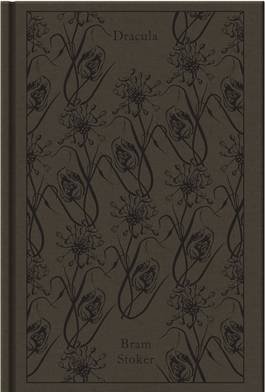


Dracula was published in London in May 1897 by Archibald Constable & Company and was later copyrighted in the U.S in 1899 and published by Doubleday & McClure of New York. Despite having decent praise form reviewers it wasn't an immediate bestseller. Although the English newspaper the Daily Mail ranked Stoker's writing prowess in Dracula above that of Mary Shelly, Edgar Allen Poe and Emily Bronte's Wuthering heights. Unfortunately it didn't make Stoker that much money and he'd had to petition for a compassionate grant from the royal literary fund. When he died his widow was forced to sell his notes and outlines of the book at an auction in 1913. It was the unauthorised adaption of Nosferatu by F. W. Murnau in 1922 and the resulting legal battle made when Stokers widow took affront that the novels popularity began to grow.
Before writing Dracula Bram Stoker had been researching European folklore and stories of vampires having been most influenced by Emily Gerard's “Transylvania Superstitions” 1885 essay...which included content about the vampire myth. Some historians insist that Vlad iii Dracula (More commonly known as Vlad the impaler) was the model for Stokers count but there's been no supporting evidence to make that true. According to one expert Stoker only borrowed the barest minimum of information of the Wallachian tyrant and he's not even mentioned in Stokers notes. Stoker was a member of the London library during the 1890's where books by Sabine Baring-Gould, Thomas Browne, AF Crosse and Charles Boner are attributed to Stokers research. Stoker would later claim he'd had a nightmare caused by over-eating crab meat about a “Vampire king” rising from his grave. Whitby on the Yorkshire coast contributed its landscape since Bram Stoker often holidayed there during the summer.
Dracula wasn't Stokers first choice as title for the story since he cycled through The Dead Un-Dead then simply the Un-Dead the count wasn't even supposed to be Count Dracula having had the name Count Wampyr for several drafts before Stoker became intrigued by the name Dracula. After reading “An account of the principles of Wallachia and Moldavia with political observations relative to them” written by author William Wilkinson (Published in 1820). the descendants of Vlad ii of Wallachia took the name Dracula or Dracul after being invested in the Order of the Dragon in 1431. In the old Romanian language the word Dracul mean “the Dragon” and Dracula meant “Son of the Dragon”. Nowadays however Dracul means “the Devil”
Whilst Dracula is known as THE Vampire novel its not the first. Johan Wolfgang Von Goethe had his book the Bride of Corinth published in 1797, 1871's Carmilla (a story about a lesbian vampire) was written by Sheridan Le Frau and James Malcolm Rymer's penny dreadful series Venny the Vampire was a product from the mid Victorian period. Even John Polidori created an image of a vampyric aristocrat in his 1819 story The Vampyre when he spent a summer with Merry Shelly (creator of Frankenstein) and her poet husband Percy Bysshe Shelly and Lord Bryon in 1816.
I really love Dracula. It showed the madness, the ethereal quality and the ultimate danger of what a vampire could do. Like many other goth inclined teenagers trying to find their feet in the world Dracula definitely added its two cents to my self worth and love of all things macabre. The fact it was written by a Victorian writer has added a unusual depth to the story as only a Victorian writer could. The culture of the Vampire has become deep rooted and wide spread in its acceptance and Dracula has definitely spearheaded such a phenomenon.
Abraham “Bram” Stoker was Born in Dublin, Ireland on the 8th of November 1847, He was the third of seven children born to Abraham and Charlotte Stoker and was bedridden with an unknown illness until he recovered at seven. He started schooling at a private school run by the Reverend William Woods and grew up without serious illness. Stoker excelled at sports at Trinity College Dublin having graduated in 1870 with a BA (Bachelor of Arts). He was an Auditor of the College Historical Society and the president of the University Philosophical Society where his first paper was on Sensationalism in fiction and society.
Thanks to his friend Dr. Maunsell, Stoker became interested in the theatre as a student and whilst working for the Irish civil service he became a theatre critic for the Dublin evening mail where he attracted notice for the quality of his reviews. Stoker gave a favourable review of Henry Irving's adaption of Hamlet in December 1876, this prompted Irving to invite him to dinner where they ended up becoming friends. Stoker wrote The Crystal Cup which was published by the London society in 1872 and The chain of Destiny which was released in four parts in the Shamrock. Stoker also wrote the non-fiction book the duties of clerks of petty sessions in Ireland which was published in 1879.
Bram stoker married Florence Balcombe the daughter of a lieutenent-colonel in 1978 and they moved to London. Where Stoker ended up the Business manager of the Lyceum theatre as well as manager for Henry Irving- a position he held for 27 years. Despite being a very busy man Stoker ended up writing several novels (as well as Dracula) Including The Snakes pass in 1890, the lady of the shroud in 1909 and the lair of the white worm in 1911. when Henry Irving died in 1906 he published his personal reminiscences of Henry Irving. Stoker also managed productions at the Prince of Wales theatre.
Bram stoker died after a series of strokes in London on April 20th 1912, the cause of death is split between the possibility of Tertiary Syphilis or overwork. He was cremated and was placed in a display urn at Golders Green Crematorium in North London, he was later joined by the ashes of his Son Irving Noel Stoker in 1961, his wife Florence was meant to join them but her ashes were scattered at the Gardens of rest.
Stoker was honoured with a Google Doogle (the banner on goggles homepage) on November 8th 2012 commemorating the 165th anniversary of his birth. An annual festival in honour of Bram Stoker happens in Dublin, its supported by the Bram stoker estate and was/is usually funded by Dublin City Council and Failte Ireland.
My opinion of Bran stoker is that of a decent hard working man who loved life. Stoker epitomises the phrases of “a man on a mission” and “a man who hussles”. Having worked extremely hard both creatively as a novelist and business wise as a theatre manager Stoker pretty much showed that if you work hard you could pretty much do anything you set your mind to.
And there you have it a book for all the ages, definitely under the banner of AWESOME!!!.

Kyera (8 KP) rated Clockwork Angel in Books
Jan 31, 2018
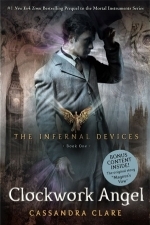

The clockwork automatons are intriguing, as they are made from neither Heaven nor Hell and thus the Shadowhunters have no experience dealing with them. They create a unique foe to fight against and are a greater mystery – as our heroes do not know who truly created them, or their nefarious purpose.
Each chapter is headed with an excerpt from a poem that Tessa might have found herself reading over the years. Each is not only a wonderful addition to the story but if you enjoy them, perhaps it will lead you to seek them out in their original forms. I personally do not find myself frequently reading poetry, but the first time I read this book I fell in love with the poems selected. It caused me to go in search of them and read poetry. Perhaps you too will find yourself inspired.
As with the Mortal Instruments, our main character is a female who is unfamiliar with the Shadow World at the beginning of the novel. Before long, she is completely embroiled in the world, the politics and must learn as she goes. In this novel, our heroine is given the Shadowhunter Codex to read which allows her to quickly understand the roles of the Shadowhunter and the world she didn’t even know existed. I have always liked Tessa and felt a kinship to her, as we are very similar.
Tessa is quite tall, especially for a woman in the Victorian era, brunette and loves books more than anything else (other than perhaps her family.) Her Aunt was a very learned woman, so Tessa received a decent education and fostered a love of reading. She is able to quote from books that she loves and does not discriminate between books considered high-brow and those considered for the lower class of society. Tessa is very intelligent and not afraid to voice her opinions, even though it was not widely accepted at that time for women to be sharp of tongue. She also does not like chocolate, which endeared her to me immediately as I also am one of the few people it seems who does not like chocolate.
Our two male leads are Jem and Will, who are parabatai but quite dissimilar from one another. Jem was originally from the Shanghai Institute but found himself in the London Institute when his parents were murdered by demons. He is quiet, kind, intelligent and loves Will like a brother. Will is a Herondale, with all of the charm that comes with it. He is more reckless, boasts about frequenting brothels and dens of vice, and despite his outward attempts to appear cheerful is prone to melancholy.
The Institute is filled with other Shadowhunters and servants with vastly different personalities who bring a lot of interesting storylines with them. Charlotte and Henry are the heads of the Institute, despite their young age. Henry is a brilliant inventor, although a bit scatterbrained. Jessamine was forced to live in the Institute after the death of her parents, but she has never desired to be a Shadowhunter.
The first book introduces us to the Shadow World of London, as Tessa is invited to travel from New York to London to live with her brother. Her plans do not turn out as she had expected and it leads her on an adventure with the Nephilim. It is fascinating to see how different the Shadowhunters of this era are, and yet utterly the same. It was also interesting to see how the Shadowhunters view the Downworld. While it was not entirely equal to the time of the Mortal Instruments series, you realize that is has improved in the century since the Infernal Devices and must be leagues above the treatment in the earliest years of the Nephilim.
Whether Clockwork Angel is your first foray into the Shadow World, or not, it is a highly entertaining and well-written novel that I could not recommend more. Many people feel that this series is the best of the three, so if you’ve been considering reading any of the Shadowhunter Chronicles but were not quite sure – perhaps this is a good place to start. I personally would recommend reading a number of the Mortal Instruments before beginning this series, but that is just my opinion. Either way, if you have not yet read this book – please go do so now! It is one of my favourites and I hope that it will be yours as well.
Brumpolarbears (22 KP) rated The Old Hellfire Club in Tabletop Games
Jun 18, 2019
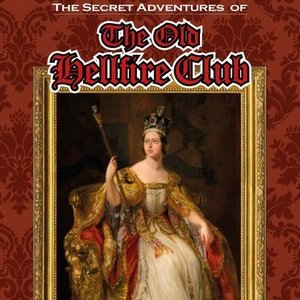

In The Old Hellfire Club two to six players take on the roles of the destitute final members of an ancient aristocratic secret society as they recount the tales of their greatest adventures to the patrons of the shadiest public houses of Old London Town. Drawing on the cards in their hands for inspiration, players weave an ever more elaborate (although far from honest) tale of daring and adventure in the hope that the drinking den’s patrons will offer them a penny for their woes. As competition for the pennies on offer increases, so too do the exaggerations and outright lies players tell about their role in the story in the hope of making themselves seem more deserving. At any time, a player can challenge anothers versions of the story by playing a less impressive card from their own hand, thereby revealing the exaggeration and taking the rewards for the story. When the tale reaches its climax, whoever has been given the most pennies wins the game.
You can win pennies by getting away with telling extravagant lies about the adventures you had (by playing
high value Boast Cards without being successfully challenged by other players), through the charity of
strangers (by meeting the conditions set out on certain Patron Cards), and by satisfying the predilections of
the mysterious benefactors lurking in the audience (by successfully playing the most cards from a particular
suit over the course of the game).
While there’s still some time until you can physically purchase The Old Hellfire Club, which launches on Kickstarter on 9 April 2019, the developers have launched a free….yes free….print and play version of the game, meaning you can print your own copies of the cards and play with friends.
You can download a copy of the file by visiting The Old Hellfire Club’s profile on Boardgame Geek. I cannot rate this game highly enough. While I was sceptical at first because, in all honesty, I’m not that great at creating stories on the spot, especially those set in Victorian England, The Old Hellfire Club was incredibly quick to pick up. During the preview at UK Games Expo there were quite a few laughs, particularly when I joined Karl Marx for a gin or two. Who knows where future tales may lead.

ClareR (6256 KP) rated The Ninth Child in Books
May 1, 2020
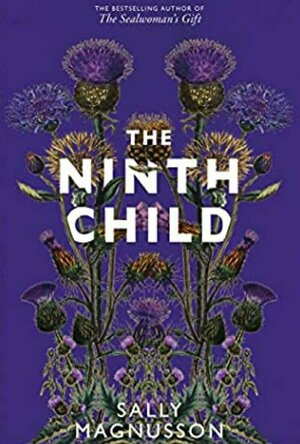
We also get little glimpses in to the private lives of Queen Victoria and Albert, and the reason for this becomes clear as the story progresses. The link between the two families seems to be a strange character called Robert Kirke. Strange things seem to have been happening since the digging and tunnelling began. Isabel meets this strange man not long after she moves near to the site of the Loch Katrine Waterworks. This is no place for a lady brought up in all the comforts of a well-to-do Glaswegian home. But Isabel finds solace in the wildness, and the descriptions of the lochs and landscapes makes it easy to understand why.
This was such a surprising book, it wasn’t at all what I was expecting. I WAS expecting a good story - I loved The Sealwoman’s Gift. The mix of real, hard life and the fairy elements were really well done, and I loved that these weren’t the pretty, twee, friendly fairies that we seem to hear of so much of these days. I like my fairies to be tricksters, untrustworthy, always looking for an angle that they can work, a little grotesque.
I really enjoyed this book, and seemed to read it far too quickly. I’m a lover of history, myths and the unexplained, and this certainly delivered in these areas. The writing is gorgeous - the descriptions are such that you feel you’re there. We were supposed to be going on holiday this year to the Highlands, and this has made me hope even more that we’ll still be able to go. It’s one thing reading a description, it’s quite another to be there, experiencing the landscape for yourself.
This is a wonderful book, and one to tell my friends about!
Many thanks to NetGalley and Two Roads for my copy of this book to read and review.
The Fourth Generation: A Personal Story of Humour and Heartache 1885-1985
Book
There are no exceptions and therefore there are no choices. This book is about the choices people...
Holkham: The Social, Architectural and Landscape History of a Great English Country House
Book
Holkham Hall is a masterpiece of eighteenth-century Palladian architecture set in a large walled...

Scottish Gold
Neil D. L. Clark, Alison Sheridan and Donal Bateson
Book
Gold has been an important part of Scottish heritage for millennia and a new mine will shortly open...

Sportsbet - Online Betting
Sports and Entertainment
App
Join now and we’ll match your first bet up to $100 in Bonus Bets (T&Cs apply. Excludes residents...

graveyardgremlin (7194 KP) rated India Black (Madam of Espionage, #1) in Books
Feb 15, 2019


<b>India Black</b> is a well-written and entertaining read, featuring a no-nonsense, street-wise, and book-smart whore-turned-madam who is the namesake of the book. While I do like India and her voice, there was something about her that felt off, and after thinking about it I've come to realize that I really don't know her that well. I find that odd because the book is told first-person. Even though this is the first in the series and some authors may not want to divulge everything about a character, I think there needed to be more tidbits about India. What's her history? How did she grow up? Was she groomed to be a whore? Etc., etc., etc. Besides, French is the secretive one, we don't need two mysterious characters in one book. As for the attraction between India and French promised on the back of the book, well, it wasn't there. Now there's the promise for that in the future, but there weren't enough scenes with the two of them together for anything to actually happen except some minor discussions about the issue(s) at hand, some bantering, and a decent amount of bickering -- though luckily not too much of the latter to annoy.
The plot is fine, but there's really nothing new to distinguish it from others in Victorian mysteries. Actually, the book doesn't feature any mystery what-so-ever and it's more of a chase to retrieve top secret government documents; I've heard the term caper thrown around and that sounds about right for this book. After a while I felt like I was in <b>Groundhog Day</b> -- same scenarios popped up under different circumstances, but all with the same outcome, which became tiring. The historical facts would have been better served had they been more smoothly incorporated into the story rather than dropped in big chunky lumps that often bored me (and I <i>like</i> history). The atmosphere of the book was fairly well-done, though it seemed a bit too polished and clean, so a little more grit would have given it some needed realism. The main character is a madam who can't possibly live in best neighborhood, and no matter how well-mannered, groomed, or intelligent she may be, she has to live in a tough place.
While I do have those minor issues about the book, the question is, <i>"Would I read the next book in the series?"</i> Yes, I believe so, because overall, I did enjoy this foray into India Black's world and it has the makings of a very interesting series.