
Search
Search results

Bob Mann (459 KP) rated Spencer (2021) in Movies
Nov 11, 2021



Diana hits rock bottom… as does the script.
Discordant strings sound as the royal party arrives at Sandringham for Christmas. “Is she here yet” intones the Queen. “No ma’am” her major domo replies. “Then she’s late”. Cut to a soulful choral version of “Perfect Day” as Diana Princess of Wales (née Spencer) arrives via a dramatic aerial shot. Hugs go to her sons William and Harry before she unhappily stalks through the corridors like a hunted animal.
This is the second movie in a row that I’ve intro’d via a positive emotional response to a great trailer. In the last case – for “Last Night in Soho” – the movie more than lived up to my high expectations from the trailer. But here – oh dear! It comes to something where the very best thing about the film is the trailer.
For, unfortunately for me, this came across as pretentious, vaguely insulting and with a dreadful script.
Plot Summary:
It’s Christmas 1991 at the Sandringham estate. Diana (Kristen Stewart) is the black sheep of the royal family, flouting tradition and always late for every formal event. She sees conspiracies at every turn, suspecting the household coordinator Major Gregory (Timothy Spall) of plotting against her. Her only allies that she can talk to are head chef Darren (Sean Harris) and her dresser Maggie (Sally Hawkins).
Mentally unstable, bulimic and self-harming, Diana must survive a tumultuous three days without destroying the Christmas spirit for her two sons and irreparably damaging her relationship with the wider royal family.
Certification:
US: R. UK: 12A.
Talent:
Starring: Kristen Stewart, Timothy Spall, Sally Hawkins, Jack Farthing, Sean Harris.
Directed by: Pablo Larraín.
Written by: Steven Knight.
“Spencer” Review: Positives:
Kristen Stewart does a simply fabulous job of impersonating Diana. She’s clearly studied a lot of video of the lady in getting to mimic the way she looks, walks and dances. Although I didn’t rate the film, the performance is a cut-above.
It’s an ironic touch that in all of her driving scenes, Diana never wears a seat-belt.
Negatives:
Oh man, Steven Knight’s dialogue here I found to be simply atrocious. Head-in-the-hands bad. I decided about half way through this monstrosity that “The Room” had had its day as a cult student classic, and that “Spencer” should take over in that role.
These things evolve organically over time, but I came up with the following basic rules for a student showing:
Every time Kristen Stewart does a ‘simp’ look to camera, down a shot;
When Darren utters the line “What are you going to do with wirecutters?” the audience yells as one “CUT WIRE!” **;
When Diana intones “Beauty is useless. Beauty is clothing”** the audience should strip to their underwear;
Every time a member of the hunt shouts “PULL!” you throw a stuffed pheasant in the air. Otherwise you keep the stuffed pheasant next to you, and engage in studious conversation with it as the film progresses;
Whenever Anne Boleyn appears, shout “OFF WITH HER HEAD”;
When a character says to Diana “I love you. And yes, in that way”**, the audience must shout “Aye aye” and every female audience member needs to passionately kiss another female audience member; and finally…
When Diana says “Leave Me. I want to masturbate”**, the audience throws dildos at the screen.
** I’d really like to pretend that I made these lines up. They might be paraphrased a bit, but honestly, that’s the gist!
Oh yes. It’s a sure-fire student classic of the future. You read it here first folks! I can see the filmmakers lauding me with praise for turning their movie into a post-release sleeper hit. “WHAT A CULT” they shout at me. “WHAT A CULT”!
The rest of the cast do a good enough job with what they have, but have the general vibe of being embarrassed to deliver the dialogue they’ve been given. Sean Harris – a fine actor – inexplicably spouts Shakespeare like Christopher Plummer in “Star Trek VI”! And one can only assume that Timothy Spall was given direction to act as if he had a whole lemon stuck inside his mouth for the whole movie.
I’ve been a fan of Jonny Greenwood’s music in other movies like “Phantom Thread“. I’ve seen Mark Kermode describe this soundtrack as “fantastic”. But, for me, the intrusive atonal strings and laid-back jazz vibe just didn’t work for me at all.
Summary Thoughts on “Spencer”
As you can probably tell, I hated this one. And the illustrious Mrs Movie Man 100% agrees with me in this assessment. The trailer promised a lot, but the movie delivered very little for me. It just all felt to me like an affront to the memory of Diana. Making a highly fictitious “fable based on a real life tragedy” just feels wrong. This seems particularly the case when the Queen, Prince Charles and (particularly) William and Harry are alive to watch it. What must they think if and when they get to view this?
I was a big fan of Larrain’s 2017 biopic on Jackie Kennedy – “Jackie” – which really covered the very similar ground, of a lady in the focus of publicity struggling with mental illness. But at least that had the benefit of historical distance.
I seem to be swimming against the critical tide here, since the movie currently has an IMDB rating of 7.4/10. But frankly, for me, I thought the recent series of “The Crown” did this so much better.
This is the second movie in a row that I’ve intro’d via a positive emotional response to a great trailer. In the last case – for “Last Night in Soho” – the movie more than lived up to my high expectations from the trailer. But here – oh dear! It comes to something where the very best thing about the film is the trailer.
For, unfortunately for me, this came across as pretentious, vaguely insulting and with a dreadful script.
Plot Summary:
It’s Christmas 1991 at the Sandringham estate. Diana (Kristen Stewart) is the black sheep of the royal family, flouting tradition and always late for every formal event. She sees conspiracies at every turn, suspecting the household coordinator Major Gregory (Timothy Spall) of plotting against her. Her only allies that she can talk to are head chef Darren (Sean Harris) and her dresser Maggie (Sally Hawkins).
Mentally unstable, bulimic and self-harming, Diana must survive a tumultuous three days without destroying the Christmas spirit for her two sons and irreparably damaging her relationship with the wider royal family.
Certification:
US: R. UK: 12A.
Talent:
Starring: Kristen Stewart, Timothy Spall, Sally Hawkins, Jack Farthing, Sean Harris.
Directed by: Pablo Larraín.
Written by: Steven Knight.
“Spencer” Review: Positives:
Kristen Stewart does a simply fabulous job of impersonating Diana. She’s clearly studied a lot of video of the lady in getting to mimic the way she looks, walks and dances. Although I didn’t rate the film, the performance is a cut-above.
It’s an ironic touch that in all of her driving scenes, Diana never wears a seat-belt.
Negatives:
Oh man, Steven Knight’s dialogue here I found to be simply atrocious. Head-in-the-hands bad. I decided about half way through this monstrosity that “The Room” had had its day as a cult student classic, and that “Spencer” should take over in that role.
These things evolve organically over time, but I came up with the following basic rules for a student showing:
Every time Kristen Stewart does a ‘simp’ look to camera, down a shot;
When Darren utters the line “What are you going to do with wirecutters?” the audience yells as one “CUT WIRE!” **;
When Diana intones “Beauty is useless. Beauty is clothing”** the audience should strip to their underwear;
Every time a member of the hunt shouts “PULL!” you throw a stuffed pheasant in the air. Otherwise you keep the stuffed pheasant next to you, and engage in studious conversation with it as the film progresses;
Whenever Anne Boleyn appears, shout “OFF WITH HER HEAD”;
When a character says to Diana “I love you. And yes, in that way”**, the audience must shout “Aye aye” and every female audience member needs to passionately kiss another female audience member; and finally…
When Diana says “Leave Me. I want to masturbate”**, the audience throws dildos at the screen.
** I’d really like to pretend that I made these lines up. They might be paraphrased a bit, but honestly, that’s the gist!
Oh yes. It’s a sure-fire student classic of the future. You read it here first folks! I can see the filmmakers lauding me with praise for turning their movie into a post-release sleeper hit. “WHAT A CULT” they shout at me. “WHAT A CULT”!
The rest of the cast do a good enough job with what they have, but have the general vibe of being embarrassed to deliver the dialogue they’ve been given. Sean Harris – a fine actor – inexplicably spouts Shakespeare like Christopher Plummer in “Star Trek VI”! And one can only assume that Timothy Spall was given direction to act as if he had a whole lemon stuck inside his mouth for the whole movie.
I’ve been a fan of Jonny Greenwood’s music in other movies like “Phantom Thread“. I’ve seen Mark Kermode describe this soundtrack as “fantastic”. But, for me, the intrusive atonal strings and laid-back jazz vibe just didn’t work for me at all.
Summary Thoughts on “Spencer”
As you can probably tell, I hated this one. And the illustrious Mrs Movie Man 100% agrees with me in this assessment. The trailer promised a lot, but the movie delivered very little for me. It just all felt to me like an affront to the memory of Diana. Making a highly fictitious “fable based on a real life tragedy” just feels wrong. This seems particularly the case when the Queen, Prince Charles and (particularly) William and Harry are alive to watch it. What must they think if and when they get to view this?
I was a big fan of Larrain’s 2017 biopic on Jackie Kennedy – “Jackie” – which really covered the very similar ground, of a lady in the focus of publicity struggling with mental illness. But at least that had the benefit of historical distance.
I seem to be swimming against the critical tide here, since the movie currently has an IMDB rating of 7.4/10. But frankly, for me, I thought the recent series of “The Crown” did this so much better.

Gareth von Kallenbach (980 KP) rated The Batman (2022) in Movies
Feb 28, 2022
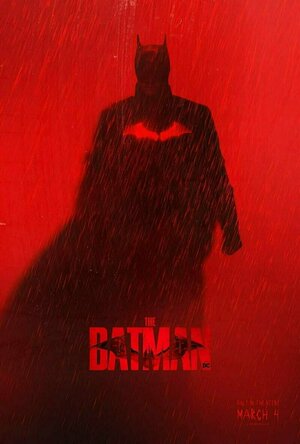


In 1989 Michael Keaton was seen as a very controversial choice to wear the Cowl of Batman but soon proved his doubters wrong by turning “Batman” and its subsequent sequel “Batman Returns” into massive Box Office success before leaving the cape behind.
While four other actors have taken up the cinematic version of the character in the subsequent years, Keaton has remained for many the Gold Standard with Christian Bale likely being his biggest rival.
When Robert Pattinson was named as the new Batman, there was interest but concern as an actor who is largely known for playing Edward in the “Twilight” films seemed to be an odd choice. However, I would say that anyone who has seen some of his recent work including his performance in “The Lighthouse” would be playing him a disservice by saying he was not up to the part.
In “The Batman”, audiences are given a darker and more broken Bruce Wayne, an Emo recluse who is far from the Socialite he has been portrayed as for decades and a very sullen and withdrawn individual who does not exude charm or grace and even shows issues making eye-contact.
When the Mayor of Gotham is killed shortly before the election by a mysterious individual known as “The Riddler” (Paul Dano), the vigilante known as “The Batman” is called in to help the police by Lt. James Gordon (Jeffrey Wright). Gordon has been working with Batman for some time but it is clear that his association with him has not won him any favors with his fellow officers, many of which openly question his use and involvement in the crime scenes.
Further complicating matters are clues left at the various crime locales that are addressed to The Batman and cause many to believe that he may be working with the very killer they are attempting to stop.
As the investigation unfolds, the seedy side of Gotham City comes to light in the form of a missing girl who was photographed with the married Mayor and may well be the key to the investigation. Her disappearance leads her friend Selina Kyle (Zoe Kravitz), to take on her Catwoman persona and delve deep into an underworld that features deadly individuals ranging from Carmine Falcone (John Turturro), and The Penguin (Colin Farrell), amongst others as she and the Batman conduct their own investigations that at times overlap and further complicate matters.
As the body count rises and Batman races to find the true method behind the madness of The Riddler, the tone becomes darker and more sinister in a deadly race against time.
The film eschews the usual abundance of action sequences and glossy special effects which are common for Comic Book related films and instead gives audiences a slow-burning murder mystery that holds your attention from start to finish over its three-hour run time.
The dark and foreboding tone of the film is brought home by the haunting and sharp piano keys of the film’s theme that permeates the film and punches home that this is a film clearly aimed at a more adult audience.
Pattinson does a great job showing the deeply broken individual that is behind the mask and that Batman is the only form of escape or therapy that Bruce Wayne has due to his insistence on saving a city that many argue cannot be saved. He has strained his relationship at times with Alfred (Andy Serkis), caused damage to the financial stability and reputation of the family company in his quest for vengeance and justice, and has become a bitter and broken recluse in doing so. In many ways, it could be argued that his only socialization with others is as The Batman and his single-minded obsession is chilling to watch.
Pattinson also handles the action sequences well as the film spaces them out to put the emphasis more on the man than the gadgets as they are kept to a minimum even during a thrilling chase with the new version of The Batmobile.
The strong supporting cast works well with the film and Paul Dano gives a very compelling and disturbing version of his character which makes the film even darker and more engrossing.
Director Matt Reeves has crafted a dark and foreboding tone and visual style as a good portion of the film takes place in the darkness and his screenplay is not afraid to take chances by putting the emphasis on the characters and their flaws versus an abundance of action and effects.
I found this version of the character and interpretation more engrossing than prior versions of the film as the bold move to do a slow-burning and dark murder mystery versus an effect-laden action film reminded me of some of the better Batman stories such as Batman: The Killing Joke or Batman: The Long Halloween.
The film is not going to be for everyone, especially younger viewers and some may take issue with the casting choices, but their performances shine and as such, “The Batman” was a very engaging and unforgettable tale that for me serves as one of the best adaptations of the character ever.
4 stars out of 5
While four other actors have taken up the cinematic version of the character in the subsequent years, Keaton has remained for many the Gold Standard with Christian Bale likely being his biggest rival.
When Robert Pattinson was named as the new Batman, there was interest but concern as an actor who is largely known for playing Edward in the “Twilight” films seemed to be an odd choice. However, I would say that anyone who has seen some of his recent work including his performance in “The Lighthouse” would be playing him a disservice by saying he was not up to the part.
In “The Batman”, audiences are given a darker and more broken Bruce Wayne, an Emo recluse who is far from the Socialite he has been portrayed as for decades and a very sullen and withdrawn individual who does not exude charm or grace and even shows issues making eye-contact.
When the Mayor of Gotham is killed shortly before the election by a mysterious individual known as “The Riddler” (Paul Dano), the vigilante known as “The Batman” is called in to help the police by Lt. James Gordon (Jeffrey Wright). Gordon has been working with Batman for some time but it is clear that his association with him has not won him any favors with his fellow officers, many of which openly question his use and involvement in the crime scenes.
Further complicating matters are clues left at the various crime locales that are addressed to The Batman and cause many to believe that he may be working with the very killer they are attempting to stop.
As the investigation unfolds, the seedy side of Gotham City comes to light in the form of a missing girl who was photographed with the married Mayor and may well be the key to the investigation. Her disappearance leads her friend Selina Kyle (Zoe Kravitz), to take on her Catwoman persona and delve deep into an underworld that features deadly individuals ranging from Carmine Falcone (John Turturro), and The Penguin (Colin Farrell), amongst others as she and the Batman conduct their own investigations that at times overlap and further complicate matters.
As the body count rises and Batman races to find the true method behind the madness of The Riddler, the tone becomes darker and more sinister in a deadly race against time.
The film eschews the usual abundance of action sequences and glossy special effects which are common for Comic Book related films and instead gives audiences a slow-burning murder mystery that holds your attention from start to finish over its three-hour run time.
The dark and foreboding tone of the film is brought home by the haunting and sharp piano keys of the film’s theme that permeates the film and punches home that this is a film clearly aimed at a more adult audience.
Pattinson does a great job showing the deeply broken individual that is behind the mask and that Batman is the only form of escape or therapy that Bruce Wayne has due to his insistence on saving a city that many argue cannot be saved. He has strained his relationship at times with Alfred (Andy Serkis), caused damage to the financial stability and reputation of the family company in his quest for vengeance and justice, and has become a bitter and broken recluse in doing so. In many ways, it could be argued that his only socialization with others is as The Batman and his single-minded obsession is chilling to watch.
Pattinson also handles the action sequences well as the film spaces them out to put the emphasis more on the man than the gadgets as they are kept to a minimum even during a thrilling chase with the new version of The Batmobile.
The strong supporting cast works well with the film and Paul Dano gives a very compelling and disturbing version of his character which makes the film even darker and more engrossing.
Director Matt Reeves has crafted a dark and foreboding tone and visual style as a good portion of the film takes place in the darkness and his screenplay is not afraid to take chances by putting the emphasis on the characters and their flaws versus an abundance of action and effects.
I found this version of the character and interpretation more engrossing than prior versions of the film as the bold move to do a slow-burning and dark murder mystery versus an effect-laden action film reminded me of some of the better Batman stories such as Batman: The Killing Joke or Batman: The Long Halloween.
The film is not going to be for everyone, especially younger viewers and some may take issue with the casting choices, but their performances shine and as such, “The Batman” was a very engaging and unforgettable tale that for me serves as one of the best adaptations of the character ever.
4 stars out of 5

Daniel Boyd (1066 KP) rated Rogue One: A Star Wars Story (2016) in Movies
Jul 19, 2017
Darth Vader (1 more)
Fits nicely with the rest of the series
What's Old Is New
So our yearly Star Wars movie has arrived and after a complicated production it has released to rave reviews, with some outlets going as far as to compare it in quality to Empire Strikes Back, (which is widely considered to be the superior Star Wars film,) and it has even garnered a fair amount of Oscar buzz. This, along with the fact it’s a Star Wars movie meant that my expectations for this were pretty high going in and after seeing the movie there are parts of the flick that I loved and parts that I didn’t. When I wrote my Force Awakens review last year, I wrote both a spoiler free and a spoiler filled version of the review, but this year I have less time on my hands, so from this point on this will be a spoiler filled review, but the movie has been out for almost a week at the time of writing this, so if you haven’t seen the movie yet and are reading my review, well that is your own fault.
This movie for the most part impressed me. I loved how well it tied into A New Hope and how it actually fixed that movie’s biggest plothole by explaining that the weak point in the Death Star was installed on purpose by Galen Erso while designing the battle station under the Empire’s thumb, so that the Rebels would have a chance to destroy it. I loved how the movie had the balls to kills off the entire crew of the Rogue One team at the end of the movie and that corridor scene at the end with Vader was possibly the best scene I’ve seen in the cinema this year, it’s definitely up there with the airport scene in Civil War. Those are the stand out positives of the movie for me, however there were also a few flaws throughout the film.
First of all, that Grand Mof Tarkin CGI recreation of Peter Cushing was awful, the whole thing looked like a character from the Star Wars animated series. When he is first introduced it is through a glass reflection on a window he is looking out of and in that part of the scene it was fairly convincing, however he then turns around and the camera moves to a medium close up shot and all of a sudden it feels like watching a video game cutscene. Guy Henry was the actor who did the motion capture for Tarkin and that actor actually looks relatively similar to Peter Cushing, so why they didn’t just apply some makeup to Guy Henry and dye his hair gray to resemble Cushing more and recast the Tarkin role is a mystery to me, it would have also been a lot cheaper than the method that they went with. Either that or he should have only been seen in the reflection of the glass, since that was the only time that the CGI effect actually looked convincing. However, I did think that the CGI recreation of 1970’s Carrie Fischer at the end of the movie was very convincing and if it wasn’t for the movement in her mouth, I wouldn’t have known that was a CGI character. Another flaw I had with the movie was the how rushed and choppy the first act was, the characters were all introduced quickly and vaguely, then it took them ages to actually form up as a team. I get that introducing a whole cast of brand new characters in a short space of time isn’t easy, but Tarantino pulls it off in Hateful 8 and Inglorious Bastards and it works a lot better than it works here.
In a lot of ways Rogue One is a contrast to Force Awakens. In Force Awakens, the plot was essentially the same as A New Hope and was a fairly by the book, traditional Star Wars story, but the characters were what made that movie, if Poe Dameron, Rey, Finn, Kylo Ren, Han and Chewie weren’t as well written, that movie would have been mediocre at best. In Rogue One, the characters are pretty shallow and underdeveloped and they are introduced quickly and by the end of the movie none of them have really had a proper character arc. However that is not what this movie is about, this film is about a team of people coming together in order to complete a task to set up the events of the original trilogy and in that sense this movie does what it sets out to do. An example of this is the robot character K2SO, who I thought was going to start off with no humanity, then over the course of the movie realize the value of human life and then sacrifice himself for the greater good at the movie’s climax, but it turns out that the only real reason that he is helping the Rebels, is because he has been programmed to do so. This I feel sums up the level of character development present in the movie and demonstrates that it is not necessary in the film as that isn’t the movie’s purpose. What Force Awakens lacked in an original plot, it made up for in character development and what Rogue One lacks in character development, it makes up for in plot and setup, so both movies have their strengths and their flaws. Bearing in mind that I have only seen Rogue One once so far, I currently prefer Force Awakens to Rogue One, but then I prefer Return of the Jedi to Empire, so maybe that’s just me.
The writing moves the story along at a brisk pace, but it is effective in that you are constantly kept aware of where we are and what is happening at least from the end of the first act onwards. The performances are also suitable to the characters in each role, but I wouldn’t say anyone was incredible, my personal favourite was Cassian, the Alliance’s trigger finger who had shades of Han Solo thrown in as well. While watching Diego Luna’s performance, I actually thought he would be a good pick to play Nathan Drake in the Uncharted movie. The lighting in the film is well used and the CGI is spectacular for the most part other than weird waxwork Peter Cushing. The space battles are breathtaking and the action on the ground is also exciting.
Now, let’s talk about the characters that weren’t part of the Rogue One team. Forest Whittaker and Mads Mikkelson are two of my favourite actors working in Hollywood today and they are both in this movie, but I feel that both could have been used more. When they are onscreen, they are brilliant, it’s just a pity they make up such a small part of the movie. Whittaker appears only to be killed off minutes later and Mikkelson is only in two major scenes outside of a brief hologram appearance and then also gets killed off unceremoniously. The reason that a lot of people will go and see this movie however, will be to see Darth Vader. He isn’t in the movie much, but when he is it is fantastic. All of this reminds me a lot of Edwards’ last movie Godzilla, where Bryan Cranston and the monster were clearly the best parts of that movie, but for some reason were hardly in the thing. It’s as if Edwards has this idea in his head that less is always more and if he doesn’t show what people want to see in the movie for more than a few minutes at a time, then he is being original and artistic. While I understand this way of thinking from an auteur perspective, it’s fucking Star Wars and Godzilla mate, just give the people what they want. It is far less of an issue here however, since the rest of the cast in Rogue One are far more compelling than the rest of the cast in Godzilla.
Anyway, back to Vader. We first see Vader when Krennic goes to see him in his Imperial Castle in Mustafar, the same location that he was relieved of his limbs and burnt alive in a pool of lava. The way he is introduced is awesome, when Krennic arrives one of Vader’s cloaked minions enters a large room containing an ominous bacta tank, which we see Vader floating in without his suit on. This is the most vulnerable we have ever seen Vader since we saw him getting his suit fitted for the first time in Revenge Of The Sith. The tank empties and we see Vader’s stumps where his arms and legs once were and we see the burnt skin that covers his torso. Then we cut to him in full costume, complete with the classic James Earl Jones voice and force choking Krennic. He then disappears again for most of the movie, until the second to last scene where he is at his most powerful and this could genuinely be my favourite Vader scene of all time, perhaps even beating the infamous, ‘I am your father,’ scene from Empire. Vader in this scene is pure raw anger and power and the way the scene is shot and lit is fucking perfect, the audio and the editing fantastic also. The scene opens with a dark corridor with Rebels scrambling to get the hard drive containing the Death Star plans to the other end of the corridor and onto the ship that Leia is on, so that she can go on to get the plans into R2 in order to kick off A New Hope’s events. At first you wonder why the Rebels are in such a panic then you hear the terrifying breathing from Vader’s suit, but he still isn’t shown. Then the first and only lightsaber in the movie is sparked and it illuminates Vader in all of his terrifying glory before he starts tearing through the Rebels like a monster in a horror movie. This minute long scene is one of the best I’ve seen this year and it alone made the ticket price worth it for me.
Overall, Rogue One was essentially what I thought it would be based on the trailers. I don’t personally understand the overblown critical fanfare that the movie is receiving, but I’m glad that Star Wars fans like it. There are many parts of the movie that could be considered polarizing, such as the lack of Vader scenes, the dodgy Tarkin CGI, the fact that the entire Rogue One squad is killed off at the end of the movie, the absence of an opening crawl and Forest Whittaker’s raspy voice, which admittedly takes a bit of getting used to. Some of these elements I loved and some I hated, but for the most part this is an enjoyable addition to the Star Wars saga, I love how well it ties into and sets up the events of the films following this one and it was an added bonus that they actually resolved some of the original trilogy’s flaws. As I said earlier, I still prefer The Force Awakens to this, but I can see how an argument could be made for this one being a better movie.
This movie for the most part impressed me. I loved how well it tied into A New Hope and how it actually fixed that movie’s biggest plothole by explaining that the weak point in the Death Star was installed on purpose by Galen Erso while designing the battle station under the Empire’s thumb, so that the Rebels would have a chance to destroy it. I loved how the movie had the balls to kills off the entire crew of the Rogue One team at the end of the movie and that corridor scene at the end with Vader was possibly the best scene I’ve seen in the cinema this year, it’s definitely up there with the airport scene in Civil War. Those are the stand out positives of the movie for me, however there were also a few flaws throughout the film.
First of all, that Grand Mof Tarkin CGI recreation of Peter Cushing was awful, the whole thing looked like a character from the Star Wars animated series. When he is first introduced it is through a glass reflection on a window he is looking out of and in that part of the scene it was fairly convincing, however he then turns around and the camera moves to a medium close up shot and all of a sudden it feels like watching a video game cutscene. Guy Henry was the actor who did the motion capture for Tarkin and that actor actually looks relatively similar to Peter Cushing, so why they didn’t just apply some makeup to Guy Henry and dye his hair gray to resemble Cushing more and recast the Tarkin role is a mystery to me, it would have also been a lot cheaper than the method that they went with. Either that or he should have only been seen in the reflection of the glass, since that was the only time that the CGI effect actually looked convincing. However, I did think that the CGI recreation of 1970’s Carrie Fischer at the end of the movie was very convincing and if it wasn’t for the movement in her mouth, I wouldn’t have known that was a CGI character. Another flaw I had with the movie was the how rushed and choppy the first act was, the characters were all introduced quickly and vaguely, then it took them ages to actually form up as a team. I get that introducing a whole cast of brand new characters in a short space of time isn’t easy, but Tarantino pulls it off in Hateful 8 and Inglorious Bastards and it works a lot better than it works here.
In a lot of ways Rogue One is a contrast to Force Awakens. In Force Awakens, the plot was essentially the same as A New Hope and was a fairly by the book, traditional Star Wars story, but the characters were what made that movie, if Poe Dameron, Rey, Finn, Kylo Ren, Han and Chewie weren’t as well written, that movie would have been mediocre at best. In Rogue One, the characters are pretty shallow and underdeveloped and they are introduced quickly and by the end of the movie none of them have really had a proper character arc. However that is not what this movie is about, this film is about a team of people coming together in order to complete a task to set up the events of the original trilogy and in that sense this movie does what it sets out to do. An example of this is the robot character K2SO, who I thought was going to start off with no humanity, then over the course of the movie realize the value of human life and then sacrifice himself for the greater good at the movie’s climax, but it turns out that the only real reason that he is helping the Rebels, is because he has been programmed to do so. This I feel sums up the level of character development present in the movie and demonstrates that it is not necessary in the film as that isn’t the movie’s purpose. What Force Awakens lacked in an original plot, it made up for in character development and what Rogue One lacks in character development, it makes up for in plot and setup, so both movies have their strengths and their flaws. Bearing in mind that I have only seen Rogue One once so far, I currently prefer Force Awakens to Rogue One, but then I prefer Return of the Jedi to Empire, so maybe that’s just me.
The writing moves the story along at a brisk pace, but it is effective in that you are constantly kept aware of where we are and what is happening at least from the end of the first act onwards. The performances are also suitable to the characters in each role, but I wouldn’t say anyone was incredible, my personal favourite was Cassian, the Alliance’s trigger finger who had shades of Han Solo thrown in as well. While watching Diego Luna’s performance, I actually thought he would be a good pick to play Nathan Drake in the Uncharted movie. The lighting in the film is well used and the CGI is spectacular for the most part other than weird waxwork Peter Cushing. The space battles are breathtaking and the action on the ground is also exciting.
Now, let’s talk about the characters that weren’t part of the Rogue One team. Forest Whittaker and Mads Mikkelson are two of my favourite actors working in Hollywood today and they are both in this movie, but I feel that both could have been used more. When they are onscreen, they are brilliant, it’s just a pity they make up such a small part of the movie. Whittaker appears only to be killed off minutes later and Mikkelson is only in two major scenes outside of a brief hologram appearance and then also gets killed off unceremoniously. The reason that a lot of people will go and see this movie however, will be to see Darth Vader. He isn’t in the movie much, but when he is it is fantastic. All of this reminds me a lot of Edwards’ last movie Godzilla, where Bryan Cranston and the monster were clearly the best parts of that movie, but for some reason were hardly in the thing. It’s as if Edwards has this idea in his head that less is always more and if he doesn’t show what people want to see in the movie for more than a few minutes at a time, then he is being original and artistic. While I understand this way of thinking from an auteur perspective, it’s fucking Star Wars and Godzilla mate, just give the people what they want. It is far less of an issue here however, since the rest of the cast in Rogue One are far more compelling than the rest of the cast in Godzilla.
Anyway, back to Vader. We first see Vader when Krennic goes to see him in his Imperial Castle in Mustafar, the same location that he was relieved of his limbs and burnt alive in a pool of lava. The way he is introduced is awesome, when Krennic arrives one of Vader’s cloaked minions enters a large room containing an ominous bacta tank, which we see Vader floating in without his suit on. This is the most vulnerable we have ever seen Vader since we saw him getting his suit fitted for the first time in Revenge Of The Sith. The tank empties and we see Vader’s stumps where his arms and legs once were and we see the burnt skin that covers his torso. Then we cut to him in full costume, complete with the classic James Earl Jones voice and force choking Krennic. He then disappears again for most of the movie, until the second to last scene where he is at his most powerful and this could genuinely be my favourite Vader scene of all time, perhaps even beating the infamous, ‘I am your father,’ scene from Empire. Vader in this scene is pure raw anger and power and the way the scene is shot and lit is fucking perfect, the audio and the editing fantastic also. The scene opens with a dark corridor with Rebels scrambling to get the hard drive containing the Death Star plans to the other end of the corridor and onto the ship that Leia is on, so that she can go on to get the plans into R2 in order to kick off A New Hope’s events. At first you wonder why the Rebels are in such a panic then you hear the terrifying breathing from Vader’s suit, but he still isn’t shown. Then the first and only lightsaber in the movie is sparked and it illuminates Vader in all of his terrifying glory before he starts tearing through the Rebels like a monster in a horror movie. This minute long scene is one of the best I’ve seen this year and it alone made the ticket price worth it for me.
Overall, Rogue One was essentially what I thought it would be based on the trailers. I don’t personally understand the overblown critical fanfare that the movie is receiving, but I’m glad that Star Wars fans like it. There are many parts of the movie that could be considered polarizing, such as the lack of Vader scenes, the dodgy Tarkin CGI, the fact that the entire Rogue One squad is killed off at the end of the movie, the absence of an opening crawl and Forest Whittaker’s raspy voice, which admittedly takes a bit of getting used to. Some of these elements I loved and some I hated, but for the most part this is an enjoyable addition to the Star Wars saga, I love how well it ties into and sets up the events of the films following this one and it was an added bonus that they actually resolved some of the original trilogy’s flaws. As I said earlier, I still prefer The Force Awakens to this, but I can see how an argument could be made for this one being a better movie.

Lee (2222 KP) rated Justice League (2017) in Movies
Nov 18, 2017

Messy introduction (1 more)
Steppenwolf
A really pleasant surprise
PRE-MOVIE THOUGHTS: Up until very recently, I'd been cautiously optimistic regarding Justice League. I enjoyed Man of Steel, despite some faults, and I thought that Henry Cavill was perfectly suited to the role. I didn't mind Batman V Superman so much either, despite Jesse Eisenbergs Lex Luthor constantly trying to ruin it. The best thing about Batman V Superman though was Gal Gadot as Wonder Woman, which is why her standalone origin movie deservedly did so well earlier this year. But the characters of Superman and Batman were beginning to get a bit of a raw deal in my opinion, and that was starting to piss me off. The original Superman movie with Christopher Reeve, along with Christopher Nolans Dark Knight trilogy, are among my favourite films and these latest movies just weren't doing them 'justice'. Suicide Squad showed that DC couldn't do an ensemble movie, which cast a lot of doubt over just how good Justice League was going to be. And when reports came in of re-shoots and a change of director, it wasn't really looking good. But some of the more recent trailers and teasers actually didn't look so bad, so maybe there wasn't too much to be worried about. Until a few days ago that is, when about 90% of the reviews I read didn't give it higher than two stars! And those that gave it higher were still highlighting some of the weaknesses I've already mentioned here. So, I headed into the cinema, expecting to be pissed off again. But seriously, genuinely hoping I wasn't.
POST-MOVIE REVIEW: Justice League doesn't start things off too well. The world is still mourning the death of Superman, and a few pointless scenes try to highlight that loss and despair. Batman and Wonder Woman appear in a couple of standalone battles to remind us what they're capable of, but those scenes also seem rushed and out of place. We have three new team members to be introduced to as well, along with the big bad of the movie. Whereas Marvel's Avengers took the time to introduce their team over a series of standalone movies, we've had no such luxury in the run up to Justice League, aside from some brief glimpses in previous movies. It all just seems like a rush to get things to the point where the team are together and can start having some fun. Everything up until that point just seems cobbled together. Lacking coherence, and just a little bit dull.
Talking of dull, once again the big bad of the movie is a bit of a let down. Steppenwolf appears on Earth in search of three powerful cubes which when combined together will give him the ability to forge the Earth into something more appealing to him, or something like that anyway. He's accompanied by thousands of flying zombie man-bug type creatures and the whole thing just reeks of supervillain plotlines we've seen many times before. Steppenwolf himself is entirely CGI, and at times the CGI just doesn't look that good.
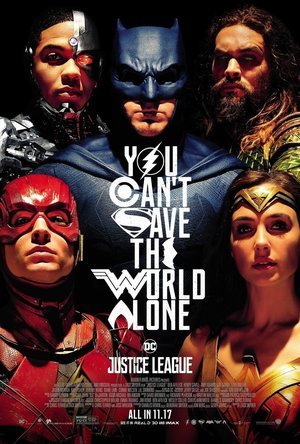
Onto the league themselves. Well, Wonder Woman is still the most impressive of them all, proving to be a real natural leader. Batman, although greatly improved on his Batman V Superman appearance, just seems like he can't be bothered. Tired and uninterested at times. This might be partly down to Ben Affleck, who never really seemed suited to the role in my opinion. If the rumours of him being recast in the next standalone Batman movie are true, then it may well be for the best. Even if the thought of yet another actor taking on the role so soon already is extremely frustrating.
The two biggest surprise for me were the two characters I was initially least interested about when heading in to the cinema. Cyborg, from his introduction in BvS and glimpses in the trailers, just seemed pointless. But, despite that we gloss over his back story somewhat, actually proves himself to be a valuable and interesting member of the team. And as for The Flash, he manages to get many of the movies better lines and scenes while he tries to come to terms with what he can actually do with his power ("Up until now I usually just run really fast and push people").
Slightly disappointing though was Aquaman. Not the character himself, just the fact that we barely get a glimpse of his undersea world, before he finds himself thrust into the league, reduced to just being some extra muscle. His is a role which would have greatly benefited from a standalone origin movie before appearing in this one.
When the team eventually do come together is when the movie really steps up a gear. They work really well together and I really enjoyed the battle scenes. It soon becomes clear though, that they cannot defeat Steppenwolf on their own, and need somebody even more powerful to help them out.
It's no secret, despite his absence from the trailers, that Superman returns to become part of the league. I felt that this was handled really well and the team helping to overcome his initial disorientation was a really fun scene. When he is fully recovered and battling the bad guys, it's the kind of Superman we all know and love and everything involving him is just hugely enjoyable.
If it wasn't for the rushed, incoherent introduction to the movie, I would have rated this a lot higher. For me, the rest of the movie is right up there with this years Wonder Woman, and is a serious step in the right direction for DC. A really pleasant surprise...
POST-MOVIE REVIEW: Justice League doesn't start things off too well. The world is still mourning the death of Superman, and a few pointless scenes try to highlight that loss and despair. Batman and Wonder Woman appear in a couple of standalone battles to remind us what they're capable of, but those scenes also seem rushed and out of place. We have three new team members to be introduced to as well, along with the big bad of the movie. Whereas Marvel's Avengers took the time to introduce their team over a series of standalone movies, we've had no such luxury in the run up to Justice League, aside from some brief glimpses in previous movies. It all just seems like a rush to get things to the point where the team are together and can start having some fun. Everything up until that point just seems cobbled together. Lacking coherence, and just a little bit dull.
Talking of dull, once again the big bad of the movie is a bit of a let down. Steppenwolf appears on Earth in search of three powerful cubes which when combined together will give him the ability to forge the Earth into something more appealing to him, or something like that anyway. He's accompanied by thousands of flying zombie man-bug type creatures and the whole thing just reeks of supervillain plotlines we've seen many times before. Steppenwolf himself is entirely CGI, and at times the CGI just doesn't look that good.
Onto the league themselves. Well, Wonder Woman is still the most impressive of them all, proving to be a real natural leader. Batman, although greatly improved on his Batman V Superman appearance, just seems like he can't be bothered. Tired and uninterested at times. This might be partly down to Ben Affleck, who never really seemed suited to the role in my opinion. If the rumours of him being recast in the next standalone Batman movie are true, then it may well be for the best. Even if the thought of yet another actor taking on the role so soon already is extremely frustrating.
The two biggest surprise for me were the two characters I was initially least interested about when heading in to the cinema. Cyborg, from his introduction in BvS and glimpses in the trailers, just seemed pointless. But, despite that we gloss over his back story somewhat, actually proves himself to be a valuable and interesting member of the team. And as for The Flash, he manages to get many of the movies better lines and scenes while he tries to come to terms with what he can actually do with his power ("Up until now I usually just run really fast and push people").
Slightly disappointing though was Aquaman. Not the character himself, just the fact that we barely get a glimpse of his undersea world, before he finds himself thrust into the league, reduced to just being some extra muscle. His is a role which would have greatly benefited from a standalone origin movie before appearing in this one.
When the team eventually do come together is when the movie really steps up a gear. They work really well together and I really enjoyed the battle scenes. It soon becomes clear though, that they cannot defeat Steppenwolf on their own, and need somebody even more powerful to help them out.
It's no secret, despite his absence from the trailers, that Superman returns to become part of the league. I felt that this was handled really well and the team helping to overcome his initial disorientation was a really fun scene. When he is fully recovered and battling the bad guys, it's the kind of Superman we all know and love and everything involving him is just hugely enjoyable.
If it wasn't for the rushed, incoherent introduction to the movie, I would have rated this a lot higher. For me, the rest of the movie is right up there with this years Wonder Woman, and is a serious step in the right direction for DC. A really pleasant surprise...
Daniel Boyd (1066 KP) rated Until Dawn in Video Games
Jul 21, 2017
Cast (1 more)
Graphics
A Bloody Good Time
This game by all accounts, should have been a flop. The fact that it was a cliché teen horror story, the fact that it started out as a move game for the ps3 and has had a long, unsteady development cycle and the fact that it was coming out in August, a time of year that is known as the stealth zone, as it is after the summer blockbuster season, but before the big fall line up drops. Yet, Supermassive games have managed to produce an engaging, genuinely scary story that plays on your expectations of this genre and succeeds in keeping the player engaged for a 10-12 hour story that follows the teens trying to survive through a horrific night of terror. I have been a gamer for the vast majority of my time on this earth and while I am very proud of that fact, I do realise that it may cloud my judgement somewhat and I could lose sight somewhat of what really makes a game special, which is why I will always greatly value an outsider’s opinion. I have been with my girlfriend for the past 3 years and before meeting me she was a casual gamer at best, playing Wii games and mobile games, I do believe she owned a PS1 when she was young but she definitely isn’t a gamer like I am. So, when I get a game and she watches me playing it and has a reaction more than just, ‘is this all you do?’ I know that it is something a bit more special than any old game. It happened with season 1 of Telltale’s Walking Dead, it happened with The Last Of Us and it happened a few nights ago with Until Dawn. As soon as I put the disc in and we played the first chapter, we were both hooked and dying to find out what happens next. This game is very well written, with an intriguing, engaging narrative coupled with purposefully written bad cheesy dialogue creating many memorable moments. The cast is very talented also, the facial capture in this game is very good and when playing you can see each tiny expression of fear or anger on the actor’s faces and the VO work is also pretty impeccable. Hayden Pannietre and Rami Malek stand out, as does Peter Stromare and the actor who plays Mike. The first quarter of the game is full of ‘mock’ scares that the group are seen pranking each other with, however not to an annoying extent. The scares that follow are very real with the next part of the game being reminiscent of a 70’s slasher movie. The atmosphere is built very well, with well timed audio cues and the use of a fixed camera working both as a homage to classic ps1 era horror games and as to give the player a feeling they are constantly being watched. Some camera angles are unsettling and the tracking shots can be particularly creepy, especially when you could have sworn that you saw something move in the far corner of the screen. The game then delves more into supernatural horror, which I will talk about more in the spoiler section of the review. Really though, there isn’t anything to spoil in this game in the respect that you can beat the game with everyone alive, or everybody dead. The only thing to spoil is how the characters die, which can be in a few different but increasingly gruesome ways which I won’t spoil here.
That’s not to say that everything that this game has to offer is positive, several of the big twists can be seen coming from a mile away, for example my better half guessed who the killer was going to be within the first hour of our playthrough, but other than that I am struggling to find any real criticisms in this game. It is just a fun experience that I would recommend to anyone, whether you are a horror fan or not.
Okay, spoiler time.
The twists in the game are fairly obvious. From very early on in the game it is clear that the ‘therapy’ sessions with Peter Stromare are a hallucination, probably a hallucination of the psycho in the clown mask and that psycho is probably Josh. All of these things come to pass, which means when they are revealed to be true the shock value is pretty much lost. It is also fairly obvious that there is something after the group besides the psycho, something that is more than likely to be supernatural. The only twist is finding out what that is and when it’s revealed to be the Gollum-like Wendigos, I was somewhat disappointed. The creatures are pretty cool in how they move, as they very twitchy and quick, but they are fairly generic and not all that scary once you know what they look like. The character deaths are quite well done, but half of the characters have fake ‘deaths,’ before their actual death scenes which makes the actual death scenes less impactful and somewhat fall flat.
Overall, Until Dawn is an engaging, entertaining experience that doesn’t really have any major flaws. For the most part the humour and the scares are well executed and while not all of the characters are likeable, they are all well written horror stereotypes that are played very well by their real life counterparts. This game was unexpectedly great by a number of people, and is seen as a surprise hit and likewise for me, it exceeded my expectations and served as a very pleasant and welcome addition to the modern horror genre.
That’s not to say that everything that this game has to offer is positive, several of the big twists can be seen coming from a mile away, for example my better half guessed who the killer was going to be within the first hour of our playthrough, but other than that I am struggling to find any real criticisms in this game. It is just a fun experience that I would recommend to anyone, whether you are a horror fan or not.
Okay, spoiler time.
The twists in the game are fairly obvious. From very early on in the game it is clear that the ‘therapy’ sessions with Peter Stromare are a hallucination, probably a hallucination of the psycho in the clown mask and that psycho is probably Josh. All of these things come to pass, which means when they are revealed to be true the shock value is pretty much lost. It is also fairly obvious that there is something after the group besides the psycho, something that is more than likely to be supernatural. The only twist is finding out what that is and when it’s revealed to be the Gollum-like Wendigos, I was somewhat disappointed. The creatures are pretty cool in how they move, as they very twitchy and quick, but they are fairly generic and not all that scary once you know what they look like. The character deaths are quite well done, but half of the characters have fake ‘deaths,’ before their actual death scenes which makes the actual death scenes less impactful and somewhat fall flat.
Overall, Until Dawn is an engaging, entertaining experience that doesn’t really have any major flaws. For the most part the humour and the scares are well executed and while not all of the characters are likeable, they are all well written horror stereotypes that are played very well by their real life counterparts. This game was unexpectedly great by a number of people, and is seen as a surprise hit and likewise for me, it exceeded my expectations and served as a very pleasant and welcome addition to the modern horror genre.

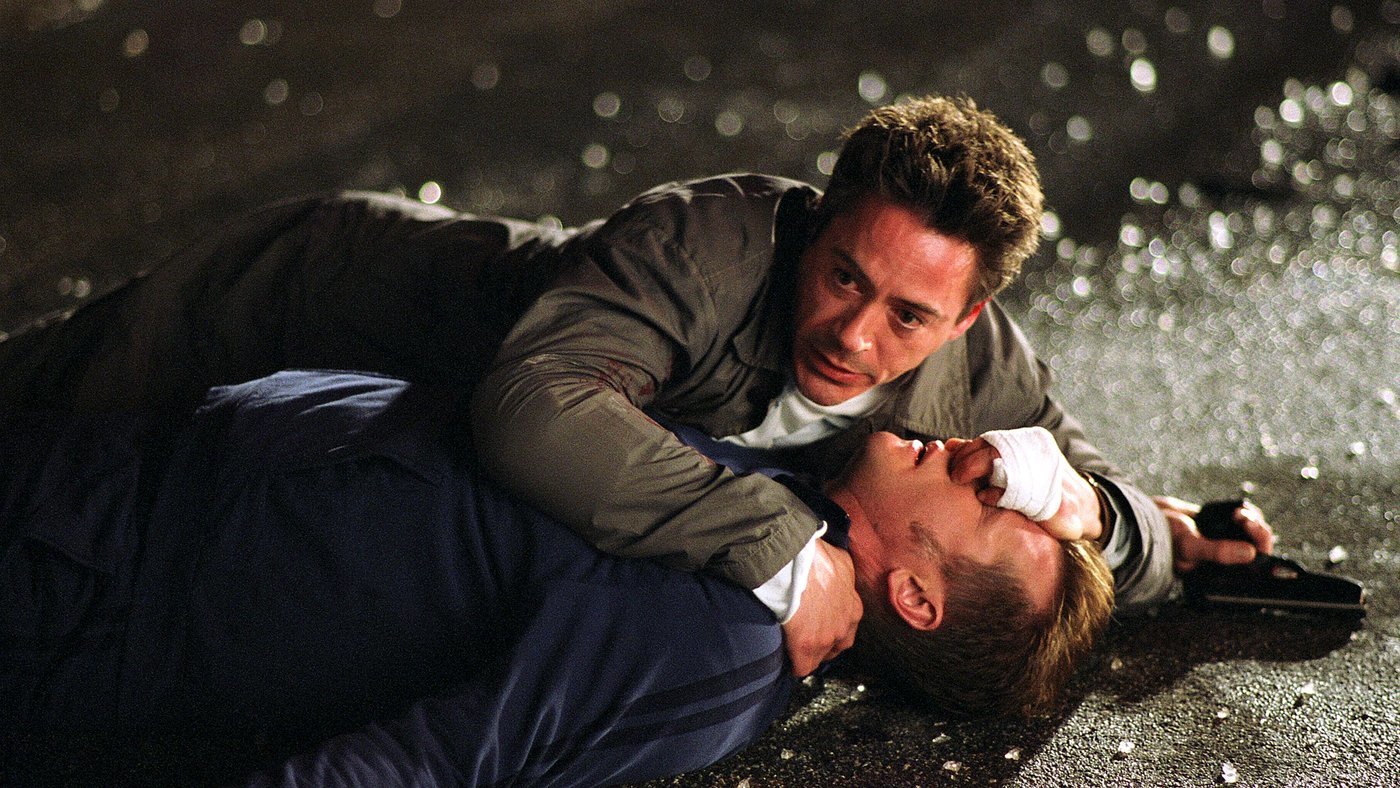
Chris Sawin (602 KP) rated Kiss Kiss, Bang Bang (2005) in Movies
Jun 18, 2019
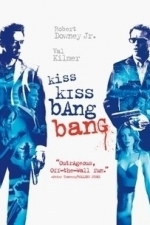
In the early to mid-2000s, Robert Downey Jr wasn’t one of the highest paid actors in the world. He was busy attempting to rebuild his career after five years of constant struggles with various drugs, being in and out of rehab, and even spent at least a year and a half incarcerated. With all of the films Downey did in that period, including Gothika, A Guide to Recognizing Your Saints, A Scanner Darkly, Zodiac, and Charlie Bartlett, perhaps none are as memorable as Shane Black’s directorial debut and neo-noir black comedy Kiss Kiss Bang Bang.
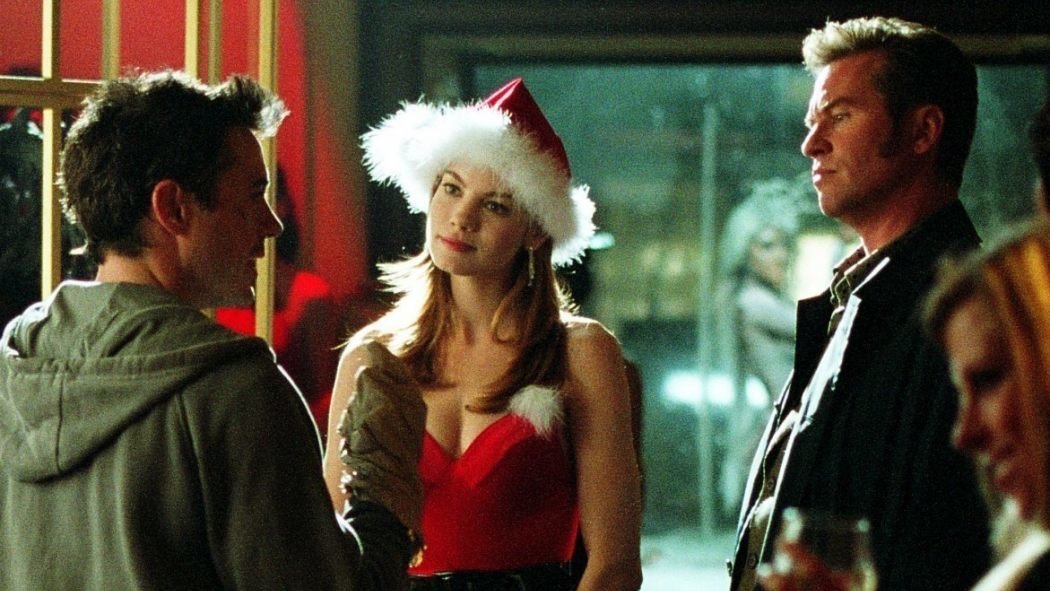
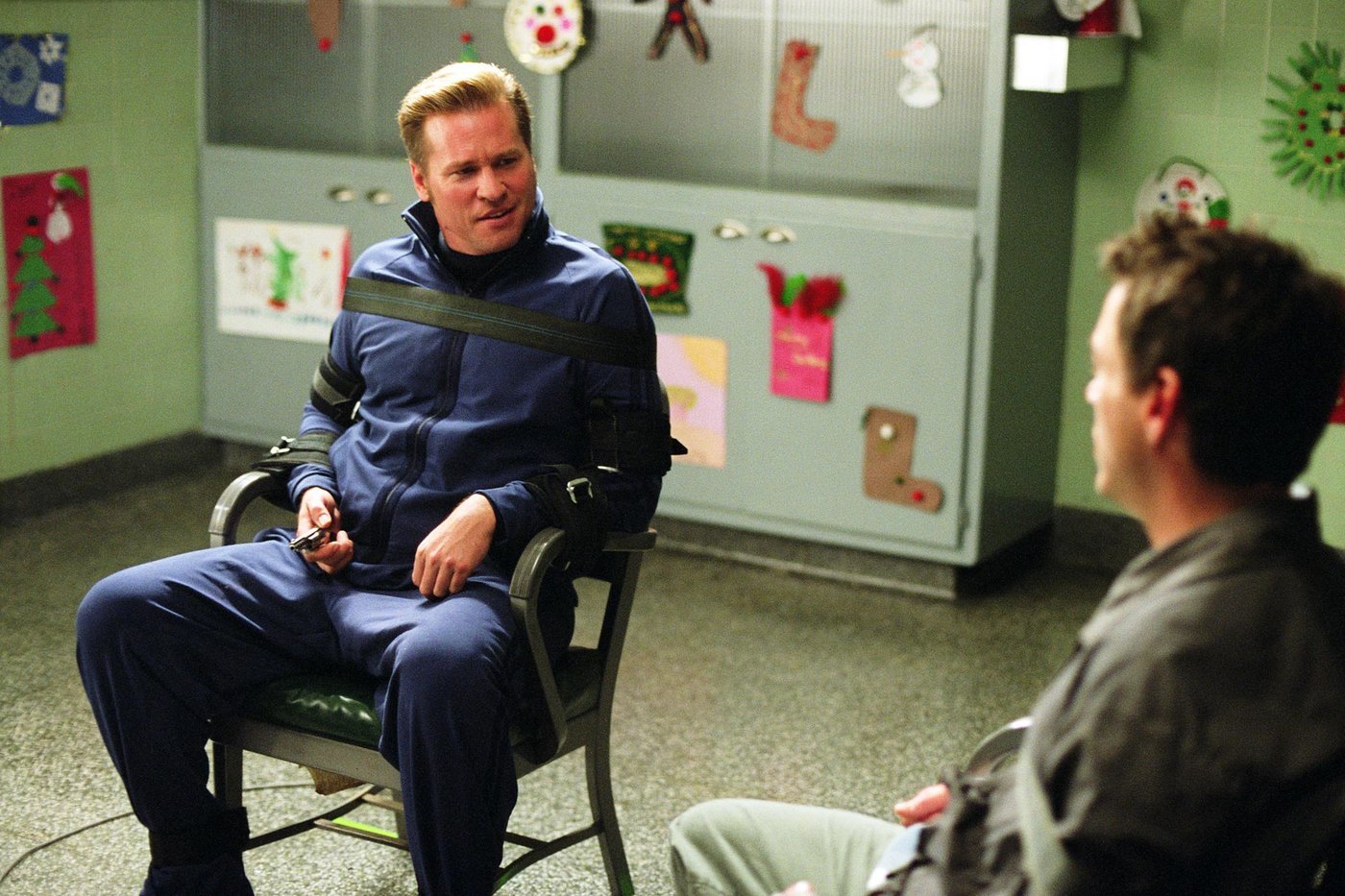
Harry Lockhart (Downey) is a thief that finds himself in a peculiar situation. After almost being apprehended by the police while breaking into a toy store, Harry stumbles into an audition and impresses everyone when his reading cuts a little too deep and is strangely accurate to Harry’s current situation. Now seen as some sort of acting prodigy, Harry finds himself in Los Angeles awaiting his screen test. He’s introduced to Gay Perry (Val Kilmer), a gay detective that’s hired to bestow his detective wisdom on Harry for his new on-screen role.
But before character development can truly begin, Harry is re-introduced to Harmony (Michelle Monaghan); a childhood friend and the girl-next-door-type who Harry considers to be the one that got away. However, Harry’s newfound luck is short-lived. While tagging along with Perry during one of his cases, the two of them witness two men in ski masks drive a car off a cliff and into a lake. They discover a woman with a broken neck in the trunk and the realization dawns on them that this is bigger than either of them could have ever imagined. With multiple cases suddenly being connected to one another and clues coming together to form bigger pieces of the puzzle, maybe Harry, Perry, and Harmony meeting each other is fate and not just a coincidence.
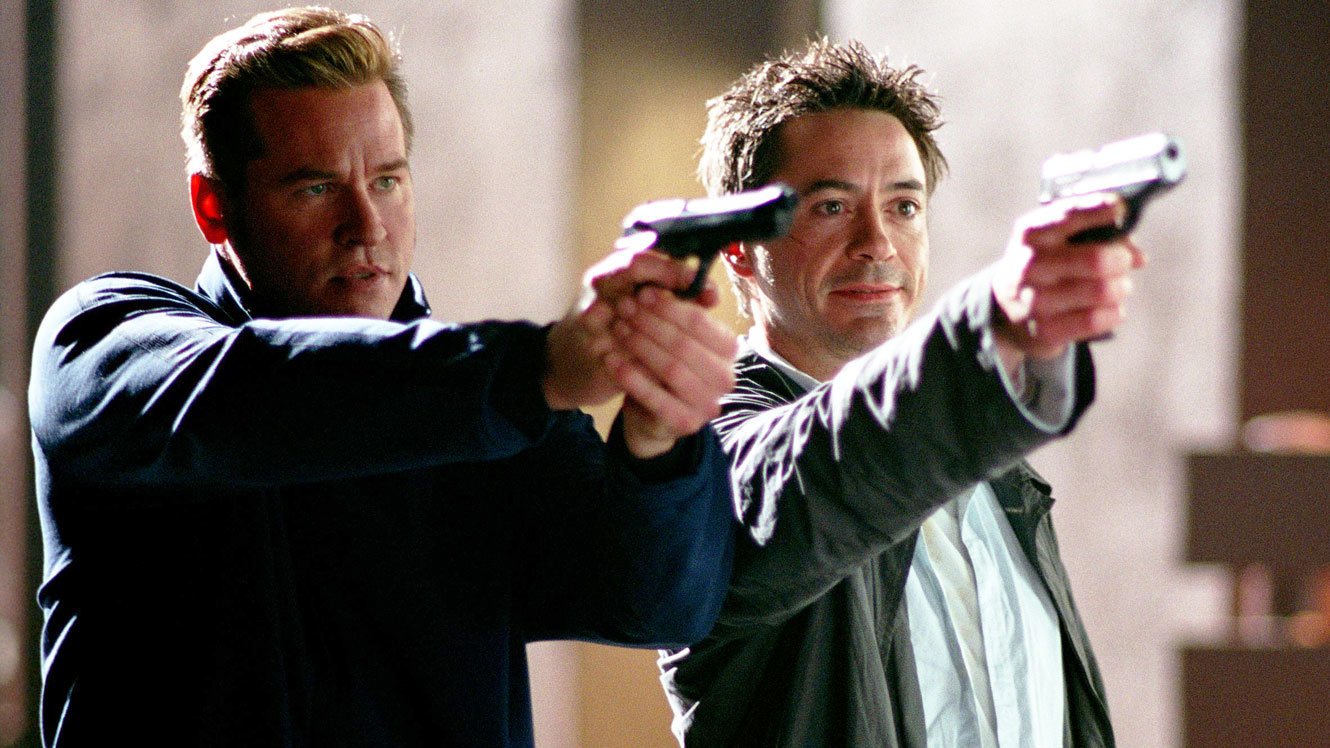
While Kiss Kiss Bang Bang is a noir film on the surface, it also has that buddy cop dynamic that Shane Black perfected with the likes of the Lethal Weapon films and The Nice Guys. The film has elements of mystery, comedy, action, and thriller genres for an overall experience that is entertaining on a variety of levels. Harry guides you as the narrator throughout the majority of the film and there are some intriguing storytelling techniques utilized to help get Harry’s perspective across. There’s a sequence where Harry realizes he’s forgotten to tell the audience an important piece of information and the film reel acts like it’s about to run off track before it pauses showing what looks like the film paused between two frames of a film reel. Kiss Kiss Bang Bang has a few elements like this that capitalizes on Harry’s quirks while he narrates that gives the film and the story a refreshing ambience.
This is Robert Downey Jr’s favorite film of his entire filmography and it’s difficult to argue with that. At a time when Downey was trying to rebound, stay sober, and prove that he was still a talented actor, Kiss Kiss Bang Bang benefits from all of his strengths. As Harry, Downey portrays nearly every emotion imaginable and this performance reminds you why he has always been held in such high regard. Unlike Iron Man 3 which seems to depreciate in repeat viewings, Kiss Kiss Bang Bang holds up extremely well for a film that is 10+ years old and should be considered as one of Shane Black’s strongest films in general and to date.
The one downside was the way the film was released theatrically. The film didn’t expand to more theaters after its opening weekend and underperformed at the box office, but did well overseas and was a big hit once it was released on DVD. The Gay Perry character is considered to be the first openly gay character to headline a major motion picture in Hollywood and Val Kilmer is in top form in the role. The chemistry he has with Robert Downey Jr is overwhelmingly entertaining while Perry’s agitation with Harry’s incompetence as a detective is hilariously brought to light by Kilmer’s memorable performance.
John Ottman’s score is the unseen cast member of Kiss Kiss Bang Bang that helps cement the noir vibe the film is aiming for. The jazz-infused compositions invoke a sense of mystery and intrigue in the viewer that sets the tone of the film perfectly. For proof of this, look no further than the film’s opening credits which simultaneously feel like an homage to other noir films while also offering something completely new.
Kiss Kiss Bang Bang isn’t as overlooked as it used to be, but it still doesn’t seem to have the reputation it deserves. The film is entertaining on so many levels and the performances from the cast are exceptional. The music is superb and the story constantly captivates; Shane Black couldn’t have dreamed of a better directorial debut.
Kiss Kiss Bang Bang is currently available to stream on Amazon Prime, YouTube, Google Play, and Vudu for $2.99 and iTunes for $3.99. The film is also free on Amazon Prime if you have Cinemax with Prime Video Channels. It is currently available on DVD for $8.49, Blu-ray for $16.99, and Multi-Format Blu-ray for $14.42 on Amazon. On eBay, the DVD is currently running $4.66 pre-owned and $4.50 brand new with free shipping and a brand new Blu-ray is $15.98 with free shipping.
Harry Lockhart (Downey) is a thief that finds himself in a peculiar situation. After almost being apprehended by the police while breaking into a toy store, Harry stumbles into an audition and impresses everyone when his reading cuts a little too deep and is strangely accurate to Harry’s current situation. Now seen as some sort of acting prodigy, Harry finds himself in Los Angeles awaiting his screen test. He’s introduced to Gay Perry (Val Kilmer), a gay detective that’s hired to bestow his detective wisdom on Harry for his new on-screen role.
But before character development can truly begin, Harry is re-introduced to Harmony (Michelle Monaghan); a childhood friend and the girl-next-door-type who Harry considers to be the one that got away. However, Harry’s newfound luck is short-lived. While tagging along with Perry during one of his cases, the two of them witness two men in ski masks drive a car off a cliff and into a lake. They discover a woman with a broken neck in the trunk and the realization dawns on them that this is bigger than either of them could have ever imagined. With multiple cases suddenly being connected to one another and clues coming together to form bigger pieces of the puzzle, maybe Harry, Perry, and Harmony meeting each other is fate and not just a coincidence.
While Kiss Kiss Bang Bang is a noir film on the surface, it also has that buddy cop dynamic that Shane Black perfected with the likes of the Lethal Weapon films and The Nice Guys. The film has elements of mystery, comedy, action, and thriller genres for an overall experience that is entertaining on a variety of levels. Harry guides you as the narrator throughout the majority of the film and there are some intriguing storytelling techniques utilized to help get Harry’s perspective across. There’s a sequence where Harry realizes he’s forgotten to tell the audience an important piece of information and the film reel acts like it’s about to run off track before it pauses showing what looks like the film paused between two frames of a film reel. Kiss Kiss Bang Bang has a few elements like this that capitalizes on Harry’s quirks while he narrates that gives the film and the story a refreshing ambience.
This is Robert Downey Jr’s favorite film of his entire filmography and it’s difficult to argue with that. At a time when Downey was trying to rebound, stay sober, and prove that he was still a talented actor, Kiss Kiss Bang Bang benefits from all of his strengths. As Harry, Downey portrays nearly every emotion imaginable and this performance reminds you why he has always been held in such high regard. Unlike Iron Man 3 which seems to depreciate in repeat viewings, Kiss Kiss Bang Bang holds up extremely well for a film that is 10+ years old and should be considered as one of Shane Black’s strongest films in general and to date.
The one downside was the way the film was released theatrically. The film didn’t expand to more theaters after its opening weekend and underperformed at the box office, but did well overseas and was a big hit once it was released on DVD. The Gay Perry character is considered to be the first openly gay character to headline a major motion picture in Hollywood and Val Kilmer is in top form in the role. The chemistry he has with Robert Downey Jr is overwhelmingly entertaining while Perry’s agitation with Harry’s incompetence as a detective is hilariously brought to light by Kilmer’s memorable performance.
John Ottman’s score is the unseen cast member of Kiss Kiss Bang Bang that helps cement the noir vibe the film is aiming for. The jazz-infused compositions invoke a sense of mystery and intrigue in the viewer that sets the tone of the film perfectly. For proof of this, look no further than the film’s opening credits which simultaneously feel like an homage to other noir films while also offering something completely new.
Kiss Kiss Bang Bang isn’t as overlooked as it used to be, but it still doesn’t seem to have the reputation it deserves. The film is entertaining on so many levels and the performances from the cast are exceptional. The music is superb and the story constantly captivates; Shane Black couldn’t have dreamed of a better directorial debut.
Kiss Kiss Bang Bang is currently available to stream on Amazon Prime, YouTube, Google Play, and Vudu for $2.99 and iTunes for $3.99. The film is also free on Amazon Prime if you have Cinemax with Prime Video Channels. It is currently available on DVD for $8.49, Blu-ray for $16.99, and Multi-Format Blu-ray for $14.42 on Amazon. On eBay, the DVD is currently running $4.66 pre-owned and $4.50 brand new with free shipping and a brand new Blu-ray is $15.98 with free shipping.

Darren (1599 KP) rated Formula 51 (2002) in Movies
Jun 20, 2019
Story: The 51st State starts in 1971 California where Elmo McElroy (Jackson) getting caught smoking weed losing he recently receive diploma in pharmacy. Move forward 30 years Elmo works as a drug maker for The Lizard (Meat Loaf). We learn that Dakota (Mortimer) owes The Lizard a debt which she pays off with her assassin skills. Elmo has taken it upon himself to escape The Lizard but he doesn’t get the job done, this leads to The Lizard giving Dakota a chance to clean her slate for good by sending her to kill Elmo and the drug dealer who never turned up for the deal Durant (Tomlinson).
Next we meet Felix DeSouza (Carlyle) a fellow dealer who is happy to live in Manchester while cheering for Liverpool putting him into conflict when he doesn’t need too. Felix has to deliver Elmo to Durant to help with the latest deal as Elmo brings his product to England but to keep things interesting Dakota just so happens to be Felix’s ex make the assassination attempt difficult due to the personal side.
It is up to Felix and Elmo to try and work out a deal in the city before the time runs out with Dakota trying to track down Elmo to for The Lizard. All this while determined detective Kane (Pertwee) want in on the action and to stop the deal taking place. All these factors lead to the final outcome of the film when we find out just who is playing who.
The 51st State is a film that really made me want to switch it off very early because the needless amount of swearing and aggressive toning of the language just seemed to be there because someone couldn’t think of any real words. I wasn’t the most interested in this film because of the heavy drug use either because I feel drugs over use makes people out to stupid because not everyone needs drugs but the films seems to make the point everyone does. After getting through the opening half of the film and getting used the poorly written script the story does unfold to be quite interesting. We get plenty of twists and turn along the way and the final twist does actually make you smile because of how Elmo has handled it all. (5/10)
Actor Review
Samuel L Jackson: Elmo McElroy is the most wanted chemist in the world of drugs, he decides to leave his old market behind and take his work to England where he gets stuck in the middle of a battle for power between the drug lords. Samuel does end up giving us a performance you would expect but his image if something that will shock with his kilt. (7/10)
elmo
Robert Carlyle: Felix DeSouza is the hot head Liverpool fan who works for a drug lord in the city but when things get out of hand he has to help settle the deal for Elmo and his price tickets to Liverpool v Manchester United. Robert gives the performance you would expect from the British star. (7/10)
robert
Emily Mortimer: Dakota Parker is the deadly beautiful assassin who is working off a debt from The Lizard, she has history with Felix but is working on catching Elmo for The Lizard. Emily does a good job as the assassin with a past. (7/10)
dakota
Meat Loaf: The Lizard is the American drug lord that has been double crossed by Elmo but he isn’t taking it lightly when he sends his best assassin to bring him back to complete the business deal they had going down. Meat Loaf does end up giving a performance you wouldn’t expect from the musician. (7/10)
Rhys Ifans: Iki is the local dealer who can help get the deal done in Liverpool once everything gets out of hand. He is playing both sides because he is the go to guy in the city. Rhys is one of the best over the top crazy performers in the acting work and he shows why here. (7/10)
ike
Support Cast: The 51st State has a supporting cast that includes plenty of different characters involved in the drug world that all help motive our characters.
Director Review: Ronny Yu – Ronny does try to give us a crime caper but does he need to just have the characters swearing for the sake of it. (5/10)
Action: The 51st State has a couple of fights but most of the action is almost happening. (5/10)
Crime: The 51st State puts us in a drug world well giving us a mixture of colourful characters. (8/10)
Thriller: The 51st State doesn’t pull you in as much as it should because we think everything is done and dusted early on and by the time it has changed we are not sure what to think. (6/10)
Settings: The 51st State uses the setting of Liverpool very well making everything feel like a normal day with the crime happening around it. (8/10)
Suggestion: The 51st State is one to try, I think if you are a fan of the genre you will enjoy but otherwise it might end up feeling like too much. (Try It)
Best Part: Final deal.
Worst Part: Too much needless aggressive swearing.
Believability: No (0/10)
Chances of Tears: No (0/10)
Chances of Sequel: No
Post Credits Scene: Early on in the credits.
Oscar Chances: No
Budget: $28 Million
Runtime: 1 Hour 33 Minutes
Tagline: In a world of shady characters and dirty deals, this is just business as usual.
Overall: This is a typical over aggressive drug filled film that has a twist that makes it more enjoyable.
https://moviesreview101.com/2015/12/11/the-51st-state-2001/
Next we meet Felix DeSouza (Carlyle) a fellow dealer who is happy to live in Manchester while cheering for Liverpool putting him into conflict when he doesn’t need too. Felix has to deliver Elmo to Durant to help with the latest deal as Elmo brings his product to England but to keep things interesting Dakota just so happens to be Felix’s ex make the assassination attempt difficult due to the personal side.
It is up to Felix and Elmo to try and work out a deal in the city before the time runs out with Dakota trying to track down Elmo to for The Lizard. All this while determined detective Kane (Pertwee) want in on the action and to stop the deal taking place. All these factors lead to the final outcome of the film when we find out just who is playing who.
The 51st State is a film that really made me want to switch it off very early because the needless amount of swearing and aggressive toning of the language just seemed to be there because someone couldn’t think of any real words. I wasn’t the most interested in this film because of the heavy drug use either because I feel drugs over use makes people out to stupid because not everyone needs drugs but the films seems to make the point everyone does. After getting through the opening half of the film and getting used the poorly written script the story does unfold to be quite interesting. We get plenty of twists and turn along the way and the final twist does actually make you smile because of how Elmo has handled it all. (5/10)
Actor Review
Samuel L Jackson: Elmo McElroy is the most wanted chemist in the world of drugs, he decides to leave his old market behind and take his work to England where he gets stuck in the middle of a battle for power between the drug lords. Samuel does end up giving us a performance you would expect but his image if something that will shock with his kilt. (7/10)
elmo
Robert Carlyle: Felix DeSouza is the hot head Liverpool fan who works for a drug lord in the city but when things get out of hand he has to help settle the deal for Elmo and his price tickets to Liverpool v Manchester United. Robert gives the performance you would expect from the British star. (7/10)
robert
Emily Mortimer: Dakota Parker is the deadly beautiful assassin who is working off a debt from The Lizard, she has history with Felix but is working on catching Elmo for The Lizard. Emily does a good job as the assassin with a past. (7/10)
dakota
Meat Loaf: The Lizard is the American drug lord that has been double crossed by Elmo but he isn’t taking it lightly when he sends his best assassin to bring him back to complete the business deal they had going down. Meat Loaf does end up giving a performance you wouldn’t expect from the musician. (7/10)
Rhys Ifans: Iki is the local dealer who can help get the deal done in Liverpool once everything gets out of hand. He is playing both sides because he is the go to guy in the city. Rhys is one of the best over the top crazy performers in the acting work and he shows why here. (7/10)
ike
Support Cast: The 51st State has a supporting cast that includes plenty of different characters involved in the drug world that all help motive our characters.
Director Review: Ronny Yu – Ronny does try to give us a crime caper but does he need to just have the characters swearing for the sake of it. (5/10)
Action: The 51st State has a couple of fights but most of the action is almost happening. (5/10)
Crime: The 51st State puts us in a drug world well giving us a mixture of colourful characters. (8/10)
Thriller: The 51st State doesn’t pull you in as much as it should because we think everything is done and dusted early on and by the time it has changed we are not sure what to think. (6/10)
Settings: The 51st State uses the setting of Liverpool very well making everything feel like a normal day with the crime happening around it. (8/10)
Suggestion: The 51st State is one to try, I think if you are a fan of the genre you will enjoy but otherwise it might end up feeling like too much. (Try It)
Best Part: Final deal.
Worst Part: Too much needless aggressive swearing.
Believability: No (0/10)
Chances of Tears: No (0/10)
Chances of Sequel: No
Post Credits Scene: Early on in the credits.
Oscar Chances: No
Budget: $28 Million
Runtime: 1 Hour 33 Minutes
Tagline: In a world of shady characters and dirty deals, this is just business as usual.
Overall: This is a typical over aggressive drug filled film that has a twist that makes it more enjoyable.
https://moviesreview101.com/2015/12/11/the-51st-state-2001/
Darren (1599 KP) rated Alien Abduction (2014) in Movies
Jun 20, 2019

Story: Alien Abduction starts by informing us this is based on actual footage found, *sigh*. This before going off to show us footage that looks like is being shot through a pair of fingers with screaming in the background. All this and the camera gets dropped out the spacecraft. The film then decides to inform us about The Brown Mountain Lights a location in North Carolina that has a high disappearance rate. Time for the experts and locals to give us their stories about what has been happening and a theory behind what is happening. More reading before we find out who the camera belonged too.
Oh great now the film starts with the Morris family and their camcorder holiday being filmed by autistic 11 year old boy Riley (Polanski). The family which includes Katie (Sigismund), Corey (Eid), Jillian (Clare) and Peter (Holden) are camping out around the The Brown Mountain. On the first night the children see UFOs in the sky and film it but don’t seem to rewind and watch it. The family continues their trip and gets lost while travelling to the next location and the family finds themselves stranded very low on gas. What the family finds next is a string of abandoned cars blocking the road and investigating the tunnel they find themselves under attack from aliens.
We now have to deal with an over panicked family running for their lives against an enemy they can’t imagine beating. The family makes out hiding with generic redneck Sean (Bowser) where they have to survive the night.
Alien Abduction started off by really annoying me for first 5 odd minutes because of the amount of reading on a found footage film is too much. One thing that always annoys me with found footage is bad decision and this is filled with them starting very early on. Let’s list them panicking too much, turning the light on in the dark so the aliens know where you are, not turning around after finding plenty of abandoned cars and finally after the first light sighting why didn’t you just pack up and go home. I know a lot of these found footage films criticise why they carry on filming but I think this one gets away with it by making the kid autistic and needs to film everything to keep him happy. In the end this does have good scares but not original ones and you never really end up feeling truly scared as everything unfolds because you know how it ends thanks to the beginning. (4/10)
Actor Review
Katherine Sigismund: Katie Morris is the mother of the family who is all out to protect her family from the aliens, she tries to stay strong after the early loss of the father. Katherine does a solid job by making us feel like she really is the mother of the house. (6/10)
Corey Eid: Corey Morris is the eldest son who has to become the man after his father sacrifices himself to save the rest of the family. Corey does solid job and like most of the cast we really do believe they are just a family. (6/10)
Riley Polanski: Riley Morris is our autistic cameraman and we see nearly the whole film from his point of view, this helps use try and get into the idea of the fear he would be going through watching his family being picked off one by one. It is hard to rate someone behind the camera. (5/10)
Jillian Clare: Jillian Morris is the only daughter of the family who has to try and help keep Riley safe once the aliens start turning up. Jillian gives a solid performance but never really shines. (6/10)
Jeff Bowser: Sean is the nice redneck who lives in and around the mountains that helps the family try and survive the horror that is out there waiting for them. Jeff does a solid job and his character constantly turning up makes us believe they could survive. (6/10)
Support Cast: Alien Abduction doesn’t really have much of a supporting cast with the only character we actual meet in the father of the family who doesn’t last too long.
Director Review: Matty Beckerman – Matty does a solid job with the scares, but gave away too much information about the location because there was no reason or chance for the characters to learn about the history. (5/10)
Horror: Alien Abduction enters the found footage horror genre nicely but will end up going down as a standard one. (7/10)
Sci-Fi: Alien Abduction uses the alien abduction well but never really makes us see more than we need to about the ship. (6/10)
Thriller: Alien Abduction never lets you care about the characters because you know what happens at the end, not all found footage films need everyone to die. (6/10)
Settings: Alien Abduction puts us in a location that could very well have unexplained experiences happening there but surely people would suggest not going there on a camping trip. (8/10)
Suggestion: Alien Abduction is one for the found footage fans out there to try it isn’t special but does have its good moments. (Found Footage Fans Try)
Best Part: Not holding back with the first alien encounter.
Worst Part: Too much given away early on with the reading.
Kill Of The Film: Katie
Believability: No (0/10)
Chances of Tears: No (0/10)
Chances of Sequel: No
Post Credits Scene: Yes there are two.
Similar Too: VHS 2 Alien Abduction part.
Oscar Chances: No
Runtime: 1 Hour 25 Minutes
Tagline: Fear The Lights
Overall: Found Footage falls from the sky here, literally.
https://moviesreview101.com/2016/01/22/movie-reviews-101-halloween-midnight-horror-alien-abduction-2014/
Oh great now the film starts with the Morris family and their camcorder holiday being filmed by autistic 11 year old boy Riley (Polanski). The family which includes Katie (Sigismund), Corey (Eid), Jillian (Clare) and Peter (Holden) are camping out around the The Brown Mountain. On the first night the children see UFOs in the sky and film it but don’t seem to rewind and watch it. The family continues their trip and gets lost while travelling to the next location and the family finds themselves stranded very low on gas. What the family finds next is a string of abandoned cars blocking the road and investigating the tunnel they find themselves under attack from aliens.
We now have to deal with an over panicked family running for their lives against an enemy they can’t imagine beating. The family makes out hiding with generic redneck Sean (Bowser) where they have to survive the night.
Alien Abduction started off by really annoying me for first 5 odd minutes because of the amount of reading on a found footage film is too much. One thing that always annoys me with found footage is bad decision and this is filled with them starting very early on. Let’s list them panicking too much, turning the light on in the dark so the aliens know where you are, not turning around after finding plenty of abandoned cars and finally after the first light sighting why didn’t you just pack up and go home. I know a lot of these found footage films criticise why they carry on filming but I think this one gets away with it by making the kid autistic and needs to film everything to keep him happy. In the end this does have good scares but not original ones and you never really end up feeling truly scared as everything unfolds because you know how it ends thanks to the beginning. (4/10)
Actor Review
Katherine Sigismund: Katie Morris is the mother of the family who is all out to protect her family from the aliens, she tries to stay strong after the early loss of the father. Katherine does a solid job by making us feel like she really is the mother of the house. (6/10)
Corey Eid: Corey Morris is the eldest son who has to become the man after his father sacrifices himself to save the rest of the family. Corey does solid job and like most of the cast we really do believe they are just a family. (6/10)
Riley Polanski: Riley Morris is our autistic cameraman and we see nearly the whole film from his point of view, this helps use try and get into the idea of the fear he would be going through watching his family being picked off one by one. It is hard to rate someone behind the camera. (5/10)
Jillian Clare: Jillian Morris is the only daughter of the family who has to try and help keep Riley safe once the aliens start turning up. Jillian gives a solid performance but never really shines. (6/10)
Jeff Bowser: Sean is the nice redneck who lives in and around the mountains that helps the family try and survive the horror that is out there waiting for them. Jeff does a solid job and his character constantly turning up makes us believe they could survive. (6/10)
Support Cast: Alien Abduction doesn’t really have much of a supporting cast with the only character we actual meet in the father of the family who doesn’t last too long.
Director Review: Matty Beckerman – Matty does a solid job with the scares, but gave away too much information about the location because there was no reason or chance for the characters to learn about the history. (5/10)
Horror: Alien Abduction enters the found footage horror genre nicely but will end up going down as a standard one. (7/10)
Sci-Fi: Alien Abduction uses the alien abduction well but never really makes us see more than we need to about the ship. (6/10)
Thriller: Alien Abduction never lets you care about the characters because you know what happens at the end, not all found footage films need everyone to die. (6/10)
Settings: Alien Abduction puts us in a location that could very well have unexplained experiences happening there but surely people would suggest not going there on a camping trip. (8/10)
Suggestion: Alien Abduction is one for the found footage fans out there to try it isn’t special but does have its good moments. (Found Footage Fans Try)
Best Part: Not holding back with the first alien encounter.
Worst Part: Too much given away early on with the reading.
Kill Of The Film: Katie
Believability: No (0/10)
Chances of Tears: No (0/10)
Chances of Sequel: No
Post Credits Scene: Yes there are two.
Similar Too: VHS 2 Alien Abduction part.
Oscar Chances: No
Runtime: 1 Hour 25 Minutes
Tagline: Fear The Lights
Overall: Found Footage falls from the sky here, literally.
https://moviesreview101.com/2016/01/22/movie-reviews-101-halloween-midnight-horror-alien-abduction-2014/
Gareth von Kallenbach (980 KP) rated The Dark Knight (2008) in Movies
Aug 14, 2019

Riding a wave a fan expectations and anticipation as well as surrounding by the tragic death of Heath Ledger, the latest installment in Writer/Director Christopher Nolan’s Batman Series, “The Dark Knight”, has arrived. Christian Bale once again stars in the dual role of troubled billionaire playboy Bruce Wayne and the masked avenger Batman, as he attempts to bring order to Gotham City.
The film picks up shortly after the events of “Batman Begins” and finds Bruce and his trusty sidekick Alfred (Michael Caine), splitting their time between a lofty penthouse and a secret lair while Wayne Manor is being rebuilt. The streets of Gotham have become safer as thanks to Batman many of the bad elements of the city have either been arrested or driven off.
Batman has a new ally in his fight, as new District Attorney Harvey Dent, (Aaron Eckhart), is waging a personal war on crime, and has vowed to stop at nothing to bring the remaining crime bosses and their associates to justice. Bruce is unsure what to make of Dent, and is further troubled by the growing relationship between Dent and his longtime flame Rachel Dawes (Maggie Gyllenhaal).
Unknown to Batman and Dent, the biggest threat ever to face Gotham City is about to move into the limelight, as a mysterious figure known as The Joker (Heath Ledger), has risen from the ranks of violent bank robber to psychopathic mastermind, attempting to get the remaining crime lords to join him in an scheme to kill Batman and prominent heads of the city to bring utter chaos.
As the Joker’s wave of violence, death, and destruction unfolds, Batman is drawn deeper into turmoil, as he is conflicted by his desire to abandon his Batman alter-ego and leave cleaning up the city to Dent and his trusted ally James Gordon (Gary Oldman). Bruce knows that he cannot be with Rachel as long as Batman is a part of his life, and he wishes he can abandon the fight to live a more normal existence.
As the crime wave escalates and the body count starts to mount, Bruce is driven to the edge as he matches wits with his toughest foe yet, a man who seems capable of matching his every move, and seems to be always one step ahead.
What follows is a truly gripping and enjoyably dark tale of murder, deception, action, and intrigue in what is not only the best Batman film ever but simply the best superhero film ever. This is strong praise considering the solid screen versions of “Spider-Man”, “Iron-Man” and the previous “Batman Beyond”, but Nolan has crafted a true cinematic masterpiece.
The key to the film is not only the solid cast but a serious and intelligent script that allows the actors to truly shine. This is not a thinly veiled comic story where plot and character are secondary to visuals and actions; instead it is a brilliant physiological study of madness, human nature, unchecked ambition, and morality, wrapped in a truly epic story.
Nolan deftly juggles the characters and action and never allows one to overshadow the other. He does not lose sight of the fact that despite the amazing and intense actions and visuals, this is a character driven story.
Many times during the press showing of the film I marveled at the high quality of the story and solid acting in the film. The impressive cast is anchored by a truly incredible performance by Ledger as he portrays the Joker as a deeply disturbed individual who mixes genius with absolute ruthless cunning. The mannerisms of the character are such that Ledger simply becomes the demented killer and at no time appears to be an actor portraying a character, but rather the personification of the character brought to reality.
His scenes with Bale are truly memorable and underscore the vast history between the two characters that has been established over the decades, and emphasizes the fact that, in some ways, Batman and the Joker are similar beings, both troubled souls who deal with their pain in different ways.
Bale is very good at portraying the torment his character lives with day in and day out, as well as the dark and seething rage that threatens to overtake him and his constant struggle to keep it under the control. Lesser actors would be lost against the amazing performance of Ledger, but Bale more than holds his own, and provides gripping cinema at its best during his scenes with Ledger and the talented cast.
Morgan Freeman and Michael Caine bring solid support to the film as their characters provide wisdom, morality, and direction for characters that walk the thin line between good and evil. The only real disappointment in the film for me was that Maggie Gyllenhaal is not given enough to do. She ably takes over the role originated by Katie Holmes, but she is not given any chance to stand out and her moments with Bale do not allow her to further her relationship with Bruce Wayne.
Eckhart gives a solid performance as Harvey Dent and his alter ego Two Face, taking great advantage of the time he was allowed to develop Dent. My only wish would have been for Two Face to have more time to develop as his arrival seems more of an add-on than a point of plot emphasis.
That being said, the film is a true masterpiece that proves you do not have to sacrifice character development and story to deliver a solid action film. The story sets up very well for future installments and I am sure I am not alone in wanting another outing for Nolan and Bale.
The film picks up shortly after the events of “Batman Begins” and finds Bruce and his trusty sidekick Alfred (Michael Caine), splitting their time between a lofty penthouse and a secret lair while Wayne Manor is being rebuilt. The streets of Gotham have become safer as thanks to Batman many of the bad elements of the city have either been arrested or driven off.
Batman has a new ally in his fight, as new District Attorney Harvey Dent, (Aaron Eckhart), is waging a personal war on crime, and has vowed to stop at nothing to bring the remaining crime bosses and their associates to justice. Bruce is unsure what to make of Dent, and is further troubled by the growing relationship between Dent and his longtime flame Rachel Dawes (Maggie Gyllenhaal).
Unknown to Batman and Dent, the biggest threat ever to face Gotham City is about to move into the limelight, as a mysterious figure known as The Joker (Heath Ledger), has risen from the ranks of violent bank robber to psychopathic mastermind, attempting to get the remaining crime lords to join him in an scheme to kill Batman and prominent heads of the city to bring utter chaos.
As the Joker’s wave of violence, death, and destruction unfolds, Batman is drawn deeper into turmoil, as he is conflicted by his desire to abandon his Batman alter-ego and leave cleaning up the city to Dent and his trusted ally James Gordon (Gary Oldman). Bruce knows that he cannot be with Rachel as long as Batman is a part of his life, and he wishes he can abandon the fight to live a more normal existence.
As the crime wave escalates and the body count starts to mount, Bruce is driven to the edge as he matches wits with his toughest foe yet, a man who seems capable of matching his every move, and seems to be always one step ahead.
What follows is a truly gripping and enjoyably dark tale of murder, deception, action, and intrigue in what is not only the best Batman film ever but simply the best superhero film ever. This is strong praise considering the solid screen versions of “Spider-Man”, “Iron-Man” and the previous “Batman Beyond”, but Nolan has crafted a true cinematic masterpiece.
The key to the film is not only the solid cast but a serious and intelligent script that allows the actors to truly shine. This is not a thinly veiled comic story where plot and character are secondary to visuals and actions; instead it is a brilliant physiological study of madness, human nature, unchecked ambition, and morality, wrapped in a truly epic story.
Nolan deftly juggles the characters and action and never allows one to overshadow the other. He does not lose sight of the fact that despite the amazing and intense actions and visuals, this is a character driven story.
Many times during the press showing of the film I marveled at the high quality of the story and solid acting in the film. The impressive cast is anchored by a truly incredible performance by Ledger as he portrays the Joker as a deeply disturbed individual who mixes genius with absolute ruthless cunning. The mannerisms of the character are such that Ledger simply becomes the demented killer and at no time appears to be an actor portraying a character, but rather the personification of the character brought to reality.
His scenes with Bale are truly memorable and underscore the vast history between the two characters that has been established over the decades, and emphasizes the fact that, in some ways, Batman and the Joker are similar beings, both troubled souls who deal with their pain in different ways.
Bale is very good at portraying the torment his character lives with day in and day out, as well as the dark and seething rage that threatens to overtake him and his constant struggle to keep it under the control. Lesser actors would be lost against the amazing performance of Ledger, but Bale more than holds his own, and provides gripping cinema at its best during his scenes with Ledger and the talented cast.
Morgan Freeman and Michael Caine bring solid support to the film as their characters provide wisdom, morality, and direction for characters that walk the thin line between good and evil. The only real disappointment in the film for me was that Maggie Gyllenhaal is not given enough to do. She ably takes over the role originated by Katie Holmes, but she is not given any chance to stand out and her moments with Bale do not allow her to further her relationship with Bruce Wayne.
Eckhart gives a solid performance as Harvey Dent and his alter ego Two Face, taking great advantage of the time he was allowed to develop Dent. My only wish would have been for Two Face to have more time to develop as his arrival seems more of an add-on than a point of plot emphasis.
That being said, the film is a true masterpiece that proves you do not have to sacrifice character development and story to deliver a solid action film. The story sets up very well for future installments and I am sure I am not alone in wanting another outing for Nolan and Bale.
Gareth von Kallenbach (980 KP) rated X-Men: First Class (2011) in Movies
Aug 7, 2019
When the “X-Men:The Last Stand” failed to score big with critics and audiences in 2006, many fans began to wonder if they would ever see their favorite mutant superhero team on screen anytime soon. Despite mixed reviews, 2009’s standalone film “Wolverine“, did sufficient box office numbers to warrant a sequel which is currently in development, indicating that the likely future of the series was with standalone character films.
Then 20th Century Fox decided to tell a team-based origin story that focuses on the early days of the X-Men and how they became the team that they are today. This is a bit of a controversial move as it involves recasting several roles to play younger versions of beloved characters.
The result is X-Men: First Class which stars Scottish actor James McAvoy as Charles Xavier, a brilliant young academic who hides his unique and amazing telepathic gifts from the world. When a chance encounter proves to Charles that there are others in the world who share his gifts he dedicates his studies to unlocking the mysteries of genetic mutations and their possibilities.
At the same time a young man named Eric Lehnsherr (Michael Fassbender), has embarked on a path of destruction and revenge against those who wronged and tormented him and his family during the Nazi occupation of their native Poland. Eric’s main target is man who now calls himself Sebastian Shaw (Kevin Bacon), who has surrounded himself with a team of skilled mutants and is manipulating US and Russia to the brink of nuclear war, for his own evil purposes.
When CIA Agent MacTaggart (Rose Byrne), learns of Shaw’s plans, she recruits Xavier, not knowing that he and his friend Raven (Jennifer Lawrence) are mutants themselves, with the hopes of understanding their new enemy and mounting a proper defense.
When the truth of his true nature is revealed, Charles teems with MacTaggart and scientist Hank McCoy (Nicholas Hoult), to locate and recruit other gifted individuals to their cause. Fate steps in when Erik and Charles meet and eventually become friends over there mutual pursuit of Shaw. Despite a great deal of understanding between the two individuals, Eric is intent upon killing Shaw. He warns his new friend not to trust humans, as his time under Nazi control taught him that it’s only a matter of time until he and his fellow mutants are targeted for extinction by the world. Despite this the Eric and Charles recruit and train a team to prepare to face Shaw and his followers, with the fate of the world hanging in the balance.
The film starts off well and it was very enjoyable to see a deeper side of the characters. From young Charles hitting on women in bars and making jokes about losing his full head of hair to the deadly side of Eric and his abilities as well as the early relationship between the iconic characters. Somewhere along the way the film loses its initial momentum as the plot of the film takes a while to get going. As good as the cast is, they need something to do and after numerous debates and a few training and recruitment segments the film became somewhat boring. There simply was not a lot of action to sustain the plot.
Kevin Bacon was an interesting choice for the villain. He did a good job, although watching him strut around I kept expecting him to break into dance at any moment. Another issue I had was that some of the supporting characters were basically throwaway as I cared little about their stories and outcomes. Only the characters of Raven, Eric, and Charles held any real interest for me and watching their interplay with one another was one of the strong points of the film.
As the film move toward the finale there were several things about it that did not work for me starting with the makeup for The Beast. Complete with spectacles it was almost a laughable look that brought to mind Jason Bateman in “Teen Wolf 2“. The fact that the character was annoying as well did very little to help.
The biggest issue I had with the film was that after all this buildup the finale was actually very ho-hum and while it did contain some visually nice moments, I do not feel the action balanced with the storytelling, certainly not to the extent that audiences expect from nor require of a summer blockbuster.
There are a couple of moments in the film that will certainly be questioned by fans of the series as well as scenes which conflict with information from the earlier films in the series. It seems certain elements of continuity have been omitted for creative license. I will not spoil those here but suffice it to say that if my wife, who is a casual fan of the series, was able to note conflicts and discrepancies between this film and a previous film, then certainly hard-core fans may have some real issues.
The film does a good job with explaining the origin and nature of the characters, but fails to provide an adventure worthy of the effort and instead plays out in a very underwhelming fashion. Director Matthew Vaughn proved himself highly adept with adventure films when he produced “Kick Ass“, and other action-oriented films. He is clearly a fan of comics and action and I would love to have seen what could’ve resulted had he been given carte blanche with the film.
In the end, “X-Men: First Class“, for me was more entertaining than the previous ensemble films, but fails to live up to its potential and severely lacks enough action to sustain the early momentum of the film.
Then 20th Century Fox decided to tell a team-based origin story that focuses on the early days of the X-Men and how they became the team that they are today. This is a bit of a controversial move as it involves recasting several roles to play younger versions of beloved characters.
The result is X-Men: First Class which stars Scottish actor James McAvoy as Charles Xavier, a brilliant young academic who hides his unique and amazing telepathic gifts from the world. When a chance encounter proves to Charles that there are others in the world who share his gifts he dedicates his studies to unlocking the mysteries of genetic mutations and their possibilities.
At the same time a young man named Eric Lehnsherr (Michael Fassbender), has embarked on a path of destruction and revenge against those who wronged and tormented him and his family during the Nazi occupation of their native Poland. Eric’s main target is man who now calls himself Sebastian Shaw (Kevin Bacon), who has surrounded himself with a team of skilled mutants and is manipulating US and Russia to the brink of nuclear war, for his own evil purposes.
When CIA Agent MacTaggart (Rose Byrne), learns of Shaw’s plans, she recruits Xavier, not knowing that he and his friend Raven (Jennifer Lawrence) are mutants themselves, with the hopes of understanding their new enemy and mounting a proper defense.
When the truth of his true nature is revealed, Charles teems with MacTaggart and scientist Hank McCoy (Nicholas Hoult), to locate and recruit other gifted individuals to their cause. Fate steps in when Erik and Charles meet and eventually become friends over there mutual pursuit of Shaw. Despite a great deal of understanding between the two individuals, Eric is intent upon killing Shaw. He warns his new friend not to trust humans, as his time under Nazi control taught him that it’s only a matter of time until he and his fellow mutants are targeted for extinction by the world. Despite this the Eric and Charles recruit and train a team to prepare to face Shaw and his followers, with the fate of the world hanging in the balance.
The film starts off well and it was very enjoyable to see a deeper side of the characters. From young Charles hitting on women in bars and making jokes about losing his full head of hair to the deadly side of Eric and his abilities as well as the early relationship between the iconic characters. Somewhere along the way the film loses its initial momentum as the plot of the film takes a while to get going. As good as the cast is, they need something to do and after numerous debates and a few training and recruitment segments the film became somewhat boring. There simply was not a lot of action to sustain the plot.
Kevin Bacon was an interesting choice for the villain. He did a good job, although watching him strut around I kept expecting him to break into dance at any moment. Another issue I had was that some of the supporting characters were basically throwaway as I cared little about their stories and outcomes. Only the characters of Raven, Eric, and Charles held any real interest for me and watching their interplay with one another was one of the strong points of the film.
As the film move toward the finale there were several things about it that did not work for me starting with the makeup for The Beast. Complete with spectacles it was almost a laughable look that brought to mind Jason Bateman in “Teen Wolf 2“. The fact that the character was annoying as well did very little to help.
The biggest issue I had with the film was that after all this buildup the finale was actually very ho-hum and while it did contain some visually nice moments, I do not feel the action balanced with the storytelling, certainly not to the extent that audiences expect from nor require of a summer blockbuster.
There are a couple of moments in the film that will certainly be questioned by fans of the series as well as scenes which conflict with information from the earlier films in the series. It seems certain elements of continuity have been omitted for creative license. I will not spoil those here but suffice it to say that if my wife, who is a casual fan of the series, was able to note conflicts and discrepancies between this film and a previous film, then certainly hard-core fans may have some real issues.
The film does a good job with explaining the origin and nature of the characters, but fails to provide an adventure worthy of the effort and instead plays out in a very underwhelming fashion. Director Matthew Vaughn proved himself highly adept with adventure films when he produced “Kick Ass“, and other action-oriented films. He is clearly a fan of comics and action and I would love to have seen what could’ve resulted had he been given carte blanche with the film.
In the end, “X-Men: First Class“, for me was more entertaining than the previous ensemble films, but fails to live up to its potential and severely lacks enough action to sustain the early momentum of the film.