

BookInspector (124 KP) rated The Girl Before in Books
Sep 24, 2020
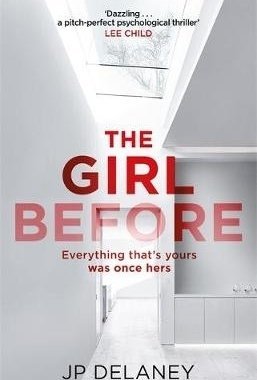

I found the plot original and I loved all the twists and turns which were going on in the book. Every chapter had something happening and it didn’t leave me bored. The more you go into the book, the more plot thickens, the more twists happen and it really kept me hooked. I think it was really great, that the book talked about really important topics, and the psychological aspects of eating disorders, how parents feel after still birth, parents thought about disabled children or how minimalist sees world. I’m new to minimalism and just briefly checked on it, but after reading this book I’m confused if I really want to know more… I loved that the name “the girl before” had deeper meaning than only finding out Emma’s story, it felt way deeper than it looked. The book itself is easy to read and the writing style was not difficult. The chapters are quite short so it doesn’t drag along. I really loved the ending of the book, which concluded the book really nicely but at the same time left me questioning. So to conclude, even though a lot of reviewers bashed this book, I loved this twisted, fast paced and full of suspense and psychological labyrinths creation and I recommend to try it and decide for yourself.

Lee (2222 KP) rated Joker (2019) in Movies
Oct 6, 2019 (Updated Oct 6, 2019)

We’re in Gotham City during the early eighties. A garbage strike means that the city is currently suffering from a build up of garbage on the streets and the subsequent arrival of ‘super rats’. The rich are getting richer, the poor and the underprivileged even more so. And, at the forefront of all the wealth and power in the city is Thomas Wayne, who is currently looking to run for mayor. There is growing divide and unrest throughout Gotham, all of which serves to add fuel to the increasingly unstable mind of Arthur Fleck.
We’ve had our fair share of Joker portrayals over the decades, the most memorable of which being in 2008, and Heath Ledger’s brilliant take on the character in The Dark Knight. But Joaquin Phoenix brings a side to the Joker we’ve not experienced before - all skin and bone, abused, downtrodden, ridiculed and with a neurological condition that sees him suddenly laughing maniacally and uncontrollably, even during times of stress or sadness. Throughout the movie, we learn that Arthur also had a pretty unpleasant childhood and, for a while, you really can sympathise with him and the suffering he experiences. “I just don’t want to feel so bad any more” he says at one point.
Joker features no CGI, no costumed antics (other than the clowned kind), or any of the traditional comic book movie themes that we’re now so used to seeing. Instead, Joker treats us to something of a slow-burn character study, one mans slow descent into madness, and the birth of one of the most iconic villains of all time. Joaquin Phoenix is incredible in the role, supported by an outstanding cast, including Robert De Niro as a late night talk show host idolised by Arthur and Zazie Beets as the neighbour Arthur becomes obsessed with.
Joker isn’t exactly enjoyable in the traditional sense, uncomfortable at times and a brutally honest depiction of extreme mental health issues. But it’s beautifully shot, subtly weaving itself into the familiar DC universe while remaining unique and original. I was gripped from start to finish and I just hope that the upcoming Robert Pattison incarnation of The Batman fits into the universe and style that has been introduced here within Joker.

Lucy Buglass (45 KP) rated Lynn + Lucy (2019) in Movies
Oct 14, 2019

Lynn (Roxanne Scrimshaw) is a married stay-at-home mum turned hairdressing assistant, who is delighted when her best friend Lucy (Nichola Burley) gives birth to her first child. But she is clearly struggling with a new baby and her volatile relationship.
The two friends differ in a lot of ways, as Lynn seems more grounded and content with being a mother, whereas Lucy is a party animal, impulsive and misses life before motherhood. Yet their friendship works and has stood the test of time – until one awful day where everything changes.
Lynn + Lucy plays like an elevated soap opera, that’s reminiscent of kitchen sink realism. The film is fuelled by honest depictions of everyday domestic life, and as a result you won’t see any beautiful cinematography from this.
It’s bleak, it’s raw, and it even feels intrusive at times. It’s likely you’ll feel uncomfortable watching this as a result. Director and writer Fyzal Boulifa forces you to join this community even if you don’t want to be there.
As we’re given insight into what happens behind closed doors, we’re able to see exactly why Lynn and Lucy’s friendship rapidly falls apart. It’s not long before others start gossiping about the tragedy that unfolds for the two friends and the community they live in.
Lynn is forced to get a job as her husband is injured and she’s never been employed before, so she goes to a hairdressers owned by a former classmate. There is certainly a hierarchy there, Lynn sweeps the floors and makes teas and coffees, whilst being reminded that it’s typically a job for a school leaver.
But with no formal qualifications on her CV, it’s all she’s got. And salon owner Janelle (Jennifer Lee Moon) makes sure Lynn knows that, making her life hell and talking about her behind her back. However, Lynn grows close to hairdresser Caroline (Kacey Ainsworth) once her friendship with Lucy is tested.
The salon feels like a high school clique, and is a sad reminder of history repeating itself. I really enjoyed the performances here as it reflected the bleak, realistic nature of the overall story, and how horrible people can still be even when several years have passed.
Lynn + Lucy is a tragic, sometimes amusing, look at working class families and close knit communities, as well as the devastating effects of a personal tragedy.
Expect very difficult themes, lingering camera shots, and a sinking feeling in your stomach at the end. Bring tissues.

Dianne Robbins (1738 KP) rated Merrily We Go to Hell (1932) in Movies
Sep 3, 2020 (Updated Sep 3, 2020)


Sylvia Sidney plays Joan Prentice, the daughter of the president of Prentice coffee and Fredric March plays Jerry Corbett, a newspaperman who wishes to be a playwright. They meet at a society party where she is trying to ignore the advances of a very handsy older man and he is on the terrace drunk and drinking even more. She somehow finds him charming and he finds her "swell." They make a date to meet up again and romance follows. I mean, allegedly follows though it seems like a huge plot point to me what they see in each other and what kind of substance their relationship has. I've never been a very romantic person but even this seems terribly lacking to me.
Skeets Gallagher plays the sidekick Buck and he's worth his weight in gold. He a drinking buddy and scenes with him often start with the camera panning him tap dancing from behind. He's sweet, sympathetic, charming, and adorable and brings so much life to the role and film. Florence Britton plays the female sidekick to Fredric March's Jerry Corbett and is a bold lady, and kind. She and Buck are so much fun and not sloppy drunk like Corbett. I would much rather watch a movie with the two of them.
Sylvia Sidney, the female protagonist was bold and determined. After her husband cheats on her with his former wife, she goes out to have a little fun, too. She gets tired of her husband's constant drunkenness and leaves him. He seems to come to his senses at the end of the movie and goes to her. Spoiler alert: she is in the hospital having delivered their baby. He didn't know she was pregnant and only learned about the baby after reading the birth announcement in the newspaper. This is a premonition of things to come once the code comes into play as any sin must be paid for with a person's ruin or death. However, it ends on a happy note that their marriage will be better and that they are hopeful for the future.
* Watch for Cary Grant in one of his earliest roles as the male lead in the period drama play towards the end of the film.

Defiance (Rise of the Iliri #3)
8.0 Rate It
Book
HER ONLY CHOICE IS TO CHANGE HER WORLD… Salryc Luxx came to the Black Blades as ignorant of her...
The Spinner of Dreams
7.0 Rate It
Book
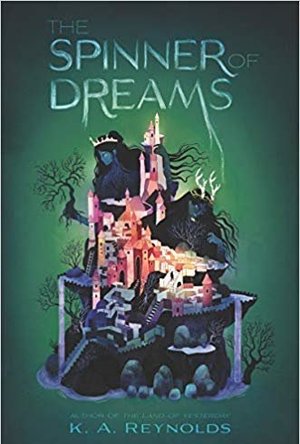
Inventive, empathetic, and strange in all the best ways, The Spinner of Dreams draws from the...

Debbiereadsbook (1849 KP) rated Port in a Storm (Sinners #8) in Books
Jan 26, 2024
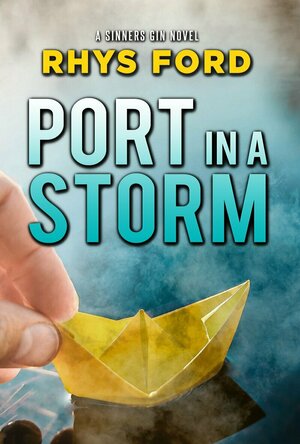
This is book 8 in the Sinners Gin series. I would STRONGLY recommend you at least read Tequila Mockingbird (book 3 in the series) before this one. That book is how Connor and Forest came to be. The whole darn series is amazing, though, and staring at the beginning wouldn't be a bad thing :-)
Connor is a SWAT team leader and comes across Tate in a raid. The kid has had a hard life, and the name on his birth certificate is gonna cause problems. But Tate needs a home, and Connor and Forest want to give him that. Connor wants to give Forest the family he never had. They just gotta battle the courts first.
I didn't see this book coming at me in the way it did, but it absolutely came at the way it should have, you know? Nothing will ever be easy for Forest and Connor, and adding Tate to their family was no exception. But they have a huge support system in Connor's family and Forest's ever growing band family, even if some of Miki's advice is a little sketchy!
It's deeply emotional, with the feeling raging through both Connor and Forest about what to do, will they be enough, will they be allowed to bring this little boy into their family. Made me cry a time or two. I loved it.
I loved that everyone pops up, or is mentioned. It was great to catch up with the Morgan clan and all their add-ins. Especially as I thought that book 7 was going to be the last one! Are there more planned, I don't know, nor do I care, but I will read them as and when they appear.
It's been a long while since I read a Rhys Ford book, and by golly I missed her work. It took me a hot minute to get into her way with words and then I lost myself in the madness that is the Morgan clan and the Crossroads Gin guys.
OH! And the epilogue! Any chance of a cheeky short about Dude and Gaige?? That'll be fun!
But I'm left with a question that played on my mind the whole way through. As I was READING this, I heard Tristan James in my ear. The voices weren't quite right, but James' reading voice was there. Will he be narrating it, at some point?? I need him to!
So, thank you, Ms Ford, for bringing us back to these wonderful people one more time. I really do appreciate the time it took!
5 stunningly beautifully written stars
*same worded review will appear elsehwere
Debbiereadsbook (1849 KP) rated Mating With Monsters (The Red Agency #2) in Books
Dec 11, 2025
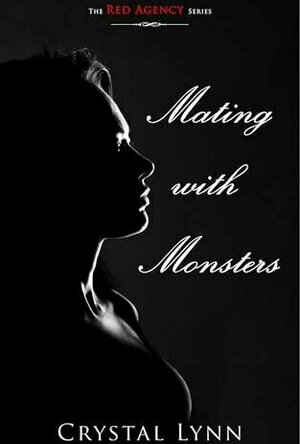

This is book 2 in The Red Agency series, and while not strictly necessary, I do recommend you read book 1, Matching With Monsters before this one. Somethings happen in that book that are referenced in this one, and they are not fully recapped. I think you can get the gist of it, so it is just a personal recommendation, is all.
Cami is Ari's best friend, one of them. After dealing with her boss for so long, and at Ari's insistence, she signs up for The Red Agency to be matched with a monster (or 4!) She finds herself face to face with a one night stand, Raif; her boss's thorn in his side, Cyrus; the werewolf who saved her in book 1, Teagan and then, her boss, Damon, who are all in a clan, if estranged somewhat. And then they find out she has a stalker, so all bets are off, they they double down to keep her safe.
Well played with the stalker! I have 3 pinned for that, and then it's someone totally else and I loved being played with that!
It is, again, very much Cami and HER monsters but I epected that so it didn't come so much as a surprise. And again, single person point of view. However, this time, there wasn't just ONE I wanted to hear from, I wanted them all! I'm just flipping greedy, I know but it's how I felt!
There was some history as to how these guys came to be a clan, and that is different from book 1, so I enjoyed that.
It's steamy, and I think steamier than book 1, but not entirely sure why my book brain thinks that! I did like that Cami was intimate with all 4 guys seperately, BEFORE they were all together, and when they were mating, Cyrus was just himself, none of his shades took part.
Loved that all four guys were different monsters, and not from birth. Cyrus was cursed, and is like Anubis. Teagan is a werewolf, Raif and incubus and Damon is a devil. They all have their quirks and they use them to please Cami as best they can.
Lyssa is the third friend. Some things happen here that lead into her book, which is next. I'm looking forward to getting my hands on that book, cos I think it might be the one that tips over to 5 stars. I gave book 1 4 stars, and we creeped up a bit here to . . .
4.5 stars (rounded down for the blog)
*same worded review will appear elsewhere
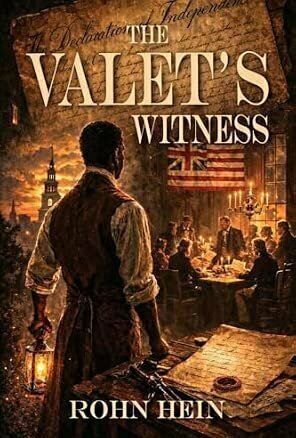
The Valet's Witness
Book
In the summer of 1776, as the Declaration of Independence takes shape within the charged chambers of...
Historical Fiction American History Civil Liberties Social Justice

Hazel (1853 KP) rated Blood and Stars in Books
Sep 24, 2017

Finally, after leaving everyone on tenterhooks, the fifth book in the Legend of Rhyme series is here. Blood and Stars by Jaime Lee Mann continues on from the tense ending to book four, finally resolving a lot of loose ends. With all the favourite characters from the series, this book transports readers back into the fantasy world of Coraira for more adventure and magic.
Blood and Stars is split into four stories, which eventually all merge together in an explosive climax. Firstly, as expected, the main characters, twins Ariana and Asher, have found themselves separated from each other once again. With Ariana destined to rule Coraira, legend suggests that Asher will be the opposite – a ruler of darkness. But, is there a chance he can be saved from this fate? Meanwhile, the present ruler of Coraira is dying. The only person who could potentially save Calla is her evil twin sister Elora, the infamous witch in the previous books. Can she be trusted enough with such an important task?
Concurrently, in the ethereal world of the mermaids, readers are reintroduced to the mer-queen, Starla and her apprentice, Teagan. Abandoned at birth, Teagan is hoping to discover what happened to her parents; however, her curiosity leads her into the lair of a sea witch. Be that as it may, some dangerous situations result in silver linings.
Eventually, with the majority of the book already concluded, another character is brought back into the story. Grimblerod is still under the curse of an evil king, but he now has hope that it can be broken. As long as his love for Freya does not fail, Grimblerod’s patient determination will lead him back to where he belongs.
With a mix of new and old characters, Jaime Lee Mann smoothly draws her fans back into the storyline with a (mostly) happy ending. There are a couple of things left incomplete, but nothing that will majorly irritate readers. There is no dreaded cliffhanger.
As it may have been some time since children read the last book, or parents and teachers are only just being introduced to the story, the author has provided an in-depth character guide in the end pages to bring everyone up to speed.
Blood and Stars was a more straightforward story than previous books. It resolved more issues than it created. There will be a final book coming (hopefully) soon, but there is no way of guessing what it will feature.
Legend of Rhyme is a series suitable for girls and boys. Mildly scary in parts, the adventure of the twins and their companions will entertain children and their parents. With discussion questions at the end, the books make readers think more about the storyline and help them to understand and interact with the narrative. This is certainly a series for young fantasy lovers.