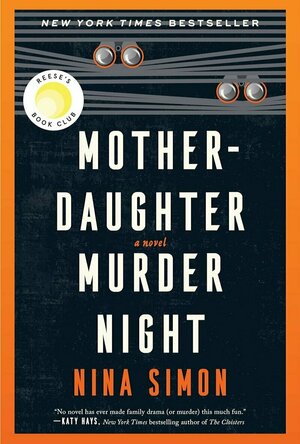
Mother-Daughter Murder Night
Book
High-powered businesswoman Lana Rubicon has a lot to be proud of: her keen intelligence, impeccable...
The Legend of Misty Mountains
Book
Misty Mountains is a magical abode nestled among the clouds and inhabited by The Strange People. It...
fantasy young adult

The Hidden Lives of Taxi Drivers
Book
What do you know about taxi drivers? Here it is. Discover what the The Ten Commandments of St...
non-fiction
ClareR (6054 KP) rated Perestroika in Books
Mar 10, 2024
We start off in Slavia in 1978 before any of the massive changes that will eventually take place, and we meet the inhabitants of the country: from the corrupt politicians to the men incarcerated in concentration camps. We see how people live on next to nothing and lies from the government that tell them all of their woes are because of the wicked Capitalist West.
The tables are turned on these corrupt Communists with the advent of Perestroika, and instead of Communists governing the country, an all-out crime boss finds himself in charge. But make no mistake: this was engineered by Ivan Fiorov (the crime boss) and his lackeys.
This is a story that is as relevant today as it always has been - especially with what is going on in the Ukraine at the moment. Some of the story arcs in this are horrific, and not just those that take place in the concentration camps. There’s child abuse, sexual coercion, drug abuse, neo-Nazis, violence. The people in this country experience a lot of change in a short period of time. But at the same time, everything stays the same.
Well worth a read.
Crimson Jewel
Book
A Deadly Game of Dating. Choose One. FEE. FIE. FOE. FUM. Bea spends her days fighting to stay...
Post Apocalyptic Dystopian Fantasy Romance
What Remains
Book
What Remains is a haunting dual-timeline mystery that bridges centuries-and secrets-between ancient...
Historical Fiction Dual Timeline Time Slip Fiction Historical Thriller Forensic Fiction Ancient Rome
The Lost Women of Mill Street
Book
1864: As Sherman’s army marches toward Atlanta, a cotton mill commandeered by the Confederacy lies...
Historical Fiction Women in History American Civil War
The Glassmaker
Book
FROM THE GLOBALLY BESTSELLING AUTHOR OF GIRL WITH A PEARL EARRING 'A triumph… a brilliant idea...
Historical fiction Magical realism
ClareR (6054 KP) rated The Garden in Books
Oct 14, 2025
The story starts off very gently: two elderly sisters, living in the grounds of a big house, one working tirelessly in the garden in order to provide them with enough food, the other joining in here and there, but mostly she’s preoccupied with practicing her dance routine. Outside the gardens walls lies unknown danger. One mustn’t even look beyond the wall.
And then a young boy arrives and everything changes. The outside comes inside.
I loved this. The rules the women live by, set by their mother decades ago, are there to keep them safe, but there’s no room for manoeuvre. So when they’re faced with the unexpected, they don’t know what to do. There’s a climate disaster angle too, and gives the reader a scenario of what might happen if we continue on our current trajectory. Changing seasons, drought, sandstorms.
This novel is so atmospheric. There’s an undercurrent of dread and impending doom, and the descriptions of the garden, cottage and land are quite beautiful.
Wonderful writing and a wonderful story. Highly recommended!
Hazel (1853 KP) rated The Care and Management of Lies in Books
Dec 17, 2018
British author Jacqueline Winspear states in the letter from the author at the front of the book that the idea for this novel came from a second hand copy of a book titled <i>The Woman’s Book</i> by Florence B Jack (1911) containing an inscription revealing that it was presented as a gift to a woman on her wedding day in July 1914. The story within </i>The Care and Management of Lies</i> is Winspear’s imaginings about who that woman was and what her life was like.
The book focuses primarily on four characters, the main being Kezia Brissenden née Marchant who receives the gift <i>The Woman’s Book</i> from a close friend, Dorothy “Thea”, who so happens to be the older sister of her new husband, Tom. The book was not a particularly kind gift as it emphasized Kezia’s upbringing and who, due to her father being a reverend and employer of maids and cooks, had never produced her own meal in her life nor had any experience with running a household, let alone a farm – her new home.
Whilst Kezia determinedly throws herself into her new role, showing her love for Tom through the food she learns to cook, Thea, living in London, is drifting away from their friendship. With the possibility of war on the horizon, Thea joins a pacifist movement, which is somewhat ironic as she was once involved with the suffragettes. On the other hand, once war is declared, Tom decides to enlist in the army as does neighbour, Edmund Hawkes, a man who is rather envious of Tom and his lovely wife. The reader receives two different perspectives of the terrors of war from these characters, but then also another, surprisingly, from Thea who rejects pacifism and goes out to France to help in anyway she can. This leaves Kezia at home alone with the effects the war has on Britain.
The love between Kezia and Tom is emphasized through the letters they send each other. Both are lying about their situations by trying to convince the other that they are better off than they really are. The thing that keeps them both going are Kezia’s descriptions of her fictional meals that she prepares for Tom’s dinner, describing in great detail the preparation and taste of the food.
Each chapter begins with a quote from <i>The Woman’s Book</i> (and later <i>Infantry Training</i> and <i>Field Service Pocket Book</i>) that relate to the particular events occurring in the story at that time. This is a great way of underlining the significance of that wedding present to the storyline.
The narrative quickly changes from character to character which, although helping to keep the pace of the novel, can sometimes be a little confusing. It also made it difficult to get into the story at the beginning. Sometimes it took a lot of concentration to follow the text and those with minds that easily wander may constantly find themselves suddenly reading from a different point of view without having noticed the change over.
Winspear’s grandfather was a soldier in the trenches during the Great War and so it seems likely that some of the scenes may be based on his experiences. If that is the case then it can be believed that <i>The Care and Management of Lies</i> is as accurate as can be in terms of the war and life on the front lines. Winspear also does not attempt to gloss over any of the war horrors, therefore does not create the unlikely “and they all lived happily ever after” ending that other writers of war stories have done in the past.
Those interested in war themes may be particularly interested in this book, especially as this year (2014) is the anniversary of the Great War. <i>The Care and Management of Lies</i> is a piece of literature to add to the mountain of media coverage of the commemoration of the war.