
Search
Search results

Bob Mann (459 KP) rated Alita: Battle Angel (2019) in Movies
Sep 28, 2021
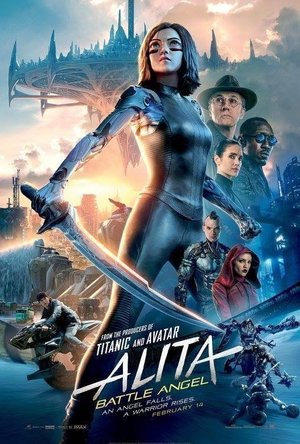

A Berserk Excursion Down Uncanny Valley.
“I see you”. James Cameron‘s fingerprints are all over this one, as producer ahead of his threatened (and with this movie-goer, entirely unwanted) Avatar sequels. Alita is a huge great smelly CGI mess of a film, but quite fun with it.
The Plot.
Christophe Waltz plays Dr. Dyson (no, not that one), a cyber-surgeon in the 24th century whose job is to give cyber/human crossovers (which just about everyone now seems to be) a ‘service’ to get them back on the road again.
Hanging over Iron City – in just the same way as bricks don’t – is a huge floating cloud city called Zalem (“What keeps it up?”; “Engineering!”). A stream of detritus falls from the city into the scrap yards below, and Dr Dyson scavenges through the mess for parts. He discovers that the best way to get ahead in business is to… get a head! In this case, it’s the head and upper torso of a female ‘teenage’ cyber-girl who he finds to be still alive and who he names “Alita”.
But Alita (Rosa Salazar) isn’t just any teenage girl. When fitted out with a new body, one very precious to Dyson, Alita proves to have massive strength and dexterity which sets her up to trial for the national sport of Motorball: a no-holds-barred race around an arena to capture and keep a ball. Her love interest, Hugo (Keean Johnson), can help her in that department.
But dark forces are also in play and the agents of Nova, the Zalem-overseer, have great interest in destroying Alita before she can damage his plans.
What a mess!
I’ve significantly simplified the plot and reduced the characters referenced. There are so many different things going on here, it’s like they’ve made Back to the Future I, II and III and squeezed them all into one film. There’s Dyson’s ex-wife Chiran (Jennifer Connolly) and her partner in crime Vector (Maherashala Ali); there’s their pet thug called Grewishka (Jackie Earle Haley); there’s a bunch of “Hunter-Warriors” including a vicious sword-wielding guy called Zapan (Ed Skrein); there’s a kind of “Lost Boys” vibe to Hugo’s pals including Alita-hater Tanji (Jorge Lendeborg Jr.); etc. etc. etc. It’s a huge great sprawling mess of a plot.
The movie is also highly derivative, and watching it feels like you are working through a mental set of check-boxes of the films it apes: Wall-E (check); Elysium (check); Terminator (check); Rollerball (if you’re old enough to remember that one) (check); even some Harry Potter quidditch thrown in for good measure.
Urm… berserk dialogue.
The story is based on a Manga work by Yukito Kishiro, but the script by James Cameron, director Robert Rodriquez and Laeta Kalogridis has some bat-shit crazy moments.
Remembering that Cameron in Avatar brought us the mineral ‘unobtainium’ there are similar ‘jolt yourself awake’ moments here. At one point Waltz starts talking about what sounds like “Panda c***s”…. I’m sorry… what?? (This was clearly an episode of David Attenborough’s “Life on Earth” that passed me by! Although frankly, if male pandas took a bit more interest in panda c***s, that wouldn’t necessarily be a bad thing. But I digress….)
The turns.
What stands out if the quality of the cast. Who wouldn’t kill to have Waltz, Connolly and Ali starring in their film? The inclusion of Maherashala Ali in here was a surprise to me. I know he has had a part in “The Hunger Games” series, but this is surely (Marvel must be kicking themselves) his most ‘mainstream’ film to date. And he again really shows his class, bringing a gravitas to all the scenes he’s in.
It was also interesting to see Ed Skrein in a movie for the second time in a month. He was the racist cop in “If Beale Street Could Talk“, and here he plays an equally unpleasant character with a sideline in vanity.
Also good fun is to see the cameo of who plays Nova in the final scene of the film. I was not expecting that.
But the film lives and dies on believing Alita, and after you get used to the rather spooky ‘uncanny valley’ eyes, Rosa Salazar really breathes life into the android character: you can really believe its a teenage android girl developing her understanding of the world and of love. (We’ll gloss over the age thing here which doesn’t make a lot of sense!). One thing’s for sure, when Alita gives her heart to a boy, she really gives her heart to a boy!
Will I like it?
I was not expecting to, but did. It’s a big, brash, loud CGI-stuffed adventure, but well done and visually appealing (as you would expect given the director is Robert Rodriguez of “Sin City” fame). The BBFC have given it a 12A rating in the UK, which feels appropriate: there are some pretty graphic scenes of violence (true they are “mostly involving robots fighting each other” as the BBFC says, but not all). That would make it not very suitable for younger children.
But I was entertained. You might well be too.
The Plot.
Christophe Waltz plays Dr. Dyson (no, not that one), a cyber-surgeon in the 24th century whose job is to give cyber/human crossovers (which just about everyone now seems to be) a ‘service’ to get them back on the road again.
Hanging over Iron City – in just the same way as bricks don’t – is a huge floating cloud city called Zalem (“What keeps it up?”; “Engineering!”). A stream of detritus falls from the city into the scrap yards below, and Dr Dyson scavenges through the mess for parts. He discovers that the best way to get ahead in business is to… get a head! In this case, it’s the head and upper torso of a female ‘teenage’ cyber-girl who he finds to be still alive and who he names “Alita”.
But Alita (Rosa Salazar) isn’t just any teenage girl. When fitted out with a new body, one very precious to Dyson, Alita proves to have massive strength and dexterity which sets her up to trial for the national sport of Motorball: a no-holds-barred race around an arena to capture and keep a ball. Her love interest, Hugo (Keean Johnson), can help her in that department.
But dark forces are also in play and the agents of Nova, the Zalem-overseer, have great interest in destroying Alita before she can damage his plans.
What a mess!
I’ve significantly simplified the plot and reduced the characters referenced. There are so many different things going on here, it’s like they’ve made Back to the Future I, II and III and squeezed them all into one film. There’s Dyson’s ex-wife Chiran (Jennifer Connolly) and her partner in crime Vector (Maherashala Ali); there’s their pet thug called Grewishka (Jackie Earle Haley); there’s a bunch of “Hunter-Warriors” including a vicious sword-wielding guy called Zapan (Ed Skrein); there’s a kind of “Lost Boys” vibe to Hugo’s pals including Alita-hater Tanji (Jorge Lendeborg Jr.); etc. etc. etc. It’s a huge great sprawling mess of a plot.
The movie is also highly derivative, and watching it feels like you are working through a mental set of check-boxes of the films it apes: Wall-E (check); Elysium (check); Terminator (check); Rollerball (if you’re old enough to remember that one) (check); even some Harry Potter quidditch thrown in for good measure.
Urm… berserk dialogue.
The story is based on a Manga work by Yukito Kishiro, but the script by James Cameron, director Robert Rodriquez and Laeta Kalogridis has some bat-shit crazy moments.
Remembering that Cameron in Avatar brought us the mineral ‘unobtainium’ there are similar ‘jolt yourself awake’ moments here. At one point Waltz starts talking about what sounds like “Panda c***s”…. I’m sorry… what?? (This was clearly an episode of David Attenborough’s “Life on Earth” that passed me by! Although frankly, if male pandas took a bit more interest in panda c***s, that wouldn’t necessarily be a bad thing. But I digress….)
The turns.
What stands out if the quality of the cast. Who wouldn’t kill to have Waltz, Connolly and Ali starring in their film? The inclusion of Maherashala Ali in here was a surprise to me. I know he has had a part in “The Hunger Games” series, but this is surely (Marvel must be kicking themselves) his most ‘mainstream’ film to date. And he again really shows his class, bringing a gravitas to all the scenes he’s in.
It was also interesting to see Ed Skrein in a movie for the second time in a month. He was the racist cop in “If Beale Street Could Talk“, and here he plays an equally unpleasant character with a sideline in vanity.
Also good fun is to see the cameo of who plays Nova in the final scene of the film. I was not expecting that.
But the film lives and dies on believing Alita, and after you get used to the rather spooky ‘uncanny valley’ eyes, Rosa Salazar really breathes life into the android character: you can really believe its a teenage android girl developing her understanding of the world and of love. (We’ll gloss over the age thing here which doesn’t make a lot of sense!). One thing’s for sure, when Alita gives her heart to a boy, she really gives her heart to a boy!
Will I like it?
I was not expecting to, but did. It’s a big, brash, loud CGI-stuffed adventure, but well done and visually appealing (as you would expect given the director is Robert Rodriguez of “Sin City” fame). The BBFC have given it a 12A rating in the UK, which feels appropriate: there are some pretty graphic scenes of violence (true they are “mostly involving robots fighting each other” as the BBFC says, but not all). That would make it not very suitable for younger children.
But I was entertained. You might well be too.
Bob Mann (459 KP) rated Mortal Engines (2018) in Movies
Sep 28, 2021


At last, the hilarious Brexit comedy we’ve all been waiting for.
As comedy goes it’s classic gold! London has been transferred, presumably via a futuristic big-arsed forklift truck of some kind, onto a huge chassis and is now chugging its way across mainland Europe. Needing fuel, it has the capability to gobble-up other roving towns and cities (take that Barnier!) which London ‘digests’ (smoke that Tusk!). Curiously, the captured cities’ inhabitants are not exterminated but integrated into the City’s population: so much for any anti-immigration policy! (LOL).
But all doesn’t go entirely smoothly for the UK capital. The Lord Mayor of London (Patrick Malahide) declares “We should never have gone into Europe. It’s the biggest mistake we ever made”. (Classic: how we SNORTED with laughter!)
Cities on wheels. London in hot pursuit of a Bavarian mining town. (Some things you just write, and then have to do a double take!). (Source: Universal Pictures International).
Stuffing it squarely to the ‘remainers’, London makes its own future. “It’s time to show the world how strong London can be”. Having conquered most of Europe, it’s time to set its sights on new markets to conquer: so London takes the Chinese on! (Now the tears of laughter are flowing freely!) Trade deals have never been more entertaining since “Star Wars: The Phantom Menace”!
Well, perhaps not
OK, so in the interests of ‘advertising standards’, I’d better make clear before you rush out to the cinema expecting a comedy feature that my tongue is firmly in my cheek here. For “Mortal Engines” is the latest sci-fi feature from Peter Jackson. But when viewed from a Brexit perspective, it’s friggin’ hilarious!
In terms of plot, this (like “Waterworld”) makes clever use of the Universal logo to set the agenda. The world has been decimated with a worldwide war – though clearly one that selectively destroyed bits of London and not others! – and the survivors must try to survive in any way they can. Settlements are divided between those that are ‘static’ and those (like London) that are mobile and constantly evolving: “Municipal Darwinism” as it is hysterically described. But London, or rather the power-crazed Londoner Thaddeus Valentine (Hugo Weaving), wants revolution rather than evolution and he is working on development of one of the super-weapons that started the world’s demise in the first place.
But Hester Shaw (Hera Hilmar), separated when young from her mother Pandora (yes, she has a box and we’ve seen it: wink, wink) is intent on stopping him, since she is on a personal path of vengence. Teaming up with Londoner Tom (Robert Sheehan) and activist Anna Fang (Jihae) they must face both Thaddeus and the ever-relentless Shrike (Stephen Lang) to try to derail the destructive plan.
“I’m not subtle”
So says Anna Fang, but then neither is this movie. The film is loud and action-filled and (as a significant plus) visually extremely impressive with it. I’m not a great fan of excessive CGI but here it is essential, and the special-effects team do a great job. The production design is tremendous – a lot of money has been thrown at this – and the costume design inventive, a high-spot (again snortworthy) being the Beefeater guards costumes!
Where the film really crashes, like a post-Brexit stock market, is with the dialogue. The screenplay by Jackson himself, with his regular writers Fran Walsh and Phillipa Boyens contains some absolute clunkers, notwithstanding the unintended LOL-worthy Brexit irony. It’s jaw-droppingly bad, believe me.
The turns
The only real “name” in the whole film is Jackson-favourite Hugo Weaving. Just about everyone else in the cast is pretty well unknown, and in many cases it shows. Standing head and shoulders though for me over the rest of the cast was Icelandic actress Hera Hilmar, who strikes a splendidly feisty pose as the mentally and physically scarred Hester. I look forward to seeing what she does next.
Plagerism: the movie
Story-wise, there’s not a sci-fi film that’s not been looted, and a number of other films seem to be plundered too. (I can’t comment on how much of this comes from the source book by Philip Reeve). The Londonmobile looks for all the world like Monty Python’s “Crimson Permanent Assurance Company”; the teenage female lead is Sarah Connors, relentlessly pursued by The Terminator; the male lead is archaologist cum hot-shot pilot Indiana Solo, leather jacket and all; there is a Blade Runner moment; a battle that is a meld of “The Great Wall” and Morannon from “The Lord of the Rings: The Two Towers”; a less sophisticated aerial location from “The Empire Strikes Back”; and another classic Star Wars moment (without the words being actually said!).
A case of the Jackson Pollocks
Now I’m loathe to say anything bad about director Peter Jackson, after his breathtakingly memorable “They Shall Not Grown Old“. And the film has its moments of flair, most memorably a “life flashing before your eyes scene” that I found genuinely moving. But overall, as an actioner, it’s a bit of a mess.
It’s a long way from being the worse film I’ve seen this year by a long stroke – it kept me interested and amused in equal measure for the running time. But I think given it’s initially bombed at the Box Office, any plans Jackson had to deliver a series of these movies might need to be self-funded.
But all doesn’t go entirely smoothly for the UK capital. The Lord Mayor of London (Patrick Malahide) declares “We should never have gone into Europe. It’s the biggest mistake we ever made”. (Classic: how we SNORTED with laughter!)
Cities on wheels. London in hot pursuit of a Bavarian mining town. (Some things you just write, and then have to do a double take!). (Source: Universal Pictures International).
Stuffing it squarely to the ‘remainers’, London makes its own future. “It’s time to show the world how strong London can be”. Having conquered most of Europe, it’s time to set its sights on new markets to conquer: so London takes the Chinese on! (Now the tears of laughter are flowing freely!) Trade deals have never been more entertaining since “Star Wars: The Phantom Menace”!
Well, perhaps not
OK, so in the interests of ‘advertising standards’, I’d better make clear before you rush out to the cinema expecting a comedy feature that my tongue is firmly in my cheek here. For “Mortal Engines” is the latest sci-fi feature from Peter Jackson. But when viewed from a Brexit perspective, it’s friggin’ hilarious!
In terms of plot, this (like “Waterworld”) makes clever use of the Universal logo to set the agenda. The world has been decimated with a worldwide war – though clearly one that selectively destroyed bits of London and not others! – and the survivors must try to survive in any way they can. Settlements are divided between those that are ‘static’ and those (like London) that are mobile and constantly evolving: “Municipal Darwinism” as it is hysterically described. But London, or rather the power-crazed Londoner Thaddeus Valentine (Hugo Weaving), wants revolution rather than evolution and he is working on development of one of the super-weapons that started the world’s demise in the first place.
But Hester Shaw (Hera Hilmar), separated when young from her mother Pandora (yes, she has a box and we’ve seen it: wink, wink) is intent on stopping him, since she is on a personal path of vengence. Teaming up with Londoner Tom (Robert Sheehan) and activist Anna Fang (Jihae) they must face both Thaddeus and the ever-relentless Shrike (Stephen Lang) to try to derail the destructive plan.
“I’m not subtle”
So says Anna Fang, but then neither is this movie. The film is loud and action-filled and (as a significant plus) visually extremely impressive with it. I’m not a great fan of excessive CGI but here it is essential, and the special-effects team do a great job. The production design is tremendous – a lot of money has been thrown at this – and the costume design inventive, a high-spot (again snortworthy) being the Beefeater guards costumes!
Where the film really crashes, like a post-Brexit stock market, is with the dialogue. The screenplay by Jackson himself, with his regular writers Fran Walsh and Phillipa Boyens contains some absolute clunkers, notwithstanding the unintended LOL-worthy Brexit irony. It’s jaw-droppingly bad, believe me.
The turns
The only real “name” in the whole film is Jackson-favourite Hugo Weaving. Just about everyone else in the cast is pretty well unknown, and in many cases it shows. Standing head and shoulders though for me over the rest of the cast was Icelandic actress Hera Hilmar, who strikes a splendidly feisty pose as the mentally and physically scarred Hester. I look forward to seeing what she does next.
Plagerism: the movie
Story-wise, there’s not a sci-fi film that’s not been looted, and a number of other films seem to be plundered too. (I can’t comment on how much of this comes from the source book by Philip Reeve). The Londonmobile looks for all the world like Monty Python’s “Crimson Permanent Assurance Company”; the teenage female lead is Sarah Connors, relentlessly pursued by The Terminator; the male lead is archaologist cum hot-shot pilot Indiana Solo, leather jacket and all; there is a Blade Runner moment; a battle that is a meld of “The Great Wall” and Morannon from “The Lord of the Rings: The Two Towers”; a less sophisticated aerial location from “The Empire Strikes Back”; and another classic Star Wars moment (without the words being actually said!).
A case of the Jackson Pollocks
Now I’m loathe to say anything bad about director Peter Jackson, after his breathtakingly memorable “They Shall Not Grown Old“. And the film has its moments of flair, most memorably a “life flashing before your eyes scene” that I found genuinely moving. But overall, as an actioner, it’s a bit of a mess.
It’s a long way from being the worse film I’ve seen this year by a long stroke – it kept me interested and amused in equal measure for the running time. But I think given it’s initially bombed at the Box Office, any plans Jackson had to deliver a series of these movies might need to be self-funded.
Bob Mann (459 KP) rated The Hate U Give (2018) in Movies
Sep 28, 2021


It’s a turf war on a global scale.
I saw this as part of a “Secret Cinema” event by Cineworld cinemas in the UK. That’s where you go to see a pre-release movie without knowing what it is going to be. It’s an interesting litmus test for a) a movie’s upfront marketing appeal (how many people get up and walk out when the BBFC title appears) and b) the “grab ’em early” appeal of the movie itself (how many people get up and walk out during the first 20 minutes of so).
I’m afraid this movie didn’t do very well on either a) or b) at my showing: about 20 people left immediately, and more tellingly about another 20 people left in the first half hour. There’s a reason for that: the first half hour of this film is goddamn awful!
Starr Carter (Amandla Stenberg) is a sixteen year-old resident of Garden Heights, a black neighbourhood in a US city, where she lives with her younger brother and step-brother. Their parents Maverick (Russell Hornsby, “Fences“) and Lisa (Regina Hall) are devoting all of their energies to “break the cycle” and get their kids out of the neighbourhood and off to college and better futures. As such, the kids attend not the rough-house local school but a much more upper-class establishment: there Starr has to play a different role, with links to her origins being kept hidden even from her white boyfriend Chris (K.J. Apa).
But all that changes when her boyhood friend Khalil (Algee Smith) is shot and killed in a police stop-and-search. As the only witness, and with Khalil linked to local gang lord King (Anthony Mackie), Starr’s anonymous world is about to get a national focus shone onto it.
Man… I hate voiceovers in films and always have. So I really hated the start of this film which has Starr narrating ABSOLUTELY EVERYTHING (“Blah, blah, blah..”): no audience discovery is required. It also starts with a sort of highschool romance vibe, but not one that’s well done with kissing (“Blah, blah, blah..”) while the local Mean Girls look on (“Blah, blah”) then with Starr’s friends trying to act street (“blah, blah”) while Starr tries not to be street, all to the constant droning of Starr’s voiceover (“Blah, blah, blah..”). (I never walk out of movies…. but I can kind of understand the rationale of those who did).
Fortunately the voiceover then largely recedes (it only pops up with occasional staccato “thoughts”, before storming back for a “blah, blah” finale). And with the shooting, the film takes on a much more interesting slant, giving Amandla Stenberg a chance to really shine.
I have commented on Ms Stenberg before: she was the only really good thing in the recent “The Darkest Minds“. Here she exhibits a tremendous range from the delighted (her smile is radiant and seems astonishingly unforced) to the heartbroken and furious. There’s also a really strong supporting cast with great turns from Hornsby, Hall, Mackie and Smith. Hornsby in particular I found great as the Dad desperately tutoring his kids in military (but loving) fashion to avoid his mistakes.
For me, this seemed to be a surprisingly atypical view of a black ghetto-living family. A scene set in a diner is genuinely touching at emphasising the loving and close-knit nature of the Carter family.
Where I will struggle here is in trying to interpret my overall feelings about the film. As a white, older male person I have three degrees of separation from Starr’s perspective. And these are undoubtedly difficult issues to juggle with. The riots that happened recently in towns like Ferguson ape the activities on screen uncomfortably. Your sympathies might lie to some degree with the unfortunate white police officer (Drew Starkey); sympathies supported by the views of Starr’s police officer uncle Carlos (Common): until Starr points out via a punchy question that you REALLY shouldn’t feel like that… and your views are brought up with a jolt.
Aside from the rights and wrongs of the incident, there’s a frustrating dichotomy at play in the film with black and white communities wanting to be treated equally but never wanting to be treated the same. “You don’t SEE me” wails Starr. “I see you” replies Chris (as if James Cameron was directing!) But does he really? Without colour, I do not consider myself to be remotely capable of fully understanding Starr’s perspective on life. It made me want to read the source novel by Angie Thomas to try to get better insight.
Directed by George Tillman Jr., it’s undoubtedly a mixed bag, but I came down in the end on the side of it being good rather than bad… it has certainly had me thinking for a couple of days. The clumsy voiceovers and story elements in the opening and closing scenes mask a number of parallel and interesting story strands that generate conflicting thoughts about the state of race relations in today’s America. Jackson sang “It doesn’t matter if you’re black or white”: and it really shouldn’t, but actually in some quarters, it clearly still does.
I’m afraid this movie didn’t do very well on either a) or b) at my showing: about 20 people left immediately, and more tellingly about another 20 people left in the first half hour. There’s a reason for that: the first half hour of this film is goddamn awful!
Starr Carter (Amandla Stenberg) is a sixteen year-old resident of Garden Heights, a black neighbourhood in a US city, where she lives with her younger brother and step-brother. Their parents Maverick (Russell Hornsby, “Fences“) and Lisa (Regina Hall) are devoting all of their energies to “break the cycle” and get their kids out of the neighbourhood and off to college and better futures. As such, the kids attend not the rough-house local school but a much more upper-class establishment: there Starr has to play a different role, with links to her origins being kept hidden even from her white boyfriend Chris (K.J. Apa).
But all that changes when her boyhood friend Khalil (Algee Smith) is shot and killed in a police stop-and-search. As the only witness, and with Khalil linked to local gang lord King (Anthony Mackie), Starr’s anonymous world is about to get a national focus shone onto it.
Man… I hate voiceovers in films and always have. So I really hated the start of this film which has Starr narrating ABSOLUTELY EVERYTHING (“Blah, blah, blah..”): no audience discovery is required. It also starts with a sort of highschool romance vibe, but not one that’s well done with kissing (“Blah, blah, blah..”) while the local Mean Girls look on (“Blah, blah”) then with Starr’s friends trying to act street (“blah, blah”) while Starr tries not to be street, all to the constant droning of Starr’s voiceover (“Blah, blah, blah..”). (I never walk out of movies…. but I can kind of understand the rationale of those who did).
Fortunately the voiceover then largely recedes (it only pops up with occasional staccato “thoughts”, before storming back for a “blah, blah” finale). And with the shooting, the film takes on a much more interesting slant, giving Amandla Stenberg a chance to really shine.
I have commented on Ms Stenberg before: she was the only really good thing in the recent “The Darkest Minds“. Here she exhibits a tremendous range from the delighted (her smile is radiant and seems astonishingly unforced) to the heartbroken and furious. There’s also a really strong supporting cast with great turns from Hornsby, Hall, Mackie and Smith. Hornsby in particular I found great as the Dad desperately tutoring his kids in military (but loving) fashion to avoid his mistakes.
For me, this seemed to be a surprisingly atypical view of a black ghetto-living family. A scene set in a diner is genuinely touching at emphasising the loving and close-knit nature of the Carter family.
Where I will struggle here is in trying to interpret my overall feelings about the film. As a white, older male person I have three degrees of separation from Starr’s perspective. And these are undoubtedly difficult issues to juggle with. The riots that happened recently in towns like Ferguson ape the activities on screen uncomfortably. Your sympathies might lie to some degree with the unfortunate white police officer (Drew Starkey); sympathies supported by the views of Starr’s police officer uncle Carlos (Common): until Starr points out via a punchy question that you REALLY shouldn’t feel like that… and your views are brought up with a jolt.
Aside from the rights and wrongs of the incident, there’s a frustrating dichotomy at play in the film with black and white communities wanting to be treated equally but never wanting to be treated the same. “You don’t SEE me” wails Starr. “I see you” replies Chris (as if James Cameron was directing!) But does he really? Without colour, I do not consider myself to be remotely capable of fully understanding Starr’s perspective on life. It made me want to read the source novel by Angie Thomas to try to get better insight.
Directed by George Tillman Jr., it’s undoubtedly a mixed bag, but I came down in the end on the side of it being good rather than bad… it has certainly had me thinking for a couple of days. The clumsy voiceovers and story elements in the opening and closing scenes mask a number of parallel and interesting story strands that generate conflicting thoughts about the state of race relations in today’s America. Jackson sang “It doesn’t matter if you’re black or white”: and it really shouldn’t, but actually in some quarters, it clearly still does.
Bob Mann (459 KP) rated Love, Simon (2018) in Movies
Sep 29, 2021
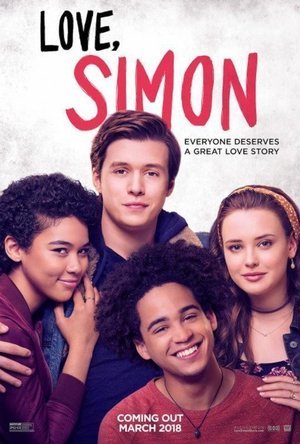
Time to Exhale.
I saw this as a Cineworld “Secret Unlimited Screening” event (for non-UK readers, Cineworld is one of the main movie-theater chains), so went in – like the majority of the audience I suspect – predicting early sight of Lara Croft in skin tight shorts! This was a bit different! A secret screening is an interesting concept, and really tests the metal of a film in engaging its audience early. This one failed to some degree, with seven people (I was counting) walking out in the first 10 minutes. (To be fair on those seven, the film’s first 20 minutes are rather laborious; and to be fair on the film, this was a pretty full auditorium so as a percentage drop out it was low).
Teen heartthrob Nick Robinson (the older brother from “Jurassic World“) plays the eponymous hero who has a well-buried secret: he’s gay. Growing up in Pleasantville (I almost expected someone to yell “Cat!” and the fire brigade turn up) he feels unable to come out to either his high-school friends or his loving family (“Apple pie cooling on the window-sill anyone?”). But striking up an email relationship with another closeted male from the same high school – nicknamed “Blue” – allows him to explore his feelings about his sexuality and fall in love all at the same time. But neither coming out or love run terribly smoothly for Simon…
Happy families. From left, Nick Robinson, Talitha Bateman, Jennifer Garner and Josh Duhamel.
I am forty years adrift from being able to directly relate to the stresses and strains of modern high-school life (though I AM still 17 on the inside people!) But even to me, this film doesn’t feel like it should be set in the present day. While it needs to be for its tweeting and blogging story-line, surely there are few backwaters in either America or Western Europe where gay people have to stay so silent? An 80’s or early 90’s setting would, I think, have worked so much better. (Ironically, its not his gay-ness or otherwise that his friends get upset by, but something far more fundamental in the human condition).
Definitely set in the present day.
That aside, this is a sweet and ultimately quite engaging film that I’m sure will be a big hit with a teenage audience. While for me it didn’t come close to ticking all of the coming-of-age boxes that the inestimable “Lady Bird” did, it does cover old ground in a new and refreshing way, and I’m sure it WILL be very helpful for many gay people in getting the courage to come out. Times are different today, but I still can imagine few things requiring more bravery than declaring you are gay to your parents and closest friends (even though, deep down, they surely already suspect).
So, it’s sweet, but also for me (although far from its target audience) rather flat. As a comedy drama, the moments of comedy are few and far between, with only one or two of the lines making me chuckle rather than smile. A quiet auditorium is not a good sign for a film with “Comedy” in its imdb description. It does however occasionally break through with something memorable: a full on college “La La Land” scene (“Not that gay” – LoL) is a case in point. And all of the scenes featuring comedy actress Natasha Rothwell as drama teacher Ms Allbright add much needed energy and humour to the film.
Someone should tell him… regardless of gender preference, sex is never going to work like this.
Of the teen actors, Robinson is fine but it is Katherine Langford as Simon’s friend Leah who stood out for me. Talitha Eliana Bateman (“The 5th Wave“; looking a whole lot younger than her 16 years!) is also impressive as Simon’s culinary sister Nora. Simon’s parents are played by Jennifer Garner (“Dallas Buyers Club“) and Josh Duhamel (a new one on me… he’s been in the “Transformers” films apparently).
Simon says walk this way. From left, Jorge Lendeborg Jr., Nich Robinson, Alexandra Shipp and Katherine Langford.
The screenplay is by movie virgins Elizabeth Berger and Isaac Aptaker, and is a slightly patchy affair. There are scenes that worked well (a cringe inducing sports stadium scene for example) but other times where it seems to be trying too hard for T-shirt captions…. a line from Ethan (Clark Moore) about hate crime was a “Ye-what?” moment.
Some of the characters really don’t quite work either: Tony Hale (so memorable as the useless PA in “Veep”) plays almost a school-ified version of Stephen Stucker’s Johnny from “Airplane”. Perhaps that would work as some sort of whacky hall monitor guy… but it transpires that he is the headmaster. No, I don’t think so.
A bit OTT. Veep’s Tony Hale as the principal with a surfeit of bonhomie.
So, in summary, after a bit of a bumpy start, its a pleasant watch that culminates in a feel-good ending. Feel good, that is, providing you have liberal views: I can’t see it pleasing many Trump supporters. I also can’t see it getting a cinema release in Gambia or Nigeria, though God only knows they could use one. If I could give half stars I would give this one an extra half as I applaud both the theme its trying to promote and for bringing something fresh to the screen…
Teen heartthrob Nick Robinson (the older brother from “Jurassic World“) plays the eponymous hero who has a well-buried secret: he’s gay. Growing up in Pleasantville (I almost expected someone to yell “Cat!” and the fire brigade turn up) he feels unable to come out to either his high-school friends or his loving family (“Apple pie cooling on the window-sill anyone?”). But striking up an email relationship with another closeted male from the same high school – nicknamed “Blue” – allows him to explore his feelings about his sexuality and fall in love all at the same time. But neither coming out or love run terribly smoothly for Simon…
Happy families. From left, Nick Robinson, Talitha Bateman, Jennifer Garner and Josh Duhamel.
I am forty years adrift from being able to directly relate to the stresses and strains of modern high-school life (though I AM still 17 on the inside people!) But even to me, this film doesn’t feel like it should be set in the present day. While it needs to be for its tweeting and blogging story-line, surely there are few backwaters in either America or Western Europe where gay people have to stay so silent? An 80’s or early 90’s setting would, I think, have worked so much better. (Ironically, its not his gay-ness or otherwise that his friends get upset by, but something far more fundamental in the human condition).
Definitely set in the present day.
That aside, this is a sweet and ultimately quite engaging film that I’m sure will be a big hit with a teenage audience. While for me it didn’t come close to ticking all of the coming-of-age boxes that the inestimable “Lady Bird” did, it does cover old ground in a new and refreshing way, and I’m sure it WILL be very helpful for many gay people in getting the courage to come out. Times are different today, but I still can imagine few things requiring more bravery than declaring you are gay to your parents and closest friends (even though, deep down, they surely already suspect).
So, it’s sweet, but also for me (although far from its target audience) rather flat. As a comedy drama, the moments of comedy are few and far between, with only one or two of the lines making me chuckle rather than smile. A quiet auditorium is not a good sign for a film with “Comedy” in its imdb description. It does however occasionally break through with something memorable: a full on college “La La Land” scene (“Not that gay” – LoL) is a case in point. And all of the scenes featuring comedy actress Natasha Rothwell as drama teacher Ms Allbright add much needed energy and humour to the film.
Someone should tell him… regardless of gender preference, sex is never going to work like this.
Of the teen actors, Robinson is fine but it is Katherine Langford as Simon’s friend Leah who stood out for me. Talitha Eliana Bateman (“The 5th Wave“; looking a whole lot younger than her 16 years!) is also impressive as Simon’s culinary sister Nora. Simon’s parents are played by Jennifer Garner (“Dallas Buyers Club“) and Josh Duhamel (a new one on me… he’s been in the “Transformers” films apparently).
Simon says walk this way. From left, Jorge Lendeborg Jr., Nich Robinson, Alexandra Shipp and Katherine Langford.
The screenplay is by movie virgins Elizabeth Berger and Isaac Aptaker, and is a slightly patchy affair. There are scenes that worked well (a cringe inducing sports stadium scene for example) but other times where it seems to be trying too hard for T-shirt captions…. a line from Ethan (Clark Moore) about hate crime was a “Ye-what?” moment.
Some of the characters really don’t quite work either: Tony Hale (so memorable as the useless PA in “Veep”) plays almost a school-ified version of Stephen Stucker’s Johnny from “Airplane”. Perhaps that would work as some sort of whacky hall monitor guy… but it transpires that he is the headmaster. No, I don’t think so.
A bit OTT. Veep’s Tony Hale as the principal with a surfeit of bonhomie.
So, in summary, after a bit of a bumpy start, its a pleasant watch that culminates in a feel-good ending. Feel good, that is, providing you have liberal views: I can’t see it pleasing many Trump supporters. I also can’t see it getting a cinema release in Gambia or Nigeria, though God only knows they could use one. If I could give half stars I would give this one an extra half as I applaud both the theme its trying to promote and for bringing something fresh to the screen…
Bob Mann (459 KP) rated Rear Window (1954) in Movies
Sep 29, 2021
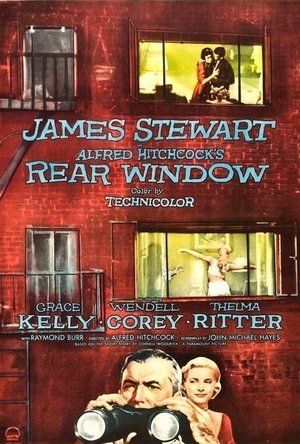

“Hmm… must have splattered a lot”.
Maddy at Maddy Loves Her Classic Films is hosting The Alfred Hitchcockblogathon. A fine idea, celebrating the life and works of the “Master of Suspense”. My contribution comes from his 1954 masterpiece “Rear Window” starring James Stewart and Grace Kelly.
rw-poster
In one pan around his small apartment, and without a word of dialogue required, Hitchcock deftly fills in all the back-story you need: Stewart plays ace photo-journalist L.B. Jefferies, laid up from jetting the world to worn-torn regions by a broken leg in a full-cast with only his courtyard view to entertain him. In sweltering summer temperatures all the apartments are open to the elements, so he can be well entertained by the menagerie before him: “Miss Torso”, the scantily-clad and frequently showering ballerina; a sculptress with an eye towards Henry Moore; a struggling composer (who has his clock wound by someone very familiar!); a newly-wedded bride threatening to wear out the groom; a salesman and his bed-ridden wife; a dog-loving and balcony-sleeping couple; and “Miss Lonelyhearts” – a hard-drinking spinster forced to create imaginary male dinner-guests.
Stewart plays his usual ‘Mr Ordinary’ watching perfectly ordinary goings on in a perfectly ordinary apartment block.
Or not. Jefferies is drawn to some odd-events in the apartment of the salesman (Raymond Burr, still 13 years before his career-defining role in TV’s “Ironside”). His rampant suspicions infect not only his cranky middle-aged physiotherapist Stella (Thelma Ritter) but also his perfect (“too perfect”) girlfriend, the fashion expert Lisa (Grace Kelly). Of course his police friend Doyle (Wendell Corey) is having none of it… there is no evidence of any crime being committed. And the “murdered” wife has been seen being put on a train by her husband, and is sending him letters from the countryside.
Is Jefferies just going stir-crazy? Or is there really something to it?
The set for this film is masterly. Although depicting a genuine location in New York’s Greenwich village the huge set was constructed on the Paramount lot in Hollywood, and you can just imagine the army of carpenters and artists building the multi-layered structure.
It’s one of the stars of the film, allowing for a wealth of detail to be populated: in the apartments; in the street behind; even in the cafe over the other side of the street. And it’s this detail that really makes what could be a highly static film come alive. There are a half dozen films-within-the-film going on at once, with Stewart’s character – and you as the fellow-voyeur – having a multi-pass to watch them all simultaneously.
And watch he does. As what could be perceived as a seriously pervy character – something he is called out on by Stella – Jeffries gets to see an eyeful in particular of the shapely and scantily-clad ballerina (Georgine Darcy, agent-less and only paid $350 for the role!). These scenes must have been deemed quite risque for the year of release.
Where the film rather falters is in the bickering romance between Stewart and Kelly. As a hot-blooded man, I will declare that even today Kelly’s first dream-like appearance (with Vaseline lightly coating the lens) is breathtaking. She’s just the ‘girl-next-door’: if you live next to a palace that is! And yet (with Kelly 21 years Stewart’s junior) she’s just “too perfect” for L.B. , who feels (against her protestations) that she’s ‘too girly’ to hack the life of a war photographer on the road. The mysogeny, common for the day, is gasp-making: “If a girl’s pretty enough, she just has to ‘be'” intones Stewart, to no howls of protest or throwing of saucepans! In fact Kelly is greatly encouraged: “Preview of coming attractions” purrs Kelly, flaunting what she has around the apartment in a negligee.
These scenes though are rather overlong and somewhat get in the way of the murder mystery plot-line. Things really start to warm up when a death occurs, to piercing screams in the night: “Which one of you did it?” shouts a woman to the neighbourhood, as everything – momentarily – stops. “WHICH ONE OF YOU DID IT?”. Given your emotional involvement in the ongoing voyeurism, it’s hard as a viewer not to feel discomforted…. (“well, it wasn’t me”…. shifts uneasily in the seat).
From then on, Hitchcock proceeds to pile on suspenseful jolt after jolt, with first Lisa and then L.B. placed in harms way. While the perpetrator may seem clueless and incompetent, as most murderers of passion probably are, the denouement is satisfying, with a great trial use of green-screen ‘falling’ that would be perfected by Hitchcock for “Vertigo” four years later.
What’s curious for such as classic is that there are a number of fluffed lines in the piece: with two notable ones by Stewart and Kelly. Hitchcock was the master of long and uninterrupted takes, but did he not believe in re-shooting scenes when such errors occurred? Most odd.
Although tighter and more claustrophobic that some of his better known films, this is a firm favourite of mine. If you’ve never seen it, its well worth you checking out.
rw-poster
In one pan around his small apartment, and without a word of dialogue required, Hitchcock deftly fills in all the back-story you need: Stewart plays ace photo-journalist L.B. Jefferies, laid up from jetting the world to worn-torn regions by a broken leg in a full-cast with only his courtyard view to entertain him. In sweltering summer temperatures all the apartments are open to the elements, so he can be well entertained by the menagerie before him: “Miss Torso”, the scantily-clad and frequently showering ballerina; a sculptress with an eye towards Henry Moore; a struggling composer (who has his clock wound by someone very familiar!); a newly-wedded bride threatening to wear out the groom; a salesman and his bed-ridden wife; a dog-loving and balcony-sleeping couple; and “Miss Lonelyhearts” – a hard-drinking spinster forced to create imaginary male dinner-guests.
Stewart plays his usual ‘Mr Ordinary’ watching perfectly ordinary goings on in a perfectly ordinary apartment block.
Or not. Jefferies is drawn to some odd-events in the apartment of the salesman (Raymond Burr, still 13 years before his career-defining role in TV’s “Ironside”). His rampant suspicions infect not only his cranky middle-aged physiotherapist Stella (Thelma Ritter) but also his perfect (“too perfect”) girlfriend, the fashion expert Lisa (Grace Kelly). Of course his police friend Doyle (Wendell Corey) is having none of it… there is no evidence of any crime being committed. And the “murdered” wife has been seen being put on a train by her husband, and is sending him letters from the countryside.
Is Jefferies just going stir-crazy? Or is there really something to it?
The set for this film is masterly. Although depicting a genuine location in New York’s Greenwich village the huge set was constructed on the Paramount lot in Hollywood, and you can just imagine the army of carpenters and artists building the multi-layered structure.
It’s one of the stars of the film, allowing for a wealth of detail to be populated: in the apartments; in the street behind; even in the cafe over the other side of the street. And it’s this detail that really makes what could be a highly static film come alive. There are a half dozen films-within-the-film going on at once, with Stewart’s character – and you as the fellow-voyeur – having a multi-pass to watch them all simultaneously.
And watch he does. As what could be perceived as a seriously pervy character – something he is called out on by Stella – Jeffries gets to see an eyeful in particular of the shapely and scantily-clad ballerina (Georgine Darcy, agent-less and only paid $350 for the role!). These scenes must have been deemed quite risque for the year of release.
Where the film rather falters is in the bickering romance between Stewart and Kelly. As a hot-blooded man, I will declare that even today Kelly’s first dream-like appearance (with Vaseline lightly coating the lens) is breathtaking. She’s just the ‘girl-next-door’: if you live next to a palace that is! And yet (with Kelly 21 years Stewart’s junior) she’s just “too perfect” for L.B. , who feels (against her protestations) that she’s ‘too girly’ to hack the life of a war photographer on the road. The mysogeny, common for the day, is gasp-making: “If a girl’s pretty enough, she just has to ‘be'” intones Stewart, to no howls of protest or throwing of saucepans! In fact Kelly is greatly encouraged: “Preview of coming attractions” purrs Kelly, flaunting what she has around the apartment in a negligee.
These scenes though are rather overlong and somewhat get in the way of the murder mystery plot-line. Things really start to warm up when a death occurs, to piercing screams in the night: “Which one of you did it?” shouts a woman to the neighbourhood, as everything – momentarily – stops. “WHICH ONE OF YOU DID IT?”. Given your emotional involvement in the ongoing voyeurism, it’s hard as a viewer not to feel discomforted…. (“well, it wasn’t me”…. shifts uneasily in the seat).
From then on, Hitchcock proceeds to pile on suspenseful jolt after jolt, with first Lisa and then L.B. placed in harms way. While the perpetrator may seem clueless and incompetent, as most murderers of passion probably are, the denouement is satisfying, with a great trial use of green-screen ‘falling’ that would be perfected by Hitchcock for “Vertigo” four years later.
What’s curious for such as classic is that there are a number of fluffed lines in the piece: with two notable ones by Stewart and Kelly. Hitchcock was the master of long and uninterrupted takes, but did he not believe in re-shooting scenes when such errors occurred? Most odd.
Although tighter and more claustrophobic that some of his better known films, this is a firm favourite of mine. If you’ve never seen it, its well worth you checking out.

Writing (3 more)
No character development
Too many inconsistencies
Too many chapters
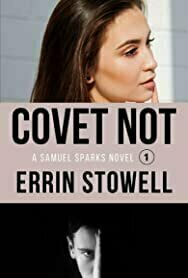
Errin Stowell's new novel series starts with Covet Not which is about a middle-aged lawyer named Sam Sparks - - - who is referred to as Sparks nearly the entire story - - - whose fiancee goes missing and he then becomes the prime suspect. Before everything happens though, readers see that Sparks spends his time trying to defend the elderly from home foreclosures as a small-time lawyer.
If this sounds like a synopsis for a John Grisham novel, you wouldn't be far off because Stowell has the potential to be the next one. This is only the first novel I've read by Stowell, but the one thing I noticed mostly in this story was the amount of inconsistencies and amateur writing mistakes; with better editing and consistency, his books could very well hit mainstream.
Also, Covet Not had so many chapters, so much so that scenes were chopped in half and made into entirely new chapters. The book ended up having 48 chapters within 158 pages. This amount could have easily been shortened and helped with the flow of the story if Stowell had just continued onwards with scenes rather then cutting them short or just skipping parts completely.
The novel starts with a man called Skinny who is enjoying his growing infamy on the dark web (he records himself murdering women then uploads it for his audience to enjoy). Here is how Stowell describes Skinny's thought process:
" Skinny took a black ski mask from the duffel bag and put it on before carrying the bag into the camera's frame and placing it near the woman. He began unpacking other items from the bag. It was slow work, deliberately slow for the camera. Skinny intended to have a before and after view for each tool. It was important to show the proper use of tools. The viewers always appreciated that. "
When we switch over to Sparks, we find him after a long day of work, speaking with a journalist named Gina, his fiancee, who is telling him one of her co-workers stole her story, but no one has heard from her in two days. Yet, they both agree that she's probably holed up with one of the producers, and instead, get into a small argument about Sparks never supporting Gina - - - a constant habit of arguing is almost every interaction between the two throughout the entire novel.
Soon after, Sparks introduces us to his uncle Jimmy, who is being housed at a retirement home: " The old man was seated in a wheelchair; his left leg had been amputated just below the knee a few years before, the result of allowing an ingrown toenail to fester to gangrene. Jimmy's barrel chest and solid upper body contrasted with his wasting legs. "
As Sparks continues to visit his uncle in the retirement home, he keeps running into a cute nurse named Darlene, who quickly sets her sights on him. She goes so far out of her way to get Sparks and Gina to separate that she sends him nude photos of herself from a burner phone. Fortunately, Sparks has bigger fish to fry when he hears over his car radio that Gina's co-worker was now being treated as a missing person case, causing Sparks to quickly jump to the conclusion that Gina possibly was responsible for it.
However, Stowell throws in an expected curveball by making our villain, Skinny, work at the retirement home. When he comes in to take care of a patient while Sparks is present, it's too easy to guess that this patient was going to end up dead soon. Sparks, expectedly, has a bad feeling about this male nurse, but dismisses it and believes that the patient died by natural causes. Life goes on.
Stowell's novel, with a great plot, was just too focused on ending the story, that after page 50, it seemed as if Stowell didn't care what happened to these characters, just as long as he finished the book. At one point, readers are told that Sparks doesn't drink alcohol, but it's never explained why he doesn't which would have given a bite of character development; another scene, Sparks finds a phone, but doesn't want to give it to police, instead he states that he has a 'friend' in the police department who can go through it as a favor, but this 'friend' is completely forgotten, as if Sparks never mentioned him, and the former is left dumbfounded as to how to get into the phone.
There's a story here and characters that could be more well-rounded, but I honestly found myself not caring the least bit about any of the characters' well-being, especially Sparks - - - someone who comes off as inept, someone who has to be told what to do in order for anything to get done - - - he's like a lost child running blindly throughout the book. The story needs to be longer with more emphasis given to mundane scenes that will allow readers to chew on a piece of Sparks' daily life because, by the end of the book, we needed a full picture of every major character, not a Jackson Pollock.
If this sounds like a synopsis for a John Grisham novel, you wouldn't be far off because Stowell has the potential to be the next one. This is only the first novel I've read by Stowell, but the one thing I noticed mostly in this story was the amount of inconsistencies and amateur writing mistakes; with better editing and consistency, his books could very well hit mainstream.
Also, Covet Not had so many chapters, so much so that scenes were chopped in half and made into entirely new chapters. The book ended up having 48 chapters within 158 pages. This amount could have easily been shortened and helped with the flow of the story if Stowell had just continued onwards with scenes rather then cutting them short or just skipping parts completely.
The novel starts with a man called Skinny who is enjoying his growing infamy on the dark web (he records himself murdering women then uploads it for his audience to enjoy). Here is how Stowell describes Skinny's thought process:
" Skinny took a black ski mask from the duffel bag and put it on before carrying the bag into the camera's frame and placing it near the woman. He began unpacking other items from the bag. It was slow work, deliberately slow for the camera. Skinny intended to have a before and after view for each tool. It was important to show the proper use of tools. The viewers always appreciated that. "
When we switch over to Sparks, we find him after a long day of work, speaking with a journalist named Gina, his fiancee, who is telling him one of her co-workers stole her story, but no one has heard from her in two days. Yet, they both agree that she's probably holed up with one of the producers, and instead, get into a small argument about Sparks never supporting Gina - - - a constant habit of arguing is almost every interaction between the two throughout the entire novel.
Soon after, Sparks introduces us to his uncle Jimmy, who is being housed at a retirement home: " The old man was seated in a wheelchair; his left leg had been amputated just below the knee a few years before, the result of allowing an ingrown toenail to fester to gangrene. Jimmy's barrel chest and solid upper body contrasted with his wasting legs. "
As Sparks continues to visit his uncle in the retirement home, he keeps running into a cute nurse named Darlene, who quickly sets her sights on him. She goes so far out of her way to get Sparks and Gina to separate that she sends him nude photos of herself from a burner phone. Fortunately, Sparks has bigger fish to fry when he hears over his car radio that Gina's co-worker was now being treated as a missing person case, causing Sparks to quickly jump to the conclusion that Gina possibly was responsible for it.
However, Stowell throws in an expected curveball by making our villain, Skinny, work at the retirement home. When he comes in to take care of a patient while Sparks is present, it's too easy to guess that this patient was going to end up dead soon. Sparks, expectedly, has a bad feeling about this male nurse, but dismisses it and believes that the patient died by natural causes. Life goes on.
Stowell's novel, with a great plot, was just too focused on ending the story, that after page 50, it seemed as if Stowell didn't care what happened to these characters, just as long as he finished the book. At one point, readers are told that Sparks doesn't drink alcohol, but it's never explained why he doesn't which would have given a bite of character development; another scene, Sparks finds a phone, but doesn't want to give it to police, instead he states that he has a 'friend' in the police department who can go through it as a favor, but this 'friend' is completely forgotten, as if Sparks never mentioned him, and the former is left dumbfounded as to how to get into the phone.
There's a story here and characters that could be more well-rounded, but I honestly found myself not caring the least bit about any of the characters' well-being, especially Sparks - - - someone who comes off as inept, someone who has to be told what to do in order for anything to get done - - - he's like a lost child running blindly throughout the book. The story needs to be longer with more emphasis given to mundane scenes that will allow readers to chew on a piece of Sparks' daily life because, by the end of the book, we needed a full picture of every major character, not a Jackson Pollock.

Charlie Cobra Reviews (1840 KP) rated Coming 2 America (2021) in Movies
Mar 16, 2021 (Updated Mar 27, 2021)
Almost all of the original cast returns for this sequel (2 more)
Lots of laughs
Eddie Murphy and Arsenio Hall reprising many of the roles where they played multiple characters again.
Terrible character development (2 more)
Plot doesn't make sense at times or feels like missing scenes or plot development
Some jokes fall flat or feel forced and the trailer spoils some
Lots of Laughs and Callbacks But Not Enough Substance
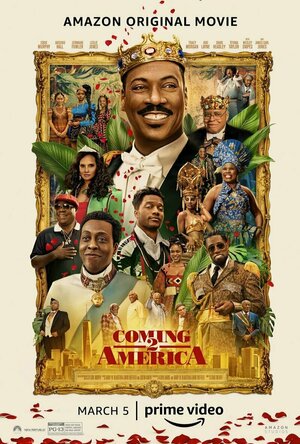
Prince Akeem of Zamunda (Eddie Murphy) is visited by General Izzi (Wesley Snipes) who pushes for Akeem's eldest daughter Meeka (Kiki Layne) to marry his foppish son, Idi (Rotimi). Nexdoria is a hostile militaristic neighbor nation ruled by General Izzi, who is also the brother of Akeem's original arranged bride-to-be. Izzi threatens Akeem and says that it is better to be bound by blood and family then divided by blood and war. This occurs on the very day that Zamunda is celebrating the 30th anniversary of Prince Akeem and Lisa's wedding. King Jaffe Joffer (James Earl Jones) summons Akeem and Semmi (Arsenio Hall) and reminds them that only a male heir can inherit his kingdom. He summons his shaman Baba and they reveal that Akeem has a long lost son in America that he must retrieve in order to avoid a hostile takeover by Nexdoria.
I enjoyed this movie when I saw it the first time and thought that it was pretty funny. It definitely isn't a great movie but when compared to several other sequels that happen years after the original, I felt that it did better than most. It was for the most part a lesser version of the original but it's been years since I've seen the original and I didn't let my nostalgia for it to skew my opinion on this one. I do plan on re-watching the original soon though so I can see how much they differ. A big difference was that the original Coming to America is rated R and this sequel was PG-13. I usually hate when a company chooses to do this because I always feel what the fans/audience gets is a watered down version of the original but it's hard to say this time around. This movie was full of laughs and I was surprised how much they got away with it for being a PG-13 movie, however some of the jokes fell flat and a lot of them were given away in the trailer. Also there were somethings in the trailer that I didn't see in the movie; like the Wakanda joke in the barbershop. Wesley Snipes character General Izzi was quite a character and you could feel he was having fun portraying him. I also enjoyed Akeem's three daughters in the movie. I really liked the opening scene which showed Prince Akeem sparring with his daughters and stick fighting like the original movie. The middle daughter Princess Omma who had glasses was actually Eddie Murphy's daughter in real life, Bella Murphy. And I also heard that most of the palace scenes in Zamunda were actually filmed in rapper Rick Ross' house. As much as I liked this movie it also felt very thin and didn't have a lot of character development or much of a plot to speak of. It also felt like quite a few things didn't make sense and that characters that came out in the first movie were quite different personality wise or just by their actions. I feel like I should give this movie a lower score but I'm not sure if it's nostalgia again or the fact that since it's a comedy I'm not really letting some of those things bother me as much. I'll go over my many reasons for scoring it so low in the spoiler section but for now I give this movie a 6/10. I would say it's worth getting a free trial of Amazon Prime if you want to see it in good quality and for free, or if you already have Amazon Prime you should give it a shot if you're looking for some laughs, but if not you can totally wait to see this movie.
-------------------------------------------------------
Spoiler Section Review:
Alright so let's get to it. Like I said I enjoyed this movie and thought that it delivered on the laughs even if some of them were forced or fell flat. I also felt that it was pretty thin on the plot and from what I remember of the first movie some of the characters were off or acted very different personality wise. I loved how the movie began with Prince Akeem training with his daughters and doing the stick fighting which was one of many call backs to the original film. The conflict begins in the beginning of the movie when General Izzi visits Akeem and tries to arrange a marriage between his son and Akeem's oldest daughter, Princess Meeka. You can tell that Akeem doesn't like General Izzi's son Idi but doesn't say anything other than his daughter didn't find him suitable. General Izzi threatens him after making a comment about the King being dead or near death and Akeem not having any male heirs. I still don't understand the conflict between the two nations and felt that this would have benefitted the plot more if they would have explained it better. Why would he need an heir so soon if he himself hadn't even inherited the kingdom from his father yet? Also the only explanation between the conflict of the nations was that Nexdoria was poor and Zamunda was rich. Anyways then Akeem is summoned to see his father and his shaman Baba and is told that he has an illegitimate son in America after a tryst with a woman while being drugged. I thought this was pretty funny scene where they did a flashback to when it happened. So now Akeem and Semmi must travel to America to retrieve his son so that he can take the princely tests and become heir to the kingdom. This totally doesn't make any sense to me plot wise other than this is how they wanted the movie to go. Akeem was totally a person who went against his father's wishes and traditions in the first film to find his wife Lisa and doesn't make sense that he would get this "son" to be his heir even if he was blood without getting to know him first. However I ignored that while watching because I figured he would get to know him while they met and he went back to Zamunda with them. Also before the leave there is a pretty cool scene where King Jaffe Joffer decides to have his funeral while he's alive and it was very lavish and elegant and full of cameos from great artists and performers. It was funny to see the barbershop scene and how Eddie Murphy and Arsenio Hall reprised their roles of some of the barbershop characters when they arrive in America but I felt that the funny parts were already spoiled in the trailer. Also the part about Wakanda wasn't even in the movie. From there they find out that his son is selling tickets near Madison Square when they're told about the mascot being a thunderbird that was part of Baba's vision. That was a cool details that I wish would have been developed more to make it more interesting. It would have been cool for them to have struggled to find his son but instead the first place they go tells them exactly where he is. Also when he meets his son Lavelle, it didn't even come off as awkward enough and Lavelle totally takes him back to his house to meet everyone or ask his mom. I didn't see this as realistic or how it would have played out in real life. Leslie Jones was a pretty annoying character but I feel she fit the job of the role she played and that people are too harsh on her as an actor for this role but I do feel that she is like Kevin Hart or The Rock in basically being the same character in every role. She admits that Akeem could be Lavelle's father and just like that they are whisked away to Zamunda. No paternity test, no lie detector test, no witnesses like her friend in the club saying yes it was true. This was very unrealistic to me because anybody would say yes to inherit the riches of Zamunda. When he returns Princess Lisa confronts him about him having a son and the particulars of how it occurred and she was shocked to find out that he brought not only his son but the son's mother back with him as well. General Izzi returns to Zamunda as soon as Prince Lavelle returns and makes it known that he has a daughter that he wishes for him to marry and Prince Akeem un-characteristically allows this arranged marriage to take place. Prince Lavelle must now pass the 3 princely tests first, which consist of knowledge of his ancestors/predecessors, getting the whiskers of a lion, and also one which involved ritual circumcision. I felt like there wasn't enough character development during these scenes and also the ones where Lavelle interacted with Mirembe, his royal barber to warrant the closeness that they all experienced. Princess Meeka, Akeem's oldest daughter is very upset about being passes up as heir for being a woman and rightly dislikes Lavelle and it totally seems out of character for her to aid him in passing his test to get the lion whiskers. They only had a small exchange about being written off or being judged for how they look or talk. And I felt that Lavelle also didn't have enough rapport with his barber Mirembe to be falling in love with her in under a week, or if they did it wasn't shown enough to us. There was a lot that didn't make sense or I feel was cut from the movie or even worse, just bad writing and poor plot development and it wasn't done right. The worse had to have been seeing Akeem's character become the opposite of who he was in the first movie. He passes over his daughter to give the throne to a stranger because he is a man and even when he loses his patience with a drunk or inebriated Lisa and tells her to shut her mouth after the celebration of the upcoming wedding between Lavelle and Bopoto, General Izzi's daughter. All in all I have to say that for me personally this movie was full of laughs but just had so much wrong with it that I should really be rating it a 5 or just an average movie. However there are so many sequels that happen 5 years or more after the original that are far worse or just as bad that I feel since this one was 30 years later it wasn't as bad as others are judging it. But maybe if I had seen the original right before seeing this one I would have changed by rating but for now I'm not sure if it's nostalgia or just bias but I rate this movie a 6/10. If you thought the original was funny then you more than likely will like this movie but if the original is a special movie to you that holds a special place in your heart then you might just think this sequel is utter trash.
https://youtu.be/-tT8Wy3YeI4
I enjoyed this movie when I saw it the first time and thought that it was pretty funny. It definitely isn't a great movie but when compared to several other sequels that happen years after the original, I felt that it did better than most. It was for the most part a lesser version of the original but it's been years since I've seen the original and I didn't let my nostalgia for it to skew my opinion on this one. I do plan on re-watching the original soon though so I can see how much they differ. A big difference was that the original Coming to America is rated R and this sequel was PG-13. I usually hate when a company chooses to do this because I always feel what the fans/audience gets is a watered down version of the original but it's hard to say this time around. This movie was full of laughs and I was surprised how much they got away with it for being a PG-13 movie, however some of the jokes fell flat and a lot of them were given away in the trailer. Also there were somethings in the trailer that I didn't see in the movie; like the Wakanda joke in the barbershop. Wesley Snipes character General Izzi was quite a character and you could feel he was having fun portraying him. I also enjoyed Akeem's three daughters in the movie. I really liked the opening scene which showed Prince Akeem sparring with his daughters and stick fighting like the original movie. The middle daughter Princess Omma who had glasses was actually Eddie Murphy's daughter in real life, Bella Murphy. And I also heard that most of the palace scenes in Zamunda were actually filmed in rapper Rick Ross' house. As much as I liked this movie it also felt very thin and didn't have a lot of character development or much of a plot to speak of. It also felt like quite a few things didn't make sense and that characters that came out in the first movie were quite different personality wise or just by their actions. I feel like I should give this movie a lower score but I'm not sure if it's nostalgia again or the fact that since it's a comedy I'm not really letting some of those things bother me as much. I'll go over my many reasons for scoring it so low in the spoiler section but for now I give this movie a 6/10. I would say it's worth getting a free trial of Amazon Prime if you want to see it in good quality and for free, or if you already have Amazon Prime you should give it a shot if you're looking for some laughs, but if not you can totally wait to see this movie.
-------------------------------------------------------
Spoiler Section Review:
Alright so let's get to it. Like I said I enjoyed this movie and thought that it delivered on the laughs even if some of them were forced or fell flat. I also felt that it was pretty thin on the plot and from what I remember of the first movie some of the characters were off or acted very different personality wise. I loved how the movie began with Prince Akeem training with his daughters and doing the stick fighting which was one of many call backs to the original film. The conflict begins in the beginning of the movie when General Izzi visits Akeem and tries to arrange a marriage between his son and Akeem's oldest daughter, Princess Meeka. You can tell that Akeem doesn't like General Izzi's son Idi but doesn't say anything other than his daughter didn't find him suitable. General Izzi threatens him after making a comment about the King being dead or near death and Akeem not having any male heirs. I still don't understand the conflict between the two nations and felt that this would have benefitted the plot more if they would have explained it better. Why would he need an heir so soon if he himself hadn't even inherited the kingdom from his father yet? Also the only explanation between the conflict of the nations was that Nexdoria was poor and Zamunda was rich. Anyways then Akeem is summoned to see his father and his shaman Baba and is told that he has an illegitimate son in America after a tryst with a woman while being drugged. I thought this was pretty funny scene where they did a flashback to when it happened. So now Akeem and Semmi must travel to America to retrieve his son so that he can take the princely tests and become heir to the kingdom. This totally doesn't make any sense to me plot wise other than this is how they wanted the movie to go. Akeem was totally a person who went against his father's wishes and traditions in the first film to find his wife Lisa and doesn't make sense that he would get this "son" to be his heir even if he was blood without getting to know him first. However I ignored that while watching because I figured he would get to know him while they met and he went back to Zamunda with them. Also before the leave there is a pretty cool scene where King Jaffe Joffer decides to have his funeral while he's alive and it was very lavish and elegant and full of cameos from great artists and performers. It was funny to see the barbershop scene and how Eddie Murphy and Arsenio Hall reprised their roles of some of the barbershop characters when they arrive in America but I felt that the funny parts were already spoiled in the trailer. Also the part about Wakanda wasn't even in the movie. From there they find out that his son is selling tickets near Madison Square when they're told about the mascot being a thunderbird that was part of Baba's vision. That was a cool details that I wish would have been developed more to make it more interesting. It would have been cool for them to have struggled to find his son but instead the first place they go tells them exactly where he is. Also when he meets his son Lavelle, it didn't even come off as awkward enough and Lavelle totally takes him back to his house to meet everyone or ask his mom. I didn't see this as realistic or how it would have played out in real life. Leslie Jones was a pretty annoying character but I feel she fit the job of the role she played and that people are too harsh on her as an actor for this role but I do feel that she is like Kevin Hart or The Rock in basically being the same character in every role. She admits that Akeem could be Lavelle's father and just like that they are whisked away to Zamunda. No paternity test, no lie detector test, no witnesses like her friend in the club saying yes it was true. This was very unrealistic to me because anybody would say yes to inherit the riches of Zamunda. When he returns Princess Lisa confronts him about him having a son and the particulars of how it occurred and she was shocked to find out that he brought not only his son but the son's mother back with him as well. General Izzi returns to Zamunda as soon as Prince Lavelle returns and makes it known that he has a daughter that he wishes for him to marry and Prince Akeem un-characteristically allows this arranged marriage to take place. Prince Lavelle must now pass the 3 princely tests first, which consist of knowledge of his ancestors/predecessors, getting the whiskers of a lion, and also one which involved ritual circumcision. I felt like there wasn't enough character development during these scenes and also the ones where Lavelle interacted with Mirembe, his royal barber to warrant the closeness that they all experienced. Princess Meeka, Akeem's oldest daughter is very upset about being passes up as heir for being a woman and rightly dislikes Lavelle and it totally seems out of character for her to aid him in passing his test to get the lion whiskers. They only had a small exchange about being written off or being judged for how they look or talk. And I felt that Lavelle also didn't have enough rapport with his barber Mirembe to be falling in love with her in under a week, or if they did it wasn't shown enough to us. There was a lot that didn't make sense or I feel was cut from the movie or even worse, just bad writing and poor plot development and it wasn't done right. The worse had to have been seeing Akeem's character become the opposite of who he was in the first movie. He passes over his daughter to give the throne to a stranger because he is a man and even when he loses his patience with a drunk or inebriated Lisa and tells her to shut her mouth after the celebration of the upcoming wedding between Lavelle and Bopoto, General Izzi's daughter. All in all I have to say that for me personally this movie was full of laughs but just had so much wrong with it that I should really be rating it a 5 or just an average movie. However there are so many sequels that happen 5 years or more after the original that are far worse or just as bad that I feel since this one was 30 years later it wasn't as bad as others are judging it. But maybe if I had seen the original right before seeing this one I would have changed by rating but for now I'm not sure if it's nostalgia or just bias but I rate this movie a 6/10. If you thought the original was funny then you more than likely will like this movie but if the original is a special movie to you that holds a special place in your heart then you might just think this sequel is utter trash.
https://youtu.be/-tT8Wy3YeI4

Mothergamer (1652 KP) rated the PC version of Fallout 4 in Video Games
Apr 3, 2019
I just finished my first play through of Fallout 4 on the PS4 and my overall impression is that it was amazing. I truly had fun playing it especially when I got to run around in power armor. We'll get to all that in a minute. First you start with the usual creation of your character. You can play as male or female. I chose female and let's just say the hairstyle choices were interesting. Again I ask, why were there several types of bald? At least there were some long hair choices, but I went for a fancy updo. There are a lot of choices for the face also and you can add scarring if you want or different facial features.
Once that was done, I started the story and the world seems like it's a nice place, you even get a cheerful talking robot by the name of Codsworth out of it. Then the Vault-Tec rep shows up at your door informing you that you and your family are approved for entry into Vault 111. A few minutes later a news report warns of a nuclear attack forcing you and your family to rush to the vault and as you're waiting to go in a nuclear bomb detonates in the distance causing even more panic. The platform you're on then lowers everyone into the vault and everyone is put into cryosleep. Years later, events cause you to be awakened and then your adventure in Fallout 4 begins.
Entering Vault 111
Things are not as your sole survivor remembers in their little town. Signs of war, desolation, and destruction are everywhere. You do run into your old pal Codsworth and he becomes your first companion. This also gives you a tutorial on the game controls and the crafting aspect of it i.e. rebuilding settlements. The controls are fairly easy to manage and you can go back and forth easily. Of course the big thing is to loot everything everywhere you go because salvaging things like metal and copper are important to building many things such as water pumps that give you purified water or radio beacons for recruiting settlers.
The old homestead isn't what it used to be.
After the tutorial is out of the way, you're instructed to head to Diamond City as part of the main story quest. Of course, you can explore other areas as you go which leads you to new characters and companions one of the first after Codsworth being your canine companion Dogmeat. There are 12 companions in all to find in Fallout 4 as you progress in your adventure. There are also 4 different factions that you can join and do a ton of quests for, but bear in mind that as part of the main story you are going to have to pick one and this affects your relationship with the remaining factions.
Just a sole survivor and their dog.
There's a lot to do in Fallout 4 with the various faction quests and radiant quests. There are also side quests from various cities and settlements which can keep you busy while doing the main story quest. Factor in the quests that you can do for your companions and there's at least 100 hours of game play or more. There are a ton of dangers while exploring the world of Fallout 4 like Queen Deathclaws, Super Mutants, and Raiders just to name a few. The SPECIAL (Strength, Perception, Endurance, Charisma, Intelligence, Agility, and Luck) system is here too and it's quite streamlined in the way your abilities are managed and each skill requires a higher rank to unlock as you progress via the perks chart.
Taking out some raiders.
The power armor was a great plus for me because it's like running around in a tank and kicking lots of ass and it was awesome! And while I liked the first power armor set I found, the best one to me was the X-01 power armor I found while doing a quest and it was a complete set too. This thing could stand up to all kinds of things even suicider Super Mutants. Walking away from explosions virtually untouched in the X-01 power armor was all kinds of amazing.
One of the first power armors I found.
Behold! The X-01 power armor in all its glory!
There are glitches of course, but not a lot. I only experienced a couple. One was with being stuck in the elevator in one building and the only fix was to reload my last save and start over. There was another one where I was floating above the ground and the game froze completely. Again, reloading my last save seemed to do the trick. Another thing that bothered me was all the radiant quests mainly from The Minutemen leader Preston Garvey because after a while they become tedious especially with the kidnapping ones when it seemed like the same NPC settler got kidnapped three times. I started to think that perhaps they were getting kidnapped on purpose just to screw with me. I also wish there had been a way for the factions to work together against the scary villain instead of forcing you to pick one and depending on your actions, the other factions would become your enemies. I wish there had been a varied path with some options instead of you had to be on this set path and there's no other way around it.
That being said, I enjoyed Fallout 4 a great deal. There's lots to see and do, tons of things to build, and plenty of adventure to be had. It's worth checking out and definitely worth having in your gaming collection.
Once that was done, I started the story and the world seems like it's a nice place, you even get a cheerful talking robot by the name of Codsworth out of it. Then the Vault-Tec rep shows up at your door informing you that you and your family are approved for entry into Vault 111. A few minutes later a news report warns of a nuclear attack forcing you and your family to rush to the vault and as you're waiting to go in a nuclear bomb detonates in the distance causing even more panic. The platform you're on then lowers everyone into the vault and everyone is put into cryosleep. Years later, events cause you to be awakened and then your adventure in Fallout 4 begins.
Entering Vault 111
Things are not as your sole survivor remembers in their little town. Signs of war, desolation, and destruction are everywhere. You do run into your old pal Codsworth and he becomes your first companion. This also gives you a tutorial on the game controls and the crafting aspect of it i.e. rebuilding settlements. The controls are fairly easy to manage and you can go back and forth easily. Of course the big thing is to loot everything everywhere you go because salvaging things like metal and copper are important to building many things such as water pumps that give you purified water or radio beacons for recruiting settlers.
The old homestead isn't what it used to be.
After the tutorial is out of the way, you're instructed to head to Diamond City as part of the main story quest. Of course, you can explore other areas as you go which leads you to new characters and companions one of the first after Codsworth being your canine companion Dogmeat. There are 12 companions in all to find in Fallout 4 as you progress in your adventure. There are also 4 different factions that you can join and do a ton of quests for, but bear in mind that as part of the main story you are going to have to pick one and this affects your relationship with the remaining factions.
Just a sole survivor and their dog.
There's a lot to do in Fallout 4 with the various faction quests and radiant quests. There are also side quests from various cities and settlements which can keep you busy while doing the main story quest. Factor in the quests that you can do for your companions and there's at least 100 hours of game play or more. There are a ton of dangers while exploring the world of Fallout 4 like Queen Deathclaws, Super Mutants, and Raiders just to name a few. The SPECIAL (Strength, Perception, Endurance, Charisma, Intelligence, Agility, and Luck) system is here too and it's quite streamlined in the way your abilities are managed and each skill requires a higher rank to unlock as you progress via the perks chart.
Taking out some raiders.
The power armor was a great plus for me because it's like running around in a tank and kicking lots of ass and it was awesome! And while I liked the first power armor set I found, the best one to me was the X-01 power armor I found while doing a quest and it was a complete set too. This thing could stand up to all kinds of things even suicider Super Mutants. Walking away from explosions virtually untouched in the X-01 power armor was all kinds of amazing.
One of the first power armors I found.
Behold! The X-01 power armor in all its glory!
There are glitches of course, but not a lot. I only experienced a couple. One was with being stuck in the elevator in one building and the only fix was to reload my last save and start over. There was another one where I was floating above the ground and the game froze completely. Again, reloading my last save seemed to do the trick. Another thing that bothered me was all the radiant quests mainly from The Minutemen leader Preston Garvey because after a while they become tedious especially with the kidnapping ones when it seemed like the same NPC settler got kidnapped three times. I started to think that perhaps they were getting kidnapped on purpose just to screw with me. I also wish there had been a way for the factions to work together against the scary villain instead of forcing you to pick one and depending on your actions, the other factions would become your enemies. I wish there had been a varied path with some options instead of you had to be on this set path and there's no other way around it.
That being said, I enjoyed Fallout 4 a great deal. There's lots to see and do, tons of things to build, and plenty of adventure to be had. It's worth checking out and definitely worth having in your gaming collection.

Hadley (567 KP) rated The Maze Runner in Books
Apr 6, 2019
Contains spoilers, click to show
There are murderous creatures in the maze, but the maze is your only way home.
Although there is power in numbers, no one in the Glade knows how they got there or why they're there. Everyone has a job, either making food or running the maze, hoping to find an exit, but they've been at it for two years.
Then there's the 'changing.' Anyone who has seen the creatures in the maze knows they can be stung instead of killed (which one is worse is hard to tell), it brings back unwanted memories of their life before the maze. All can agree, that have been stung, it's better to live with the Maze than with what's outside in the world.
In 'The Maze Runner,' James Dashner writes an action filled mystery that keeps the readers on their toes. Although the film is already out and has been viewed by millions, the book is well worth a read just because the movie kept out crucial parts that happened in the book!
The reader gets to follow Thomas from the very moment he enters the Glade; everything is new for him and for us. Thomas quickly wants to be a Runner (someone who runs the maze every day, from sun up to sun down), but the leaders of the Glade think he's a greenie (new person in the Glade) that thinks he's too good for hard labor: "Listen, trust me on this, Tommy. Start stompin' around this place yappin' about how you're too good to work like a peasant, how you're all nice and ready to be a Runner - you'll make plenty of enemies. Drop it for now." Thomas' fast friend, Newt, gives him sound advice.
Later in the book, Thomas ends up becoming a Runner after saving the leader of the Glade from the maze and its creatures. The maze's openings close at sundown every night, which means if you get caught in the maze afterwards, you are stuck out there until sun rise, and this is exactly what happened with leader, Alby and lead Runner, Minho.
As the walls were closing, Thomas and Newt saw the forms of Alby and Minho appear,but they both knew they wouldn't make it in time - Thomas runs inside just as the walls shut behind him. "Greenie,' Minho said, 'if you think that was brave comin' out here, listen up. You're the shuckiest shuck-faced shuck there ever was. You're as good as dead, just like us." Thomas also broke the biggest rule of the Glade : DO NOT ENTER THE MAZE IF YOU'RE NOT A RUNNER.
This entire night is the most important part of the book.
All of the characters in Dashner's first book of the series are interesting and diverse, even down to Newt's accent. My biggest complaint of this book was the author's over use of the words meters and centimeters; there are plenty of words out there that are used to describe how big or how small something is,but Dashner decided to only use those two words repeatedly. Also, all of the Gladers use code words for curse words, but this is never explained why they do this (such as shuck face instead of fuck face).
Then there's the telepathy that Thomas has with Teresa (the only girl to ever show up at the Glade) - this may be explained later on in the other books,but having only read this one so far - this is never explained. They use this ability quite a bit after Teresa wakes up from her 'coma,' that it almost seems like an afterthought that was just added to make the story more interesting.
I also don't have patience for characters that make a decision then suddenly change their mind the very next page. At one point, when Thomas and Teresa learn that there is a code for the maze, they agree that they shouldn't tell anyone about it,yet,suddenly, like right after Thomas states he doesn't need to tell anyone, he's thinking he MUST tell someone about the code.
But,the entire book isn't like this. Dashner is very fluid in his writing,and keeps the reader interested with really no downtime in between chapters - there just always seems to be something happening or going wrong!
Also, Dashner made Thomas into an emotional character, something that is odd in writing for a male character. He isn't afraid to show his emotions, and this is something that is very welcomed and written quite well throughout the book.
Yet, the other characters aren't written as well as our main character. A majority of the characters just seem angry all the time, walking around with a chip on their shoulder. Any other character that is mentioned, such as Zart, is a blank slate except for the slight description of what they look like.
The Glade and the maze are wonderfully described that even a light reader can imagine it. The creatures inside seem to take the cake when it comes to description, seeming that Dashner took more time out to describe these nightmarish beings.
I think the fact that the movie left out important parts of the book did a dishonor to Dashner's work. The book's version of events may not make more sense than the film's, but it made for a more interesting story. I do like the movies, but you MUST read the book if you like them. You missed out on quite a few things.
I certainly recommend this book. Most people don't categorize 'The Maze Runner' as a horror- genre book,but I ask you: if you woke up in an isolated community, where you can only get out if you solve the maze, which is covered in creatures that want to hunt you down and kill you, wouldn't you consider that a horrific problem?
Although there is power in numbers, no one in the Glade knows how they got there or why they're there. Everyone has a job, either making food or running the maze, hoping to find an exit, but they've been at it for two years.
Then there's the 'changing.' Anyone who has seen the creatures in the maze knows they can be stung instead of killed (which one is worse is hard to tell), it brings back unwanted memories of their life before the maze. All can agree, that have been stung, it's better to live with the Maze than with what's outside in the world.
In 'The Maze Runner,' James Dashner writes an action filled mystery that keeps the readers on their toes. Although the film is already out and has been viewed by millions, the book is well worth a read just because the movie kept out crucial parts that happened in the book!
The reader gets to follow Thomas from the very moment he enters the Glade; everything is new for him and for us. Thomas quickly wants to be a Runner (someone who runs the maze every day, from sun up to sun down), but the leaders of the Glade think he's a greenie (new person in the Glade) that thinks he's too good for hard labor: "Listen, trust me on this, Tommy. Start stompin' around this place yappin' about how you're too good to work like a peasant, how you're all nice and ready to be a Runner - you'll make plenty of enemies. Drop it for now." Thomas' fast friend, Newt, gives him sound advice.
Later in the book, Thomas ends up becoming a Runner after saving the leader of the Glade from the maze and its creatures. The maze's openings close at sundown every night, which means if you get caught in the maze afterwards, you are stuck out there until sun rise, and this is exactly what happened with leader, Alby and lead Runner, Minho.
As the walls were closing, Thomas and Newt saw the forms of Alby and Minho appear,but they both knew they wouldn't make it in time - Thomas runs inside just as the walls shut behind him. "Greenie,' Minho said, 'if you think that was brave comin' out here, listen up. You're the shuckiest shuck-faced shuck there ever was. You're as good as dead, just like us." Thomas also broke the biggest rule of the Glade : DO NOT ENTER THE MAZE IF YOU'RE NOT A RUNNER.
This entire night is the most important part of the book.
All of the characters in Dashner's first book of the series are interesting and diverse, even down to Newt's accent. My biggest complaint of this book was the author's over use of the words meters and centimeters; there are plenty of words out there that are used to describe how big or how small something is,but Dashner decided to only use those two words repeatedly. Also, all of the Gladers use code words for curse words, but this is never explained why they do this (such as shuck face instead of fuck face).
Then there's the telepathy that Thomas has with Teresa (the only girl to ever show up at the Glade) - this may be explained later on in the other books,but having only read this one so far - this is never explained. They use this ability quite a bit after Teresa wakes up from her 'coma,' that it almost seems like an afterthought that was just added to make the story more interesting.
I also don't have patience for characters that make a decision then suddenly change their mind the very next page. At one point, when Thomas and Teresa learn that there is a code for the maze, they agree that they shouldn't tell anyone about it,yet,suddenly, like right after Thomas states he doesn't need to tell anyone, he's thinking he MUST tell someone about the code.
But,the entire book isn't like this. Dashner is very fluid in his writing,and keeps the reader interested with really no downtime in between chapters - there just always seems to be something happening or going wrong!
Also, Dashner made Thomas into an emotional character, something that is odd in writing for a male character. He isn't afraid to show his emotions, and this is something that is very welcomed and written quite well throughout the book.
Yet, the other characters aren't written as well as our main character. A majority of the characters just seem angry all the time, walking around with a chip on their shoulder. Any other character that is mentioned, such as Zart, is a blank slate except for the slight description of what they look like.
The Glade and the maze are wonderfully described that even a light reader can imagine it. The creatures inside seem to take the cake when it comes to description, seeming that Dashner took more time out to describe these nightmarish beings.
I think the fact that the movie left out important parts of the book did a dishonor to Dashner's work. The book's version of events may not make more sense than the film's, but it made for a more interesting story. I do like the movies, but you MUST read the book if you like them. You missed out on quite a few things.
I certainly recommend this book. Most people don't categorize 'The Maze Runner' as a horror- genre book,but I ask you: if you woke up in an isolated community, where you can only get out if you solve the maze, which is covered in creatures that want to hunt you down and kill you, wouldn't you consider that a horrific problem?

Gareth von Kallenbach (980 KP) rated the PC version of Battleborn in Video Games
Jun 19, 2019
Gearbox and 2K have teamed up yet again create an animated action fest that is filled with colorful characters, humor, and plenty of action. If you thought it was a new entry into the popular Borderlands you would be mistaken although at first glance some might take the similar use of brilliantly cell shaded graphics to be part of the series. That however is where the majority of the similarities end as Battleborn is one of the most frantic and enjoyable action games to come along in a while. I first played the game at E3 last year and was instantly impressed with what I had just played. Subsequent games at PAX Prime and in the early access portion of the game only increased my enjoyment and anticipation for the final product.
The game involves an evil force that has been destroying all the stars in the universe. A team of misfits who specialize in all types of combat known as the “Battleborn” take up the call to save the universe. Accompanying them is a ship captain, and unstable scientist, and is even more unstable A.I, unit who pop up during the campaign with all sorts of humorous commentary to help propel the story along.
The campaign missions for the game are not linear in that players opting to take part of the five player co-op campaigns select which mission they will undertake and at times waiting for a mission that you have not already played does require a bit of patience or for players to leave the party and try again in the matchmaking screen.
Gameplay is of a first-person perspective but in the unique style that players are free to select from 25 playable characters, many of whom unlock as the campaign mode unfolds. There are male, female, and alien characters as well as some other more unique individuals for players to select from. As they go on, players will be able to customize power ups and abilities for players as well as various aspects of their appearance. In the game action, players will have the opportunity to reach 10 different skill levels and each opportunity a new skill or ability that can be deployed during the game and will regenerate itself on a timer after being used.
The key aspect of the game is the variety of the characters as you can go from a slow-moving but massive chain gun wielding character to a clone soldier, a cybernetic butler, a fiendish imp, and so many more. The characters have everything from close quarter and distanced combat abilities and many have support functions as well. This is one of the greatest aspects of the game but also for many one of the biggest tricks in that you have to select a player that best suits your style of play but you are not able to fully comprehend what a character is and is not capable of until you try them in action. Unfortunately once a character is selected, you are required to play them through completion of the mission and do not have the opportunity to change in the middle of a match. I found out the hard way that a selected character did not have much in the way of offensive abilities and therefore had to spend the majority of my match hanging in the background mopping up and offering support whenever needed. This is quite a change from my usual approach of going in the thick of the action and cutting down as many of the enemy forces as I could.
The maps are very clever and creative and have all sorts of things ranging from jump ads which control you will cross the locale, to weapon emplacements were using credits earned from collecting energy shards, players can power up traps and defensive weaponry which will help them with the endless waves of enemies they will encounter.
While there only two main species of enemies, there are plenty of variations amongst them but after a few missions you will have felt that you have seen them all. This is where the clever boss battles come into play and really make the game shine. Players can revive one another should they fall in battle, and also take advantage of various power ups located throughout the map. The missions can take a bit of patience because there is nothing more frustrating than enduring wave after wave of enemies 30 min. into a match and failing a mission because a key locale was left unprotected when a player succumbed to a swarm of enemies while the rest of the team was off defending against a multi-pronged attack.
The developers have promised more characters would be included in future updates and there is also DLC coming that will add new options for players to enjoy.
The game also boasts several multiplayer modes where players can take a break from the campaign and enjoy numerous matches that are more in line with what players might come to expect from a multiplayer experience. There certainly will not be any shortage of options for players as some players will up to play through the campaign with as many different characters as possible, and others like myself will stick to a tried-and-true character and occasionally dabble with one of the others.
The game looks and sounds fantastic and the action as I mentioned is fun, intense, and frequent. I hope that we see plenty of additional Battleborn titles and content in the future as I continue to enjoy the game with its quirky and enjoyable characters and enjoyable premise and gameplay. This is definitely been one of the more enjoyable gaming experiences for me this year and I definitely think it is a game not be missed for fans of this genre.
http://sknr.net/2016/05/23/battleborn/
The game involves an evil force that has been destroying all the stars in the universe. A team of misfits who specialize in all types of combat known as the “Battleborn” take up the call to save the universe. Accompanying them is a ship captain, and unstable scientist, and is even more unstable A.I, unit who pop up during the campaign with all sorts of humorous commentary to help propel the story along.
The campaign missions for the game are not linear in that players opting to take part of the five player co-op campaigns select which mission they will undertake and at times waiting for a mission that you have not already played does require a bit of patience or for players to leave the party and try again in the matchmaking screen.
Gameplay is of a first-person perspective but in the unique style that players are free to select from 25 playable characters, many of whom unlock as the campaign mode unfolds. There are male, female, and alien characters as well as some other more unique individuals for players to select from. As they go on, players will be able to customize power ups and abilities for players as well as various aspects of their appearance. In the game action, players will have the opportunity to reach 10 different skill levels and each opportunity a new skill or ability that can be deployed during the game and will regenerate itself on a timer after being used.
The key aspect of the game is the variety of the characters as you can go from a slow-moving but massive chain gun wielding character to a clone soldier, a cybernetic butler, a fiendish imp, and so many more. The characters have everything from close quarter and distanced combat abilities and many have support functions as well. This is one of the greatest aspects of the game but also for many one of the biggest tricks in that you have to select a player that best suits your style of play but you are not able to fully comprehend what a character is and is not capable of until you try them in action. Unfortunately once a character is selected, you are required to play them through completion of the mission and do not have the opportunity to change in the middle of a match. I found out the hard way that a selected character did not have much in the way of offensive abilities and therefore had to spend the majority of my match hanging in the background mopping up and offering support whenever needed. This is quite a change from my usual approach of going in the thick of the action and cutting down as many of the enemy forces as I could.
The maps are very clever and creative and have all sorts of things ranging from jump ads which control you will cross the locale, to weapon emplacements were using credits earned from collecting energy shards, players can power up traps and defensive weaponry which will help them with the endless waves of enemies they will encounter.
While there only two main species of enemies, there are plenty of variations amongst them but after a few missions you will have felt that you have seen them all. This is where the clever boss battles come into play and really make the game shine. Players can revive one another should they fall in battle, and also take advantage of various power ups located throughout the map. The missions can take a bit of patience because there is nothing more frustrating than enduring wave after wave of enemies 30 min. into a match and failing a mission because a key locale was left unprotected when a player succumbed to a swarm of enemies while the rest of the team was off defending against a multi-pronged attack.
The developers have promised more characters would be included in future updates and there is also DLC coming that will add new options for players to enjoy.
The game also boasts several multiplayer modes where players can take a break from the campaign and enjoy numerous matches that are more in line with what players might come to expect from a multiplayer experience. There certainly will not be any shortage of options for players as some players will up to play through the campaign with as many different characters as possible, and others like myself will stick to a tried-and-true character and occasionally dabble with one of the others.
The game looks and sounds fantastic and the action as I mentioned is fun, intense, and frequent. I hope that we see plenty of additional Battleborn titles and content in the future as I continue to enjoy the game with its quirky and enjoyable characters and enjoyable premise and gameplay. This is definitely been one of the more enjoyable gaming experiences for me this year and I definitely think it is a game not be missed for fans of this genre.
http://sknr.net/2016/05/23/battleborn/