
Search
Search results

Isle of Skye: 2016
Book
Are you planning a visit to the Isle of Skye? Do you enjoy a walk in the country or a leisurely...

Kristy H (1252 KP) rated The Lying Game in Books
Jan 21, 2018


Predictable (1 more)
Slow-moving
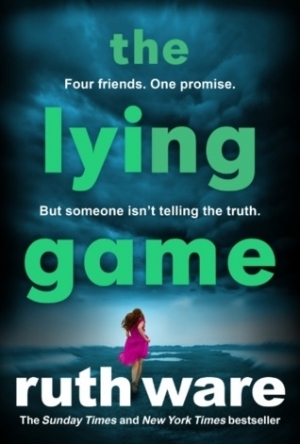
Isa, Kate, Fatima, and Thea were the best of friends for a year in boarding school. Thick as thieves, they kept to themselves at Salten House, bonded by a game they invented (The Lying Game), where they came up with increasingly higher stakes lies for a series of points and boasting rights. The girls spent much of their time at The Mill House, Kate's childhood home--a quick walk across the marsh from their boarding school and home to Kate's father, Ambrose, and stepbrother, Luc. But all that changes when Ambrose, an art teacher at Salten, dies; a scandal is uncovered; and the girls are expelled. Years pass without the four women seeing each other, until they receive a text from Kate: I need you. Isa--with her baby daughter in tow, Fatima, and Thea return to The Mill House, where Kate still lives, to help their friend. But what exactly happened all those years ago? And are the women still playing The Lying Game?
So I probably enjoyed this novel more than I should have, considering it's rather predictable. There are so few characters in the book as a whole, it seems, for the ending to be that grand of a surprise. It's also a slow-moving mystery where much of the drama could be avoided if the characters would just talk to each other or tell the truth - ever. The main character, Isa, puts her baby in danger far more often than a reasonable parent would, and for what? Even worse, while Isa is a fairly well-developed main character, her three best friends seem to be more of cliches or stereotypes than fleshed out characters.
Still, Ware has had this hold on me on each of her two previous novels--and she did it again here. The book is just oddly readable, and I found myself drawn to it, despite its flaws, so I have to give that to her. I read it rather quickly, despite being swamped at work, and found myself sneaking away to finish it on my lunch break. It's very descriptive, just like her first two books, and you can easily picture the eerie setting. Even if you're not fully invested in what's happening or you're pretty sure what's going to happen, or who was involved, there's just something compelling that makes you keep reading. The novel is told from Isa's point of view, unfolding in the present, but flashing back to her memories of the past. It's a rather effective technique, as we only figure out plot pieces as she does and can discern bits and pieces of the story through Isa's perspective alone.
Overall, I'd hoped for a bit more, and I probably enjoyed Ware's first two novels as a cohesive whole more than this one. But I won't deny that I found this book intriguing and that it kept me reading. There's certainly a lot in the novel that requires you to suspend some elements of disbelief. Still, I'll definitely continue to read anything Ware writes--she just has a fascinating style.
So I probably enjoyed this novel more than I should have, considering it's rather predictable. There are so few characters in the book as a whole, it seems, for the ending to be that grand of a surprise. It's also a slow-moving mystery where much of the drama could be avoided if the characters would just talk to each other or tell the truth - ever. The main character, Isa, puts her baby in danger far more often than a reasonable parent would, and for what? Even worse, while Isa is a fairly well-developed main character, her three best friends seem to be more of cliches or stereotypes than fleshed out characters.
Still, Ware has had this hold on me on each of her two previous novels--and she did it again here. The book is just oddly readable, and I found myself drawn to it, despite its flaws, so I have to give that to her. I read it rather quickly, despite being swamped at work, and found myself sneaking away to finish it on my lunch break. It's very descriptive, just like her first two books, and you can easily picture the eerie setting. Even if you're not fully invested in what's happening or you're pretty sure what's going to happen, or who was involved, there's just something compelling that makes you keep reading. The novel is told from Isa's point of view, unfolding in the present, but flashing back to her memories of the past. It's a rather effective technique, as we only figure out plot pieces as she does and can discern bits and pieces of the story through Isa's perspective alone.
Overall, I'd hoped for a bit more, and I probably enjoyed Ware's first two novels as a cohesive whole more than this one. But I won't deny that I found this book intriguing and that it kept me reading. There's certainly a lot in the novel that requires you to suspend some elements of disbelief. Still, I'll definitely continue to read anything Ware writes--she just has a fascinating style.

Hazel (1853 KP) rated Spilt Milk in Books
May 30, 2017
Not about milk
I received this book for free through Goodreads First Reads.
Spilt Milk is the second historical novel by Amanda Hodgkinson, award-winning British author of 22 Britannia Road. Split into two parts it follows the lives of two sisters over several decades during the first half of the twentieth century. Set in Britain, this is a novel about relationships, family, secrets… and illegitimate pregnancies. Lots of illegitimate pregnancies.
The first part spans from 1913 until 1917 thus covering the First World War period. The second part picks up the storyline in 1939 and continues until the novel’s final pages set in 1965. So yet another world war is included, although it has little impact on the plot. The first chapter is almost like the calm before the storm. Everything appears peaceful and happy until everything spirals out of control. Vivian and Nellie Marsh (aged twenty three and twenty two) have been raised by their older sister Rose in a small farmhouse since the death of their parents when Nellie was a baby. We first meet Nellie rinsing chamber pots outside where she has a feeling that something is going to happen; something good, she hopes. Alas, it turns out it was a bad feeling after all as floodwaters rise and Rose dies. The only apparent good thing is the arrival of a hired farm hand, Joe Ferier. But no, that is also a bad occurrence that leaves one sister pregnant and the other temporarily homeless.
Over the years we see how the sisters deal with the way in which their lives have drastically changed up until Nellie has a child with her husbands brother. Luckily her husband is willing to pass the child off as his own, and so Nellie, unlike the other secret pregnancies in this story, actually gets to keep her love child.
At the start of part two, Nellie’s daughter Bertha (commonly known as Birdie) is eighteen years old and finds herself – can you guess? – pregnant after a one night stand. So that it can remain secret she goes to live with her Aunt Vivian until the baby is born and adopted. Vivian ends up housing many girls including a couple of minor characters who have got themselves in a similar way. I did say there were a lot of illegitimate pregnancies! It also comes to light that supposedly innocent, spinster Rose had not one but two babies during her teenage years.
The remainder of the novel shows us how the girls: Nellie, Vivian and Birdie; get on with their lives under the burden of their personal secrets and emotions. It is Birdie who struggles the most with the knowledge that her daughter is growing up without her but to talk to anyone about it would have deep consequences.
The size of the time period means that the reader can become attached to certain key characters and feel their pain as they struggle with their emotional afflictions, however each scene passes quickly as time goes on which means we do not really get to appreciate the minor characters.
Overall it is a good, reasonably quick read which many women would enjoy, particularly those who appreciate historical fiction and may have sisters of their own and therefore understand what the power of keeping secrets can result in.
Spilt Milk is the second historical novel by Amanda Hodgkinson, award-winning British author of 22 Britannia Road. Split into two parts it follows the lives of two sisters over several decades during the first half of the twentieth century. Set in Britain, this is a novel about relationships, family, secrets… and illegitimate pregnancies. Lots of illegitimate pregnancies.
The first part spans from 1913 until 1917 thus covering the First World War period. The second part picks up the storyline in 1939 and continues until the novel’s final pages set in 1965. So yet another world war is included, although it has little impact on the plot. The first chapter is almost like the calm before the storm. Everything appears peaceful and happy until everything spirals out of control. Vivian and Nellie Marsh (aged twenty three and twenty two) have been raised by their older sister Rose in a small farmhouse since the death of their parents when Nellie was a baby. We first meet Nellie rinsing chamber pots outside where she has a feeling that something is going to happen; something good, she hopes. Alas, it turns out it was a bad feeling after all as floodwaters rise and Rose dies. The only apparent good thing is the arrival of a hired farm hand, Joe Ferier. But no, that is also a bad occurrence that leaves one sister pregnant and the other temporarily homeless.
Over the years we see how the sisters deal with the way in which their lives have drastically changed up until Nellie has a child with her husbands brother. Luckily her husband is willing to pass the child off as his own, and so Nellie, unlike the other secret pregnancies in this story, actually gets to keep her love child.
At the start of part two, Nellie’s daughter Bertha (commonly known as Birdie) is eighteen years old and finds herself – can you guess? – pregnant after a one night stand. So that it can remain secret she goes to live with her Aunt Vivian until the baby is born and adopted. Vivian ends up housing many girls including a couple of minor characters who have got themselves in a similar way. I did say there were a lot of illegitimate pregnancies! It also comes to light that supposedly innocent, spinster Rose had not one but two babies during her teenage years.
The remainder of the novel shows us how the girls: Nellie, Vivian and Birdie; get on with their lives under the burden of their personal secrets and emotions. It is Birdie who struggles the most with the knowledge that her daughter is growing up without her but to talk to anyone about it would have deep consequences.
The size of the time period means that the reader can become attached to certain key characters and feel their pain as they struggle with their emotional afflictions, however each scene passes quickly as time goes on which means we do not really get to appreciate the minor characters.
Overall it is a good, reasonably quick read which many women would enjoy, particularly those who appreciate historical fiction and may have sisters of their own and therefore understand what the power of keeping secrets can result in.

tapestry100 (306 KP) rated The Marsh King's Daughter in Books
Aug 2, 2017


Originally reviewed on http://www.frommybookshelf.com
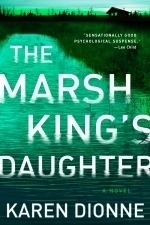
Helena Pelletier's life is more or less exactly what she wants: a husband and two daughters she loves deeply, a home business that keeps her busy during the days, her past a secret that she keeps hidden from everyone. Helena has worked hard for these things and she prides herself in her accomplishments, until the day her father escapes from prison and she immediately understands that her past is going to catch up to her, whether she wants it to or not. She also knows that the only way to keep her family safe and put her father back in prison is to find and deal with her father herself, since he was the one who trained her to live in the marshes of Michigan's Upper Peninsula, where he was keeping her mother captive after he had kidnapped her as a young girl.
With the main part of the story taking place over 24 hours "real time" with Helena tracking her father, the actual meat of the story all takes place in flashbacks as Helena thinks back on her childhood in the marshes of the UP and how her father treated her and her mother, who her father kidnapped as a young girl and made his wife. As she closes in on her father, she goes over various aspects of the only life she knew as a child, until her mother's past starts to catch up to her and Helena realizes that much of her life has been a lie perpetrated by both her father and mother and isn't exactly what they told her it was. As she grows older and finally starts to understand that even though this is the only life she's ever known, it may not be the life that either she or her mother deserves, and when she finally escapes her father's control she discovers that there is in fact an entire world she never knew about outside the marsh.
To be honest, the story of Helena's childhood is what really makes this book. Personally, I felt the entire portion of the book that is taking place in "real time" where Helena knows that she's the only one who can find her father, regardless of the large police force searching for him, and that she knows exactly where to look for him in the entire area surrounding her home and the prison he escaped from all seemed far to convenient, and only plausible in order to make this portion of the story move forward. Helena's memories of her childhood and the psychological aspects of being a child who has been raised in an extreme situation, but one that seems normal to her only because it's all that she knows, was fascinating. Her recollections of her father teaching her how to hunt and live in the wilderness, and her childhood idolization of him in this respect juxtaposed against her later feeling towards him as she starts to mature and gain some sense of adolescent independence, and her eventual discovery that her whole life has been based on lies and the kidnapping of her mother, was remarkable storytelling, and Karen Dionne delivers this entire sequence of events deftly and with sharp storytelling. While the "real time" story requires quite a hefty amount of suspension of disbelief, the background story well makes up for this and creates a truly mesmerizing and atmospheric story that will keep you up late into the night, turning the page for more.
Helena Pelletier's life is more or less exactly what she wants: a husband and two daughters she loves deeply, a home business that keeps her busy during the days, her past a secret that she keeps hidden from everyone. Helena has worked hard for these things and she prides herself in her accomplishments, until the day her father escapes from prison and she immediately understands that her past is going to catch up to her, whether she wants it to or not. She also knows that the only way to keep her family safe and put her father back in prison is to find and deal with her father herself, since he was the one who trained her to live in the marshes of Michigan's Upper Peninsula, where he was keeping her mother captive after he had kidnapped her as a young girl.
With the main part of the story taking place over 24 hours "real time" with Helena tracking her father, the actual meat of the story all takes place in flashbacks as Helena thinks back on her childhood in the marshes of the UP and how her father treated her and her mother, who her father kidnapped as a young girl and made his wife. As she closes in on her father, she goes over various aspects of the only life she knew as a child, until her mother's past starts to catch up to her and Helena realizes that much of her life has been a lie perpetrated by both her father and mother and isn't exactly what they told her it was. As she grows older and finally starts to understand that even though this is the only life she's ever known, it may not be the life that either she or her mother deserves, and when she finally escapes her father's control she discovers that there is in fact an entire world she never knew about outside the marsh.
To be honest, the story of Helena's childhood is what really makes this book. Personally, I felt the entire portion of the book that is taking place in "real time" where Helena knows that she's the only one who can find her father, regardless of the large police force searching for him, and that she knows exactly where to look for him in the entire area surrounding her home and the prison he escaped from all seemed far to convenient, and only plausible in order to make this portion of the story move forward. Helena's memories of her childhood and the psychological aspects of being a child who has been raised in an extreme situation, but one that seems normal to her only because it's all that she knows, was fascinating. Her recollections of her father teaching her how to hunt and live in the wilderness, and her childhood idolization of him in this respect juxtaposed against her later feeling towards him as she starts to mature and gain some sense of adolescent independence, and her eventual discovery that her whole life has been based on lies and the kidnapping of her mother, was remarkable storytelling, and Karen Dionne delivers this entire sequence of events deftly and with sharp storytelling. While the "real time" story requires quite a hefty amount of suspension of disbelief, the background story well makes up for this and creates a truly mesmerizing and atmospheric story that will keep you up late into the night, turning the page for more.

Movie Metropolis (309 KP) rated Only The Brave (2017) in Movies
Jun 10, 2019

One of the year's best films
Films based on true events are ten-a-penny these days. From 2015s stunning American Sniper and 2016s breath-taking Deepwater Horizon to the critically acclaimed Patriots Day, there seems to be no stopping the ‘true to life’ variety of movies that has suddenly become very popular.
The trouble is, getting the films right is trickier than for any other genre. Not only do you have to please the audience with bombastic spectacle, you have to respect the events that caused them to exist in the first place. The new kid on the block is Only the Brave. But does this tale of the Granite Mountain Hotshots do their incredibly tragic story justice?
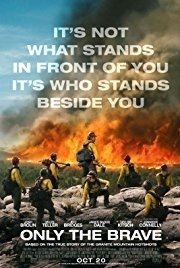
Through hope, determination, sacrifice and the drive to protect families and communities, the Granite Mountain Hotshots become one of the most elite firefighting teams in the country. While most people run from danger, they run toward it — watching over lives, homes and everything people hold dear, forging a unique brotherhood that comes into focus with one fateful fire in Yarnell, Arizona.
With a cast that includes the likes of Jeff Bridges, Miles Teller, Josh Brolin, Jennifer Connelly and Andie MacDowell to name but a few, there’s no denying there is some seriously good talent on offer here. After researching the people these characters are based on, it appears that director Joseph Kosinski – who just so happens to be directing the long-awaited Top Gun sequel – has picked the perfect group of actors to portray them.
Teller is frankly, outstanding as troubled Brendan McDonough, joining the Hotshots after leaving his life of crime and addiction behind him. Josh Brolin is his ever-magnetic self as group leader Eric Marsh and the legendary Jeff Bridges really needs no introduction. The cast ooze class in every frame.
Cinematography wise, the lush landscapes of Arizona lend themselves perfectly to a beautifully shot film that features intense CGI and tasteful practical effects. Make no mistake though, this is not an action film and it feels all the better for it. While the fires themselves are mightily impressive and rendered with magnificent detail and precision, the real action here is in the human drama, of which there is an abundance.
The fact that this touching story is based on true events means that the subject matter needs to be handled as sensitively as possible and in that respect, Only the Brave has succeeded on every level. The touching tribute to these incredible men before the end credits proves to be a final emotional gut-punch after 2 hours of absolute excellence.
The script is good at making us feel for these people through their daily personal lives and their professional mentalities. In fact, it’s so well written, it may just be one of the best scripts I’ve had the pleasure of watching come to life all year and coupled with the glorious airborne shots, it makes for a deeply immersive film.
Only the Brave isn’t a film that shouts about any one thing it does well. Instead Joseph Kosinski rallies a phenomenal cast in a film that is beautifully written, exquisitely acted and is a fitting but perhaps most importantly, touching, tribute to the men who desperately tried to protect those around them.
https://moviemetropolis.net/2017/11/11/only-the-brave-review/
The trouble is, getting the films right is trickier than for any other genre. Not only do you have to please the audience with bombastic spectacle, you have to respect the events that caused them to exist in the first place. The new kid on the block is Only the Brave. But does this tale of the Granite Mountain Hotshots do their incredibly tragic story justice?
Through hope, determination, sacrifice and the drive to protect families and communities, the Granite Mountain Hotshots become one of the most elite firefighting teams in the country. While most people run from danger, they run toward it — watching over lives, homes and everything people hold dear, forging a unique brotherhood that comes into focus with one fateful fire in Yarnell, Arizona.
With a cast that includes the likes of Jeff Bridges, Miles Teller, Josh Brolin, Jennifer Connelly and Andie MacDowell to name but a few, there’s no denying there is some seriously good talent on offer here. After researching the people these characters are based on, it appears that director Joseph Kosinski – who just so happens to be directing the long-awaited Top Gun sequel – has picked the perfect group of actors to portray them.
Teller is frankly, outstanding as troubled Brendan McDonough, joining the Hotshots after leaving his life of crime and addiction behind him. Josh Brolin is his ever-magnetic self as group leader Eric Marsh and the legendary Jeff Bridges really needs no introduction. The cast ooze class in every frame.
Cinematography wise, the lush landscapes of Arizona lend themselves perfectly to a beautifully shot film that features intense CGI and tasteful practical effects. Make no mistake though, this is not an action film and it feels all the better for it. While the fires themselves are mightily impressive and rendered with magnificent detail and precision, the real action here is in the human drama, of which there is an abundance.
The fact that this touching story is based on true events means that the subject matter needs to be handled as sensitively as possible and in that respect, Only the Brave has succeeded on every level. The touching tribute to these incredible men before the end credits proves to be a final emotional gut-punch after 2 hours of absolute excellence.
The script is good at making us feel for these people through their daily personal lives and their professional mentalities. In fact, it’s so well written, it may just be one of the best scripts I’ve had the pleasure of watching come to life all year and coupled with the glorious airborne shots, it makes for a deeply immersive film.
Only the Brave isn’t a film that shouts about any one thing it does well. Instead Joseph Kosinski rallies a phenomenal cast in a film that is beautifully written, exquisitely acted and is a fitting but perhaps most importantly, touching, tribute to the men who desperately tried to protect those around them.
https://moviemetropolis.net/2017/11/11/only-the-brave-review/

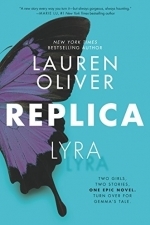
Replica is a fascinating novel about human cloning that is written from two points of view. It's really unique because it can be read in three different ways. The first is from Lena's perspective. Lena is a replica, or clone, and has only known a life at Haven. The second is from Gemma's point of view. Gemma is a normal girl who doesn't feel like she fits in. The final method, and way I chose to read the book, was alternating chapters. The two stories are woven together seamlessly and make for a great read.
On an island surrounded by guard towers and fences, ocean and marsh, alligators and water mocassins is Have - Lyra's home. Each day she is told when to eat, sleep and take her medication. Her life is not her own. It's not even considered a life by most of the staff who address her as "it".. if they recognize her at all.
Gemma attends high school and has two overprotective parents. she was very sick as a child and her parents never quite got over it. Gemma isn't even allowed to participate in gym, which doesn't help shield her from school bullies. Instead, it makes her more of a target. Her only true friend is April.
Somehow, Gemma and April manage to convince their parents to allow them to spend their spring break at April's grandparent's house in Florida. Just days before their trip, there is an explosion at Haven. Gemma overhears her parents fighting about it and suddenly she's not longer allowed on her trip. hurt and confused, Gemma begins to dig into Haven wondering why it is so important. She discovers a world of conspiracies and realized she must uncover the truth.
Catching a ride to Florida with a classmate, Pete, Gemma rebels for the first time in her life. She goes on a harrowing adventure and her path eventually crosses with Lyra's. Together, they begin to learn the truth and uncover life-altering information about Haven and themselves.
Both Lyra and Gemma are well-written characters that the reader can relate to. Lyra, or number 24, is new to the world and slow to trust. Gemma is caring and curious. Personally, I related to Gemma more than Lyra but I know a lot of people say the opposite. They are joined by the talkative and reliable Pete; the only person to ever make it to Haven Jake; and a fellow Haven resident number 72, or Caelum. Each boy has a unique personality and purpose in the story.
The world of Haven and the replicas is fascinating. Unfortunately, we only know as much as out protagonists do. I eagerly await more world building in future books. The backstory was a giant mystery involving Gemma's father, but she slowly discovers little pieces and the world is exposed to us bit by bit.
The story immediately draws you in and you can't put the book down (or at least I couldn't!) Recommended for fans of science fiction (or fact) and mystery young adult books. Even if you don't normally gravitate towards science related fiction, this book is very accessible. Fans of BBC's Orphan Black will find themselves in love with this novel. Definitely a must read!
On an island surrounded by guard towers and fences, ocean and marsh, alligators and water mocassins is Have - Lyra's home. Each day she is told when to eat, sleep and take her medication. Her life is not her own. It's not even considered a life by most of the staff who address her as "it".. if they recognize her at all.
Gemma attends high school and has two overprotective parents. she was very sick as a child and her parents never quite got over it. Gemma isn't even allowed to participate in gym, which doesn't help shield her from school bullies. Instead, it makes her more of a target. Her only true friend is April.
Somehow, Gemma and April manage to convince their parents to allow them to spend their spring break at April's grandparent's house in Florida. Just days before their trip, there is an explosion at Haven. Gemma overhears her parents fighting about it and suddenly she's not longer allowed on her trip. hurt and confused, Gemma begins to dig into Haven wondering why it is so important. She discovers a world of conspiracies and realized she must uncover the truth.
Catching a ride to Florida with a classmate, Pete, Gemma rebels for the first time in her life. She goes on a harrowing adventure and her path eventually crosses with Lyra's. Together, they begin to learn the truth and uncover life-altering information about Haven and themselves.
Both Lyra and Gemma are well-written characters that the reader can relate to. Lyra, or number 24, is new to the world and slow to trust. Gemma is caring and curious. Personally, I related to Gemma more than Lyra but I know a lot of people say the opposite. They are joined by the talkative and reliable Pete; the only person to ever make it to Haven Jake; and a fellow Haven resident number 72, or Caelum. Each boy has a unique personality and purpose in the story.
The world of Haven and the replicas is fascinating. Unfortunately, we only know as much as out protagonists do. I eagerly await more world building in future books. The backstory was a giant mystery involving Gemma's father, but she slowly discovers little pieces and the world is exposed to us bit by bit.
The story immediately draws you in and you can't put the book down (or at least I couldn't!) Recommended for fans of science fiction (or fact) and mystery young adult books. Even if you don't normally gravitate towards science related fiction, this book is very accessible. Fans of BBC's Orphan Black will find themselves in love with this novel. Definitely a must read!
Hazel (1853 KP) rated Spilt Milk in Books
Dec 14, 2018
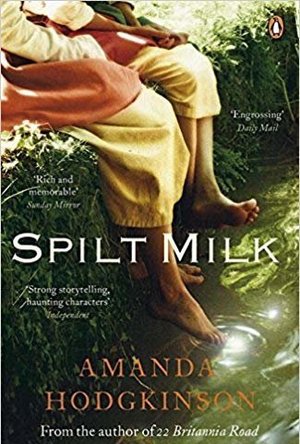
<i>I received this book for free through Goodreads First Reads.</i>
<i>Spilt Milk</i> is the second historical novel by Amanda Hodgkinson, award-winning British author of <i>22 Britannia Road</i>. Split into two parts it follows the lives of two sisters over several decades during the first half of the twentieth century. Set in Britain, this is a novel about relationships, family, secrets… and illegitimate pregnancies. Lots of illegitimate pregnancies.
The first part spans from 1913 until 1917 thus covering the First World War period. The second part picks up the storyline in 1939 and continues until the novel’s final pages set in 1965. So yet another world war is included, although it has little impact on the plot. The first chapter is almost like the calm before the storm. Everything appears peaceful and happy until everything spirals out of control. Vivian and Nellie Marsh (aged twenty three and twenty two) have been raised by their older sister Rose in a small farmhouse since the death of their parents when Nellie was a baby. We first meet Nellie rinsing chamber pots outside where she has a feeling that something is going to happen; something good, she hopes. Alas, it turns out it was a bad feeling after all as floodwaters rise and Rose dies. The only apparent good thing is the arrival of a hired farm hand, Joe Ferier. But no, that is also a bad occurrence that leaves one sister pregnant and the other temporarily homeless.
Over the years we see how the sisters deal with the way in which their lives have drastically changed up until Nellie has a child with her husbands brother. Luckily her husband is willing to pass the child off as his own, and so Nellie, unlike the other secret pregnancies in this story, actually gets to keep her love child.
At the start of part two, Nellie’s daughter Bertha (commonly known as Birdie) is eighteen years old and finds herself – can you guess? – pregnant after a one night stand. So that it can remain secret she goes to live with her Aunt Vivian until the baby is born and adopted. Vivian ends up housing many girls including a couple of minor characters who have got themselves in a similar way. I did say there were a lot of illegitimate pregnancies! It also comes to light that supposedly innocent, spinster Rose had not one but two babies during her teenage years.
The remainder of the novel shows us how the girls: Nellie, Vivian and Birdie; get on with their lives under the burden of their personal secrets and emotions. It is Birdie who struggles the most with the knowledge that her daughter is growing up without her but to talk to anyone about it would have deep consequences.
The size of the time period means that the reader can become attached to certain key characters and feel their pain as they struggle with their emotional afflictions, however each scene passes quickly as time goes on which means we do not really get to appreciate the minor characters.
Overall it is a good, reasonably quick read which many women would enjoy, particularly those who appreciate historical fiction and may have sisters of their own and therefore understand what the power of keeping secrets can result in.
<i>Spilt Milk</i> is the second historical novel by Amanda Hodgkinson, award-winning British author of <i>22 Britannia Road</i>. Split into two parts it follows the lives of two sisters over several decades during the first half of the twentieth century. Set in Britain, this is a novel about relationships, family, secrets… and illegitimate pregnancies. Lots of illegitimate pregnancies.
The first part spans from 1913 until 1917 thus covering the First World War period. The second part picks up the storyline in 1939 and continues until the novel’s final pages set in 1965. So yet another world war is included, although it has little impact on the plot. The first chapter is almost like the calm before the storm. Everything appears peaceful and happy until everything spirals out of control. Vivian and Nellie Marsh (aged twenty three and twenty two) have been raised by their older sister Rose in a small farmhouse since the death of their parents when Nellie was a baby. We first meet Nellie rinsing chamber pots outside where she has a feeling that something is going to happen; something good, she hopes. Alas, it turns out it was a bad feeling after all as floodwaters rise and Rose dies. The only apparent good thing is the arrival of a hired farm hand, Joe Ferier. But no, that is also a bad occurrence that leaves one sister pregnant and the other temporarily homeless.
Over the years we see how the sisters deal with the way in which their lives have drastically changed up until Nellie has a child with her husbands brother. Luckily her husband is willing to pass the child off as his own, and so Nellie, unlike the other secret pregnancies in this story, actually gets to keep her love child.
At the start of part two, Nellie’s daughter Bertha (commonly known as Birdie) is eighteen years old and finds herself – can you guess? – pregnant after a one night stand. So that it can remain secret she goes to live with her Aunt Vivian until the baby is born and adopted. Vivian ends up housing many girls including a couple of minor characters who have got themselves in a similar way. I did say there were a lot of illegitimate pregnancies! It also comes to light that supposedly innocent, spinster Rose had not one but two babies during her teenage years.
The remainder of the novel shows us how the girls: Nellie, Vivian and Birdie; get on with their lives under the burden of their personal secrets and emotions. It is Birdie who struggles the most with the knowledge that her daughter is growing up without her but to talk to anyone about it would have deep consequences.
The size of the time period means that the reader can become attached to certain key characters and feel their pain as they struggle with their emotional afflictions, however each scene passes quickly as time goes on which means we do not really get to appreciate the minor characters.
Overall it is a good, reasonably quick read which many women would enjoy, particularly those who appreciate historical fiction and may have sisters of their own and therefore understand what the power of keeping secrets can result in.

Bob Mann (459 KP) rated The Mercy (2018) in Movies
Sep 29, 2021
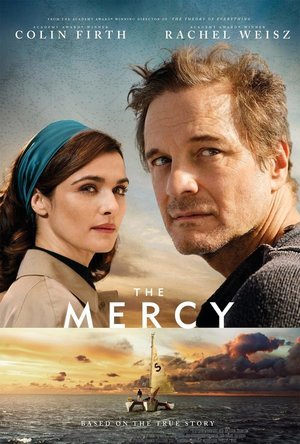
“With shroud, and mast, and pennon fair”.
It’s 1968. Donald Crowhurst (Colin Firth, “Kingsman: The Golden Circle“; “Magic in the Moonlight“), an amateur sailor and entrepreneur based in Teignmouth, Devon, is inspired by listening to single-handed round-the-world yachtsman Sir Francis Chichester and does a a crazy thing. He puts his business, his family’s house and his own life on the line by entering the Sunday Times single-handed round-the-world yacht race. It’s not even as if he has a boat built yet!
Lending him the money, under onerous terms, are local businessman Mr Best (Ken Stott, “The Hobbit“) and local newspaper editor Rodney Hallworth (David Thewlis, “Wonder Woman“, “The Theory of Everything“). With the race deadline upon him, Crowhurst is pressed into sailing away from his beloved wife Clare (Rachel Weisz, “Denial“, “The Lobster“) and young family in a trimaran that is well below par.
But what happens next is so ludicrous that it makes a mockery of whoever wrote this ridiculous work of fiction. Ah… but wait a minute… it’s a true story!
It is in fact such an astonishing story that this is a film that is easy to spoil in a review, a fact that seems to have passed many newspaper reviewers by (Arrrggghhh!!). So I will leave much comment to a “spoiler section” that follows the trailer (which is also best avoided). This is honestly a film worth seeing cold. What can I say that is spoiler-free then?
Firth and Weisz make a well-matched couple, and the rest of the cast is peppered with well-known faces from British film and (particularly) TV: Andrew Buchan and Jonathan Bailey (from “Broadchurch”); Mark Gatiss (“Sherlock”, “Out Kind of Traitor“); Adrian Schiller (“Victoria”; “Beauty and the Beast“).
The first part of the film is well executed and excellent value for older viewers. 60’s Devon is warm, bucolic and nostalgic. In fact, the film beautifully creates the late 60’s of my childhood, from the boxy hardwood furniture of the Crowhurst’s house to the Meccano set opened at Christmas time.
Once afloat though, the film is less successful at getting its sea-legs. The story is riveting, but quite a number of the scenes raise more questions than they answer. As stress takes hold it is perhaps not surprising that there are a few fantastical flights of movie fancy. But some specific elements in Scott Burns’ script don’t quite gel: a brass clock overboard is a case in point. What? Why?
And it seems to be light on the fallout from the race: there is a weighty scene in the trailer between Best and Hallworth that (unless I dozed off!) I don’t think appeared in the final cut, and I think was needed.
All in all, I was left feeling mildly dissatisfied: a potentially good film by “Theory of Everything” director James Marsh that rather goes off the rails in the final stretch.
This was a time where morality and honour were often rigidly adhered to – British “stiff upper lip” and all that – and seemed to carry a lot more weight than they do today. So some of the decisions in the film might mystify younger viewers. But for the packed older audience in my showing (Cineworld: this needs to be put on in a bigger screen!) then it was a gripping, stressful, but far from flawless watch.
I’d also like to take this opportunity to pay my respects to the film’s composer Jóhann Jóhannsson, who shockingly died last week at the ridiculously young age of 48. His strange and atmospheric music for films including “The Theory of Everything“, “Sicario” and (particularly) “Arrival” set him on the path to be a film composing great of the future. Like James Horner, another awful and untimely loss to the film music industry.
Lending him the money, under onerous terms, are local businessman Mr Best (Ken Stott, “The Hobbit“) and local newspaper editor Rodney Hallworth (David Thewlis, “Wonder Woman“, “The Theory of Everything“). With the race deadline upon him, Crowhurst is pressed into sailing away from his beloved wife Clare (Rachel Weisz, “Denial“, “The Lobster“) and young family in a trimaran that is well below par.
But what happens next is so ludicrous that it makes a mockery of whoever wrote this ridiculous work of fiction. Ah… but wait a minute… it’s a true story!
It is in fact such an astonishing story that this is a film that is easy to spoil in a review, a fact that seems to have passed many newspaper reviewers by (Arrrggghhh!!). So I will leave much comment to a “spoiler section” that follows the trailer (which is also best avoided). This is honestly a film worth seeing cold. What can I say that is spoiler-free then?
Firth and Weisz make a well-matched couple, and the rest of the cast is peppered with well-known faces from British film and (particularly) TV: Andrew Buchan and Jonathan Bailey (from “Broadchurch”); Mark Gatiss (“Sherlock”, “Out Kind of Traitor“); Adrian Schiller (“Victoria”; “Beauty and the Beast“).
The first part of the film is well executed and excellent value for older viewers. 60’s Devon is warm, bucolic and nostalgic. In fact, the film beautifully creates the late 60’s of my childhood, from the boxy hardwood furniture of the Crowhurst’s house to the Meccano set opened at Christmas time.
Once afloat though, the film is less successful at getting its sea-legs. The story is riveting, but quite a number of the scenes raise more questions than they answer. As stress takes hold it is perhaps not surprising that there are a few fantastical flights of movie fancy. But some specific elements in Scott Burns’ script don’t quite gel: a brass clock overboard is a case in point. What? Why?
And it seems to be light on the fallout from the race: there is a weighty scene in the trailer between Best and Hallworth that (unless I dozed off!) I don’t think appeared in the final cut, and I think was needed.
All in all, I was left feeling mildly dissatisfied: a potentially good film by “Theory of Everything” director James Marsh that rather goes off the rails in the final stretch.
This was a time where morality and honour were often rigidly adhered to – British “stiff upper lip” and all that – and seemed to carry a lot more weight than they do today. So some of the decisions in the film might mystify younger viewers. But for the packed older audience in my showing (Cineworld: this needs to be put on in a bigger screen!) then it was a gripping, stressful, but far from flawless watch.
I’d also like to take this opportunity to pay my respects to the film’s composer Jóhann Jóhannsson, who shockingly died last week at the ridiculously young age of 48. His strange and atmospheric music for films including “The Theory of Everything“, “Sicario” and (particularly) “Arrival” set him on the path to be a film composing great of the future. Like James Horner, another awful and untimely loss to the film music industry.

BankofMarquis (1832 KP) rated It (2017) in Movies
Feb 14, 2018
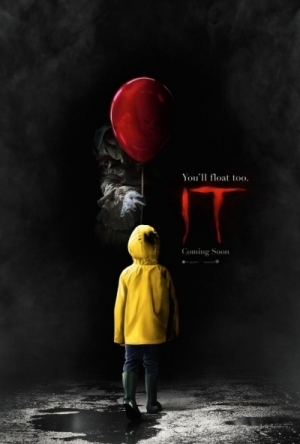
IT is very good
I met the clown and IT is...fascinating, gripping, thrilling, humorous, intense and good.
But...is it scary? Sure...scary enough, but this adaptation of Stephen King's bestseller is much, much more than a scary movie.
One of the best screen adaptations of a Stephen King book, ever, IT tells the story of a group of13 year olds in Derry, Maine (one of the main towns featured in a variety of King's stories). It is 1989 and children have been going missing at an alarming rate. The adults in the town seem impassive about this, and when the younger brother of one of the gang goes missing, this "Loser's Club" investigates. What they find is a horrifying evil at the center of it all.
Like the plot of this film, there is much, much more going on in this film than what that last paragraph suggests, for this story is not only about the mystery of the missing children, it is a loving look back at childhood, friendship, caring and bonding. Think of this film as STAND BY ME meets...well...a killer clown.
And the clown IS killer. As played by Bill Skarsgard (TV's THE CROWN), Pennywise The Dancing Clown is slyly sinister, drawing the children in as a spider would a fly. It is only when the children are close (and alone) does he drop the guise of niceness and pounce. This is an intense and terrifyingly terrific performance, keeping the fine line between realism and camp (a line that Tim Curry trounced all over in the TV Mini-series version of this material in the 1980's).
I'm a big fan of Stephen King's writing (having read nearly all of his books and short stories) and I walked out of the theater thinking "finally, someone figured out the right way to make a Stephen King thriller work on the screen" and that someone is Director Andy Muschietti (MAMA). He guides this film with a strong hand, not wavering in his vision or sense of purpose as to where (and how) he wants this story to go. He let's the young actor's lead this story, with Skargard's clown pouncing every now and then. This works well, especially when infusing something that is sorely lacking, typically, in these types of films - humor.
And the humor, mostly, falls into the hands of Richie Tozier (Finn Wolfhard, STRANGER THINGS). He is an absolute bright spot injecting just the wrong (or maybe it is right?) comment in a tense situation, just as a 13 year old boy would do. As part of the "Loser's Club", he holds a bright spot in keeping things together when the mood threatens to get too grim or dire. And grim and dire is what is following this set of "Loser's", a veritable "who's who" of loser stereotypes. There is the "fat kid", Ben Hanscome (Jeremy Ray Taylor, ANT-MAN, in a sweet performance), the "always sick kid with the overbearing mother", Eddie Kasbrak (Jack Dylan Grazer), the "Jewish kid", Stanley Uris (Wyatt Oleff) and the "Black Kid", Mike Hanlon (Chosen Jacobs).
But the heart and sole of this film is the two main leads of the "Loser's Club", Bill Denbrough (Jaeden Lieberher, star of two criminally under-viewed gems MIDNIGHT SPECIAL and ST. VINCENT) and Beverly Marsh (Sophia Lillis, a relative newcomer that bears watching in the future). Both are harboring deep, emotional scars - Bill blames himself for the death of his brother by Pennywise and Beverly is (wrongly) viewed as a 13 year old slut by school rumor and innuendo and is sexually harassed by her father. The relationship between these two and the rest of the Loser's Club is the real treat of this film and the actor's are up to the challenge to draw us in and care about what happens to them when they are, ultimately, separated and confronted by Pennywise.
I was surprised by how little graphic gore there was in this film (though there is plenty of blood) and there is a little too many "jump scares" for my taste, but these are quibbles for a very good, very intense "scary film".
I floated out of the cinema after seeing this film You'll float too.
Letter Grade: A-
8 (out of 10) stars and you can take that to the Bank (ofMarquis)
But...is it scary? Sure...scary enough, but this adaptation of Stephen King's bestseller is much, much more than a scary movie.
One of the best screen adaptations of a Stephen King book, ever, IT tells the story of a group of13 year olds in Derry, Maine (one of the main towns featured in a variety of King's stories). It is 1989 and children have been going missing at an alarming rate. The adults in the town seem impassive about this, and when the younger brother of one of the gang goes missing, this "Loser's Club" investigates. What they find is a horrifying evil at the center of it all.
Like the plot of this film, there is much, much more going on in this film than what that last paragraph suggests, for this story is not only about the mystery of the missing children, it is a loving look back at childhood, friendship, caring and bonding. Think of this film as STAND BY ME meets...well...a killer clown.
And the clown IS killer. As played by Bill Skarsgard (TV's THE CROWN), Pennywise The Dancing Clown is slyly sinister, drawing the children in as a spider would a fly. It is only when the children are close (and alone) does he drop the guise of niceness and pounce. This is an intense and terrifyingly terrific performance, keeping the fine line between realism and camp (a line that Tim Curry trounced all over in the TV Mini-series version of this material in the 1980's).
I'm a big fan of Stephen King's writing (having read nearly all of his books and short stories) and I walked out of the theater thinking "finally, someone figured out the right way to make a Stephen King thriller work on the screen" and that someone is Director Andy Muschietti (MAMA). He guides this film with a strong hand, not wavering in his vision or sense of purpose as to where (and how) he wants this story to go. He let's the young actor's lead this story, with Skargard's clown pouncing every now and then. This works well, especially when infusing something that is sorely lacking, typically, in these types of films - humor.
And the humor, mostly, falls into the hands of Richie Tozier (Finn Wolfhard, STRANGER THINGS). He is an absolute bright spot injecting just the wrong (or maybe it is right?) comment in a tense situation, just as a 13 year old boy would do. As part of the "Loser's Club", he holds a bright spot in keeping things together when the mood threatens to get too grim or dire. And grim and dire is what is following this set of "Loser's", a veritable "who's who" of loser stereotypes. There is the "fat kid", Ben Hanscome (Jeremy Ray Taylor, ANT-MAN, in a sweet performance), the "always sick kid with the overbearing mother", Eddie Kasbrak (Jack Dylan Grazer), the "Jewish kid", Stanley Uris (Wyatt Oleff) and the "Black Kid", Mike Hanlon (Chosen Jacobs).
But the heart and sole of this film is the two main leads of the "Loser's Club", Bill Denbrough (Jaeden Lieberher, star of two criminally under-viewed gems MIDNIGHT SPECIAL and ST. VINCENT) and Beverly Marsh (Sophia Lillis, a relative newcomer that bears watching in the future). Both are harboring deep, emotional scars - Bill blames himself for the death of his brother by Pennywise and Beverly is (wrongly) viewed as a 13 year old slut by school rumor and innuendo and is sexually harassed by her father. The relationship between these two and the rest of the Loser's Club is the real treat of this film and the actor's are up to the challenge to draw us in and care about what happens to them when they are, ultimately, separated and confronted by Pennywise.
I was surprised by how little graphic gore there was in this film (though there is plenty of blood) and there is a little too many "jump scares" for my taste, but these are quibbles for a very good, very intense "scary film".
I floated out of the cinema after seeing this film You'll float too.
Letter Grade: A-
8 (out of 10) stars and you can take that to the Bank (ofMarquis)
Bob Mann (459 KP) rated King of Thieves (2018) in Movies
Sep 28, 2021
No f-ing honour among f-ing thieves.
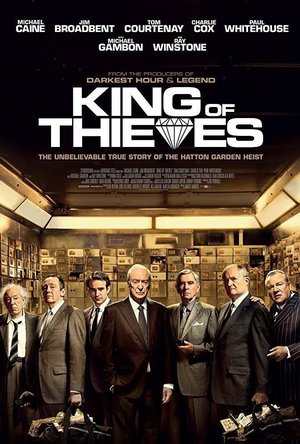
What a cast! Micheal Caine; Jim Broadbent; Tom Courtenay; Michael Gambon; Ray Winstone; Paul Whitehouse…. Just one look at the poster and you think yes, Yes, YES! But would this be a case where my expectations would be dashed?
Having seen the film at a preview showing last night, I’m pleased to say no, it’s not. I was very much entertained.
The film tells the ridiculous true story of the “over the hill gang” – the bunch of largely pensioner-age criminals who successfully extracted what was definitely £14 million – and could have been up to £200 million – of goodies from a vault in London’s Hatton Gardens jewellery district over the Easter Bank Holiday weekend in 2015. The gang is led by the “king of thieves” – Brian (Michael Caine) – highly regarded as an ‘elder statesman’ among the London criminal scene.
Did you see Mark Kermode‘s excellent “Secrets of Cinema” series on the BBC? (If not, seek it out on a catch-up service!) The first of the series deconstructs the “Heist” movie, showing how such movies track the preparation, the execution and the progressive unravelling of the wicked scheme, typically through internal strife among the gang itself. (Pretty much as you would assume happens most of the time in real life!) Kermode points out that such movies play with our emotion in secretly wishing the bad ‘uns to succeed in doing something we would never have the bottle to ‘step out of line’ to do. “King of Thieves” nicely follows this well trodden story-arc, but – for me – does it with significantly greater style than the norm.
Yes, it’s very much a “Brit-flick”, and I’m not sure how it will play outside of the UK. But the film’s script, penned by Joe Penhall (“The Road”, “Enduring Love”), plays beautifully to the extreme age of its cast – the average age of the actors playing the gang is over 67… and that includes the 35-year old Charlie “Stardust” Cox (who is actually very good as the young foil for the older blades)! There is lots of laugh-out-loud dialogue relating to bodily deficiencies and ailments and the tendencies of old-folk to nod off at inconvenient times! However, its not very deep stuff, giving little background to the characters. And if you are of a sensitive disposition, the language used in the film is pretty extreme: F-bombs and C-bombs are dropped in every other sentence.
The film is delivered with visual style by “The Theory of Everything” director James Marsh. He cleverly reflects that all of the older leads have past records: the film nicely interweaving tiny snippets of past British crime movies to illustrate the career exploits of the now-creaky old folks. (If in the epilepsy-inducing opening titles you thought you caught a subliminal shot of the gold from “The Italian Job” – the superior 1969 version – then you were right!) As well as “The Italian Job”, the snippets also includes “The Lavender Hill Mob” and (if I’m not mistaken) the late George Sewell in “Robbery”.
It’s all delivered to a deafeningly intrusive – but in a good way – jazz-style soundtrack by the continually up-and-coming Benjamin Wallfisch.
As in the recent “The Children Act”, it is the acting of the senior leads that makes the film fly for me. Caine is just MAGNIFICENT, at the age of 85 with the same screen presence he had (as featured) stepping out of that prison in “The Italian Job”; Winstone is as good as ever in playing a menacing thug, and even gets to do a Michael Caine impression!; Gambon is hilarious as the weak-bladdered “Billy the Fish”. But it is Broadbent that really impresses: he generally appears in films as a genial but slightly ditzy old gent in films like the “Potter” series; “Paddington” and “Bridget Jones“. While he has played borderline darker roles (“The Lady in the Van” for example), he rarely goes full “Sexy Beast” evil…. but here he is borderline psycho and displays blistering form. A head-to-head unblinking confrontation between Broadbent and Caine is a high-point in the whole film… just electrifying. I’d love to see BAFTA nominations for them both in Acting/Supporting Acting categories.
In summary, it’s a sweary but stylishly-executed heist movie that has enough humour to thoroughly entertain this cinema-goer. The film is on general release in the UK from September 14th and comes with my recommendation.
Having seen the film at a preview showing last night, I’m pleased to say no, it’s not. I was very much entertained.
The film tells the ridiculous true story of the “over the hill gang” – the bunch of largely pensioner-age criminals who successfully extracted what was definitely £14 million – and could have been up to £200 million – of goodies from a vault in London’s Hatton Gardens jewellery district over the Easter Bank Holiday weekend in 2015. The gang is led by the “king of thieves” – Brian (Michael Caine) – highly regarded as an ‘elder statesman’ among the London criminal scene.
Did you see Mark Kermode‘s excellent “Secrets of Cinema” series on the BBC? (If not, seek it out on a catch-up service!) The first of the series deconstructs the “Heist” movie, showing how such movies track the preparation, the execution and the progressive unravelling of the wicked scheme, typically through internal strife among the gang itself. (Pretty much as you would assume happens most of the time in real life!) Kermode points out that such movies play with our emotion in secretly wishing the bad ‘uns to succeed in doing something we would never have the bottle to ‘step out of line’ to do. “King of Thieves” nicely follows this well trodden story-arc, but – for me – does it with significantly greater style than the norm.
Yes, it’s very much a “Brit-flick”, and I’m not sure how it will play outside of the UK. But the film’s script, penned by Joe Penhall (“The Road”, “Enduring Love”), plays beautifully to the extreme age of its cast – the average age of the actors playing the gang is over 67… and that includes the 35-year old Charlie “Stardust” Cox (who is actually very good as the young foil for the older blades)! There is lots of laugh-out-loud dialogue relating to bodily deficiencies and ailments and the tendencies of old-folk to nod off at inconvenient times! However, its not very deep stuff, giving little background to the characters. And if you are of a sensitive disposition, the language used in the film is pretty extreme: F-bombs and C-bombs are dropped in every other sentence.
The film is delivered with visual style by “The Theory of Everything” director James Marsh. He cleverly reflects that all of the older leads have past records: the film nicely interweaving tiny snippets of past British crime movies to illustrate the career exploits of the now-creaky old folks. (If in the epilepsy-inducing opening titles you thought you caught a subliminal shot of the gold from “The Italian Job” – the superior 1969 version – then you were right!) As well as “The Italian Job”, the snippets also includes “The Lavender Hill Mob” and (if I’m not mistaken) the late George Sewell in “Robbery”.
It’s all delivered to a deafeningly intrusive – but in a good way – jazz-style soundtrack by the continually up-and-coming Benjamin Wallfisch.
As in the recent “The Children Act”, it is the acting of the senior leads that makes the film fly for me. Caine is just MAGNIFICENT, at the age of 85 with the same screen presence he had (as featured) stepping out of that prison in “The Italian Job”; Winstone is as good as ever in playing a menacing thug, and even gets to do a Michael Caine impression!; Gambon is hilarious as the weak-bladdered “Billy the Fish”. But it is Broadbent that really impresses: he generally appears in films as a genial but slightly ditzy old gent in films like the “Potter” series; “Paddington” and “Bridget Jones“. While he has played borderline darker roles (“The Lady in the Van” for example), he rarely goes full “Sexy Beast” evil…. but here he is borderline psycho and displays blistering form. A head-to-head unblinking confrontation between Broadbent and Caine is a high-point in the whole film… just electrifying. I’d love to see BAFTA nominations for them both in Acting/Supporting Acting categories.
In summary, it’s a sweary but stylishly-executed heist movie that has enough humour to thoroughly entertain this cinema-goer. The film is on general release in the UK from September 14th and comes with my recommendation.