
Search
Search results
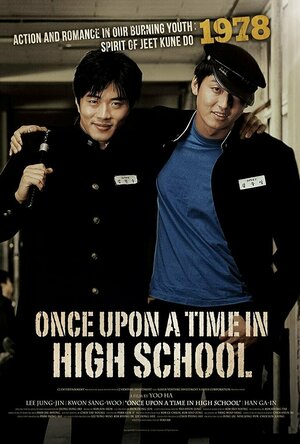
Once Upon a Time in High School: The Spirit of Jeet Kune Do (2004)
Movie
By "Fist of Fury", Kim Hyun-Soo (Sang-Woo Kwone) addicted to Bruce Lee. Year 1978. Hyun-Soo moved to...

Ryan Hill (152 KP) rated Man of Steel (2013) in Movies
May 21, 2019


"It's not an s on my world it means hope"
Superman's origin has been retold in comics more than any other character. But how do you reboot such a beloved icon in film form without making his origin feel unnecessary to go through again. By handing him over to the masters of all reboots. While developing the story for The Dark Knight Rises, Director Christopher Nolan and writer David S. Goyer developed a new way to bring the man of steel to life. The duo previously saved Batman and made him a cinematic legend again and now they plan to save Superman from uneven sequels and a stale image. And who did they invite to lead this revival? None other than director Zack Snyder, a visual wizard with a lackluster reputation in storytelling thanks to his remake of Dawn of the Dead, 300, Watchmen and Sucker Punch. Now despite some filmmaking stumbles along the way, the trio make for a surprisingly great combination and deliver the modern Superman film we have waited 75 years for with Man of Steel. We are given both Superman and a Clark Kent who doesn't know his place in the world and is coming to terms with how the public perceives him.
As with all Superman mythology the story begins on Krypton, the planet that's hundreds of thousands of civilized years ahead of Earth. The whole planet is science fiction nirvana. The zooming spaceships, winged beast and advanced technology crafted from liquid metal. For once we experience the entire planet, not just a couple rooms made out of cheap crystal. There's a system of ways things work that has never been fleshed out on screen before. The government, the science and it's culture. At the head of the planet's scientific research is Jor-El (Russell Crowe) and he has discovered proof that may lead to the planet's destruction. But unfortunately his pleas towards his leaders are ignored due to the ongoing civil war with Jor-El's old friend General Zod (Michael Shannon). There's more history to the Jor-El/ Zod dynamic this time around which just enriches their conflict. There are millions of stories concerning Marlon Brando's $3 million dollar slumming in the '78 film. He intentionally mispronounced Krypton, made outrageous production demands and in the end that put him on the cutting room floor for it's sequel. Crowe see's Brando's paycheck acting and raises it with a performance full of gravitas. When conflicts begin to soften and punishments are served, more and more evidence begin to support Jor-El's claims of Krypton's destruction and with time and options exhausted, his final resort is to save his only son Kal-El. Still an infant, Jor-El concludes the only way his son will ever have any chance of life is to be sent to a more primitive alien planet and have a significant advantage over it's species. So he sends him to Earth, where it's sun will grant his body incredible abilities.
Jump 33 years later as the adult Kal-El, now under the name Clark Kent (Henry Cavil) is wandering the world trying to discover his place in it. There are multiple flashbacks to Clark's childhood with his adoptive parents Jonathan and Martha Kent (Kevin Costner and Diane Lane). Costner gives a heartfelt performance full of warmth as the father concerned with his son's well-being if the world rejects him. If someone with Clark's abilities were to be exposed to the public, it would be one of the biggest moments in human history. His existence alone would make everyone question religion, science and everything they had ever thought about the universe. And Lane strikes quiet, charming notes as the more understanding mother. Throughout his entire life Clark had been using his powers in secret, from saving derrick workers from fires to fighting a massive hurricane in his hometown of Smallville. If there's one word to describe Cavil's performance it's "Modern". He is not the "Aw shucks" farm boy nor is he the angst filled mess many feared he was going to be. There's still a humbleness, a sweetness and a sense of forthrightness to him. And of course he is a perfect physical representation of the character as well. As much as Christopher Reeve's performance still means to audiences today, it has reached a point where it has unfairly overshadowed the character. The idealism of Reeve's Superman isn't relevant today, at least not in the purest sense of the word. Cavil's Superman understands the difficulty of what his powers mean for the world and understands there really isn't anything to smile about.
Of course you can't tell a Superman story without his supporting players at the Daily Planet. Perry White (Laurence Fishburne, in an inspired piece of casting) knows the only way a newspaper could ever have hope at functioning these days is if they had major exclusives to the first alien ever revealed to the masses. Enter Lois Lane (Amy Adams, full of spunk) who has been chasing Clark's story all across the globe for several years. Lois has always been a tricky character to adapt, seeing how it's difficult for audiences to like her if you get it wrong. Can somebody who can't see Superman past a pair of thick glasses really be a Pulitzer Prize winning journalist? Thankfully, this Lois isn't as Shrill as Margot Kidder or as bland as Kate Bosworth in previous versions. Snyder and Adams treat Lois as the talented, dedicated journalist we know she really is by making her active at her profession and not having to prove anything just because she's a woman. The only thing she has to prove are her credentials, which are just as impressive as everything else about her. While some might be disappointed by the lack of romance between the couple, but to be fair, this isn't a Lois and Clark story, it's the story of Clark discovering his place in the world. But the spark between the two of them is certainly present when they first meet. For Clark to go from a lifetime of loneliness to have somebody instantly discover everything about you and admiring all of it is a luxury he has never had before.
Clark couldn't have picked a better time to make his presence known to the world, with General Zod returning to finish what he started. The cinematic Superman villains have created a history of scenery chewing performances dating back to Gene Hackman's Lex Luthor. Terrence Stamp was the first actor to portray Zod on film in Superman ll, but despite some memorable dialogue ("Kneel before Zod!") he was still essentially just a typical mustache twirling maniac. Zod this time around is nothing but bold tactics and is fully fledged to preserving his lost race, no matter what the cost. Michael Shannon is nothing but pure, demented megalomania. The only disadvantage Zod possesses though is that his body isn't used to the yellow son and must try and control all his new powers at once. Clark on the other hand, has had a lifetime to perfect his gifts.
Visual aesthetics have leaped skyscrapers since the Donner era. Snyder takes that technological advantage and gives fans what they have dreamed of for years. To put it bluntly, to see Supes punch somebody- really fucking hard! Snyder understands all of Superman's abilities and test them on the grandest scale imaginable. And he does so without resorting to his trademark slow-mo sequences and putting macho fantasies on display. In terms of action alone this is the first time the character has been given justice. Even as bombastic or repetitive it occasionally becomes, it can easily be forgiven because the character has been so overdue for it. It is unfortunate that cinematographer Amir Morki captures it all in a rather unpolished handheld style. But at least Snyder's chaotic direction finally seems to have a sense of aim and isn't relying on green screen to tell his stories. It may have to do with the influence of Nolan producing, but the end result is gloriously flashy, gritty and contains a well needed sense of gravity. And while Man of Steel never reaches the same dizzying heights as Nolan's Dark Knight trilogy, it still preserves and reintroduces it's legendary character in the same respect.
Snyder, Nolan and Goyer certainly have stayed true to the modern lore of Superman by adapting elements of his classic comic stories Birthright, Man for All Seasons, New Krypton and Earth One, and do so without damaging or over-explaining any of it. But if anything it's a science fiction story first then a comic book adaptation, in the vein of such first contact films as the original Day the Earth Stood Still and War of the Worlds. Man of Steel reminds us that Superman is not human, but still represents the best that humanity has to offer. It's the story of fathers, understanding your roots and taking hold of your destiny. It's always been that way for Superman, ever since he was created by young Jewish immigrants Jerry Siegel and Joe Shuster.
While the original theme music by John Williams is still the granddaddy of all superhero cinematic anthems, Hans Zimmer still creates a thunderous pulse of a score. Atmospheric, gentle and adrenaline charged, Zimmer accompanies Clark's drifting, the concerns of his parents and Superman's clashes with one perfect note after another.
Christopher Reeve for many people is still going to be the definitive Superman, but that's too be expected. For so long that's all we've had to go on as far as a great man of steel. There are multiple generations separating Reeve and Cavil and multiple generations separating their audiences. Will everyone accept Cavil as this modern Superman that understands today's humanity? As with Batman Begins, the conclusion doesn't technically set itself up for a sequel but it establishes an iconic part of it's universe in a nice wink that makes you want to see more of it. It isn't quite perfect, but this universe certainly deserved to grow. Because unlike what occurred in 2006, this time Superman really has returned.
As with all Superman mythology the story begins on Krypton, the planet that's hundreds of thousands of civilized years ahead of Earth. The whole planet is science fiction nirvana. The zooming spaceships, winged beast and advanced technology crafted from liquid metal. For once we experience the entire planet, not just a couple rooms made out of cheap crystal. There's a system of ways things work that has never been fleshed out on screen before. The government, the science and it's culture. At the head of the planet's scientific research is Jor-El (Russell Crowe) and he has discovered proof that may lead to the planet's destruction. But unfortunately his pleas towards his leaders are ignored due to the ongoing civil war with Jor-El's old friend General Zod (Michael Shannon). There's more history to the Jor-El/ Zod dynamic this time around which just enriches their conflict. There are millions of stories concerning Marlon Brando's $3 million dollar slumming in the '78 film. He intentionally mispronounced Krypton, made outrageous production demands and in the end that put him on the cutting room floor for it's sequel. Crowe see's Brando's paycheck acting and raises it with a performance full of gravitas. When conflicts begin to soften and punishments are served, more and more evidence begin to support Jor-El's claims of Krypton's destruction and with time and options exhausted, his final resort is to save his only son Kal-El. Still an infant, Jor-El concludes the only way his son will ever have any chance of life is to be sent to a more primitive alien planet and have a significant advantage over it's species. So he sends him to Earth, where it's sun will grant his body incredible abilities.
Jump 33 years later as the adult Kal-El, now under the name Clark Kent (Henry Cavil) is wandering the world trying to discover his place in it. There are multiple flashbacks to Clark's childhood with his adoptive parents Jonathan and Martha Kent (Kevin Costner and Diane Lane). Costner gives a heartfelt performance full of warmth as the father concerned with his son's well-being if the world rejects him. If someone with Clark's abilities were to be exposed to the public, it would be one of the biggest moments in human history. His existence alone would make everyone question religion, science and everything they had ever thought about the universe. And Lane strikes quiet, charming notes as the more understanding mother. Throughout his entire life Clark had been using his powers in secret, from saving derrick workers from fires to fighting a massive hurricane in his hometown of Smallville. If there's one word to describe Cavil's performance it's "Modern". He is not the "Aw shucks" farm boy nor is he the angst filled mess many feared he was going to be. There's still a humbleness, a sweetness and a sense of forthrightness to him. And of course he is a perfect physical representation of the character as well. As much as Christopher Reeve's performance still means to audiences today, it has reached a point where it has unfairly overshadowed the character. The idealism of Reeve's Superman isn't relevant today, at least not in the purest sense of the word. Cavil's Superman understands the difficulty of what his powers mean for the world and understands there really isn't anything to smile about.
Of course you can't tell a Superman story without his supporting players at the Daily Planet. Perry White (Laurence Fishburne, in an inspired piece of casting) knows the only way a newspaper could ever have hope at functioning these days is if they had major exclusives to the first alien ever revealed to the masses. Enter Lois Lane (Amy Adams, full of spunk) who has been chasing Clark's story all across the globe for several years. Lois has always been a tricky character to adapt, seeing how it's difficult for audiences to like her if you get it wrong. Can somebody who can't see Superman past a pair of thick glasses really be a Pulitzer Prize winning journalist? Thankfully, this Lois isn't as Shrill as Margot Kidder or as bland as Kate Bosworth in previous versions. Snyder and Adams treat Lois as the talented, dedicated journalist we know she really is by making her active at her profession and not having to prove anything just because she's a woman. The only thing she has to prove are her credentials, which are just as impressive as everything else about her. While some might be disappointed by the lack of romance between the couple, but to be fair, this isn't a Lois and Clark story, it's the story of Clark discovering his place in the world. But the spark between the two of them is certainly present when they first meet. For Clark to go from a lifetime of loneliness to have somebody instantly discover everything about you and admiring all of it is a luxury he has never had before.
Clark couldn't have picked a better time to make his presence known to the world, with General Zod returning to finish what he started. The cinematic Superman villains have created a history of scenery chewing performances dating back to Gene Hackman's Lex Luthor. Terrence Stamp was the first actor to portray Zod on film in Superman ll, but despite some memorable dialogue ("Kneel before Zod!") he was still essentially just a typical mustache twirling maniac. Zod this time around is nothing but bold tactics and is fully fledged to preserving his lost race, no matter what the cost. Michael Shannon is nothing but pure, demented megalomania. The only disadvantage Zod possesses though is that his body isn't used to the yellow son and must try and control all his new powers at once. Clark on the other hand, has had a lifetime to perfect his gifts.
Visual aesthetics have leaped skyscrapers since the Donner era. Snyder takes that technological advantage and gives fans what they have dreamed of for years. To put it bluntly, to see Supes punch somebody- really fucking hard! Snyder understands all of Superman's abilities and test them on the grandest scale imaginable. And he does so without resorting to his trademark slow-mo sequences and putting macho fantasies on display. In terms of action alone this is the first time the character has been given justice. Even as bombastic or repetitive it occasionally becomes, it can easily be forgiven because the character has been so overdue for it. It is unfortunate that cinematographer Amir Morki captures it all in a rather unpolished handheld style. But at least Snyder's chaotic direction finally seems to have a sense of aim and isn't relying on green screen to tell his stories. It may have to do with the influence of Nolan producing, but the end result is gloriously flashy, gritty and contains a well needed sense of gravity. And while Man of Steel never reaches the same dizzying heights as Nolan's Dark Knight trilogy, it still preserves and reintroduces it's legendary character in the same respect.
Snyder, Nolan and Goyer certainly have stayed true to the modern lore of Superman by adapting elements of his classic comic stories Birthright, Man for All Seasons, New Krypton and Earth One, and do so without damaging or over-explaining any of it. But if anything it's a science fiction story first then a comic book adaptation, in the vein of such first contact films as the original Day the Earth Stood Still and War of the Worlds. Man of Steel reminds us that Superman is not human, but still represents the best that humanity has to offer. It's the story of fathers, understanding your roots and taking hold of your destiny. It's always been that way for Superman, ever since he was created by young Jewish immigrants Jerry Siegel and Joe Shuster.
While the original theme music by John Williams is still the granddaddy of all superhero cinematic anthems, Hans Zimmer still creates a thunderous pulse of a score. Atmospheric, gentle and adrenaline charged, Zimmer accompanies Clark's drifting, the concerns of his parents and Superman's clashes with one perfect note after another.
Christopher Reeve for many people is still going to be the definitive Superman, but that's too be expected. For so long that's all we've had to go on as far as a great man of steel. There are multiple generations separating Reeve and Cavil and multiple generations separating their audiences. Will everyone accept Cavil as this modern Superman that understands today's humanity? As with Batman Begins, the conclusion doesn't technically set itself up for a sequel but it establishes an iconic part of it's universe in a nice wink that makes you want to see more of it. It isn't quite perfect, but this universe certainly deserved to grow. Because unlike what occurred in 2006, this time Superman really has returned.

Kirk Bage (1775 KP) rated The Mandalorian in TV
Jan 22, 2021 (Updated Jan 22, 2021)
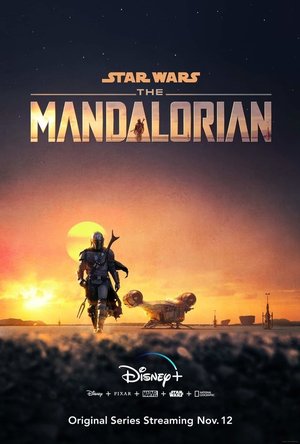

Being a child of Star Wars, born in ’73, whose first memory of a cinema was A New Hope in ’77, of course the entire franchise is still close to my heart. I am no superfan, however. I do not need to remember every name of every character, or know the obscure names of planets to enjoy it. I remember that deeply competitive nature back in the playground – how important it was to prove Star Wars was yours by knowing more than any other kid! Fortunately I managed to let that go shortly after The Return of the Jedi. Ok, maybe 1995.
The Mandalorian is definitely for all Star Wars fans, but it is mostly for the kids that never grew up and need those details of “the canonical Star Wars” universe in their lives. And there are plenty of them. It is a geek’s wet dream! With chat rooms and fan sites going wild in debate and argument over the smallest of Easter eggs and hints to connections across the medium. As if this is a lost historical document that sheds light on the truth of many characters and events, that until now were shrouded in darkness and speculation only.
I find that phenomenon weird and a little creepy, but I do appreciate where it comes from. For me, I am merely glad it isn’t crap. It is nice to be in the Star Wars universe without holding your face in your hands for shame of lazy storytelling and moments that shit on the spirit of the original trilogy. The first thing that pleased me about The Mandolorian is how close it is in feel to the old school trilogy. In fact it surprised me, because, despite the very modern effects and full budget of Disney behind it, it feels very old fashioned, like a TV show from around 1986, maybe. And I wonder how they have achieved that every time I watch it. It has an intangible magic about it.
In fact, the feel of the show as a whole is often a little cheap, shockingly – the posters and toys and all associated media is as glossy and crisp as all money can afford, creating an image of the show that isn’t actually what the show is. In reality it is a cross between old spaghetti westerns, with The Mandalorian cast as The Man With No Name, and episodes of The A-Team or Knightrider. I kinda like it; very nostalgic, and a smart move by Jon Favreau and the other show-runners. It appeals to middle aged audiences and new alike, because it is a knowing hybrid of all things cool and nerdy!
Design-wise, the look of The Mandalorian himself is perfect fan bait and very cool. The music goes a long way to drawing you in – Ludwig Göransson, known for his work on Black Panther and Tenet, has hit on a career defining theme that blends Clint Eastwood and Star Wars in perfect harmony. I can’t imagine the show working half as well without that theme music! The spaceships and detail of every alien and weapon and costume is meticulous (if at times a little wobbly or cheap looking), and the wider feel of background and tertiary characters is pretty damn good.
But, let’s face it… The Mandalorian is the success it has been predominantly for one reason. I could give him his real name, but if you haven’t finished it yet that would count as a huge spoiler, so I will refer to him as The Child. The temptation to use the phrase Baby Yoda is hard to resist, and has been a cultural phenomenon that only comes along once or twice in a decade, but on this I agree with the fans: it is inaccurate and misleading. The Child is fine. It’ll do until you learn his true moniker.
In season one, where the build up of story, character and mystery is superb, we see very little of The Child at first. But we cannot take our eyes off him for every second he is on screen. The whole concept is so beyond cute and incredibly strong as a hook for a Star Wars story it is almost impossible not to squeal out loud at everything he does. Who is he? Why is he? What is he capable of? How will he fit in to the longterm idea for the story? So exciting, and total genius to keep everyone watching.
It isn’t all about The Child on his own though. It is about the unlikely symbiotic bond, like father and son, that develops between the tiny, vulnerable and childlike focal point, and the increasingly confident and loyal antihero, who will stop at nothing to protect his ward, as he struggles to find his own place in the universe. After a very short time, we care more about this relationship than 90% of all romances in all of TV history.
Through danger, mayhem and a touch of comedy, we grow to adore the two of them together, and can’t bear to think of them being apart. Some trick when you realise The Child is as much a mini-muppet style prosthetic as it is added CGI for expression and detail. Perhaps another callback to our 80s sensibilities, when we accepted ETs and Gremlins and all of the residents of Mos Eisley’s cantina as real without hesitation. It doesn’t have to look real, is the point, as long as it fits the story, is cool and is fun! Which The Child totally is – for entertainment value they have got the tone of the show so right.
What doesn’t hold up that strongly to critical scrutiny though is quite a lot of the scripts, the repetitive nature of the context of many episodes and missions the duo find themselves on, the mismatch quality of the guest directors abilities, and quite a lot of the dodgy acting by supporting characters. It’s as if at some production meeting at one early point they all said, look it’s Star Wars, we make the aliens and the spaceships and the weapons look good and we can’t fail… plus we have The Child and Boba Fett’s (yes, I know) armour, we can’t fail!
The basic storyline is enough to hook it on, just about, it is the detail that sometimes feels weak and lazy. But don’t worry, any minute something cool to look at and a big fight will happen, so we’re all good! I’m sure Pedro Pascal (the actor under the armour) can’t believe his luck! He is one of the biggest stars in TV all of a sudden, for basically doing a fairly monotone voice-over performance of some seriously dodgy dialogue. That is the magic of Star Wars.
So, I came to season one late, having no access at that time to Disney plus. In fact, I watched all of season one in a day the day before the launch of season two, so the switch to a new episode to look forward to suited me well. It gave me something to look forward to on a Friday between Halloween and Christmas. Trouble was that, although still having fun with the exploits of The Kid, I was starting to weary of the plotlines, and put my viewing on hold after S2E4 in favour of the far superior scripting of His Dark Materials on BBC.
I must have needed the hiatus, because when I came back to mop it up and finish season two a few days ago I realised that I had in fact missed it. It also helped that episode 5 onwards is when the season gets really good again. Rosario Dawson as Ashoka Tano (known well by fans of The Clone Wars) was a truly great addition that the show much needed by that point.
I had no trouble after that in bingeing to the end. You could feel a climax and a revelation coming, and although the character of Moff Gideon (Giancarlo Esposito) crumbled disappointly away into nothing much, the last 15 minutes of the final episode had me slack jawed in fan wonderment. I felt 9 years old again, and I loved it! I had been amazingly lucky not to stumble upon spoilers, I guess. Amazing ending, and all faults forgiven for that unforgettable moment and feel. Wonderful stuff!
To say any more, again, is to spoil. So, let’s just talk about it privately, or, you know, in about a year when season 3 is over and it is old news. Hmmm, season 3…? I wonder where they will take that now…? Actually, properly exciting, in a back in the playground kind of way.
The Mandalorian is definitely for all Star Wars fans, but it is mostly for the kids that never grew up and need those details of “the canonical Star Wars” universe in their lives. And there are plenty of them. It is a geek’s wet dream! With chat rooms and fan sites going wild in debate and argument over the smallest of Easter eggs and hints to connections across the medium. As if this is a lost historical document that sheds light on the truth of many characters and events, that until now were shrouded in darkness and speculation only.
I find that phenomenon weird and a little creepy, but I do appreciate where it comes from. For me, I am merely glad it isn’t crap. It is nice to be in the Star Wars universe without holding your face in your hands for shame of lazy storytelling and moments that shit on the spirit of the original trilogy. The first thing that pleased me about The Mandolorian is how close it is in feel to the old school trilogy. In fact it surprised me, because, despite the very modern effects and full budget of Disney behind it, it feels very old fashioned, like a TV show from around 1986, maybe. And I wonder how they have achieved that every time I watch it. It has an intangible magic about it.
In fact, the feel of the show as a whole is often a little cheap, shockingly – the posters and toys and all associated media is as glossy and crisp as all money can afford, creating an image of the show that isn’t actually what the show is. In reality it is a cross between old spaghetti westerns, with The Mandalorian cast as The Man With No Name, and episodes of The A-Team or Knightrider. I kinda like it; very nostalgic, and a smart move by Jon Favreau and the other show-runners. It appeals to middle aged audiences and new alike, because it is a knowing hybrid of all things cool and nerdy!
Design-wise, the look of The Mandalorian himself is perfect fan bait and very cool. The music goes a long way to drawing you in – Ludwig Göransson, known for his work on Black Panther and Tenet, has hit on a career defining theme that blends Clint Eastwood and Star Wars in perfect harmony. I can’t imagine the show working half as well without that theme music! The spaceships and detail of every alien and weapon and costume is meticulous (if at times a little wobbly or cheap looking), and the wider feel of background and tertiary characters is pretty damn good.
But, let’s face it… The Mandalorian is the success it has been predominantly for one reason. I could give him his real name, but if you haven’t finished it yet that would count as a huge spoiler, so I will refer to him as The Child. The temptation to use the phrase Baby Yoda is hard to resist, and has been a cultural phenomenon that only comes along once or twice in a decade, but on this I agree with the fans: it is inaccurate and misleading. The Child is fine. It’ll do until you learn his true moniker.
In season one, where the build up of story, character and mystery is superb, we see very little of The Child at first. But we cannot take our eyes off him for every second he is on screen. The whole concept is so beyond cute and incredibly strong as a hook for a Star Wars story it is almost impossible not to squeal out loud at everything he does. Who is he? Why is he? What is he capable of? How will he fit in to the longterm idea for the story? So exciting, and total genius to keep everyone watching.
It isn’t all about The Child on his own though. It is about the unlikely symbiotic bond, like father and son, that develops between the tiny, vulnerable and childlike focal point, and the increasingly confident and loyal antihero, who will stop at nothing to protect his ward, as he struggles to find his own place in the universe. After a very short time, we care more about this relationship than 90% of all romances in all of TV history.
Through danger, mayhem and a touch of comedy, we grow to adore the two of them together, and can’t bear to think of them being apart. Some trick when you realise The Child is as much a mini-muppet style prosthetic as it is added CGI for expression and detail. Perhaps another callback to our 80s sensibilities, when we accepted ETs and Gremlins and all of the residents of Mos Eisley’s cantina as real without hesitation. It doesn’t have to look real, is the point, as long as it fits the story, is cool and is fun! Which The Child totally is – for entertainment value they have got the tone of the show so right.
What doesn’t hold up that strongly to critical scrutiny though is quite a lot of the scripts, the repetitive nature of the context of many episodes and missions the duo find themselves on, the mismatch quality of the guest directors abilities, and quite a lot of the dodgy acting by supporting characters. It’s as if at some production meeting at one early point they all said, look it’s Star Wars, we make the aliens and the spaceships and the weapons look good and we can’t fail… plus we have The Child and Boba Fett’s (yes, I know) armour, we can’t fail!
The basic storyline is enough to hook it on, just about, it is the detail that sometimes feels weak and lazy. But don’t worry, any minute something cool to look at and a big fight will happen, so we’re all good! I’m sure Pedro Pascal (the actor under the armour) can’t believe his luck! He is one of the biggest stars in TV all of a sudden, for basically doing a fairly monotone voice-over performance of some seriously dodgy dialogue. That is the magic of Star Wars.
So, I came to season one late, having no access at that time to Disney plus. In fact, I watched all of season one in a day the day before the launch of season two, so the switch to a new episode to look forward to suited me well. It gave me something to look forward to on a Friday between Halloween and Christmas. Trouble was that, although still having fun with the exploits of The Kid, I was starting to weary of the plotlines, and put my viewing on hold after S2E4 in favour of the far superior scripting of His Dark Materials on BBC.
I must have needed the hiatus, because when I came back to mop it up and finish season two a few days ago I realised that I had in fact missed it. It also helped that episode 5 onwards is when the season gets really good again. Rosario Dawson as Ashoka Tano (known well by fans of The Clone Wars) was a truly great addition that the show much needed by that point.
I had no trouble after that in bingeing to the end. You could feel a climax and a revelation coming, and although the character of Moff Gideon (Giancarlo Esposito) crumbled disappointly away into nothing much, the last 15 minutes of the final episode had me slack jawed in fan wonderment. I felt 9 years old again, and I loved it! I had been amazingly lucky not to stumble upon spoilers, I guess. Amazing ending, and all faults forgiven for that unforgettable moment and feel. Wonderful stuff!
To say any more, again, is to spoil. So, let’s just talk about it privately, or, you know, in about a year when season 3 is over and it is old news. Hmmm, season 3…? I wonder where they will take that now…? Actually, properly exciting, in a back in the playground kind of way.
Rob P (30 KP) rated Avengers: Endgame (2019) in Movies
May 6, 2019
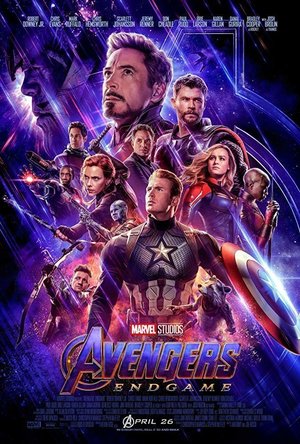

Sheer scope and spectacle (2 more)
satisfying conclusion to the Infinity/Avengers saga
Pretty much a 90 minute end battle scene
Unfair arc for some characters (1 more)
The end of an era! #cry
Love you 3000 - *Seriously - S P O I L E R S*
Contains spoilers, click to show
Well, what a long, strange, amazing trip it's been.
Assuming that everyone who sees this film is invested in the MCU, this doesn't disappoint. Although I'm a fan of the comics, you can't really compare the comic universe to the cinematic universe in terms of plot, it stands alone with its own intricacies, strengths and weaknesses.
I don't have a lot of negative things to say about this one, it's an involving, dramatic, action packed and beautiful piece of work from the Russo brothers, but I'll start with the one or two gripes I had.
From the start, they went with an odd route, one that I wasn't expecting . *SPOILERS* - Thanos as we know him, dies in the first 15 minutes of the film. Honestly was not expecting that. Robbed the satisfaction of build up for me, but ultimately the build up starts again, as the Avengers then go about stopping an alternate timeline Thanos from BEFORE the events of Guardians of the Galaxy by going to retrieve the infinity stones from different points in time (and the MCU movies), before Thanos finds them, so all is not lost on that front, there's still a Thanos to face.
One gripe was the arc of one particular character - our big green rage machine. After the events of infinity war, you'll remember, Hulk was left somewhat lacking, after getting his arse handed to him by Thanos and then refusing to come out for the rest of the film. I felt there was atonement due for him. Here we see Banner has now found catharsis with the Hulk, by staying in Hulk form with his own personality in the five years since the snap. That's all well and good, but after the death of a certain other member of the Avengers after retrieving the Soulstone, I thought - right. Now Hulk will smash. Now we have to see him go ham on someone. Nothing. Not even an action shot of Hulk fighting in the entire last battle scene, which only would have taken 20 seconds out of an entire 90 minute battle. I would have liked to have seen Hulk Vs Thanos, even if for a brief moment, whether Banner came out on top or not. Banner actually using his own anger, which by his own admission in Avengers Assemble, he has. All the time. It felt an unfair way to end one of the major characters stories, for seemingly what would have taken so little to make. it's not like they lacked the CGI budget, after all. Instead, Scarlet Witch gets a showdown with Thanos, and she's not even a particularly major player within the Avengers team, again don't get me wrong, after Vision she deserves a shot. But Hulk more so... It seemed silly to me.
The other negative for me, was Thor. Another slightly disappointing arc for the god of thunder. I felt he was robbed of all the awesomeness Taika rejuvenated him with from Ragnarok, which then continued into Infinity War. They turned him into God of amazing lightning and patron saint of badassery, with a new axe that just gives him a look as cool as they other side of the pillow. Now, the Russo's have had him drink himself to death, making him bloated and filled with sadness and regret. Don't get me wrong. Thor has more reason than most to be that way, he's lost everything over his story arc. I think that by letting him kill Thanos at the beginning, they robbed him of his real purpose, which is to be the strongest of the avengers (arguably) and just be the badass we all know he is. The one positive thing about this, is Thor's new aesthetic actually makes him look like a viking, which was amazing. Braided beard, heavy set, long hair. Great stuff, made him feel much more realistic in that sense, just again I think it was a bit of an unfair arc for him. Although, as he's now set to join GOTG, there's plenty of time to atone.
That's my two cents on the negs of this one. Now for positives:
My god, the scope and sheer spectacle of the MCU films rarely disappoint, this is no exception. just some absolutely jaw dropping sequences, especially when you have the big three (Stark, Cap and Thor) trying to stop Thanos before the major battle scene. It's stuff to make you weep tears of pure joy.
Following on from that, the moment where it's confirmed the snap has been reversed and the portals open up, the armies of Wakanda come out chanting along with just EVERYBODY, and that Avengers music starts up... goosebumps just thinking about it.
The involvement and rounding of previous MCU films in the first half of the movie is intense and satisfying, as the group split up into different places in time to retrieve the stones. Lots of nods to different franchises, nice bit of exposition, and certain parts in particular are just happy, like seeing Tony talking to his father back in the 70's without him realising who he is. Wonderful Stuff.
We all knew there would be deaths, I felt that these were handled gracefully and tactfully, giving the best service for the characters and fans. At the same time, they were not predictable, which i felt was definitely important.
As a last word, anyone who's ever watched a marvel film or had interest in the comics needs to see this. There is a list published of the films you need to see beforehand to fully appreciate the time travel segments, but it's not absolutely necessary. It just helps you appreciate the thought that has gone into rounding off the biggest cinematic series in history, all the in jokes and nuances that the Russo's included to really make this serviceable to the fans.
The end of an era, and as a crescendo to the the symphony started by the rest of MCU, it's just plain beautiful.
Love you 3000, folks.
- Rob
Assuming that everyone who sees this film is invested in the MCU, this doesn't disappoint. Although I'm a fan of the comics, you can't really compare the comic universe to the cinematic universe in terms of plot, it stands alone with its own intricacies, strengths and weaknesses.
I don't have a lot of negative things to say about this one, it's an involving, dramatic, action packed and beautiful piece of work from the Russo brothers, but I'll start with the one or two gripes I had.
From the start, they went with an odd route, one that I wasn't expecting . *SPOILERS* - Thanos as we know him, dies in the first 15 minutes of the film. Honestly was not expecting that. Robbed the satisfaction of build up for me, but ultimately the build up starts again, as the Avengers then go about stopping an alternate timeline Thanos from BEFORE the events of Guardians of the Galaxy by going to retrieve the infinity stones from different points in time (and the MCU movies), before Thanos finds them, so all is not lost on that front, there's still a Thanos to face.
One gripe was the arc of one particular character - our big green rage machine. After the events of infinity war, you'll remember, Hulk was left somewhat lacking, after getting his arse handed to him by Thanos and then refusing to come out for the rest of the film. I felt there was atonement due for him. Here we see Banner has now found catharsis with the Hulk, by staying in Hulk form with his own personality in the five years since the snap. That's all well and good, but after the death of a certain other member of the Avengers after retrieving the Soulstone, I thought - right. Now Hulk will smash. Now we have to see him go ham on someone. Nothing. Not even an action shot of Hulk fighting in the entire last battle scene, which only would have taken 20 seconds out of an entire 90 minute battle. I would have liked to have seen Hulk Vs Thanos, even if for a brief moment, whether Banner came out on top or not. Banner actually using his own anger, which by his own admission in Avengers Assemble, he has. All the time. It felt an unfair way to end one of the major characters stories, for seemingly what would have taken so little to make. it's not like they lacked the CGI budget, after all. Instead, Scarlet Witch gets a showdown with Thanos, and she's not even a particularly major player within the Avengers team, again don't get me wrong, after Vision she deserves a shot. But Hulk more so... It seemed silly to me.
The other negative for me, was Thor. Another slightly disappointing arc for the god of thunder. I felt he was robbed of all the awesomeness Taika rejuvenated him with from Ragnarok, which then continued into Infinity War. They turned him into God of amazing lightning and patron saint of badassery, with a new axe that just gives him a look as cool as they other side of the pillow. Now, the Russo's have had him drink himself to death, making him bloated and filled with sadness and regret. Don't get me wrong. Thor has more reason than most to be that way, he's lost everything over his story arc. I think that by letting him kill Thanos at the beginning, they robbed him of his real purpose, which is to be the strongest of the avengers (arguably) and just be the badass we all know he is. The one positive thing about this, is Thor's new aesthetic actually makes him look like a viking, which was amazing. Braided beard, heavy set, long hair. Great stuff, made him feel much more realistic in that sense, just again I think it was a bit of an unfair arc for him. Although, as he's now set to join GOTG, there's plenty of time to atone.
That's my two cents on the negs of this one. Now for positives:
My god, the scope and sheer spectacle of the MCU films rarely disappoint, this is no exception. just some absolutely jaw dropping sequences, especially when you have the big three (Stark, Cap and Thor) trying to stop Thanos before the major battle scene. It's stuff to make you weep tears of pure joy.
Following on from that, the moment where it's confirmed the snap has been reversed and the portals open up, the armies of Wakanda come out chanting along with just EVERYBODY, and that Avengers music starts up... goosebumps just thinking about it.
The involvement and rounding of previous MCU films in the first half of the movie is intense and satisfying, as the group split up into different places in time to retrieve the stones. Lots of nods to different franchises, nice bit of exposition, and certain parts in particular are just happy, like seeing Tony talking to his father back in the 70's without him realising who he is. Wonderful Stuff.
We all knew there would be deaths, I felt that these were handled gracefully and tactfully, giving the best service for the characters and fans. At the same time, they were not predictable, which i felt was definitely important.
As a last word, anyone who's ever watched a marvel film or had interest in the comics needs to see this. There is a list published of the films you need to see beforehand to fully appreciate the time travel segments, but it's not absolutely necessary. It just helps you appreciate the thought that has gone into rounding off the biggest cinematic series in history, all the in jokes and nuances that the Russo's included to really make this serviceable to the fans.
The end of an era, and as a crescendo to the the symphony started by the rest of MCU, it's just plain beautiful.
Love you 3000, folks.
- Rob

Gareth von Kallenbach (980 KP) rated Climax (2018) in Movies
Jul 2, 2019
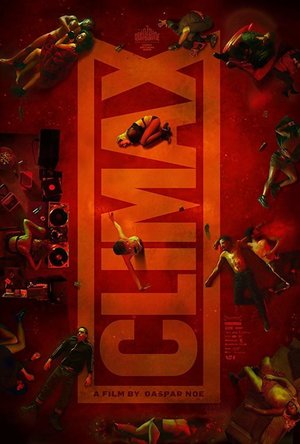
If you’re going to see this film, it likely won’t be a huge surprise to you. Those that will buy a ticket already know who Gaspar Noé is and what he’s all about. Films like Irreversible and Enter the Void have defined him as an artist of scandal, evil and the extreme. Climax follows directly in the footsteps of those films, but at this point it does leave us wondering if there’s any room for growth in this writer/director or if we’ll just continue to get more of the same until we’re sufficiently numb to his offerings.
The setting for Noé’s latest tour of human horrors is the final rehearsal of a French dance troupe set to tour internationally. The film begins with the final scene of the movie and the ending credits. Then, just as your confusion has built to appropriate levels, things actually begin with videotaped interviews of all 22 members in an attempt to give you some semblance of character introduction. Shown on an older TV, the screen is surrounded by books and plays focused on ultra-negative philosophical views and subjects such as schizophrenia and suicide. So, despite the rather upbeat and optimistic responses of the prospective dancers, the tone is already being set for the madness that is about to commence.
From there we are taken to the big dance number. A ten-minute single shot involving the entire cast choreographed to 90’s EDM music. While this scene felt a little bit long, it did nearly as much to introduce the characters as the audition tapes shown earlier. Each dancer has a unique style and flair that executes a certain character development. Once the dance is complete it feels like the movie finally begins and the cast starts their post-rehearsal party. The soiree involves dancing (of course), drinking (homemade sangria) and some minor cocaine use. But it mostly consists of quick shots between different cast members taking part in some intergroup gossip. We are treated to one more (non-choreographed) dance scene with each individual showing their talents in a circle of their comrades, then we break again for more conversation. As the party continues on everyone starts to feel a little bit funny. They quickly deduce that the sangria has been spiked with LSD, but cannot determine who drugged them.
And this is where the hour-long journey into hell embarks from. The realization that they have been drugged seems to worry them very little, but does instantly turn them all against each other. The effects of the LSD ramp up rather quickly and as the cast members descend into madness the audience is treated to a myriad of trauma and depravity including: rape, incest, self-mutilation, child electrocution and an attempted abortion via a swift kick to the stomach. None of this should be any surprise to someone familiar with Noé’s work. But if this is your first experience with his particular brand of filmmaking, then be prepared to leave no perverted stone unturned.
One of the most impressive things about this film is how little preparation actually went into it. The entire film was shot in 15 days and edited to completion in only 3 months after that in order to meet the Cannes festival deadline. In addition, it was shot with a mere 5 pages of script. The majority of the film consists of both dancing and psychotic undulations inspired by web videos of people high on crack, ecstasy and acid which were hand-selected by Noé. So, despite the assumed need for structure that comes with extended tracking shots such as these, the whole movie is (surprisingly) mostly ad-libbed. Only the opening dance scene is choreographed with all of the remaining ones being the result of the how the dancers chose to express themselves through dance.
In the end you’ll be left wondering if all of the shock and awe that’s been served to you actually meant something, or if it was simply sensory overload for the sake of itself. And that’s where the movie really falls short. If Noé had meant for any sort of deeper meaning in this film, it was ultimately lost to extreme subtlety. I did my best to find the clever allegory here (French history and culture, biblical stories, etc.) and I admittedly fell short. “Birth is a unique opportunity. Life is an impossible collective. Death is an extraordinary experience,” read three title cards which flash throughout the journey of Climax. Although these sayings are poetic and beautiful, they seem to have little or loose application to the actual storyline.
The strongest feelings in this film are not evoked from any sort of meaning or fable-style lesson. They come from the distress and disgust brought about by the actions of the characters and, more so, the beautifully executed cinematography. Every filming technique meant to cause discomfort is present here including: long tracking shots, inverted imagery, black screen with nonlinear sounds and subliminal images. The application and combination of all of these effects means that much credit for this film should most likely go to Noé’s DP, Benoit Debie.
Fundamentally, the judgement for a Gaspar Noé film exists on a different scale than any other film. And while that concept can be new and exciting when the first shocking film debuts, you quickly realize that subsequent ones have to continue to push the boundaries that were originally broken. Otherwise you run the risk of becoming stale. We may have gotten to that point now with Noé. Climax brings very little new shock to the table for a director who has developed his reputation as a purveyor of wickedness. Those who attend this movie will be looking for him to push their horror to new levels, but will likely end up unfulfilled. Although the lack of a new frontier doesn’t remove all of the value for the film, Noé has made implicit promises through his other work which he has failed to deliver upon with Climax.
The setting for Noé’s latest tour of human horrors is the final rehearsal of a French dance troupe set to tour internationally. The film begins with the final scene of the movie and the ending credits. Then, just as your confusion has built to appropriate levels, things actually begin with videotaped interviews of all 22 members in an attempt to give you some semblance of character introduction. Shown on an older TV, the screen is surrounded by books and plays focused on ultra-negative philosophical views and subjects such as schizophrenia and suicide. So, despite the rather upbeat and optimistic responses of the prospective dancers, the tone is already being set for the madness that is about to commence.
From there we are taken to the big dance number. A ten-minute single shot involving the entire cast choreographed to 90’s EDM music. While this scene felt a little bit long, it did nearly as much to introduce the characters as the audition tapes shown earlier. Each dancer has a unique style and flair that executes a certain character development. Once the dance is complete it feels like the movie finally begins and the cast starts their post-rehearsal party. The soiree involves dancing (of course), drinking (homemade sangria) and some minor cocaine use. But it mostly consists of quick shots between different cast members taking part in some intergroup gossip. We are treated to one more (non-choreographed) dance scene with each individual showing their talents in a circle of their comrades, then we break again for more conversation. As the party continues on everyone starts to feel a little bit funny. They quickly deduce that the sangria has been spiked with LSD, but cannot determine who drugged them.
And this is where the hour-long journey into hell embarks from. The realization that they have been drugged seems to worry them very little, but does instantly turn them all against each other. The effects of the LSD ramp up rather quickly and as the cast members descend into madness the audience is treated to a myriad of trauma and depravity including: rape, incest, self-mutilation, child electrocution and an attempted abortion via a swift kick to the stomach. None of this should be any surprise to someone familiar with Noé’s work. But if this is your first experience with his particular brand of filmmaking, then be prepared to leave no perverted stone unturned.
One of the most impressive things about this film is how little preparation actually went into it. The entire film was shot in 15 days and edited to completion in only 3 months after that in order to meet the Cannes festival deadline. In addition, it was shot with a mere 5 pages of script. The majority of the film consists of both dancing and psychotic undulations inspired by web videos of people high on crack, ecstasy and acid which were hand-selected by Noé. So, despite the assumed need for structure that comes with extended tracking shots such as these, the whole movie is (surprisingly) mostly ad-libbed. Only the opening dance scene is choreographed with all of the remaining ones being the result of the how the dancers chose to express themselves through dance.
In the end you’ll be left wondering if all of the shock and awe that’s been served to you actually meant something, or if it was simply sensory overload for the sake of itself. And that’s where the movie really falls short. If Noé had meant for any sort of deeper meaning in this film, it was ultimately lost to extreme subtlety. I did my best to find the clever allegory here (French history and culture, biblical stories, etc.) and I admittedly fell short. “Birth is a unique opportunity. Life is an impossible collective. Death is an extraordinary experience,” read three title cards which flash throughout the journey of Climax. Although these sayings are poetic and beautiful, they seem to have little or loose application to the actual storyline.
The strongest feelings in this film are not evoked from any sort of meaning or fable-style lesson. They come from the distress and disgust brought about by the actions of the characters and, more so, the beautifully executed cinematography. Every filming technique meant to cause discomfort is present here including: long tracking shots, inverted imagery, black screen with nonlinear sounds and subliminal images. The application and combination of all of these effects means that much credit for this film should most likely go to Noé’s DP, Benoit Debie.
Fundamentally, the judgement for a Gaspar Noé film exists on a different scale than any other film. And while that concept can be new and exciting when the first shocking film debuts, you quickly realize that subsequent ones have to continue to push the boundaries that were originally broken. Otherwise you run the risk of becoming stale. We may have gotten to that point now with Noé. Climax brings very little new shock to the table for a director who has developed his reputation as a purveyor of wickedness. Those who attend this movie will be looking for him to push their horror to new levels, but will likely end up unfulfilled. Although the lack of a new frontier doesn’t remove all of the value for the film, Noé has made implicit promises through his other work which he has failed to deliver upon with Climax.
Kirk Bage (1775 KP) rated Roma (2018) in Movies
Mar 2, 2020 (Updated Mar 3, 2020)
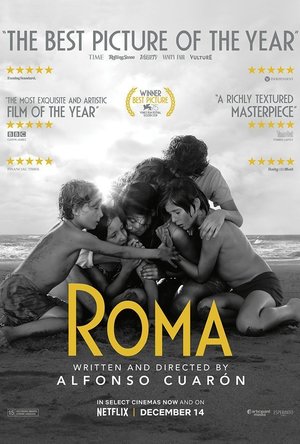
I watched Roma exactly a week ago today. And although I knew 20 minutes in that I loved it, and at the end that I really loved it, I have taken that time to let it settle within me in before coming to write about it. Some films are so good that you have to do that: let it sink into you fully, before doing anything so trivial as judging and comparing them. Roma is incomparable! I have never seen anything like it, or felt as deeply moved by a film in a long time.
Not that it didn’t get attention at the time of its release, it did, receiving 10 Oscar nominations and winning 3, for best foreign language film, director and cinematography, but it certainly wasn’t seen by as many people as it should have been, despite its presence on Netflix from the start. Having digested it now, and spending some time reading about how and why it was made, I feel a slight mission to recommend it to as many people as I can.
Based on Alfonso Cuarón’s own childhood in Mexico City, and his memories of his family and especially their housemaid, Liboria (Libo) Rodriguez, to whom the film is dedicated, it is a masterpiece labour of love that few directors ever achieve or even attempt to make. After a strong career of exceptional films, including Y Tu Mamá También, Children of Men and Gravity, it was the box office and critical success of the latter that gave Cuarón carte blanche to go and make whatever project he chose. Where many might have been tempted by the big money of superhero or fantasy movies (for which he had some experience with Harry Potter and the Prisoner of Azkaban) he went back to his roots and shot a very personal non-English film, in black and white, where no music exists except that which occurs naturally, and on the surface not much happens.
At least it feels like not much is happening, such is the naturalistic, almost improvised (although it wasn’t) style and pace; shot with a lens capturing detail and nuance with some of the most beautiful photography I have ever had the privilege to see. Truly, an awful lot is happening, but you have to feel and experience it, not simply be told it by the narrative. It takes a while for our Hollywood conditioned brains to accept this at first, and many might come to it and give up half an hour in because of that challenge. I can promise, however, there is not a single thing boring about this film, unless humanity is boring.
Oscar nominated lead Yalitza Aparicio as the shy, loving maid, Cleo, was not an actor before this film. She auditioned and was hand picked by Cuarón from hundreds of young women, without knowing who he was or what the film was about. Apparently, the film was shot in sequence so as not to confuse her emotionally on her extraordinary journey. She is so unassuming and natural that part of you falls in love with her immediately. In time, we almost come to forget we are watching an act at all, and almost become her, such is the empathy she evokes.
Which isn’t an easy ride, as we watch her be gently and then cruelly ignored, mistreated and used; climaxing in one of the most astonishingly painful and jaw-dropping scenes imaginable, and then a scene of such powerful redemption and humanity it instantly breaks the heart and lifts the soul. All the while she never asks for attention or love, but is just herself: a young woman living a difficult but beautiful life in a country and time full of turmoil, prejudice and social change.
The recreation of Mexico in 1970 is so breathtaking, it is hard to imagine at times we are not watching a documentary from that era. But, it is the detail the lens chooses to capture that reminds you this is a visual poem and a love-letter to a time, a place and a family far away in history and the memory of one man (represented by ten year old Carlos Peralta as Paco). At times it evokes the work of the very greatest film artists of all time: Bergman, Fellini, Hitchcock etc. Not one image is wasted or insignificant, from the reflection of the sky in water, to the dog-shit constantly lining the driveway. Everything is chosen and meaningful in the full context of the work.
There is no awkward exposition, no dramatic moments milked for all they are worth, no sequences of heightened excitement that manipulate us; simply truthful moments that hang in the air for what they are, leaving us to decide how we relate to them without ever preaching or teaching us how. In that way, it is a work of such maturity that I doubt many living directors could emulate it at all. The closest comparison I can think of is the personal passion Spielberg put into Shindler’s List, but really it is a moot comparison, and in fact owes much more to films like Haneke’s The White Ribbon.
Can it be faulted? Well, yes, certainly. But, honestly, I don’t see the point in trying. It is as close to perfection a small story of this kind can be. Importantly, I think it is an open film, that allows us to take from it whatever we like, relating to our own experiences and cares. For me, it said that any pain and hardship can be overcome, as long as there is love and beauty walking by its side. A message of no small importance. If you haven’t seen it, I urge you to do so. If you have, then please keep spreading the word. I believe it to be a genuine classic that will endure the criticism of many decades to come. Without a doubt in my mind something very special indeed.
Not that it didn’t get attention at the time of its release, it did, receiving 10 Oscar nominations and winning 3, for best foreign language film, director and cinematography, but it certainly wasn’t seen by as many people as it should have been, despite its presence on Netflix from the start. Having digested it now, and spending some time reading about how and why it was made, I feel a slight mission to recommend it to as many people as I can.
Based on Alfonso Cuarón’s own childhood in Mexico City, and his memories of his family and especially their housemaid, Liboria (Libo) Rodriguez, to whom the film is dedicated, it is a masterpiece labour of love that few directors ever achieve or even attempt to make. After a strong career of exceptional films, including Y Tu Mamá También, Children of Men and Gravity, it was the box office and critical success of the latter that gave Cuarón carte blanche to go and make whatever project he chose. Where many might have been tempted by the big money of superhero or fantasy movies (for which he had some experience with Harry Potter and the Prisoner of Azkaban) he went back to his roots and shot a very personal non-English film, in black and white, where no music exists except that which occurs naturally, and on the surface not much happens.
At least it feels like not much is happening, such is the naturalistic, almost improvised (although it wasn’t) style and pace; shot with a lens capturing detail and nuance with some of the most beautiful photography I have ever had the privilege to see. Truly, an awful lot is happening, but you have to feel and experience it, not simply be told it by the narrative. It takes a while for our Hollywood conditioned brains to accept this at first, and many might come to it and give up half an hour in because of that challenge. I can promise, however, there is not a single thing boring about this film, unless humanity is boring.
Oscar nominated lead Yalitza Aparicio as the shy, loving maid, Cleo, was not an actor before this film. She auditioned and was hand picked by Cuarón from hundreds of young women, without knowing who he was or what the film was about. Apparently, the film was shot in sequence so as not to confuse her emotionally on her extraordinary journey. She is so unassuming and natural that part of you falls in love with her immediately. In time, we almost come to forget we are watching an act at all, and almost become her, such is the empathy she evokes.
Which isn’t an easy ride, as we watch her be gently and then cruelly ignored, mistreated and used; climaxing in one of the most astonishingly painful and jaw-dropping scenes imaginable, and then a scene of such powerful redemption and humanity it instantly breaks the heart and lifts the soul. All the while she never asks for attention or love, but is just herself: a young woman living a difficult but beautiful life in a country and time full of turmoil, prejudice and social change.
The recreation of Mexico in 1970 is so breathtaking, it is hard to imagine at times we are not watching a documentary from that era. But, it is the detail the lens chooses to capture that reminds you this is a visual poem and a love-letter to a time, a place and a family far away in history and the memory of one man (represented by ten year old Carlos Peralta as Paco). At times it evokes the work of the very greatest film artists of all time: Bergman, Fellini, Hitchcock etc. Not one image is wasted or insignificant, from the reflection of the sky in water, to the dog-shit constantly lining the driveway. Everything is chosen and meaningful in the full context of the work.
There is no awkward exposition, no dramatic moments milked for all they are worth, no sequences of heightened excitement that manipulate us; simply truthful moments that hang in the air for what they are, leaving us to decide how we relate to them without ever preaching or teaching us how. In that way, it is a work of such maturity that I doubt many living directors could emulate it at all. The closest comparison I can think of is the personal passion Spielberg put into Shindler’s List, but really it is a moot comparison, and in fact owes much more to films like Haneke’s The White Ribbon.
Can it be faulted? Well, yes, certainly. But, honestly, I don’t see the point in trying. It is as close to perfection a small story of this kind can be. Importantly, I think it is an open film, that allows us to take from it whatever we like, relating to our own experiences and cares. For me, it said that any pain and hardship can be overcome, as long as there is love and beauty walking by its side. A message of no small importance. If you haven’t seen it, I urge you to do so. If you have, then please keep spreading the word. I believe it to be a genuine classic that will endure the criticism of many decades to come. Without a doubt in my mind something very special indeed.

Gareth von Kallenbach (980 KP) rated Les Misérables (2012) in Movies
Aug 7, 2019
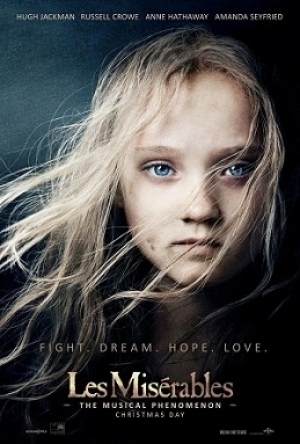
Words cannot express how amazing this movie is. For those of you who have shouldered through the modern-day musical revival; suffering through the questionable singing talents of many stars as “Phantom of the Opera,” “Chicago,” “Moulin Rouge,” “Sweeny Todd,” and that abysmal rendition of “Nine” – I can assure you, that “Les Mis” will change that perception. For once, the casting crew took the time to select a cast capable of the repertoire’s vocal demands (and Les Mis is very vocally demanding – as most operatic pieces are). It’s apparent that each singer was heavily vocally coached and trained, some faring more so than others. While this is no replacement for raw talent, I can assure you that the cast was downright fantastic.
For years I studied and sang opera. I know music and I’ve sung my fair share of Les Mis pieces in my past. I adore Victor Hugo and “Les Misérables” is by far one of my favorite literary works. When I began to watch this movie, I was keyed up to be critical on the vocal spectrum, the literary aspect, and the representation of one of my favorite Broadway/London pieces. To be frank, I wasn’t disappointed at all.
For those unfamiliar with Hugo’s work or what to expect with Les Mis, let me give you a brief synopsis on its plot and the history of the French revolution in which this takes place. France has just endured her infamous Revolution (the one with the guillotine, Marie-Antoinette, and the Sans Culottes movement) and her people are still suffering. There is no money for food, the country is in the midst of a depression, and the Napoleonic regime is yet to come to fruition. Thus, you find Fantine (Hathaway), a poor but determined (and beautiful) woman trying desperately to make enough money to support her daughter, Cosette, who resides with friends in another city. The book reveals that Madame Thénardier (Bonham-Carter) and her husband, Thénardier (Baron-Cohen) were supposed to be taking the money that Fantine had given to them to provide for her daughter, Cosette. Instead, however, Cosette is forced to live in absolute poverty while Thénardier’s daughter, Eponine, lives the life of opulence. Meanwhile, Jean Valjean (Jackman), an ex-convict, is trying desperately to find legitimate work after his stint in prison for stealing a loaf of bread to provide for his starving family. The infamous policeman, Javert (Crowe), feels Valjean will re-offend and makes it his mission to pursue Valjean until the end.
Finding the world a terrible place as an ex-convict, Valjean seeks to steal from a church her silver, believing he has no other way to survive. It is the love of a good priest, however, who gives Valjean the silver he seeks under the pledge he will become a servant of God and provide for others the same good he has provided for him. Thus, years later, we find Valjean a reformed man (who has skipped on his parole and assumed a new name), running a factory in which Fantine works. And so, when Fantine is fired from her job and takes to a life of prostitution in order to provide for her daughter, it is Valjean who feels the burden of her demise and takes it upon himself to save Cosette and raise her as his own.
Of course, this entire time, Javert is pursuing Valjean and a new revolution is starting to take place amongst Paris’ people. Years later we find Cosette grown to womanhood (now played by Seyfried), and falling in love with one of the revolution’s key players, a youth by the name of Marius (Redmayne). The Thénardiers are back again and we find their once-grand lifestyle has resorted to a life of gutter-crime and Éponine (now played by Barks), is desperately in love with Marius as well (although her love is unrequited). For those unfamiliar with how the story plays out, I will leave it at that.
I will caution those who have never seen this play to prepare for a long show. It is very dramatic and very intense, but visually breath-taking and emotionally moving in so many ways. Vocally, there are times when the legato is lacking and some transitions seemed forced (Crowe struggled many times with allowing his natural vibrato to come through instead of pushing a sustained note; Seyfried’s vibrato is very trill-like and sometimes distracts from the pure quality of her spinto-soprano range). However, I must say that I was blown away by Hathway’s performance (she brought me to tears with “I Dreamed a Dream” due to her emotional rendition) and her ability to truly escape into her character. Similarly, Tviet (he played Enjolras) was stunning with his vocal command and Redmayne was equally as impressive. Jackman will amaze you with his rich tenor and, surprisingly, I found Crowe to have a fantastic baritone when he didn’t force his work. Baron-Cohen and Bonham-Carter provided a much needed comical respite throughout the film (and both sing beautifully as well, although this movie didn’t focus on their vocal command as much). Barks did a lovely job for most of her work; although I found her rendition of “On My Own” a bit forced (she is a true mezzo but seemed to push her high notes, although this may have been where her voice shifted into her head voice which is no fault of her own).
Overall, if you are an avid musical lover and have been waiting for a proper rendition of this production, this movie will astound you. Visually, the movie is breath-taking and the acting is absolutely fantastic. I’m still haunted by the revolutionary song, to be honest. If you’ve been waiting for a musical worthy of the big screen, this one is it. Look for it to sweep the Oscars this year.
This movie deserves an A all around.
For years I studied and sang opera. I know music and I’ve sung my fair share of Les Mis pieces in my past. I adore Victor Hugo and “Les Misérables” is by far one of my favorite literary works. When I began to watch this movie, I was keyed up to be critical on the vocal spectrum, the literary aspect, and the representation of one of my favorite Broadway/London pieces. To be frank, I wasn’t disappointed at all.
For those unfamiliar with Hugo’s work or what to expect with Les Mis, let me give you a brief synopsis on its plot and the history of the French revolution in which this takes place. France has just endured her infamous Revolution (the one with the guillotine, Marie-Antoinette, and the Sans Culottes movement) and her people are still suffering. There is no money for food, the country is in the midst of a depression, and the Napoleonic regime is yet to come to fruition. Thus, you find Fantine (Hathaway), a poor but determined (and beautiful) woman trying desperately to make enough money to support her daughter, Cosette, who resides with friends in another city. The book reveals that Madame Thénardier (Bonham-Carter) and her husband, Thénardier (Baron-Cohen) were supposed to be taking the money that Fantine had given to them to provide for her daughter, Cosette. Instead, however, Cosette is forced to live in absolute poverty while Thénardier’s daughter, Eponine, lives the life of opulence. Meanwhile, Jean Valjean (Jackman), an ex-convict, is trying desperately to find legitimate work after his stint in prison for stealing a loaf of bread to provide for his starving family. The infamous policeman, Javert (Crowe), feels Valjean will re-offend and makes it his mission to pursue Valjean until the end.
Finding the world a terrible place as an ex-convict, Valjean seeks to steal from a church her silver, believing he has no other way to survive. It is the love of a good priest, however, who gives Valjean the silver he seeks under the pledge he will become a servant of God and provide for others the same good he has provided for him. Thus, years later, we find Valjean a reformed man (who has skipped on his parole and assumed a new name), running a factory in which Fantine works. And so, when Fantine is fired from her job and takes to a life of prostitution in order to provide for her daughter, it is Valjean who feels the burden of her demise and takes it upon himself to save Cosette and raise her as his own.
Of course, this entire time, Javert is pursuing Valjean and a new revolution is starting to take place amongst Paris’ people. Years later we find Cosette grown to womanhood (now played by Seyfried), and falling in love with one of the revolution’s key players, a youth by the name of Marius (Redmayne). The Thénardiers are back again and we find their once-grand lifestyle has resorted to a life of gutter-crime and Éponine (now played by Barks), is desperately in love with Marius as well (although her love is unrequited). For those unfamiliar with how the story plays out, I will leave it at that.
I will caution those who have never seen this play to prepare for a long show. It is very dramatic and very intense, but visually breath-taking and emotionally moving in so many ways. Vocally, there are times when the legato is lacking and some transitions seemed forced (Crowe struggled many times with allowing his natural vibrato to come through instead of pushing a sustained note; Seyfried’s vibrato is very trill-like and sometimes distracts from the pure quality of her spinto-soprano range). However, I must say that I was blown away by Hathway’s performance (she brought me to tears with “I Dreamed a Dream” due to her emotional rendition) and her ability to truly escape into her character. Similarly, Tviet (he played Enjolras) was stunning with his vocal command and Redmayne was equally as impressive. Jackman will amaze you with his rich tenor and, surprisingly, I found Crowe to have a fantastic baritone when he didn’t force his work. Baron-Cohen and Bonham-Carter provided a much needed comical respite throughout the film (and both sing beautifully as well, although this movie didn’t focus on their vocal command as much). Barks did a lovely job for most of her work; although I found her rendition of “On My Own” a bit forced (she is a true mezzo but seemed to push her high notes, although this may have been where her voice shifted into her head voice which is no fault of her own).
Overall, if you are an avid musical lover and have been waiting for a proper rendition of this production, this movie will astound you. Visually, the movie is breath-taking and the acting is absolutely fantastic. I’m still haunted by the revolutionary song, to be honest. If you’ve been waiting for a musical worthy of the big screen, this one is it. Look for it to sweep the Oscars this year.
This movie deserves an A all around.

Emma @ The Movies (1786 KP) rated Valerian and the City of a Thousand Planets (2017) in Movies
Sep 25, 2019
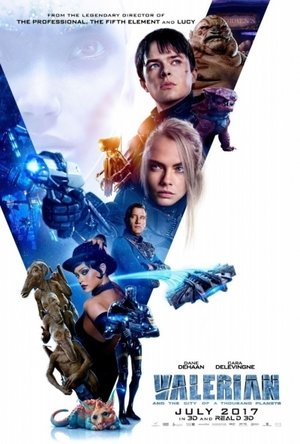

The story of Valerian is a good one. We open on Mül, a idyllic place of peace and a simple life. But this peace is shattered when fire rains from the sky devastating the entire planet. The last moment of Mül sees the Princess, doomed to die in the explosion, release her energy into the universe, through time and space.
Valerian, sunning himself on his ship, is hit with a sudden vision of the cataclysm on Mül. Unsure about it's meaning he goes back to the task at hand, retrieving a relic from some disreputable people on the black market. The "converter" is the last of it's kind in the universe, it will eat anything and rapidly replicate it, and as such is a very valuable commodity.
The mission is to return the converter to Alpha station. But when they arrive they discover that the station has been infected with something right at its heart. It's spreading, and all those that enter do not come back. When events lead to Valerian being drawn into the infected area, Laureline isn't willing to give up hope, and she battles her way in. Once she's reunited with Valerian they work travel to the centre of the station and discover the shocking truth about how the infection began...
The film is based on Valerian and Laureline, a French sci-fi comic series written by Pierre Christin and illustrated by Jean-Claude Mézières. I have got the first one to read, but as is my tradition, I have yet to do so. The first one is available free on Kindle at the moment if anybody is that way inclined. I expect that it will get a much better reaction in Europe than it seem to have done in the States, which is a bit of a shame. Possibly the way to go would have been with bigger stars, but *shrugs shoulders* it's too late now.
As I said, the story itself is a good one, and while people are nit picking and saying there are plot holes... there aren't if you don't look for them. I have this horrible ability to just watch a film for what it is, if you just go and see something to have some fun you don't notice any of that. It's a horribly nice way to be able to live my life, I enjoy a lot more things that way.
What I'm about to say is going to contradict my overall feeling for the film... I didn't really enjoy Dane DeHaan or Cara Delevingne. I had originally thought that I hadn't seen DeHaan in anything before, but was soon getting recollections of The Amazing Spider-Man 2. Scrolling through Delevingne's few years of films I've only seen Suicide Squad, and her acting as a "real person" is quite a small piece in that. While I can't think of anyone who would have perfectly suited either role, I feel like many other actors could have done an equal, or better, performance.
You get a wonderful introduction to what the station is, and has become. And we're treated to the potted history of alien species, several of which would sit quite nicely in the Whoniverse. I'm quite looking forward to reading the graphic novel. I can see stories unfolding in the different sections of the station, and that works. It almost feels like it would have made an amazing TV series, because it is essentially Star Trek with glitzier aliens and ecosystems.
As far as the secondary characters go we're treated to several memorable moments. Including Ethan Hawke as Jolly the Pimp, which is as flamboyant as you'd expect. Clive Owen as Commander Filitt, stern and ruthless, the sort who would stab you in the back (or the front) for his own gain. Sam Spruell as General Okto-Bar, who acted his part incredibly well... I'm honestly surprised I've not seen any of the other things he's been in, but I will be checking them out. Rihanna as Bubble, I'm a little surprised about how much I heard about her being in this considering how short her role is. But the same is true of a few things I've seen recently. We first meet her at Jolly's den of iniquity, where the music video training definitely came in handy.
As a whole the film moves along smoothly, with only a few little bits that seemed like they didn't belong, or could have been cut out. Unlike other films though, these little additions didn't harm the overall product.
Here is where my love for the film takes a steep nose-drive. Imagine crying with joy to resting bitch-face in the space of a few seconds. The 3D was hideous. I can't even think of a nice thing to say about it.
When the scenes were general crowd shots or indoors, everything was fine... although these shots didn't really benefit from the effect. The exterior shots however, in my not so expert opinion, were a terrible idea. I found some of them actually painful to watch, particularly long range shots of Alpha with ships coming in to dock. It was near on impossible to deal with the perspective as there was so much happening. For the last half of the film I took my 3D glasses off every time these shots appeared on screen as my head was rapidly starting to hurt, and I wasn't the only one having trouble.
If it wasn't for the painful exterior shots I honestly would have forgotten I was watching the film in 3D. Unlike other 3D films, you weren't aware that things were coming out of the screen at you. Not once.
I really don't want to be so negative about this film, it was an enjoyable watch (without the optical illusion created by the 3D). I would recommend it to anyone who has a passing interest in sci-fi and adaptations of comics. And I feel like, if nothing else, it might get the graphic novels themselves more circulation outside of Europe.
But please... watch it in 2D.
Valerian, sunning himself on his ship, is hit with a sudden vision of the cataclysm on Mül. Unsure about it's meaning he goes back to the task at hand, retrieving a relic from some disreputable people on the black market. The "converter" is the last of it's kind in the universe, it will eat anything and rapidly replicate it, and as such is a very valuable commodity.
The mission is to return the converter to Alpha station. But when they arrive they discover that the station has been infected with something right at its heart. It's spreading, and all those that enter do not come back. When events lead to Valerian being drawn into the infected area, Laureline isn't willing to give up hope, and she battles her way in. Once she's reunited with Valerian they work travel to the centre of the station and discover the shocking truth about how the infection began...
The film is based on Valerian and Laureline, a French sci-fi comic series written by Pierre Christin and illustrated by Jean-Claude Mézières. I have got the first one to read, but as is my tradition, I have yet to do so. The first one is available free on Kindle at the moment if anybody is that way inclined. I expect that it will get a much better reaction in Europe than it seem to have done in the States, which is a bit of a shame. Possibly the way to go would have been with bigger stars, but *shrugs shoulders* it's too late now.
As I said, the story itself is a good one, and while people are nit picking and saying there are plot holes... there aren't if you don't look for them. I have this horrible ability to just watch a film for what it is, if you just go and see something to have some fun you don't notice any of that. It's a horribly nice way to be able to live my life, I enjoy a lot more things that way.
What I'm about to say is going to contradict my overall feeling for the film... I didn't really enjoy Dane DeHaan or Cara Delevingne. I had originally thought that I hadn't seen DeHaan in anything before, but was soon getting recollections of The Amazing Spider-Man 2. Scrolling through Delevingne's few years of films I've only seen Suicide Squad, and her acting as a "real person" is quite a small piece in that. While I can't think of anyone who would have perfectly suited either role, I feel like many other actors could have done an equal, or better, performance.
You get a wonderful introduction to what the station is, and has become. And we're treated to the potted history of alien species, several of which would sit quite nicely in the Whoniverse. I'm quite looking forward to reading the graphic novel. I can see stories unfolding in the different sections of the station, and that works. It almost feels like it would have made an amazing TV series, because it is essentially Star Trek with glitzier aliens and ecosystems.
As far as the secondary characters go we're treated to several memorable moments. Including Ethan Hawke as Jolly the Pimp, which is as flamboyant as you'd expect. Clive Owen as Commander Filitt, stern and ruthless, the sort who would stab you in the back (or the front) for his own gain. Sam Spruell as General Okto-Bar, who acted his part incredibly well... I'm honestly surprised I've not seen any of the other things he's been in, but I will be checking them out. Rihanna as Bubble, I'm a little surprised about how much I heard about her being in this considering how short her role is. But the same is true of a few things I've seen recently. We first meet her at Jolly's den of iniquity, where the music video training definitely came in handy.
As a whole the film moves along smoothly, with only a few little bits that seemed like they didn't belong, or could have been cut out. Unlike other films though, these little additions didn't harm the overall product.
Here is where my love for the film takes a steep nose-drive. Imagine crying with joy to resting bitch-face in the space of a few seconds. The 3D was hideous. I can't even think of a nice thing to say about it.
When the scenes were general crowd shots or indoors, everything was fine... although these shots didn't really benefit from the effect. The exterior shots however, in my not so expert opinion, were a terrible idea. I found some of them actually painful to watch, particularly long range shots of Alpha with ships coming in to dock. It was near on impossible to deal with the perspective as there was so much happening. For the last half of the film I took my 3D glasses off every time these shots appeared on screen as my head was rapidly starting to hurt, and I wasn't the only one having trouble.
If it wasn't for the painful exterior shots I honestly would have forgotten I was watching the film in 3D. Unlike other 3D films, you weren't aware that things were coming out of the screen at you. Not once.
I really don't want to be so negative about this film, it was an enjoyable watch (without the optical illusion created by the 3D). I would recommend it to anyone who has a passing interest in sci-fi and adaptations of comics. And I feel like, if nothing else, it might get the graphic novels themselves more circulation outside of Europe.
But please... watch it in 2D.

Death By Rock and Roll by The Pretty Reckless
Album
Rock 'n' roll is a religion. It's a commitment to an ideal, a belief system. The lifestyle and...

Bob Mann (459 KP) rated Avengers: Endgame (2019) in Movies
Sep 28, 2021
The final curtain.
So… thanks again to work and family commitments, I’ve spent 7 days dodging social media to arrive at my showing of “Endgame” spoiler free… and was successful in doing so! It is of course impossible to write just about anything on this film without dropping spoilers. So I will keep this first part of the review short, but add some footnotes (indexed with <#> symbols) to a “spoiler section” below the trailer video. Proceed at your peril if you haven’t yet seen it!
The Plot
The MCU has delivered an impressively well-connected movie series. In the case of Thanos, this is a story-arc that started in the mid-credit “monkey” at the end of 2012’s “The Avengers” and, at the conclusion of “Avengers: Infinity War”, saw half the universe’s population drift away – Voldemort-style – into grey ash. This, of course, also wiped out half of our heroes (good trivia question for future years: who was the first we saw drift away? Answer below* ). This included Spider-Man (Tom Holland); Dr Strange (Benedict Cumberbatch); Black Panther (Chadwick Boseman); Nick Fury (Samuel L. Jackson); half of the remaining Guardians; The Wasp (Evangeline Lilly) and Dr Pym (Michael Douglas). Oblivious to all of this is Ant Man (Paul Rudd), still stranded in the ‘quantum realm’ following the demise of his colleagues, and with no one to flick the ‘return’ switch.
After some early action, Endgame’s story revolves around a desperate attempt by the remaining Avengers, led by Black Widow (Scarlett Johansson) and a ‘retired’ Tony Stark (Robert Downey Jnr) to undo the undoable. Can they succeed against all the odds? (With a new Spider-Man film due out in the summer, I’ll give you a guess!). Of more relevance perhaps is whether the team can stay unscathed from their encounter with the scheming and massively powerful Thanos (Josh Brolin)?
Thoughtful
The film will not be to every fan’s taste. After the virtually non-stop rip-roaring action of “Infinity War”, “Endgame” takes a far more contemplative approach to its first hour.
The film starts with a devastating prologue, and a great lesson in statistics: that you need a decent sized population to guarantee getting a 50:50 split! There is also a very surprising twist in the first 15 minutes or so that I didn’t see coming AT ALL.
But then things settle down into a far more sombre section of the film: short on action; long on character development. The world is grieving for its loss, unable to move on past the non-stop counselling sessions that everyone is getting. This first hour was, for me, by far, my favourite part of the film. Seeing how the characters we know and love have been impacted – some for better rather than for worse – was terrific. Mark Ruffalo’s Hulk (with a rather glib plot-point) takes on an hilarious new aspect; and Chris Hemsworth adds hugely comedic value as Thor, setting up in Scotland a “New Asgard” settlement in uncharacteristically laid-back fashion.
Cast
As an ensemble cast, everyone plays their parts extremely well. But it is just the breadth of the cast that astounds in this film: just about everyone who is anyone in the Marvel Universe – at least, those who are still alive (alive!) and not dead (dead!) – pop up for an appearance! This is great fun with, in one particular case, the opportunity to try some more rejuvenation of an old timer as previously done with Samuel L. Jackson in “Captain Marvel”.
Inevitably, some of these appearances are overly brief, and characters that I wanted to see developed more in this film (particularly Brie Larson’s Captain Marvel) get very little screen time. Drax (Dave Bautista) and Mantis (Pom Klementieff) barely get a single line each. So it will depend on where your loyalties lie as to whether you are satisfied with the coverage or not. (I personally find Chris Evans‘ Captain America a bit of a po-faced bore, so I wasn’t keen on the amount of screen time he had).
Stan Lee again gets another cameo in the bag before his demise: will this actually be his last live one?
Overall view
I enjoyed this movie. It could obviously NEVER live up to the over-hyped expectations of the fan base. But as a cinematic spectacle, for me, it delivered on its billing as a blockbuster finale, but one filled with a degree of nuance I was not expecting. The problem with the way that the plot have been structured (no spoilers – <#>) is that it is easy to pick holes in the storyline. Indeed, some dramatic options (that to me seemed obvious ones to ‘mine’) were left ‘unmined’ <##>; others were left inexplicably hanging <###>.
I suspect the reason for some of this is that the initial cut of this film probably ran to 5 hours rather than the – still bladder-testing – 3 hours as released. There were probably a bunch of scenes left on the cutting room floor that might allow things to make more sense in the extended BluRay release.
It’s at times slow, but for me never dull. It does suffer from one significant flaw though: the “Return of the King” disease. It doesn’t know when to quit. There was a natural MCU arc to follow and a perfect time at which to end it: but the directors (the Russo Brothers, Anthony Russo and Joe Russo) kept adding additional scenes that detracted from the natural ending <####>.
Above all, unlike I think all but one film in MCU history, there is NO “MONKEY” in the end credits: either mid-credit or end-credit! So, after the long title crawl (and some rather odd choices for end-title music by Alan Silvestri), if you are not to look bloody stupid as the lights come up, and face a storm of derision from your partner, then leave after the dramatic roll-call sequence of the film’s stars!
(*BTW, the answer to the trivia question is, I believe, Bucky.)
So… thanks again to work and family commitments, I’ve spent 7 days dodging social media to arrive at my showing of “Endgame” spoiler free… and was successful in doing so! It is of course impossible to write just about anything on this film without dropping spoilers. So I will keep this first part of the review short, but add some footnotes (indexed with <#> symbols) to a “spoiler section” below the trailer video. Proceed at your peril if you haven’t yet seen it!
The Plot
The MCU has delivered an impressively well-connected movie series. In the case of Thanos, this is a story-arc that started in the mid-credit “monkey” at the end of 2012’s “The Avengers” and, at the conclusion of “Avengers: Infinity War”, saw half the universe’s population drift away – Voldemort-style – into grey ash. This, of course, also wiped out half of our heroes (good trivia question for future years: who was the first we saw drift away? Answer below* ). This included Spider-Man (Tom Holland); Dr Strange (Benedict Cumberbatch); Black Panther (Chadwick Boseman); Nick Fury (Samuel L. Jackson); half of the remaining Guardians; The Wasp (Evangeline Lilly) and Dr Pym (Michael Douglas). Oblivious to all of this is Ant Man (Paul Rudd), still stranded in the ‘quantum realm’ following the demise of his colleagues, and with no one to flick the ‘return’ switch.
After some early action, Endgame’s story revolves around a desperate attempt by the remaining Avengers, led by Black Widow (Scarlett Johansson) and a ‘retired’ Tony Stark (Robert Downey Jnr) to undo the undoable. Can they succeed against all the odds? (With a new Spider-Man film due out in the summer, I’ll give you a guess!). Of more relevance perhaps is whether the team can stay unscathed from their encounter with the scheming and massively powerful Thanos (Josh Brolin)?
Thoughtful
The film will not be to every fan’s taste. After the virtually non-stop rip-roaring action of “Infinity War”, “Endgame” takes a far more contemplative approach to its first hour.
The film starts with a devastating prologue, and a great lesson in statistics: that you need a decent sized population to guarantee getting a 50:50 split! There is also a very surprising twist in the first 15 minutes or so that I didn’t see coming AT ALL.
But then things settle down into a far more sombre section of the film: short on action; long on character development. The world is grieving for its loss, unable to move on past the non-stop counselling sessions that everyone is getting. This first hour was, for me, by far, my favourite part of the film. Seeing how the characters we know and love have been impacted – some for better rather than for worse – was terrific. Mark Ruffalo’s Hulk (with a rather glib plot-point) takes on an hilarious new aspect; and Chris Hemsworth adds hugely comedic value as Thor, setting up in Scotland a “New Asgard” settlement in uncharacteristically laid-back fashion.
Cast
As an ensemble cast, everyone plays their parts extremely well. But it is just the breadth of the cast that astounds in this film: just about everyone who is anyone in the Marvel Universe – at least, those who are still alive (alive!) and not dead (dead!) – pop up for an appearance! This is great fun with, in one particular case, the opportunity to try some more rejuvenation of an old timer as previously done with Samuel L. Jackson in “Captain Marvel”.
Inevitably, some of these appearances are overly brief, and characters that I wanted to see developed more in this film (particularly Brie Larson’s Captain Marvel) get very little screen time. Drax (Dave Bautista) and Mantis (Pom Klementieff) barely get a single line each. So it will depend on where your loyalties lie as to whether you are satisfied with the coverage or not. (I personally find Chris Evans‘ Captain America a bit of a po-faced bore, so I wasn’t keen on the amount of screen time he had).
Stan Lee again gets another cameo in the bag before his demise: will this actually be his last live one?
Overall view
I enjoyed this movie. It could obviously NEVER live up to the over-hyped expectations of the fan base. But as a cinematic spectacle, for me, it delivered on its billing as a blockbuster finale, but one filled with a degree of nuance I was not expecting. The problem with the way that the plot have been structured (no spoilers – <#>) is that it is easy to pick holes in the storyline. Indeed, some dramatic options (that to me seemed obvious ones to ‘mine’) were left ‘unmined’ <##>; others were left inexplicably hanging <###>.
I suspect the reason for some of this is that the initial cut of this film probably ran to 5 hours rather than the – still bladder-testing – 3 hours as released. There were probably a bunch of scenes left on the cutting room floor that might allow things to make more sense in the extended BluRay release.
It’s at times slow, but for me never dull. It does suffer from one significant flaw though: the “Return of the King” disease. It doesn’t know when to quit. There was a natural MCU arc to follow and a perfect time at which to end it: but the directors (the Russo Brothers, Anthony Russo and Joe Russo) kept adding additional scenes that detracted from the natural ending <####>.
Above all, unlike I think all but one film in MCU history, there is NO “MONKEY” in the end credits: either mid-credit or end-credit! So, after the long title crawl (and some rather odd choices for end-title music by Alan Silvestri), if you are not to look bloody stupid as the lights come up, and face a storm of derision from your partner, then leave after the dramatic roll-call sequence of the film’s stars!
(*BTW, the answer to the trivia question is, I believe, Bucky.)