
Search
Search results

Heather Cranmer (2721 KP) rated The Safe Place in Books
May 30, 2020
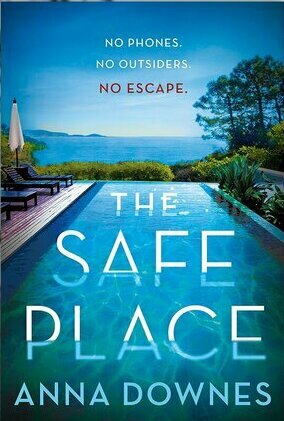
I'm a sucker for psychological thrillers, so when the opportunity arose to read The Safe Place by Anna Downes, I jumped at the chance! Luckily, I ended up loving this book!
Emily Proudman just can't catch a break. After losing her job as well as her acting agent, things are looking grim. After being late on the rent again, she's also facing eviction from her apartment. However, things start looking up when she runs into Scott Denny. Scott, a successful CEO of the company she's just been fired from, feels like Emily would be perfect working for his wife, Nina, and living on their very remote property in France. Things seem perfect, but they are a little too perfect. When Emily finds out the truth behind Nina's and Scott's ideal life, she puts herself in grave danger and finds out how far some people will go to protect their secrets.
While the idea behind The Safe Place has been done before, Downes does a fantastic job of making it feel like it was her idea and hers alone. To me, The Safe Place felt like it was a slow burn as the action didn't really take place until towards the end. I would say the first 85 percent of the book or so is just the backstory and build up to all the action which happens in the last few chapters. The pacing is a little slow throughout most of the book, but it isn't so slow that I became bored - quite the contrary. While the pacing is fairly slow, I did enjoy what I read thanks to Downes' brilliant way with words. There are a few plot twists although I found them fairly easy to figure out, but I think that's only because I've read so many psychological thrillers before. Some of my guesses were wrong though, I admit. Even though there's an epilogue, I would have liked to have known more about what happened with Denny family. I just need a little more closure when it came to that.
Downes did a fantastic job with all of her characters. It was easy to imagine every single character in The Safe Place as a real person. The main characters all had plenty of backstory (or just enough to keep them mysterious), and the minor characters were all described very well. I liked how Emily seemed to want to please those around her. While she didn't feel like a pushover, it was nice to see her wanting to fit in with her new employer as well as Yves, the sometimes handyman. Nina was definitely an interesting character. I didn't know what to make of her before Emily met her in the book, but once Emily met Nina, and I read more about her, I ended up liking her. (I kept trying to figure out why Scott didn't want to be around her though.) Aurelia, the Denny's daughter, was my favorite character. She seemed like such a sweet little girl who had been through so much. I found myself wishing I could meet Aurelia and give her a hug (only if she'd let me since she took a long time to warm up to people).
Trigger warnings for The Safe Place include profanity, mental illness, alcohol use, prescription pill abuse, self harm, violence, and attempted murder.
Overall, The Safe Place is a highly intriguing book that makes each and every word on the page come alive. With a great set of characters, beautiful descriptions of the scenery, and a highly intriguing plot, this is one book that's sure to become a best seller. I would definitely recommend The Safe Place by Anna Downes to those aged 20+ who enjoy psychological thrillers and/or want to be instantly transported into a fantastic book!
--
(A special thank you to Minotaur Books for sending me a paperback ARC of The Safe Place by Anna Downes. A review was not required but appreciated. This was my honest and unbiased review.)
Emily Proudman just can't catch a break. After losing her job as well as her acting agent, things are looking grim. After being late on the rent again, she's also facing eviction from her apartment. However, things start looking up when she runs into Scott Denny. Scott, a successful CEO of the company she's just been fired from, feels like Emily would be perfect working for his wife, Nina, and living on their very remote property in France. Things seem perfect, but they are a little too perfect. When Emily finds out the truth behind Nina's and Scott's ideal life, she puts herself in grave danger and finds out how far some people will go to protect their secrets.
While the idea behind The Safe Place has been done before, Downes does a fantastic job of making it feel like it was her idea and hers alone. To me, The Safe Place felt like it was a slow burn as the action didn't really take place until towards the end. I would say the first 85 percent of the book or so is just the backstory and build up to all the action which happens in the last few chapters. The pacing is a little slow throughout most of the book, but it isn't so slow that I became bored - quite the contrary. While the pacing is fairly slow, I did enjoy what I read thanks to Downes' brilliant way with words. There are a few plot twists although I found them fairly easy to figure out, but I think that's only because I've read so many psychological thrillers before. Some of my guesses were wrong though, I admit. Even though there's an epilogue, I would have liked to have known more about what happened with Denny family. I just need a little more closure when it came to that.
Downes did a fantastic job with all of her characters. It was easy to imagine every single character in The Safe Place as a real person. The main characters all had plenty of backstory (or just enough to keep them mysterious), and the minor characters were all described very well. I liked how Emily seemed to want to please those around her. While she didn't feel like a pushover, it was nice to see her wanting to fit in with her new employer as well as Yves, the sometimes handyman. Nina was definitely an interesting character. I didn't know what to make of her before Emily met her in the book, but once Emily met Nina, and I read more about her, I ended up liking her. (I kept trying to figure out why Scott didn't want to be around her though.) Aurelia, the Denny's daughter, was my favorite character. She seemed like such a sweet little girl who had been through so much. I found myself wishing I could meet Aurelia and give her a hug (only if she'd let me since she took a long time to warm up to people).
Trigger warnings for The Safe Place include profanity, mental illness, alcohol use, prescription pill abuse, self harm, violence, and attempted murder.
Overall, The Safe Place is a highly intriguing book that makes each and every word on the page come alive. With a great set of characters, beautiful descriptions of the scenery, and a highly intriguing plot, this is one book that's sure to become a best seller. I would definitely recommend The Safe Place by Anna Downes to those aged 20+ who enjoy psychological thrillers and/or want to be instantly transported into a fantastic book!
--
(A special thank you to Minotaur Books for sending me a paperback ARC of The Safe Place by Anna Downes. A review was not required but appreciated. This was my honest and unbiased review.)
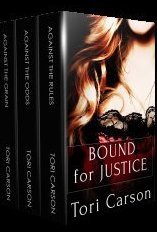
Bound for Justice Box Set
8.0 Rate It
Book
Bound for Justice: A Box Set Against the Rules Targeted by a drug cartel, Teague is out for...
ANTHOLOGIES AND COLLECTIONS BONDAGE AND BDSM CONTEMPORARY EROTIC ROMANCE

Bob Mann (459 KP) rated I, Tonya (2017) in Movies
Sep 29, 2021

Some Darwin award winners.
Man, I personally found this one to be an exceedingly uncomfortable watch.
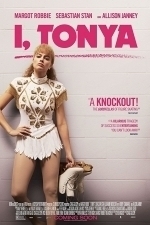
“I, Tonya” is cleverly filmed as a pseudo-documentary, featuring re-enactments of the real-life interviews of most of the participants in this true-life drama. I recently bitterly criticised some film critics for spoiling the story of Donald Crowhurst, the subject of the recent “The Mercy”. But I was about to do exactly the same here, *assuming* that you all know the lurid tale of the rivalry between Tonya Harding and Nancy Kerrigan that led up to an ‘event’ in 1994 that shocked the world. And of course, many of you younger folk don’t know: case in point my 26 year old son who I went to see this with, and who went into the story blissfully blind of the drama about to unfold. So I will try to keep this review spoiler-free.
Playing Tonya from a (not very credible!) 15 years old to her mid-20’s is Margot Robbie (“The Wolf of Wall Street”, “Suicide Squad”) in what is a BAFTA and Oscar nominated performance. And for good reason: the performance is raw, visceral and disturbing in reflecting a victim who still thinks everything at heart is her own fault.
Also BAFTA and Oscar nominated is Allison Janney (“The Girl on the Train”) as Tonya’s obnoxious chain-smoking mother LaVona. Janney is truly terrifying as the mother who abuses her daughter both physically and mentally in a driven attempt to make her the best ice-skater in the world.
Victims seem to attract abusers, and Tonya is surrounded by people who are just plain bad for her: notably her husband Jeff (Sebastian Stan, “The Martian”, “Captain America: Winter Soldier”) and his slimy and pitifully self-deluded friend Shawn (Paul Walter Hauser). The end credits video footage of the real-life players show just how well these parts were cast.
Why so uncomfortable to watch? There is a significant degree of domestic abuse featured in the film, both in terms of LaVona on her child and Jeff on his wife. This is something I abhor in general, having been brought up to believe it is never EVER acceptable to lay a hand on a woman. To have these cowardly individuals sensationalised in the movie I found to be really upsetting. I strongly feel, for this reason alone, that the film should have had an 18 certificate. Violence in film should be related to the context as well as the severity. (Note that this is in stark contrast to my comments of recent BBFC decisions to make “Phantom Thread” and “Lady Bird” 15-certificates when I believe they should have been 12A).
The film is executed extremely well, with 4:3 framing for the staged interviews, and ice skating scenes that seamlessly cut between the professional clearly doing the stunts and Robbie (who must also be a half decent skater too). The soundtrack is nicely littered – “Guardians of the Galaxy” style – with classic hits of the early 90’s.
To think that this story actually unfolded in this way is nothing short of astounding… but it did! There is an astonishing video clip here (#spoilers) of the run up to, and the immediate aftermath of, the Kerrigan incident. I came out of the film with a deep feeling of sadness for Harding (at least, as portrayed) and utter disgust that the villains of this piece could be a) so cruel and out of control and b) so utterly stupid. These are individuals who really should have been sterilised to stop them polluting the gene pool any further.
Written by Steven Rogers (“Stepmom”) and directed by Australian Craig Gillespie, there is no doubting that this is a powerful film: played to an absolutely silent and gripped Saturday night cinema audience. And it has truly dynamite performances from Allison Janney and Margot Robbie. But be warned that you’ll need a strong stomach to go and see it without being affected by it afterwards. It’s a mental keeper.
“I, Tonya” is cleverly filmed as a pseudo-documentary, featuring re-enactments of the real-life interviews of most of the participants in this true-life drama. I recently bitterly criticised some film critics for spoiling the story of Donald Crowhurst, the subject of the recent “The Mercy”. But I was about to do exactly the same here, *assuming* that you all know the lurid tale of the rivalry between Tonya Harding and Nancy Kerrigan that led up to an ‘event’ in 1994 that shocked the world. And of course, many of you younger folk don’t know: case in point my 26 year old son who I went to see this with, and who went into the story blissfully blind of the drama about to unfold. So I will try to keep this review spoiler-free.
Playing Tonya from a (not very credible!) 15 years old to her mid-20’s is Margot Robbie (“The Wolf of Wall Street”, “Suicide Squad”) in what is a BAFTA and Oscar nominated performance. And for good reason: the performance is raw, visceral and disturbing in reflecting a victim who still thinks everything at heart is her own fault.
Also BAFTA and Oscar nominated is Allison Janney (“The Girl on the Train”) as Tonya’s obnoxious chain-smoking mother LaVona. Janney is truly terrifying as the mother who abuses her daughter both physically and mentally in a driven attempt to make her the best ice-skater in the world.
Victims seem to attract abusers, and Tonya is surrounded by people who are just plain bad for her: notably her husband Jeff (Sebastian Stan, “The Martian”, “Captain America: Winter Soldier”) and his slimy and pitifully self-deluded friend Shawn (Paul Walter Hauser). The end credits video footage of the real-life players show just how well these parts were cast.
Why so uncomfortable to watch? There is a significant degree of domestic abuse featured in the film, both in terms of LaVona on her child and Jeff on his wife. This is something I abhor in general, having been brought up to believe it is never EVER acceptable to lay a hand on a woman. To have these cowardly individuals sensationalised in the movie I found to be really upsetting. I strongly feel, for this reason alone, that the film should have had an 18 certificate. Violence in film should be related to the context as well as the severity. (Note that this is in stark contrast to my comments of recent BBFC decisions to make “Phantom Thread” and “Lady Bird” 15-certificates when I believe they should have been 12A).
The film is executed extremely well, with 4:3 framing for the staged interviews, and ice skating scenes that seamlessly cut between the professional clearly doing the stunts and Robbie (who must also be a half decent skater too). The soundtrack is nicely littered – “Guardians of the Galaxy” style – with classic hits of the early 90’s.
To think that this story actually unfolded in this way is nothing short of astounding… but it did! There is an astonishing video clip here (#spoilers) of the run up to, and the immediate aftermath of, the Kerrigan incident. I came out of the film with a deep feeling of sadness for Harding (at least, as portrayed) and utter disgust that the villains of this piece could be a) so cruel and out of control and b) so utterly stupid. These are individuals who really should have been sterilised to stop them polluting the gene pool any further.
Written by Steven Rogers (“Stepmom”) and directed by Australian Craig Gillespie, there is no doubting that this is a powerful film: played to an absolutely silent and gripped Saturday night cinema audience. And it has truly dynamite performances from Allison Janney and Margot Robbie. But be warned that you’ll need a strong stomach to go and see it without being affected by it afterwards. It’s a mental keeper.

Hadley (567 KP) rated Stranger Things: Runaway Max in Books
Feb 16, 2020


More of Max & Billy's relationship (1 more)
Max's life in California
Brenna Yovanoff wrote this novel after season two of Stranger Things debuted on Netflix. And it reads exactly like season two, but from Max's point-of-view with some flashbacks of her life before Hawkins mixed in to make a pleasurable meal for the eyes.
Max Mayfield is a pre-teen that just moved to Hawkins, Indiana after her mother remarried and added an abusive step-father and step-brother to the family equation. She spends most of her time trying to not want to fit in with the kids at her new school, riding her trusty skateboard behind the building during recess and telling a group of boys who can't stop staring at her to leave her alone. Max's home life has become unbearable to the point that she debates running back to her real father in California. Fortunately, two of those boys that couldn't stop staring try to be friends with her, but when she begins to hang around them, she learns that things are not what they seem in Hawkins, Indiana. Merging with this group of boys, Max's life is forever changed, and probably for the better.
Runaway Max doesn't focus on the supernatural aspect that Stranger Things is known for. Instead, the focus is on a girl's life that gets turned upside down [pun intended] by the introduction of two abusive people that enter it with the intent of either destroying her or making her compliant, the struggle with who she is and who everyone else says she should be, to the desperation for just one real friend. Personally, I believe Yovanoff did an amazing job at telling Stranger Things fans the backstory of our Mad Max. As a result, I have no complaints about this novel whatsoever.
Yovanoff starts readers off with Max riding her skateboard through downtown Hawkins, with Max telling us how she was happy there was an arcade in this small town. Max wipes out on her skateboard, where a woman who will be very familiar to fans, runs out of a store to help her to her feet until the loud sound of engine comes pulling up; enter Billy and his Camaro. All throughout the story, readers get to see more of what was going on inside the Mayfield/Hargrove's household, which viewers of the series were only witness to one of the abuses happening to Billy by his father.
Runaway Max picks up the pace when a familiar scene happens with Max joining Stranger Things regulars: Lucas and Dustin, for Halloween around Hawkins. But with this story, we follow Max home after Will's encounter with a creature from the Upside Down. We learn that Billy never picked Max up, as he was suppose to, and that his father, Neil, is beyond angry when Billy comes home drunk and high:
" When Billy came slamming into the house, the smell came with him, rolling like the clouds of smoke and alcohol wafting out of a dive bar. Like bad weather. He was stumbling a little. His eyes were red-rimmed and heavier than ever, and he still had the leather jacket on, but he wasn't wearing a shirt. The light from the stained-glass lamp on the end table made him look deranged.
Neil breathed in through his nose and heaved himself out of his chair. 'And where the hell have you been?'
'Nowhere,' Billy muttered, and tried to brush past him, but Neil stepped in front of him and stopped him with a hand on his chest.
'What was that?'
Billy ducked his head and mumbled something about a flat tire. I couldn't tell if he was being honest or not - - - probably not - - - but as soon as he said it, it was pretty obvious that I had been lying. Whatever he'd been doing, it definitely hadn't been giving a school friend a ride home.
Neil had stayed ominously quiet, but now he drew himself up and took a step forward so he had Billy trapped against the wall. 'I'm curious to know where you learned to be so disobedient.'
Billy stared back at him. He was standing with his chin down and his jacket open, looking mutinous. He smelled like beer and the dry-skunk smell of Nate's brother, Silas, and all the other eighth-grade boys who got stoned behind the baseball diamond back home. It was the smell of not caring. 'Bite me, Neil. I'm not in the mood.'
For a second, they just stood looking at each other.
Then Neil spoke in a low, dangerous voice. The air was heavy and metallic, like right before a thunderstorm. 'I don't know where you've been or what you've been up to, but you will show me some respect!'
He shouted the last part. His voice sounded much too big in the smallness of the living room, and I winced, even though I was willing myself not to."
After Max quickly heads to her room to count her Halloween candy...
"Out in the living room, Neil was tuning up. For a while, it was just a rumble of voices, softer sometimes, then louder. There was a short, sharp cry and then a flat, meaty sound, like punching the pocket of a baseball glove. "
Runaway Max does a superb job of detailing abuse and the psychology that plays a role in it. Readers, also, get to see more of Billy's abuse towards Max. Focusing on the shift of personality Billy goes through (those who have watched season three of Stranger Things will have more of an understanding behind Billy, I recommend that if you haven't watched that season yet, that you do after reading this book). While all of this is going on, Yovanoff also retells season two, winding it within Max's story effortlessly and concisely:
"Dustin bent over the table, gazing at the creature in his hands like it was the sweetest, most adorable thing. He kept calling it a he, even though it was so weird and shapeless that how could you tell?
When he saw me staring, he asked if I wanted to hold it, and I shook my head, but he turned and tipped it out of his cupped palms and into mine.
It felt cool and squishy, heavier than it looked, and I passed it to Lucas fast. Lucas handed it off to Will, and it made its way around the circle. I was a little relieved to see that I wasn't the only one shrinking back from it. Will was looking at it like it had some kind of disease, and even Mike didn't exactly seem thrilled to touch it. He was the bravest, though, and held it up for a closer look. "
All-in-all, Runaway Max is season two of Stranger Things to-a-tee. But with Max's relationship with Billy being molded more by this novel, it can make even the most die-hard fans look at the two in a different way. There are even small splotches of scenes where Billy seems to want Max as a little sister, one such, when Max catches him in the garage of their California home, working on his car and smoking a cigarette:
" I leaned forward with my knees on my elbows and cupped my chin in my hands. 'At the health assembly in school, they told us that we're not supposed to smoke.'
Billy straightened and closed the hood, wiping his hands with a rag. 'And do you always do everything your teachers tell you?'
That idea was so wrong it was hilarious. My grades were usually okay, but my conduct cards were a mess. I was always in trouble for something- - - talking back, or drawing cartoon hot rods on my desk with a felt pen. I laughed and shook my head.
That seemed to make him happy. He smiled in a slow, lazy way, then pulled the pack of Parliaments out of his shirt pocket. He held it out to me and waited, watching my face until I took one." When readers get to see the small moments between the two, it hurts more to know that Billy is just an abused young man that is reflecting his father's behavior.
Overall, I really enjoyed Max's story, but was it needed? Before season three, I would have said yes, but with what we learned of Billy in season three, I don't think it was completely necessary. I think only die-hard fans of the show will enjoy this book, otherwise watching the series is the majority of the novel.
Max Mayfield is a pre-teen that just moved to Hawkins, Indiana after her mother remarried and added an abusive step-father and step-brother to the family equation. She spends most of her time trying to not want to fit in with the kids at her new school, riding her trusty skateboard behind the building during recess and telling a group of boys who can't stop staring at her to leave her alone. Max's home life has become unbearable to the point that she debates running back to her real father in California. Fortunately, two of those boys that couldn't stop staring try to be friends with her, but when she begins to hang around them, she learns that things are not what they seem in Hawkins, Indiana. Merging with this group of boys, Max's life is forever changed, and probably for the better.
Runaway Max doesn't focus on the supernatural aspect that Stranger Things is known for. Instead, the focus is on a girl's life that gets turned upside down [pun intended] by the introduction of two abusive people that enter it with the intent of either destroying her or making her compliant, the struggle with who she is and who everyone else says she should be, to the desperation for just one real friend. Personally, I believe Yovanoff did an amazing job at telling Stranger Things fans the backstory of our Mad Max. As a result, I have no complaints about this novel whatsoever.
Yovanoff starts readers off with Max riding her skateboard through downtown Hawkins, with Max telling us how she was happy there was an arcade in this small town. Max wipes out on her skateboard, where a woman who will be very familiar to fans, runs out of a store to help her to her feet until the loud sound of engine comes pulling up; enter Billy and his Camaro. All throughout the story, readers get to see more of what was going on inside the Mayfield/Hargrove's household, which viewers of the series were only witness to one of the abuses happening to Billy by his father.
Runaway Max picks up the pace when a familiar scene happens with Max joining Stranger Things regulars: Lucas and Dustin, for Halloween around Hawkins. But with this story, we follow Max home after Will's encounter with a creature from the Upside Down. We learn that Billy never picked Max up, as he was suppose to, and that his father, Neil, is beyond angry when Billy comes home drunk and high:
" When Billy came slamming into the house, the smell came with him, rolling like the clouds of smoke and alcohol wafting out of a dive bar. Like bad weather. He was stumbling a little. His eyes were red-rimmed and heavier than ever, and he still had the leather jacket on, but he wasn't wearing a shirt. The light from the stained-glass lamp on the end table made him look deranged.
Neil breathed in through his nose and heaved himself out of his chair. 'And where the hell have you been?'
'Nowhere,' Billy muttered, and tried to brush past him, but Neil stepped in front of him and stopped him with a hand on his chest.
'What was that?'
Billy ducked his head and mumbled something about a flat tire. I couldn't tell if he was being honest or not - - - probably not - - - but as soon as he said it, it was pretty obvious that I had been lying. Whatever he'd been doing, it definitely hadn't been giving a school friend a ride home.
Neil had stayed ominously quiet, but now he drew himself up and took a step forward so he had Billy trapped against the wall. 'I'm curious to know where you learned to be so disobedient.'
Billy stared back at him. He was standing with his chin down and his jacket open, looking mutinous. He smelled like beer and the dry-skunk smell of Nate's brother, Silas, and all the other eighth-grade boys who got stoned behind the baseball diamond back home. It was the smell of not caring. 'Bite me, Neil. I'm not in the mood.'
For a second, they just stood looking at each other.
Then Neil spoke in a low, dangerous voice. The air was heavy and metallic, like right before a thunderstorm. 'I don't know where you've been or what you've been up to, but you will show me some respect!'
He shouted the last part. His voice sounded much too big in the smallness of the living room, and I winced, even though I was willing myself not to."
After Max quickly heads to her room to count her Halloween candy...
"Out in the living room, Neil was tuning up. For a while, it was just a rumble of voices, softer sometimes, then louder. There was a short, sharp cry and then a flat, meaty sound, like punching the pocket of a baseball glove. "
Runaway Max does a superb job of detailing abuse and the psychology that plays a role in it. Readers, also, get to see more of Billy's abuse towards Max. Focusing on the shift of personality Billy goes through (those who have watched season three of Stranger Things will have more of an understanding behind Billy, I recommend that if you haven't watched that season yet, that you do after reading this book). While all of this is going on, Yovanoff also retells season two, winding it within Max's story effortlessly and concisely:
"Dustin bent over the table, gazing at the creature in his hands like it was the sweetest, most adorable thing. He kept calling it a he, even though it was so weird and shapeless that how could you tell?
When he saw me staring, he asked if I wanted to hold it, and I shook my head, but he turned and tipped it out of his cupped palms and into mine.
It felt cool and squishy, heavier than it looked, and I passed it to Lucas fast. Lucas handed it off to Will, and it made its way around the circle. I was a little relieved to see that I wasn't the only one shrinking back from it. Will was looking at it like it had some kind of disease, and even Mike didn't exactly seem thrilled to touch it. He was the bravest, though, and held it up for a closer look. "
All-in-all, Runaway Max is season two of Stranger Things to-a-tee. But with Max's relationship with Billy being molded more by this novel, it can make even the most die-hard fans look at the two in a different way. There are even small splotches of scenes where Billy seems to want Max as a little sister, one such, when Max catches him in the garage of their California home, working on his car and smoking a cigarette:
" I leaned forward with my knees on my elbows and cupped my chin in my hands. 'At the health assembly in school, they told us that we're not supposed to smoke.'
Billy straightened and closed the hood, wiping his hands with a rag. 'And do you always do everything your teachers tell you?'
That idea was so wrong it was hilarious. My grades were usually okay, but my conduct cards were a mess. I was always in trouble for something- - - talking back, or drawing cartoon hot rods on my desk with a felt pen. I laughed and shook my head.
That seemed to make him happy. He smiled in a slow, lazy way, then pulled the pack of Parliaments out of his shirt pocket. He held it out to me and waited, watching my face until I took one." When readers get to see the small moments between the two, it hurts more to know that Billy is just an abused young man that is reflecting his father's behavior.
Overall, I really enjoyed Max's story, but was it needed? Before season three, I would have said yes, but with what we learned of Billy in season three, I don't think it was completely necessary. I think only die-hard fans of the show will enjoy this book, otherwise watching the series is the majority of the novel.
Hazel (1853 KP) rated The Water Babies in Books
Oct 9, 2017

Worryingly Controversial
This eBook was provided by the publisher via NetGalley in exchange for an honest review
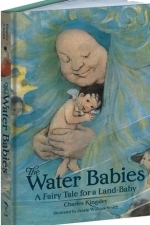
This year (2017), Calla Editions are printing a new hardback version of the original 1863 children’s classic The Water Babies written by the Anglican clergyman, Charles Kingsley (1819-75). Subtitled “A Fairytale for a land-baby” the book was intended for Kingsley’s youngest son and therefore was targeted at a juvenile demographic. However, as a result of the 1800’s vernacular and particularly deep themes, it has become more appropriate for older readers. With full-colour illustrations by Jessie Wilcox Smith (1863-1935) from the height of the golden age of illustration, this edition promises to be a collector’s item.
Charles Kingsley, the founder of England’s Christian Socialist movement, was exceedingly interested in the plight of the working class, particularly of the abuse and protection of children. This is reflected in his story about Tom, the ten-year-old London chimney sweep, who suffers ill-treatment at the hands of his employer. Tom, who has known nothing but the sooty streets of London, is embarrassed after scaring a beautiful young girl with his grimy appearance. Running away through a countryside he is unfamiliar with, Tom dives into a river to wash, however, falls asleep in the water.
On awakening, Tom discovers he has been transformed into a water baby; he can live and breathe amongst all the fishes and other mystical water creatures. Forgetting his horrible past, Tom is soon frolicking with the characters he meets, teasing and provoking unsuspecting individuals. But the fairies in charge of water babies are determined to teach him many lessons about truth, mercy, justice and courage.
The Water Babies is a morality fable with fairy-tale-like qualities. It educates young readers about the consequences of their actions but also enlightens them about the cruelty of some adults. Kingsley often talks to the reader (in this instance his son), drawing them into the story and making the scenarios as relatable as possible. The magical underwater setting is merely a veil to hide the lessons Kingsley is attempting to preach.
For the adult reader, Kingsley has a much more political message. Written at the time of political and scientific advancement, particularly in respect to the concept of natural selection, Kingsley attempts to ridicule the ideas of thinkers such as Charles Darwin by producing a satirical narrative. He suggests that scientists are fools who use unnecessarily long and foreign terms, evidenced by his use of the made-up subject of Necrobioneopalæonthydrochthonanthropopithekology. He also goes as far as to mock the majority of adults and appears to be completely anti-Irish people.
In some instances, Charles Kingsley goes too far in his satire, resulting in something that would not be accepted by publishers today. In order for Tom to be the hero of the story, adults need to be viewed as less than good – people who need to be punished for their discourteous treatment of children, which in this instance, they are, and quite graphically. But the most controversial theme explored is death. The more naïve may not cotton on to the fact that Tom falling asleep in the river equates to drowning, yet that is exactly what happened. Only through death can one become a water baby. To make matters slightly more alarming, Kingsley does not see this death as a bad thing; he describes Tom’s new life as something far better than life on earth – coming from a clergyman this is understandable – which suggests that death is better than living for an abused child.
Despite these controversies, Kingsley’s prose is humorous and entertaining - far more mind-boggling than you may initially expect. With characters named Mrs Bedonebyasyoudid and Professor Ptthmllnsprts, there is plenty to make readers laugh. Some of the hilarities may go above the heads of children since the jargon is no longer used in today’s society, however, adults will be able to appreciate the comical aspect.
Over 150 years old, The Water Babies has remained a classic. It reveals the political, scientific and social situations of the mid-1800s, yet it contains wisdom that is still relevant today. As Kingsley’s daughter Rose says in the introduction, “What a fine thing it is to love truth, mercy, justice, courage, and all things noble and of good report.” No matter how peculiar this novel is, it says a lot about the virtues of our character.
This year (2017), Calla Editions are printing a new hardback version of the original 1863 children’s classic The Water Babies written by the Anglican clergyman, Charles Kingsley (1819-75). Subtitled “A Fairytale for a land-baby” the book was intended for Kingsley’s youngest son and therefore was targeted at a juvenile demographic. However, as a result of the 1800’s vernacular and particularly deep themes, it has become more appropriate for older readers. With full-colour illustrations by Jessie Wilcox Smith (1863-1935) from the height of the golden age of illustration, this edition promises to be a collector’s item.
Charles Kingsley, the founder of England’s Christian Socialist movement, was exceedingly interested in the plight of the working class, particularly of the abuse and protection of children. This is reflected in his story about Tom, the ten-year-old London chimney sweep, who suffers ill-treatment at the hands of his employer. Tom, who has known nothing but the sooty streets of London, is embarrassed after scaring a beautiful young girl with his grimy appearance. Running away through a countryside he is unfamiliar with, Tom dives into a river to wash, however, falls asleep in the water.
On awakening, Tom discovers he has been transformed into a water baby; he can live and breathe amongst all the fishes and other mystical water creatures. Forgetting his horrible past, Tom is soon frolicking with the characters he meets, teasing and provoking unsuspecting individuals. But the fairies in charge of water babies are determined to teach him many lessons about truth, mercy, justice and courage.
The Water Babies is a morality fable with fairy-tale-like qualities. It educates young readers about the consequences of their actions but also enlightens them about the cruelty of some adults. Kingsley often talks to the reader (in this instance his son), drawing them into the story and making the scenarios as relatable as possible. The magical underwater setting is merely a veil to hide the lessons Kingsley is attempting to preach.
For the adult reader, Kingsley has a much more political message. Written at the time of political and scientific advancement, particularly in respect to the concept of natural selection, Kingsley attempts to ridicule the ideas of thinkers such as Charles Darwin by producing a satirical narrative. He suggests that scientists are fools who use unnecessarily long and foreign terms, evidenced by his use of the made-up subject of Necrobioneopalæonthydrochthonanthropopithekology. He also goes as far as to mock the majority of adults and appears to be completely anti-Irish people.
In some instances, Charles Kingsley goes too far in his satire, resulting in something that would not be accepted by publishers today. In order for Tom to be the hero of the story, adults need to be viewed as less than good – people who need to be punished for their discourteous treatment of children, which in this instance, they are, and quite graphically. But the most controversial theme explored is death. The more naïve may not cotton on to the fact that Tom falling asleep in the river equates to drowning, yet that is exactly what happened. Only through death can one become a water baby. To make matters slightly more alarming, Kingsley does not see this death as a bad thing; he describes Tom’s new life as something far better than life on earth – coming from a clergyman this is understandable – which suggests that death is better than living for an abused child.
Despite these controversies, Kingsley’s prose is humorous and entertaining - far more mind-boggling than you may initially expect. With characters named Mrs Bedonebyasyoudid and Professor Ptthmllnsprts, there is plenty to make readers laugh. Some of the hilarities may go above the heads of children since the jargon is no longer used in today’s society, however, adults will be able to appreciate the comical aspect.
Over 150 years old, The Water Babies has remained a classic. It reveals the political, scientific and social situations of the mid-1800s, yet it contains wisdom that is still relevant today. As Kingsley’s daughter Rose says in the introduction, “What a fine thing it is to love truth, mercy, justice, courage, and all things noble and of good report.” No matter how peculiar this novel is, it says a lot about the virtues of our character.

Movie Metropolis (309 KP) rated The Greatest Showman (2017) in Movies
Jun 10, 2019
All the fun of the circus
Ah, the movie musical. Once the choice of matinee viewings and Saturday nights in front of the TV, they’ve evolved over the last decade into something completely mainstream. From the ridiculously good remake of Hairspray in 2007, to the vibrant Mamma Mia, which gets its very own sequel Mamma Mia: Here We Go Again this year, musicals have become the ultimate in escapism.
Following on from his exceptional role in the deeply depressing Les Miserables, everyone’s favourite Australian actor, Hugh Jackman returns to the genre with The Greatest Showman. But is it worth you warming up your vocal chords for?
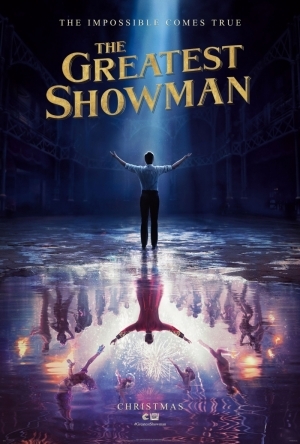
Inspired (very loosely may I add) by the imagination of P. T. Barnum, The Greatest Showman is an original musical that celebrates the birth of show business & tells of a visionary (Jackman) who rose from nothing to create a spectacle that became a worldwide sensation. The story is simple as we follow Barnum and his family as they rise from the depths of debt to the glitzy world of fame and fortune.
However, looking deeper, this rather poignant tale has special resonance today. In this ever-divided world, it’s message of acceptance and equality is something the majority of us still strive for. Whether it be for those who have suffered from homophobic, racial or any other abuse for simply being ‘different’, The Greatest Showman will take on a new, more emotional meaning.
One of the strongest parts of The Greatest Showman is its cast. Alongside Jackman, we have musical expert Zac Efron, Spider-Man: Homecoming’s Zendaya, Rebecca Ferguson (Mission Impossible: Rogue Nation) and Michelle Williams (All the Money in the World). Every single one of them is outstanding, emoting beautifully over the course of the film but this very much Jackman’s baby (it took nearly 7 years to get the idea to screen) and his performance is one of the best of his career.
I’m going to dedicate this paragraph to Efron, as I feel he’s been given a bit of a rough ride by me and Movie Metropolis in general. With his recent roles in Dirty Grandpa and Baywatch, he was becoming better at taking his shirt off than acting in any great capacity, but he proves in The Greatest Showman that he still has that acting prowess that made him so popular with the High School Musical crowd.
Thankfully The Greatest Showman has some of the best pieces of music in the genre
Barnum is a complex character portrayed with a warmth by Jackman that many of his peers would’ve struggled to emulate. Elsewhere, Keala Settle wows as bearded lady, Lettie. It appears her efforts here haven’t gone unnoticed as her powerful ballad This is Me has been nominated for an Oscar at this year’s awards – and it’s well-deserving of taking the crown. She is absolutely astounding.
The brings us nicely onto the songs. A musical, as its name suggests, lives or dies on the basis of its songs and score, and thankfully The Greatest Showman has some of the best pieces of music in the genre. There isn’t a single dud in the track listing with Rewrite the Stars, performed by Zac Efron and Zendaya, and the aforementioned This is Me, sang by Keala Settle being highlights. It’s fair to say that you’ll be clapping and singing along in no time.
Pacing is also one of the film’s strongest suits. Zipping along at only 105 minutes, The Greatest Showman doesn’t mess about in throwing song after song at the audience and this is more than welcome. First-time director Michael Gracey’s shot choices are rudimentary but colour leaps off the screen throughout and the cinematography really benefits from his more static filming style.
It’s testament to the talents of Hugh Jackman and this phenomenal cast that nearly two months after the film’s theatrical release, people are still flocking to see The Greatest Showman in cinemas across the globe. And it’s easy to see why. From start to finish, it is an absolute joy to watch. With a cracking set of songs, created by La La Land’s Benj Pasek and Justin Paul, and stunning performances by each member of the cast, it’s an absolute treat for the whole family to enjoy and my first five-star film of 2018.
https://moviemetropolis.net/2018/02/17/the-greatest-showman-review-all-the-fun-of-the-circus/
Following on from his exceptional role in the deeply depressing Les Miserables, everyone’s favourite Australian actor, Hugh Jackman returns to the genre with The Greatest Showman. But is it worth you warming up your vocal chords for?
Inspired (very loosely may I add) by the imagination of P. T. Barnum, The Greatest Showman is an original musical that celebrates the birth of show business & tells of a visionary (Jackman) who rose from nothing to create a spectacle that became a worldwide sensation. The story is simple as we follow Barnum and his family as they rise from the depths of debt to the glitzy world of fame and fortune.
However, looking deeper, this rather poignant tale has special resonance today. In this ever-divided world, it’s message of acceptance and equality is something the majority of us still strive for. Whether it be for those who have suffered from homophobic, racial or any other abuse for simply being ‘different’, The Greatest Showman will take on a new, more emotional meaning.
One of the strongest parts of The Greatest Showman is its cast. Alongside Jackman, we have musical expert Zac Efron, Spider-Man: Homecoming’s Zendaya, Rebecca Ferguson (Mission Impossible: Rogue Nation) and Michelle Williams (All the Money in the World). Every single one of them is outstanding, emoting beautifully over the course of the film but this very much Jackman’s baby (it took nearly 7 years to get the idea to screen) and his performance is one of the best of his career.
I’m going to dedicate this paragraph to Efron, as I feel he’s been given a bit of a rough ride by me and Movie Metropolis in general. With his recent roles in Dirty Grandpa and Baywatch, he was becoming better at taking his shirt off than acting in any great capacity, but he proves in The Greatest Showman that he still has that acting prowess that made him so popular with the High School Musical crowd.
Thankfully The Greatest Showman has some of the best pieces of music in the genre
Barnum is a complex character portrayed with a warmth by Jackman that many of his peers would’ve struggled to emulate. Elsewhere, Keala Settle wows as bearded lady, Lettie. It appears her efforts here haven’t gone unnoticed as her powerful ballad This is Me has been nominated for an Oscar at this year’s awards – and it’s well-deserving of taking the crown. She is absolutely astounding.
The brings us nicely onto the songs. A musical, as its name suggests, lives or dies on the basis of its songs and score, and thankfully The Greatest Showman has some of the best pieces of music in the genre. There isn’t a single dud in the track listing with Rewrite the Stars, performed by Zac Efron and Zendaya, and the aforementioned This is Me, sang by Keala Settle being highlights. It’s fair to say that you’ll be clapping and singing along in no time.
Pacing is also one of the film’s strongest suits. Zipping along at only 105 minutes, The Greatest Showman doesn’t mess about in throwing song after song at the audience and this is more than welcome. First-time director Michael Gracey’s shot choices are rudimentary but colour leaps off the screen throughout and the cinematography really benefits from his more static filming style.
It’s testament to the talents of Hugh Jackman and this phenomenal cast that nearly two months after the film’s theatrical release, people are still flocking to see The Greatest Showman in cinemas across the globe. And it’s easy to see why. From start to finish, it is an absolute joy to watch. With a cracking set of songs, created by La La Land’s Benj Pasek and Justin Paul, and stunning performances by each member of the cast, it’s an absolute treat for the whole family to enjoy and my first five-star film of 2018.
https://moviemetropolis.net/2018/02/17/the-greatest-showman-review-all-the-fun-of-the-circus/
Hazel (1853 KP) rated The Water Babies in Books
Dec 7, 2018
<i>This eBook was provided by the publisher via NetGalley in exchange for an honest review </i>
This year (2017), Calla Editions are printing a new hardback version of the original 1863 children’s classic <i>The Water Babies</i> written by the Anglican clergyman, Charles Kingsley (1819-75). Subtitled “<i>A Fairytale for a land-baby</i>” the book was intended for Kingsley’s youngest son and therefore was targeted at a juvenile demographic. However, as a result of the 1800’s vernacular and particularly deep themes, it has become more appropriate for older readers. With full-colour illustrations by Jessie Wilcox Smith (1863-1935) from the height of the golden age of illustration, this edition promises to be a collector’s item.
Charles Kingsley, the founder of England’s Christian Socialist movement, was exceedingly interested in the plight of the working class, particularly of the abuse and protection of children. This is reflected in his story about Tom, the ten-year-old London chimney sweep, who suffers ill-treatment at the hands of his employer. Tom, who has known nothing but the sooty streets of London, is embarrassed after scaring a beautiful young girl with his grimy appearance. Running away through a countryside he is unfamiliar with, Tom dives into a river to wash, however, falls asleep in the water.
On awakening, Tom discovers he has been transformed into a water baby; he can live and breathe amongst all the fishes and other mystical water creatures. Forgetting his horrible past, Tom is soon frolicking with the characters he meets, teasing and provoking unsuspecting individuals. But the fairies in charge of water babies are determined to teach him many lessons about truth, mercy, justice and courage.
<i>The Water Babies</i> is a morality fable with fairy-tale-like qualities. It educates young readers about the consequences of their actions but also enlightens them about the cruelty of some adults. Kingsley often talks to the reader (in this instance his son), drawing them into the story and making the scenarios as relatable as possible. The magical underwater setting is merely a veil to hide the lessons Kingsley is attempting to preach.
For the adult reader, Kingsley has a much more political message. Written at the time of political and scientific advancement, particularly in respect to the concept of natural selection, Kingsley attempts to ridicule the ideas of thinkers such as Charles Darwin by producing a satirical narrative. He suggests that scientists are fools who use unnecessarily long and foreign terms, evidenced by his use of the made-up subject of <i>Necrobioneopalæonthydrochthonanthropopithekology</i>. He also goes as far as to mock the majority of adults and appears to be completely anti-Irish people.
In some instances, Charles Kingsley goes too far in his satire, resulting in something that would not be accepted by publishers today. In order for Tom to be the hero of the story, adults need to be viewed as less than good – people who need to be punished for their discourteous treatment of children, which in this instance, they are, and quite graphically. But the most controversial theme explored is death. The more naïve may not cotton on to the fact that Tom falling asleep in the river equates to drowning, yet that is exactly what happened. Only through death can one become a water baby. To make matters slightly more alarming, Kingsley does not see this death as a bad thing; he describes Tom’s new life as something far better than life on earth – coming from a clergyman this is understandable – which suggests that death is better than living for an abused child.
Despite these controversies, Kingsley’s prose is humorous and entertaining - far more mind-boggling than you may initially expect. With characters named Mrs Bedonebyasyoudid and Professor Ptthmllnsprts, there is plenty to make readers laugh. Some of the hilarities may go above the heads of children since the jargon is no longer used in today’s society, however, adults will be able to appreciate the comical aspect.
Over 150 years old, <i>The Water Babies</i> has remained a classic. It reveals the political, scientific and social situations of the mid-1800s, yet it contains wisdom that is still relevant today. As Kingsley’s daughter Rose says in the introduction, “What a fine thing it is to love truth, mercy, justice, courage, and all things noble and of good report.” No matter how peculiar this novel is, it says a lot about the virtues of our character.
This year (2017), Calla Editions are printing a new hardback version of the original 1863 children’s classic <i>The Water Babies</i> written by the Anglican clergyman, Charles Kingsley (1819-75). Subtitled “<i>A Fairytale for a land-baby</i>” the book was intended for Kingsley’s youngest son and therefore was targeted at a juvenile demographic. However, as a result of the 1800’s vernacular and particularly deep themes, it has become more appropriate for older readers. With full-colour illustrations by Jessie Wilcox Smith (1863-1935) from the height of the golden age of illustration, this edition promises to be a collector’s item.
Charles Kingsley, the founder of England’s Christian Socialist movement, was exceedingly interested in the plight of the working class, particularly of the abuse and protection of children. This is reflected in his story about Tom, the ten-year-old London chimney sweep, who suffers ill-treatment at the hands of his employer. Tom, who has known nothing but the sooty streets of London, is embarrassed after scaring a beautiful young girl with his grimy appearance. Running away through a countryside he is unfamiliar with, Tom dives into a river to wash, however, falls asleep in the water.
On awakening, Tom discovers he has been transformed into a water baby; he can live and breathe amongst all the fishes and other mystical water creatures. Forgetting his horrible past, Tom is soon frolicking with the characters he meets, teasing and provoking unsuspecting individuals. But the fairies in charge of water babies are determined to teach him many lessons about truth, mercy, justice and courage.
<i>The Water Babies</i> is a morality fable with fairy-tale-like qualities. It educates young readers about the consequences of their actions but also enlightens them about the cruelty of some adults. Kingsley often talks to the reader (in this instance his son), drawing them into the story and making the scenarios as relatable as possible. The magical underwater setting is merely a veil to hide the lessons Kingsley is attempting to preach.
For the adult reader, Kingsley has a much more political message. Written at the time of political and scientific advancement, particularly in respect to the concept of natural selection, Kingsley attempts to ridicule the ideas of thinkers such as Charles Darwin by producing a satirical narrative. He suggests that scientists are fools who use unnecessarily long and foreign terms, evidenced by his use of the made-up subject of <i>Necrobioneopalæonthydrochthonanthropopithekology</i>. He also goes as far as to mock the majority of adults and appears to be completely anti-Irish people.
In some instances, Charles Kingsley goes too far in his satire, resulting in something that would not be accepted by publishers today. In order for Tom to be the hero of the story, adults need to be viewed as less than good – people who need to be punished for their discourteous treatment of children, which in this instance, they are, and quite graphically. But the most controversial theme explored is death. The more naïve may not cotton on to the fact that Tom falling asleep in the river equates to drowning, yet that is exactly what happened. Only through death can one become a water baby. To make matters slightly more alarming, Kingsley does not see this death as a bad thing; he describes Tom’s new life as something far better than life on earth – coming from a clergyman this is understandable – which suggests that death is better than living for an abused child.
Despite these controversies, Kingsley’s prose is humorous and entertaining - far more mind-boggling than you may initially expect. With characters named Mrs Bedonebyasyoudid and Professor Ptthmllnsprts, there is plenty to make readers laugh. Some of the hilarities may go above the heads of children since the jargon is no longer used in today’s society, however, adults will be able to appreciate the comical aspect.
Over 150 years old, <i>The Water Babies</i> has remained a classic. It reveals the political, scientific and social situations of the mid-1800s, yet it contains wisdom that is still relevant today. As Kingsley’s daughter Rose says in the introduction, “What a fine thing it is to love truth, mercy, justice, courage, and all things noble and of good report.” No matter how peculiar this novel is, it says a lot about the virtues of our character.
Hazel (1853 KP) rated He Walks Among Us: Encounters with Christ in a Broken World in Books
Dec 17, 2018

<b>Synopsis</b>
Richard Stearns is the president of World Vision United States who, along with his wife Reneé, regularly visits the poorer countries of our world to see the ways the charity is helping to change people's lives. <i>He Walks Among Us</i> is a compilation of short thoughts and observations (two-to-three pages, including photographs) they have both had while conducting their work. As they alternate the writing, we are given opinions and experiences that we may be able to relate to our own. As Richard is the president of the organisation, he can give an insight into the way World Vision works, however, he can also express his opinions as a father, grandfather and believer in Christ. Reneé is also a World Vision worker, but due to her nature, gives a more maternal impression of the scenes she witnesses.
The individuals written about in this book come from all over the world. Most are located in Africa, but there are also similar stories in Asia, South and North America, and even Eastern Europe. The terrors these people have faced are shocking (AIDs, war, sexual abuse, natural disasters etc), but each family has been aided in some way by World Vision and their donors.
The purpose of <i>He Walks Among Us</i> is not to promote World Vision, but to encourage us to let God and Jesus into our lives. Richard and Reneé assume their readers are Christians, however, they realise that being a Christian does not equate to fully accepting God's plans. The victims of war, rape, and poverty mentioned have also been touched by Jesus. Many did not know him before World Vision came into their lives, but they have now been transformed through the power of his love - although their situation may not have significantly improved.
The actual stories used to illustrate the work of World Vision are only brief mentions, providing the bare bones of the situations. What Richard and Reneé have focused on is linking these lives, their lives and our lives to passages from the Bible. Either taken literally or metaphorically, the pair manage to relate everything to the actions and fates of a number of key Biblical characters. This emphasises that Our Lord is walking among us, giving life, peace, hope and steadfast faith.
<b>Ideas</b>
Giving someone new hope or purpose in their life can be related to Jesus raising Lazarus from the dead. Whether people are literally dying, or on the edge of hopelessness and despair, improving their situation can turn their lives around.
The donors and workers at World Vision are like the Good Samaritan in Jesus' parable. We do not know these people, know their religion or circumstances, yet we send money and aid. To do nothing would make us the Priest or Levite in the story.
David was only a young boy when he had to face Goliath, yet, against all odds, he defeated him. The children mentioned in this book are similar to David. They each have their metaphorical Goliath's: poverty, illness, loss of parents, war, hunger etc, but with God working through us, these can be overcome.
<b>Noteworthy Bible Verses</b>
Each chapter of the book begins with a Bible verse, and often more are included within the text. Here are a few that really relate to the work of World Vision and the ways in which we can involve ourselves:
Philippians 4:12-13
Luke 21:3-4
Luke 6:20-21
Psalm 23:4
<b>Statistics</b>
23 million people in sub-Sahara Africa are suffering from HIV.
In Soviet-controlled Georgia, churches were banned. Some villages are only just seeing their first church in over 400 years.
20 thousand children under the age of 5 die every day.
Every 4 seconds a child under 5 dies.
Over 2 billion people in the world are living on $2 or less a day.
1 billion people have no access to clean drinking water.
41% of the population in Niger have no clean water.
<b>Citations</b>
Helen Keller: "So much has been given to me, I have no time to ponder over that which is denied."
Oswald Chambers: "The great hindrance in spiritual life is that we will look for big things to do. Jesus took a towel ... and began to wash the disciples' feet."
Mother Theresa: "I am a pencil in the hand of a writing God who is sending a love letter to the world."
C.S. Lewis: "Humility is not thinking less of yourself but thinking of yourself less."
<b>Other Mentions</b>
Hymn - Frances R. Havergal, <i>Take my Life and let it be.</i>
Film - <i>Pushing the Elephant</i>
Richard Stearns is the president of World Vision United States who, along with his wife Reneé, regularly visits the poorer countries of our world to see the ways the charity is helping to change people's lives. <i>He Walks Among Us</i> is a compilation of short thoughts and observations (two-to-three pages, including photographs) they have both had while conducting their work. As they alternate the writing, we are given opinions and experiences that we may be able to relate to our own. As Richard is the president of the organisation, he can give an insight into the way World Vision works, however, he can also express his opinions as a father, grandfather and believer in Christ. Reneé is also a World Vision worker, but due to her nature, gives a more maternal impression of the scenes she witnesses.
The individuals written about in this book come from all over the world. Most are located in Africa, but there are also similar stories in Asia, South and North America, and even Eastern Europe. The terrors these people have faced are shocking (AIDs, war, sexual abuse, natural disasters etc), but each family has been aided in some way by World Vision and their donors.
The purpose of <i>He Walks Among Us</i> is not to promote World Vision, but to encourage us to let God and Jesus into our lives. Richard and Reneé assume their readers are Christians, however, they realise that being a Christian does not equate to fully accepting God's plans. The victims of war, rape, and poverty mentioned have also been touched by Jesus. Many did not know him before World Vision came into their lives, but they have now been transformed through the power of his love - although their situation may not have significantly improved.
The actual stories used to illustrate the work of World Vision are only brief mentions, providing the bare bones of the situations. What Richard and Reneé have focused on is linking these lives, their lives and our lives to passages from the Bible. Either taken literally or metaphorically, the pair manage to relate everything to the actions and fates of a number of key Biblical characters. This emphasises that Our Lord is walking among us, giving life, peace, hope and steadfast faith.
<b>Ideas</b>
Giving someone new hope or purpose in their life can be related to Jesus raising Lazarus from the dead. Whether people are literally dying, or on the edge of hopelessness and despair, improving their situation can turn their lives around.
The donors and workers at World Vision are like the Good Samaritan in Jesus' parable. We do not know these people, know their religion or circumstances, yet we send money and aid. To do nothing would make us the Priest or Levite in the story.
David was only a young boy when he had to face Goliath, yet, against all odds, he defeated him. The children mentioned in this book are similar to David. They each have their metaphorical Goliath's: poverty, illness, loss of parents, war, hunger etc, but with God working through us, these can be overcome.
<b>Noteworthy Bible Verses</b>
Each chapter of the book begins with a Bible verse, and often more are included within the text. Here are a few that really relate to the work of World Vision and the ways in which we can involve ourselves:
Philippians 4:12-13
Luke 21:3-4
Luke 6:20-21
Psalm 23:4
<b>Statistics</b>
23 million people in sub-Sahara Africa are suffering from HIV.
In Soviet-controlled Georgia, churches were banned. Some villages are only just seeing their first church in over 400 years.
20 thousand children under the age of 5 die every day.
Every 4 seconds a child under 5 dies.
Over 2 billion people in the world are living on $2 or less a day.
1 billion people have no access to clean drinking water.
41% of the population in Niger have no clean water.
<b>Citations</b>
Helen Keller: "So much has been given to me, I have no time to ponder over that which is denied."
Oswald Chambers: "The great hindrance in spiritual life is that we will look for big things to do. Jesus took a towel ... and began to wash the disciples' feet."
Mother Theresa: "I am a pencil in the hand of a writing God who is sending a love letter to the world."
C.S. Lewis: "Humility is not thinking less of yourself but thinking of yourself less."
<b>Other Mentions</b>
Hymn - Frances R. Havergal, <i>Take my Life and let it be.</i>
Film - <i>Pushing the Elephant</i>

Gareth von Kallenbach (980 KP) rated Whiplash (2014) in Movies
Aug 6, 2019
Well, I must’ve done something to incur this kind of karma recently … My editors have been assigning me some excellent films this past month and this one is another on that string …
intensity, drive, and jazz combine to form the synopsis of this latest film. ‘Whiplash’ is a dramatic ‘jazz thriller’ which premiered at 2014 Sundance film festival back in January and instantly received several awards and critical acclaim before hit the theaters earlier this October.
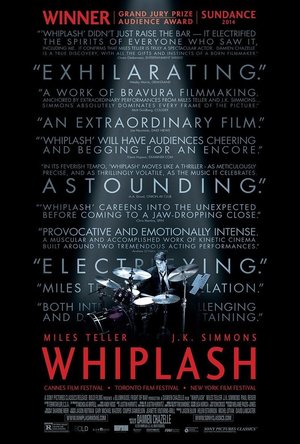
Written and directed by Damien Chazelle, ‘Whiplash’ stars Miles Teller, J.K. Simmons, Melissa Benoist, Paul Reiser, Jayson Blair, Austin Stowell, and Kavita Patil.
At a music conservatory where the competition could be compared to a ‘dog-eat-dog’ philosophy, Andrew Neyman (Teller) is a promising young drummer, willing to sacrifice his personal life and nearly everything else with his ultimate goal of becoming one of the great jazz drummers in memory. Having fallen under the eye of Terence Fletcher (Simmons), an almost insane and ruthless music conductor who notices the young music prodigy’s talent and becomes the drummer’s mentor.
Assigning Neyman as 2nd then 1st chair, Fletcher at first calmly nurtures the drummer prodigy but then pulls a complete 180 berating Neyman and very nearly assaulting him with a drum cymbal and reassigns him to 2nd chair. Later, at a jazz competition where the 1st chairs music was lost and Neyman ‘saves the day’ by playing the entire music set from memory Fletcher assigns him to 1st chair as a reward only to reassign him a few days later and replace him with another ‘supposed’ drummer prodigy. All the while, Neyman is devoting all his energies and thought to his drumming to the point of boarding on a nervous breakdown and injury …. even ending his relationship with his girlfriend. Throughout all these events Fletcher continues his villainous and tyrannical treatment of Neyman all in an effort to inspire him to realize his true potential …. the potential that Fletcher believes Neyman possess.
I mentioned ‘intensity’ and ‘drive’ at the beginning of this review …. Those two key words ….
are what this film created. The drive of Neyman and the intensity of his mentor Fletcher ….
Perhaps it’s the other way around? When the movie ends, you left with the same feeling you might imagine if you tried a 5 shot espresso. This film shows how much music (in this case jazz) can affect an individual. How anyone’s true passion can push someone beyond what is would be described as normal.
Teller and Simmons had the rare good fortunes as far as the casting in which they could both be the lead actors in this film where the intensity is magnified by the reaction of the other’s volatile attitude from one minute to the next. It was like watching a violent chemical reaction unfold in a science lab. You almost found yourself wanting to duck for cover when Neyman and Fletcher started fuming at each other. At the apex of this volatile relationship was the goal of realizing Neyman’s potential again, it was all about the drive and the intensity.
Despite the films praise, it has not been without criticism …. In recent edition of Slate, an internet culture and current affairs magazine, Forrest Wickman accused the film of distorting and misinterpreting an anecdote regarding legendary jazz composer and saxophonist Charlie Parker. Both main characters Fletcher and Neyman mention that drummer Jo Jones threw a cymbal at the teenaged Parker’s head as retaliation for Parker’s supposedly losing the beat of the composition they were performing in Count Basie’s band during a 1930s performance. According to Wickman, “Jones didn’t throw the cymbal at Parker’s head. He threw it at the floor near his feet, ‘gonging’ him off. It wasn’t an episode of physical abuse.” Jones was upset at Parker’s failure to change key with the rest of the band NOT losing the beat.
Alas, there is a an occurrence of the dreaded ‘artistic license’ in the film. And although it’s disappointing to see such an excellent film ‘alter history’ in order to better meld with the film’s script/premise the movie was so well done that I kind of let that slip by. If the performances by Teller and Simmons aren’t enough to convince you … At least go for the music! If you’re into ‘real’ jazz and not the ‘Starbucks Coffeehouse Crap’ that J.K. Simmons refers to in the film, then ‘Whiplash’ is definitely a film worth checking out. Definitely NOT one for the kids as there is A LOT of foul adult language in the film. Once again, I’m going to give this film 4 out of 5 stars.
intensity, drive, and jazz combine to form the synopsis of this latest film. ‘Whiplash’ is a dramatic ‘jazz thriller’ which premiered at 2014 Sundance film festival back in January and instantly received several awards and critical acclaim before hit the theaters earlier this October.
Written and directed by Damien Chazelle, ‘Whiplash’ stars Miles Teller, J.K. Simmons, Melissa Benoist, Paul Reiser, Jayson Blair, Austin Stowell, and Kavita Patil.
At a music conservatory where the competition could be compared to a ‘dog-eat-dog’ philosophy, Andrew Neyman (Teller) is a promising young drummer, willing to sacrifice his personal life and nearly everything else with his ultimate goal of becoming one of the great jazz drummers in memory. Having fallen under the eye of Terence Fletcher (Simmons), an almost insane and ruthless music conductor who notices the young music prodigy’s talent and becomes the drummer’s mentor.
Assigning Neyman as 2nd then 1st chair, Fletcher at first calmly nurtures the drummer prodigy but then pulls a complete 180 berating Neyman and very nearly assaulting him with a drum cymbal and reassigns him to 2nd chair. Later, at a jazz competition where the 1st chairs music was lost and Neyman ‘saves the day’ by playing the entire music set from memory Fletcher assigns him to 1st chair as a reward only to reassign him a few days later and replace him with another ‘supposed’ drummer prodigy. All the while, Neyman is devoting all his energies and thought to his drumming to the point of boarding on a nervous breakdown and injury …. even ending his relationship with his girlfriend. Throughout all these events Fletcher continues his villainous and tyrannical treatment of Neyman all in an effort to inspire him to realize his true potential …. the potential that Fletcher believes Neyman possess.
I mentioned ‘intensity’ and ‘drive’ at the beginning of this review …. Those two key words ….
are what this film created. The drive of Neyman and the intensity of his mentor Fletcher ….
Perhaps it’s the other way around? When the movie ends, you left with the same feeling you might imagine if you tried a 5 shot espresso. This film shows how much music (in this case jazz) can affect an individual. How anyone’s true passion can push someone beyond what is would be described as normal.
Teller and Simmons had the rare good fortunes as far as the casting in which they could both be the lead actors in this film where the intensity is magnified by the reaction of the other’s volatile attitude from one minute to the next. It was like watching a violent chemical reaction unfold in a science lab. You almost found yourself wanting to duck for cover when Neyman and Fletcher started fuming at each other. At the apex of this volatile relationship was the goal of realizing Neyman’s potential again, it was all about the drive and the intensity.
Despite the films praise, it has not been without criticism …. In recent edition of Slate, an internet culture and current affairs magazine, Forrest Wickman accused the film of distorting and misinterpreting an anecdote regarding legendary jazz composer and saxophonist Charlie Parker. Both main characters Fletcher and Neyman mention that drummer Jo Jones threw a cymbal at the teenaged Parker’s head as retaliation for Parker’s supposedly losing the beat of the composition they were performing in Count Basie’s band during a 1930s performance. According to Wickman, “Jones didn’t throw the cymbal at Parker’s head. He threw it at the floor near his feet, ‘gonging’ him off. It wasn’t an episode of physical abuse.” Jones was upset at Parker’s failure to change key with the rest of the band NOT losing the beat.
Alas, there is a an occurrence of the dreaded ‘artistic license’ in the film. And although it’s disappointing to see such an excellent film ‘alter history’ in order to better meld with the film’s script/premise the movie was so well done that I kind of let that slip by. If the performances by Teller and Simmons aren’t enough to convince you … At least go for the music! If you’re into ‘real’ jazz and not the ‘Starbucks Coffeehouse Crap’ that J.K. Simmons refers to in the film, then ‘Whiplash’ is definitely a film worth checking out. Definitely NOT one for the kids as there is A LOT of foul adult language in the film. Once again, I’m going to give this film 4 out of 5 stars.
Coping with Chloe
Book
Anna and Chloe are twins. They share everything. Even Chloe's terrible accident hasn't split them...