

Gas Station 2: Highway Service
Games
App
Buckle up and get ready for the trip of your life! When you cruise on an open highway, the safety...

Game of War - Fire Age
Games and Social Networking
5.7 Rate It
App
Join the ULTIMATE battle for domination of the Kingdom in Game of War – Fire Age! PLAY FOR FREE in...

2XL ATV Offroad
Games and Entertainment
App
From the makers of “2XL Supercross” comes the hottest, action-packed racing game to hit the...

FlashScore
Sports
App
Stay in touch with everything you love about sport. With the FlashScore app, you are always just one...
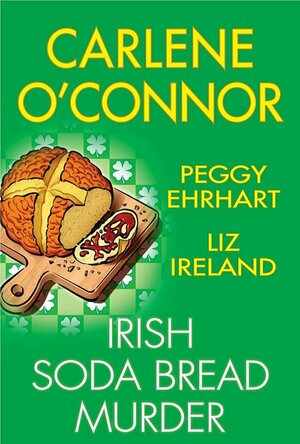
Irish Soda Bread Murder
Carlene O'Connor, Liz Ireland and Peggy Ehrhart
8.0 Rate It
Book
It’s almost time for the delicious warmth of Irish soda bread, but be careful where you...

David McK (3883 KP) rated Death to the Emperor (Macro and Cato #21) in Books
Apr 10, 2023
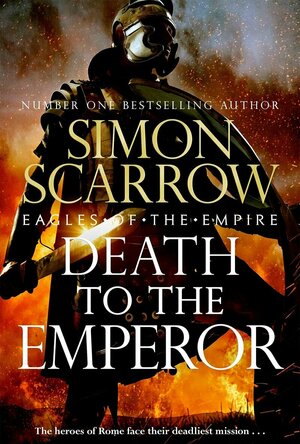

I wondered into a local branch of Eason's, and saw Under the Eagle on offer, sold for an introductory price (which I can't even remember), and with a blurb that sounded interesting. That, and a quote from the king of historical action-adventure fiction Bernard Cornwell that 'I really don't need this kind of competition ... a great read'.
Jump forward just over 20 years, and we're now onto book #20 in the series, and back in the Roman province of Brittania after the intervening books have had us all over the Roman Empire.
The series has also lost the 'Eagle' that was always included somewhere in the earlier titles (Under the Eagle, The Eagle's Conquest, The Eagle and the Wolves etc), with that word last used in the title in entry # 7 (The Eagle in the Sand).
That's not all that has changed: Cato is no longer the scared young man he had been in the first entries; Macro no longer the seasoned Centurion. Now, Macro is retired from active service whilst Cato - who now has a family of his own - has risen in rank above that that Macro ever reached but is still firm friends with the latter.
We've now also reached a pivotal moment in Roman Britain history, with the Boudicean revolt just about to kick off (as it does here) and as the Romans finally capture and raze the Druid stronghold of Mona.
Those two events form the backbone of this novel, with Cato involved in the attack on Mona whilst Macro is charged with the defence of Camulodunum (Colchester) and in charge of the Roman Reserves there whilst the main army is away on campaign, just after the Governor of Britain has further alienated their Icenian allies.
As with all of the Simon Scarrow books I've read, the history is worn lightly enough to make an enjoyable read: this is not a dry, stuffy retelling of events but rather uses the real historical events as the backbone for the story being built around it.
This, I have to say, is also the first in the series that I can remember ending in a definite cliffhanger ...
(I might have to go back and re-read the previous now)


Gareth von Kallenbach (980 KP) rated Whiplash (2014) in Movies
Aug 6, 2019
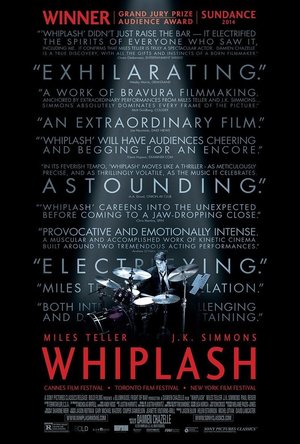
intensity, drive, and jazz combine to form the synopsis of this latest film. ‘Whiplash’ is a dramatic ‘jazz thriller’ which premiered at 2014 Sundance film festival back in January and instantly received several awards and critical acclaim before hit the theaters earlier this October.
Written and directed by Damien Chazelle, ‘Whiplash’ stars Miles Teller, J.K. Simmons, Melissa Benoist, Paul Reiser, Jayson Blair, Austin Stowell, and Kavita Patil.
At a music conservatory where the competition could be compared to a ‘dog-eat-dog’ philosophy, Andrew Neyman (Teller) is a promising young drummer, willing to sacrifice his personal life and nearly everything else with his ultimate goal of becoming one of the great jazz drummers in memory. Having fallen under the eye of Terence Fletcher (Simmons), an almost insane and ruthless music conductor who notices the young music prodigy’s talent and becomes the drummer’s mentor.
Assigning Neyman as 2nd then 1st chair, Fletcher at first calmly nurtures the drummer prodigy but then pulls a complete 180 berating Neyman and very nearly assaulting him with a drum cymbal and reassigns him to 2nd chair. Later, at a jazz competition where the 1st chairs music was lost and Neyman ‘saves the day’ by playing the entire music set from memory Fletcher assigns him to 1st chair as a reward only to reassign him a few days later and replace him with another ‘supposed’ drummer prodigy. All the while, Neyman is devoting all his energies and thought to his drumming to the point of boarding on a nervous breakdown and injury …. even ending his relationship with his girlfriend. Throughout all these events Fletcher continues his villainous and tyrannical treatment of Neyman all in an effort to inspire him to realize his true potential …. the potential that Fletcher believes Neyman possess.
I mentioned ‘intensity’ and ‘drive’ at the beginning of this review …. Those two key words ….
are what this film created. The drive of Neyman and the intensity of his mentor Fletcher ….
Perhaps it’s the other way around? When the movie ends, you left with the same feeling you might imagine if you tried a 5 shot espresso. This film shows how much music (in this case jazz) can affect an individual. How anyone’s true passion can push someone beyond what is would be described as normal.
Teller and Simmons had the rare good fortunes as far as the casting in which they could both be the lead actors in this film where the intensity is magnified by the reaction of the other’s volatile attitude from one minute to the next. It was like watching a violent chemical reaction unfold in a science lab. You almost found yourself wanting to duck for cover when Neyman and Fletcher started fuming at each other. At the apex of this volatile relationship was the goal of realizing Neyman’s potential again, it was all about the drive and the intensity.
Despite the films praise, it has not been without criticism …. In recent edition of Slate, an internet culture and current affairs magazine, Forrest Wickman accused the film of distorting and misinterpreting an anecdote regarding legendary jazz composer and saxophonist Charlie Parker. Both main characters Fletcher and Neyman mention that drummer Jo Jones threw a cymbal at the teenaged Parker’s head as retaliation for Parker’s supposedly losing the beat of the composition they were performing in Count Basie’s band during a 1930s performance. According to Wickman, “Jones didn’t throw the cymbal at Parker’s head. He threw it at the floor near his feet, ‘gonging’ him off. It wasn’t an episode of physical abuse.” Jones was upset at Parker’s failure to change key with the rest of the band NOT losing the beat.
Alas, there is a an occurrence of the dreaded ‘artistic license’ in the film. And although it’s disappointing to see such an excellent film ‘alter history’ in order to better meld with the film’s script/premise the movie was so well done that I kind of let that slip by. If the performances by Teller and Simmons aren’t enough to convince you … At least go for the music! If you’re into ‘real’ jazz and not the ‘Starbucks Coffeehouse Crap’ that J.K. Simmons refers to in the film, then ‘Whiplash’ is definitely a film worth checking out. Definitely NOT one for the kids as there is A LOT of foul adult language in the film. Once again, I’m going to give this film 4 out of 5 stars.

Matthew Krueger (10051 KP) rated The Manhattan Project: Energy Empire in Tabletop Games
Feb 22, 2021
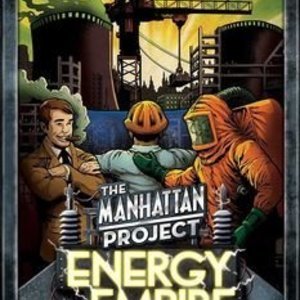
Players sit in the roles of countries trying to develop industry and energy production over a period of time roughly from the end of World War II to the present day. Throughout the game, players will construct buildings, power plants as dice, and manage the pollution in their environment with the aim of scoring the most points.
To begin play, the main board for Energy Empire is seeded with starting Building cards. These are divided into three different sectors: Government spaces, Industry spaces, and Commerce spaces. A set of pollution tokens, depending on the number of players, is also stacked on a track as the game timer.
Once the game begins, it flows continuously without rounds. Each player chooses, on their turn, to take a Work Turn or a Generate Turn.
Work Turn- During this type of turn, players must place a single worker on the main board on one of the spaces which represent activities and resources to collect. For example, this may be gaining science, steel, or purchasing oil. Afterwards, depending on which sector the player placed their worker, they can activate any previously purchased buildings, assuming they have enough workers and/or energy. Players can also activate their nation card and move up on the United Nations track, which is a pure competition for end game points. Energy is also used if a player wishes to place a worker on a space occupied by another worker. The player must place additional energy under the worker until their placement stack is larger than any other already placed.
Generate Turn: This type of turn represents the player resetting their work potential for a new set of placing workers. They do this by first potentially collecting an achievement which represents end game points for a variety of goals. They then recall any workers to their Player Mat and discard all Energy tokens. Players can also spend any oil resources to gain oil power plant dice. Finally the player rolls any or all power plant dice they have. This might include Solar/Wind (green dice), Hydro Power (blue dice, limited to one per player), Coal (black dice), and Nuclear (yellow dice). The resulting number of lightning bolts on the dice are delivered as energy tokens to the player. If a clean energy source rolled the highest cardinal number, the player does not collect pollution. If coal, oil, or nuclear dice resulted in the highest number, then the player places a single pollution token into their environment. Players continue this process one after another until a predesignated number of pollution tokens are removed from the game. Players get one final turn and then points are tallied. Players receive points for keeping their player mat free of pollution, building power plants, the United Nations track, and various points for each building constructed.
The most engaging part of the game and the main reason to seek it out, comes from the theme of global power intrigue. The building cards show off the exceptional art in the game.
Manhattan Project: Energy Empire Cards
The global impact cards for the first half of the game are green with a milder impact. Once they go red, prepare for some serious negative events. On top of this theme, the actions associated with everything in the game fit just right. The concept in game actions connect directly to the theme concept. In addition, the country actions to move up on the United Nations track also represent the tone and success formulas for those countries. The mechanism for rolling dice to gain energy and how much pollution is delivered feels just perfect given the competing goals of clean environments and high energy production.
The worker placement mechanism itself (largest stack among existing workers) is not new, but it is just the right mechanism to promote the overall feeling of energy competition. Choosing the space on which to place a worker is highly engaging and the choices tense to maximize efficiency. It is easy to connect with both strategy and tactics in this game.
Even with this engagement, it is also easy to see optimal routes for gaining points assuming opponents follow their strategies. It’s not “easy”, but it is possible to not even worry about opponents blocking a particular path to victory with low numbers of players.
Its a excellent work placement game. One i highly recordmend getting and play.

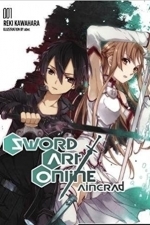
**✿❀ Maki ❀✿** (7 KP) rated Sword Art Online: 1: Aincrad in Books
May 3, 2018

<img src="http://i1321.photobucket.com/albums/u556/kotonemaki/For%20R%20Purposes/12.29.12%20If%20SAO%20was%20Real_zpsjsrg8fz5.jpg"/>;
I enjoyed the premise of the light novel - the whole "being trapped in a video game until you beat it and if you die in the game you die in real life" thing. I also liked the idea that once in the game, the players were stripped of their anonymity. They were forced to play as themselves, rather than the avatars they had created to represent themselves.
And it's nice that the novel/anime/manga have managed to carve out their own space in the "virtual reality gone wrong" genre, and give .hack// some competition.
But I really, <i>really</i> did not like Kirito.
Maybe I'm a bit prejudiced against the character because of the flood of people naming themselves Kirito in MMOs who made the games obnoxious to play for months on end, since a good portion of them had no idea what they were doing. They all chose to play tanks (of course) and completely ruined it for people looking for a tank who knew what they were doing, or made it harder for actual tanks to get a party, because nobody trusted anybody to know what they were doing in those dark years after the anime first came out.
Maybe it's because Kirito (the actual character) was such a complete special snowflake, without any real redeeming qualities, other than the fact that he managed to luck into his power. That, and his relationship with Asuna are all that really define his character.
I've heard that their characters and the build up of their relationship are handled better in the anime, and doesn't come across as so insta-love. But to be honest, I've got no desire to watch the anime just to get character development when it should have been handled better in the novel that the anime was based on in the first place.