
Search
Search results



I received a complimentary copy of this book in return for an honest review and although it has taken me a while to read it, I have really enjoyed the content and style of the information provided.
This book gives a very in-depth and detailed re-telling of the Battle of Gettysburg, and more specifically the charge of Barksdale himself. A battle and time that will live forever in history, Phillip Thomas Tucker weaves the death and grim reality of war with insightful quotes, maps and ideas about how this battle really occurred.
There are several outstanding aspects of this book, however first I feel it is necessary to warn any potential readers that this book is not that easy to read. I am a frequent reader of non-fiction books, and more specifically historical non-fiction, and this is amongst one of the hardest I have read, but the effort is well worth it. At times, it is just a little over loaded with details such as names, positions in the armies etc, and with the same names appearing in both sides of the battle as well as within the same units, it can get a little hard to keep track of everyone!
On a much more positive note though, the detailed research the author must have done truly does shine through on every page. The quotes from letters, the pictures and the maps, to name but a few things, really do add a whole new dimension to the book. Personally, it made it all seem a lot more real, helping me to engage more with the trials of those poor men (and horses) stuck in the mud and terror of that day. Although knowing all the names did get slightly confusing at times, it was a great touch in helping 'bring home' the reality and enormity of the loss at that battle.
In addition, the pace with which the events were told was pitched just right. Although packed with detail, the book still had a great pace and a pull to it. The action of the battle really does pour through the pages and come alive. It's written with great skill and is one of the best 'battle recounts' that I have read in a long time.
In conclusion, I can only praise this book for summarising one of the pivotal battles of the American Civil War. Detailed, at times a little too much so, and a compelling, engaging and at times emotional read that I would recommend to anyone who has an interest in this period of history, or who is studying this.
This book gives a very in-depth and detailed re-telling of the Battle of Gettysburg, and more specifically the charge of Barksdale himself. A battle and time that will live forever in history, Phillip Thomas Tucker weaves the death and grim reality of war with insightful quotes, maps and ideas about how this battle really occurred.
There are several outstanding aspects of this book, however first I feel it is necessary to warn any potential readers that this book is not that easy to read. I am a frequent reader of non-fiction books, and more specifically historical non-fiction, and this is amongst one of the hardest I have read, but the effort is well worth it. At times, it is just a little over loaded with details such as names, positions in the armies etc, and with the same names appearing in both sides of the battle as well as within the same units, it can get a little hard to keep track of everyone!
On a much more positive note though, the detailed research the author must have done truly does shine through on every page. The quotes from letters, the pictures and the maps, to name but a few things, really do add a whole new dimension to the book. Personally, it made it all seem a lot more real, helping me to engage more with the trials of those poor men (and horses) stuck in the mud and terror of that day. Although knowing all the names did get slightly confusing at times, it was a great touch in helping 'bring home' the reality and enormity of the loss at that battle.
In addition, the pace with which the events were told was pitched just right. Although packed with detail, the book still had a great pace and a pull to it. The action of the battle really does pour through the pages and come alive. It's written with great skill and is one of the best 'battle recounts' that I have read in a long time.
In conclusion, I can only praise this book for summarising one of the pivotal battles of the American Civil War. Detailed, at times a little too much so, and a compelling, engaging and at times emotional read that I would recommend to anyone who has an interest in this period of history, or who is studying this.

Gareth von Kallenbach (980 KP) rated 300: Rise of an Empire (2014) in Movies
Jun 19, 2019


Seven years have passed since Frank Miller’s classic Graphic Novel 300 was adapted into a hit film and made a star of the largely unknown Gerard Butler.
The follow up film, “300 Rise of an Empire” is both a sequel and a prequel to the original film as it takes place before and after the events of the first film and involves Themistocles (Sullivan Stapleton), a general from Athens who is tasked with defeating the invading Persian navy with only a handful of soldiers and ships who years earlier at the Battle of Marathon put the events of the two films in motion with his actions on the battlefield.
The film also chronicles the rise of the mortal turned god Xerxes (Rodrigo Santoro) and his brutal right hand Artemesia (Eva Green), who plays a deadly game against the Greeks and Themistocles based on a long standing desire for revenge against the Greeks despite being Greek herself.
While the film is slow getting started as there is a lot of back story and character introductions to chronicle, the film does start off nicely with the bloody battle of Marathon and then sets up several battles along the way.
Lena Headey is the only returning character of note aside from Xeres and she does a good job in her limited time as the Queen of Sparta who must make hard decisions for her people.
The film uses the same graphical style of the previous film and while there is tons of blood and splatter, it is done with CGI and this helps diminish the impact of seeing copious amounts of blood and gore flying through the air during the numerous battles.
The 3D in the film is effective and seeing the embers from the fires float around was a nice touch.
The cast was engaging and entertaining despite being largely unknown and Stapleton does a nice job with the lead as he does not try to recreate the performance of Butler and instead focuses on his own character.
While it plays out largely like it is, a film version of a comic, Zack Snyder who produced the film and wrote the screenplay has done a good job with the source material. Director Noam Murro keeps the action flowing and gives a nice mix of visuals and character to overcome some of the issues with plot and pacing.
In the end, the film is an enjoyable action film and a worthy follow up to the original which sets the stage well for future films.
http://sknr.net/2014/03/07/300-rise-of-an-empire/
The follow up film, “300 Rise of an Empire” is both a sequel and a prequel to the original film as it takes place before and after the events of the first film and involves Themistocles (Sullivan Stapleton), a general from Athens who is tasked with defeating the invading Persian navy with only a handful of soldiers and ships who years earlier at the Battle of Marathon put the events of the two films in motion with his actions on the battlefield.
The film also chronicles the rise of the mortal turned god Xerxes (Rodrigo Santoro) and his brutal right hand Artemesia (Eva Green), who plays a deadly game against the Greeks and Themistocles based on a long standing desire for revenge against the Greeks despite being Greek herself.
While the film is slow getting started as there is a lot of back story and character introductions to chronicle, the film does start off nicely with the bloody battle of Marathon and then sets up several battles along the way.
Lena Headey is the only returning character of note aside from Xeres and she does a good job in her limited time as the Queen of Sparta who must make hard decisions for her people.
The film uses the same graphical style of the previous film and while there is tons of blood and splatter, it is done with CGI and this helps diminish the impact of seeing copious amounts of blood and gore flying through the air during the numerous battles.
The 3D in the film is effective and seeing the embers from the fires float around was a nice touch.
The cast was engaging and entertaining despite being largely unknown and Stapleton does a nice job with the lead as he does not try to recreate the performance of Butler and instead focuses on his own character.
While it plays out largely like it is, a film version of a comic, Zack Snyder who produced the film and wrote the screenplay has done a good job with the source material. Director Noam Murro keeps the action flowing and gives a nice mix of visuals and character to overcome some of the issues with plot and pacing.
In the end, the film is an enjoyable action film and a worthy follow up to the original which sets the stage well for future films.
http://sknr.net/2014/03/07/300-rise-of-an-empire/
Hazel (1853 KP) rated The Forgotten Summer in Books
Dec 14, 2018
<i>I received this book for free through Goodreads First Reads.</i>
Is the truth something you really want to know? Jane Cambon has the perfect husband and spends her life travelling from their flat in London to Luc’s family estate in the south of France. Despite the hostility from Luc’s mother, Clarisse Cambon, Jane loves spending time amongst the workers in the vineyard and the olive groves. However, a tragic event causes Jane to question how well she really new her husband.
<i>The Forgotten Summer </i>by Carol Drinkwater captures the southern France climate in such a way that readers will wish to go there themselves. But for Jane it becomes a place of grief and tension as Clarisse’s aggression only increases, bringing back memories of the summer when Jane was fourteen. Not only that, there is the enigma of Jane’s husband, a filmmaker. What was he filming? Why did her keep it secret? What happened during his early years in Algeria? And, most importantly, who is Annabelle?
Not knowing the answers to many questions keeps the reader engaged in the narrative. Slowly, issues are resolved, but some answers are not uncovered until the closing of the novel. After about two thirds of the book it is possible to guess the truth about Luc’s close kept secret, and it is almost annoying that Jane is blind to it.
Drinkwater has put a lot of time and effort into <i>The Forgotten Summer</i>. The amount of research she went through to keep it as factual as possible must have been phenomenal. From reading this book we learn a little about the Algerian War of Independence – something that is glossed over in French history – and the art of winemaking: both equally interesting, particularly the former, which most readers will not have heard of.
An issue that I had with this story was the way Jane was portrayed. I kept imagining her as a younger woman even though it had been explained that she was in her late forties. There was nothing in her description or personality that fitted a middle aged character. This may also be due to the way Clarisse treated Jane: as if she were incompetent and untrustworthy.
<i>The Forgotten Summer </i>is an ideal book for fans of Victoria Hislop, particularly if you also enjoy reading about southern European countries. It is engaging and exciting with a handful of lovely characters for you to admire. With its air of mystery, this book will be hard for you to put down.
Is the truth something you really want to know? Jane Cambon has the perfect husband and spends her life travelling from their flat in London to Luc’s family estate in the south of France. Despite the hostility from Luc’s mother, Clarisse Cambon, Jane loves spending time amongst the workers in the vineyard and the olive groves. However, a tragic event causes Jane to question how well she really new her husband.
<i>The Forgotten Summer </i>by Carol Drinkwater captures the southern France climate in such a way that readers will wish to go there themselves. But for Jane it becomes a place of grief and tension as Clarisse’s aggression only increases, bringing back memories of the summer when Jane was fourteen. Not only that, there is the enigma of Jane’s husband, a filmmaker. What was he filming? Why did her keep it secret? What happened during his early years in Algeria? And, most importantly, who is Annabelle?
Not knowing the answers to many questions keeps the reader engaged in the narrative. Slowly, issues are resolved, but some answers are not uncovered until the closing of the novel. After about two thirds of the book it is possible to guess the truth about Luc’s close kept secret, and it is almost annoying that Jane is blind to it.
Drinkwater has put a lot of time and effort into <i>The Forgotten Summer</i>. The amount of research she went through to keep it as factual as possible must have been phenomenal. From reading this book we learn a little about the Algerian War of Independence – something that is glossed over in French history – and the art of winemaking: both equally interesting, particularly the former, which most readers will not have heard of.
An issue that I had with this story was the way Jane was portrayed. I kept imagining her as a younger woman even though it had been explained that she was in her late forties. There was nothing in her description or personality that fitted a middle aged character. This may also be due to the way Clarisse treated Jane: as if she were incompetent and untrustworthy.
<i>The Forgotten Summer </i>is an ideal book for fans of Victoria Hislop, particularly if you also enjoy reading about southern European countries. It is engaging and exciting with a handful of lovely characters for you to admire. With its air of mystery, this book will be hard for you to put down.
Hazel (1853 KP) rated Window in the Wall in Books
Dec 14, 2018
<i>This eBook was provided by the publisher via NetGalley in exchange for an honest review</i>
<i>The Window in the Wall</i> by Ginny Merritt is based upon the bible story of Rahab and the spies, and the fall of Jericho. Although most Christians will know this story well it is probably not as well known amongst children. By making the main character a young girl, Talia, Merritt makes it suitable for young readers to enjoy.
Talia lives with her parents and brother within the walls of Jericho and loves helping her father in the flax fields. An approaching army strikes fear into her heart despite reassurances that nothing can destroy the strong walls and get into the city. However Talia’s aunt, Rahab, has been told different by a couple of Israelite spies who promise her and all her family safety as a reward for helping them. As many family members that Rahab can persuade sit and wait in Rahab’s room to see what happens and hopefully be saved. Unfortunately there are a few people who refuse to believe in what Rahab is saying nor that there is a God that is Lord of all.
Those familiar with the story will know the outcome of the story, but children will race through this book eagerly wanting to discover what happens to Talia and her family.
As an adult reading <i>The Window in the Wall</i> the references to Rahab’s characteristics will make more sense whereas they will most likely go over children’s heads. Having it written from a child’s perspective will help children to learn this bible story. Talia has many questions, which adults will not answer, as will the readers!
Merritt has helpfully included a pronunciation guide at the back of the book to help readers with the tricky foreign names that they encounter in the story. As an adult these names were not particularly difficult, but this would be a great benefit to younger readers.
Adults that read this book need to keep in mind the age of the target audience. The story does not go into much depth and may not be that engaging to those familiar with their bible stories.
The story of Rahab is not an easy one to rewrite for children but Merritt has done an excellent job. Books such as <i>The Window in the Wall</i> would be a great way of teaching Christian children about their faith without boring them with sermons.
<i>The Window in the Wall</i> by Ginny Merritt is based upon the bible story of Rahab and the spies, and the fall of Jericho. Although most Christians will know this story well it is probably not as well known amongst children. By making the main character a young girl, Talia, Merritt makes it suitable for young readers to enjoy.
Talia lives with her parents and brother within the walls of Jericho and loves helping her father in the flax fields. An approaching army strikes fear into her heart despite reassurances that nothing can destroy the strong walls and get into the city. However Talia’s aunt, Rahab, has been told different by a couple of Israelite spies who promise her and all her family safety as a reward for helping them. As many family members that Rahab can persuade sit and wait in Rahab’s room to see what happens and hopefully be saved. Unfortunately there are a few people who refuse to believe in what Rahab is saying nor that there is a God that is Lord of all.
Those familiar with the story will know the outcome of the story, but children will race through this book eagerly wanting to discover what happens to Talia and her family.
As an adult reading <i>The Window in the Wall</i> the references to Rahab’s characteristics will make more sense whereas they will most likely go over children’s heads. Having it written from a child’s perspective will help children to learn this bible story. Talia has many questions, which adults will not answer, as will the readers!
Merritt has helpfully included a pronunciation guide at the back of the book to help readers with the tricky foreign names that they encounter in the story. As an adult these names were not particularly difficult, but this would be a great benefit to younger readers.
Adults that read this book need to keep in mind the age of the target audience. The story does not go into much depth and may not be that engaging to those familiar with their bible stories.
The story of Rahab is not an easy one to rewrite for children but Merritt has done an excellent job. Books such as <i>The Window in the Wall</i> would be a great way of teaching Christian children about their faith without boring them with sermons.

Kristy H (1252 KP) rated Twice in a Blue Moon in Books
Oct 24, 2019
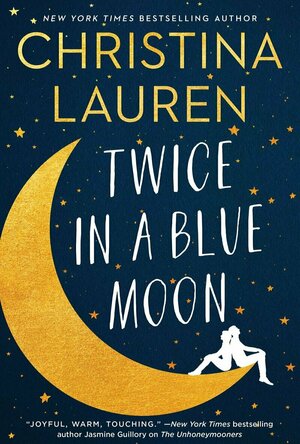
Tate first fell in love on a trip to London, where she met the mysterious Sam Brandis. They shared all their deepest secrets and dreams together every night in their hotel's garden. It was a whirlwind, beautiful romance. Sam was the only person that Tate told her biggest secret: she is the daughter of one of Hollywood's biggest film stars. But their brief love story ended abruptly when Sam betrayed Tate, revealing her secret and outing her to the world. Now, fourteen years later, Tate is a famous actress herself. She's on set on her biggest project to date. The last person she's expecting to see is Sam Brandis. But here he is. Now Tate is forced to confront what happened fourteen years ago--and how it has affected her all these years later.
"What would you do if you got a second chance with your first love?"
Well, I was totally caught up in this captivating romance. I'm a real sucker for Hollywood drama, so this was right up my alley. The daughter of a Hollywood star, who abandoned her and her Mom after a messy divorce? Said daughter grows up and decides to be a film star after being outed by her first love? I'm so in.
This Christina Lauren novel is told just from Tate's point of view, so we don't get some of the back-and-forth POV that we see in some of the duo's other books. There is more drama, less witty banter, than we might see in other books. But there's still plenty of the usual lies, longing, and misunderstandings. There are also lots of sexy moments and romantic interludes, too.
Tate is a fun character; I liked the divide between young Tate and Sam and then cutting to them fourteen years later. Honestly, older Tate is a little clueless at times. It takes her a while to catch on to things that seem pretty obvious to the rest of us. As usual, some things are rather predictable and other moments are a bit overblown, but it didn't diminish my enjoyment of the book. While Sam and Tate might not have had a constant humorous dialogue going, I liked the seriousness that the book brought to their relationship, as well as the funny moments it dropped in too. Tate's family, friends, and co-stars add a lighthearted touch, too.
Overall, this is a sweet, engaging romance. I loved the Hollywood aspect and the changing dynamic between Tate and Sam. 4 stars.
"What would you do if you got a second chance with your first love?"
Well, I was totally caught up in this captivating romance. I'm a real sucker for Hollywood drama, so this was right up my alley. The daughter of a Hollywood star, who abandoned her and her Mom after a messy divorce? Said daughter grows up and decides to be a film star after being outed by her first love? I'm so in.
This Christina Lauren novel is told just from Tate's point of view, so we don't get some of the back-and-forth POV that we see in some of the duo's other books. There is more drama, less witty banter, than we might see in other books. But there's still plenty of the usual lies, longing, and misunderstandings. There are also lots of sexy moments and romantic interludes, too.
Tate is a fun character; I liked the divide between young Tate and Sam and then cutting to them fourteen years later. Honestly, older Tate is a little clueless at times. It takes her a while to catch on to things that seem pretty obvious to the rest of us. As usual, some things are rather predictable and other moments are a bit overblown, but it didn't diminish my enjoyment of the book. While Sam and Tate might not have had a constant humorous dialogue going, I liked the seriousness that the book brought to their relationship, as well as the funny moments it dropped in too. Tate's family, friends, and co-stars add a lighthearted touch, too.
Overall, this is a sweet, engaging romance. I loved the Hollywood aspect and the changing dynamic between Tate and Sam. 4 stars.

Emma @ The Movies (1786 KP) rated Luce (2019) in Movies
Oct 26, 2019
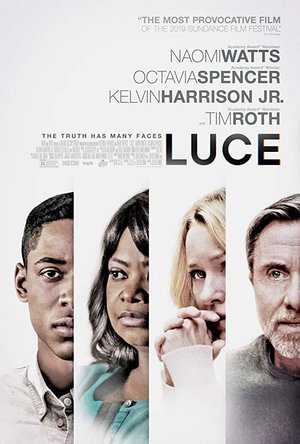
Luce was an interesting film to watch, it shows a lot of different relationships and as such it's a very wordy sort of film. I'm not averse to wordy films but they can be a little dry to watch, luckily in this case the main cast are engaging and keep you interested.
Had we not been blessed with such a great performance from Kelvin Harrison Jr as Luce I think this would have failed to make it out of the blocks. Luce becomes something very serious in his hands and the swing in the character left me with an uneasy feeling as I watched. The one frustrating thing I found was that I could sense the insincerity in all of his responses so I was frustrated that it was only really Miss Wilson that picked up on it. I understand that it's a necessary part of the story... but still.
Octavia Spencer didn't disappoint as Harriet Wilson. She got to give a good range as she devolves after going head to head with Luce. I think she probably managed to cover every emotion and handles either end of the spectrum very well.
Tim Roth and Naomi Watts play Luce's adoptive parents. Roth is someone I love on screen but Watts is an unknown entity for me as I've only seen her in 2005's King Kong. There's obviously a certain amount of tension/conflict between the couple but even taking that into consideration I didn't feel there was much of a rapport between them. Even when you take into account the conflict in the film I couldn't quite find it in me to feel anything for the couple, good or bad. Roth as Peter was good and brought across the slightly bitter side of the character well but Watt's Amy didn't seem to have enough emotion behind her. I'd have said that Amy in particular could have stood to be a little grittier, at least a small part of her did need to be a bit of a pushover but combined with her activities in the film the character didn't feel entirely believable.
Luce was enjoyable to watch but looking back I'm less enthusiastic despite the good performances at the front of it. The good sadly didn't outway the average for me and at times it became a little confusing, but it's still a solid film.
From the full review previously posted on: http://emmaatthemovies.blogspot.com/2019/10/luce-movie-review.html
Had we not been blessed with such a great performance from Kelvin Harrison Jr as Luce I think this would have failed to make it out of the blocks. Luce becomes something very serious in his hands and the swing in the character left me with an uneasy feeling as I watched. The one frustrating thing I found was that I could sense the insincerity in all of his responses so I was frustrated that it was only really Miss Wilson that picked up on it. I understand that it's a necessary part of the story... but still.
Octavia Spencer didn't disappoint as Harriet Wilson. She got to give a good range as she devolves after going head to head with Luce. I think she probably managed to cover every emotion and handles either end of the spectrum very well.
Tim Roth and Naomi Watts play Luce's adoptive parents. Roth is someone I love on screen but Watts is an unknown entity for me as I've only seen her in 2005's King Kong. There's obviously a certain amount of tension/conflict between the couple but even taking that into consideration I didn't feel there was much of a rapport between them. Even when you take into account the conflict in the film I couldn't quite find it in me to feel anything for the couple, good or bad. Roth as Peter was good and brought across the slightly bitter side of the character well but Watt's Amy didn't seem to have enough emotion behind her. I'd have said that Amy in particular could have stood to be a little grittier, at least a small part of her did need to be a bit of a pushover but combined with her activities in the film the character didn't feel entirely believable.
Luce was enjoyable to watch but looking back I'm less enthusiastic despite the good performances at the front of it. The good sadly didn't outway the average for me and at times it became a little confusing, but it's still a solid film.
From the full review previously posted on: http://emmaatthemovies.blogspot.com/2019/10/luce-movie-review.html

Eleanor (1463 KP) rated Indelible (Grant County, #4) in Books
Jul 23, 2019
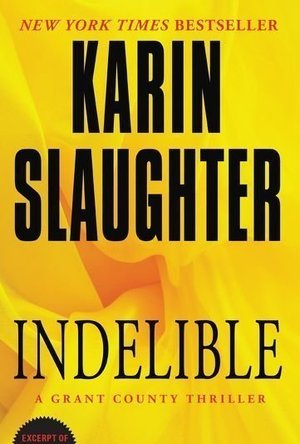

Better then the last but still not in the same league as the first couple of books in this series....
This is the fourth in the Grant County series and for a series that started so strong (I loved the first two books) I was really disappointed with this. I would recommend approaching this series in order as they do carry a lot of emotional baggage through the series.
This was the first one I listened to as an audiobook and the Southern American accents used were a bit grating for me, so I'll try to stick to the books in the future for this series (obviously a personal preference.)
With a shootout occuring in the town in the present day, we get flashbacks to an “origin” type story 12 years earlier, which sets out to give the reasoning behind the attack. It’s a pretty shocking attack and the present day part was tense.
This book is very focused on two of the main characters from the series, Medical examiner Sara Linton and her now ex husband / current boyfriend (it’s a complicated relationship) Police Chief Jeffrey. In the flashback parts of this book we see Sara and Jeffrey taking a trip to Jefferies hometown where his best friend ends up shooting someone and a body is found from Jefferies distant past. I didn’t find the investigation part here as engaging as in the previous books, with too much focus on what Jeffrey was like as a lad.
I think my main issue with this particular book is I just don’t like Jeffery and having so much dedicated to back story for him didn’t endear him any more to me. I came out of that part of the story still not liking him or really understanding why Sara is so in love with him (I suppose love is blind.)
Although I enjoyed the action packed present day shootout it still had a character issue in the form of the ever complicated Lena Adams. She is back to being a cop and this is her first day back (talk about bad timing!) I really have no idea why they are letting her back on the force she just seems to be a terrible cop (and not a particularly nice person) who is suffering from PTSD.
I feel I may be being too harsh on this book and I can fully understand people who love the characters in this series (or love to hate main characters) enjoying this book. I just prefer this series when it’s slightly more focused on a case rather than their personal lives.
This was the first one I listened to as an audiobook and the Southern American accents used were a bit grating for me, so I'll try to stick to the books in the future for this series (obviously a personal preference.)
With a shootout occuring in the town in the present day, we get flashbacks to an “origin” type story 12 years earlier, which sets out to give the reasoning behind the attack. It’s a pretty shocking attack and the present day part was tense.
This book is very focused on two of the main characters from the series, Medical examiner Sara Linton and her now ex husband / current boyfriend (it’s a complicated relationship) Police Chief Jeffrey. In the flashback parts of this book we see Sara and Jeffrey taking a trip to Jefferies hometown where his best friend ends up shooting someone and a body is found from Jefferies distant past. I didn’t find the investigation part here as engaging as in the previous books, with too much focus on what Jeffrey was like as a lad.
I think my main issue with this particular book is I just don’t like Jeffery and having so much dedicated to back story for him didn’t endear him any more to me. I came out of that part of the story still not liking him or really understanding why Sara is so in love with him (I suppose love is blind.)
Although I enjoyed the action packed present day shootout it still had a character issue in the form of the ever complicated Lena Adams. She is back to being a cop and this is her first day back (talk about bad timing!) I really have no idea why they are letting her back on the force she just seems to be a terrible cop (and not a particularly nice person) who is suffering from PTSD.
I feel I may be being too harsh on this book and I can fully understand people who love the characters in this series (or love to hate main characters) enjoying this book. I just prefer this series when it’s slightly more focused on a case rather than their personal lives.
Deborah (162 KP) rated Six Tudor Queens: Katherine of Aragon, the True Queen: Six Tudor Queens 1 in Books
Dec 19, 2018

Weir again goes from traditionalist historian to historical novelist, but she can't seem to leave the historian bit behind. Much as I dislike wholesale abandonment of historical accuracy and the flagrant sensationalism of Phillipa Gregory and her Ilk, I really found this book over long and tedious - I could quite cheerfully have done some poisoning myself just to get the book over and done with! It feels like Weir has looked up every single historical quote she could find from people in the period and tried to squeeze them into the book. I had read biographies of the period that are more enlightening that this and do more to bring the people and period to life.
During the third quarter of the book, we get a lot of Henry coming in to visit Katherine, giving us a bit of plot exposition and then having a strop and stomping out like a child having a tantrum. After about the tenth occurrence this gets rather tedious and doesn't feel altogether likely.
I was slightly weirded by the implication that Katherine on arrival quite fancied the ten year old Henry and the bit in the Tower with the 'ghost lady' and the shivers down the spine in Peterborough cathedral seemed out of place and both only really play off if you have a knowledge of the period already, in which case you really don't need to be reading this.
Finally, for all the historical stuff Weir has stuffed in there, she really does need to pay better attention to her geography. I know Ampthill isn't that far from Dunstable, but I think I little effort would inform her that it's more like 14 miles and not the 4 she has in the book!
While the writing isn't awful, it's just not engaging and the book is far too long and becomes tedious. Does Weir really believe that Katherine believed that, after everything that he had done, Henry would meekly accept the Pope's vastly overdue ruling, put Anne and Elizabeth and the change of a male heir aside along with his leadership of the Church of England? hindsight is a wonderful thing, but I find it hard to beleive that Katherine was as stupid and naive as she comes across here. She says she still loves Henry and wouldn't do anything against him, yet writes to the Pope and the Emperor with a clear intention of inciting war! I think Weir means to make her sympathetic, but I just found her exasperating. I would recommend some good non-fiction book on the period ahead of this.
During the third quarter of the book, we get a lot of Henry coming in to visit Katherine, giving us a bit of plot exposition and then having a strop and stomping out like a child having a tantrum. After about the tenth occurrence this gets rather tedious and doesn't feel altogether likely.
I was slightly weirded by the implication that Katherine on arrival quite fancied the ten year old Henry and the bit in the Tower with the 'ghost lady' and the shivers down the spine in Peterborough cathedral seemed out of place and both only really play off if you have a knowledge of the period already, in which case you really don't need to be reading this.
Finally, for all the historical stuff Weir has stuffed in there, she really does need to pay better attention to her geography. I know Ampthill isn't that far from Dunstable, but I think I little effort would inform her that it's more like 14 miles and not the 4 she has in the book!
While the writing isn't awful, it's just not engaging and the book is far too long and becomes tedious. Does Weir really believe that Katherine believed that, after everything that he had done, Henry would meekly accept the Pope's vastly overdue ruling, put Anne and Elizabeth and the change of a male heir aside along with his leadership of the Church of England? hindsight is a wonderful thing, but I find it hard to beleive that Katherine was as stupid and naive as she comes across here. She says she still loves Henry and wouldn't do anything against him, yet writes to the Pope and the Emperor with a clear intention of inciting war! I think Weir means to make her sympathetic, but I just found her exasperating. I would recommend some good non-fiction book on the period ahead of this.

Neon's Nerd Nexus (360 KP) rated Ford v Ferrari (aka Le Mans '66) (2019) in Movies
Nov 4, 2019

Ice Cream
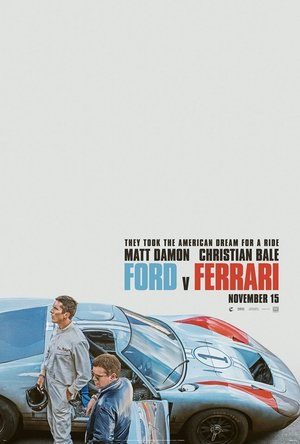
Le mans 66 aka Ford v Ferrari (the extended cut) is a blistering thrill ride equally perfect for both petrol heads and casual car lovers alike. I wont lie I was so excited to see this movie as I cant remember the last time I saw a trully great race movie and ill tell you now Le mans 66 does not disappoint. Primarily a film about pride, jealousy, ego, power and the need to be first and while the movie handles all that stuff perfectly it still manages to pack in so much more too. The art of driving, building/manufacturing, selling and owning cars is frequently and subtley liked to both war and sex in many diffrent ways but what it mostly boils down to is beating the other guy and looking good while doing it. Power is also portrayed perfectly and seeing how essentially its the little guys putting in all the work while the big men in charge reap all the rewards, fame and profit is trully disheartening but ever so relatable too. Story is constantly intresting starting slow and methodical letting you take in all the scenery and character depth before pushing you over the edge and giving you all its got, its trully exciting stuff and the attachment you gain for the main characters this way is thrilling by its self alone. Never ever predictable the film seems to swerve every time you think you know the route it will take always keeping you on the edge of your seat. Sound design is the best ive experienced all year with every tire rip, exhaust pop, speed barrier break, and narrow miss tearing though your ears and booming in your chest really putting you inside these beast machines. Visually its so god damn clean too and I kid you not I have no idea if all the effects are cgi or practical its that slick, with transitions that are immaculate making the racing scenes feel full of tension, danger and anxiety. Matt damon is solid as usual but it christian bale that really knocks it out the park here as a talented man who only strives to impress himself who would give up everything in a heart beat just to with his family (infact I think my favorite perfomance of his). Honestly this movie blew me away its thrilling, intresting, emotional, engaging, rewarding and the main characters are layerd each with thier own drive and goals. I simply can not recomend it enough and the only fault is my own for not seeing it in imax.
Phil Leader (619 KP) rated Jayden's Cybermountain (The Sanctum Series #1) in Books
Nov 15, 2019
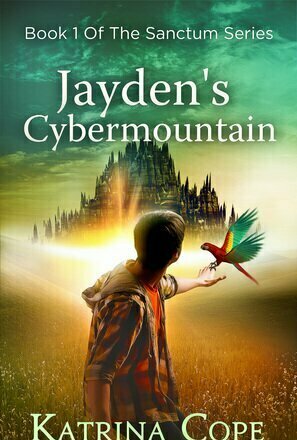

I read this book on my recent holiday and it kept me enthralled, my eReader didn't leave my side and I was always itching to read a bit more to see what happened next.
At the start of the story Jayden is 11 and due to family problems is sleeping rough. One night he is given an opportunity to turn his life around from an unexpected source. Dubious at first, Jayden accepts and is soon settling into a new life, studying at a secret school where all the pupils are from disadvantaged backgrounds. Clearly there is a purpose behind the school, but what exactly is it?
This is a hard book to review simply because it's tough to give any idea of the story without spoiling it. And really this is a story I don't want to spoil for anyone.
Although aimed at young adults (particularly around 11, the same age as Jayden) as with all the best young adult fiction it's an excellent read for anyone.
The plot is really well handled; The journey of Jayden and his friends is one aspect, the purpose of the school another and the reader is kept on their toes by regular twists and turns. Some of these are totally unexpected, others are nicely flagged for the observant reader who will feel very pleased with themselves for having spotted the clue.
The characters are all clearly drawn and the descriptions are detailed enough to sketch them out out not laboured and allow enough space for the reader's imagination to add the finishing touches. All the main characters are very positive role models for young people and many will identify with them and hopefully appreciate how they develop. The writing moves at a really good pace and it is never slow and always grabs attention.
There are moments of humour - mostly around the student's antics either trying to break the rules or playing tricks on each other. Much darker threads are wound in with skill by Cope covering topics such as drug abuse, bullying and terrorism but these are never laboured and always dealt with sympathetically and optimistically. As a parent it is great to see these topics mentioned.
My 9-going-on-10 year old read this book and said it was 'great' and could he have 'more like that'. I don't think you could get a better recommendation.
Overall this is definitely a must read, not just for its target audience but anyone who wants to read a thoughtfully constructed, engaging and thrilling story. I will definitely be reading the sequel.
At the start of the story Jayden is 11 and due to family problems is sleeping rough. One night he is given an opportunity to turn his life around from an unexpected source. Dubious at first, Jayden accepts and is soon settling into a new life, studying at a secret school where all the pupils are from disadvantaged backgrounds. Clearly there is a purpose behind the school, but what exactly is it?
This is a hard book to review simply because it's tough to give any idea of the story without spoiling it. And really this is a story I don't want to spoil for anyone.
Although aimed at young adults (particularly around 11, the same age as Jayden) as with all the best young adult fiction it's an excellent read for anyone.
The plot is really well handled; The journey of Jayden and his friends is one aspect, the purpose of the school another and the reader is kept on their toes by regular twists and turns. Some of these are totally unexpected, others are nicely flagged for the observant reader who will feel very pleased with themselves for having spotted the clue.
The characters are all clearly drawn and the descriptions are detailed enough to sketch them out out not laboured and allow enough space for the reader's imagination to add the finishing touches. All the main characters are very positive role models for young people and many will identify with them and hopefully appreciate how they develop. The writing moves at a really good pace and it is never slow and always grabs attention.
There are moments of humour - mostly around the student's antics either trying to break the rules or playing tricks on each other. Much darker threads are wound in with skill by Cope covering topics such as drug abuse, bullying and terrorism but these are never laboured and always dealt with sympathetically and optimistically. As a parent it is great to see these topics mentioned.
My 9-going-on-10 year old read this book and said it was 'great' and could he have 'more like that'. I don't think you could get a better recommendation.
Overall this is definitely a must read, not just for its target audience but anyone who wants to read a thoughtfully constructed, engaging and thrilling story. I will definitely be reading the sequel.